www.yourdomain.co
m
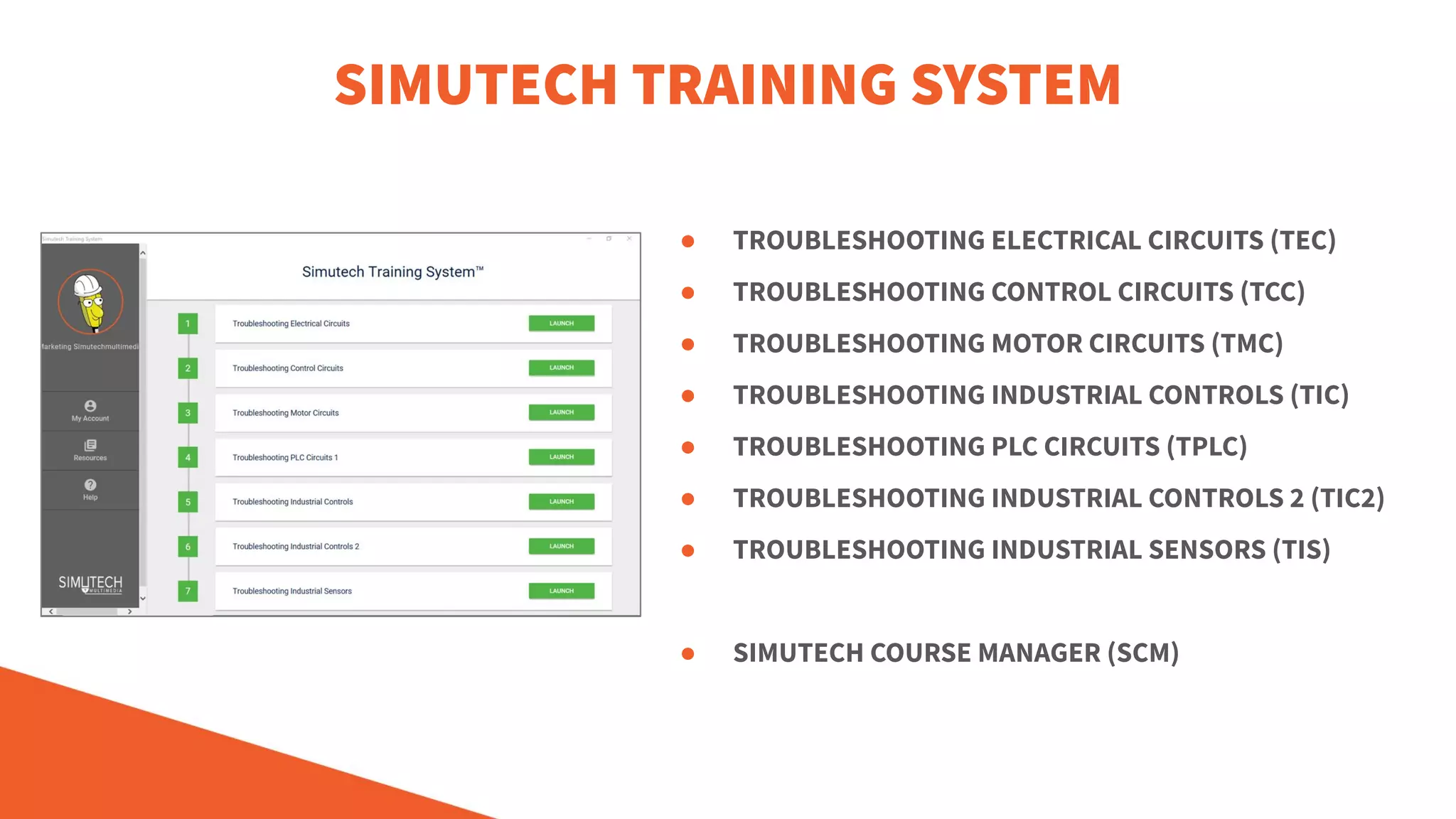
SIMUTECH TRAINING SYSTEM
● TROUBLESHOOTING ELECTRICAL CIRCUITS (TEC)
● TROUBLESHOOTING CONTROL CIRCUITS (TCC)
● TROUBLESHOOTING MOTOR CIRCUITS (TMC)
● TROUBLESHOOTING INDUSTRIAL CONTROLS (TIC)
● TROUBLESHOOTING PLC CIRCUITS (TPLC)
● TROUBLESHOOTING INDUSTRIAL CONTROLS 2 (TIC2)
● TROUBLESHOOTING INDUSTRIAL SENSORS (TIS)
● SIMUTECH COURSE MANAGER (SCM)
Key principles for getting the most out of the
Simutech Training System
● CLEAR EXPECTATIONS
● SCHEDULE APPROPRIATE TIME
● PROVIDE ADEQUATE RESOURCES
● MONITOR PROGRESS
● ASSESS SKILLS
● RECOGNIZE ACCOMPLISHMENTS
KEY PRINCIPLES
HOW OUR CONTENT IS STRUCTURED
● LEARNING LABS
● SIMULATIONS (Faults)
○ Basic, Intermediate, Advanced
(required)
○ Extra and Genius level faults
● PERFORMANCE ASSESSMENT
SIMUTECH TRAINING SYSTEM
Basic Troubleshooting
Skills Foundation
Competency in Troubleshooting
Electromechanical Systems
Expanding Troubleshooting Skill to
Include Systems with PLC Controls
Mastery in
Troubleshooting
Refine and Hone
Troubleshooting Skills
LEVEL 1
LEVEL 2
LEVEL 3
LEVEL 4
LEVEL 5
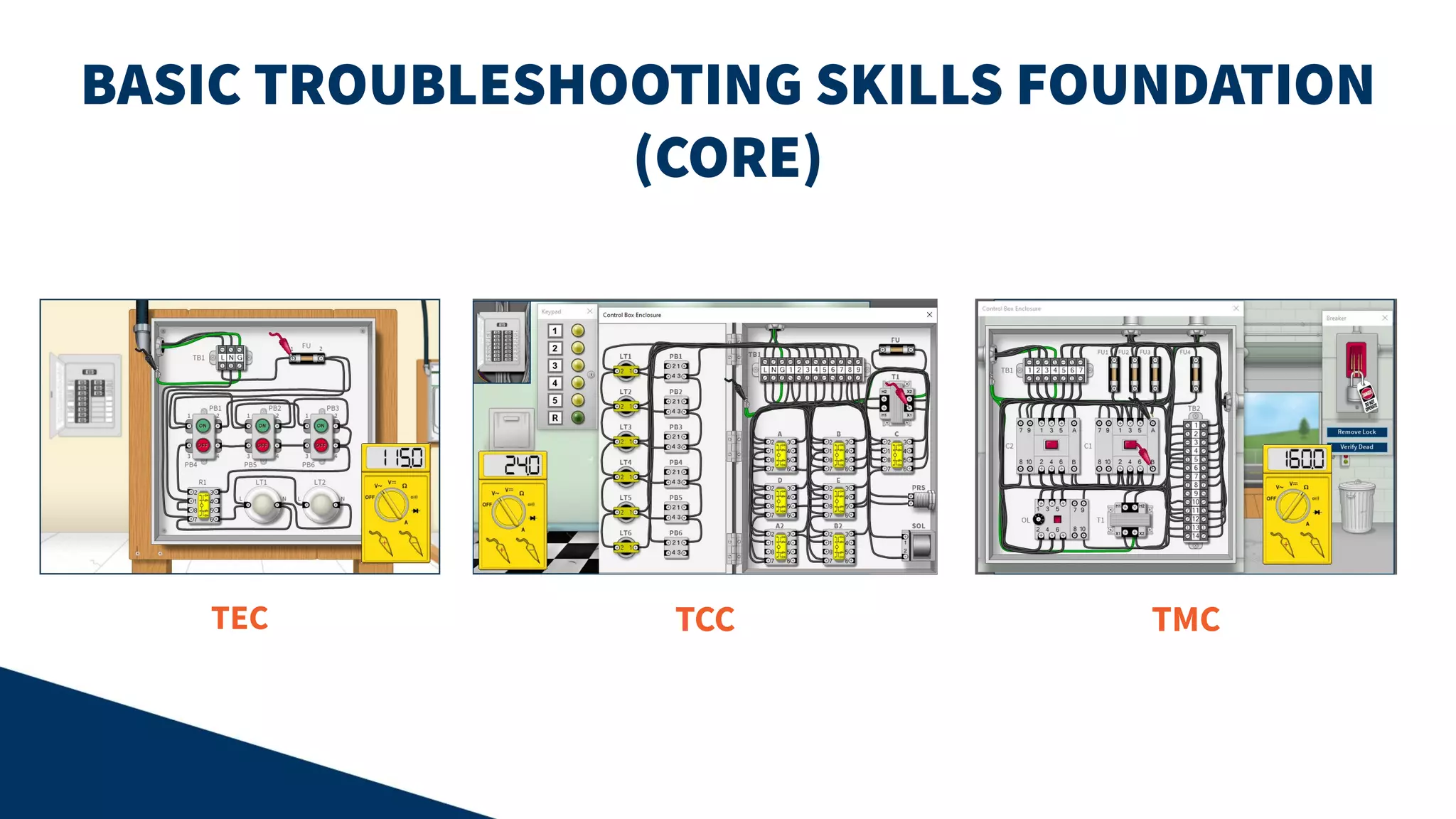
BASIC TROUBLESHOOTING SKILLS FOUNDATION
(CORE)
TEC TCC TMC
TROUBLESHOOTING ELECTRICAL CIRCUITS (TEC)
WHAT’S COVERED
● Introduction to the Simutech
troubleshooting process
● Application of troubleshooting process to
electrical circuits
● Testing techniques using a voltmeter
and ohmmeter
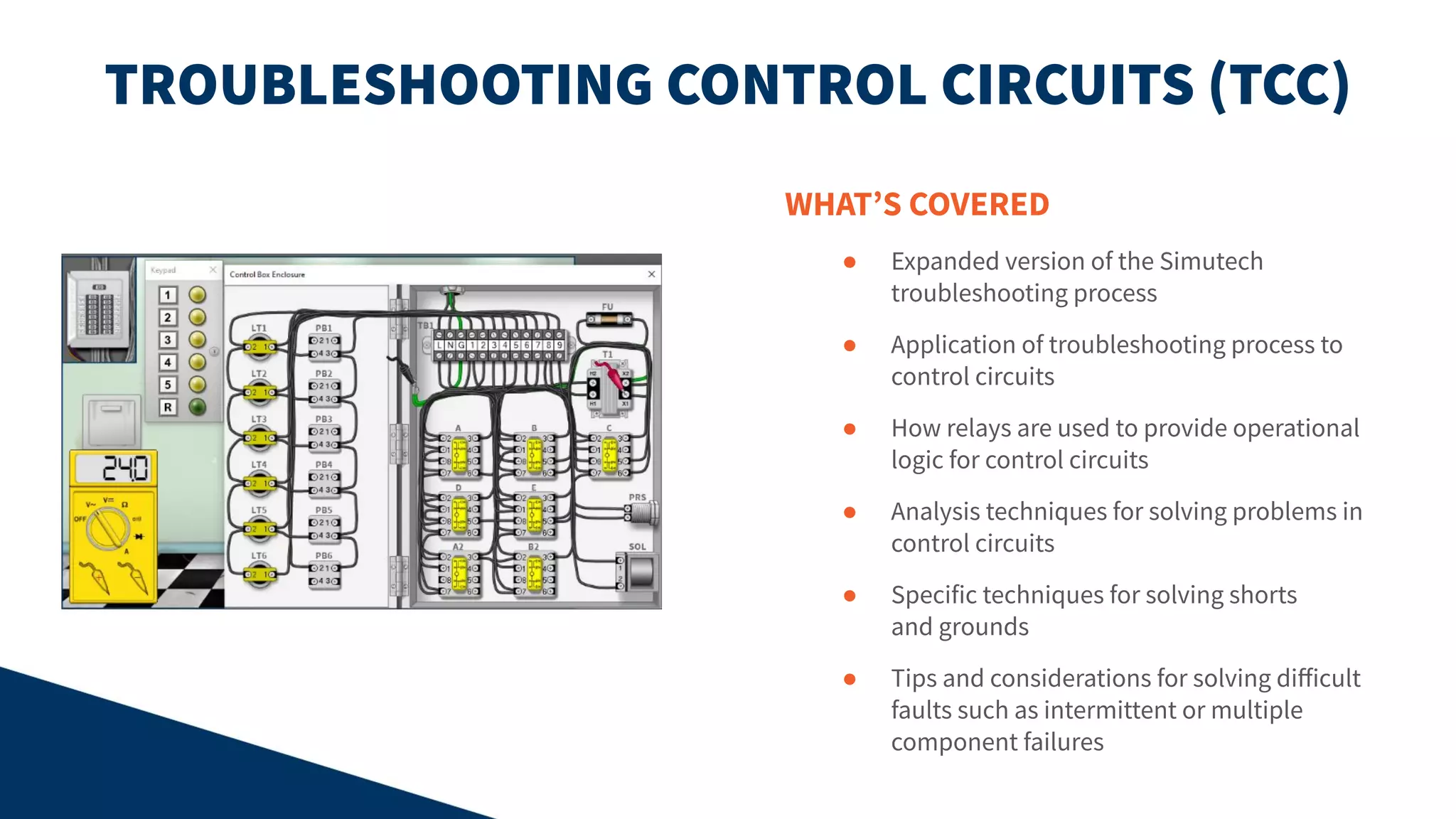
TROUBLESHOOTING CONTROL CIRCUITS (TCC)
WHAT’S COVERED
● Expanded version of the Simutech
troubleshooting process
● Application of troubleshooting process to
control circuits
● How relays are used to provide operational
logic for control circuits
● Analysis techniques for solving problems in
control circuits
● Specific techniques for solving shorts
and grounds
● Tips and considerations for solving difficult
faults such as intermittent or multiple
component failures
TROUBLESHOOTING MOTOR CIRCUITS (TMC)
WHAT’S COVERED
● Application of troubleshooting process to 3
phase motor circuits
● Motor windings and connections
● Three-phase motor behavior including speed
and current relationships
● Motor control using switches, pushbuttons,
and contactors
● Motor protection using overloads and fuses
● Testing techniques using an ammeter
LEVEL 1SUMMARY
TEC Content and Required Faults 6-10 hrs
TCC Content and Required Faults 8-12 hrs
TMC Content and Required Faults 10-15 hrs
LEVEL 1 Total Time 24-37 hrs
88
COMPETENCY IN TROUBLESHOOTING
ELECTROMECHANICAL SYSTEMS
► REFRESH AND ADVANCE
TROUBLESHOOTING INDUSTRIAL CONTROLS (TIC)
WHAT’S COVERED
● Application of the troubleshooting process on
an industrial control system
● Systems used in industrial controls
● Analysis techniques for dividing large systems
into their component functions
LEVEL 2SUMMARY
TEC Extra Faults 1-2 hrs
TCC Extra Faults 2-3 hrs
TMC Extra Faults 2-3 hrs
TIC Content and Required Faults 14-20 hrs
LEVEL 2 Total Time 20-28 hrs 88
EXPANDING TROUBLESHOOTING SKILL TO
INCLUDE SYSTEMS WITH PLC CONTROLS
(ADVANCED)
TPLC TIC TIS
TROUBLESHOOTING PLC CIRCUITS (TPLC)
WHAT’S COVERED
● Purpose and function of PLCs
● Digital I/O
● The CPU
● Interpreting ladder programs
● Applying Simutech’s Troubleshooting Process
● Diagnostic strategies and techniques
TROUBLESHOOTING INDUSTRIAL CONTROLS 2
(TIC2)
WHAT’S COVERED
● Application of the troubleshooting
process on an industrial process with a
PLC control system
● Techniques for controlling various
processes used in industrial systems
TROUBLESHOOTING INDUSTRIAL SENSORS (TIS)
WHAT’S COVERED
● Application of the
troubleshooting process
● Analog sensor troubleshooting
● Calibrating the 4 – 20 mA current loop
● PLC troubleshooting
● Configure PLC analog input modules for
different sensor types
● Setting alarms and alarm dead band
TROUBLESHOOTING INDUSTRIAL CONTROLS 2
(TIC2)
SECTIONS TO COMPLETE
● Set #1 of Extra Faults
LEVEL 3SUMMARY
TEC Extra Faults 1-2 hrs
TPLC Content and Required Faults 10-20 hrs
TIC Extra Faults 3-6 hrs
TPLC Extra Faults 2-3 hrs
TIC2 Content and Required Faults 8-15 hrs
TIS Content and Basic Faults 8-12 hrs
TIC2 Extra Faults 2-4 hrs
LEVEL 3 Total Time 33-60 hrs
88
MASTERY IN TROUBLESHOOTING
COMPLETE ALL UNCOMPLETED EXTRA FAULTS
COMPLETE ALL GENIUS FAULTS
PLCTCC TMC TIC TIC2TEC
LEVEL 4SUMMARY
Complete ALL EXTRA FAULTS 14-22 hrs
Complete ALL GENIUS FAULTS 10-20 hrs
LEVEL 4 Total Time 24-42 hrs
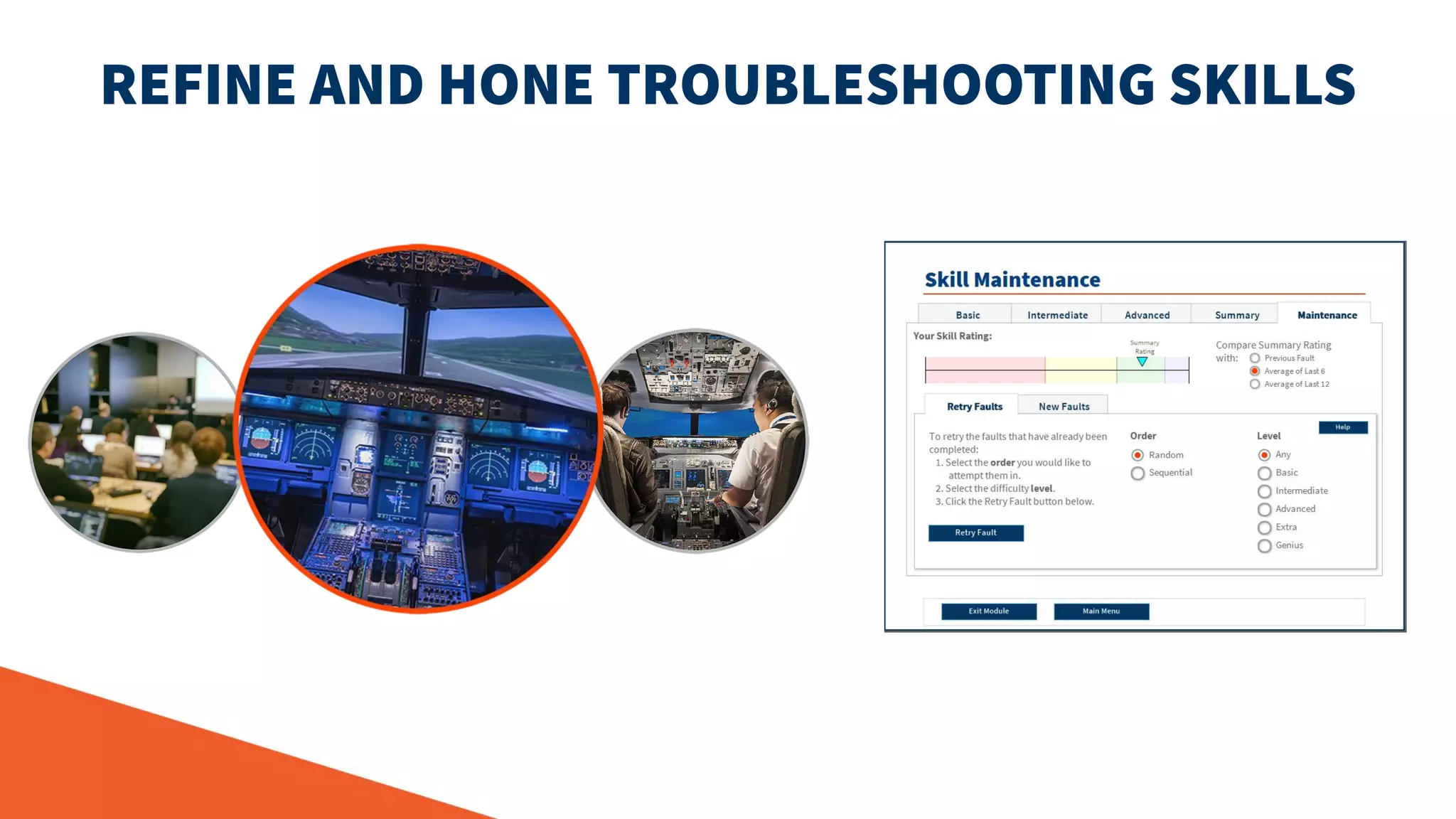
REFINE AND HONE TROUBLESHOOTING SKILLS
LEVEL 5
SCHEDULING
● CREATE A SCHEDULE AND SHARE WITH USER
● Recommended Session Time: 2-4 hrs
LEVELS 1-4
● Recommended WEEKLY or BI-WEEKLY sessions
QUESTIONS
Contact us:
marketing@simutechmultimedia.com

How to Build an Effective Manufacturing Training Plan

  • 1.
  • 2.
    SIMUTECH TRAINING SYSTEM ●TROUBLESHOOTING ELECTRICAL CIRCUITS (TEC) ● TROUBLESHOOTING CONTROL CIRCUITS (TCC) ● TROUBLESHOOTING MOTOR CIRCUITS (TMC) ● TROUBLESHOOTING INDUSTRIAL CONTROLS (TIC) ● TROUBLESHOOTING PLC CIRCUITS (TPLC) ● TROUBLESHOOTING INDUSTRIAL CONTROLS 2 (TIC2) ● TROUBLESHOOTING INDUSTRIAL SENSORS (TIS) ● SIMUTECH COURSE MANAGER (SCM)
  • 3.
    Key principles forgetting the most out of the Simutech Training System ● CLEAR EXPECTATIONS ● SCHEDULE APPROPRIATE TIME ● PROVIDE ADEQUATE RESOURCES ● MONITOR PROGRESS ● ASSESS SKILLS ● RECOGNIZE ACCOMPLISHMENTS KEY PRINCIPLES
  • 4.
    HOW OUR CONTENTIS STRUCTURED ● LEARNING LABS ● SIMULATIONS (Faults) ○ Basic, Intermediate, Advanced (required) ○ Extra and Genius level faults ● PERFORMANCE ASSESSMENT
  • 5.
    SIMUTECH TRAINING SYSTEM BasicTroubleshooting Skills Foundation Competency in Troubleshooting Electromechanical Systems Expanding Troubleshooting Skill to Include Systems with PLC Controls Mastery in Troubleshooting Refine and Hone Troubleshooting Skills LEVEL 1 LEVEL 2 LEVEL 3 LEVEL 4 LEVEL 5
  • 6.
    BASIC TROUBLESHOOTING SKILLSFOUNDATION (CORE) TEC TCC TMC
  • 7.
    TROUBLESHOOTING ELECTRICAL CIRCUITS(TEC) WHAT’S COVERED ● Introduction to the Simutech troubleshooting process ● Application of troubleshooting process to electrical circuits ● Testing techniques using a voltmeter and ohmmeter
  • 8.
    TROUBLESHOOTING CONTROL CIRCUITS(TCC) WHAT’S COVERED ● Expanded version of the Simutech troubleshooting process ● Application of troubleshooting process to control circuits ● How relays are used to provide operational logic for control circuits ● Analysis techniques for solving problems in control circuits ● Specific techniques for solving shorts and grounds ● Tips and considerations for solving difficult faults such as intermittent or multiple component failures
  • 9.
    TROUBLESHOOTING MOTOR CIRCUITS(TMC) WHAT’S COVERED ● Application of troubleshooting process to 3 phase motor circuits ● Motor windings and connections ● Three-phase motor behavior including speed and current relationships ● Motor control using switches, pushbuttons, and contactors ● Motor protection using overloads and fuses ● Testing techniques using an ammeter
  • 10.
    LEVEL 1SUMMARY TEC Contentand Required Faults 6-10 hrs TCC Content and Required Faults 8-12 hrs TMC Content and Required Faults 10-15 hrs LEVEL 1 Total Time 24-37 hrs 88
  • 11.
    COMPETENCY IN TROUBLESHOOTING ELECTROMECHANICALSYSTEMS ► REFRESH AND ADVANCE
  • 12.
    TROUBLESHOOTING INDUSTRIAL CONTROLS(TIC) WHAT’S COVERED ● Application of the troubleshooting process on an industrial control system ● Systems used in industrial controls ● Analysis techniques for dividing large systems into their component functions
  • 13.
    LEVEL 2SUMMARY TEC ExtraFaults 1-2 hrs TCC Extra Faults 2-3 hrs TMC Extra Faults 2-3 hrs TIC Content and Required Faults 14-20 hrs LEVEL 2 Total Time 20-28 hrs 88
  • 14.
    EXPANDING TROUBLESHOOTING SKILLTO INCLUDE SYSTEMS WITH PLC CONTROLS (ADVANCED) TPLC TIC TIS
  • 15.
    TROUBLESHOOTING PLC CIRCUITS(TPLC) WHAT’S COVERED ● Purpose and function of PLCs ● Digital I/O ● The CPU ● Interpreting ladder programs ● Applying Simutech’s Troubleshooting Process ● Diagnostic strategies and techniques
  • 16.
    TROUBLESHOOTING INDUSTRIAL CONTROLS2 (TIC2) WHAT’S COVERED ● Application of the troubleshooting process on an industrial process with a PLC control system ● Techniques for controlling various processes used in industrial systems
  • 17.
    TROUBLESHOOTING INDUSTRIAL SENSORS(TIS) WHAT’S COVERED ● Application of the troubleshooting process ● Analog sensor troubleshooting ● Calibrating the 4 – 20 mA current loop ● PLC troubleshooting ● Configure PLC analog input modules for different sensor types ● Setting alarms and alarm dead band
  • 18.
    TROUBLESHOOTING INDUSTRIAL CONTROLS2 (TIC2) SECTIONS TO COMPLETE ● Set #1 of Extra Faults
  • 19.
    LEVEL 3SUMMARY TEC ExtraFaults 1-2 hrs TPLC Content and Required Faults 10-20 hrs TIC Extra Faults 3-6 hrs TPLC Extra Faults 2-3 hrs TIC2 Content and Required Faults 8-15 hrs TIS Content and Basic Faults 8-12 hrs TIC2 Extra Faults 2-4 hrs LEVEL 3 Total Time 33-60 hrs 88
  • 20.
    MASTERY IN TROUBLESHOOTING COMPLETEALL UNCOMPLETED EXTRA FAULTS COMPLETE ALL GENIUS FAULTS PLCTCC TMC TIC TIC2TEC
  • 21.
    LEVEL 4SUMMARY Complete ALLEXTRA FAULTS 14-22 hrs Complete ALL GENIUS FAULTS 10-20 hrs LEVEL 4 Total Time 24-42 hrs
  • 22.
    REFINE AND HONETROUBLESHOOTING SKILLS
  • 23.
    LEVEL 5 SCHEDULING ● CREATEA SCHEDULE AND SHARE WITH USER ● Recommended Session Time: 2-4 hrs LEVELS 1-4 ● Recommended WEEKLY or BI-WEEKLY sessions
  • 24.