How is gastric juice production
          regulated.
• PHASES OF ACID SECRETION — The physiologic
  stimulation of acid secretion has classically been
  divided into three interrelated phases: cephalic,
  gastric, and intestinal [2].
• The cephalic phase is activated by the thought, taste,
  smell and site of food, and swallowing. It is mediated
  mostly by cholinergic/vagal mechanisms.
• The gastric phase is due to the chemical effects of
  food and distension of the stomach. Gastrin appears
  to be the major mediator since the response to food
  is largely inhibited by immunoneutralizing or
  blocking gastrin action at its receptors.
Composition of gastric juice
• 1/ mucus
• 2/ HCl
• 3/ pepsinogen
• Gastric acid production is regulated by both
  the autonomic nervous system and several
  hormones.
• The parasympathetic nervous system, via the
  vagus nerve, and the hormone gastrin
  stimulate the parietal cell to produce gastric
  acid.
• They directly act on parietal cells and
  indirectly, through the stimulation of the
  secretion of the hormone histamine from
  enterochromaffine-like cells (ECL).
• The production of gastric acid in the stomach
  is tightly regulated by positive regulators and
  negative feedback mechanisms.
Four types of cells are involved in this
                   process:
    parietal cells,
•    G cells,
•   D cells
•   enterochromaffine-like cells.
•   Besides this, the endings of the vagus nerve
    (CN X) and the
•    intramural nervous plexus in the digestive
    tract influence the secretion significantly.
Nerve endings in the stomach
• Nerve endings in the stomach secrete two
  stimulatory neurotransmitters
• 1/ acetylcholine
• 2/ gastrin-releasing peptide.
• Their action is both direct on parietal cells and
  mediated through the secretion of gastrin
  from G cells and histamine from
  enterochromaffine-like cells.
Gastrin
• Gastrin acts on parietal cells directly and
  indirectly too, by stimulating the release of
  histamine.
positive regulation mechanism
• The release of histamine is the most
  important positive regulation mechanism of
  the secretion of gastric acid in the stomach
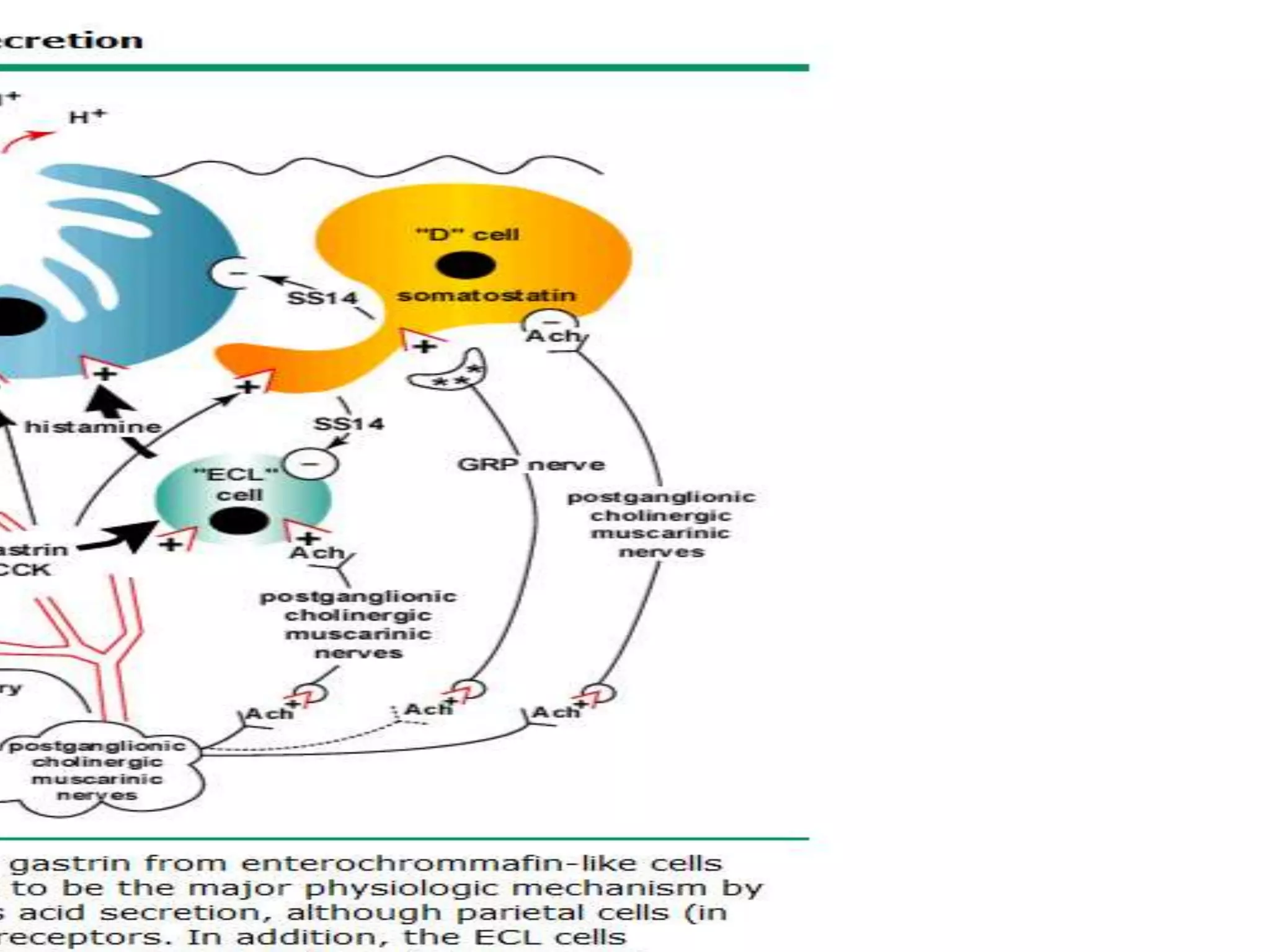
• Release of histamine by gastrin from
  enterochrommafin-like cells (ECL, in green)
  appears to be the major physiologic mechanism
  by which gastrin stimulates acid secretion,
  although parietal cells (in blue) also have gastrin
  receptors. In addition, the ECL cells integrate
  stimulatory messages from cholinergic nerves
  and inhibition by locally released somatostatin.

How is gastric juice production regulated

  • 1.
    How is gastricjuice production regulated.
  • 2.
    • PHASES OFACID SECRETION — The physiologic stimulation of acid secretion has classically been divided into three interrelated phases: cephalic, gastric, and intestinal [2]. • The cephalic phase is activated by the thought, taste, smell and site of food, and swallowing. It is mediated mostly by cholinergic/vagal mechanisms. • The gastric phase is due to the chemical effects of food and distension of the stomach. Gastrin appears to be the major mediator since the response to food is largely inhibited by immunoneutralizing or blocking gastrin action at its receptors.
  • 3.
    Composition of gastricjuice • 1/ mucus • 2/ HCl • 3/ pepsinogen
  • 4.
    • Gastric acidproduction is regulated by both the autonomic nervous system and several hormones.
  • 5.
    • The parasympatheticnervous system, via the vagus nerve, and the hormone gastrin stimulate the parietal cell to produce gastric acid.
  • 6.
    • They directlyact on parietal cells and indirectly, through the stimulation of the secretion of the hormone histamine from enterochromaffine-like cells (ECL).
  • 7.
    • The productionof gastric acid in the stomach is tightly regulated by positive regulators and negative feedback mechanisms.
  • 8.
    Four types ofcells are involved in this process: parietal cells, • G cells, • D cells • enterochromaffine-like cells. • Besides this, the endings of the vagus nerve (CN X) and the • intramural nervous plexus in the digestive tract influence the secretion significantly.
  • 9.
    Nerve endings inthe stomach • Nerve endings in the stomach secrete two stimulatory neurotransmitters • 1/ acetylcholine • 2/ gastrin-releasing peptide.
  • 10.
    • Their actionis both direct on parietal cells and mediated through the secretion of gastrin from G cells and histamine from enterochromaffine-like cells.
  • 11.
    Gastrin • Gastrin actson parietal cells directly and indirectly too, by stimulating the release of histamine.
  • 12.
    positive regulation mechanism •The release of histamine is the most important positive regulation mechanism of the secretion of gastric acid in the stomach
  • 15.
    • Release ofhistamine by gastrin from enterochrommafin-like cells (ECL, in green) appears to be the major physiologic mechanism by which gastrin stimulates acid secretion, although parietal cells (in blue) also have gastrin receptors. In addition, the ECL cells integrate stimulatory messages from cholinergic nerves and inhibition by locally released somatostatin.

Editor's Notes

  • #15 Courtesy/taken from up to date