Dr. P.PARTHIBAN
PROFESSOR
VELLALAR COLLEGE OF PHARMACY
 Catecholamines are hormones made by your adrenal glands
which are located on top of your kidneys.
Eg. Include dopamine, norepinephrine and epinephrine
(called as adrenalline).
 Adrenal glands send catecholamines into blood when your
are physically or emotionally stressed.
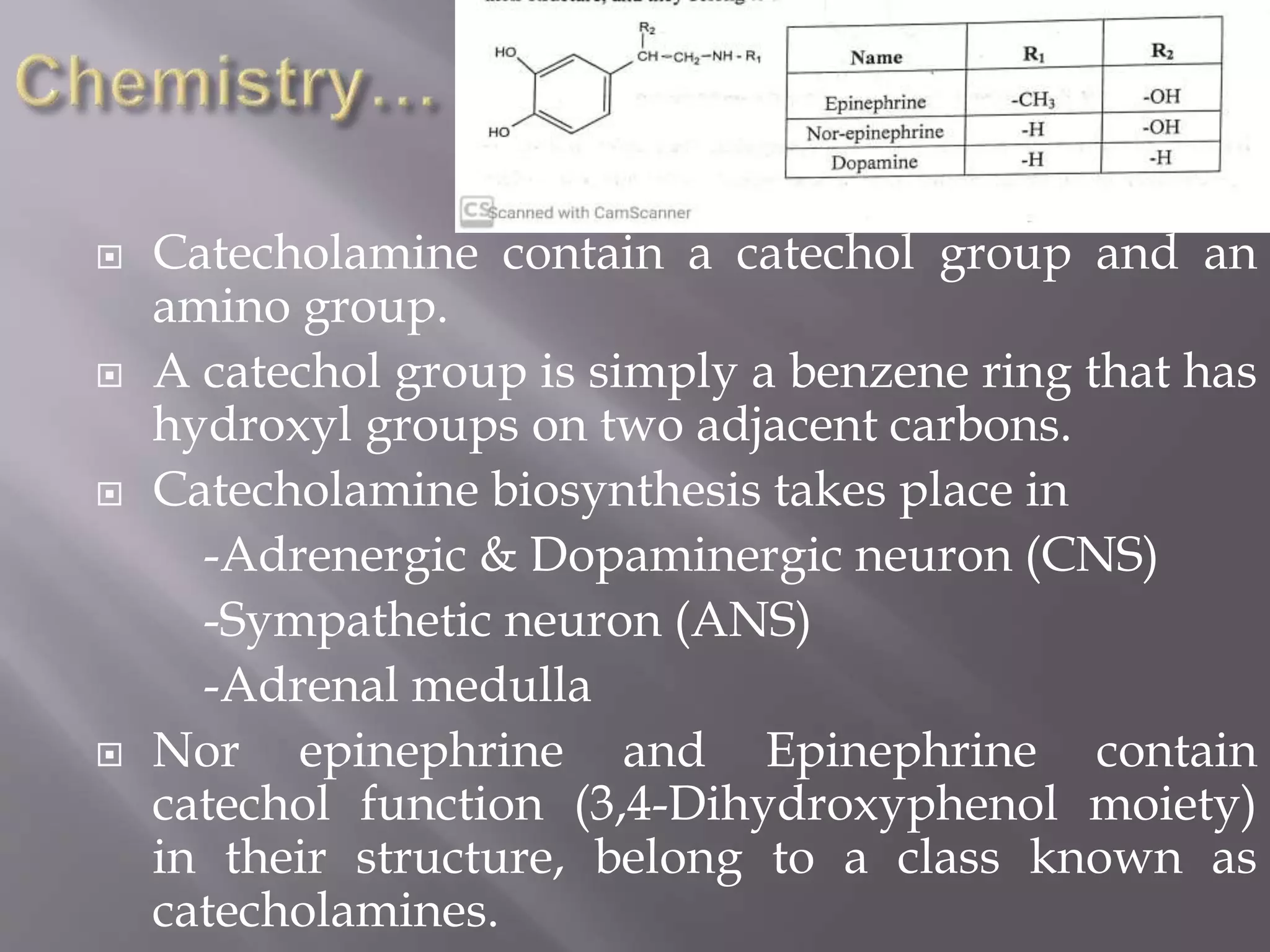
 Catecholamine contain a catechol group and an
amino group.
 A catechol group is simply a benzene ring that has
hydroxyl groups on two adjacent carbons.
 Catecholamine biosynthesis takes place in
-Adrenergic & Dopaminergic neuron (CNS)
-Sympathetic neuron (ANS)
-Adrenal medulla
 Nor epinephrine and Epinephrine contain
catechol function (3,4-Dihydroxyphenol moiety)
in their structure, belong to a class known as
catecholamines.
The actions of adrenaline and Noradrenaline are
terminated by three processes.
 Re-uptake into the presynaptic neuron terminal.
 Diffusion from the junctional cleft and uptake at non-
neuronal sites
 Metabolic transformation of NE.
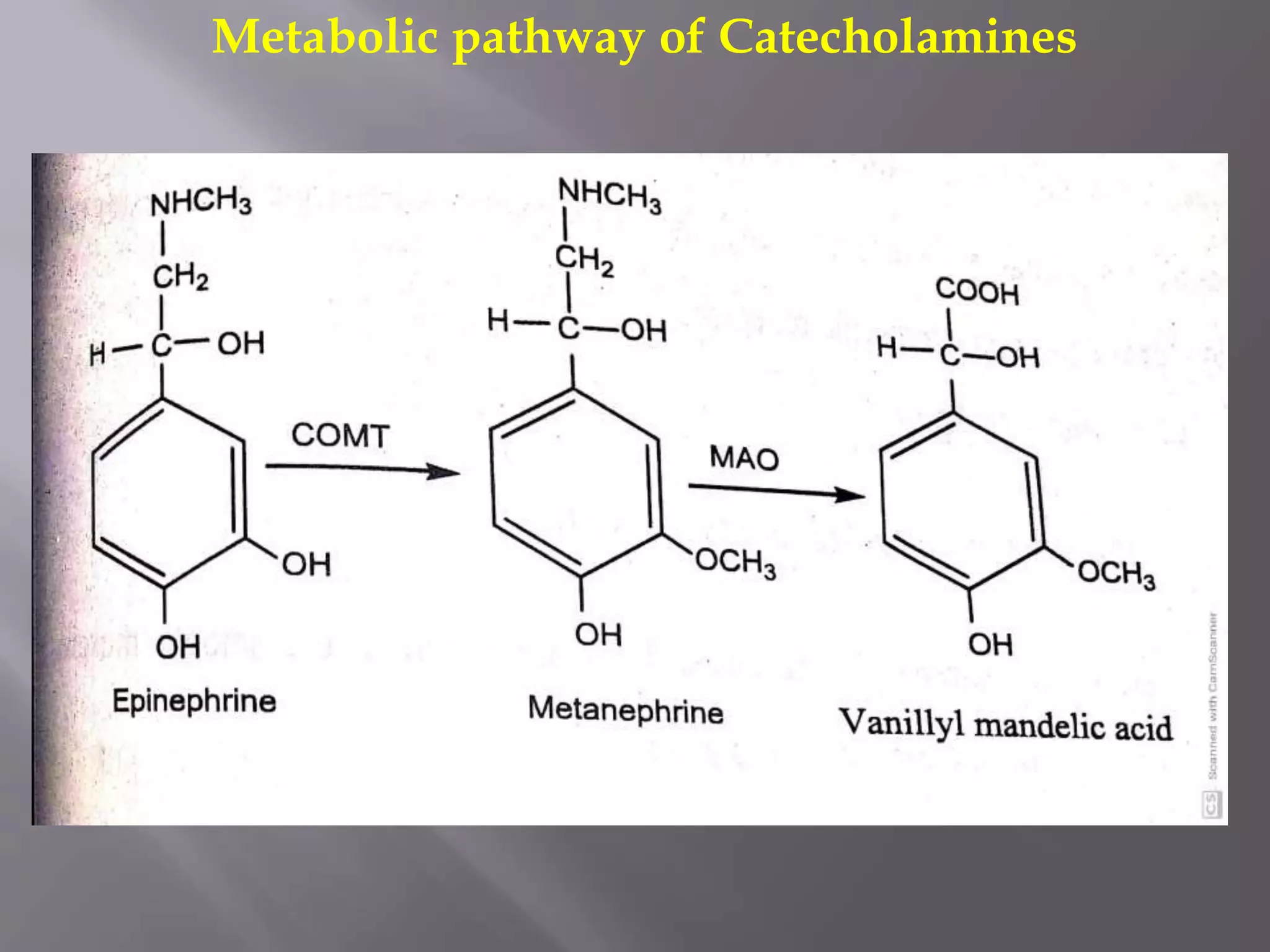
Metabolic pathway of Catecholamines
Biosynthesis & Metabolism of catecholamine

Biosynthesis & Metabolism of catecholamine

  • 1.
  • 2.
     Catecholamines arehormones made by your adrenal glands which are located on top of your kidneys. Eg. Include dopamine, norepinephrine and epinephrine (called as adrenalline).  Adrenal glands send catecholamines into blood when your are physically or emotionally stressed.
  • 3.
     Catecholamine containa catechol group and an amino group.  A catechol group is simply a benzene ring that has hydroxyl groups on two adjacent carbons.  Catecholamine biosynthesis takes place in -Adrenergic & Dopaminergic neuron (CNS) -Sympathetic neuron (ANS) -Adrenal medulla  Nor epinephrine and Epinephrine contain catechol function (3,4-Dihydroxyphenol moiety) in their structure, belong to a class known as catecholamines.
  • 5.
    The actions ofadrenaline and Noradrenaline are terminated by three processes.  Re-uptake into the presynaptic neuron terminal.  Diffusion from the junctional cleft and uptake at non- neuronal sites  Metabolic transformation of NE.
  • 6.
    Metabolic pathway ofCatecholamines
  • 7.
    Metabolic pathway ofCatecholamines