POSTING PRESENTATION
ON
HOUSEKEEPING
DEPARTMENTAYSHATHUL FEMITHA
9897
HOUSEKEEPING DEPARTMENT
• Housekeeping is the provision of a clean,
comfortable, safe and aesthetically appealing
environment
• It is the maintenance of a clean, pleasant and
orderly environment which is necessary for a
civilized living
IMPORTANCE OF HOUSEKEEPING
• Housekeeping is often perceived as a tedious
job but one feels comfortable only in the
environment which is clean and well ordered,
so cleanliness is important for the health of
persons
OBJECTIVES OF HOSPITAL
HOUSEKEEPING
• To maintain high reputation of the hospital
• To meet the expectation of the patients and
community as a whole
• To create a clean, safe, comfortable, aesthetic
and hygienic environment
• To reduce hospital acquired infection
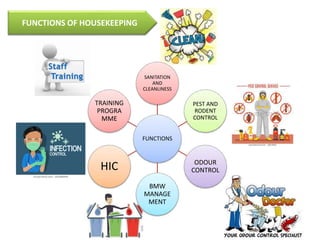
FUNCTIONS
SANITATION
AND
CLEANLINESS
PEST AND
RODENT
CONTROL
ODOUR
CONTROL
BMW
MANAGE
MENT
HIC
TRAINING
PROGRA
MME
FUNCTIONS OF HOUSEKEEPING
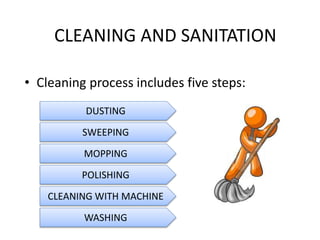
CLEANING AND SANITATION
• Cleaning process includes five steps:
WASHING
DUSTING
SWEEPING
MOPPING
POLISHING
CLEANING WITH MACHINE
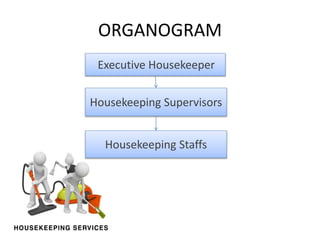
Executive Housekeeper
Housekeeping Supervisors
Housekeeping Staffs
ORGANOGRAM
LOCATION
In YMCH ,Housekeeping department is located
in Teaching Hospital block and EMD block.
●Teaching hospital – 8th floor
● EMD block – 5th floor
STAFFING
●Housekeeping Supervisors – 8
●Housekeeping Staffs – around 130
(in Teaching Hospital 83 staffs and 45 for
EMD )
SHIFTS
4 shifts
7:30am-4:30pm,8am-5pm,9am-6pm,6pm-
7:30am(Night shift)
TERMINAL CLEANING
• Terminal cleaning of rooms, which must be
done soon after a patient is discharged and
before a new patient is admitted to the room.
This includes total disinfection of the room,
including fan, furniture dustbins etc. linens are
taken out for laundry.
PERSONAL PROTECTIVE EQUIPMENTS
• Housekeeping staffs should wear PPE when
they are working. It is designed to protect the
workers from hazardous substances like
chemicals, dirt, injuries from materials like
needles, glassware etc
CLEANING AGENTS
Substances (usually liquids , powders ,sprays , or granules )
used to remove dirt , including dust , stains , bad smells ,
and clutter on surfaces.
Criteria for selecting good cleaning agent :
-It should be:
 mild
of good quality
Bactericidal
Of wide microbe spectrum
Non corrosive
Pleasant in terms of odour
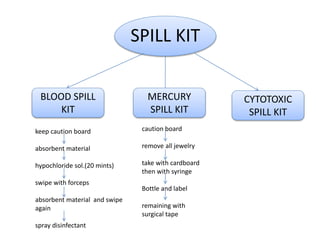
SPILL KIT
BLOOD SPILL
KIT
MERCURY
SPILL KIT
CYTOTOXIC
SPILL KIT
keep caution board
absorbent material
hypochloride sol.(20 mints)
swipe with forceps
absorbent material and swipe
again
spray disinfectant
caution board
remove all jewelry
take with cardboard
then with syringe
Bottle and label
remaining with
surgical tape
METHODS OF CLEANING
• All dirt should be removed without harming
the surface being cleaned
• The top to bottom approach should be always
used
• Cleaning should be done from farthest end of
an area working towards the exist
• It should be done from clean area to dirt area
• Dusting should be done clock wise and
anticlockwise to not miss any area
MATERIAL SAFETY DATA SHEET
• MSDS is a file that includes every cleaning
agents and how it is hazardous to workers
• And it also includes details about emergency
actions that should be done if any worker is
exposed to any of the chemical
BIOMEDICAL WASTE MANAGEMENT
• By WHO, Biomedical wastes are those which
are generated during diagnosis, testing,
treatment or production of biological products
for humans or animals
• Biomedical waste should be properly
managed and disposed of to protect the
environment, general public and workers
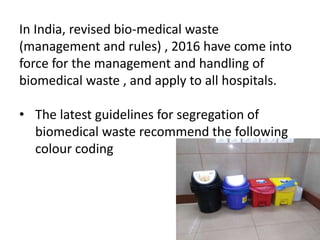
In India, revised bio-medical waste
(management and rules) , 2016 have come into
force for the management and handling of
biomedical waste , and apply to all hospitals.
• The latest guidelines for segregation of
biomedical waste recommend the following
colour coding
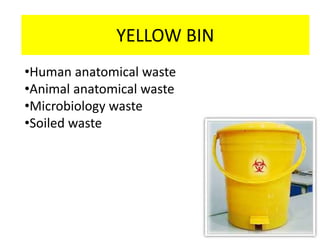
YELLOW BIN
•Human anatomical waste
•Animal anatomical waste
•Microbiology waste
•Soiled waste
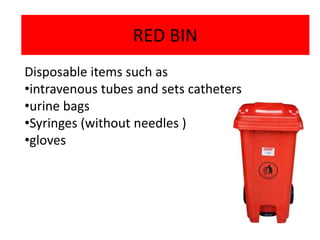
RED BIN
Disposable items such as
•intravenous tubes and sets catheters
•urine bags
•Syringes (without needles )
•gloves
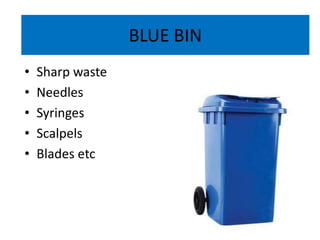
BLUE BIN
• Sharp waste
• Needles
• Syringes
• Scalpels
• Blades etc
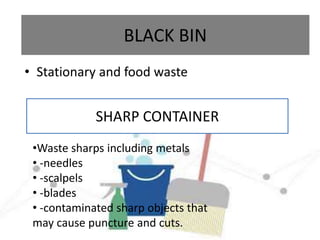
BLACK BIN
• Stationary and food waste
SHARP CONTAINER
•Waste sharps including metals
• -needles
• -scalpels
• -blades
• -contaminated sharp objects that
may cause puncture and cuts.
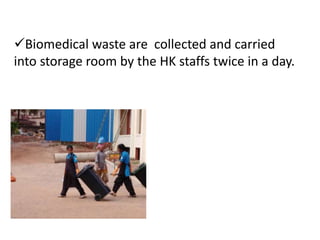
Biomedical waste are collected and carried
into storage room by the HK staffs twice in a day.
HK staffs should wear gloves ,while handling
biomedical waste.
It is stored in BMW storage room which is
also colour coded
BMW management daily checklist is
maintained.
Biomedical waste are collected by Ramky
energy & environment limited from hospital ,
treatment and disposal of BWM carried out
by them.
Black bag is collected by municipality.
PEST AND RODENT CONTROL
• All patients from the area is shifted and
chemical is sprayed
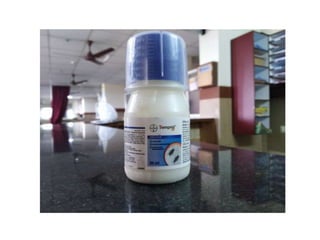
• Chemical used is ‘temprid’ suspension
concentrate formulation of two insecticides:
imidacloprid and β cyfluthrin
• 25 ml of this chemical is mixed with 5 litre
water and sprayed to the areas including beds,
ceiling etc
House keeping department

House keeping department

  • 1.
  • 2.
    HOUSEKEEPING DEPARTMENT • Housekeepingis the provision of a clean, comfortable, safe and aesthetically appealing environment • It is the maintenance of a clean, pleasant and orderly environment which is necessary for a civilized living
  • 3.
    IMPORTANCE OF HOUSEKEEPING •Housekeeping is often perceived as a tedious job but one feels comfortable only in the environment which is clean and well ordered, so cleanliness is important for the health of persons
  • 4.
    OBJECTIVES OF HOSPITAL HOUSEKEEPING •To maintain high reputation of the hospital • To meet the expectation of the patients and community as a whole • To create a clean, safe, comfortable, aesthetic and hygienic environment • To reduce hospital acquired infection
  • 5.
  • 6.
    CLEANING AND SANITATION •Cleaning process includes five steps: WASHING DUSTING SWEEPING MOPPING POLISHING CLEANING WITH MACHINE
  • 7.
  • 8.
    LOCATION In YMCH ,Housekeepingdepartment is located in Teaching Hospital block and EMD block. ●Teaching hospital – 8th floor ● EMD block – 5th floor
  • 9.
    STAFFING ●Housekeeping Supervisors –8 ●Housekeeping Staffs – around 130 (in Teaching Hospital 83 staffs and 45 for EMD ) SHIFTS 4 shifts 7:30am-4:30pm,8am-5pm,9am-6pm,6pm- 7:30am(Night shift)
  • 10.
    TERMINAL CLEANING • Terminalcleaning of rooms, which must be done soon after a patient is discharged and before a new patient is admitted to the room. This includes total disinfection of the room, including fan, furniture dustbins etc. linens are taken out for laundry.
  • 11.
    PERSONAL PROTECTIVE EQUIPMENTS •Housekeeping staffs should wear PPE when they are working. It is designed to protect the workers from hazardous substances like chemicals, dirt, injuries from materials like needles, glassware etc
  • 12.
    CLEANING AGENTS Substances (usuallyliquids , powders ,sprays , or granules ) used to remove dirt , including dust , stains , bad smells , and clutter on surfaces. Criteria for selecting good cleaning agent : -It should be:  mild of good quality Bactericidal Of wide microbe spectrum Non corrosive Pleasant in terms of odour
  • 13.
    SPILL KIT BLOOD SPILL KIT MERCURY SPILLKIT CYTOTOXIC SPILL KIT keep caution board absorbent material hypochloride sol.(20 mints) swipe with forceps absorbent material and swipe again spray disinfectant caution board remove all jewelry take with cardboard then with syringe Bottle and label remaining with surgical tape
  • 14.
    METHODS OF CLEANING •All dirt should be removed without harming the surface being cleaned • The top to bottom approach should be always used • Cleaning should be done from farthest end of an area working towards the exist • It should be done from clean area to dirt area • Dusting should be done clock wise and anticlockwise to not miss any area
  • 15.
    MATERIAL SAFETY DATASHEET • MSDS is a file that includes every cleaning agents and how it is hazardous to workers • And it also includes details about emergency actions that should be done if any worker is exposed to any of the chemical
  • 16.
    BIOMEDICAL WASTE MANAGEMENT •By WHO, Biomedical wastes are those which are generated during diagnosis, testing, treatment or production of biological products for humans or animals • Biomedical waste should be properly managed and disposed of to protect the environment, general public and workers
  • 17.
    In India, revisedbio-medical waste (management and rules) , 2016 have come into force for the management and handling of biomedical waste , and apply to all hospitals. • The latest guidelines for segregation of biomedical waste recommend the following colour coding
  • 18.
    YELLOW BIN •Human anatomicalwaste •Animal anatomical waste •Microbiology waste •Soiled waste
  • 19.
    RED BIN Disposable itemssuch as •intravenous tubes and sets catheters •urine bags •Syringes (without needles ) •gloves
  • 20.
    BLUE BIN • Sharpwaste • Needles • Syringes • Scalpels • Blades etc
  • 21.
    BLACK BIN • Stationaryand food waste SHARP CONTAINER •Waste sharps including metals • -needles • -scalpels • -blades • -contaminated sharp objects that may cause puncture and cuts.
  • 22.
    Biomedical waste arecollected and carried into storage room by the HK staffs twice in a day.
  • 23.
    HK staffs shouldwear gloves ,while handling biomedical waste. It is stored in BMW storage room which is also colour coded BMW management daily checklist is maintained. Biomedical waste are collected by Ramky energy & environment limited from hospital , treatment and disposal of BWM carried out by them. Black bag is collected by municipality.
  • 24.
    PEST AND RODENTCONTROL • All patients from the area is shifted and chemical is sprayed • Chemical used is ‘temprid’ suspension concentrate formulation of two insecticides: imidacloprid and β cyfluthrin • 25 ml of this chemical is mixed with 5 litre water and sprayed to the areas including beds, ceiling etc