7139 Practical cleaning Skills
Clean and Maintain Washrooms
Outcomes...
 Know why its important to keep clean and hygienic in the






workplace
Know the use of Personal Protective Equipment (PPE)
within the industry
Know how to prevent and control contamination and
cross-infection
Link these standards to washroom cleaning
Demonstrate the correct methods for cleaning and
maintaining washrooms
2
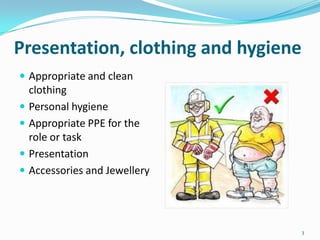
Presentation, clothing and hygiene
 Appropriate and clean






clothing
Personal hygiene
Appropriate PPE for the
role or task
Presentation
Accessories and Jewellery

3
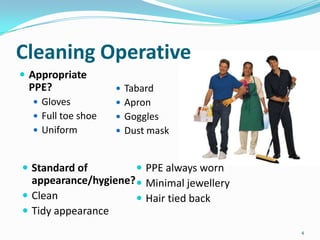
Cleaning Operative
 Appropriate

PPE?

 Tabard

 Gloves

 Apron

 Full toe shoe

 Goggles

 Uniform

 Dust mask

 Standard of

 PPE always worn
appearance/hygiene?  Minimal jewellery
 Clean
 Hair tied back
 Tidy appearance
4
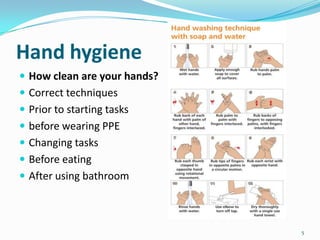
Hand hygiene
 How clean are your hands?
 Correct techniques

 Prior to starting tasks
 before wearing PPE
 Changing tasks
 Before eating
 After using bathroom

5
Hand hygiene exercise

6
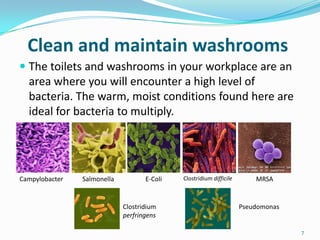
Clean and maintain washrooms
 The toilets and washrooms in your workplace are an
area where you will encounter a high level of

bacteria. The warm, moist conditions found here are
ideal for bacteria to multiply.

Campylobacter

Salmonella

E-Coli

Clostridium
perfringens

Clostridium difficile

MRSA

Pseudomonas

7
Bacterial Growth
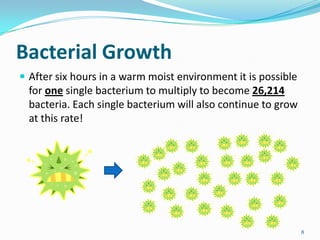
 After six hours in a warm moist environment it is possible

for one single bacterium to multiply to become 26,214
bacteria. Each single bacterium will also continue to grow
at this rate!

8
Preparation
 Before attempting to clean a sanitary area you must

prepare the area using:
 Warning signs / Barriers
 Verbal warnings
 Special Procedures for entering/leaving the area
 Protective clothing
 Ventilation of the area

 Use colour coded equipment

9
Cleaning washroom areas
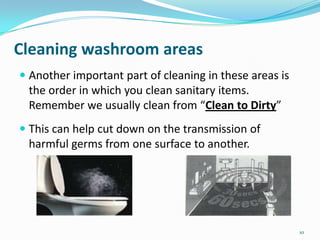
 Another important part of cleaning in these areas is
the order in which you clean sanitary items.
Remember we usually clean from “Clean to Dirty”
 This can help cut down on the transmission of
harmful germs from one surface to another.

10
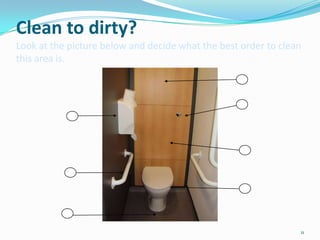
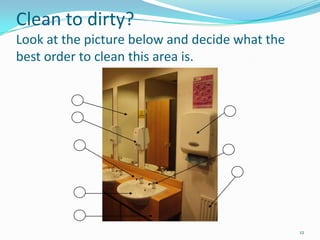
Clean to dirty?
Look at the picture below and decide what the best order to clean
this area is.
1

11
Clean to dirty?
Look at the picture below and decide what the
best order to clean this area is.
1

12
Toilet cleaning
 You will need the following equipment –
 1 toilet brush
 Colour coded cloths (designated for toilet and urinal

cleaning only)
 Toilet cleaning agent and neutral detergent

13
Toilet Cleaning
Method:
 Ventilate area
 Close toilet lid and flush
 Use toilet brush to push back water and reveal normal water line
 Apply toilet cleaner to bowl making sure you get right under the rim, agitate with
toilet brush and leave the brush in the bowl
 Leave to stand for a few minutes
 Proceed to damp wipe the outside surface of WC (Remember clean to dirty!)
 Scrub inside the WC bowl with toilet brush paying attention to water line and under
rim, remove all stains
 Flush toilet again, this time allowing flush water to rinse brush, Clean toilet brush

holder (Yes! It really does need cleaning!) replace brush in holder

 Dry and buff other surfaces with disposable towels, close lid.

14
Cleaning washbasins
 You will need the following equipment
 Colour coded cloths
 (Colour coded bucket)

 Nylon pad/toothbrush/bottlebrush
 Neutral detergent solution or
 Hard surface cleaner/solution

 Warning signs

15
Cleaning Washbasins
Method
 Ventilate area
 Rinse bath/basin to remove loose dust, hair and debris
 Damp wipe basin, surrounds, fixtures and fittings using colour-coded cloth,

wrung out in neutral detergent solution or directly with hard surface
cleaner (remember clean to dirty!)

 Pay special attention to tide mark area (use nylon pad if necessary)
 Remove soil from plughole/overflow
 Pay attention to overflow and tap area, use nylon pad/toothbrush if

necessary

 Rinse
 Dry and buff taps
16
Replenishing supplies
 Filling soap dispensers to manufacturer’s instructions
 Filling paper towel dispensers
 Empty litter bins
 Providing new bin liners
 Replace toilet rolls (leaving sufficient to cover the day)
 Replace sanitary bags

As always follow manufacturer’s instructions when
replenishing consumable items, especially soaps.
17
Waste Disposal
Remember – all waste must be removed and disposed of
properly. Special or hazardous waste much be dealt with
according to instructions. If in doubt, ask!

18
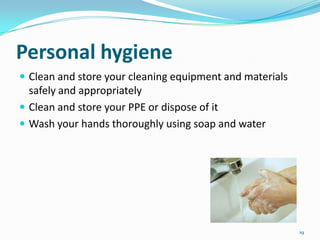
Personal hygiene
 Clean and store your cleaning equipment and materials

safely and appropriately
 Clean and store your PPE or dispose of it
 Wash your hands thoroughly using soap and water

19
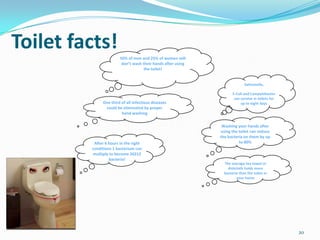
Toilet facts!
50% of men and 25% of women still
don’t wash their hands after using
the toilet!

Salmonella,

One third of all infectious diseases
could be eliminated by proper
hand washing

After 6 hours in the right
conditions 1 bacterium can
multiply to become 26212
bacteria!

E-Coli and Campylobacter
can survive in toilets for
up to eight days

Washing your hands after
using the toilet can reduce
the bacteria on them by up
to 80%

The average tea towel or
dishcloth holds more
bacteria than the toilet in
your home

20
21

102 clean and maintain washrooms

  • 1.
    7139 Practical cleaningSkills Clean and Maintain Washrooms
  • 2.
    Outcomes...  Know whyits important to keep clean and hygienic in the     workplace Know the use of Personal Protective Equipment (PPE) within the industry Know how to prevent and control contamination and cross-infection Link these standards to washroom cleaning Demonstrate the correct methods for cleaning and maintaining washrooms 2
  • 3.
    Presentation, clothing andhygiene  Appropriate and clean     clothing Personal hygiene Appropriate PPE for the role or task Presentation Accessories and Jewellery 3
  • 4.
    Cleaning Operative  Appropriate PPE? Tabard  Gloves  Apron  Full toe shoe  Goggles  Uniform  Dust mask  Standard of  PPE always worn appearance/hygiene?  Minimal jewellery  Clean  Hair tied back  Tidy appearance 4
  • 5.
    Hand hygiene  Howclean are your hands?  Correct techniques  Prior to starting tasks  before wearing PPE  Changing tasks  Before eating  After using bathroom 5
  • 6.
  • 7.
    Clean and maintainwashrooms  The toilets and washrooms in your workplace are an area where you will encounter a high level of bacteria. The warm, moist conditions found here are ideal for bacteria to multiply. Campylobacter Salmonella E-Coli Clostridium perfringens Clostridium difficile MRSA Pseudomonas 7
  • 8.
    Bacterial Growth  Aftersix hours in a warm moist environment it is possible for one single bacterium to multiply to become 26,214 bacteria. Each single bacterium will also continue to grow at this rate! 8
  • 9.
    Preparation  Before attemptingto clean a sanitary area you must prepare the area using:  Warning signs / Barriers  Verbal warnings  Special Procedures for entering/leaving the area  Protective clothing  Ventilation of the area  Use colour coded equipment 9
  • 10.
    Cleaning washroom areas Another important part of cleaning in these areas is the order in which you clean sanitary items. Remember we usually clean from “Clean to Dirty”  This can help cut down on the transmission of harmful germs from one surface to another. 10
  • 11.
    Clean to dirty? Lookat the picture below and decide what the best order to clean this area is. 1 11
  • 12.
    Clean to dirty? Lookat the picture below and decide what the best order to clean this area is. 1 12
  • 13.
    Toilet cleaning  Youwill need the following equipment –  1 toilet brush  Colour coded cloths (designated for toilet and urinal cleaning only)  Toilet cleaning agent and neutral detergent 13
  • 14.
    Toilet Cleaning Method:  Ventilatearea  Close toilet lid and flush  Use toilet brush to push back water and reveal normal water line  Apply toilet cleaner to bowl making sure you get right under the rim, agitate with toilet brush and leave the brush in the bowl  Leave to stand for a few minutes  Proceed to damp wipe the outside surface of WC (Remember clean to dirty!)  Scrub inside the WC bowl with toilet brush paying attention to water line and under rim, remove all stains  Flush toilet again, this time allowing flush water to rinse brush, Clean toilet brush holder (Yes! It really does need cleaning!) replace brush in holder  Dry and buff other surfaces with disposable towels, close lid. 14
  • 15.
    Cleaning washbasins  Youwill need the following equipment  Colour coded cloths  (Colour coded bucket)  Nylon pad/toothbrush/bottlebrush  Neutral detergent solution or  Hard surface cleaner/solution  Warning signs 15
  • 16.
    Cleaning Washbasins Method  Ventilatearea  Rinse bath/basin to remove loose dust, hair and debris  Damp wipe basin, surrounds, fixtures and fittings using colour-coded cloth, wrung out in neutral detergent solution or directly with hard surface cleaner (remember clean to dirty!)  Pay special attention to tide mark area (use nylon pad if necessary)  Remove soil from plughole/overflow  Pay attention to overflow and tap area, use nylon pad/toothbrush if necessary  Rinse  Dry and buff taps 16
  • 17.
    Replenishing supplies  Fillingsoap dispensers to manufacturer’s instructions  Filling paper towel dispensers  Empty litter bins  Providing new bin liners  Replace toilet rolls (leaving sufficient to cover the day)  Replace sanitary bags As always follow manufacturer’s instructions when replenishing consumable items, especially soaps. 17
  • 18.
    Waste Disposal Remember –all waste must be removed and disposed of properly. Special or hazardous waste much be dealt with according to instructions. If in doubt, ask! 18
  • 19.
    Personal hygiene  Cleanand store your cleaning equipment and materials safely and appropriately  Clean and store your PPE or dispose of it  Wash your hands thoroughly using soap and water 19
  • 20.
    Toilet facts! 50% ofmen and 25% of women still don’t wash their hands after using the toilet! Salmonella, One third of all infectious diseases could be eliminated by proper hand washing After 6 hours in the right conditions 1 bacterium can multiply to become 26212 bacteria! E-Coli and Campylobacter can survive in toilets for up to eight days Washing your hands after using the toilet can reduce the bacteria on them by up to 80% The average tea towel or dishcloth holds more bacteria than the toilet in your home 20
  • 21.