HOSPITAL
HOUSEKEEPING
HOSPITAL
HOUSEKEEPING
- Is the management of the
hospital, cleaning, keeping,
and placing hospital things
in order.
PURPOSE:
- To maintain clean, healthful surroundings
- for patients, visitors, and staff.
BASIC CLEANSING PROCEDURES:
A. SWEEPING โ€“ a cleansing operation to remove
dirt from a floor area. It precedes all other
cleansing operation.
Equipment:
1. Floor brush or broom for rough surfaces.
2. Dustpan
3. Dust Box / Trash Can
PROCEDURE:
1. Leave dustpan out of traffic where accumulated sweeping can be
picked.
2. Starting from one place, sweep with proper stroke towards the center
of the room.
3. When dust is heavy on a rough surface, tap brush or broom on the
floor at the end of each stroke to free dirt.
4. Sweep accumulation of dirt into the dustpan and deposit into the dust
box. Do not leave piles of sweeping around.
5. Inspect work. Floor must have no dust streaks.
6. Proceed to the other operation as directed as mopping, scrubbing,
dusting, etc. as the case may be.
7. Return furniture and dust them including drawers, windows, walls and
doors.
8. Clean equipment and return them to their proper places.
B. DUSTING
โ€“ a cleaning operation to remove dirt.
Types of Dusting:
1. Low Dusting โ€“ dusting of all places easily
reached by standing on the floor. It should
be done at least daily.
2. High Dusting โ€“ refers to those areas over
windows, overhead pipes, walls, and
ceilings and is done periodically as needed.
Principles in Dusting:
1. Have everything ready before starting to work.
2. Begin working from top to bottom.
Rules in Dusting:
1. All furniture of the ward, bathroom, etc. must be
cleaned and put in order.
2. Use damp cloth in cleaning articles not injured by
moisture.
3. Use a dry soft cloth for electric bulbs and
varnished furniture. Use metal polish for metals.
Water is a good conductor of electricity, hence the
danger of electrocution if wet cloth is used.
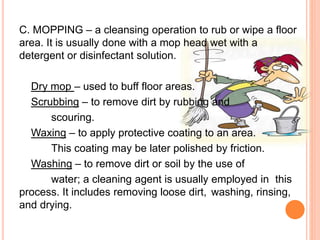
C. MOPPING โ€“ a cleansing operation to rub or wipe a floor
area. It is usually done with a mop head wet with a
detergent or disinfectant solution.
Dry mop โ€“ used to buff floor areas.
Scrubbing โ€“ to remove dirt by rubbing and
scouring.
Waxing โ€“ to apply protective coating to an area.
This coating may be later polished by friction.
Washing โ€“ to remove dirt or soil by the use of
water; a cleaning agent is usually employed in this
process. It includes removing loose dirt, washing, rinsing,
and drying.
- END-

Hospital Housekeeping

  • 1.
  • 2.
    HOSPITAL HOUSEKEEPING - Is themanagement of the hospital, cleaning, keeping, and placing hospital things in order.
  • 3.
    PURPOSE: - To maintainclean, healthful surroundings - for patients, visitors, and staff. BASIC CLEANSING PROCEDURES: A. SWEEPING โ€“ a cleansing operation to remove dirt from a floor area. It precedes all other cleansing operation. Equipment: 1. Floor brush or broom for rough surfaces. 2. Dustpan 3. Dust Box / Trash Can
  • 4.
    PROCEDURE: 1. Leave dustpanout of traffic where accumulated sweeping can be picked. 2. Starting from one place, sweep with proper stroke towards the center of the room. 3. When dust is heavy on a rough surface, tap brush or broom on the floor at the end of each stroke to free dirt. 4. Sweep accumulation of dirt into the dustpan and deposit into the dust box. Do not leave piles of sweeping around. 5. Inspect work. Floor must have no dust streaks. 6. Proceed to the other operation as directed as mopping, scrubbing, dusting, etc. as the case may be. 7. Return furniture and dust them including drawers, windows, walls and doors. 8. Clean equipment and return them to their proper places.
  • 5.
    B. DUSTING โ€“ acleaning operation to remove dirt. Types of Dusting: 1. Low Dusting โ€“ dusting of all places easily reached by standing on the floor. It should be done at least daily. 2. High Dusting โ€“ refers to those areas over windows, overhead pipes, walls, and ceilings and is done periodically as needed.
  • 6.
    Principles in Dusting: 1.Have everything ready before starting to work. 2. Begin working from top to bottom. Rules in Dusting: 1. All furniture of the ward, bathroom, etc. must be cleaned and put in order. 2. Use damp cloth in cleaning articles not injured by moisture. 3. Use a dry soft cloth for electric bulbs and varnished furniture. Use metal polish for metals. Water is a good conductor of electricity, hence the danger of electrocution if wet cloth is used.
  • 7.
    C. MOPPING โ€“a cleansing operation to rub or wipe a floor area. It is usually done with a mop head wet with a detergent or disinfectant solution. Dry mop โ€“ used to buff floor areas. Scrubbing โ€“ to remove dirt by rubbing and scouring. Waxing โ€“ to apply protective coating to an area. This coating may be later polished by friction. Washing โ€“ to remove dirt or soil by the use of water; a cleaning agent is usually employed in this process. It includes removing loose dirt, washing, rinsing, and drying.
  • 8.