Guided By Submited By
Vikash Maurya
HOTSPOT
 What is Hotspot?
 History
 Uses
 How a Wi-Fi network works?
 Connecting to a Wi-Fi hotspot
 Finding Wi-Fi Hotspots
 Types
 Applications of Wi-Fi
 Wi-Fi Configurations
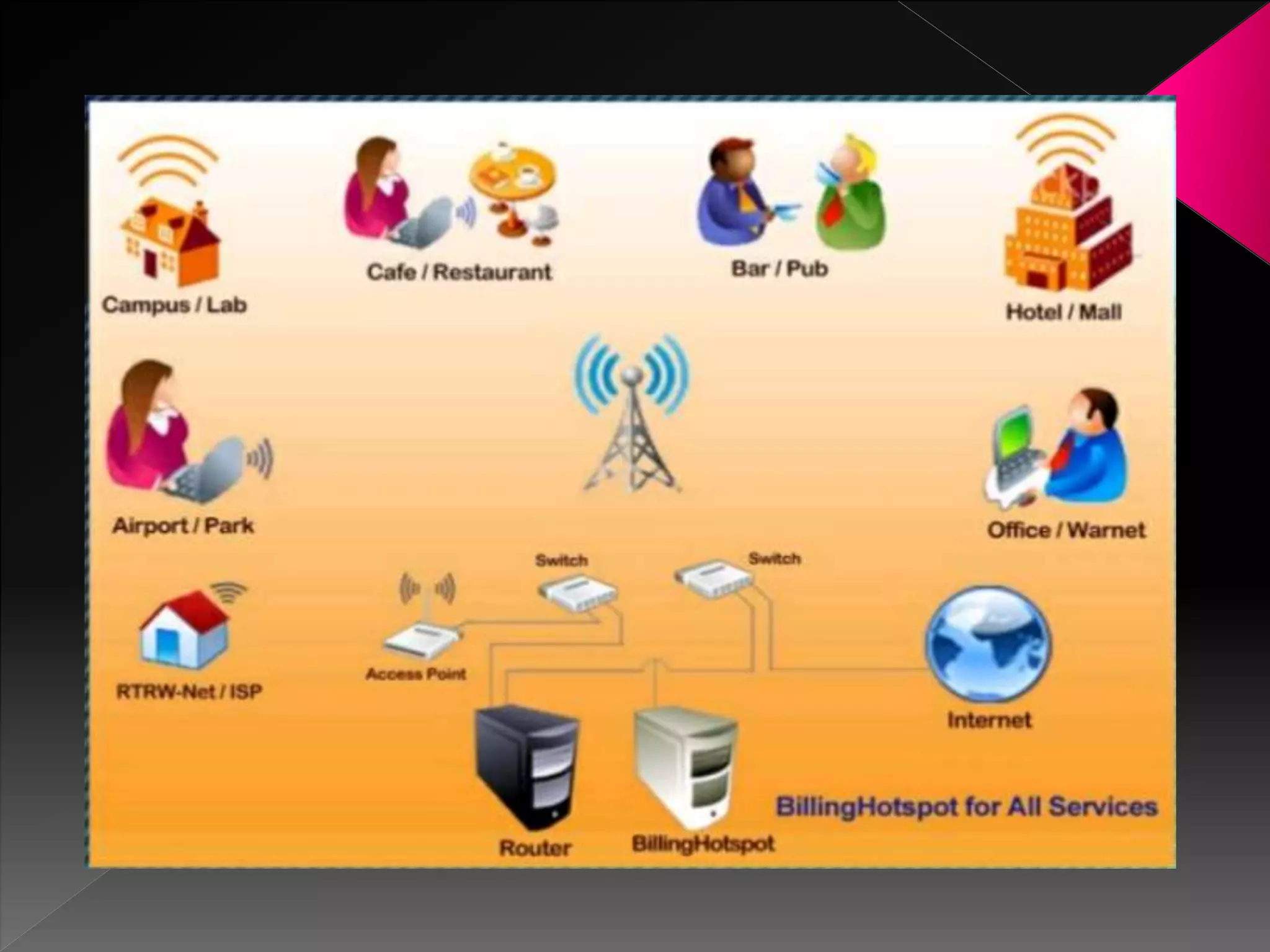
A Wi-Fi (Wireless Fidelity)hotspot is a wireless access
point that provides internet access to network devices
like laptop or smartphone typically in public locations
like cafes, libraries , airports , hotels . Basically they’re
places where you can take your laptop or other mobile
device and wirelessly connect to he internet Businesses
and schools are increasingly using Wi-Fi hotspot for
their internal (internet) networks.
Public access wireless local area
networks (LANs) were first proposed
by Henrik in August 1993 in San
Francisco .
 Computers (and other devices) connect to hotspots
using a Wi-Fi network adapter. Newer laptop
computers contain built in adapters, but most other
computers do not. Wi-Fi network adapters can be
purchased and installed separately. Depending on the
type of computer and personal preferences, USB , PC
Card, Express Card, or even PCI card adapters can
ne used..
 Basic concept is same as Walkie talkies.
 A Wi-Fi hotspot is created by installing an access point to
an internet connection.
 An access point acts as a base station.
 When Wi-Fi enabled device encounters a hotspot the
device can then connect to that network wirelessly.
 A single access point can support up to 30 users and can
function within a range of 100-150 feet indoors and up to
300 feet outdoors.
 Many access point can be connected to each other via
inernet cables to single large network.
The process for connecting to a WI-FI hotspot works
similarly on home , business and public wireless networks.
With the profile (network name and encryption settings)
applied on the wireless network adapter, you initiate the
connection from your computer operating system (or
software that was supplied with the network adapter ).
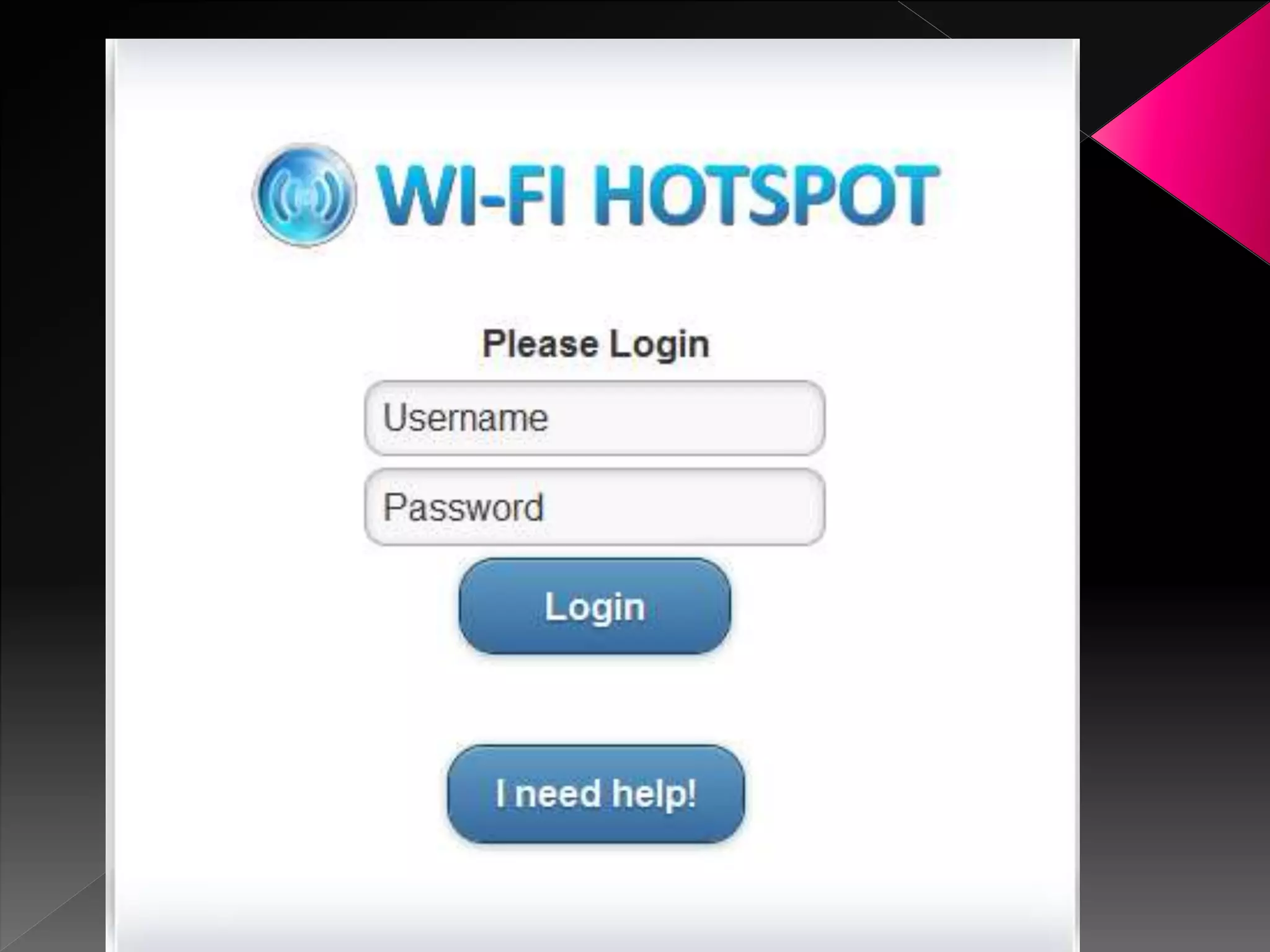
Paid or restricted hotspot services will require you to log
in with a user name and password the first time you
access the internet.
 Computers can automatically scan for hotspots within
range of their wireless signal .These scans identify the
network name of the hotspot allowing the computer to
initiate a connection. Instead of using a computer to
find hotspots , some people prefer to use a separate
gadget called a Wi-Fi finder . These small devices scan
for hotspot signals similarly to computers , and many
provide some indication of signals strength to help
pinpoint their exact location.
1. Commercial Hotspots
2. Software Hotspots
3. Hotspot 2.0
 A commercial hotspot may feature:
• A captive portal / login screen that users are
redirected to for authentication and payment.
• A payment option sing credit card , paypal , or other
payment service.
•Major airports and business hotels are more likely to
charge for service. Most hotels provide free service o
gests and increasingly , small airports and airline
lounges offer free service.
Many Wi-Fi adapters built into or easily added to
consumer computers the functionally to operate as
hotspots. Manufacturers can enable this functionally
through drive level support . Modern consumer operating
systems including Windows Vista and later and Apple
OS X 10.6 and later added features to support this. Third-
party software vendors , offer applications o allow users
to operate their own Hotspot, whether to share an
existing connection or extend the range of another
hotspot.
Also known as HS2 and Wi-Fi certified Pass point , Hotspot 2.0
is a new approach to public access Wi-Fi by the Wi-Fi Alliance.
The idea is for mobile devices to automatically join a Wi-Fi
subscriber service whenever the user enters a Hotspot 2.0 area .
The intention is to provide better bandwidth and services on
demand to and users , whilst also alleviating mobile carrier
infrastructure of traffic over heads.
Hotspot 2.0 is based on the IEEE 802.11u standard , which is a
new set of protocols to enable cellular – like roaming. If the device
supports 802.11u and is subscribed to a Hotspot 2.0 service it will
automatically connect and rom.
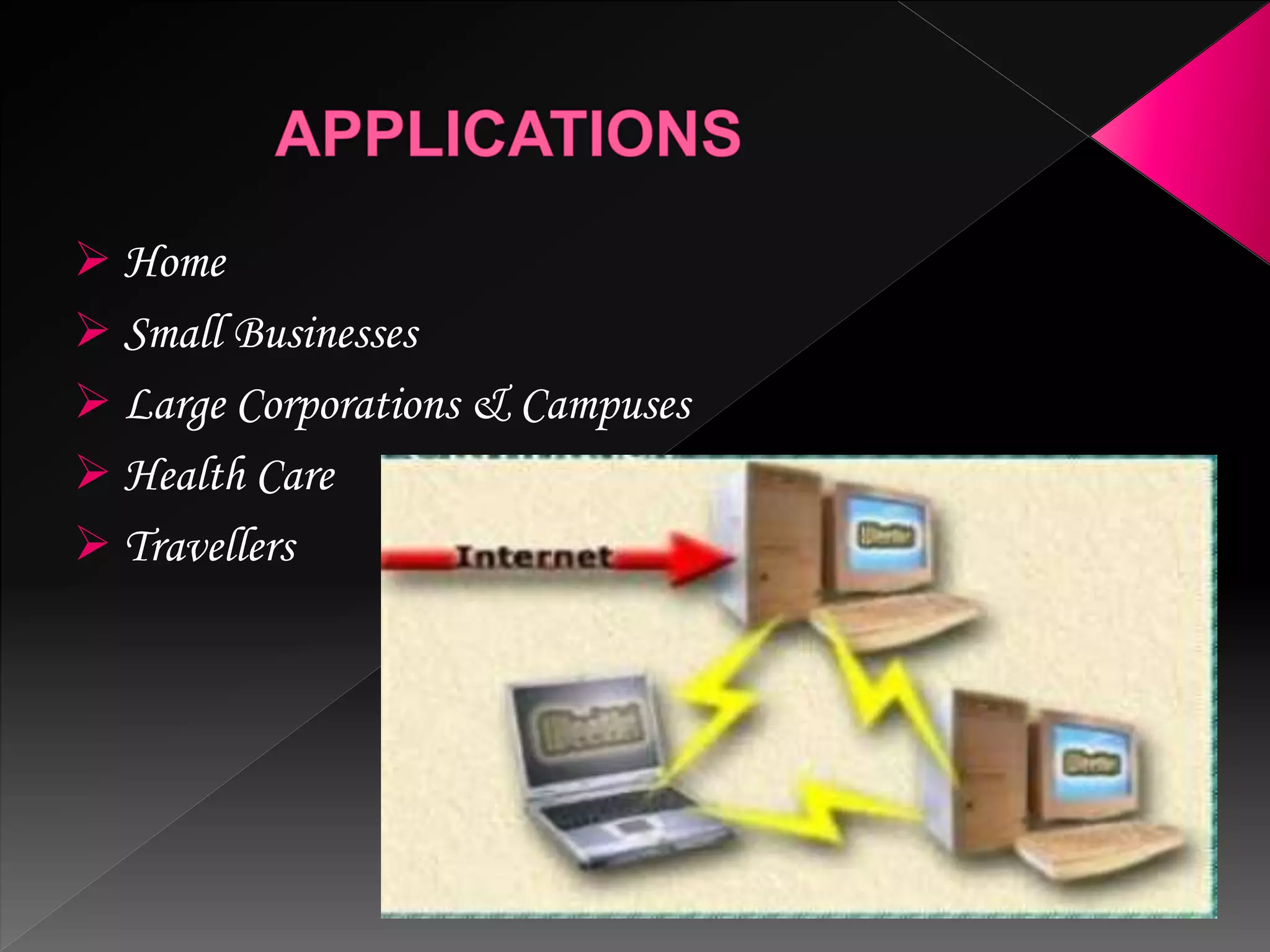
 Home
 Small Businesses
 Large Corporations & Campuses
 Health Care
 Travellers
 Wi-Fi is composed of three main sectors:
 Home (individual residences and apartment buildings)
 Public (Round about 70,000 “ hotspot” through out the world)
 Enterprise (corporations, universities, office park)
Hotspot!

Hotspot!

  • 1.
    Guided By SubmitedBy Vikash Maurya
  • 2.
  • 3.
     What isHotspot?  History  Uses  How a Wi-Fi network works?  Connecting to a Wi-Fi hotspot  Finding Wi-Fi Hotspots  Types  Applications of Wi-Fi  Wi-Fi Configurations
  • 4.
    A Wi-Fi (WirelessFidelity)hotspot is a wireless access point that provides internet access to network devices like laptop or smartphone typically in public locations like cafes, libraries , airports , hotels . Basically they’re places where you can take your laptop or other mobile device and wirelessly connect to he internet Businesses and schools are increasingly using Wi-Fi hotspot for their internal (internet) networks.
  • 6.
    Public access wirelesslocal area networks (LANs) were first proposed by Henrik in August 1993 in San Francisco .
  • 7.
     Computers (andother devices) connect to hotspots using a Wi-Fi network adapter. Newer laptop computers contain built in adapters, but most other computers do not. Wi-Fi network adapters can be purchased and installed separately. Depending on the type of computer and personal preferences, USB , PC Card, Express Card, or even PCI card adapters can ne used..
  • 8.
     Basic conceptis same as Walkie talkies.  A Wi-Fi hotspot is created by installing an access point to an internet connection.  An access point acts as a base station.  When Wi-Fi enabled device encounters a hotspot the device can then connect to that network wirelessly.  A single access point can support up to 30 users and can function within a range of 100-150 feet indoors and up to 300 feet outdoors.  Many access point can be connected to each other via inernet cables to single large network.
  • 10.
    The process forconnecting to a WI-FI hotspot works similarly on home , business and public wireless networks. With the profile (network name and encryption settings) applied on the wireless network adapter, you initiate the connection from your computer operating system (or software that was supplied with the network adapter ). Paid or restricted hotspot services will require you to log in with a user name and password the first time you access the internet.
  • 12.
     Computers canautomatically scan for hotspots within range of their wireless signal .These scans identify the network name of the hotspot allowing the computer to initiate a connection. Instead of using a computer to find hotspots , some people prefer to use a separate gadget called a Wi-Fi finder . These small devices scan for hotspot signals similarly to computers , and many provide some indication of signals strength to help pinpoint their exact location.
  • 13.
    1. Commercial Hotspots 2.Software Hotspots 3. Hotspot 2.0
  • 14.
     A commercialhotspot may feature: • A captive portal / login screen that users are redirected to for authentication and payment. • A payment option sing credit card , paypal , or other payment service. •Major airports and business hotels are more likely to charge for service. Most hotels provide free service o gests and increasingly , small airports and airline lounges offer free service.
  • 15.
    Many Wi-Fi adaptersbuilt into or easily added to consumer computers the functionally to operate as hotspots. Manufacturers can enable this functionally through drive level support . Modern consumer operating systems including Windows Vista and later and Apple OS X 10.6 and later added features to support this. Third- party software vendors , offer applications o allow users to operate their own Hotspot, whether to share an existing connection or extend the range of another hotspot.
  • 16.
    Also known asHS2 and Wi-Fi certified Pass point , Hotspot 2.0 is a new approach to public access Wi-Fi by the Wi-Fi Alliance. The idea is for mobile devices to automatically join a Wi-Fi subscriber service whenever the user enters a Hotspot 2.0 area . The intention is to provide better bandwidth and services on demand to and users , whilst also alleviating mobile carrier infrastructure of traffic over heads. Hotspot 2.0 is based on the IEEE 802.11u standard , which is a new set of protocols to enable cellular – like roaming. If the device supports 802.11u and is subscribed to a Hotspot 2.0 service it will automatically connect and rom.
  • 17.
     Home  SmallBusinesses  Large Corporations & Campuses  Health Care  Travellers
  • 18.
     Wi-Fi iscomposed of three main sectors:  Home (individual residences and apartment buildings)  Public (Round about 70,000 “ hotspot” through out the world)  Enterprise (corporations, universities, office park)