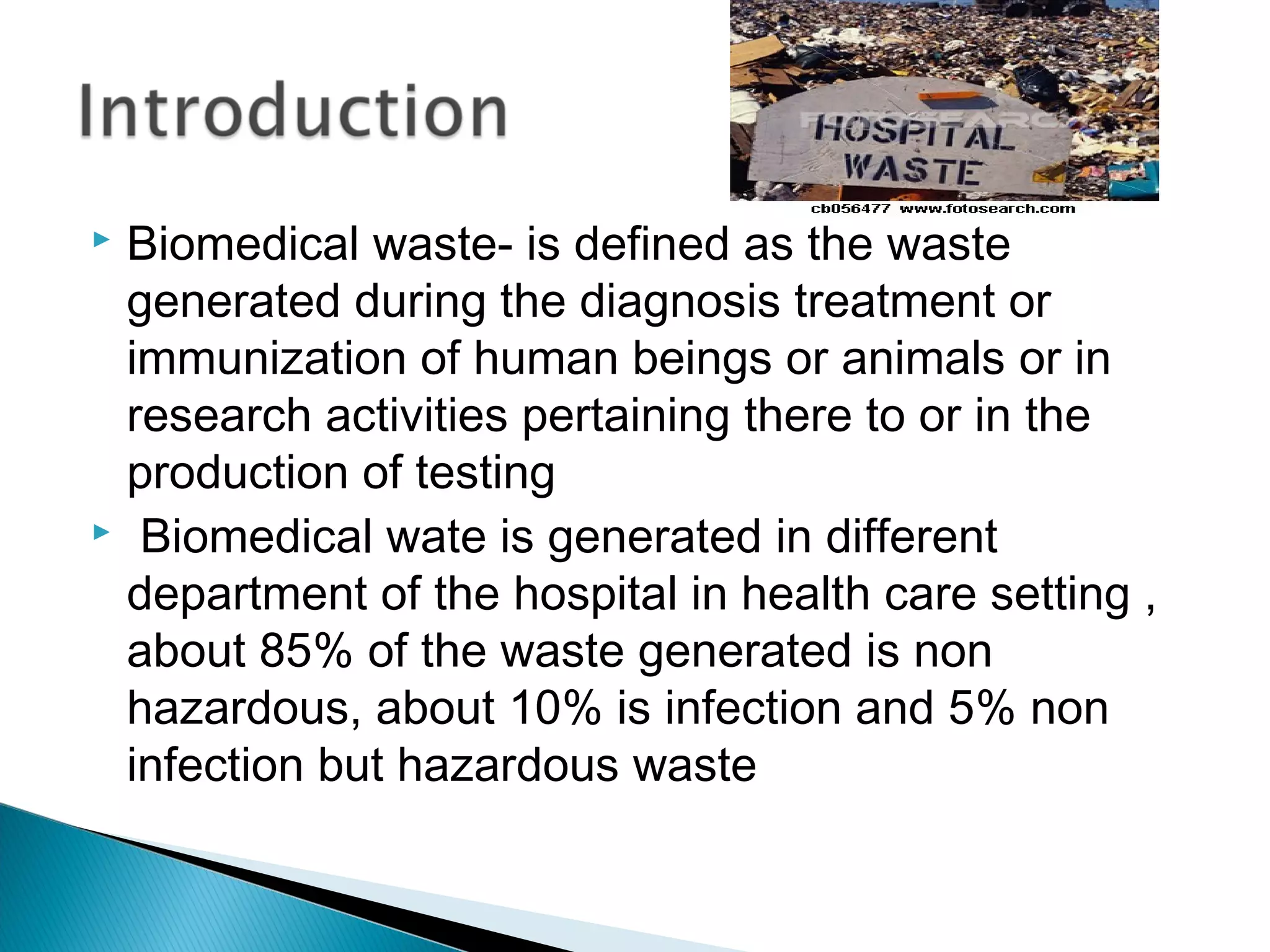
 Biomedical waste- is defined as the waste
  generated during the diagnosis treatment or
  immunization of human beings or animals or in
  research activities pertaining there to or in the
  production of testing
 Biomedical wate is generated in different

  department of the hospital in health care setting ,
  about 85% of the waste generated is non
  hazardous, about 10% is infection and 5% non
  infection but hazardous waste
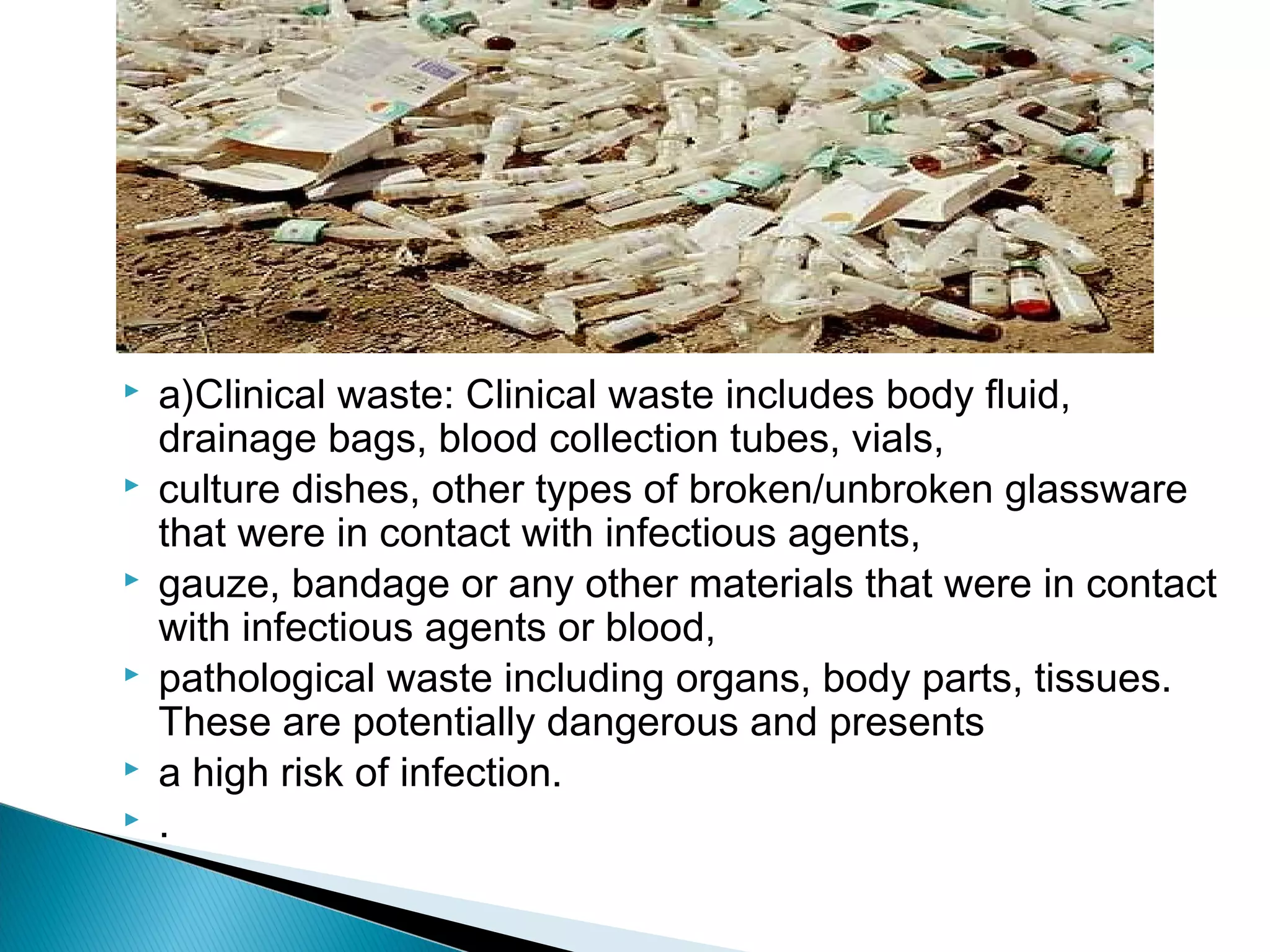
   a)Clinical waste: Clinical waste includes body fluid,
    drainage bags, blood collection tubes, vials,
   culture dishes, other types of broken/unbroken glassware
    that were in contact with infectious agents,
   gauze, bandage or any other materials that were in contact
    with infectious agents or blood,
   pathological waste including organs, body parts, tissues.
    These are potentially dangerous and presents
   a high risk of infection.
   .
   b)Laboratory waste: Laboratory waste is also of high risk
    category. This includes chemicals used in

   the pathological laboratories, microbial cultures, and clinical
    specimens, slide, culture dish, needle,

   syringes, as well as radioactive waste such as iodine-125,
    iodine -131, etc.
   .
 c)Non-clinical waste: Wrapping paper, office
  paper, and plastic that have not been in contact
  with
 patient body fluid are the examples of non- clinical
  waste

 d) Kitchen waste: Kitchen waste includes food
  waste, dirty water, etc. It is also a potential source
  of
 pests and vermin, thus creates an indirect hazard
  to staff and hospital patients
   Waste is collected from a small bowl or bin, kept under
    each bed in a hospital or a clinic and then either

   in a large plastic bag or a (plastic or metal) bucket.
    With a push cart these wastes are then carried to the
nearest municipal bin for dumping. The municipal bins
    are either within hospital premises or outside the
    municipal bins

   . This waste is then collected from municipal bins by
    trucks and carried to the landfill area for final disposal

      hospital. Waste from operation theaters,
    laboratories and hospital kitchens are also dumped
    into the same
   Medical waste usually consists of clinical and non-clinical
    waste. Such pollutants can, therefore, be


   broadly classified into solid wastes, and liquid waste
    (wastewater). Both are important sources of


   environmental degradation and constitute a health hazard.


   For example the soil on which waste is dumped
    is a reservoir of microbial life. Also waste-
    contaminated water contains pathogenic micro-
    organisms
    which can cause many diseases.
   Destroy the needle and syringes separate sharps in
    plastic box provided and send to pharmacy stores
   Evaluate the present scenario this entails preaudit and
    auditing of hospital waste

   preparation of job charts for hospital waste management

   Asses all cost associated with waste management

   Train the trainees and employers

   Evaluate technical procedures, cost and policies
Hospital waste management Real time Analysis

Hospital waste management Real time Analysis

  • 2.
     Biomedical waste-is defined as the waste generated during the diagnosis treatment or immunization of human beings or animals or in research activities pertaining there to or in the production of testing  Biomedical wate is generated in different department of the hospital in health care setting , about 85% of the waste generated is non hazardous, about 10% is infection and 5% non infection but hazardous waste
  • 3.
    a)Clinical waste: Clinical waste includes body fluid, drainage bags, blood collection tubes, vials,  culture dishes, other types of broken/unbroken glassware that were in contact with infectious agents,  gauze, bandage or any other materials that were in contact with infectious agents or blood,  pathological waste including organs, body parts, tissues. These are potentially dangerous and presents  a high risk of infection.  .
  • 4.
    b)Laboratory waste: Laboratory waste is also of high risk category. This includes chemicals used in  the pathological laboratories, microbial cultures, and clinical specimens, slide, culture dish, needle,  syringes, as well as radioactive waste such as iodine-125, iodine -131, etc.  .
  • 5.
     c)Non-clinical waste:Wrapping paper, office paper, and plastic that have not been in contact with  patient body fluid are the examples of non- clinical waste  d) Kitchen waste: Kitchen waste includes food waste, dirty water, etc. It is also a potential source of  pests and vermin, thus creates an indirect hazard to staff and hospital patients
  • 6.
    Waste is collected from a small bowl or bin, kept under each bed in a hospital or a clinic and then either  in a large plastic bag or a (plastic or metal) bucket. With a push cart these wastes are then carried to the
  • 7.
    nearest municipal binfor dumping. The municipal bins are either within hospital premises or outside the municipal bins  . This waste is then collected from municipal bins by trucks and carried to the landfill area for final disposal  hospital. Waste from operation theaters, laboratories and hospital kitchens are also dumped into the same
  • 8.
    Medical waste usually consists of clinical and non-clinical waste. Such pollutants can, therefore, be  broadly classified into solid wastes, and liquid waste (wastewater). Both are important sources of  environmental degradation and constitute a health hazard. 
  • 9.
    For example the soil on which waste is dumped is a reservoir of microbial life. Also waste- contaminated water contains pathogenic micro- organisms which can cause many diseases.
  • 10.
    Destroy the needle and syringes separate sharps in plastic box provided and send to pharmacy stores
  • 11.
    Evaluate the present scenario this entails preaudit and auditing of hospital waste  preparation of job charts for hospital waste management  Asses all cost associated with waste management  Train the trainees and employers  Evaluate technical procedures, cost and policies