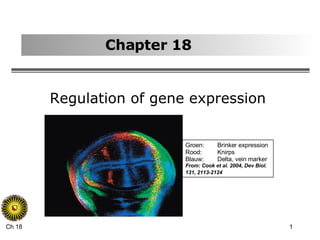
Chapter 18 Regulation of gene expression Groen: Brinker expression Rood:  Knirps Blauw: Delta, vein marker From: Cook et al. 2004, Dev Biol. 131, 2113-2124
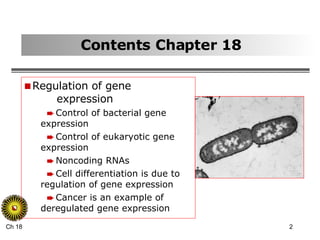
Contents Chapter 18 Regulation of gene expression Control of bacterial gene  expression Control of eukaryotic gene  expression Noncoding RNAs Cell differentiation is due to  regulation of gene expression Cancer is an example of  deregulated gene expression
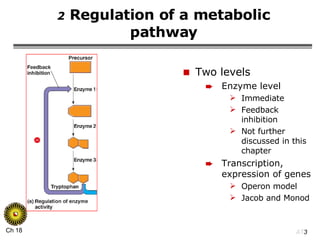
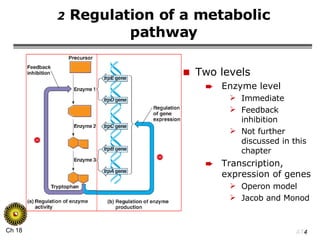
2  Regulation of a metabolic pathway Two levels Enzyme level Immediate Feedback inhibition Not further discussed in this chapter Transcription, expression of genes Operon model Jacob and Monod
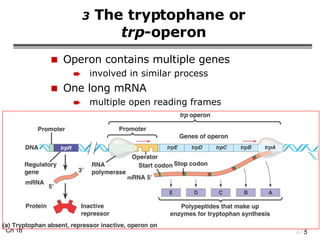
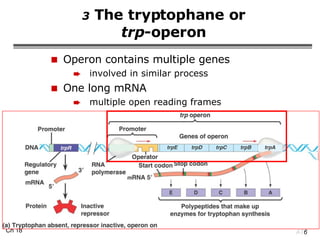
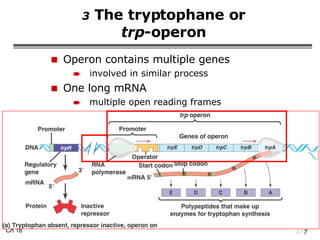
3  The tryptophane or trp -operon Operon contains multiple genes involved in similar process One long mRNA multiple open reading frames
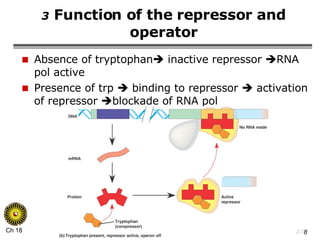
3  Function of the repressor and operator Absence of tryptophan   inactive repressor   RNA pol active Presence of trp    binding to repressor    activation of repressor   blockade of RNA pol
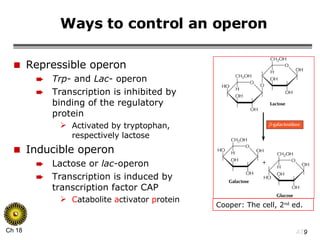
Ways to control an operon Repressible operon Trp - and  Lac - operon Transcription is inhibited by binding of the regulatory protein Activated by tryptophan, respectively lactose Inducible operon Lactose or  lac -operon Transcription is induced by transcription factor CAP C atabolite  a ctivator  p rotein Cooper: The cell, 2 nd  ed.
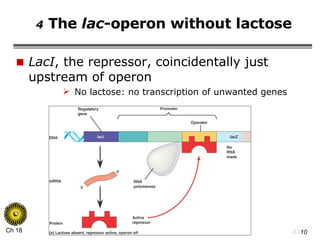
4  The  lac -operon without lactose LacI , the repressor, coincidentally just upstream of operon No lactose: no transcription of unwanted genes
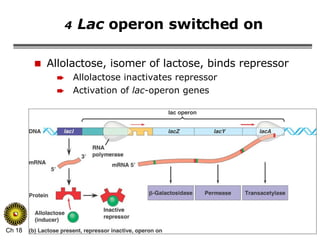
4   Lac  operon switched on Allolactose, isomer of lactose, binds repressor Allolactose inactivates repressor Activation of  lac -operon genes
5  Glucose is preferred
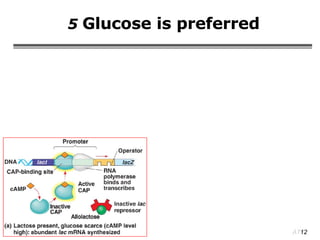
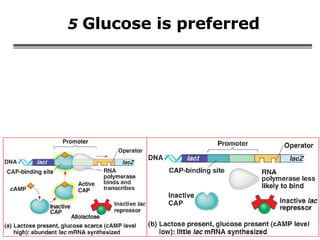
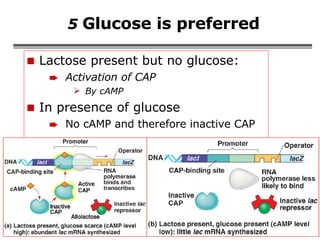
5  Glucose is preferred Lactose present but no glucose: Activation of CAP By cAMP In presence of glucose No cAMP and therefore inactive CAP
Outline Bacteria Control of gene expression Tryp and LacZ Eukaryotic gene expression Complex and multi-level Differential gene expression Non-coding, regulatory RNA Cancer
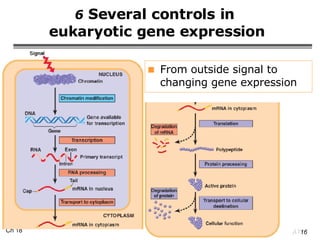
6  Several controls in  eukaryotic gene expression From outside signal to changing gene expression
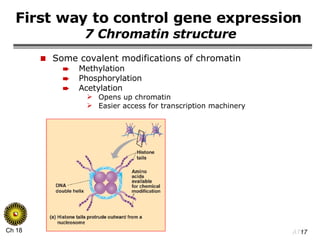
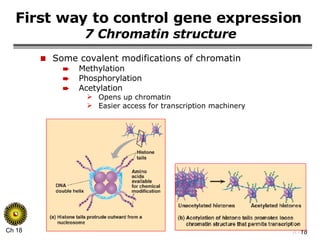
First way to control gene expression   7 Chromatin structure Some covalent modifications of chromatin Methylation Phosphorylation Acetylation Opens up chromatin Easier access for transcription machinery
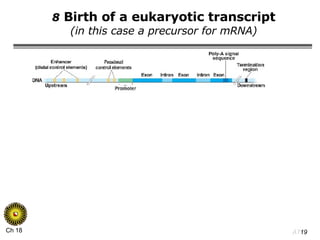
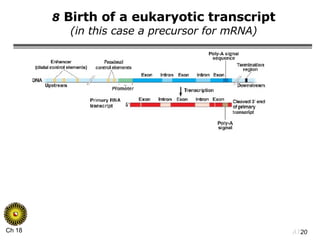
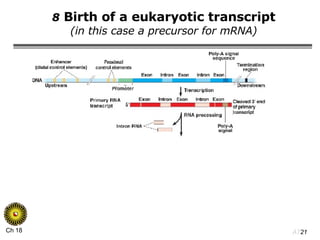
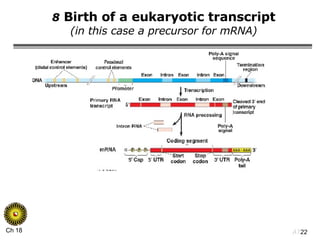
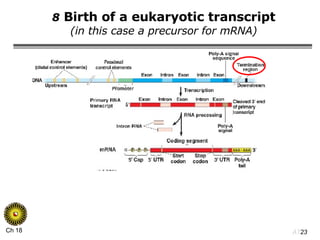
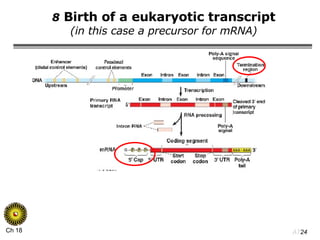
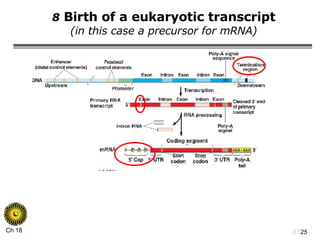
8  Birth of a eukaryotic transcript (in this case a precursor for mRNA)
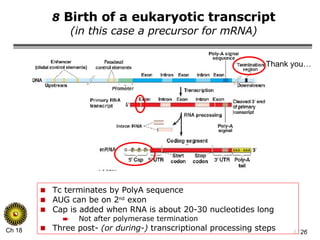
8  Birth of a eukaryotic transcript (in this case a precursor for mRNA) Tc terminates by PolyA sequence AUG can be on 2 nd  exon Cap is added when RNA is about 20-30 nucleotides long Not after polymerase termination Three post-  (or during-)  transcriptional processing steps Thank you…
How does RNA polymerase find its start? How is a gene found? 25,000 genes in a sea of DNA Less than 1% of DNA belongs to a gene Transcription start signals are less than 1% of total DNA in a gene Find a specific start basepair in 10,000 basepairs
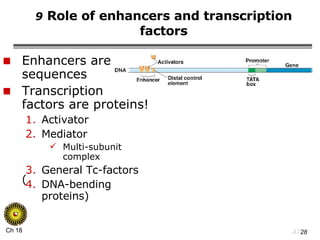
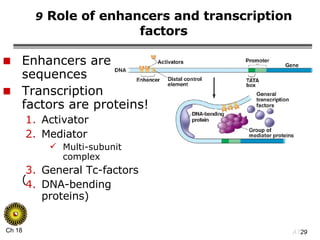
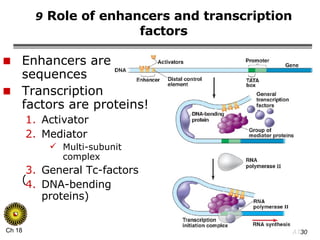
9  Role of enhancers and transcription factors Enhancers are DNA sequences Transcription  factors are proteins! Activator Mediator Multi-subunit complex General Tc-factors DNA-bending proteins) (

Hoofdstuk 18 2008 deel 1

  • 1.
    Chapter 18 Regulationof gene expression Groen: Brinker expression Rood: Knirps Blauw: Delta, vein marker From: Cook et al. 2004, Dev Biol. 131, 2113-2124
  • 2.
    Contents Chapter 18Regulation of gene expression Control of bacterial gene expression Control of eukaryotic gene expression Noncoding RNAs Cell differentiation is due to regulation of gene expression Cancer is an example of deregulated gene expression
  • 3.
    2 Regulationof a metabolic pathway Two levels Enzyme level Immediate Feedback inhibition Not further discussed in this chapter Transcription, expression of genes Operon model Jacob and Monod
  • 4.
    2 Regulationof a metabolic pathway Two levels Enzyme level Immediate Feedback inhibition Not further discussed in this chapter Transcription, expression of genes Operon model Jacob and Monod
  • 5.
    3 Thetryptophane or trp -operon Operon contains multiple genes involved in similar process One long mRNA multiple open reading frames
  • 6.
    3 Thetryptophane or trp -operon Operon contains multiple genes involved in similar process One long mRNA multiple open reading frames
  • 7.
    3 Thetryptophane or trp -operon Operon contains multiple genes involved in similar process One long mRNA multiple open reading frames
  • 8.
    3 Functionof the repressor and operator Absence of tryptophan  inactive repressor  RNA pol active Presence of trp  binding to repressor  activation of repressor  blockade of RNA pol
  • 9.
    Ways to controlan operon Repressible operon Trp - and Lac - operon Transcription is inhibited by binding of the regulatory protein Activated by tryptophan, respectively lactose Inducible operon Lactose or lac -operon Transcription is induced by transcription factor CAP C atabolite a ctivator p rotein Cooper: The cell, 2 nd ed.
  • 10.
    4 The lac -operon without lactose LacI , the repressor, coincidentally just upstream of operon No lactose: no transcription of unwanted genes
  • 11.
    4 Lac operon switched on Allolactose, isomer of lactose, binds repressor Allolactose inactivates repressor Activation of lac -operon genes
  • 12.
    5 Glucoseis preferred
  • 13.
    5 Glucoseis preferred
  • 14.
    5 Glucoseis preferred Lactose present but no glucose: Activation of CAP By cAMP In presence of glucose No cAMP and therefore inactive CAP
  • 15.
    Outline Bacteria Controlof gene expression Tryp and LacZ Eukaryotic gene expression Complex and multi-level Differential gene expression Non-coding, regulatory RNA Cancer
  • 16.
    6 Severalcontrols in eukaryotic gene expression From outside signal to changing gene expression
  • 17.
    First way tocontrol gene expression 7 Chromatin structure Some covalent modifications of chromatin Methylation Phosphorylation Acetylation Opens up chromatin Easier access for transcription machinery
  • 18.
    First way tocontrol gene expression 7 Chromatin structure Some covalent modifications of chromatin Methylation Phosphorylation Acetylation Opens up chromatin Easier access for transcription machinery
  • 19.
    8 Birthof a eukaryotic transcript (in this case a precursor for mRNA)
  • 20.
    8 Birthof a eukaryotic transcript (in this case a precursor for mRNA)
  • 21.
    8 Birthof a eukaryotic transcript (in this case a precursor for mRNA)
  • 22.
    8 Birthof a eukaryotic transcript (in this case a precursor for mRNA)
  • 23.
    8 Birthof a eukaryotic transcript (in this case a precursor for mRNA)
  • 24.
    8 Birthof a eukaryotic transcript (in this case a precursor for mRNA)
  • 25.
    8 Birthof a eukaryotic transcript (in this case a precursor for mRNA)
  • 26.
    8 Birthof a eukaryotic transcript (in this case a precursor for mRNA) Tc terminates by PolyA sequence AUG can be on 2 nd exon Cap is added when RNA is about 20-30 nucleotides long Not after polymerase termination Three post- (or during-) transcriptional processing steps Thank you…
  • 27.
    How does RNApolymerase find its start? How is a gene found? 25,000 genes in a sea of DNA Less than 1% of DNA belongs to a gene Transcription start signals are less than 1% of total DNA in a gene Find a specific start basepair in 10,000 basepairs
  • 28.
    9 Roleof enhancers and transcription factors Enhancers are DNA sequences Transcription factors are proteins! Activator Mediator Multi-subunit complex General Tc-factors DNA-bending proteins) (
  • 29.
    9 Roleof enhancers and transcription factors Enhancers are DNA sequences Transcription factors are proteins! Activator Mediator Multi-subunit complex General Tc-factors DNA-bending proteins) (
  • 30.
    9 Roleof enhancers and transcription factors Enhancers are DNA sequences Transcription factors are proteins! Activator Mediator Multi-subunit complex General Tc-factors DNA-bending proteins) (