SECOND WORLD WAR
SECOND WORLD WAR
• Second World War was a global war that lasted from
1939 to 1945.
• It involved the majority of the world's nations,
including all of the great powers, forming two
opposing military alliances: the Allies and the Axis.
• It was the most widespread war in history, involving
100 million people (over 30 countries).
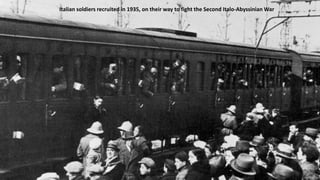
Italian soldiers recruited in 1935, on their way to fight the Second Italo-Abyssinian War
CASUALTIES
• Marked by mass deaths of civilians, WW2 included the
Holocaust, in which 11 million Jews were killed.
• It also included bombing industrial and population
centres (in which one million were killed), and the
atomic bombings of Hiroshima and Nagasaki.
• Second World War resulted in an estimated 50 million
to 85 million fatalities.
• These made World War II the deadliest conflict in
human history.
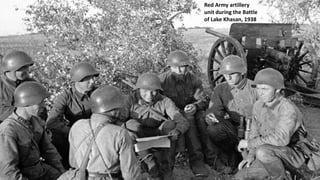
Red Army artillery
unit during the Battle
of Lake Khasan, 1938
THE BEGINNING
• Japan aimed to dominate Asia and the Pacific and was
at war with the Republic of China in 1937.
• The world war begun on 1 September 1939 with the
invasion of Poland by Germany and subsequent
declarations of war on Germany by France and the
United Kingdom.
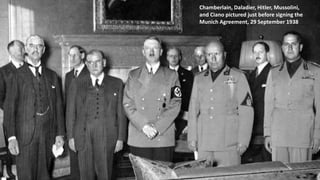
Chamberlain, Daladier, Hitler, Mussolini,
and Ciano pictured just before signing the
Munich Agreement, 29 September 1938
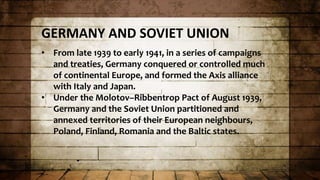
GERMANY AND SOVIET UNION
• From late 1939 to early 1941, in a series of campaigns
and treaties, Germany conquered or controlled much
of continental Europe, and formed the Axis alliance
with Italy and Japan.
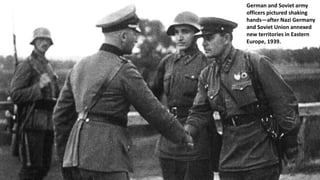
• Under the Molotov–Ribbentrop Pact of August 1939,
Germany and the Soviet Union partitioned and
annexed territories of their European neighbours,
Poland, Finland, Romania and the Baltic states.
German and Soviet army
officers pictured shaking
hands—after Nazi Germany
and Soviet Union annexed
new territories in Eastern
Europe, 1939.
IMPORTANT CAMPAIGNS
The war continued between the European Axis powers
and the coalition of the United Kingdom and the British
Commonwealth, with campaigns including:
• North Africa and East Africa
• Aerial Battle of Britain
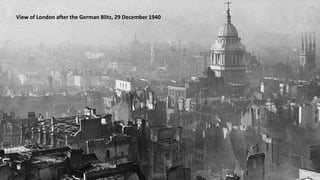
• Blitz bombing campaign
• Balkan Campaign
• Battle of the Atlantic
View of London after the German Blitz, 29 December 1940
USA TO WAR
In June 1941, the European Axis powers launched an
invasion of the Soviet Union, opening the largest land
theatre of war in history, which trapped the major part
of the Axis' military forces into a long war.
In December 1941, Japan attacked the United States and
European territories in the Pacific Ocean, and quickly
conquered much of the Western Pacific.
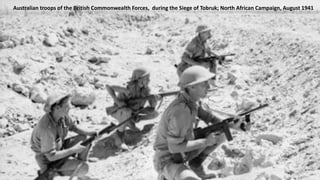
Australian troops of the British Commonwealth Forces, during the Siege of Tobruk; North African Campaign, August 1941
THE BATTLE FOR STALINGRAD
The Axis advance halted in 1942 when Japan lost the
critical Battle of Midway, near Hawaii, and Germany was
defeated in North Africa and then, decisively, at
Stalingrad in the Soviet Union.
The Battle for Stalingrad is one of the single largest (2.2
million personnel) and bloodiest (1.7–2 million wounded,
killed or captured) battles in the history of warfare.
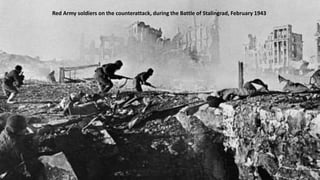
Red Army soldiers on the counterattack, during the Battle of Stalingrad, February 1943
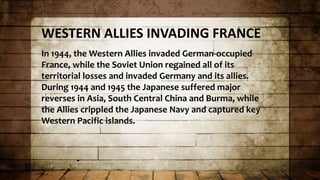
WESTERN ALLIES INVADING FRANCE
In 1944, the Western Allies invaded German-occupied
France, while the Soviet Union regained all of its
territorial losses and invaded Germany and its allies.
During 1944 and 1945 the Japanese suffered major
reverses in Asia, South Central China and Burma, while
the Allies crippled the Japanese Navy and captured key
Western Pacific islands.
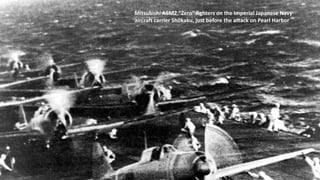
Mitsubishi A6M2 "Zero" fighters on the Imperial Japanese Navy
aircraft carrier Shōkaku, just before the attack on Pearl Harbor
GERMANY INVADED, ATOMIC BOMBS
The war in Europe concluded with an invasion of
Germany by the Western Allies and the Soviet Union,
culminating in the capture of Berlin by Soviet and Polish
troops and the German unconditional surrender on 8
May 1945.
Following the Potsdam Declaration by the Allies on 26
July 1945 and the refusal of Japan to surrender under its
terms, the United States dropped atomic bombs on the
Japanese cities of Hiroshima and Nagasaki on 6 August
and 9 August.
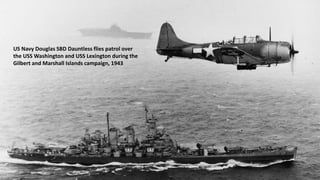
US Navy Douglas SBD Dauntless flies patrol over
the USS Washington and USS Lexington during the
Gilbert and Marshall Islands campaign, 1943
JAPAN SURRENDERED
With an invasion of the Japan imminent, the possibility of
additional atomic bombings, and the Soviet Union's
declaration of war on Japan and invasion of Manchuria,
Japan surrendered on 15 August 1945.
This ended the war in Asia, cementing the total victory of
the Allies.
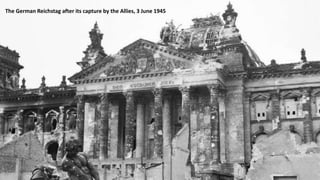
The German Reichstag after its capture by the Allies, 3 June 1945
END OF THE WAR
The exact date of the war's end is not universally agreed
upon. It was generally accepted at the time that the war
ended with the armistice of 14 August 1945, rather than the
formal surrender of Japan (2 September 1945).
A peace treaty with Japan was signed in 1951 to formally tie
up any loose ends such as compensation to be paid to
Allied prisoners of war. A treaty regarding Germany's
future allowed the reunification of East and West Germany
to take place in 1990.

HISTORY YEAR 9 - WORLD WAR 2

  • 1.
  • 2.
    SECOND WORLD WAR •Second World War was a global war that lasted from 1939 to 1945. • It involved the majority of the world's nations, including all of the great powers, forming two opposing military alliances: the Allies and the Axis. • It was the most widespread war in history, involving 100 million people (over 30 countries).
  • 3.
    Italian soldiers recruitedin 1935, on their way to fight the Second Italo-Abyssinian War
  • 4.
    CASUALTIES • Marked bymass deaths of civilians, WW2 included the Holocaust, in which 11 million Jews were killed. • It also included bombing industrial and population centres (in which one million were killed), and the atomic bombings of Hiroshima and Nagasaki. • Second World War resulted in an estimated 50 million to 85 million fatalities. • These made World War II the deadliest conflict in human history.
  • 5.
    Red Army artillery unitduring the Battle of Lake Khasan, 1938
  • 6.
    THE BEGINNING • Japanaimed to dominate Asia and the Pacific and was at war with the Republic of China in 1937. • The world war begun on 1 September 1939 with the invasion of Poland by Germany and subsequent declarations of war on Germany by France and the United Kingdom.
  • 7.
    Chamberlain, Daladier, Hitler,Mussolini, and Ciano pictured just before signing the Munich Agreement, 29 September 1938
  • 8.
    GERMANY AND SOVIETUNION • From late 1939 to early 1941, in a series of campaigns and treaties, Germany conquered or controlled much of continental Europe, and formed the Axis alliance with Italy and Japan. • Under the Molotov–Ribbentrop Pact of August 1939, Germany and the Soviet Union partitioned and annexed territories of their European neighbours, Poland, Finland, Romania and the Baltic states.
  • 9.
    German and Sovietarmy officers pictured shaking hands—after Nazi Germany and Soviet Union annexed new territories in Eastern Europe, 1939.
  • 10.
    IMPORTANT CAMPAIGNS The warcontinued between the European Axis powers and the coalition of the United Kingdom and the British Commonwealth, with campaigns including: • North Africa and East Africa • Aerial Battle of Britain • Blitz bombing campaign • Balkan Campaign • Battle of the Atlantic
  • 11.
    View of Londonafter the German Blitz, 29 December 1940
  • 12.
    USA TO WAR InJune 1941, the European Axis powers launched an invasion of the Soviet Union, opening the largest land theatre of war in history, which trapped the major part of the Axis' military forces into a long war. In December 1941, Japan attacked the United States and European territories in the Pacific Ocean, and quickly conquered much of the Western Pacific.
  • 13.
    Australian troops ofthe British Commonwealth Forces, during the Siege of Tobruk; North African Campaign, August 1941
  • 14.
    THE BATTLE FORSTALINGRAD The Axis advance halted in 1942 when Japan lost the critical Battle of Midway, near Hawaii, and Germany was defeated in North Africa and then, decisively, at Stalingrad in the Soviet Union. The Battle for Stalingrad is one of the single largest (2.2 million personnel) and bloodiest (1.7–2 million wounded, killed or captured) battles in the history of warfare.
  • 15.
    Red Army soldierson the counterattack, during the Battle of Stalingrad, February 1943
  • 16.
    WESTERN ALLIES INVADINGFRANCE In 1944, the Western Allies invaded German-occupied France, while the Soviet Union regained all of its territorial losses and invaded Germany and its allies. During 1944 and 1945 the Japanese suffered major reverses in Asia, South Central China and Burma, while the Allies crippled the Japanese Navy and captured key Western Pacific islands.
  • 17.
    Mitsubishi A6M2 "Zero"fighters on the Imperial Japanese Navy aircraft carrier Shōkaku, just before the attack on Pearl Harbor
  • 18.
    GERMANY INVADED, ATOMICBOMBS The war in Europe concluded with an invasion of Germany by the Western Allies and the Soviet Union, culminating in the capture of Berlin by Soviet and Polish troops and the German unconditional surrender on 8 May 1945. Following the Potsdam Declaration by the Allies on 26 July 1945 and the refusal of Japan to surrender under its terms, the United States dropped atomic bombs on the Japanese cities of Hiroshima and Nagasaki on 6 August and 9 August.
  • 19.
    US Navy DouglasSBD Dauntless flies patrol over the USS Washington and USS Lexington during the Gilbert and Marshall Islands campaign, 1943
  • 20.
    JAPAN SURRENDERED With aninvasion of the Japan imminent, the possibility of additional atomic bombings, and the Soviet Union's declaration of war on Japan and invasion of Manchuria, Japan surrendered on 15 August 1945. This ended the war in Asia, cementing the total victory of the Allies.
  • 21.
    The German Reichstagafter its capture by the Allies, 3 June 1945
  • 22.
    END OF THEWAR The exact date of the war's end is not universally agreed upon. It was generally accepted at the time that the war ended with the armistice of 14 August 1945, rather than the formal surrender of Japan (2 September 1945). A peace treaty with Japan was signed in 1951 to formally tie up any loose ends such as compensation to be paid to Allied prisoners of war. A treaty regarding Germany's future allowed the reunification of East and West Germany to take place in 1990.