Major Causes of WWII Treaty of Versailles Rise of Italian fascism Rise of Hitler and the Nazi Party  Great Depression Japanese expansionism  Anti-communism Appeasement Militarism Nationalism U.S. isolationism Maps
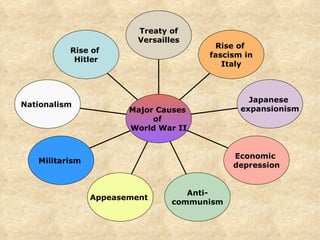
Rise of  Hitler Nationalism  Militarism  Appeasement  Anti- communism Economic  depression Japanese  expansionism Rise of  fascism in Italy Treaty of Versailles Major Causes  of  World War II
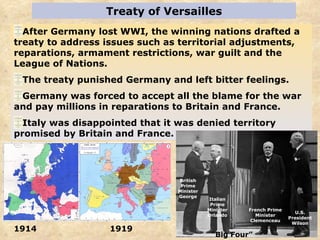
Treaty of Versailles After Germany lost WWI, the winning nations drafted a treaty to address issues such as territorial adjustments, reparations, armament restrictions, war guilt and the League of Nations. The treaty punished Germany and left bitter feelings.  Germany was forced to accept all the blame for the war and pay millions in reparations to Britain and France. Italy was disappointed that it was denied territory promised by Britain and France.  U.S. President Wilson French Prime Minister Clemenceau Italian Prime Minister Orlando British Prime Minister George 1914  1919 “ Big Four”
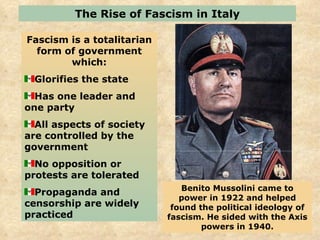
The Rise of Fascism in Italy Fascism is a totalitarian form of government which: Glorifies the state  Has one leader and one party All aspects of society are controlled by the government No opposition or protests are tolerated Propaganda and censorship are widely practiced  Benito Mussolini came to power in 1922 and helped found the political ideology of fascism. He sided with the Axis powers in 1940.
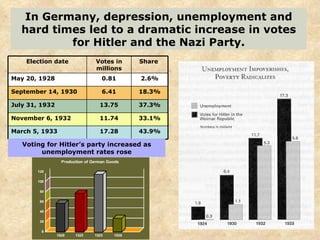
In Germany, depression, unemployment and hard times led to a dramatic increase in votes for Hitler and the Nazi Party. Voting for Hitler’s party increased as unemployment rates rose 43.9% 17.28 March 5, 1933 33.1% 11.74 November 6, 1932 37.3% 13.75 July 31, 1932 18.3% 6.41 September 14, 1930 2.6% 0.81 May 20, 1928 Share  Votes in millions Election date
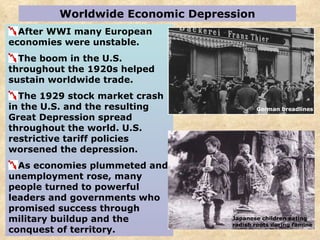
Worldwide Economic Depression After WWI many European economies were unstable. The boom in the U.S. throughout the 1920s helped sustain worldwide trade. The 1929 stock market crash in the U.S. and the resulting Great Depression spread throughout the world. U.S. restrictive tariff policies worsened the depression.  As economies plummeted and unemployment rose, many people turned to powerful leaders and governments who promised success through military buildup and the conquest of territory. German breadlines Japanese children eating radish roots during famine
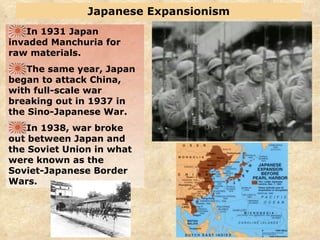
Japanese Expansionism In 1931 Japan invaded Manchuria for raw materials. The same year, Japan began to attack China, with full-scale war breaking out in 1937 in the Sino-Japanese War. In 1938, war broke out between Japan and the Soviet Union in what were known as the Soviet-Japanese Border Wars.
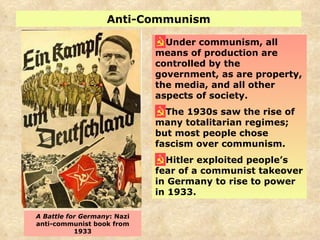
Anti-Communism Under communism, all means of production are controlled by the government, as are property, the media, and all other aspects of society. The 1930s saw the rise of many totalitarian regimes; but most people chose fascism over communism. Hitler exploited people’s fear of a communist takeover in Germany to rise to power in 1933. A Battle for Germany : Nazi anti-communist book from 1933
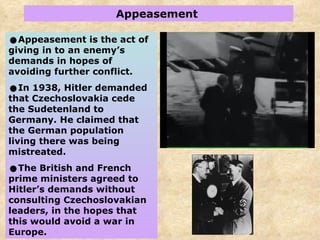
Appeasement  Appeasement is the act of giving in to an enemy’s demands in hopes of avoiding further conflict. In 1938, Hitler demanded that Czechoslovakia cede the Sudetenland to Germany.   He claimed that the German population living there was being mistreated. The British and French prime ministers agreed to Hitler’s demands without consulting Czechoslovakian leaders, in the hopes that this would avoid a war in Europe.
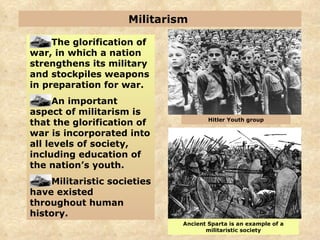
Militarism  The glorification of war, in which a nation strengthens its military and stockpiles weapons in preparation for war. An important aspect of militarism is that the glorification of war is incorporated into all levels of society, including education of the nation’s youth. Militaristic societies have existed throughout human history. Ancient Sparta is an example of a militaristic society Hitler Youth group
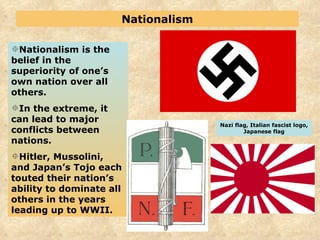
Nationalism Nationalism is the belief in the superiority of one’s own nation over all others. In the extreme, it can lead to major conflicts between nations. Hitler, Mussolini, and Japan’s Tojo each touted their nation’s ability to dominate all others in the years leading up to WWII. Nazi flag, Italian fascist logo, Japanese flag
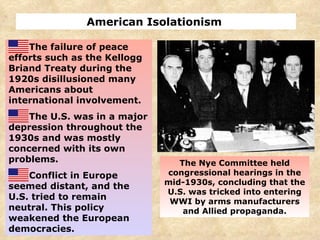
American Isolationism  The failure of peace efforts such as the Kellogg Briand Treaty during the 1920s disillusioned many Americans about international involvement. The U.S. was in a major depression throughout the 1930s and was mostly concerned with its own problems. Conflict in Europe seemed distant, and the U.S. tried to remain neutral. This policy weakened the European democracies. The Nye Committee held congressional hearings in the mid-1930s, concluding that the U.S. was tricked into entering WWI by arms manufacturers and Allied propaganda.
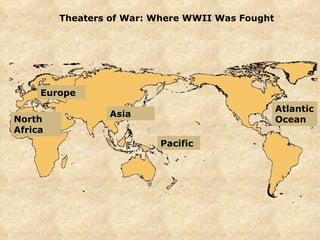
Theaters of War: Where WWII Was Fought Pacific Asia North Africa Europe Atlantic Ocean
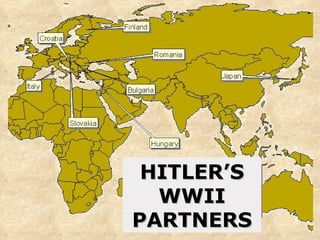
HITLER’S WWII PARTNERS
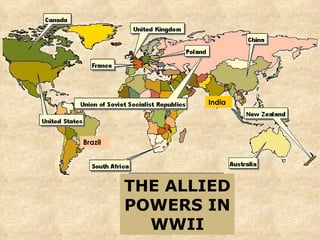
Brazil India THE   ALLIED POWERS IN WWII

Causes WWII

  • 1.
    Major Causes ofWWII Treaty of Versailles Rise of Italian fascism Rise of Hitler and the Nazi Party Great Depression Japanese expansionism Anti-communism Appeasement Militarism Nationalism U.S. isolationism Maps
  • 2.
    Rise of Hitler Nationalism Militarism Appeasement Anti- communism Economic depression Japanese expansionism Rise of fascism in Italy Treaty of Versailles Major Causes of World War II
  • 3.
    Treaty of VersaillesAfter Germany lost WWI, the winning nations drafted a treaty to address issues such as territorial adjustments, reparations, armament restrictions, war guilt and the League of Nations. The treaty punished Germany and left bitter feelings. Germany was forced to accept all the blame for the war and pay millions in reparations to Britain and France. Italy was disappointed that it was denied territory promised by Britain and France. U.S. President Wilson French Prime Minister Clemenceau Italian Prime Minister Orlando British Prime Minister George 1914 1919 “ Big Four”
  • 4.
    The Rise ofFascism in Italy Fascism is a totalitarian form of government which: Glorifies the state Has one leader and one party All aspects of society are controlled by the government No opposition or protests are tolerated Propaganda and censorship are widely practiced Benito Mussolini came to power in 1922 and helped found the political ideology of fascism. He sided with the Axis powers in 1940.
  • 5.
    In Germany, depression,unemployment and hard times led to a dramatic increase in votes for Hitler and the Nazi Party. Voting for Hitler’s party increased as unemployment rates rose 43.9% 17.28 March 5, 1933 33.1% 11.74 November 6, 1932 37.3% 13.75 July 31, 1932 18.3% 6.41 September 14, 1930 2.6% 0.81 May 20, 1928 Share Votes in millions Election date
  • 6.
    Worldwide Economic DepressionAfter WWI many European economies were unstable. The boom in the U.S. throughout the 1920s helped sustain worldwide trade. The 1929 stock market crash in the U.S. and the resulting Great Depression spread throughout the world. U.S. restrictive tariff policies worsened the depression. As economies plummeted and unemployment rose, many people turned to powerful leaders and governments who promised success through military buildup and the conquest of territory. German breadlines Japanese children eating radish roots during famine
  • 7.
    Japanese Expansionism In1931 Japan invaded Manchuria for raw materials. The same year, Japan began to attack China, with full-scale war breaking out in 1937 in the Sino-Japanese War. In 1938, war broke out between Japan and the Soviet Union in what were known as the Soviet-Japanese Border Wars.
  • 8.
    Anti-Communism Under communism,all means of production are controlled by the government, as are property, the media, and all other aspects of society. The 1930s saw the rise of many totalitarian regimes; but most people chose fascism over communism. Hitler exploited people’s fear of a communist takeover in Germany to rise to power in 1933. A Battle for Germany : Nazi anti-communist book from 1933
  • 9.
    Appeasement Appeasementis the act of giving in to an enemy’s demands in hopes of avoiding further conflict. In 1938, Hitler demanded that Czechoslovakia cede the Sudetenland to Germany. He claimed that the German population living there was being mistreated. The British and French prime ministers agreed to Hitler’s demands without consulting Czechoslovakian leaders, in the hopes that this would avoid a war in Europe.
  • 10.
    Militarism Theglorification of war, in which a nation strengthens its military and stockpiles weapons in preparation for war. An important aspect of militarism is that the glorification of war is incorporated into all levels of society, including education of the nation’s youth. Militaristic societies have existed throughout human history. Ancient Sparta is an example of a militaristic society Hitler Youth group
  • 11.
    Nationalism Nationalism isthe belief in the superiority of one’s own nation over all others. In the extreme, it can lead to major conflicts between nations. Hitler, Mussolini, and Japan’s Tojo each touted their nation’s ability to dominate all others in the years leading up to WWII. Nazi flag, Italian fascist logo, Japanese flag
  • 12.
    American Isolationism The failure of peace efforts such as the Kellogg Briand Treaty during the 1920s disillusioned many Americans about international involvement. The U.S. was in a major depression throughout the 1930s and was mostly concerned with its own problems. Conflict in Europe seemed distant, and the U.S. tried to remain neutral. This policy weakened the European democracies. The Nye Committee held congressional hearings in the mid-1930s, concluding that the U.S. was tricked into entering WWI by arms manufacturers and Allied propaganda.
  • 13.
    Theaters of War:Where WWII Was Fought Pacific Asia North Africa Europe Atlantic Ocean
  • 14.
  • 15.
    Brazil India THE ALLIED POWERS IN WWII