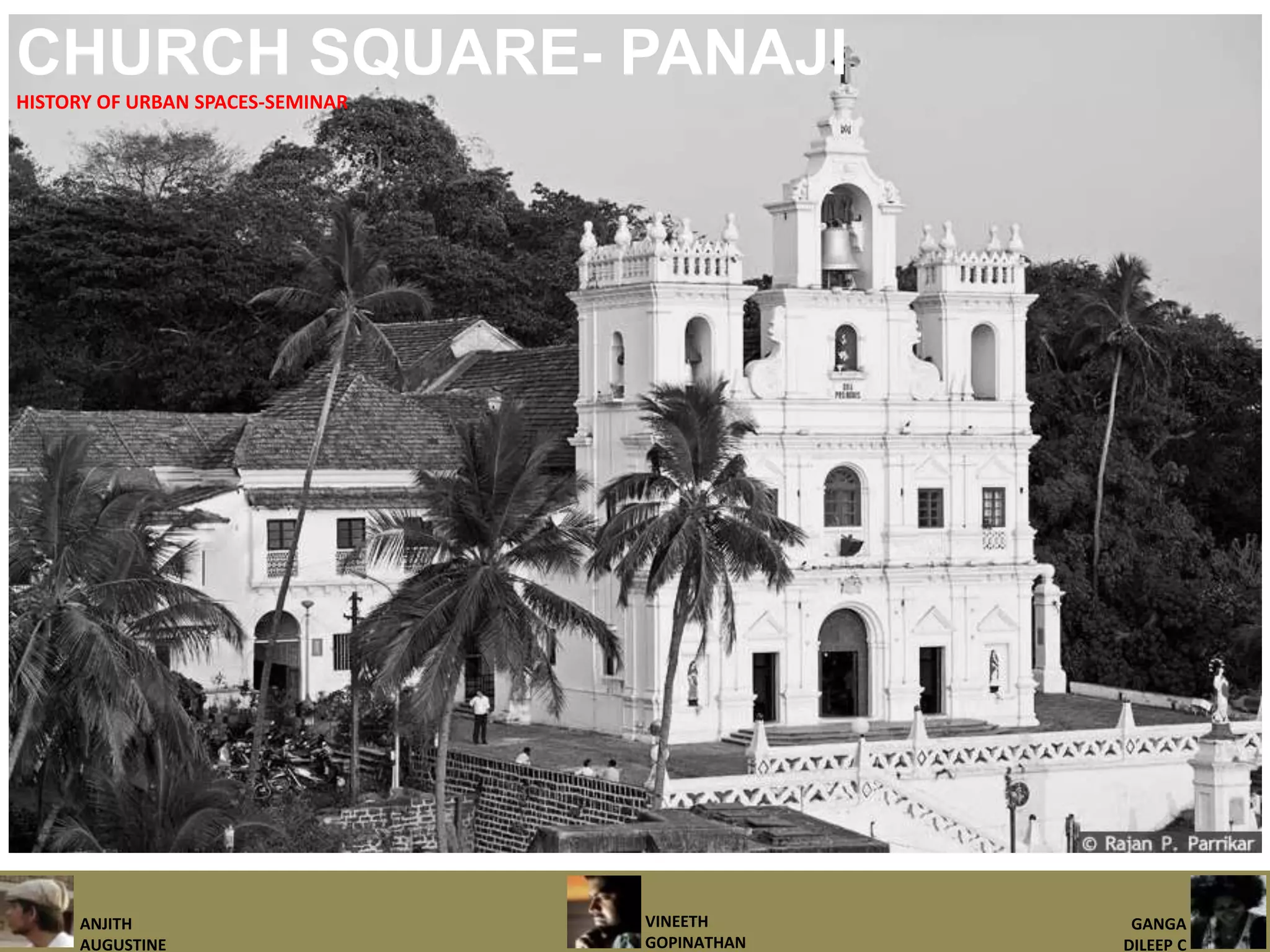

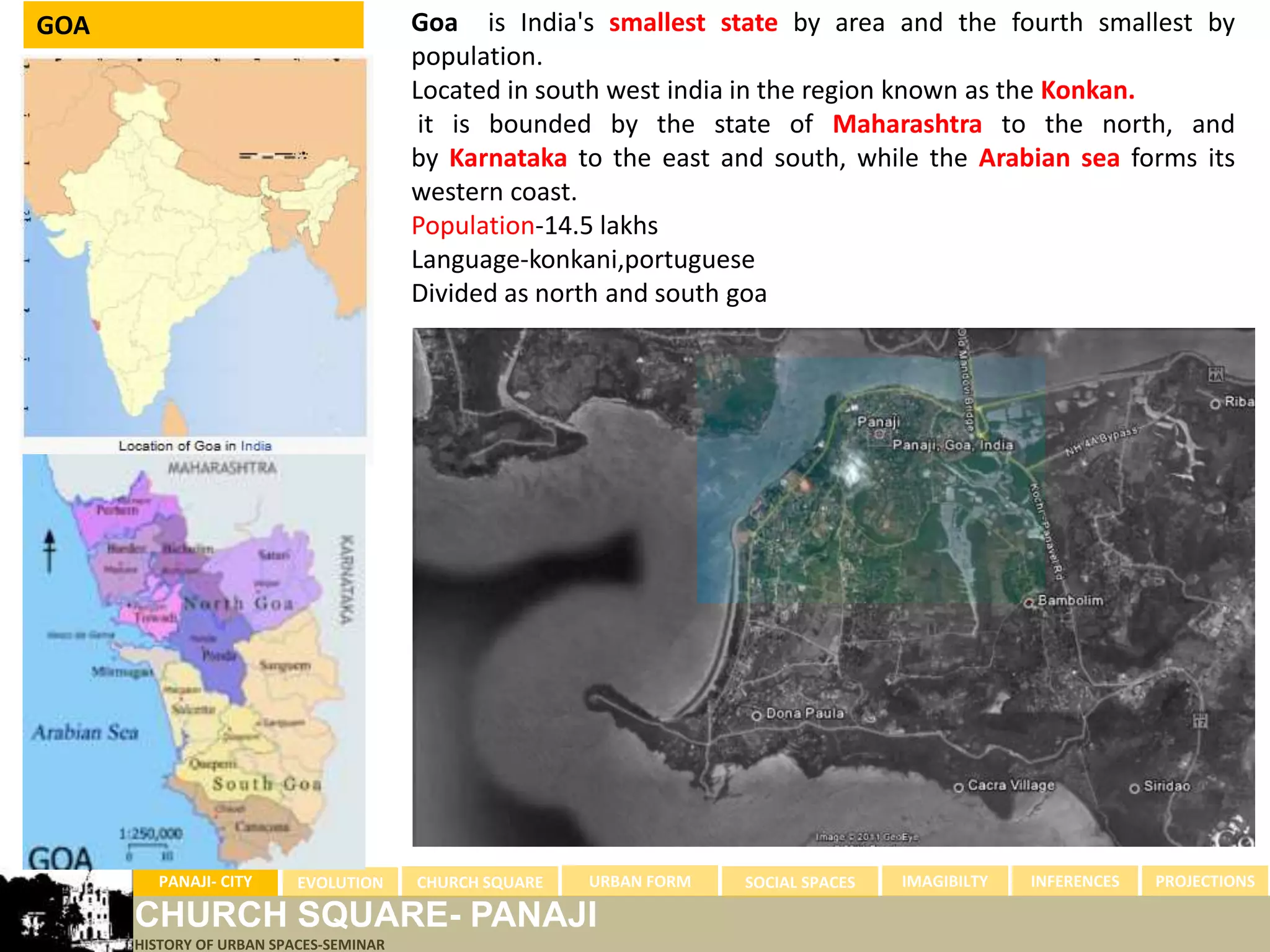
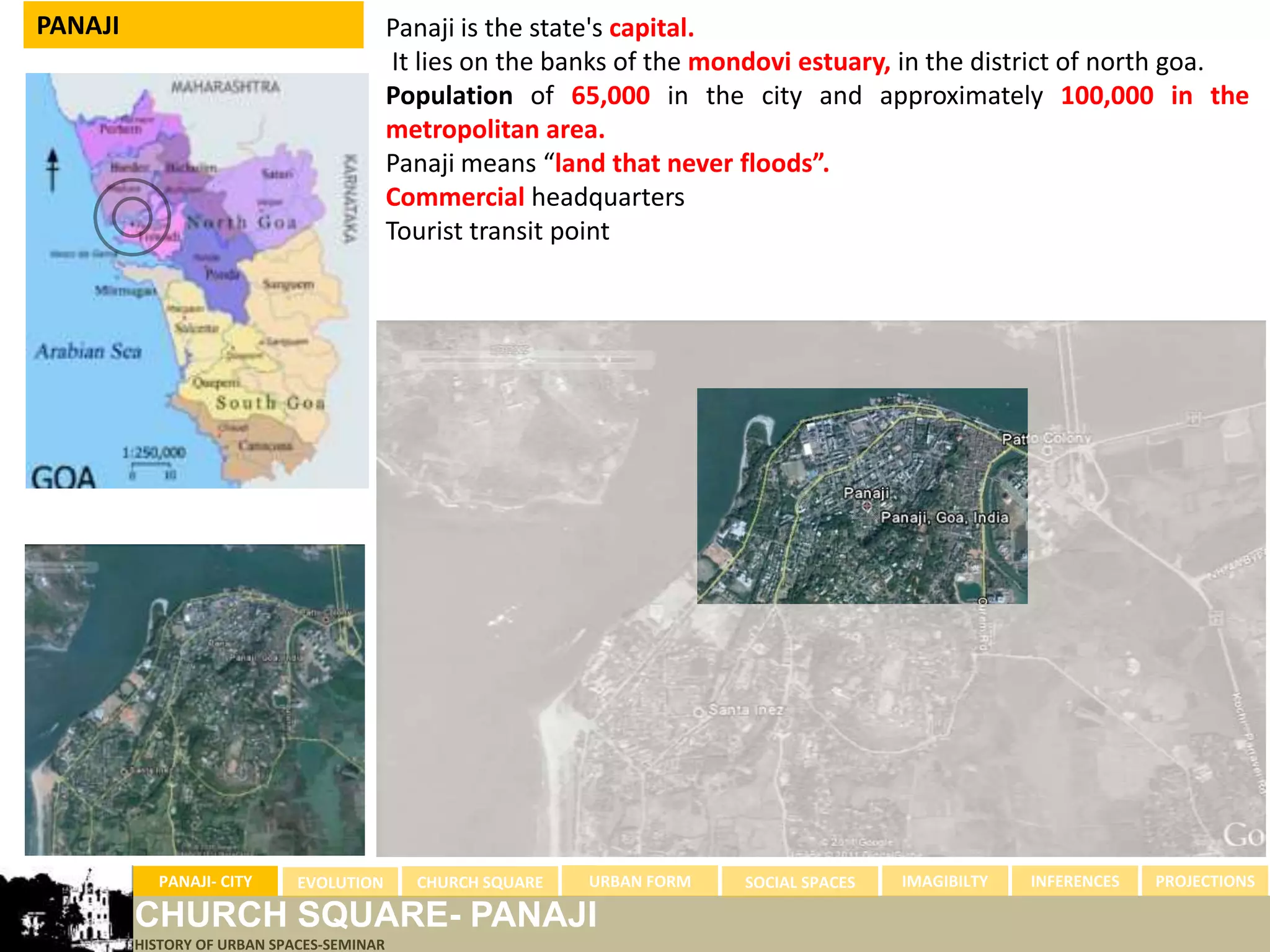
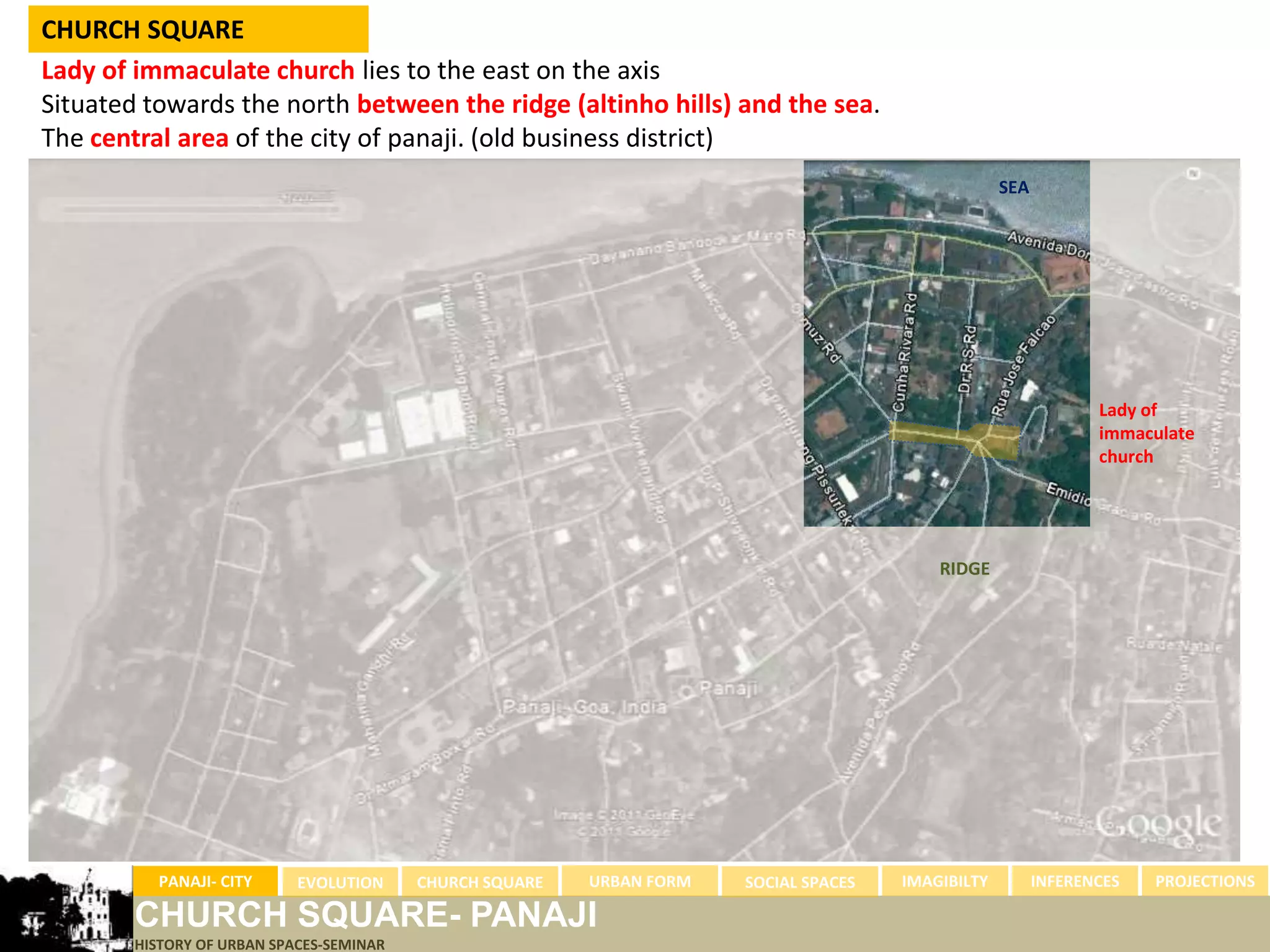

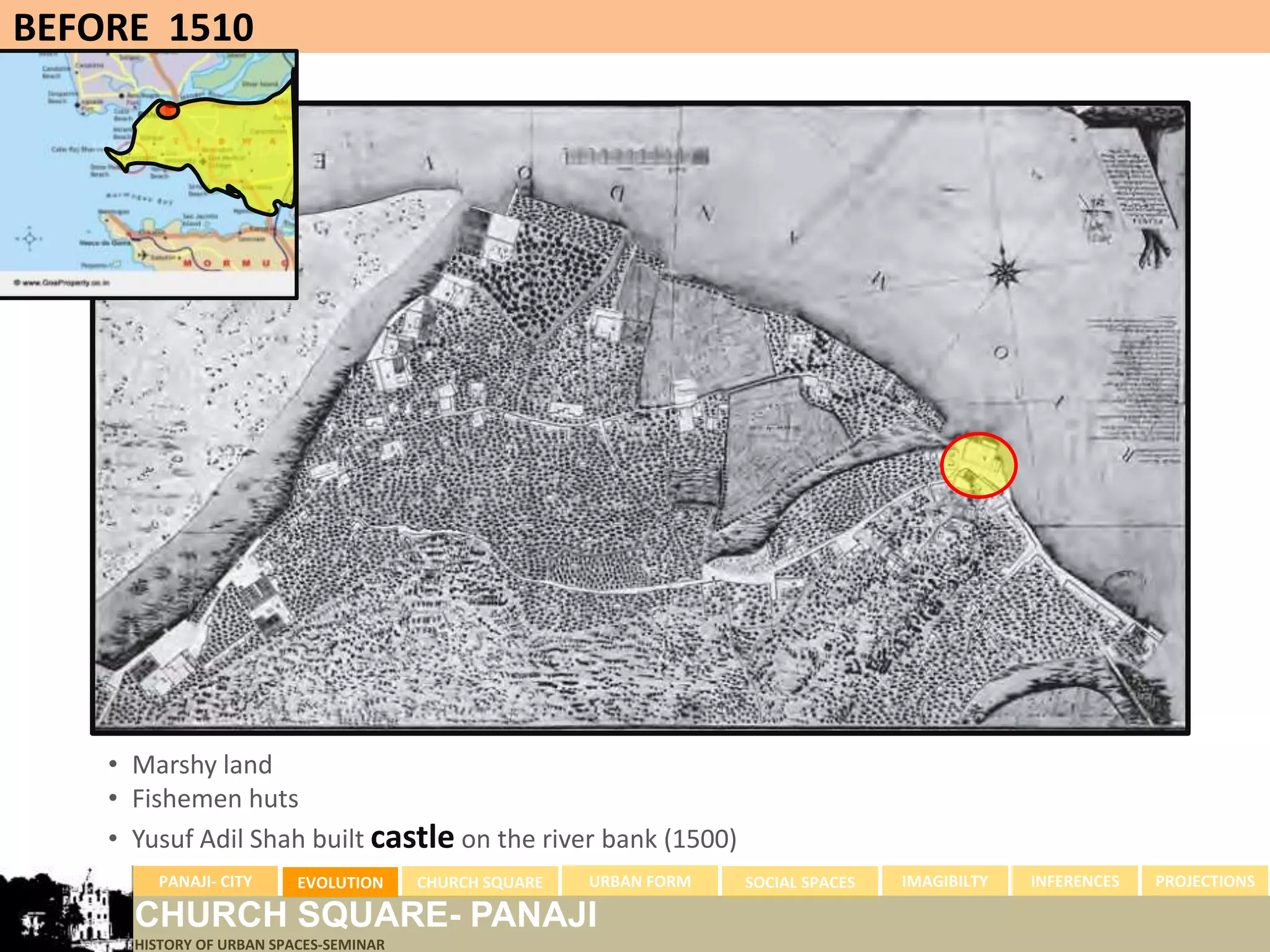
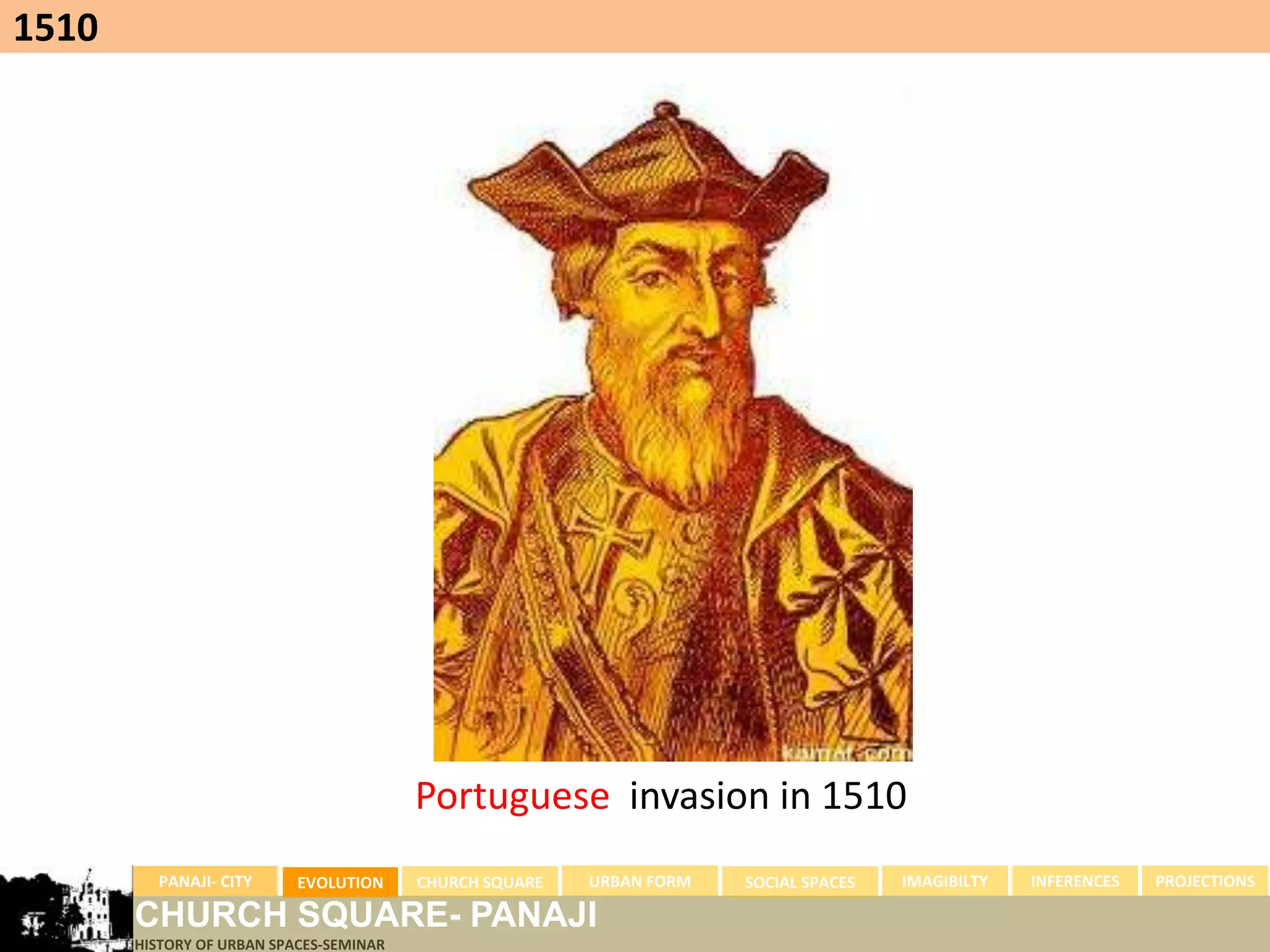
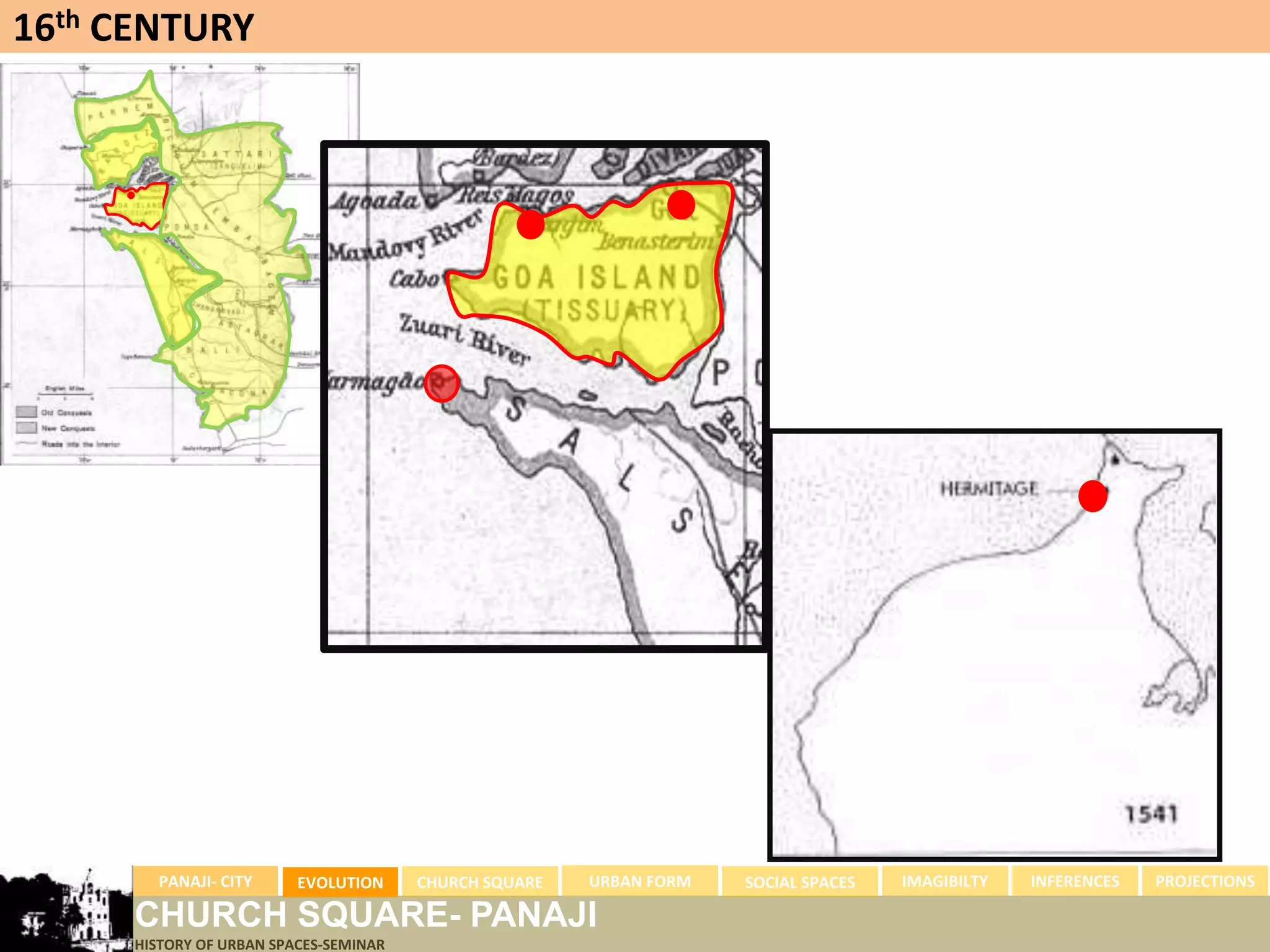
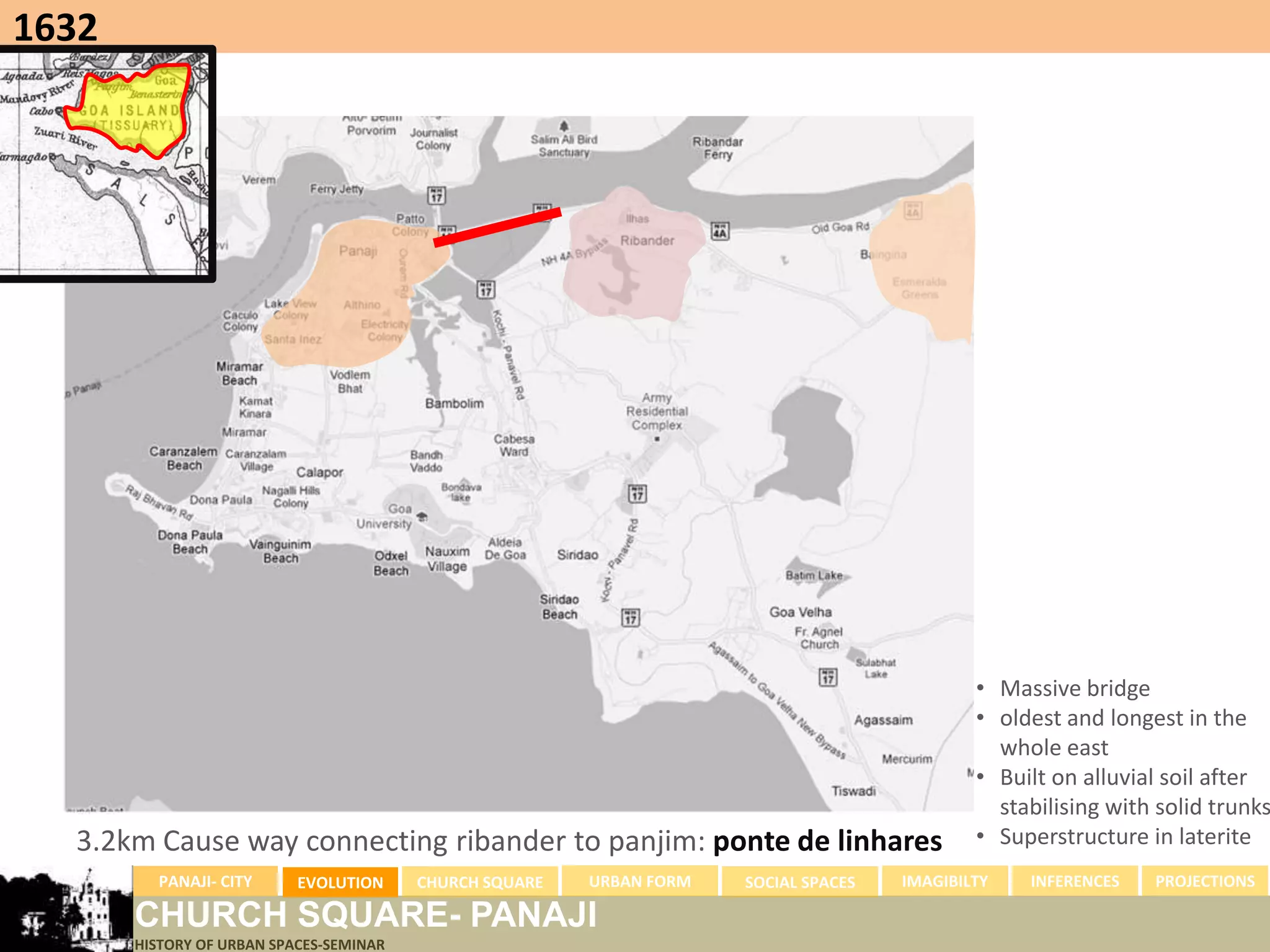
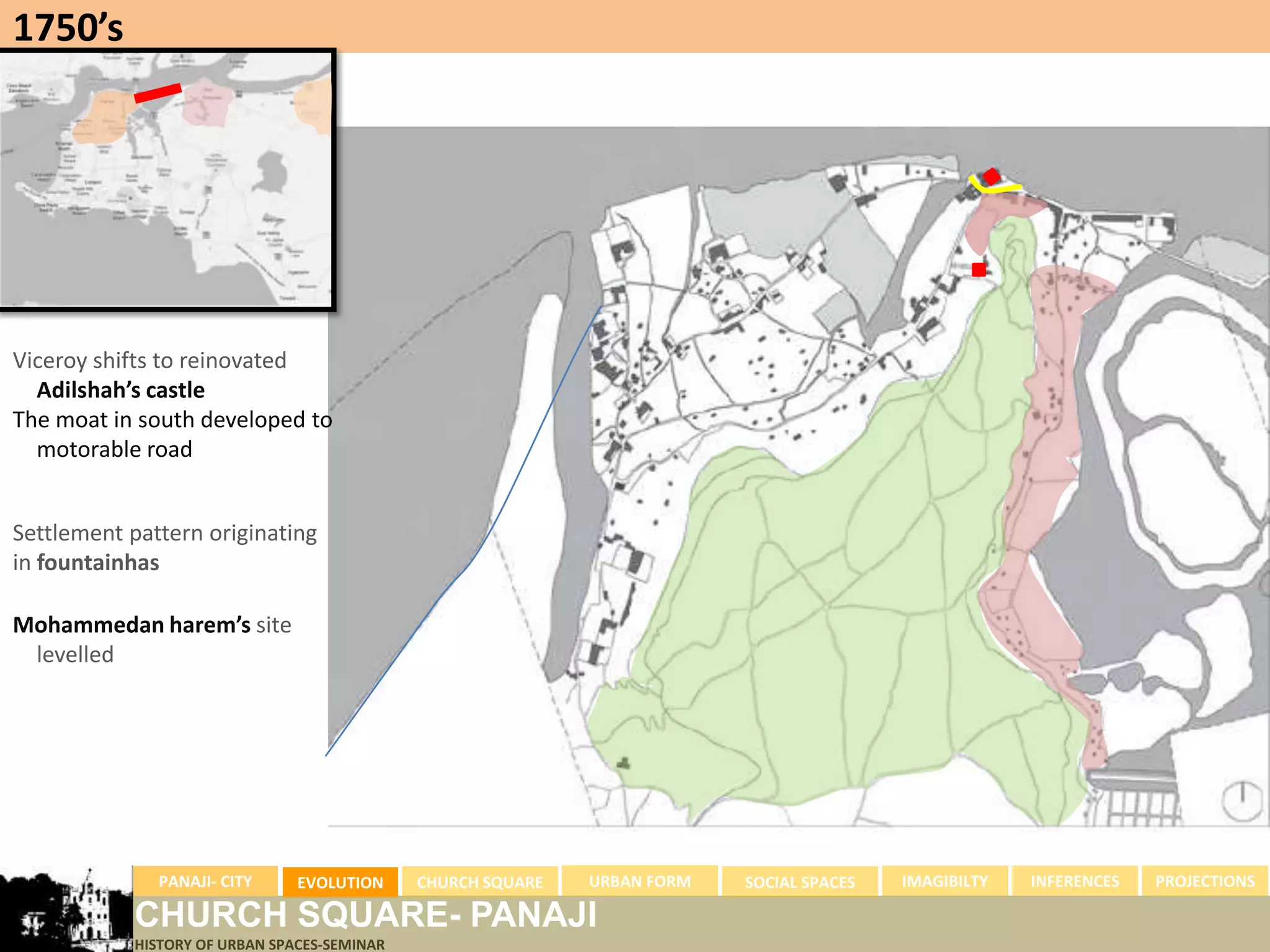
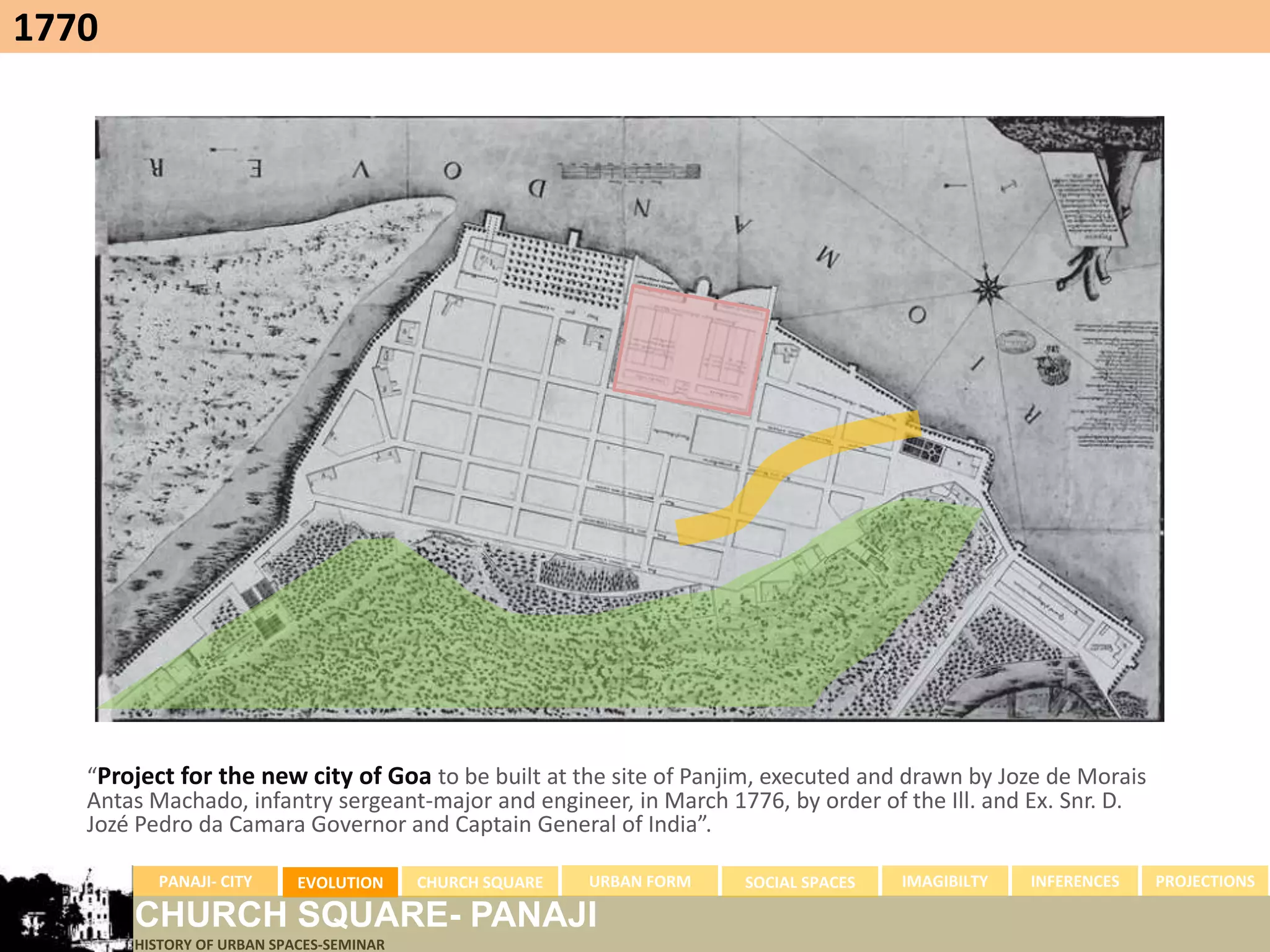
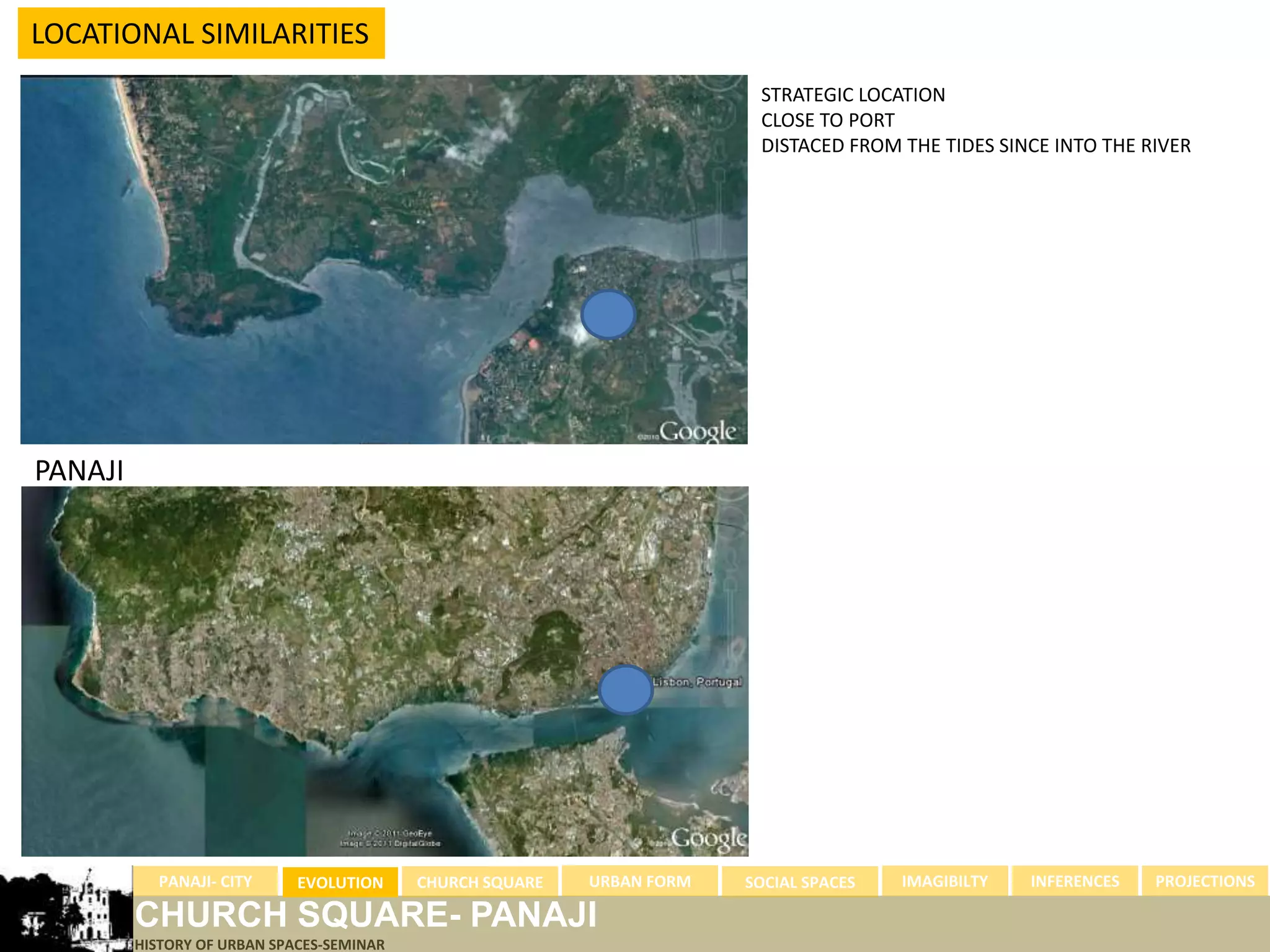
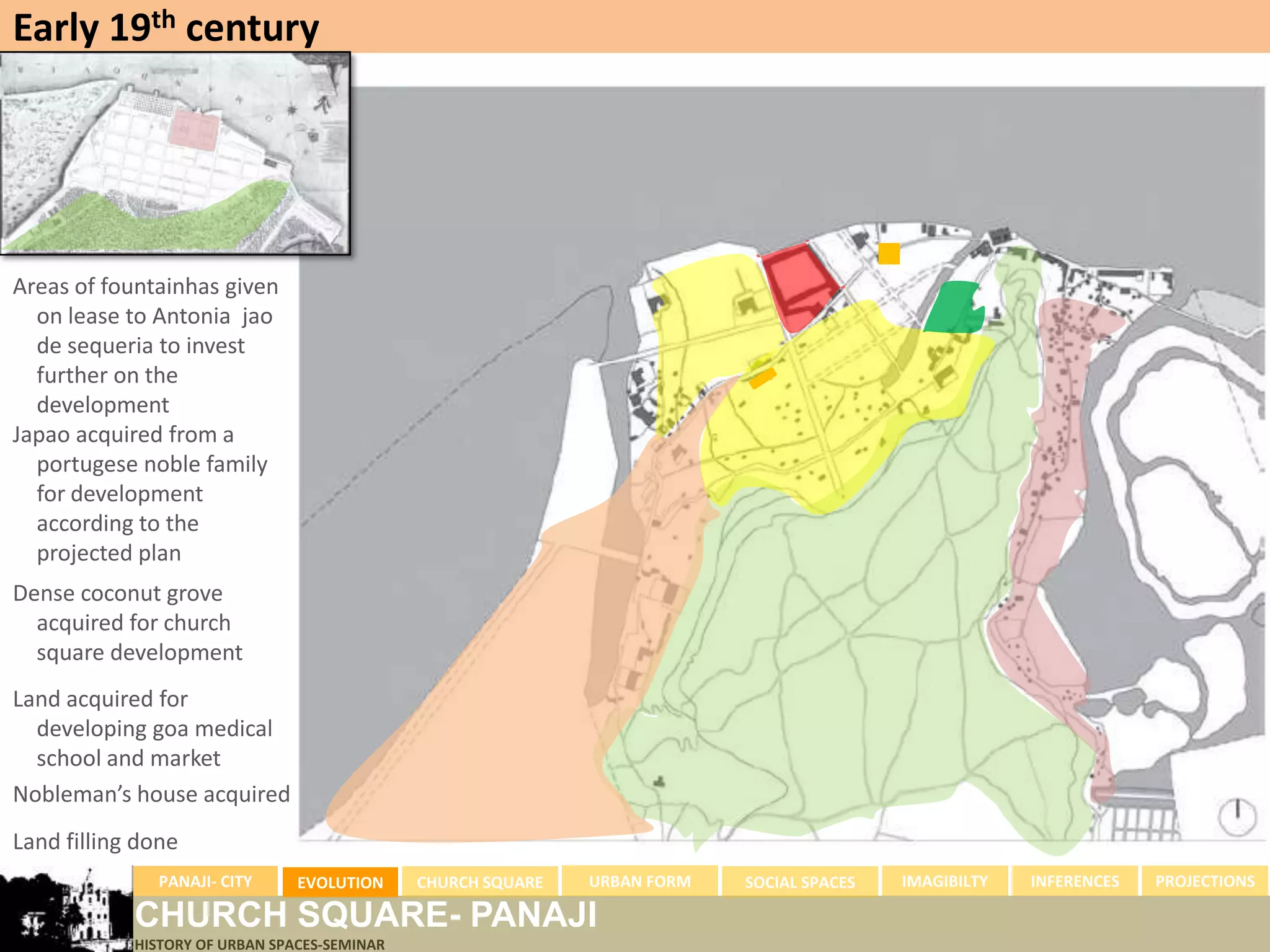
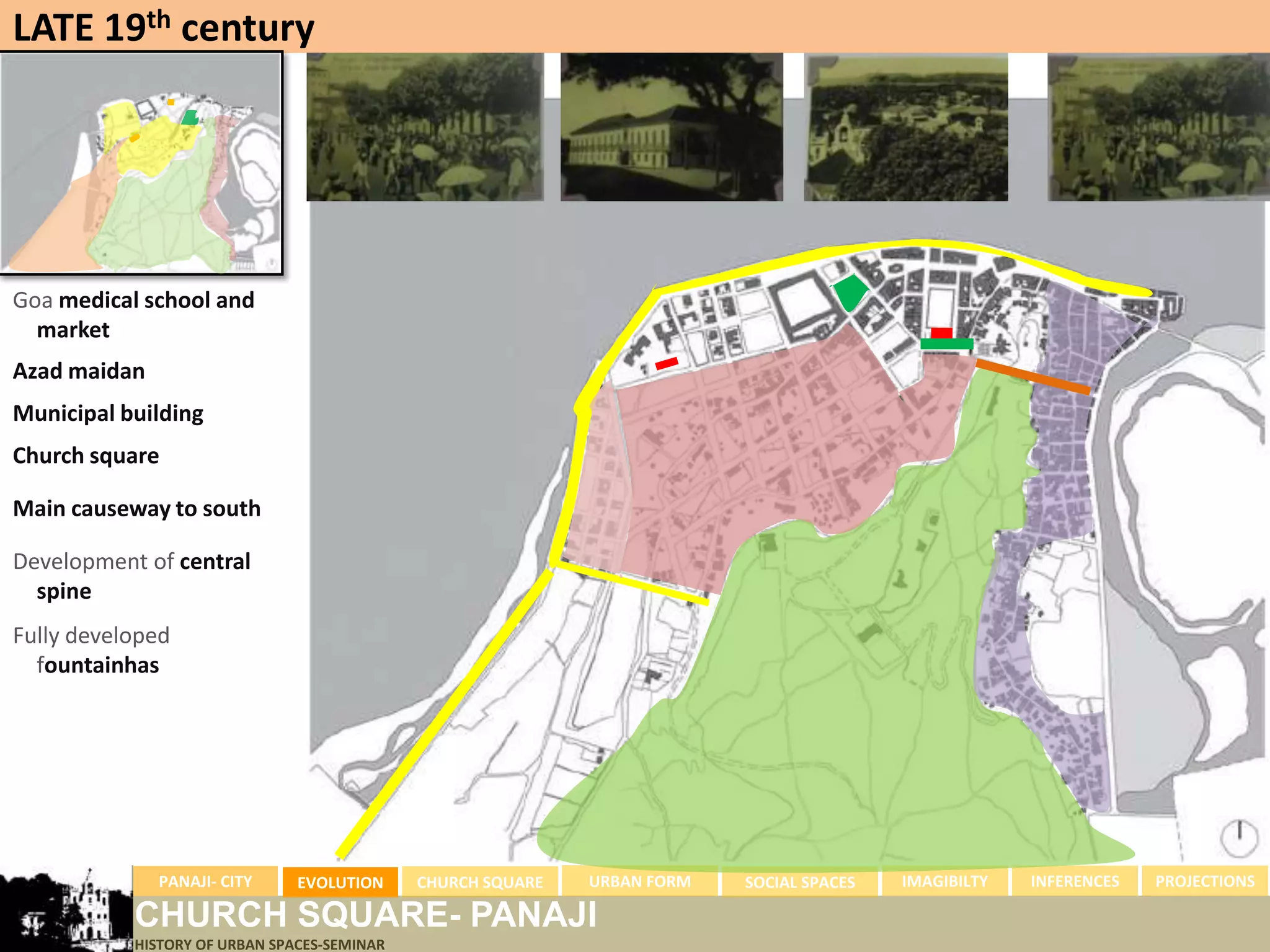
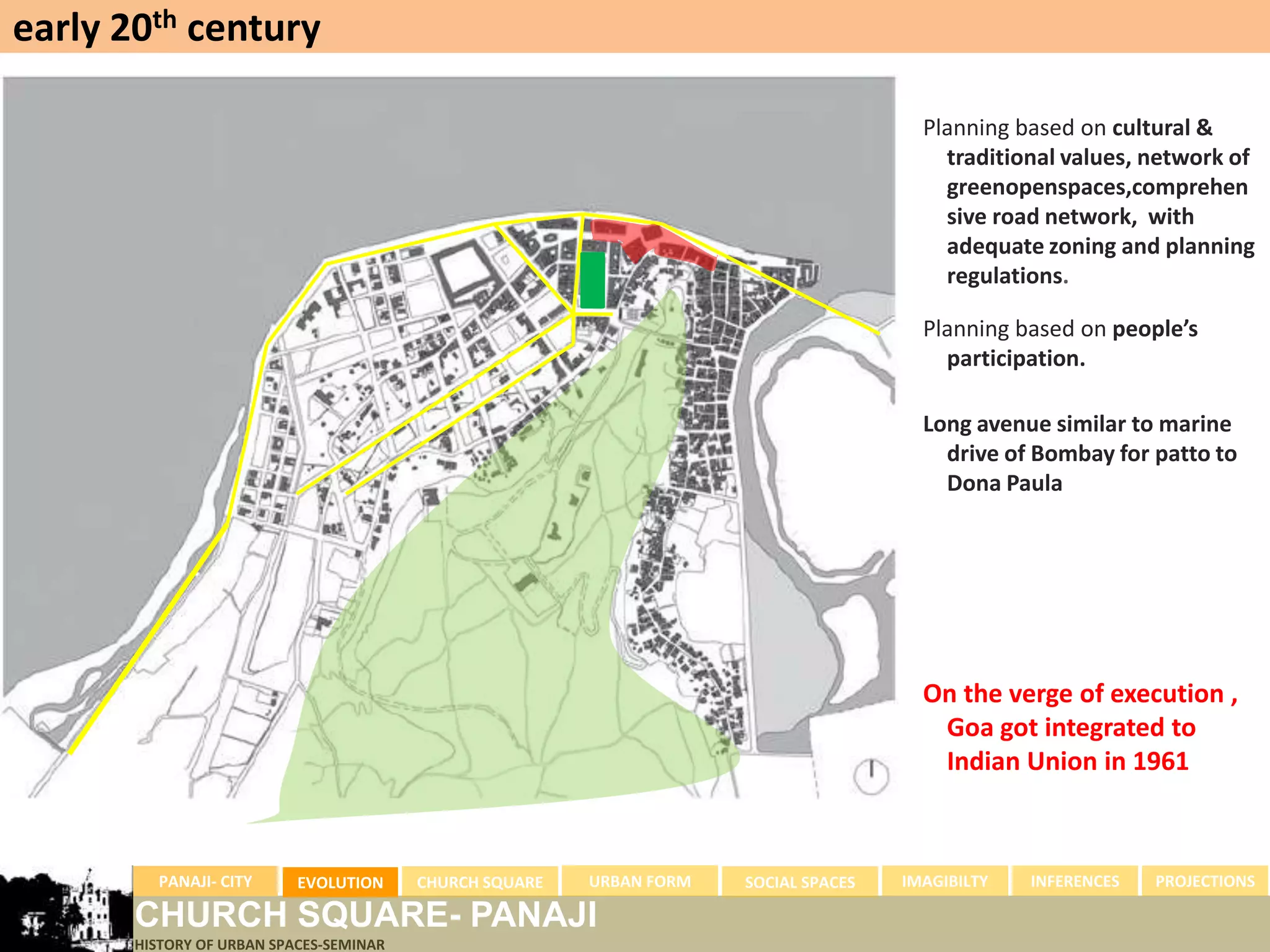
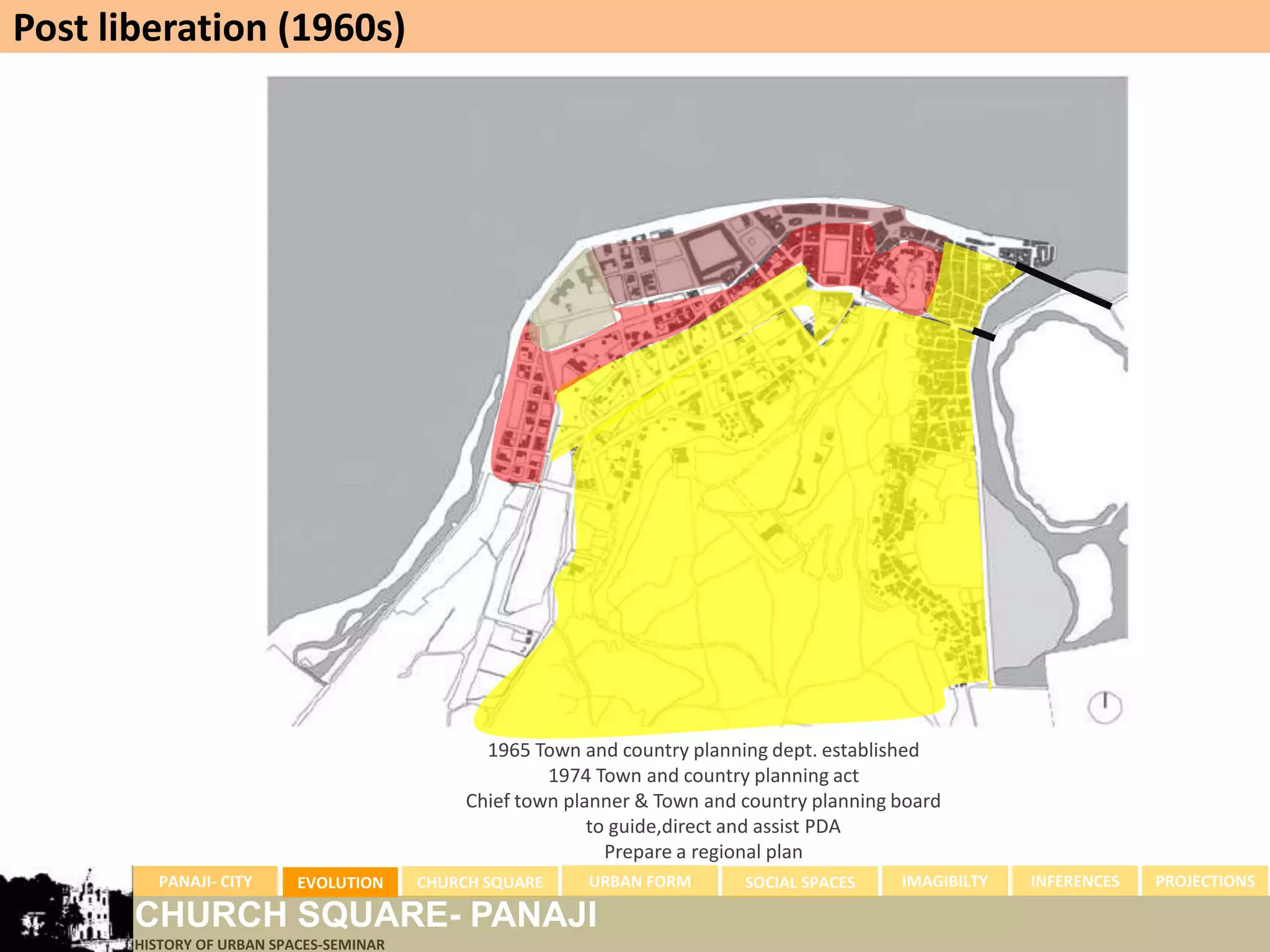
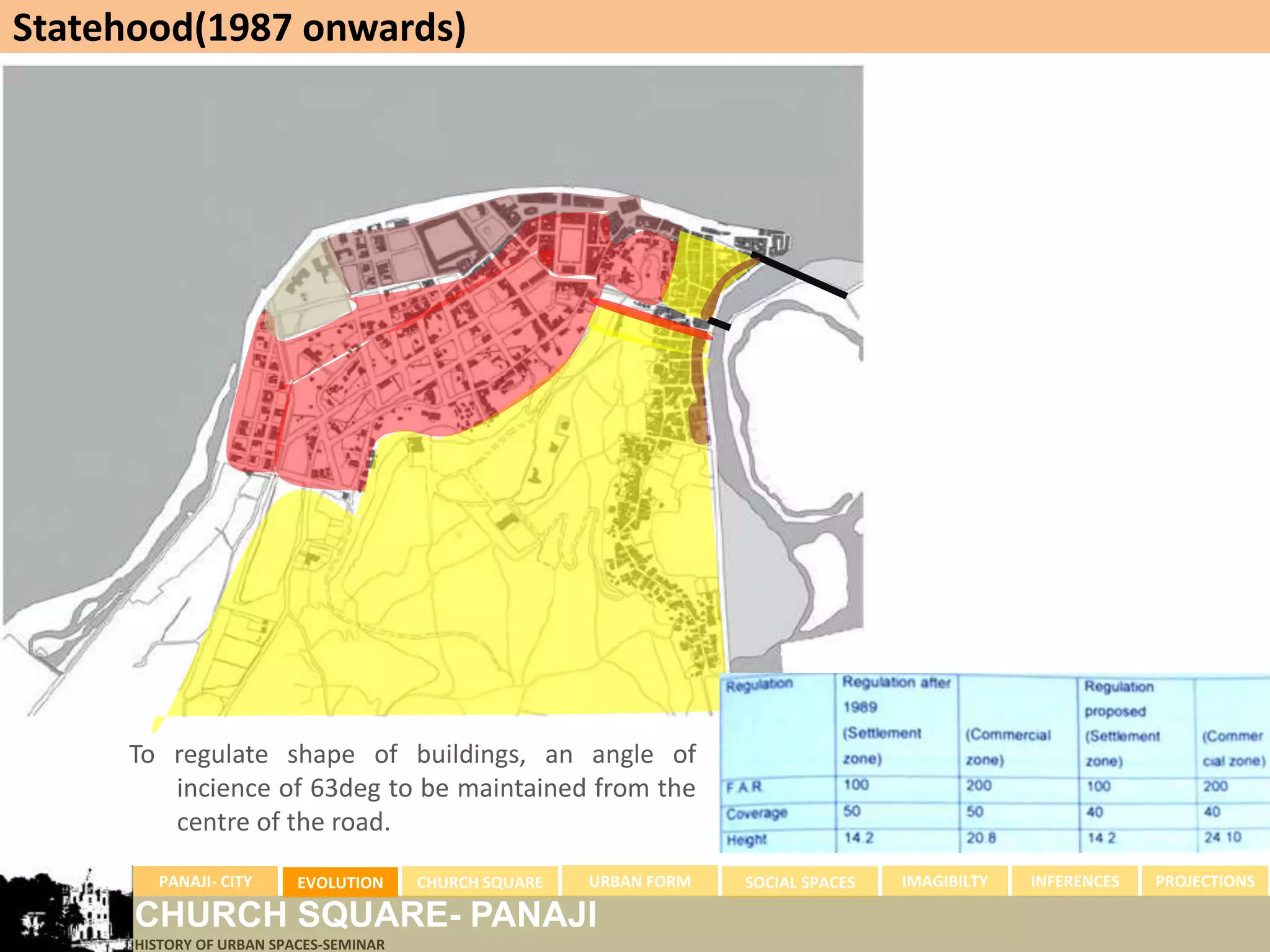
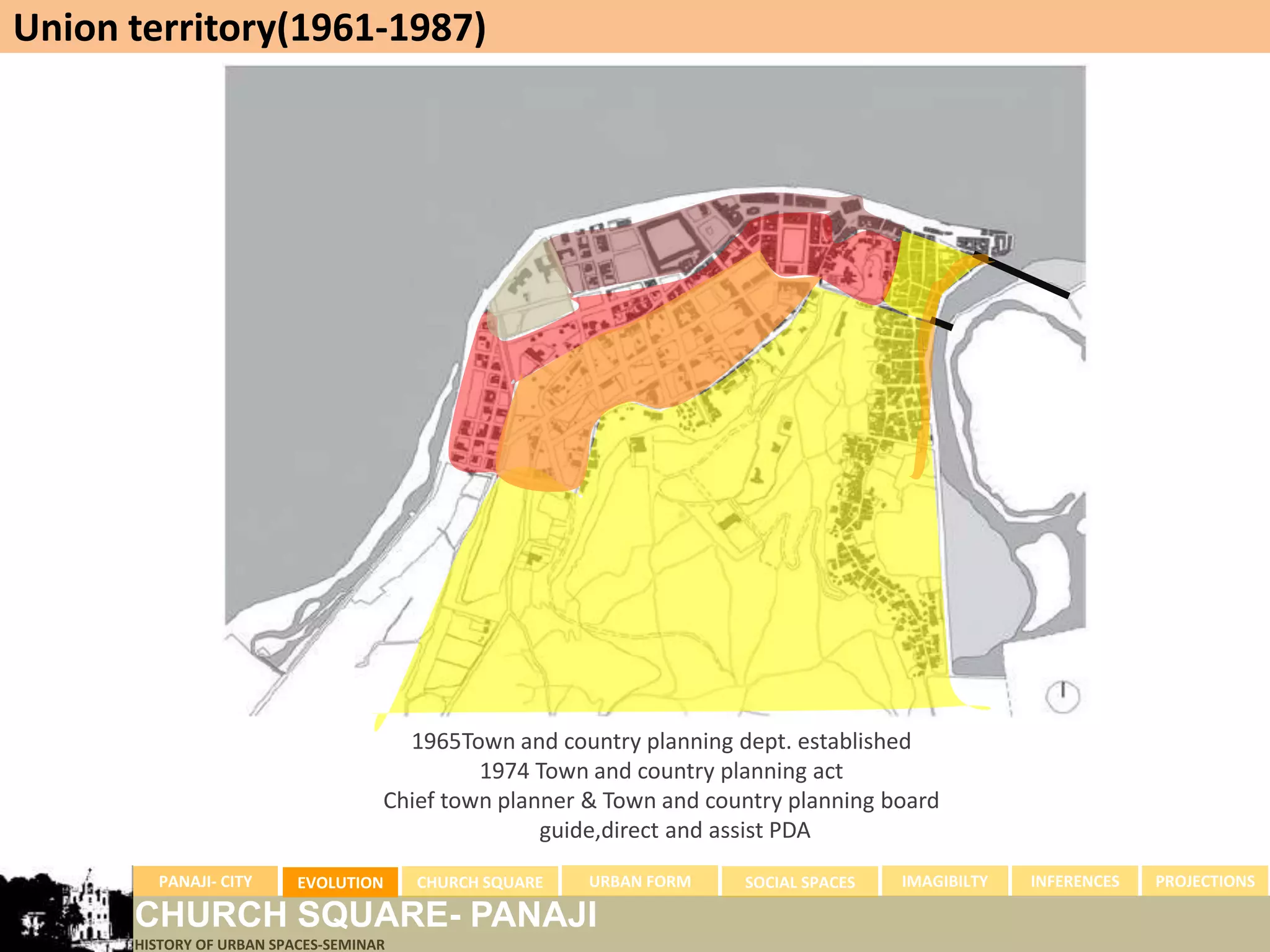
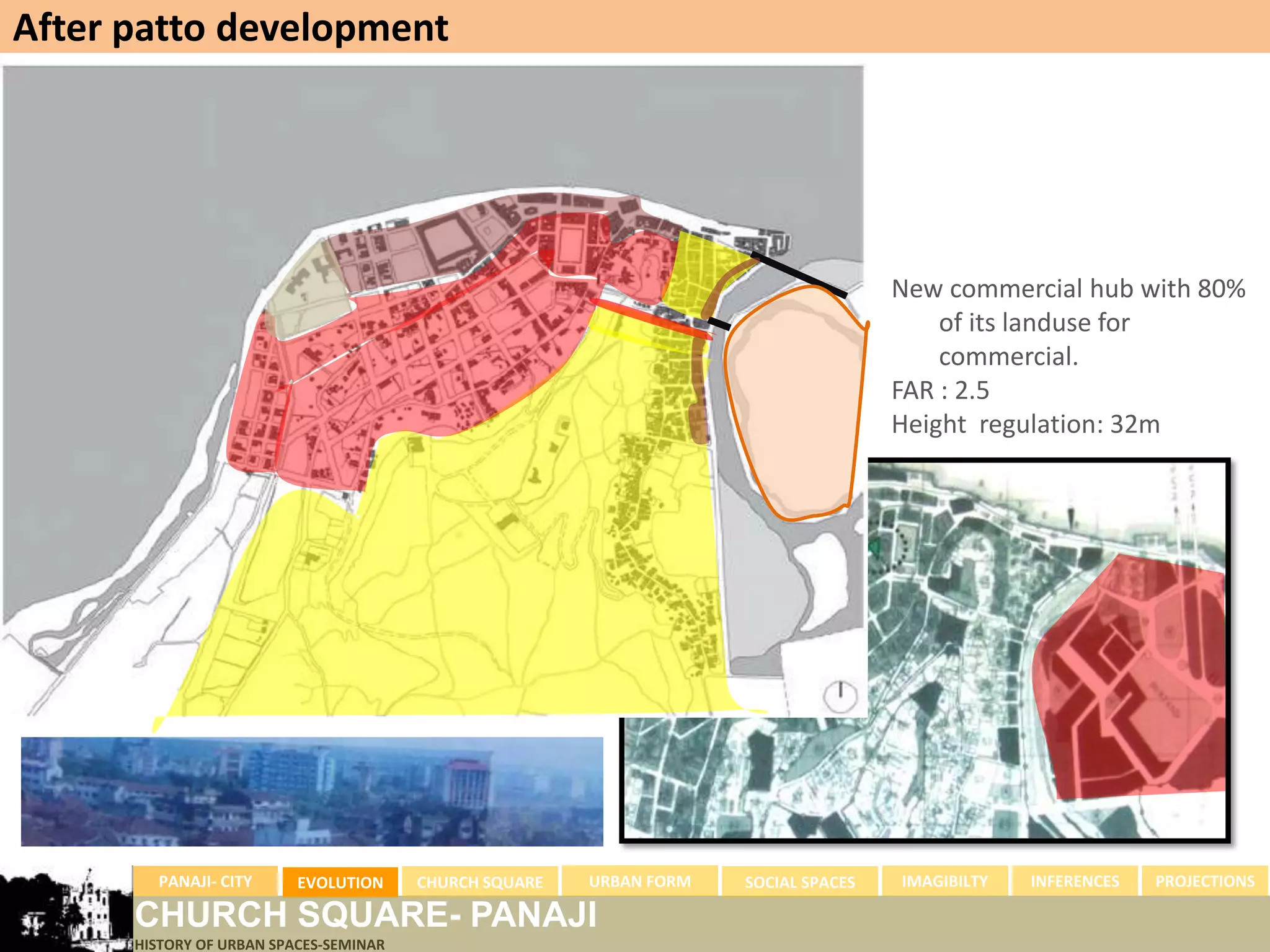
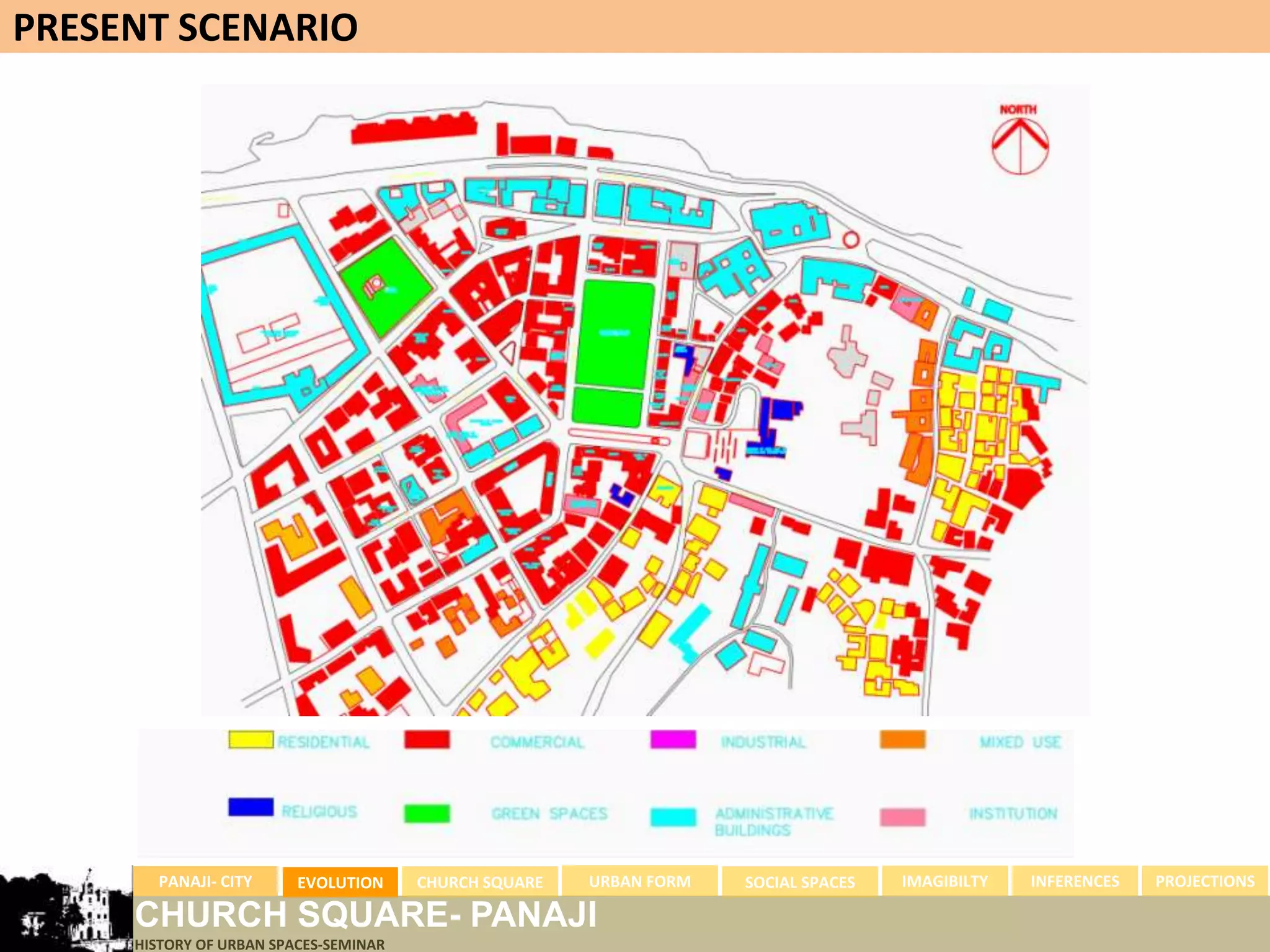
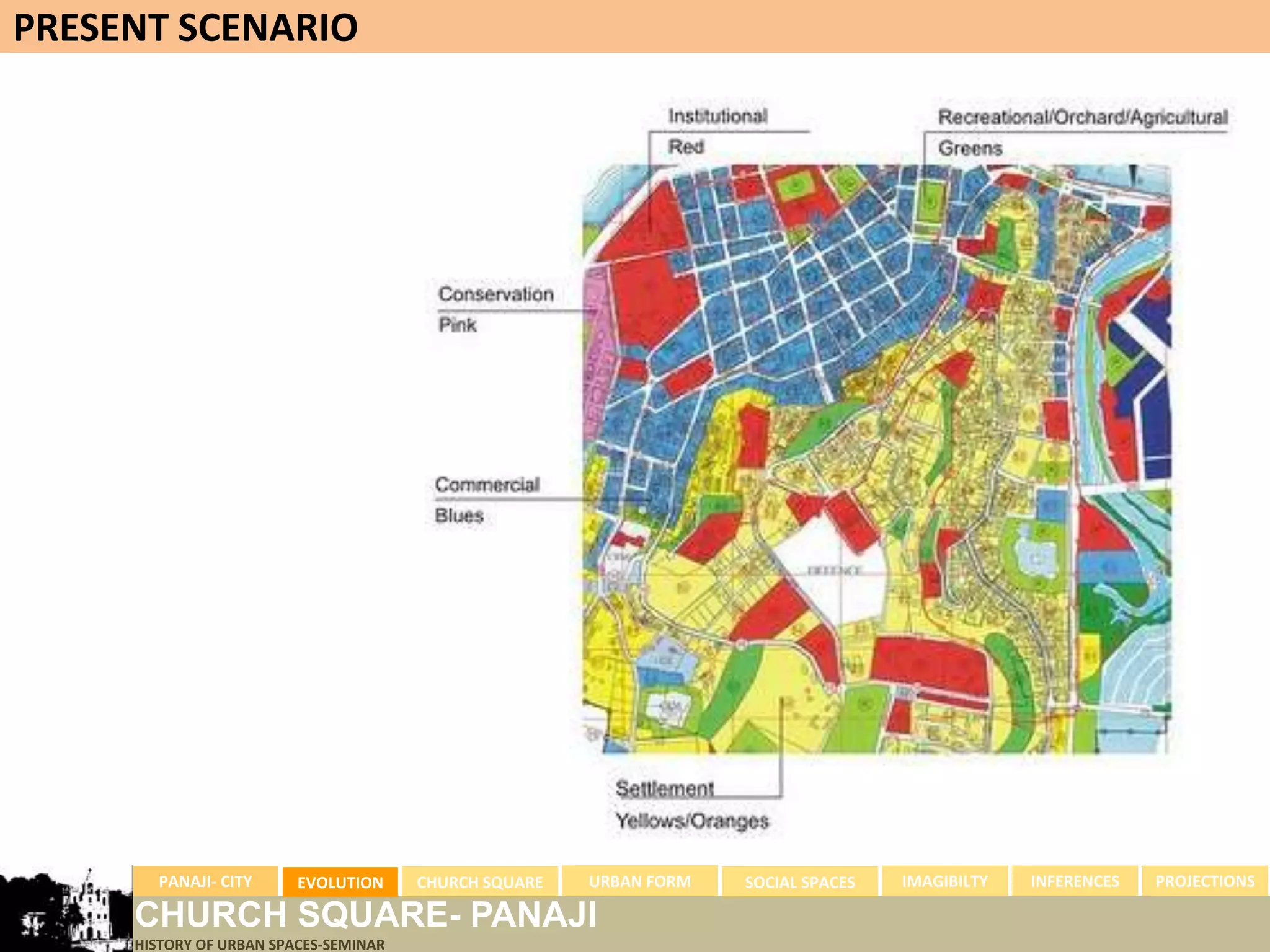
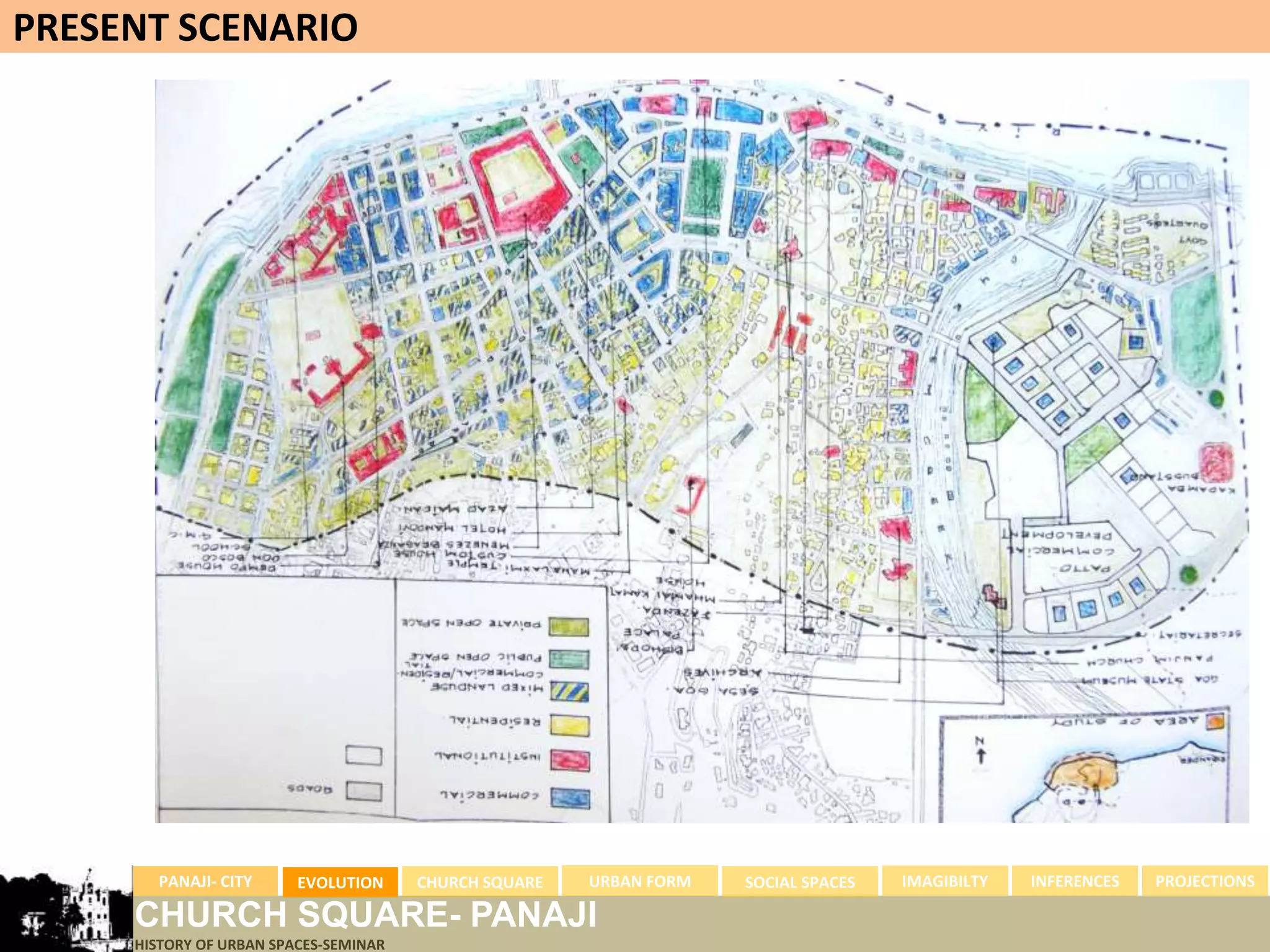
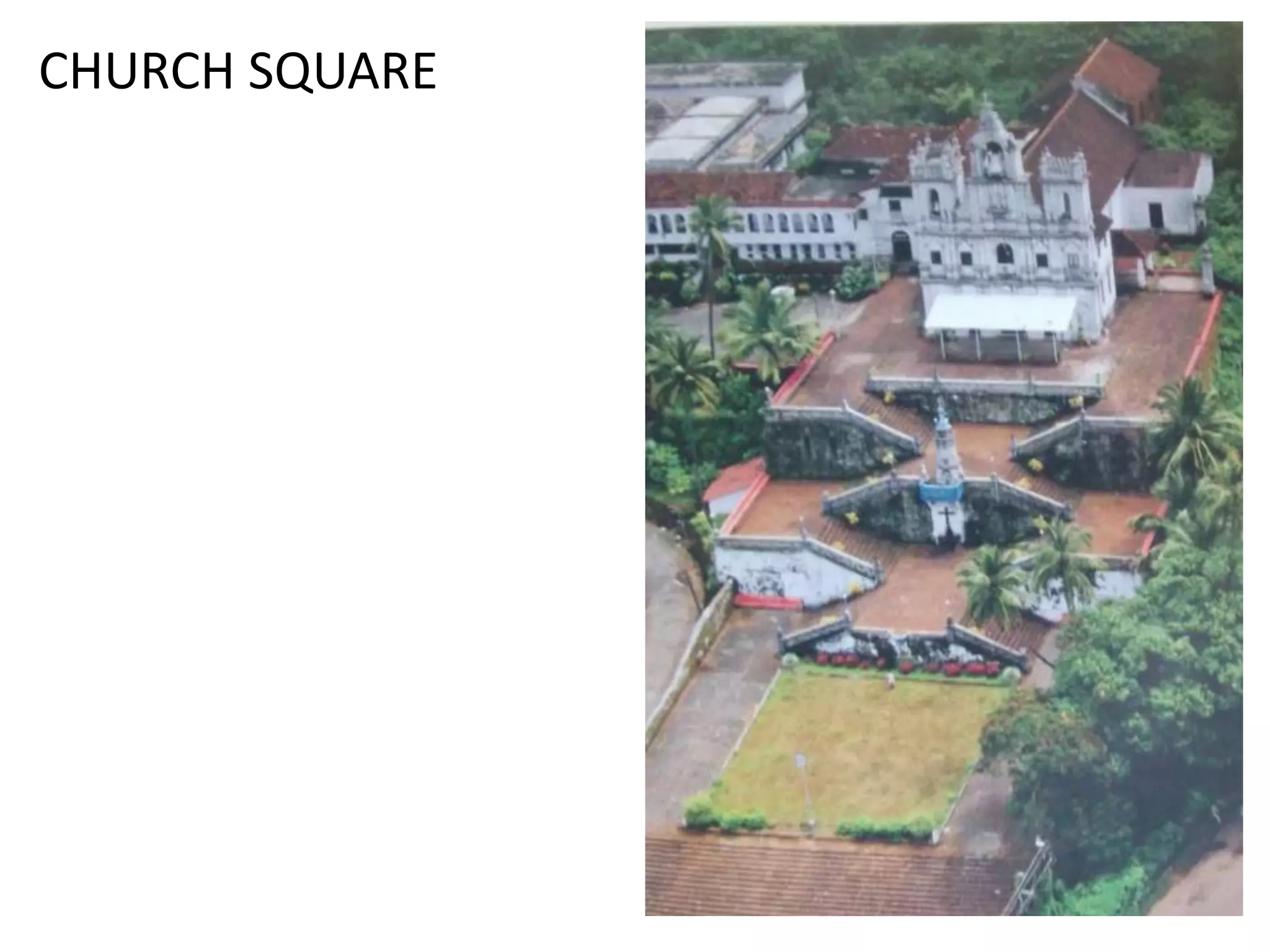
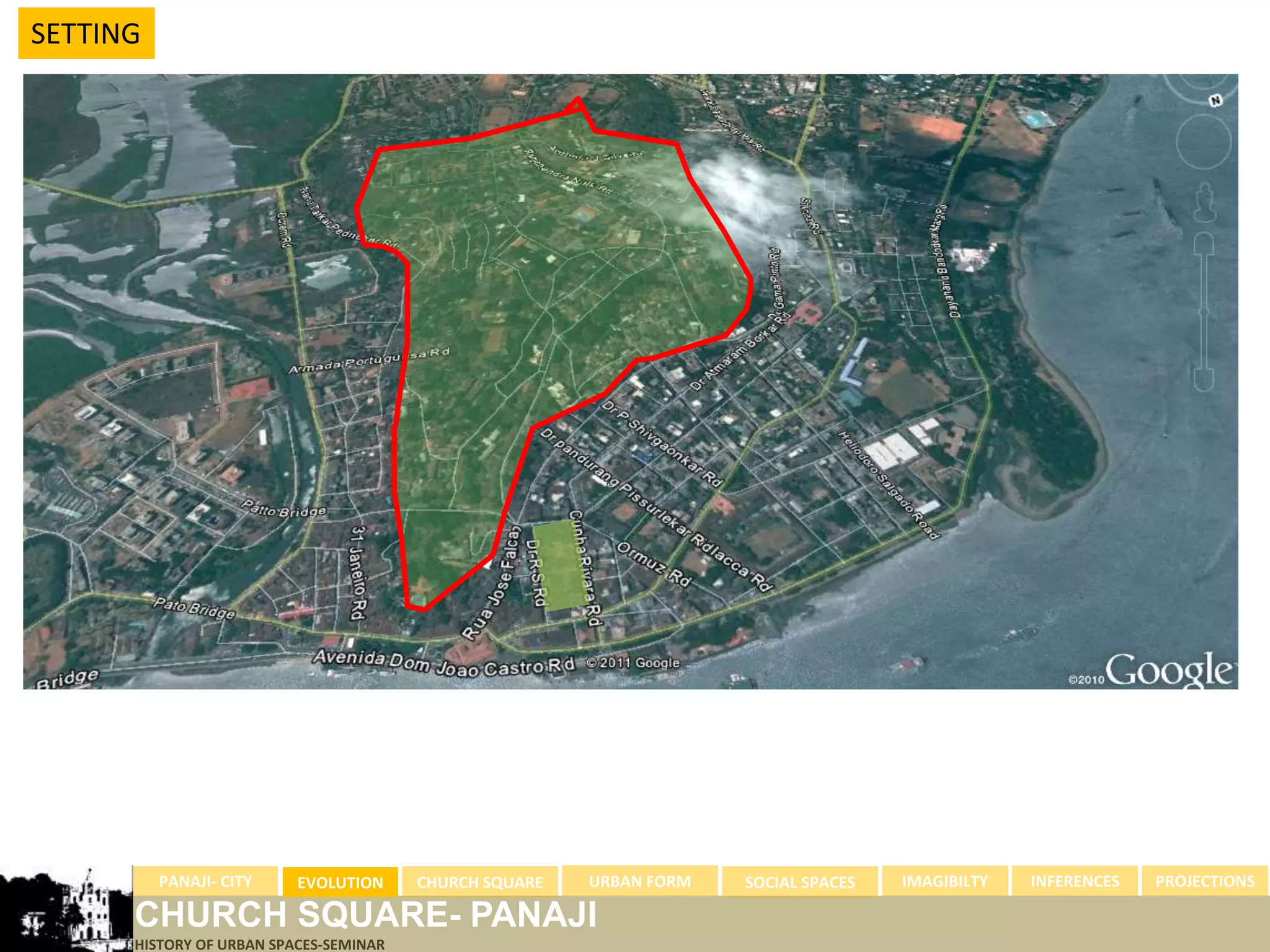
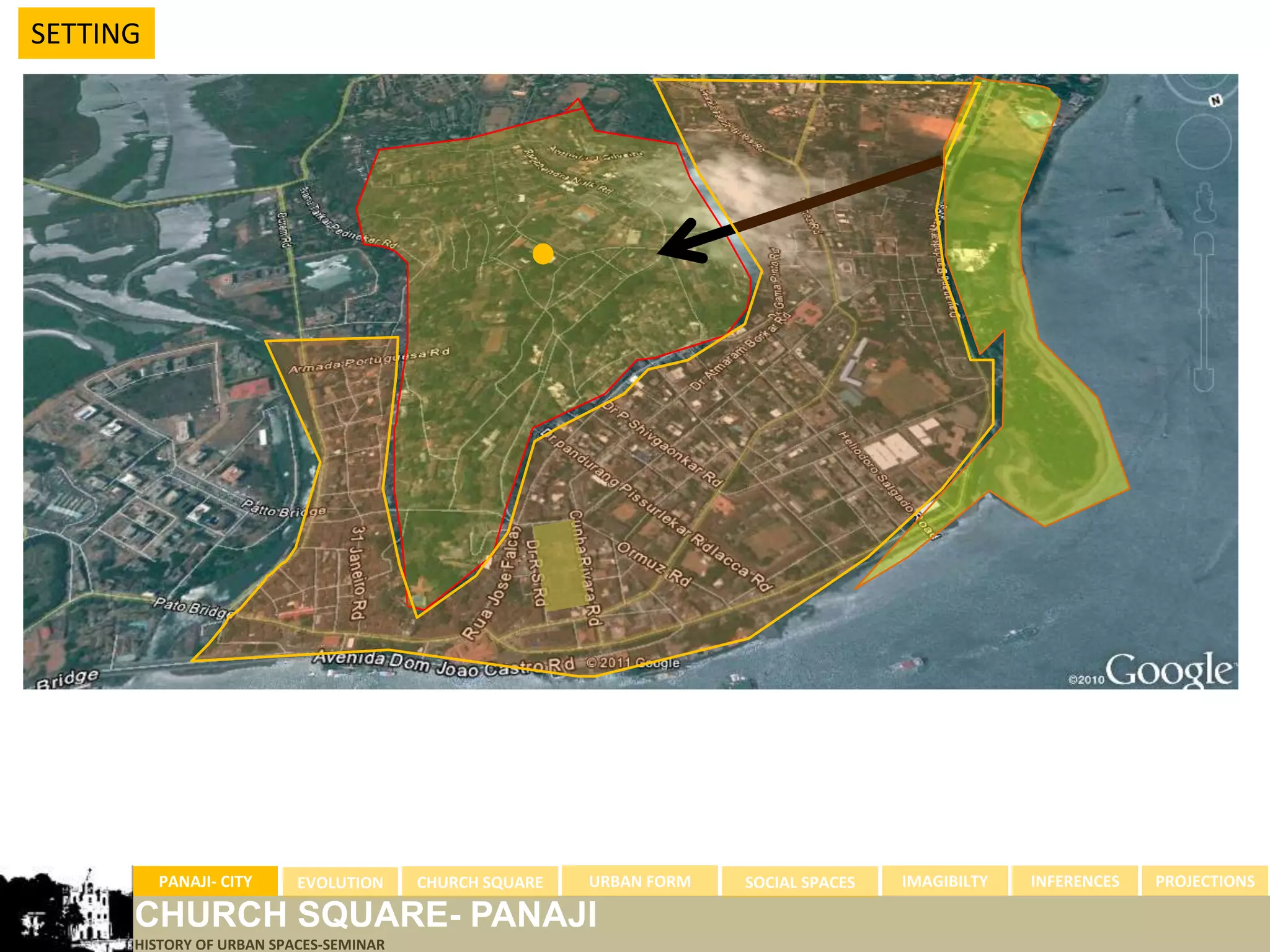
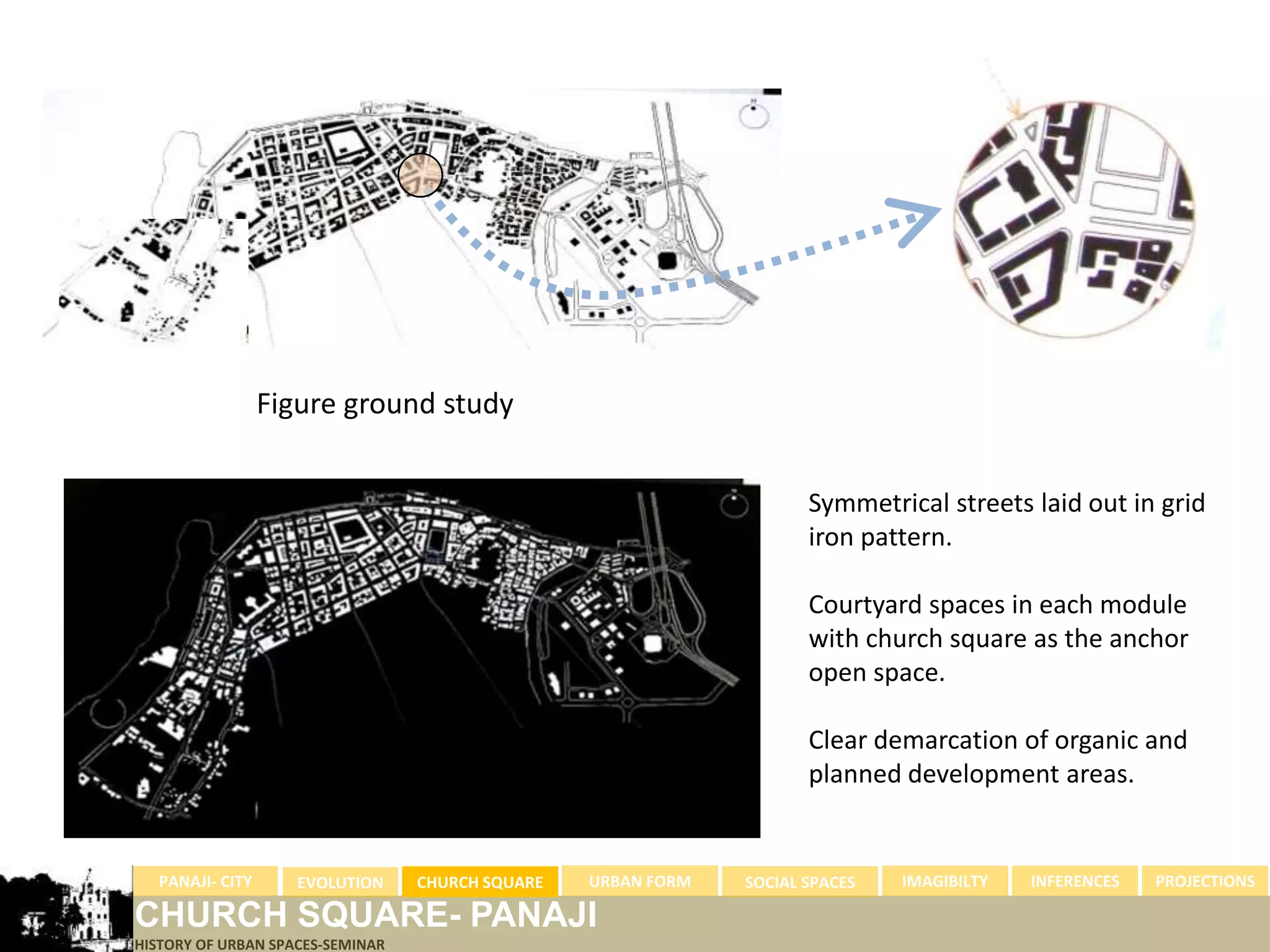
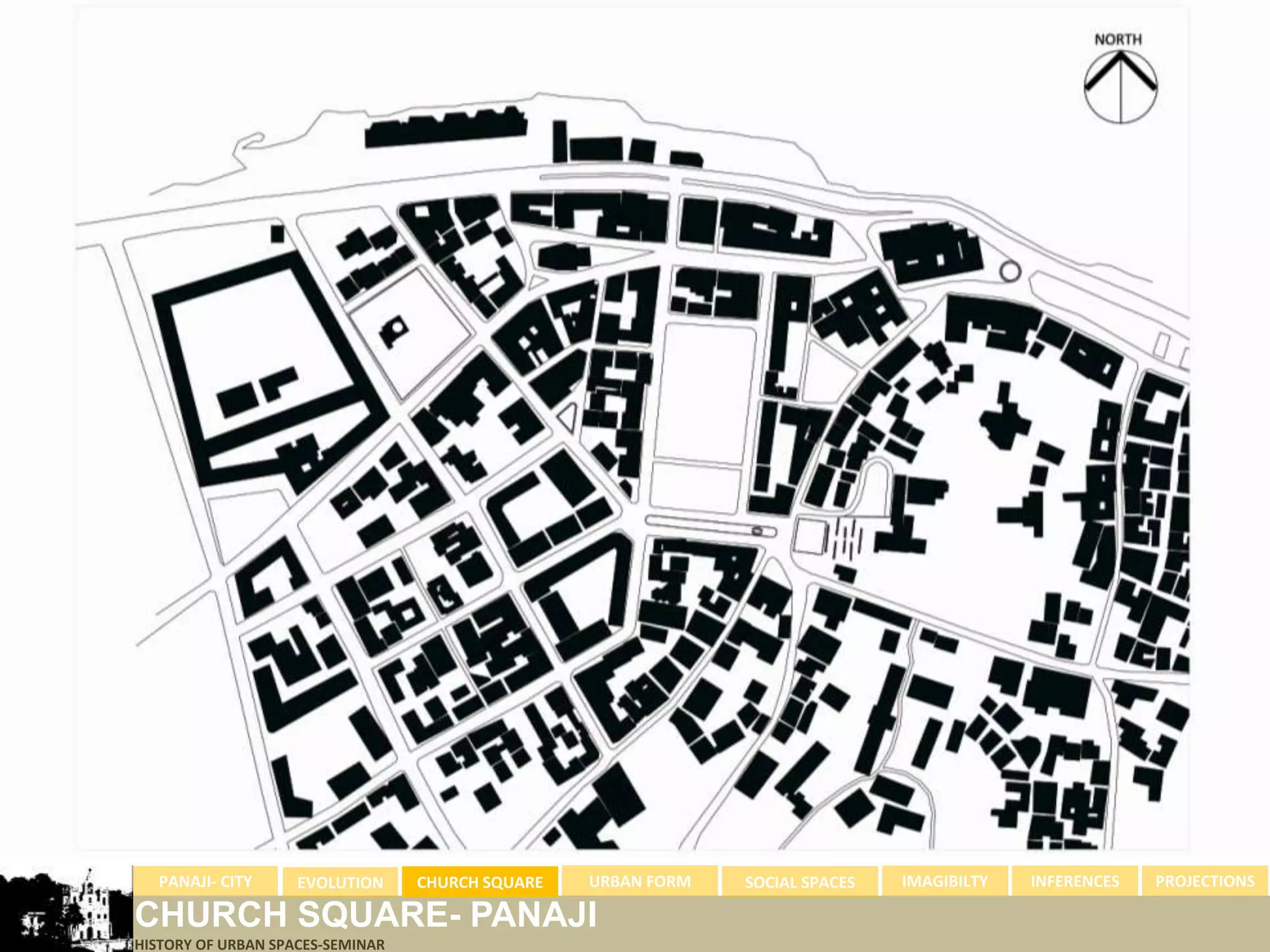
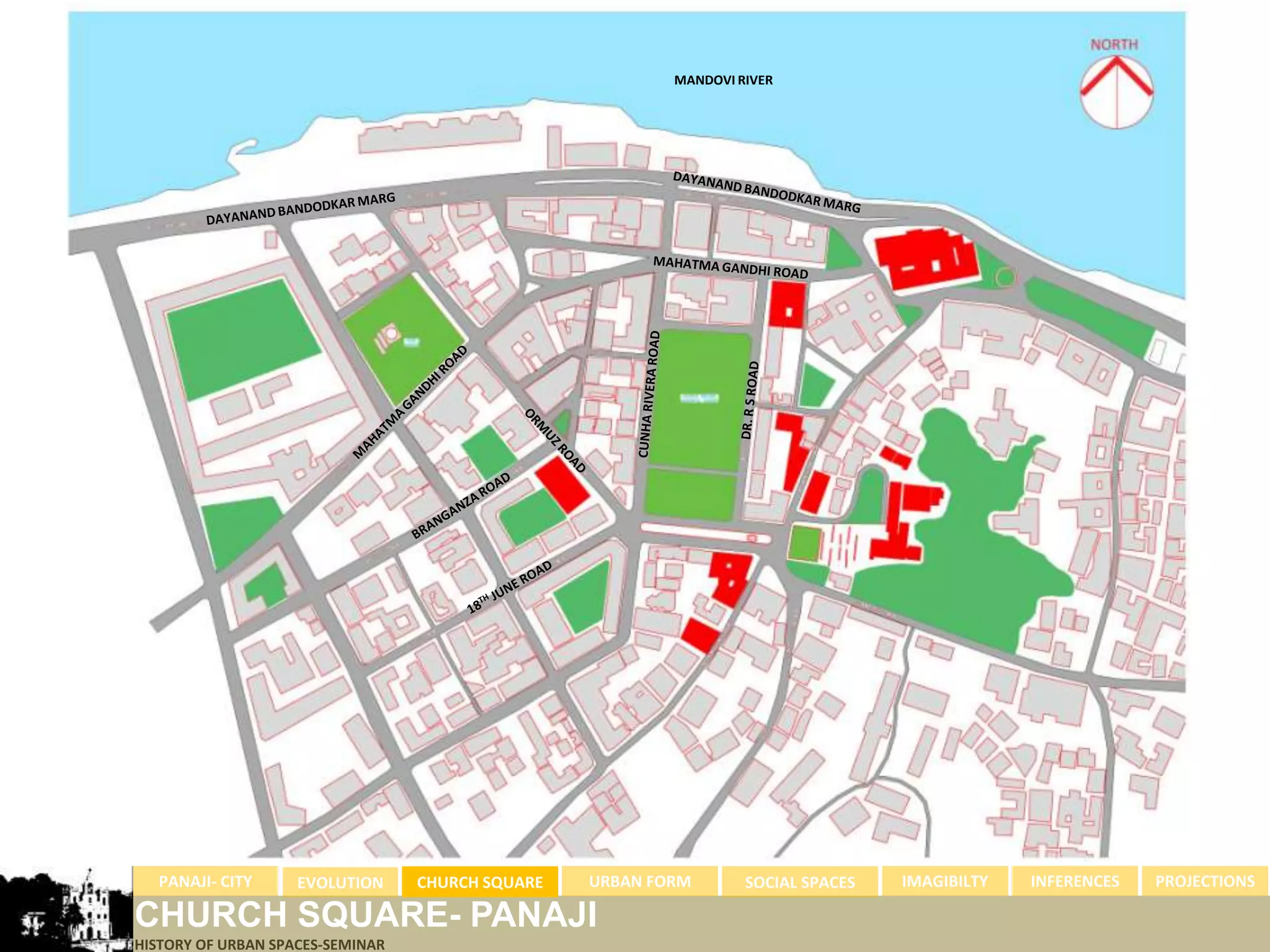
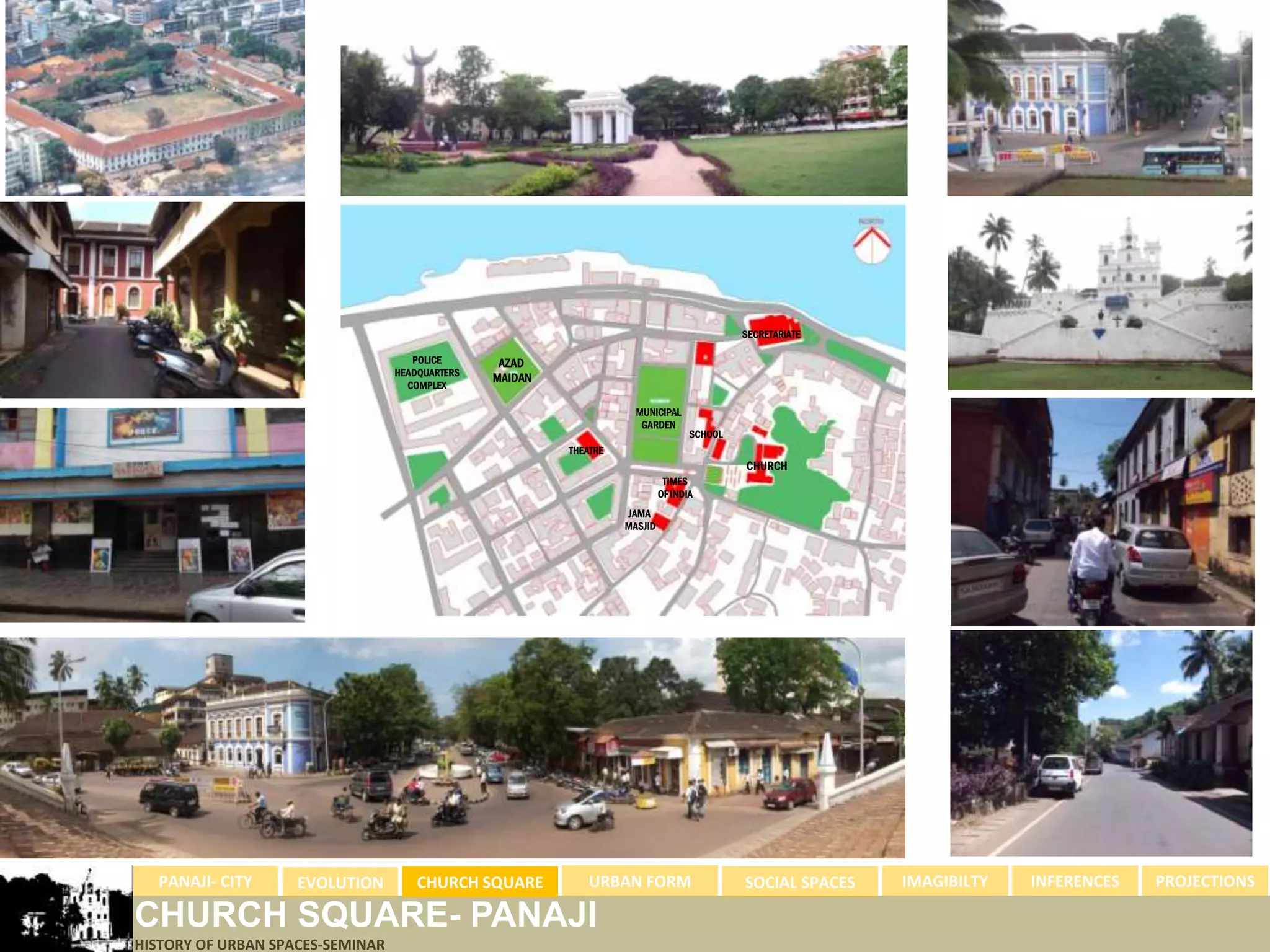
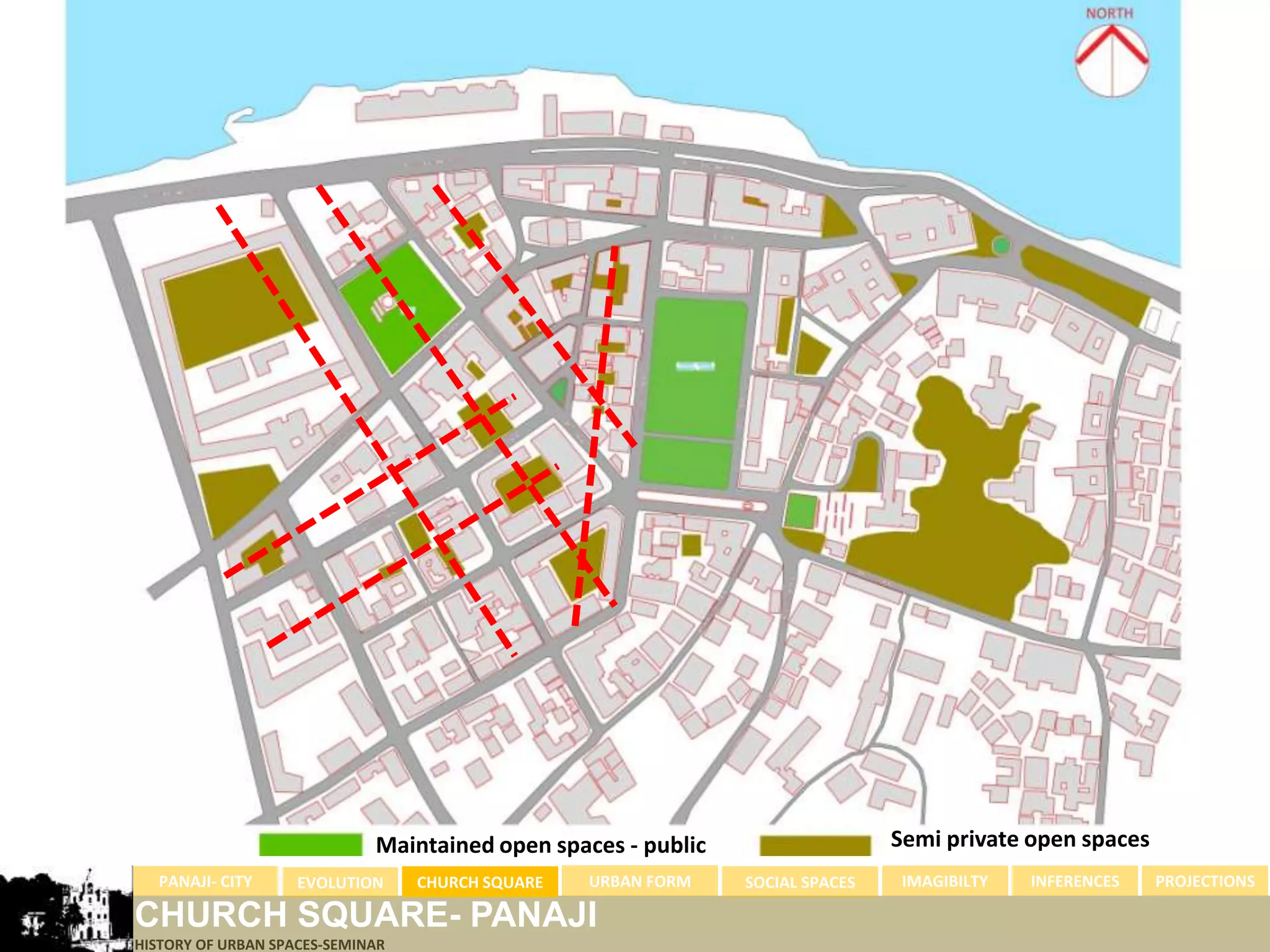
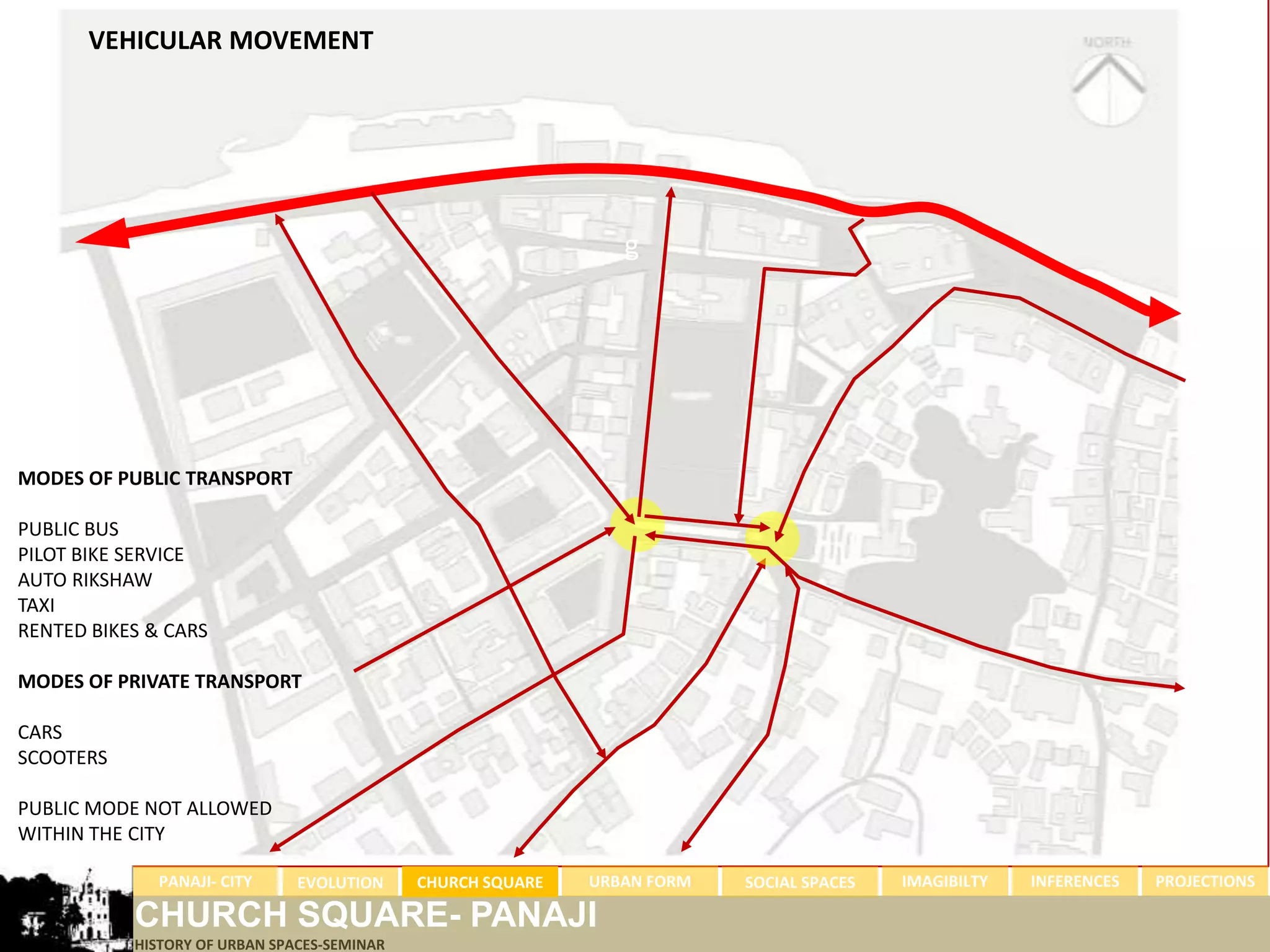
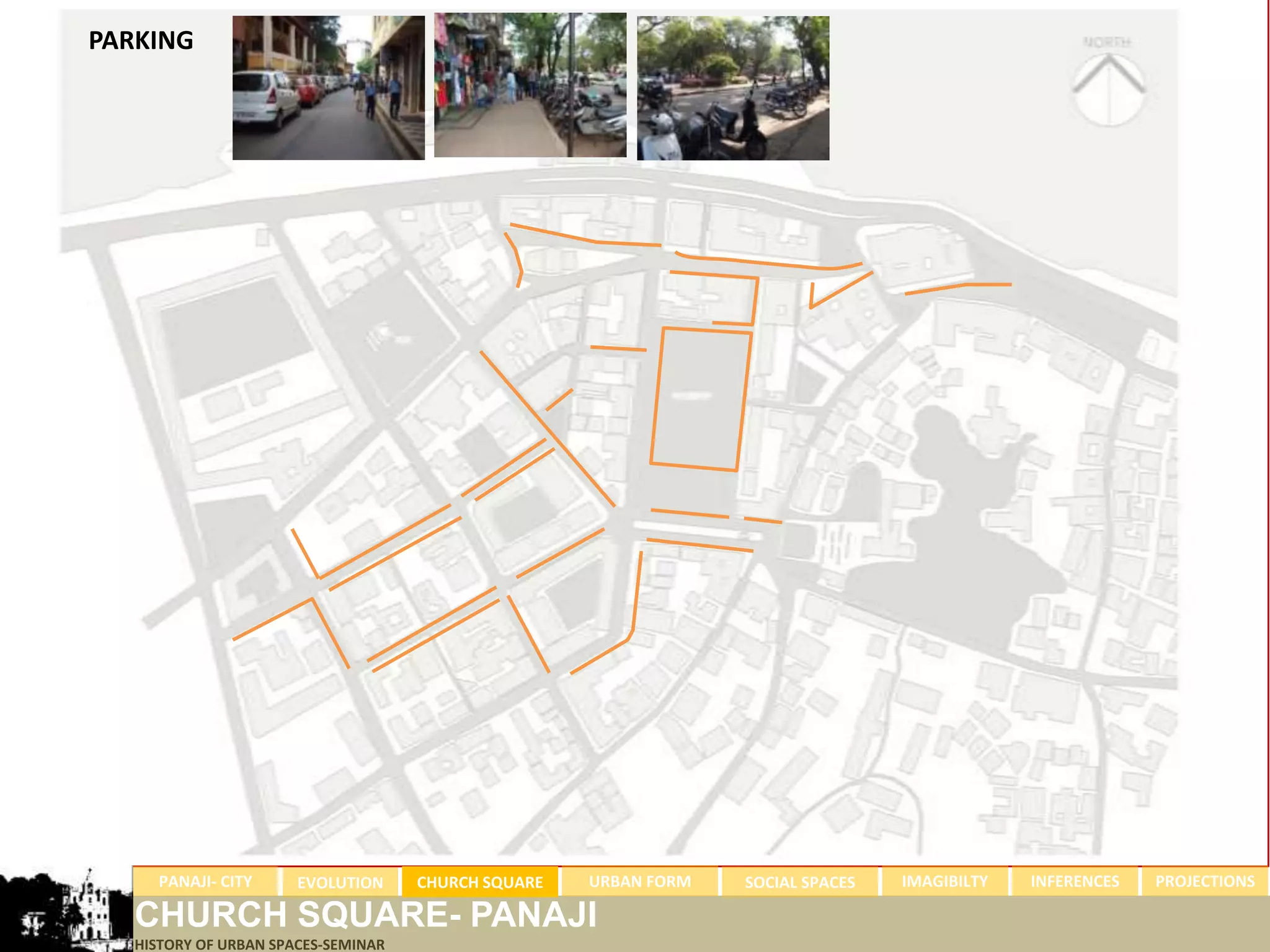
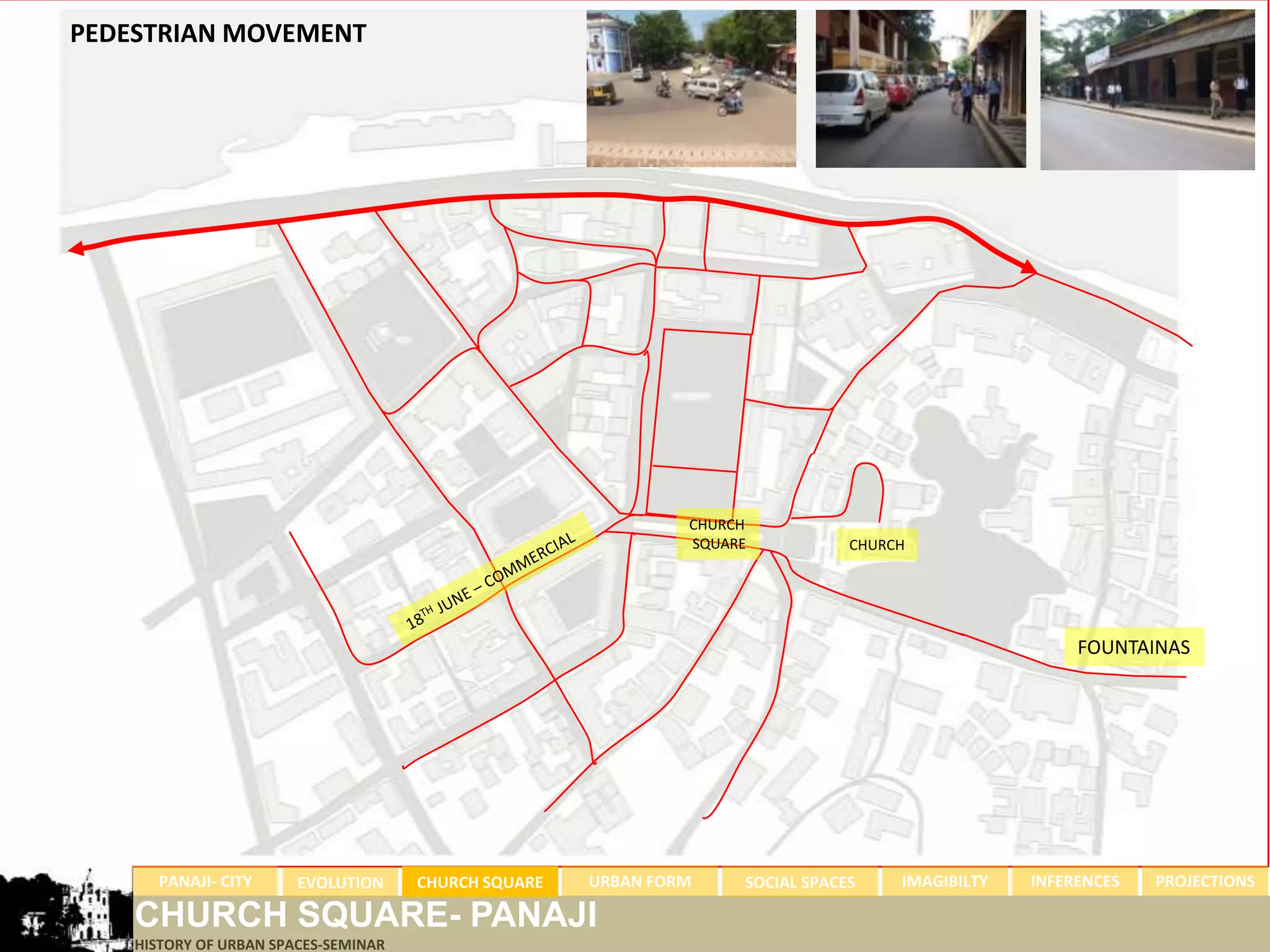
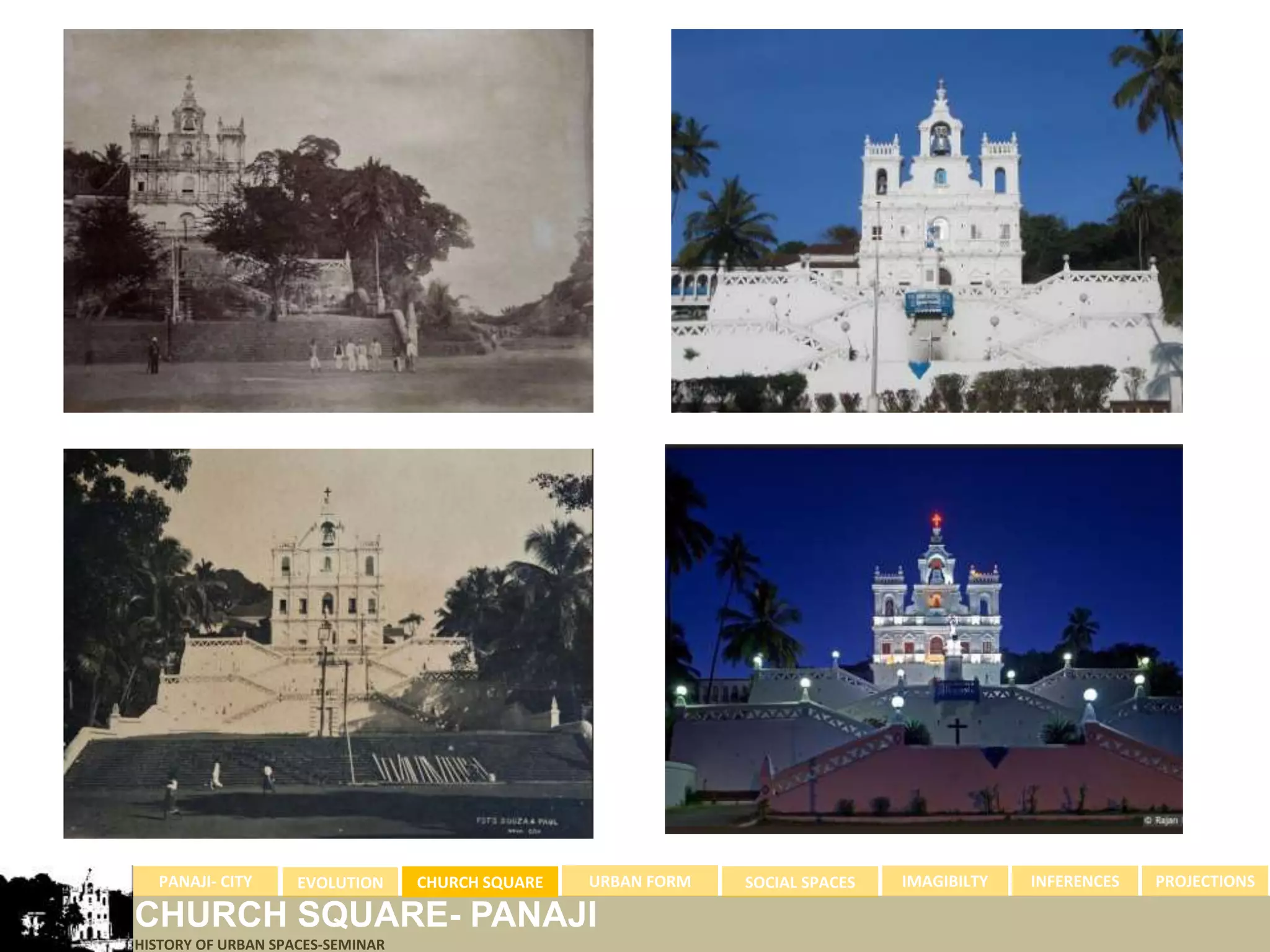
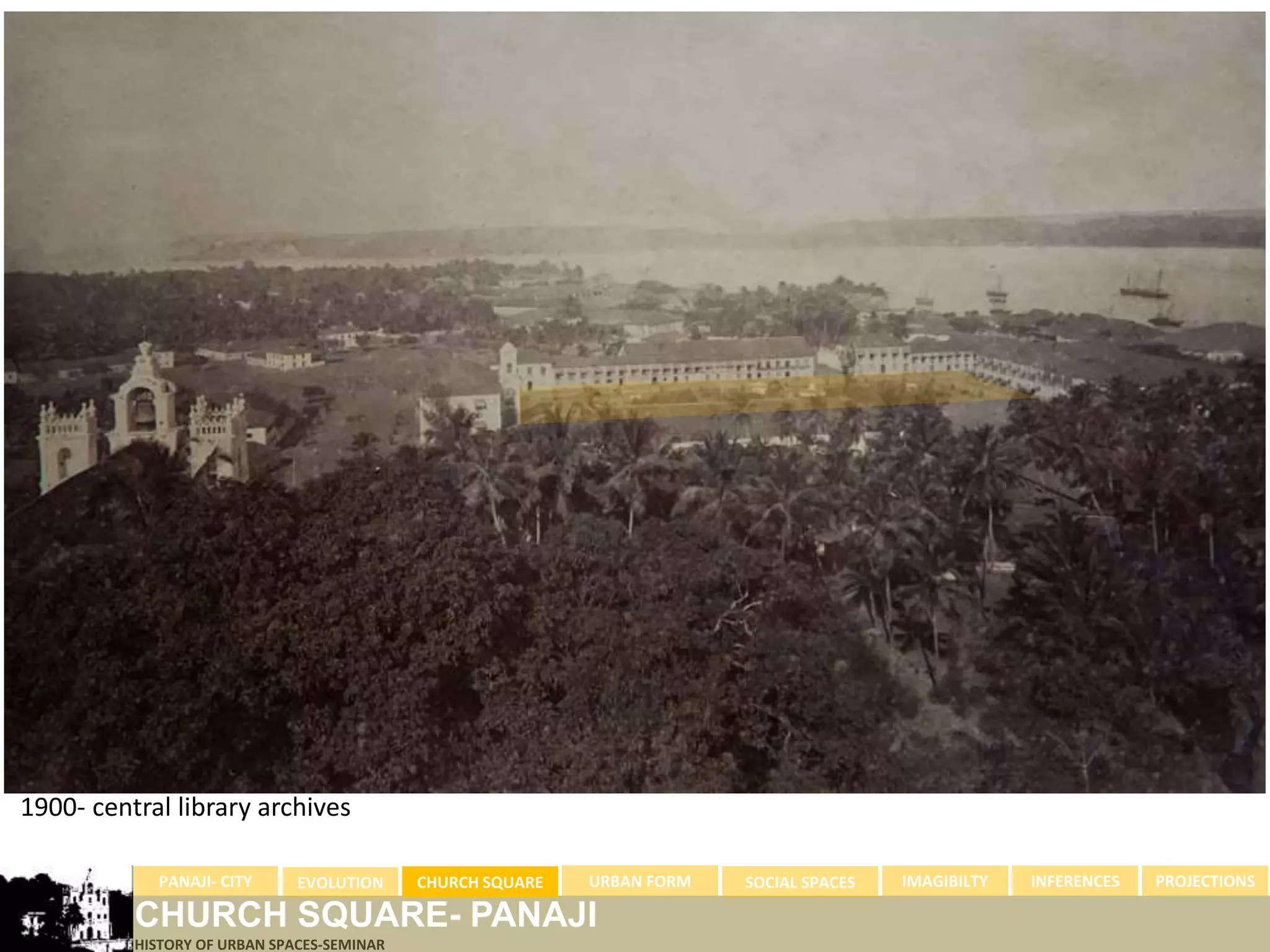
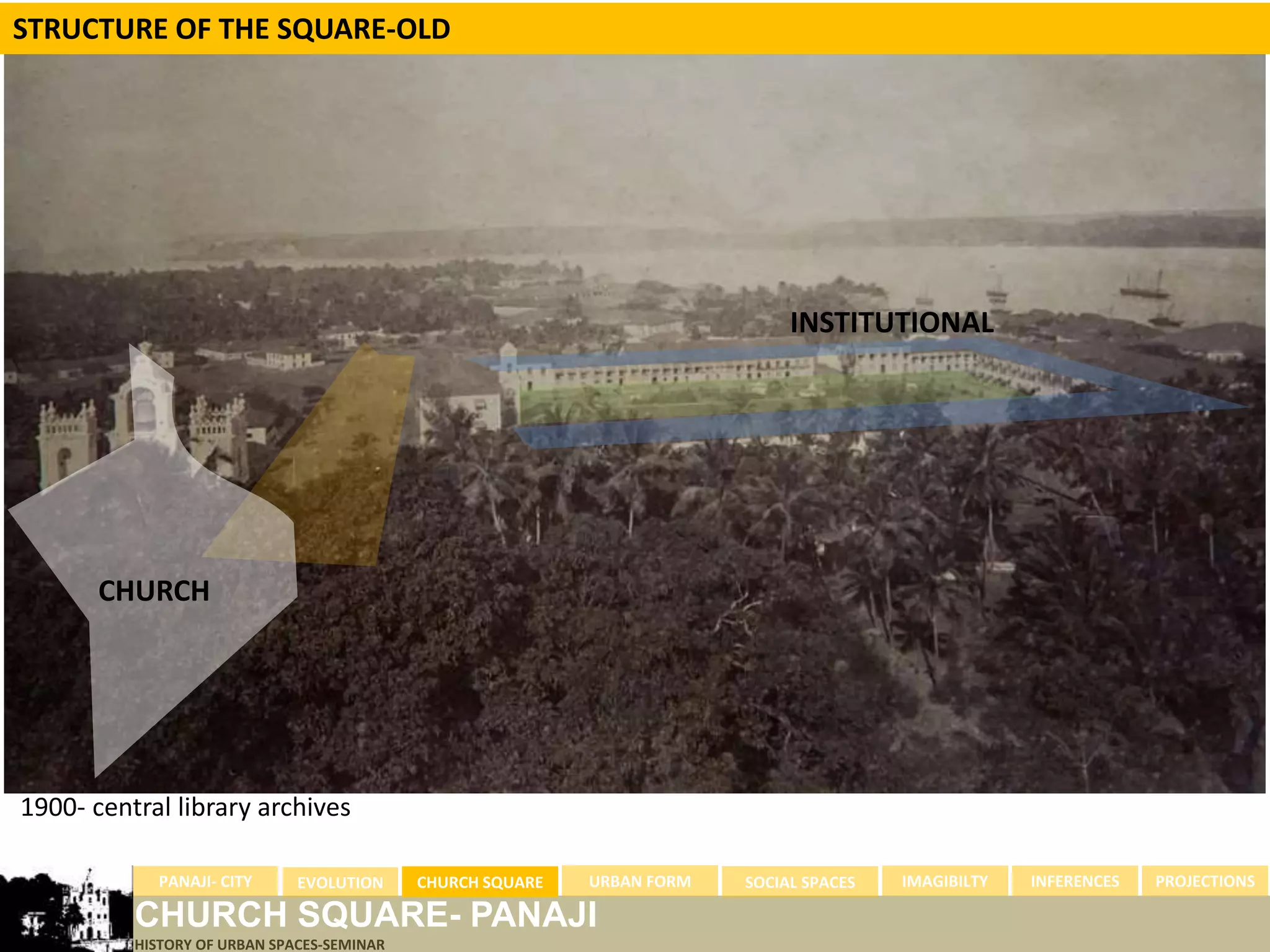

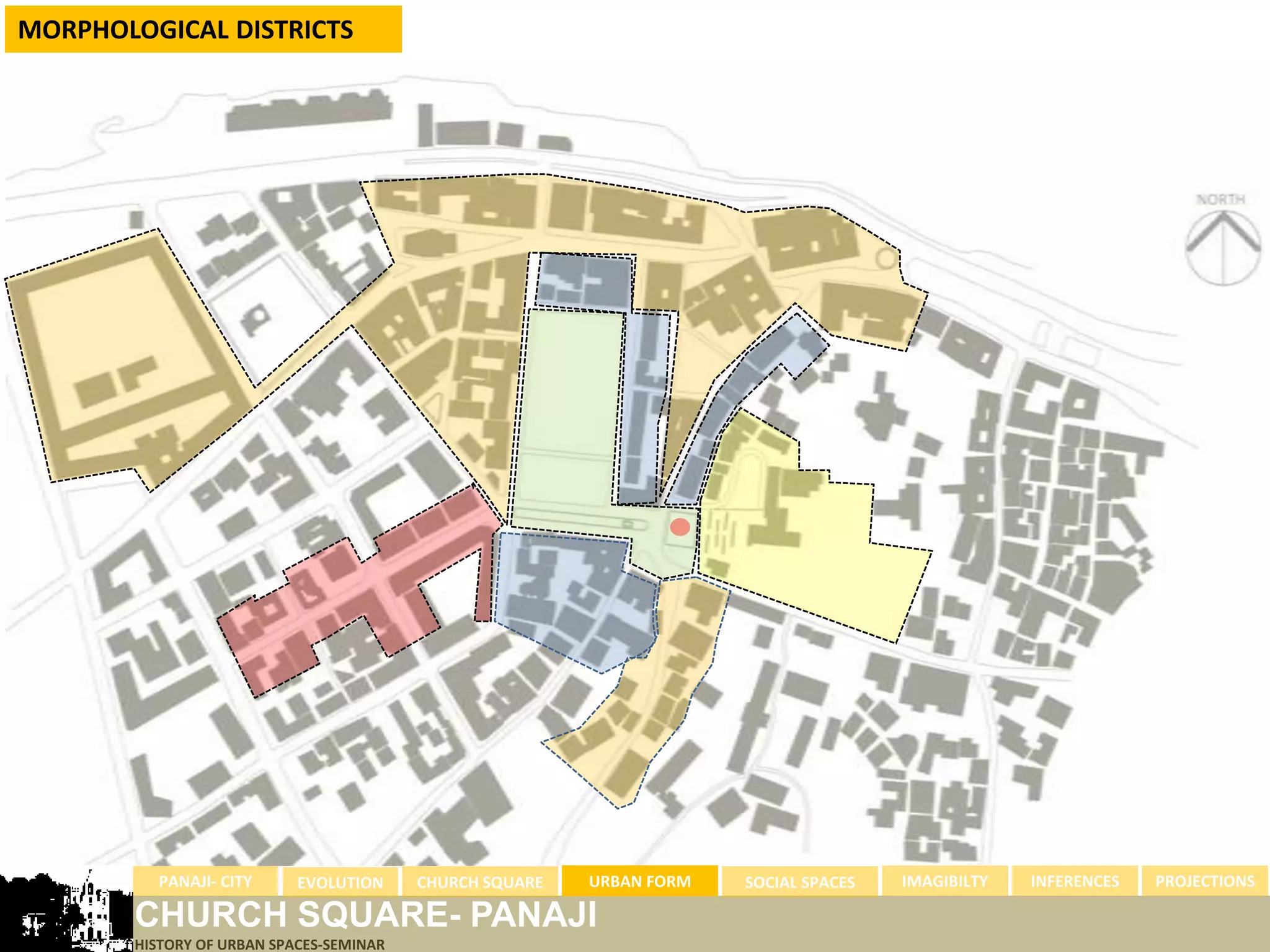
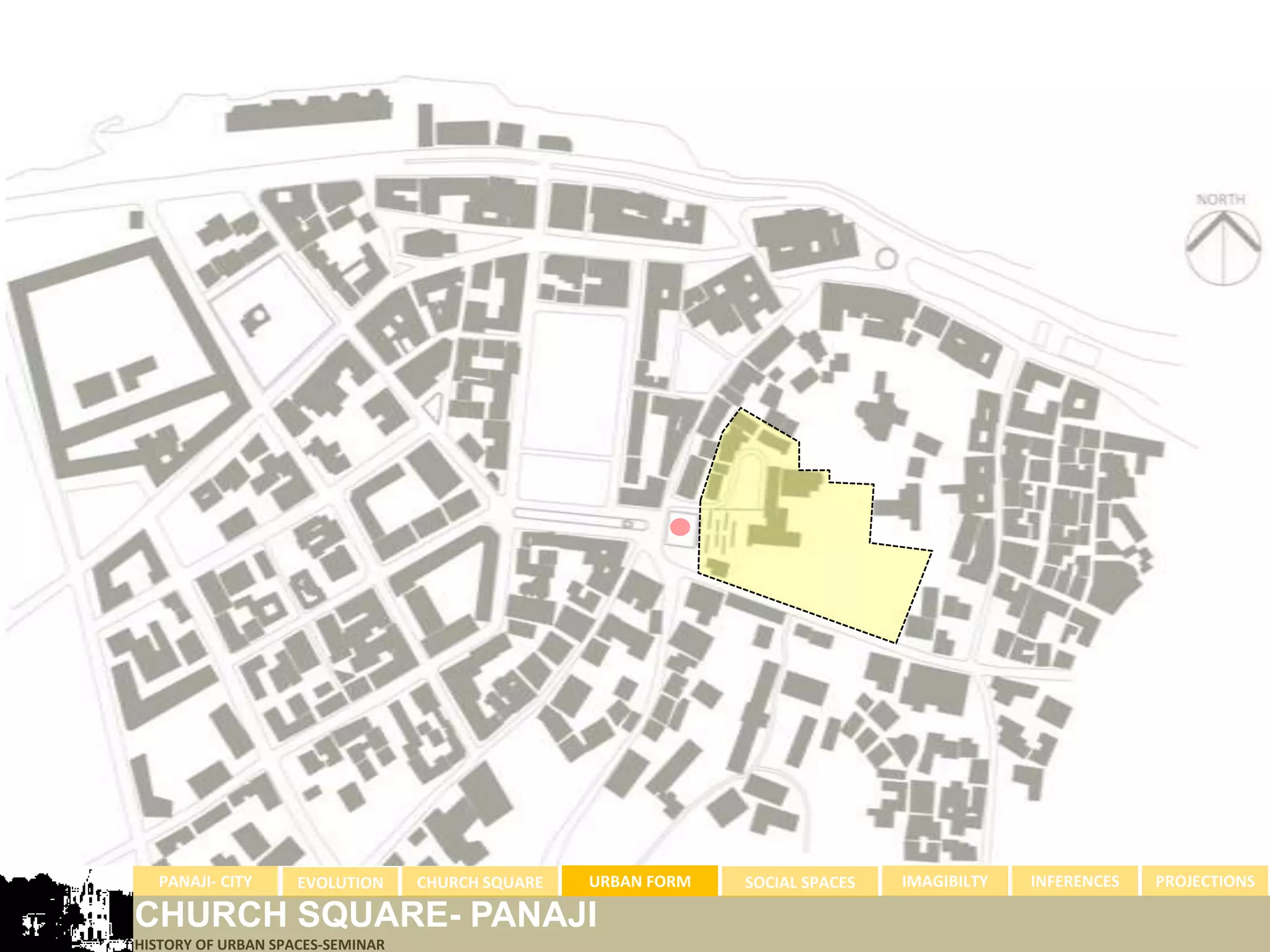
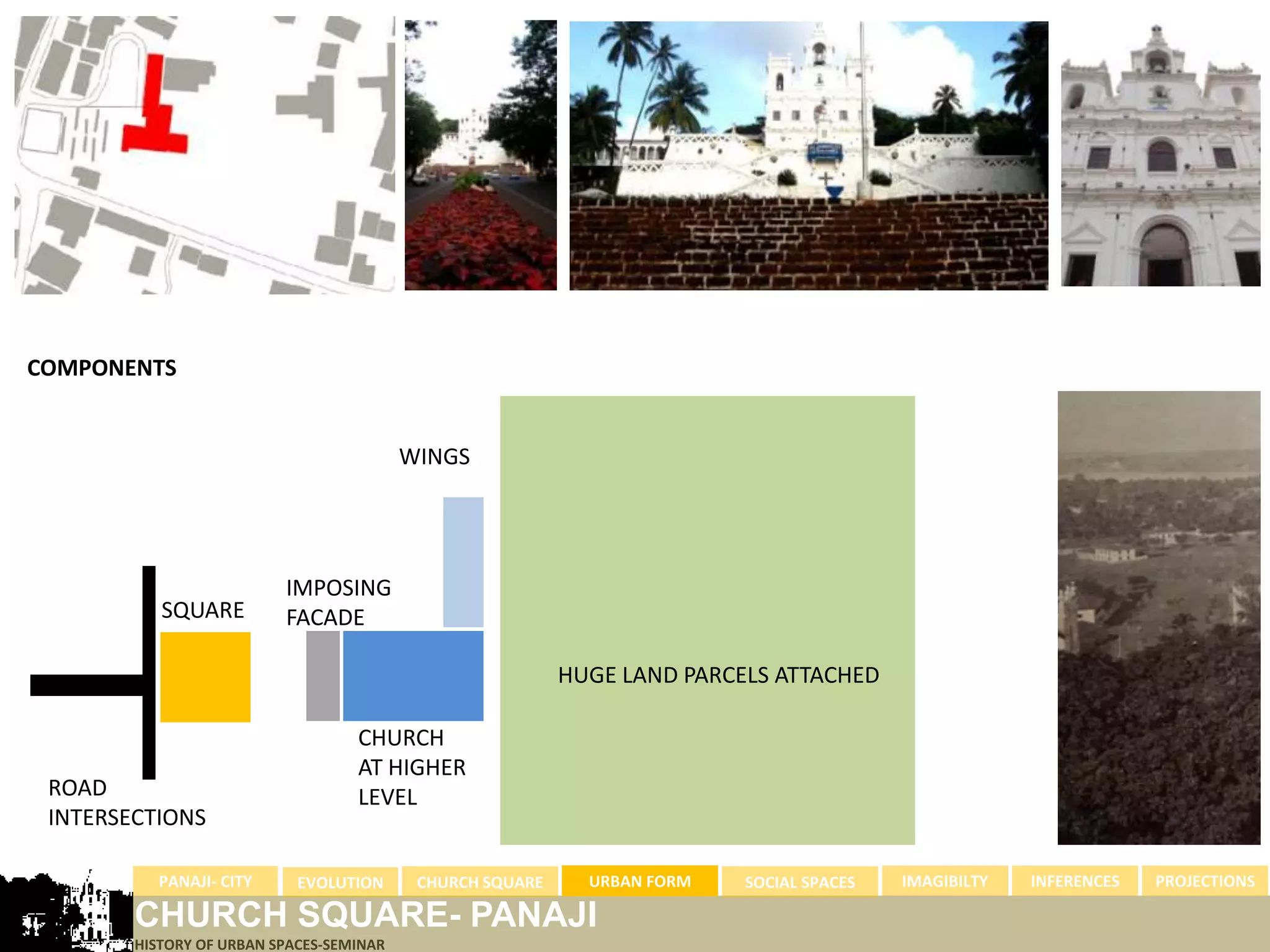
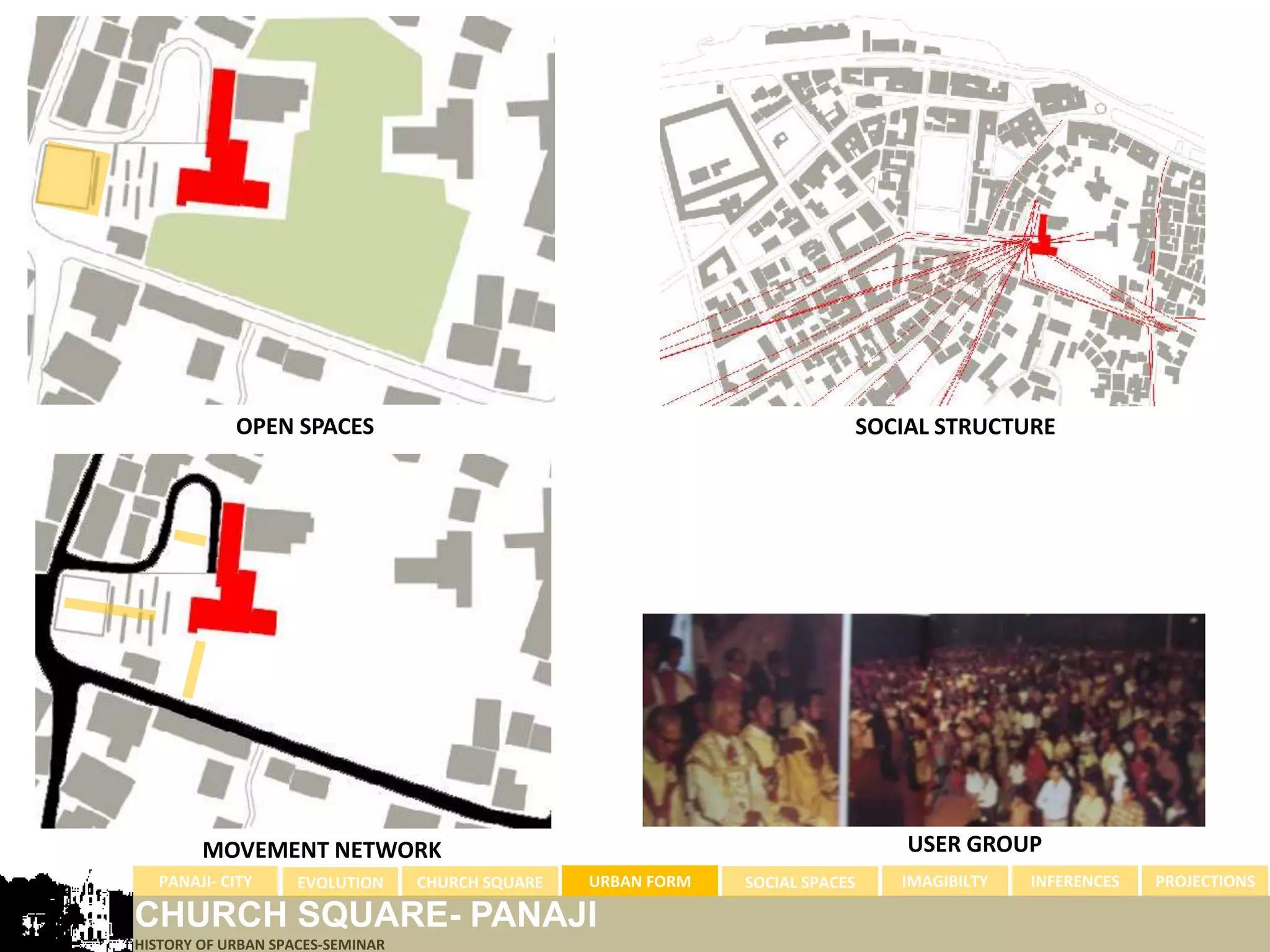
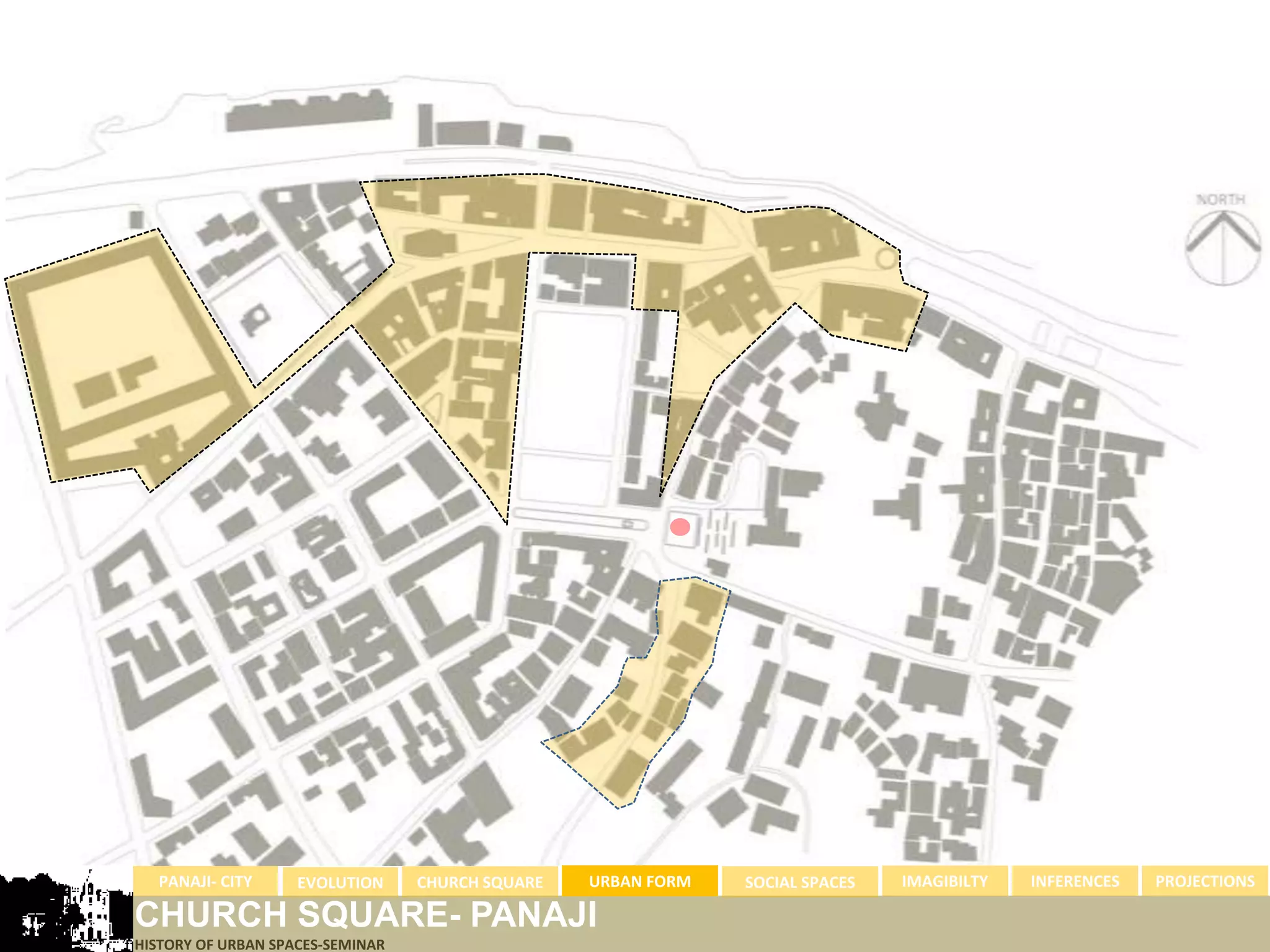
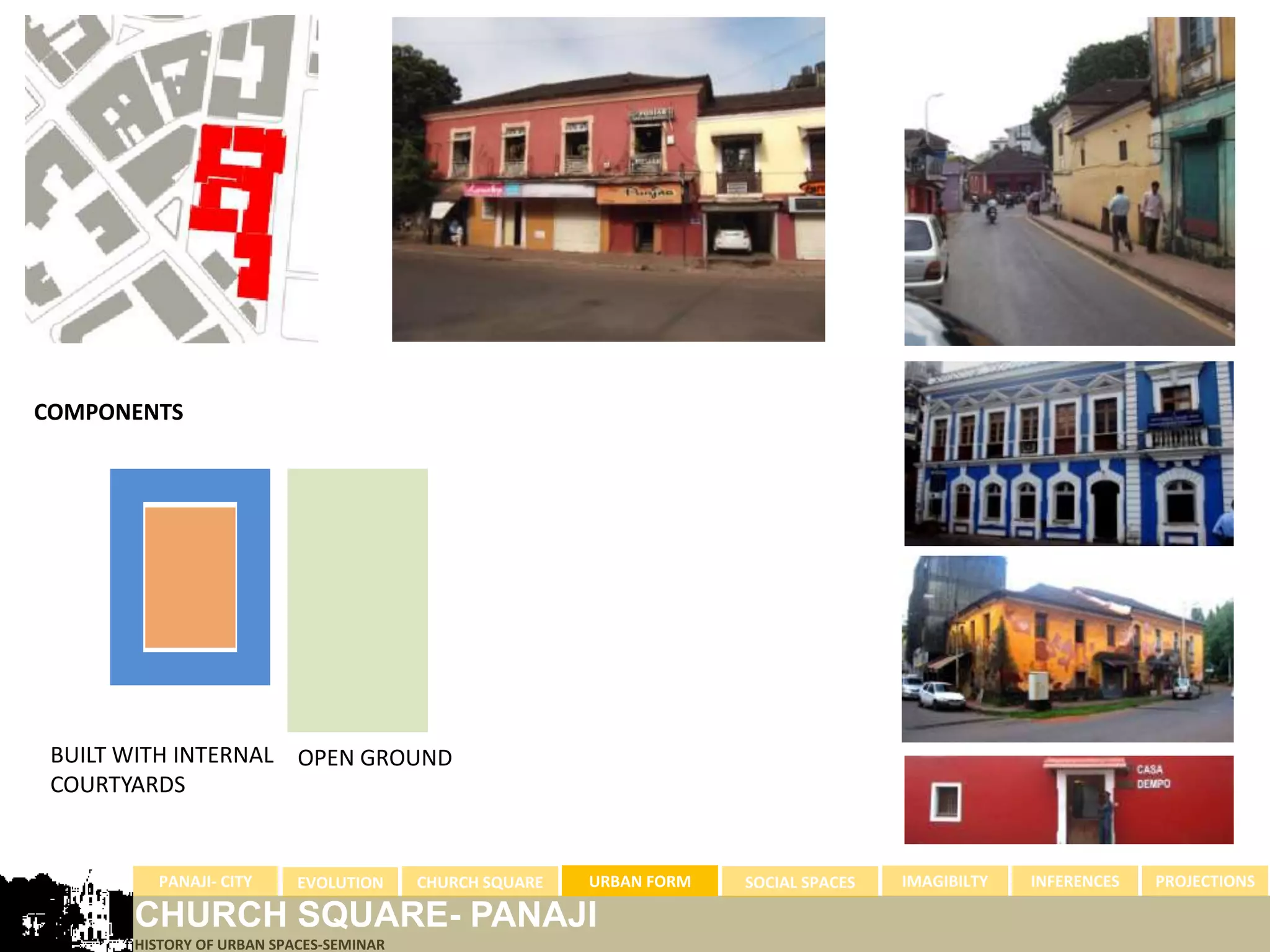
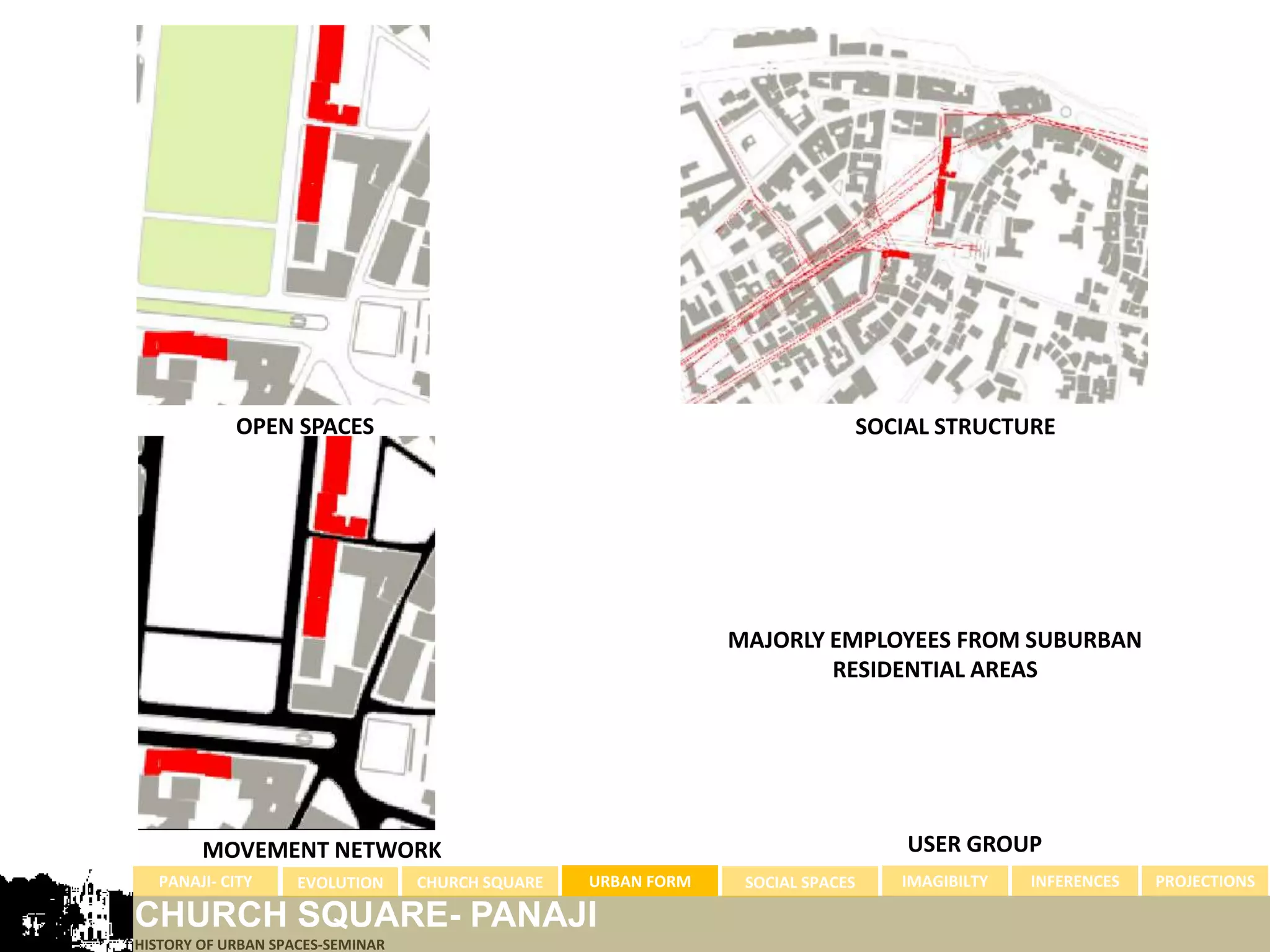
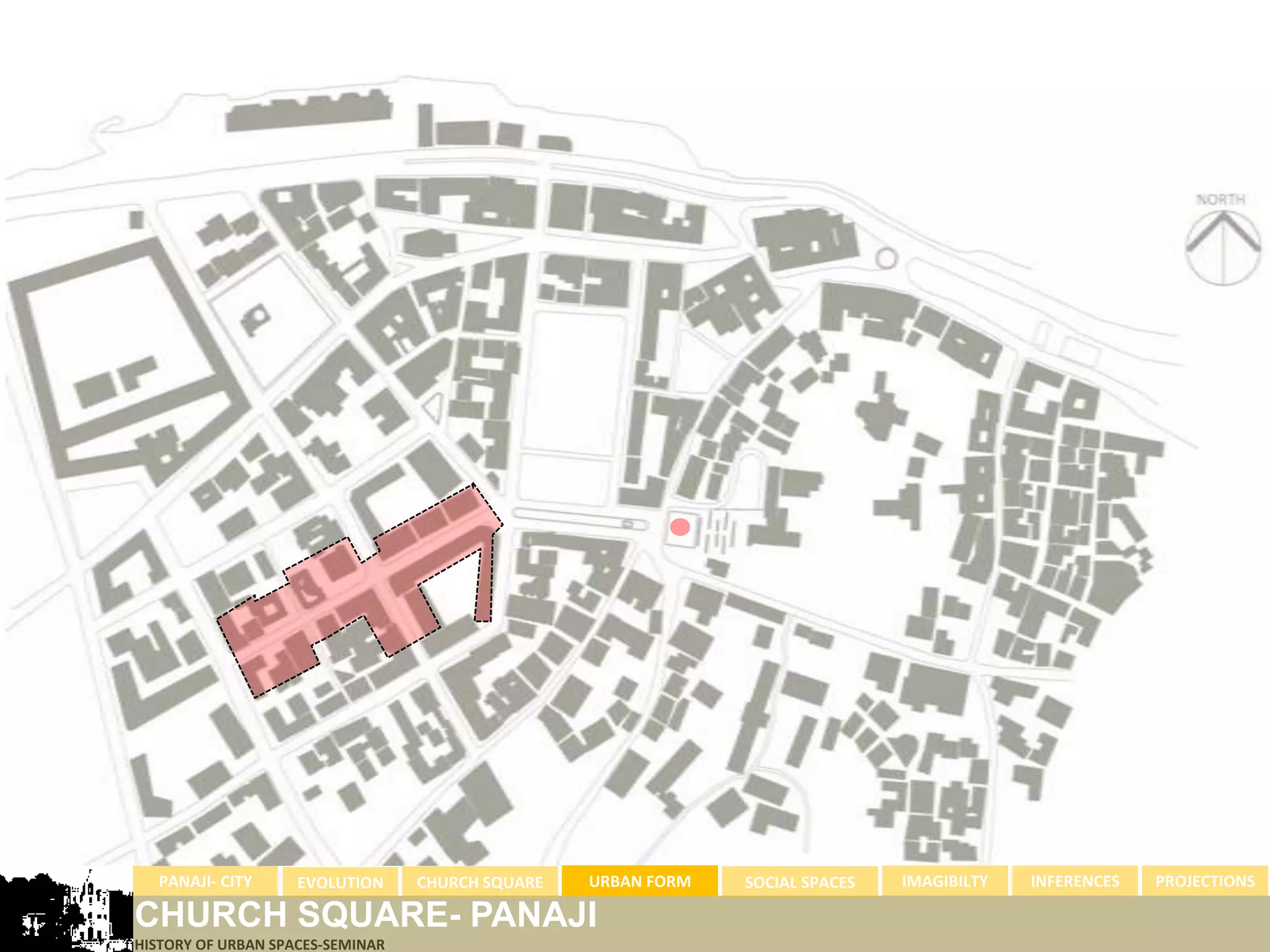
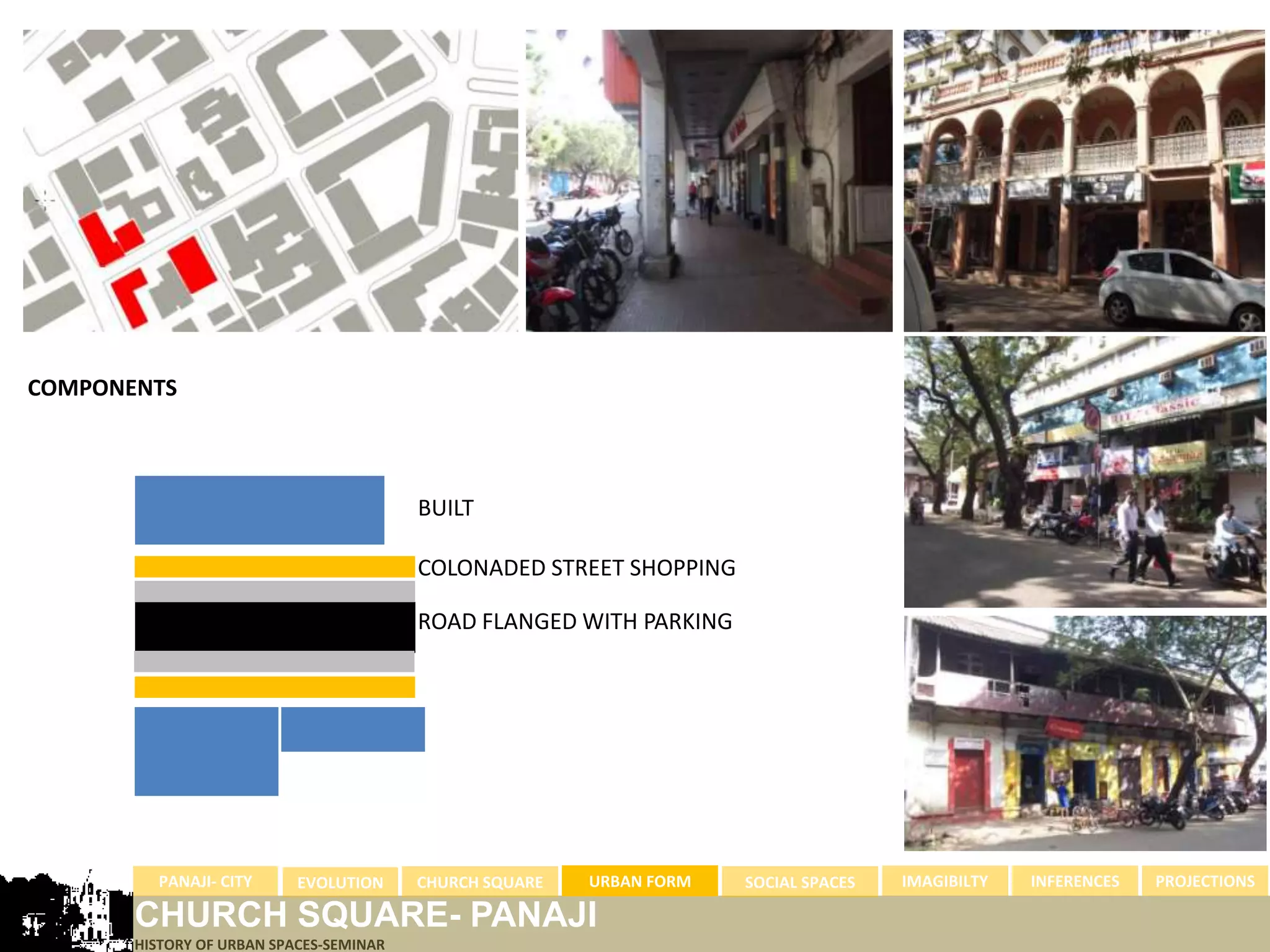
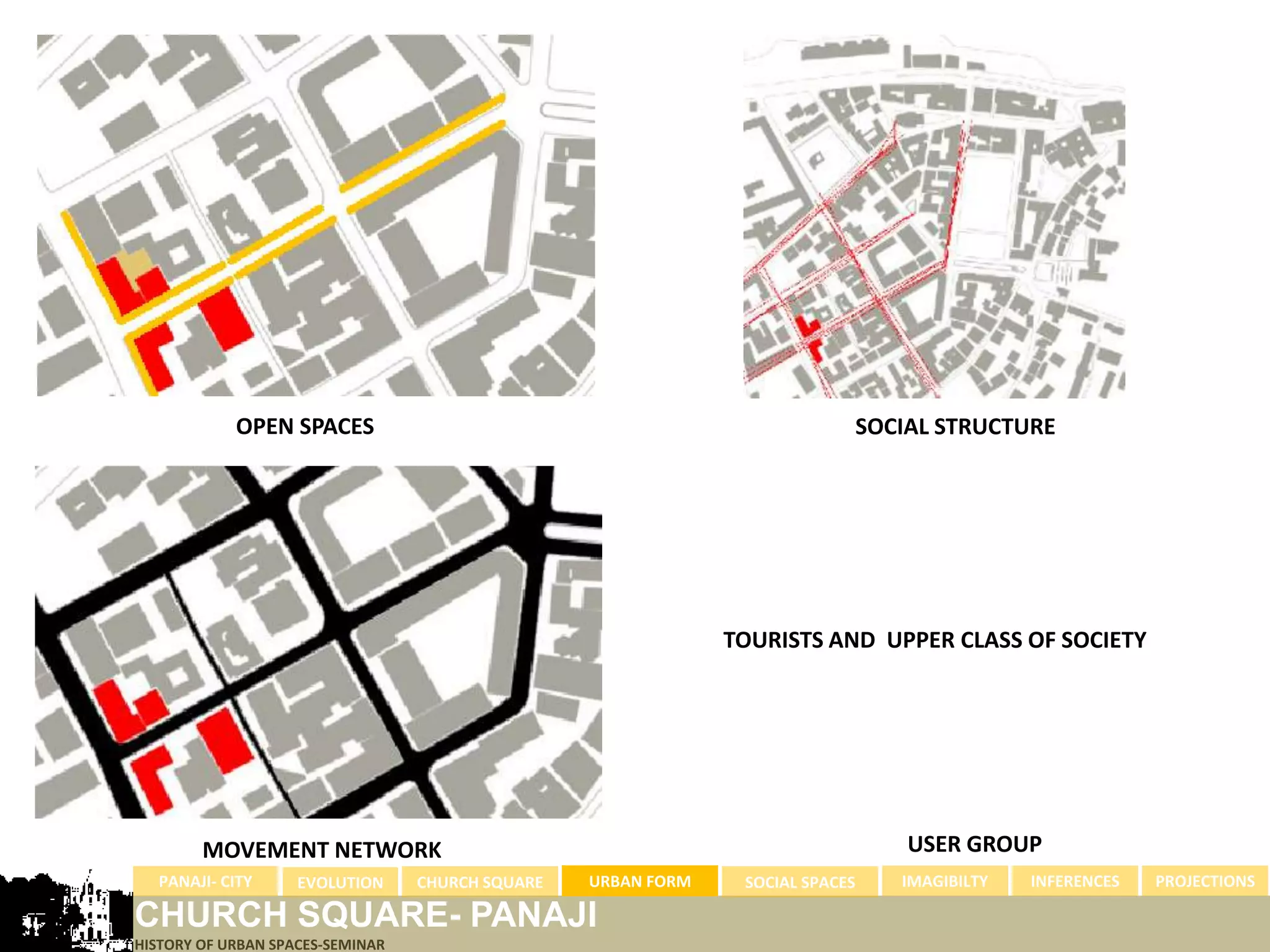
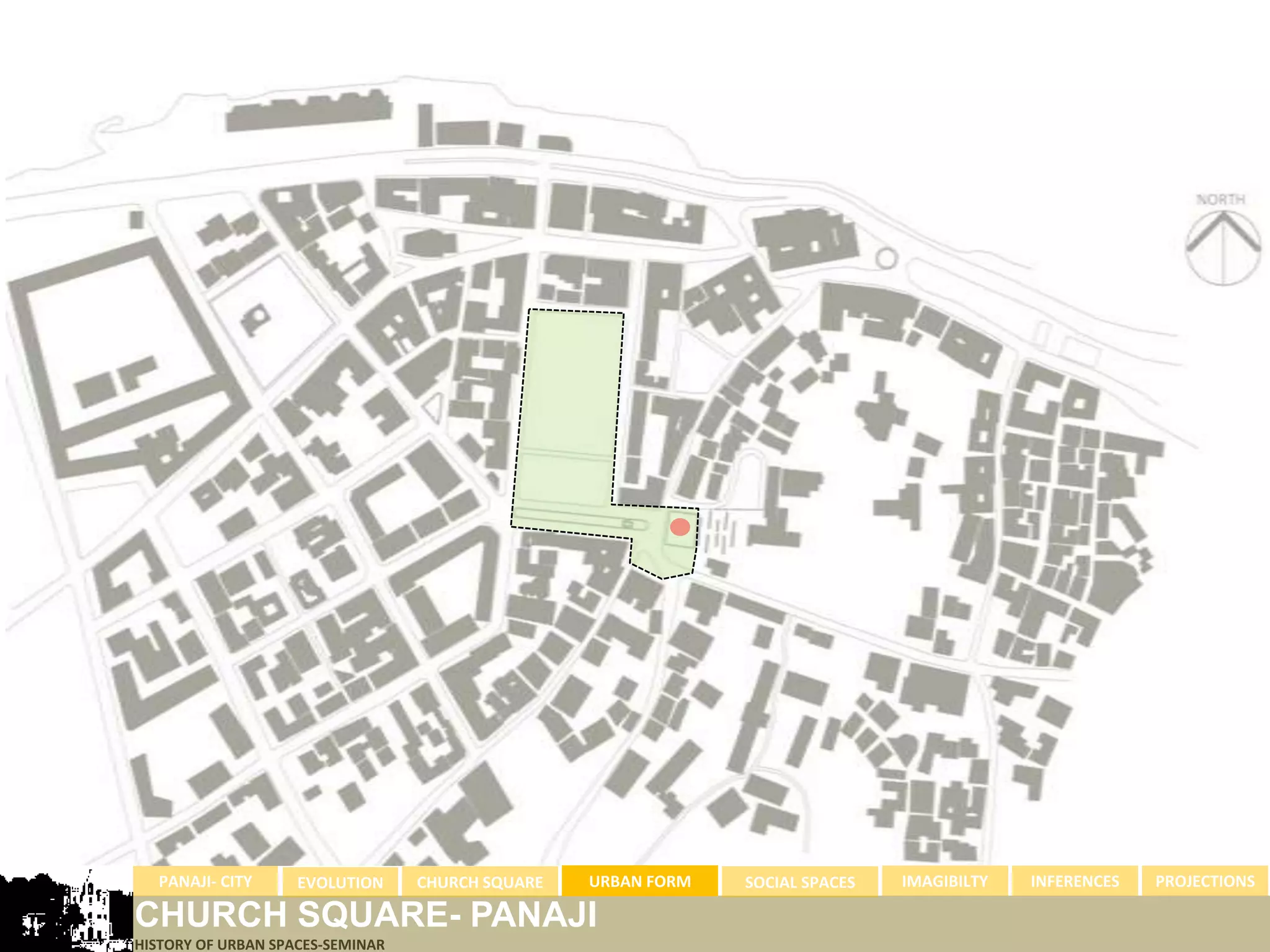
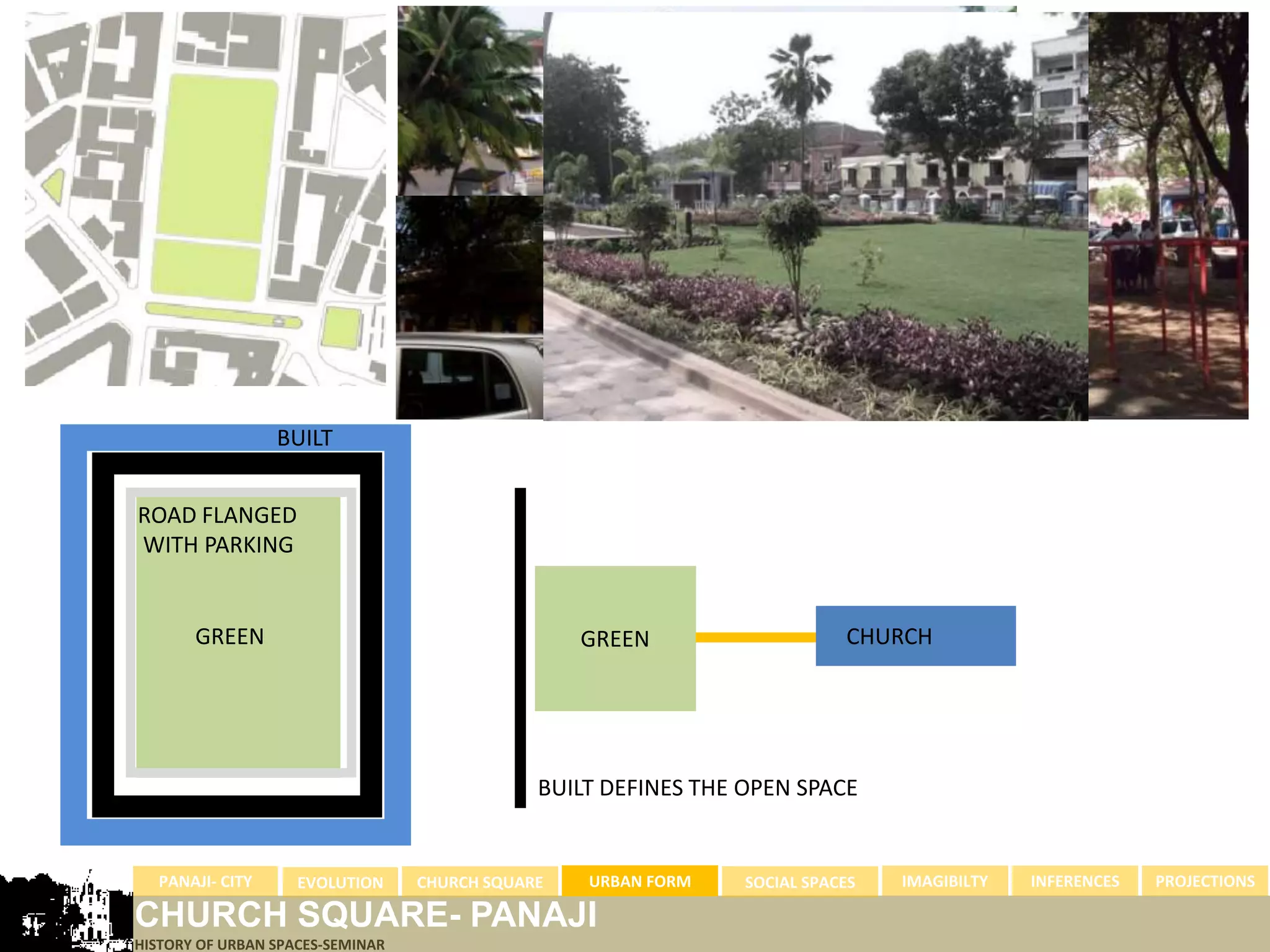
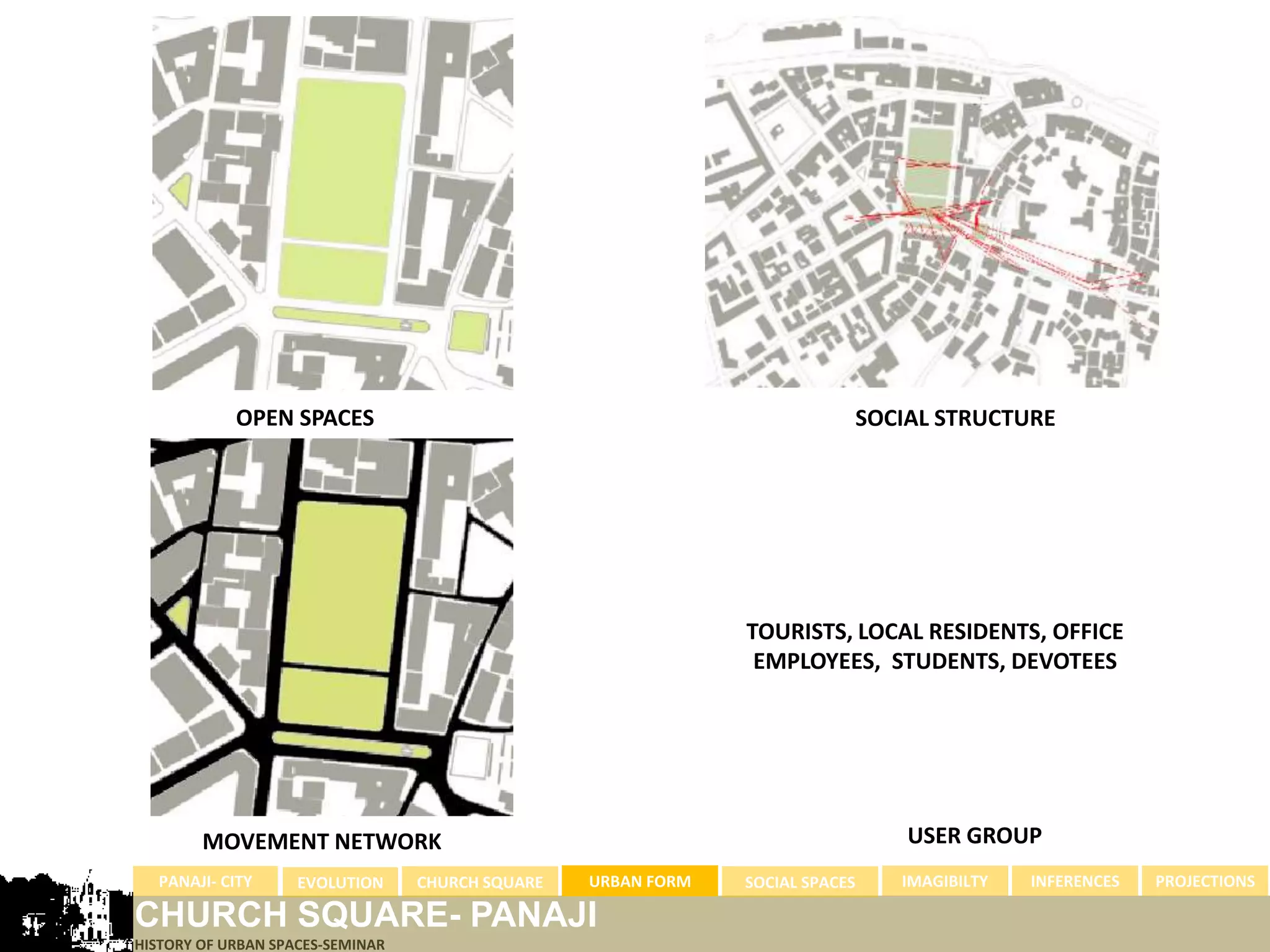
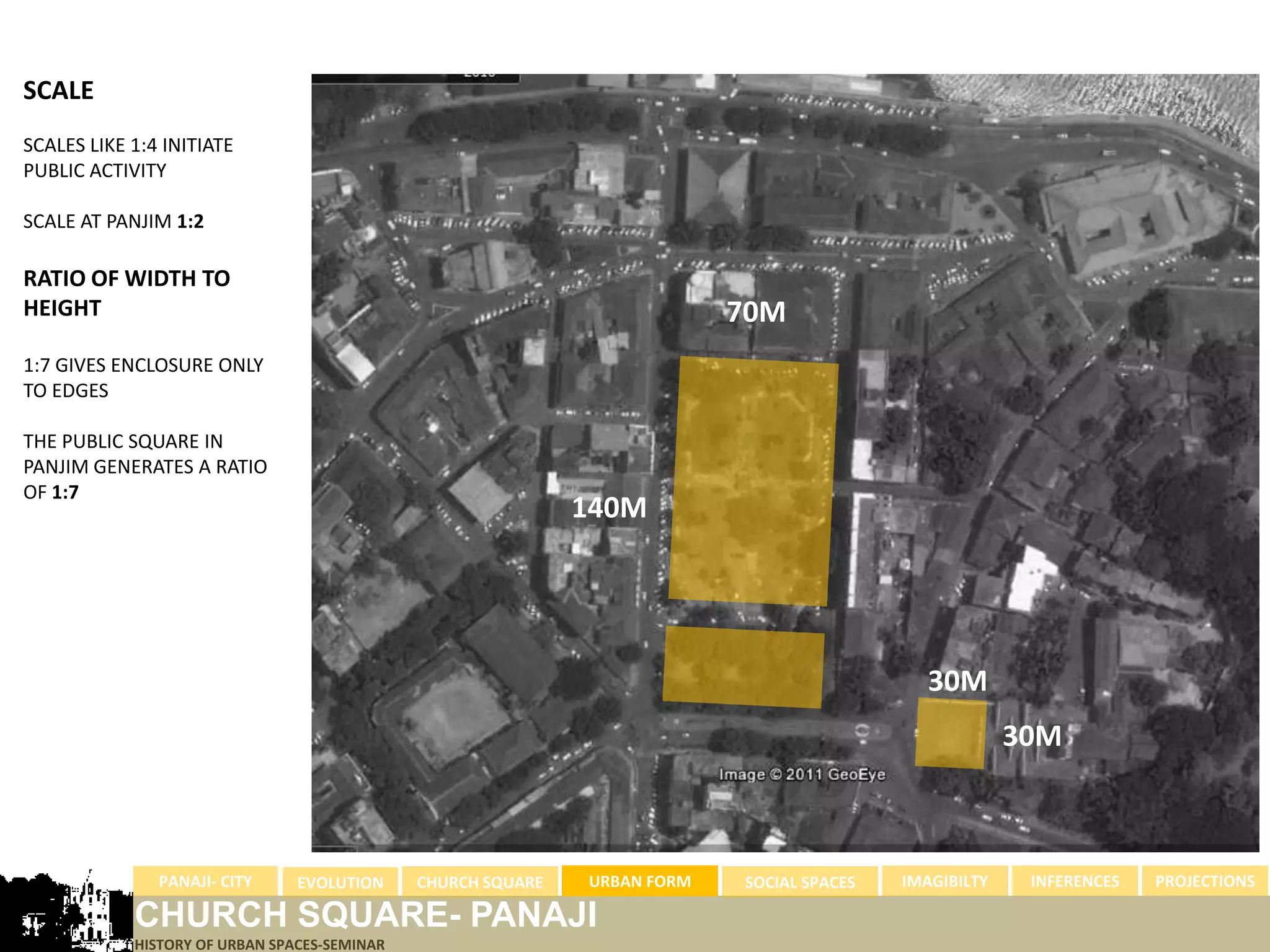
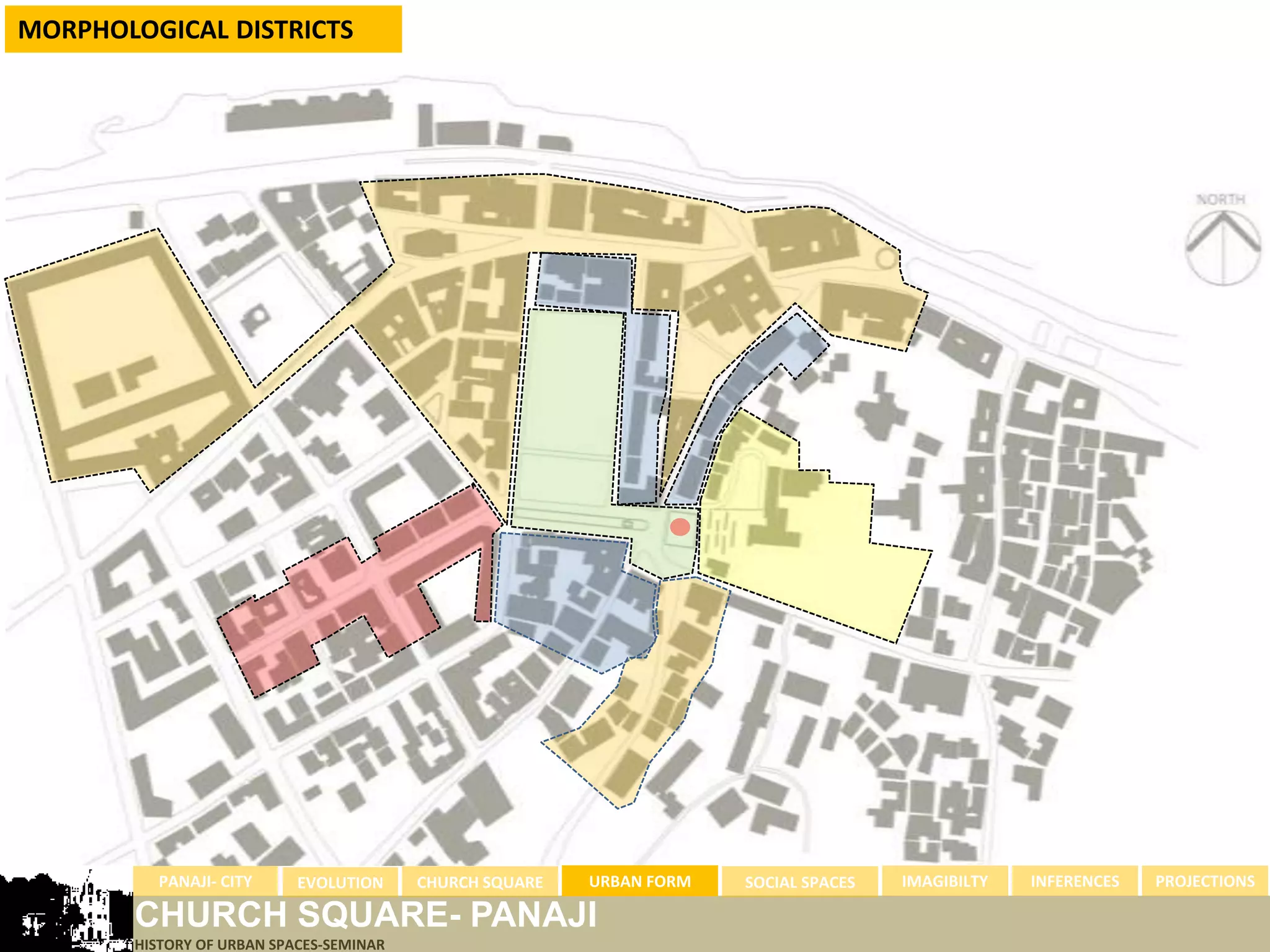
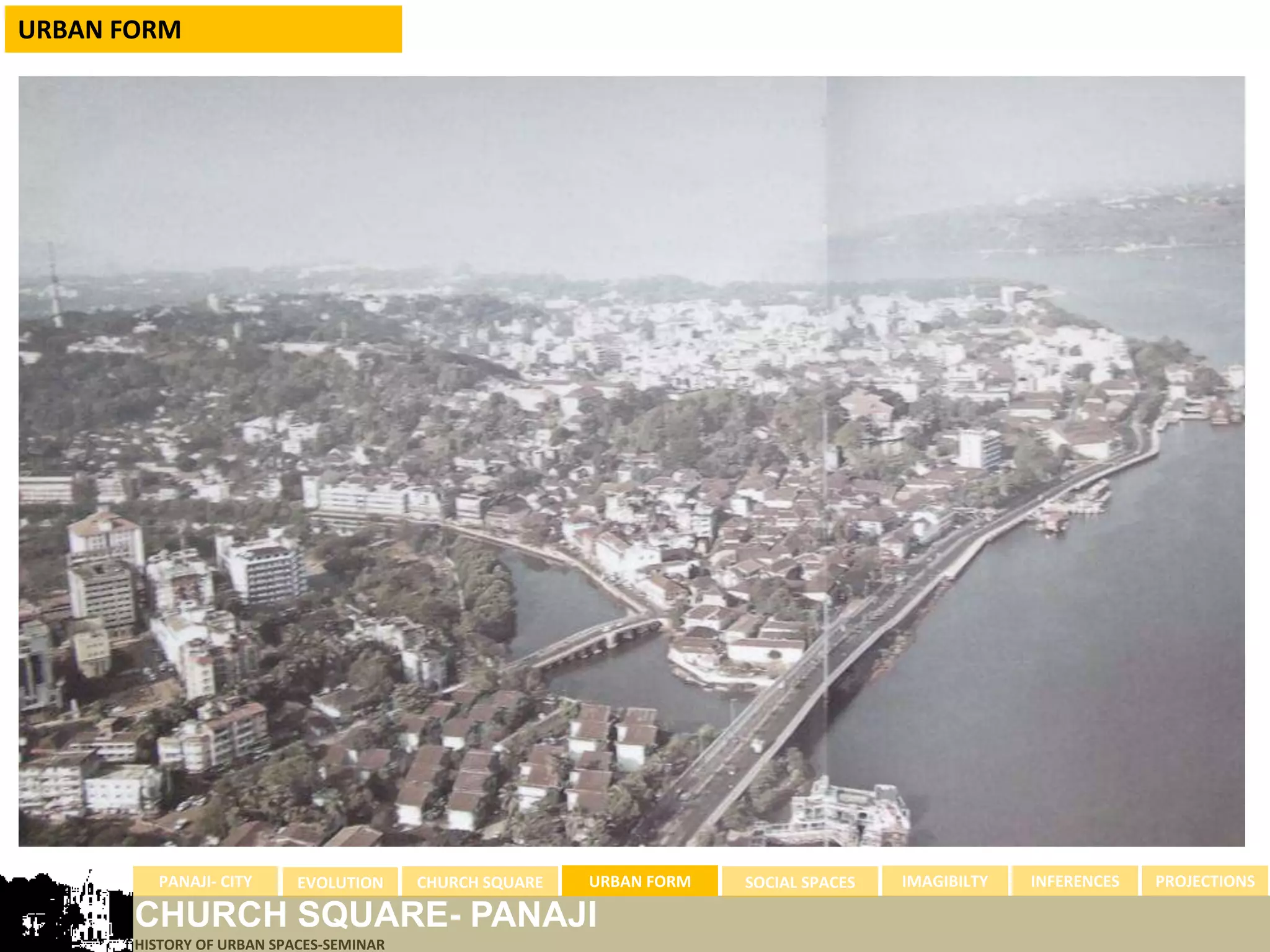

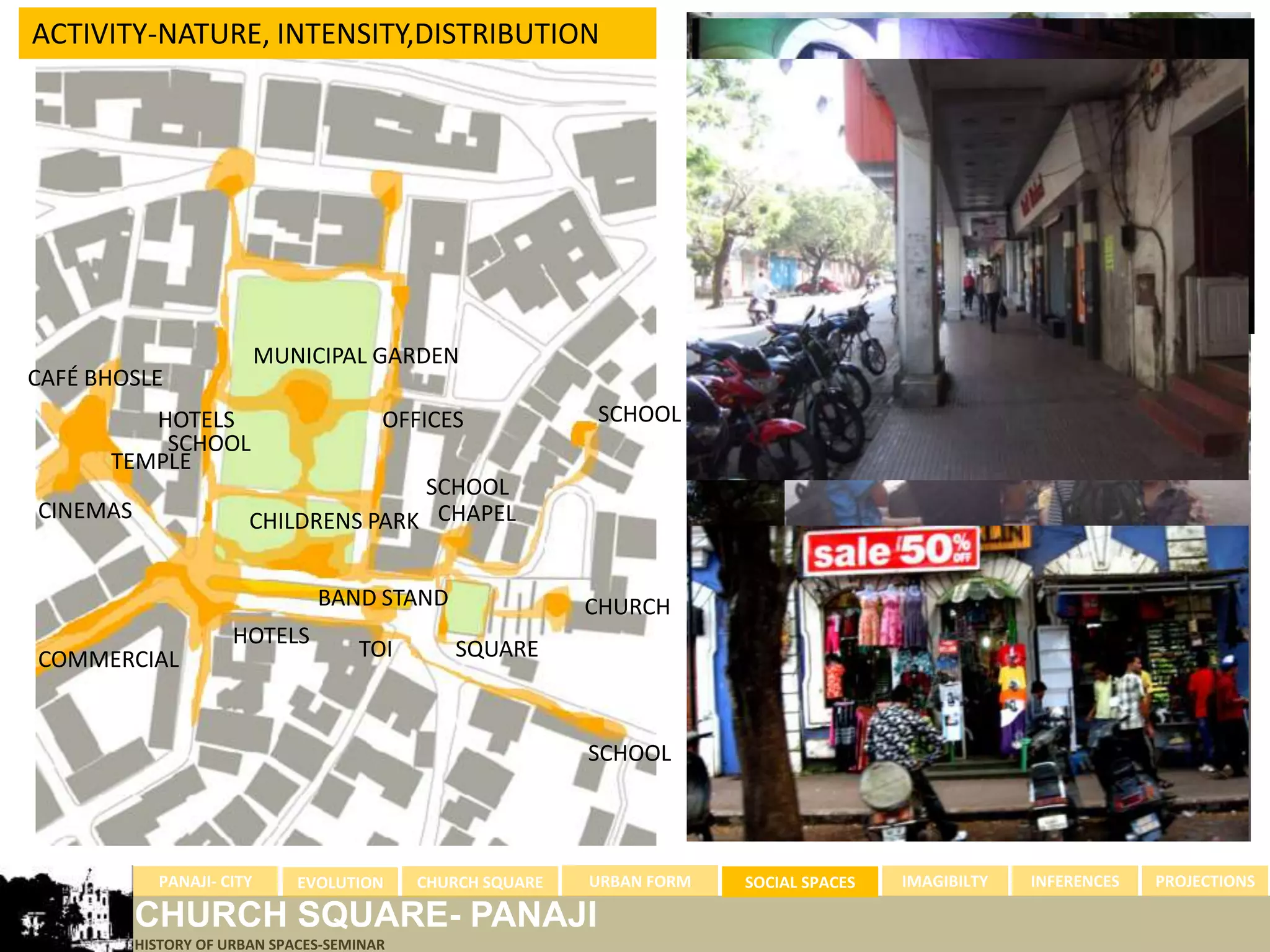
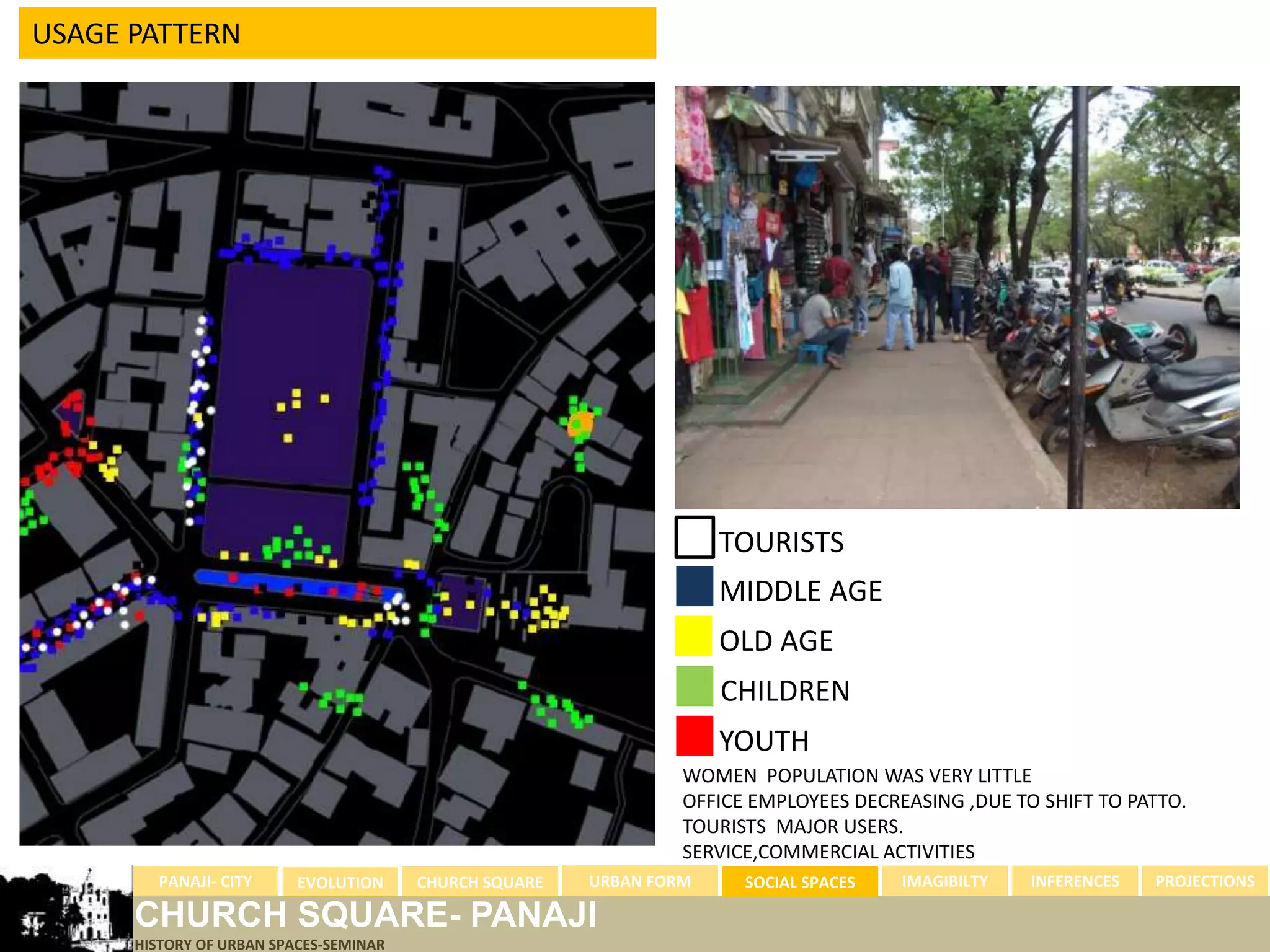
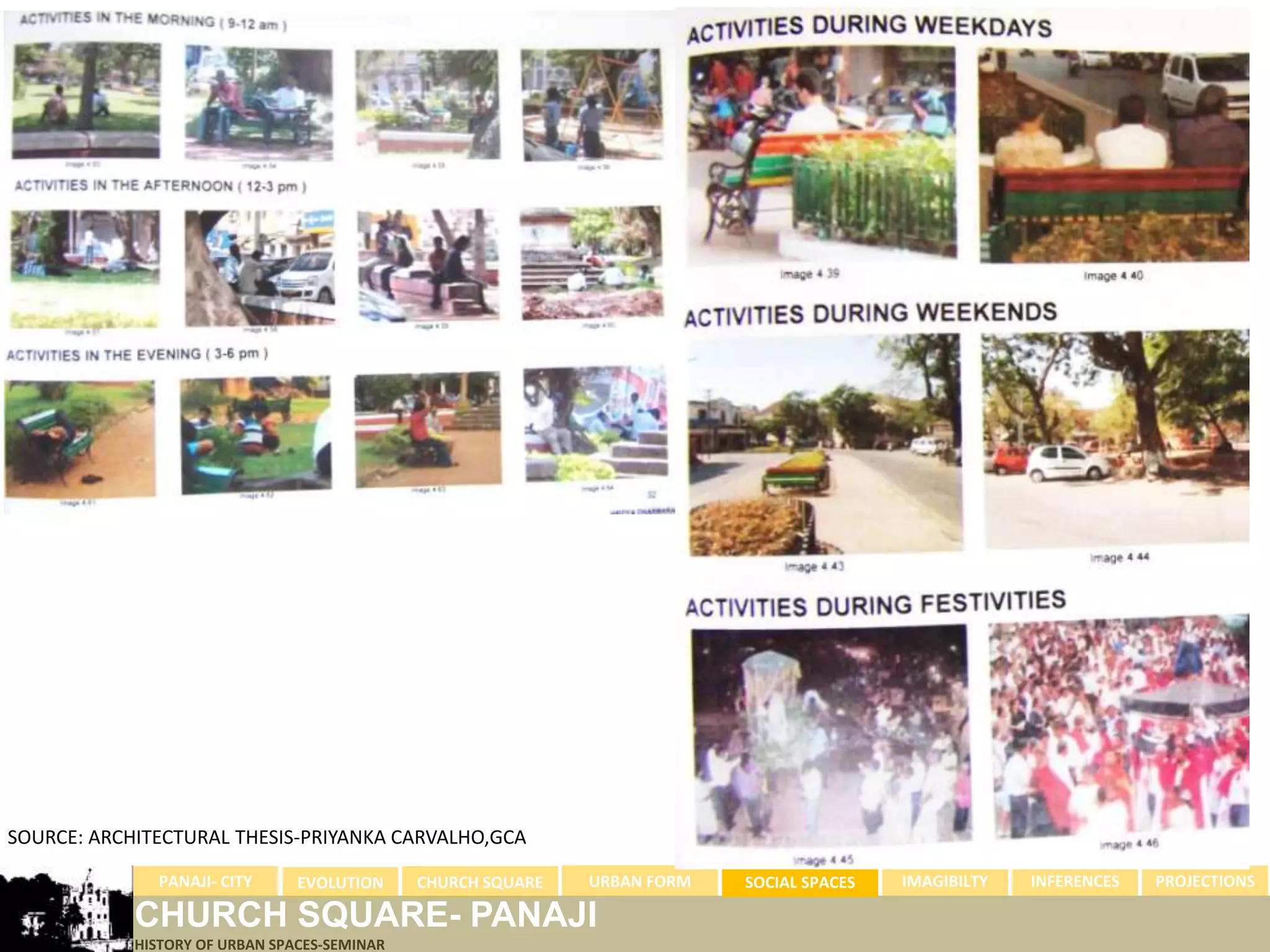
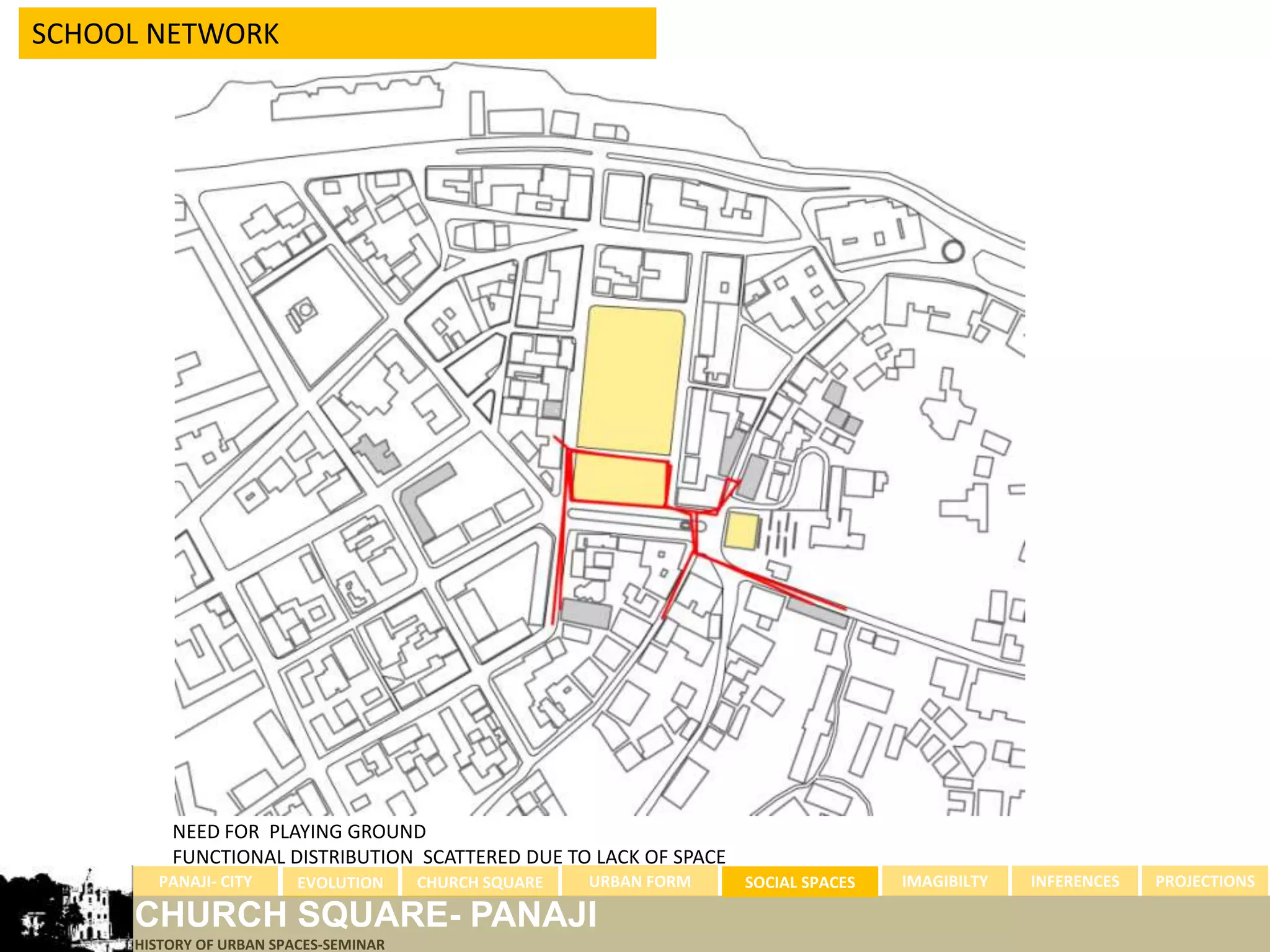
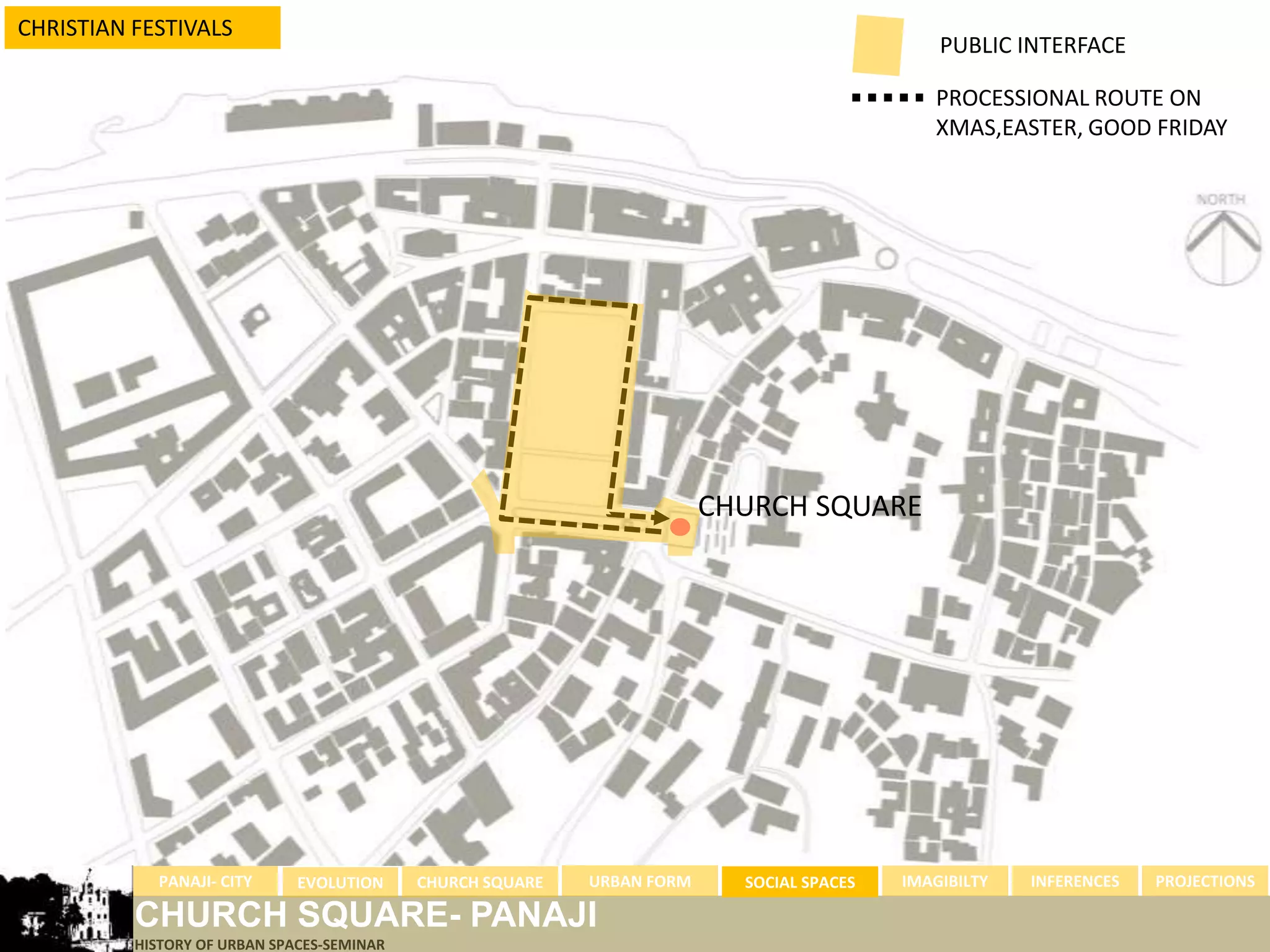
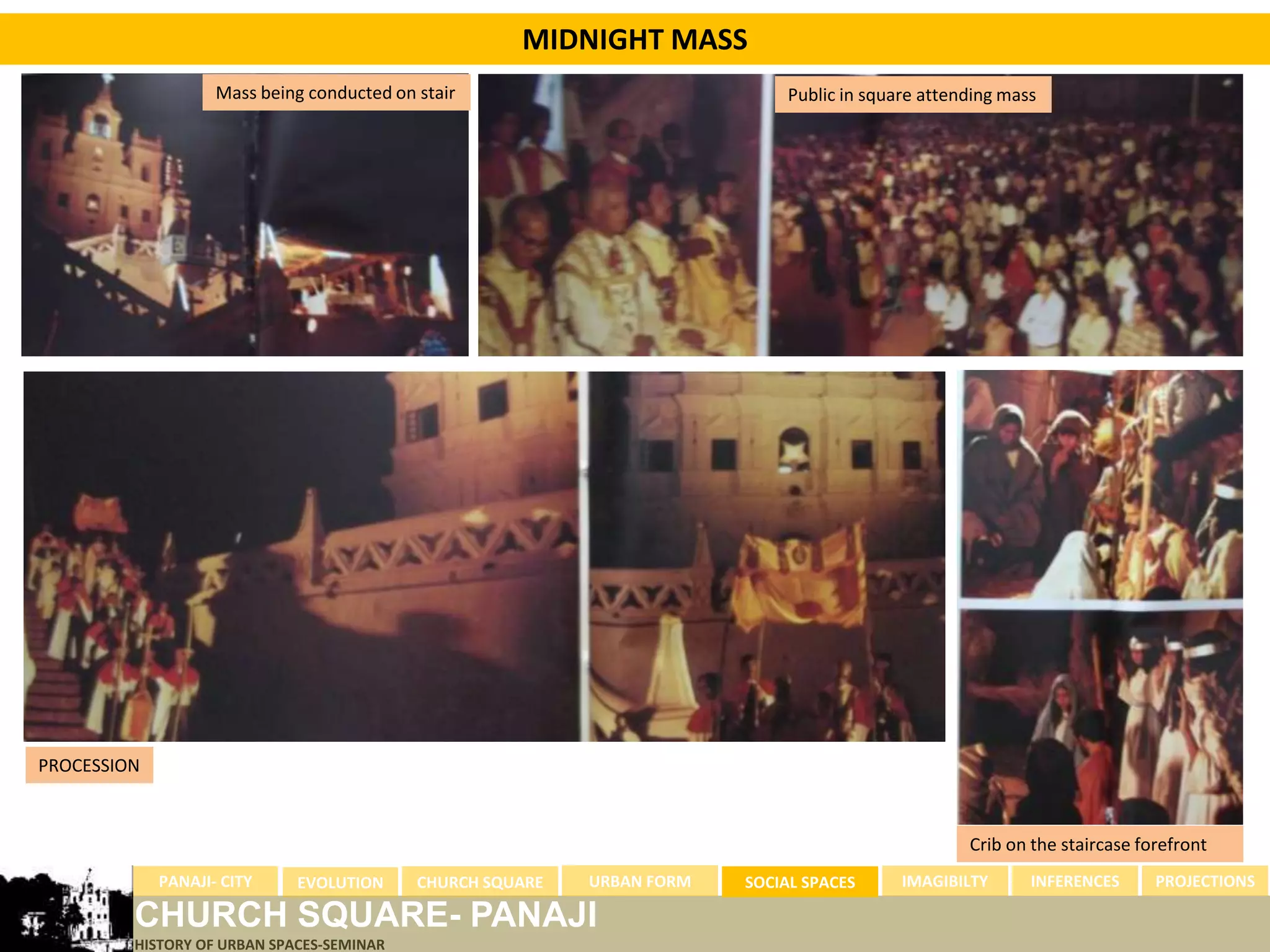
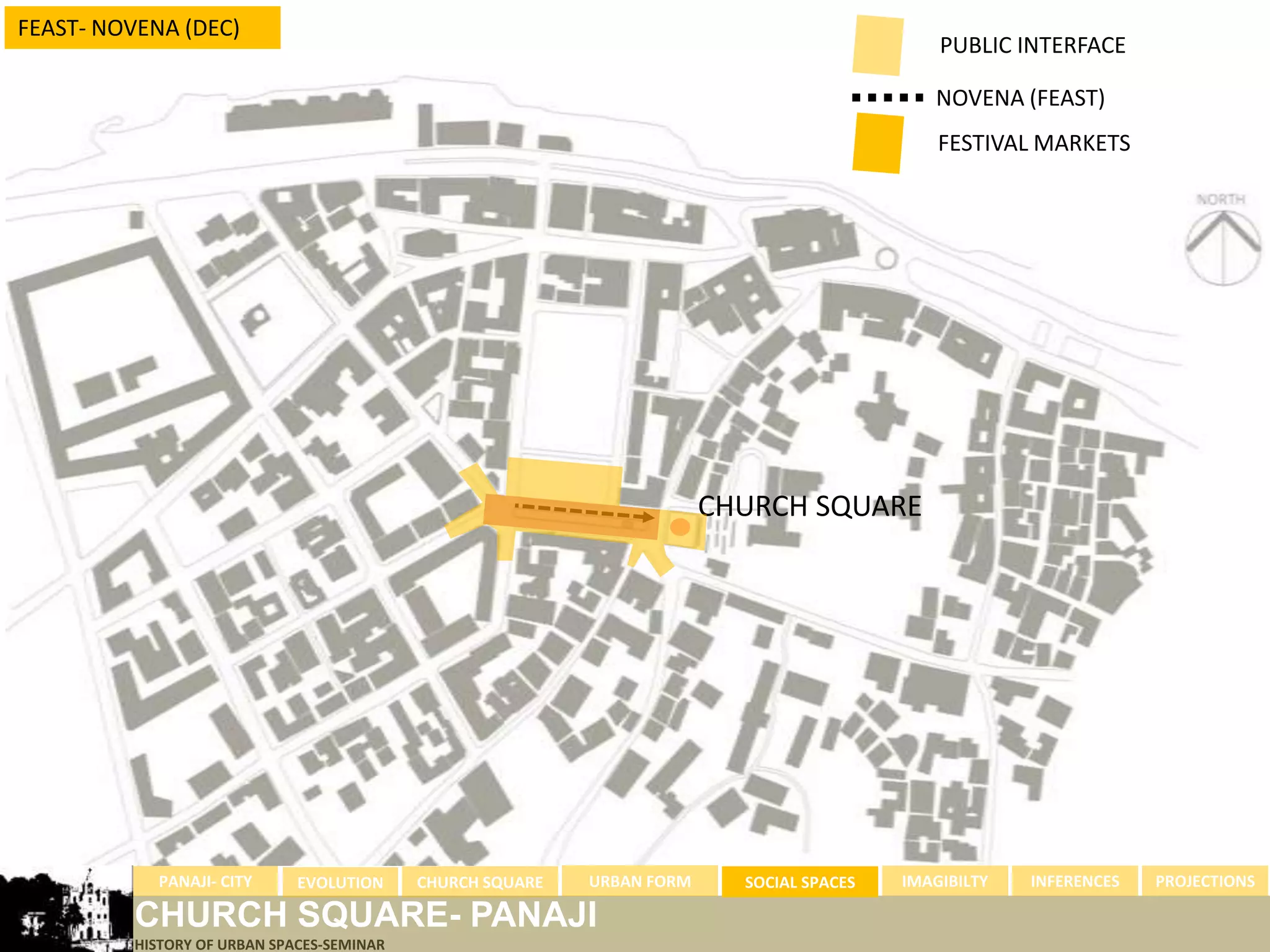
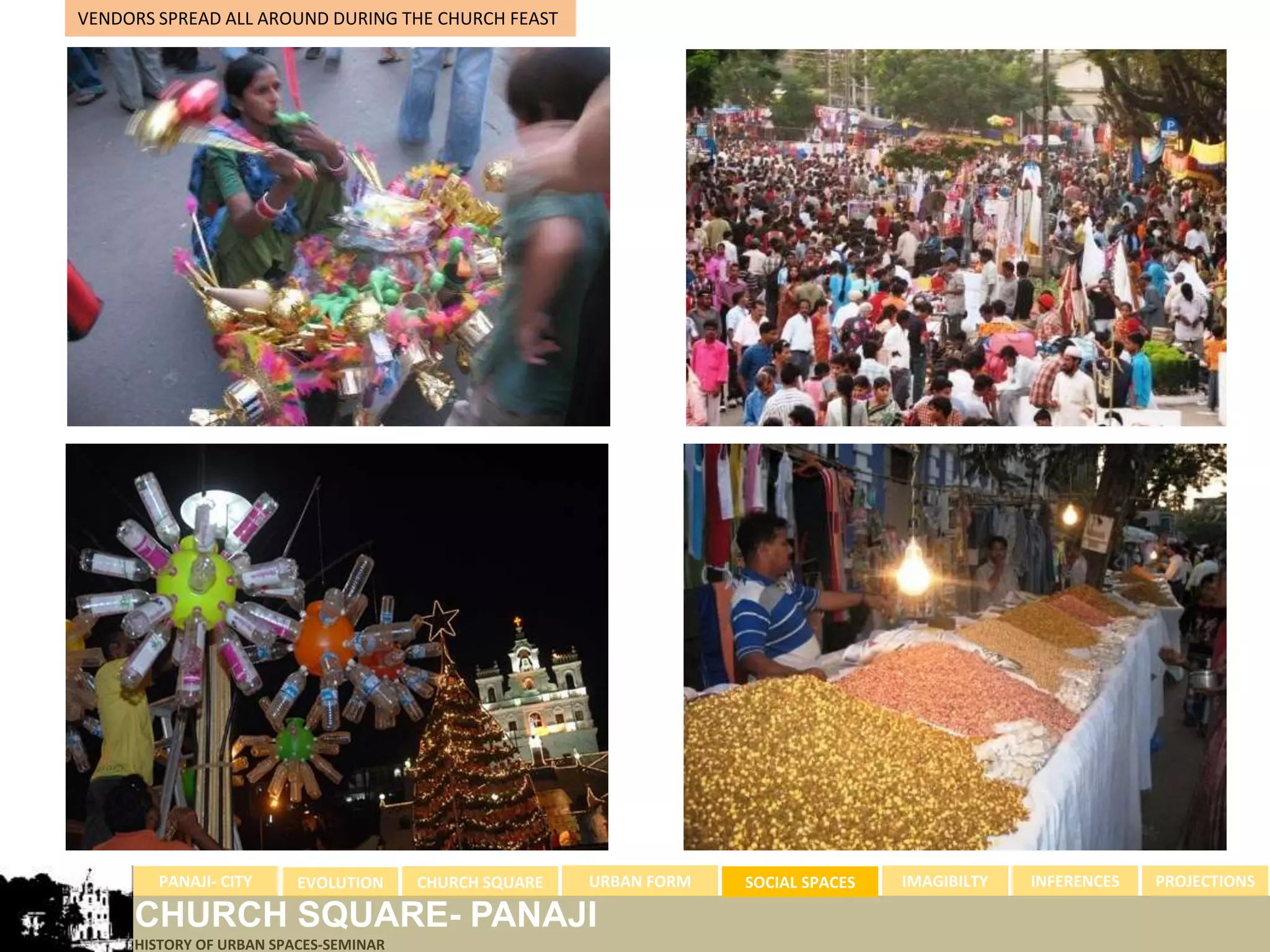
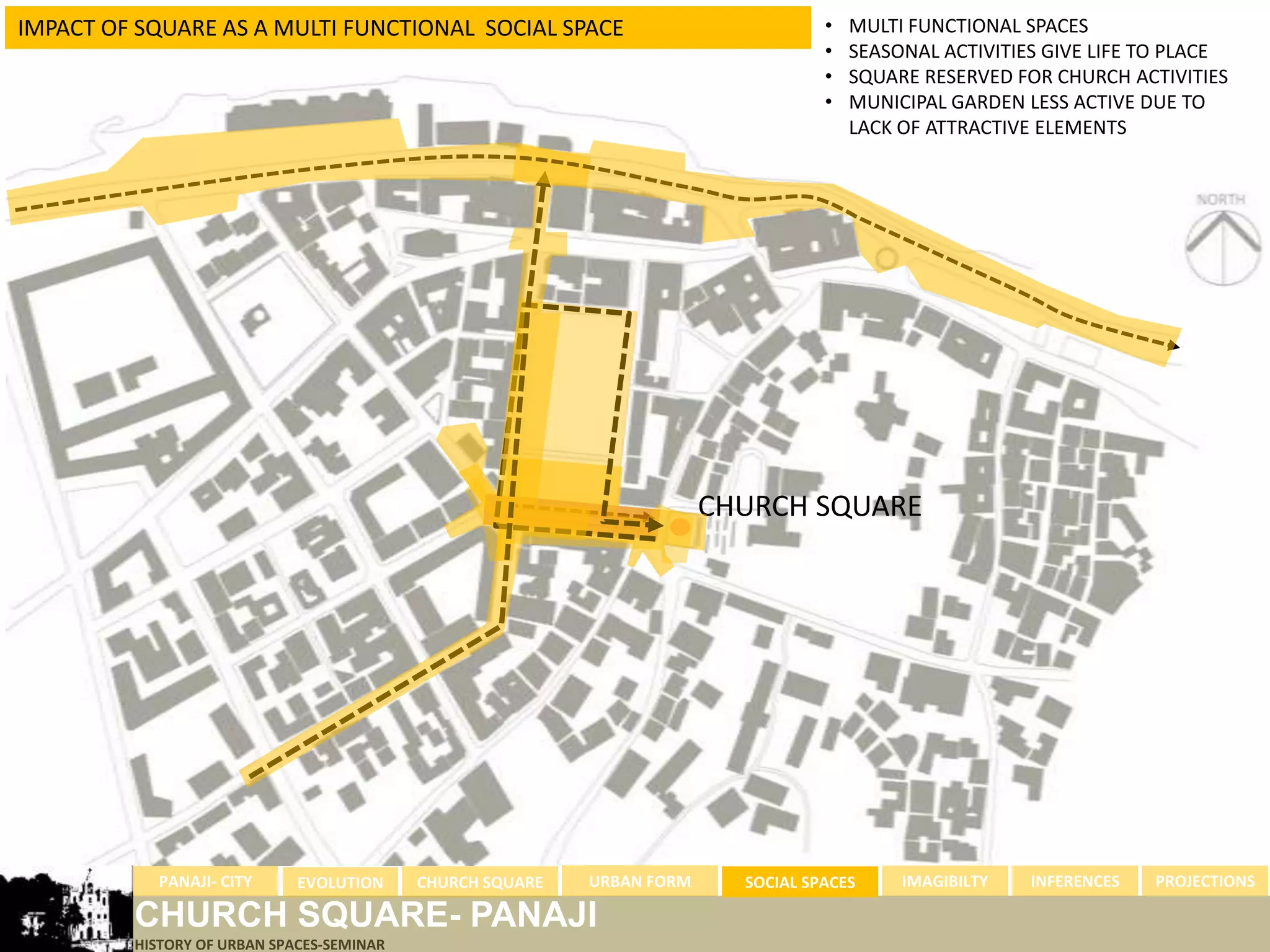
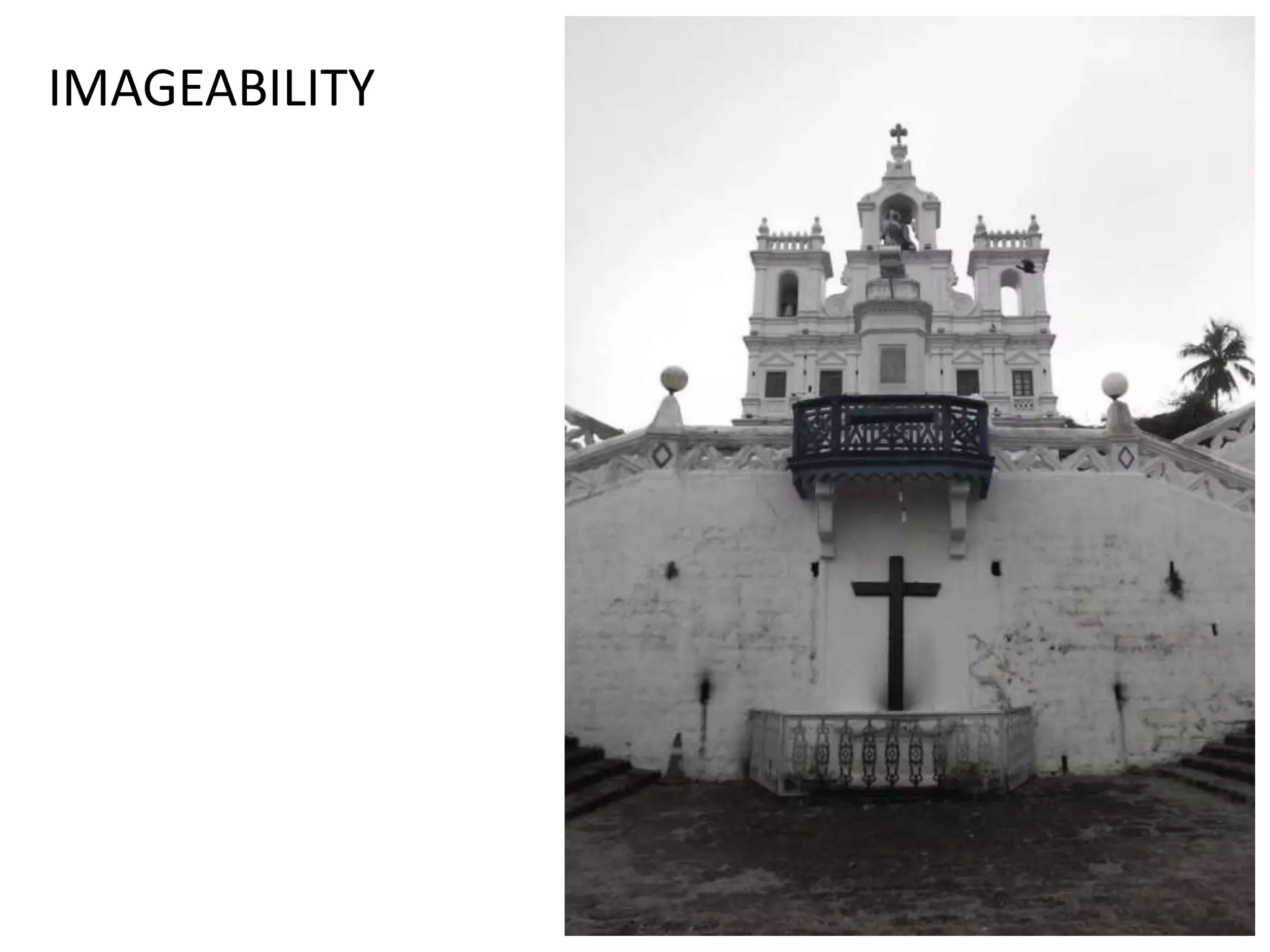
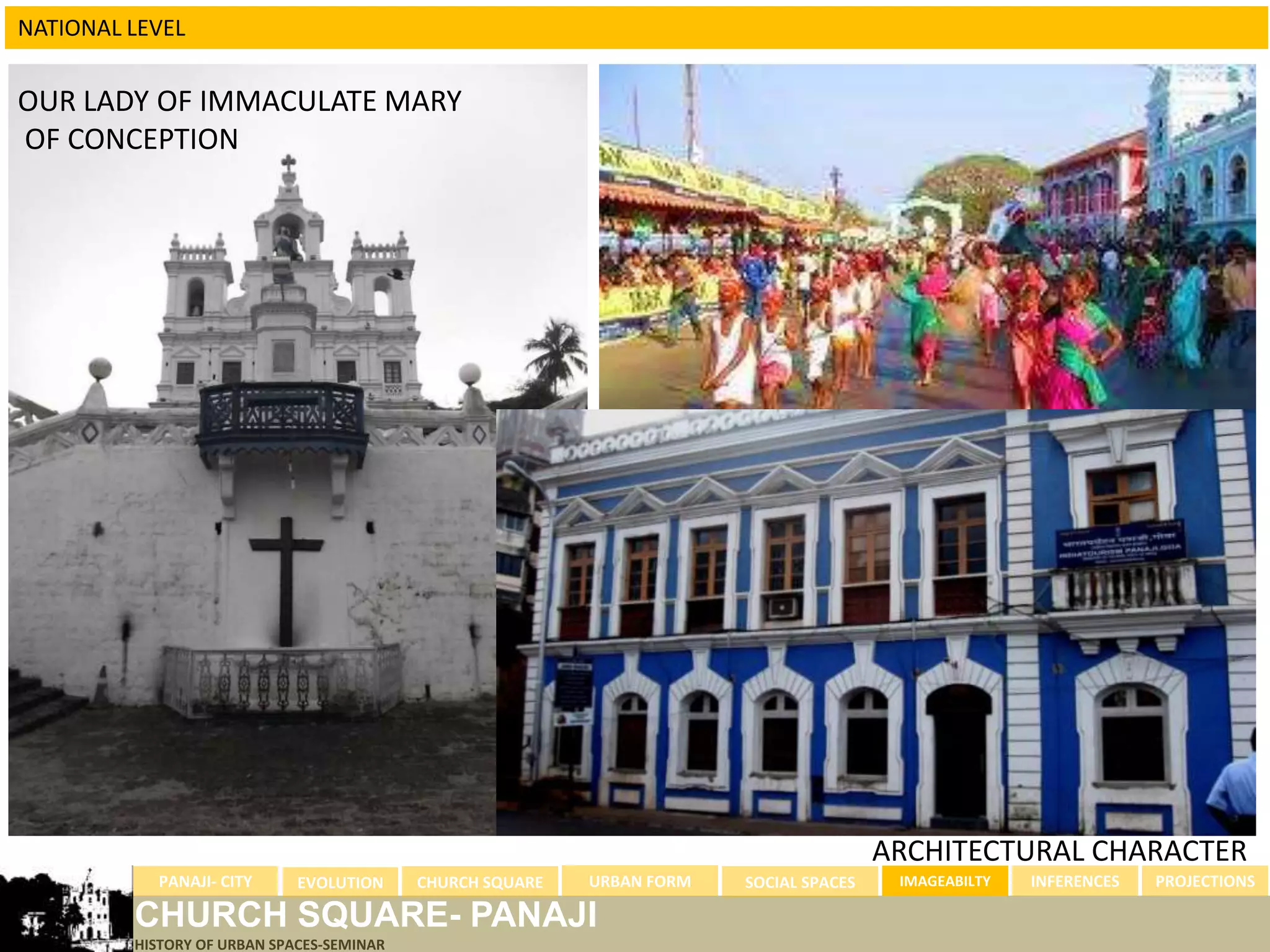
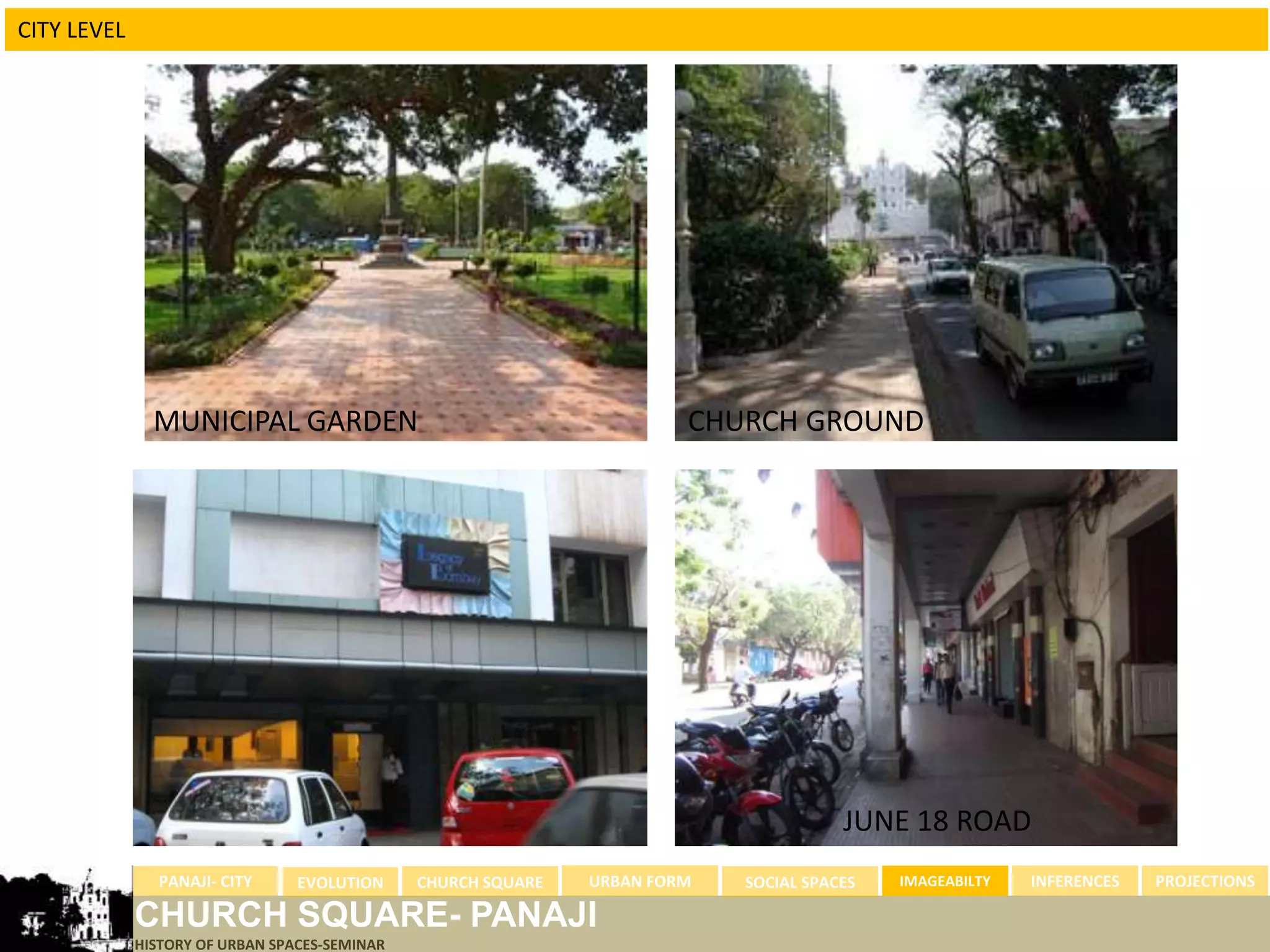
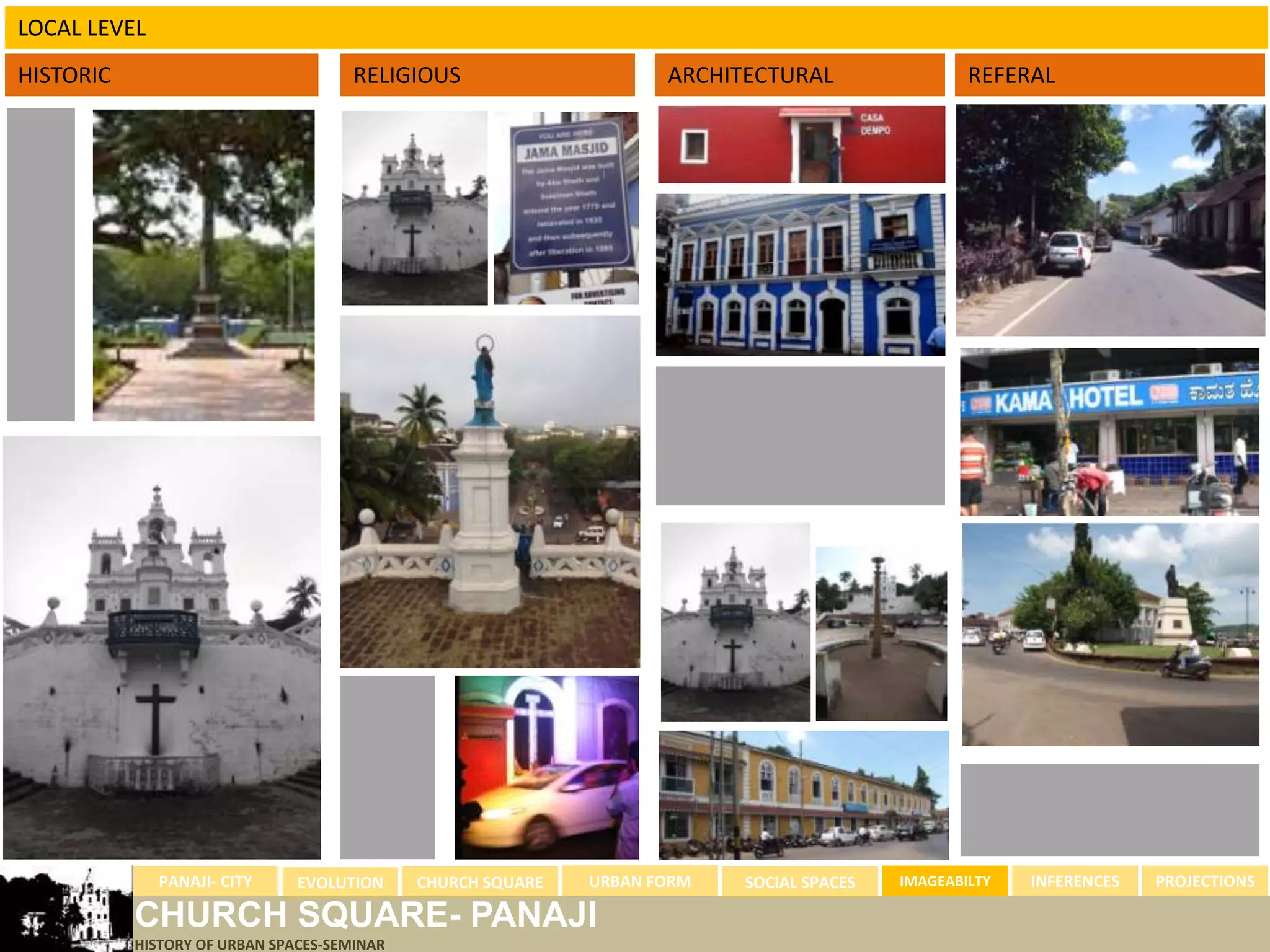




The document summarizes the history and evolution of Church Square in Panaji, Goa. It describes how the area started as marshy land inhabited by fishermen before the Portuguese invasion in 1510. Over centuries, the Portuguese developed the area by constructing a massive bridge in 1632, shifting the viceroy's residence in the 1750s, and developing a formal town plan in 1770. In the early 19th century, land acquisitions and reclamations helped expand the area and develop landmarks like the Church Square, Goa Medical School, and Azad Maidan. By the late 19th century, Church Square and the surrounding areas were fully developed.


