
PRESENTATION ON
1
History
of
COMPUTER
By Wajahat Ali Ghulam
2
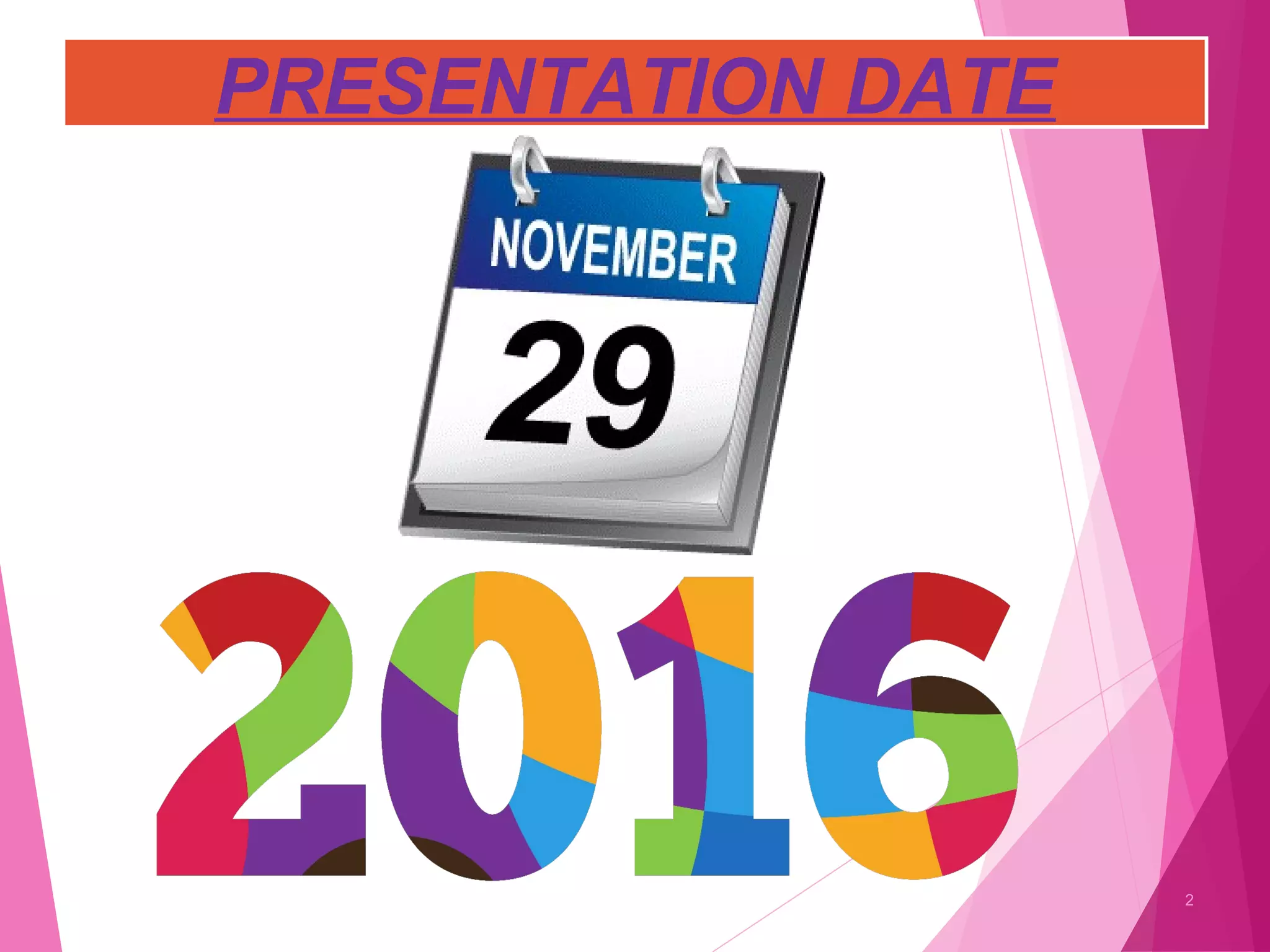
PRESENTATION DATE
History of Computers - Way Back When
3
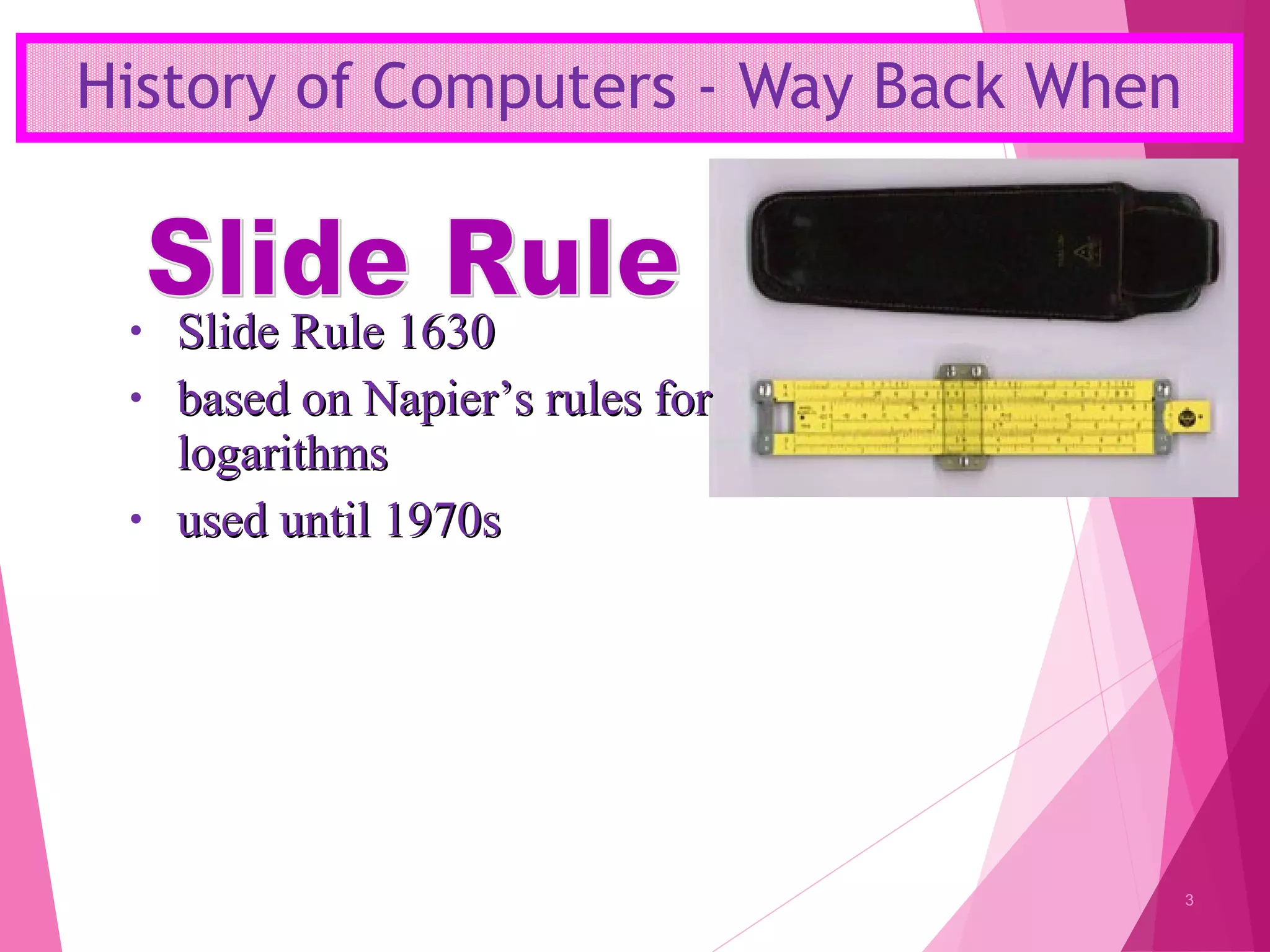
• Slide Rule 1630Slide Rule 1630
• based on Napier’s rules forbased on Napier’s rules for
logarithmslogarithms
• used until 1970sused until 1970s
History of Computers - 19th Century
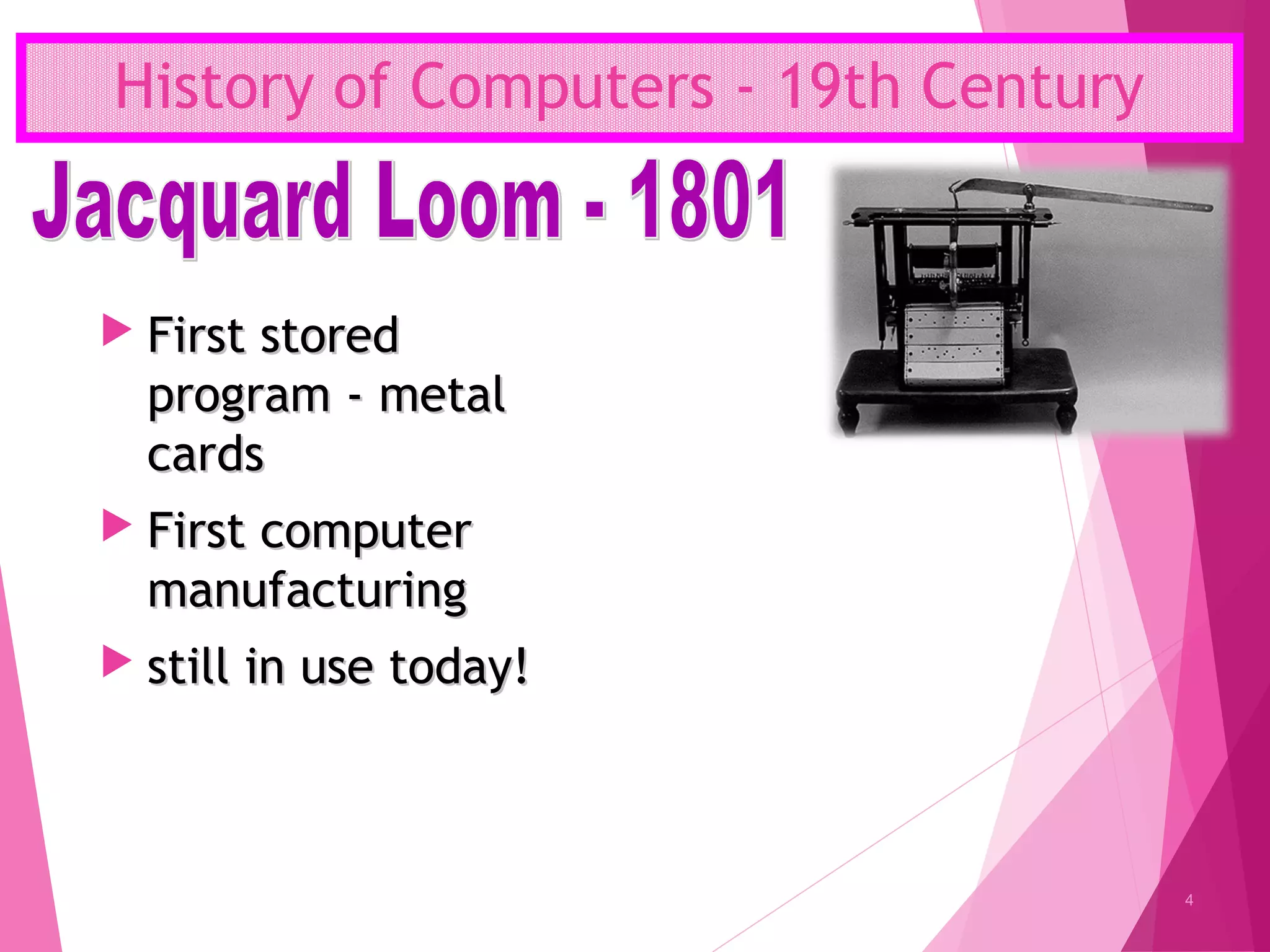
 First storedFirst stored
program - metalprogram - metal
cardscards
 First computerFirst computer
manufacturingmanufacturing
 still in use today!still in use today!
4
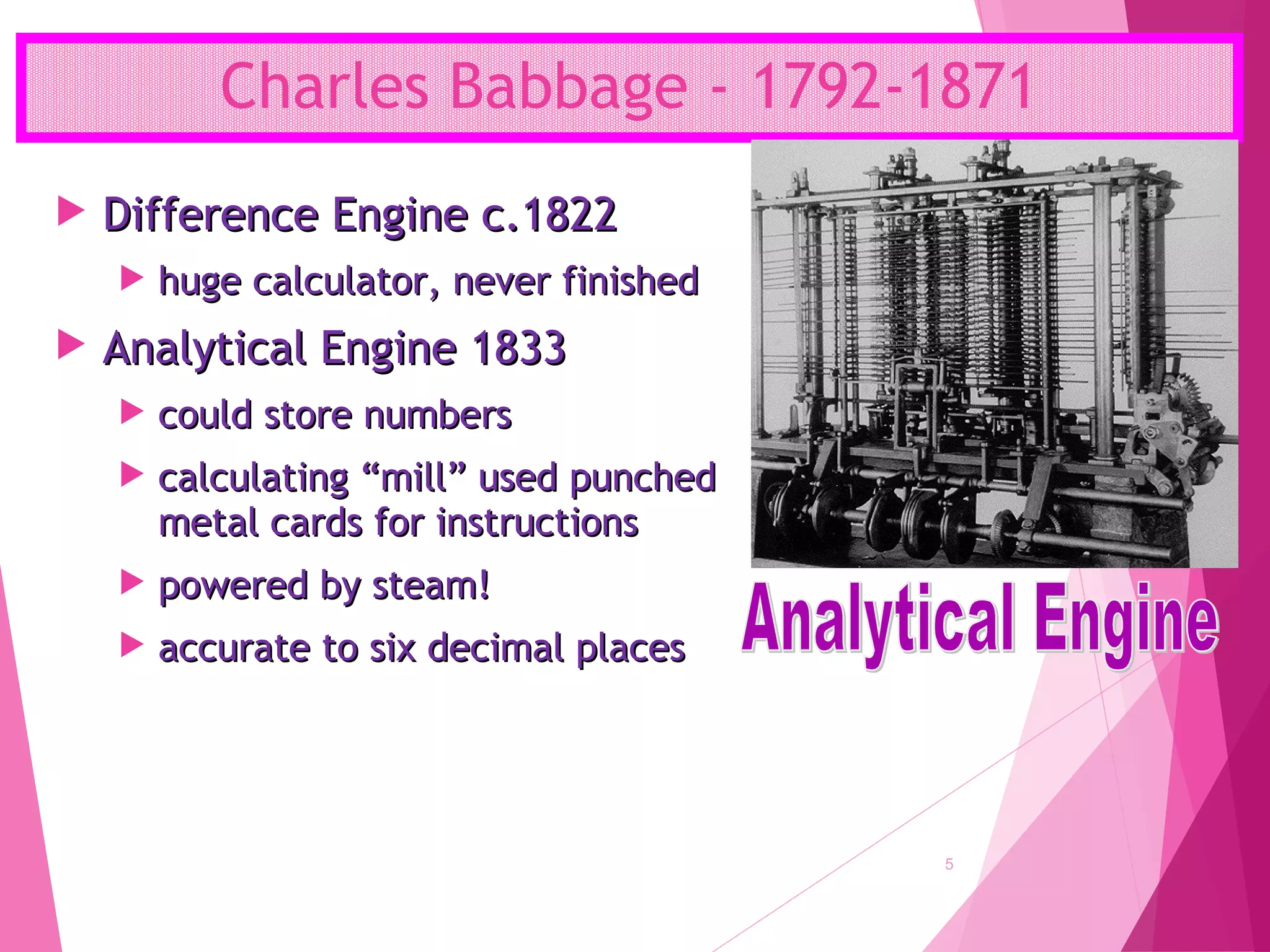
Charles Babbage - 1792-1871
5
 Difference Engine c.1822Difference Engine c.1822
 huge calculator, never finishedhuge calculator, never finished
 Analytical Engine 1833Analytical Engine 1833
 could store numberscould store numbers
 calculating “mill” used punchedcalculating “mill” used punched
metal cards for instructionsmetal cards for instructions
 powered by steam!powered by steam!
 accurate to six decimal placesaccurate to six decimal places
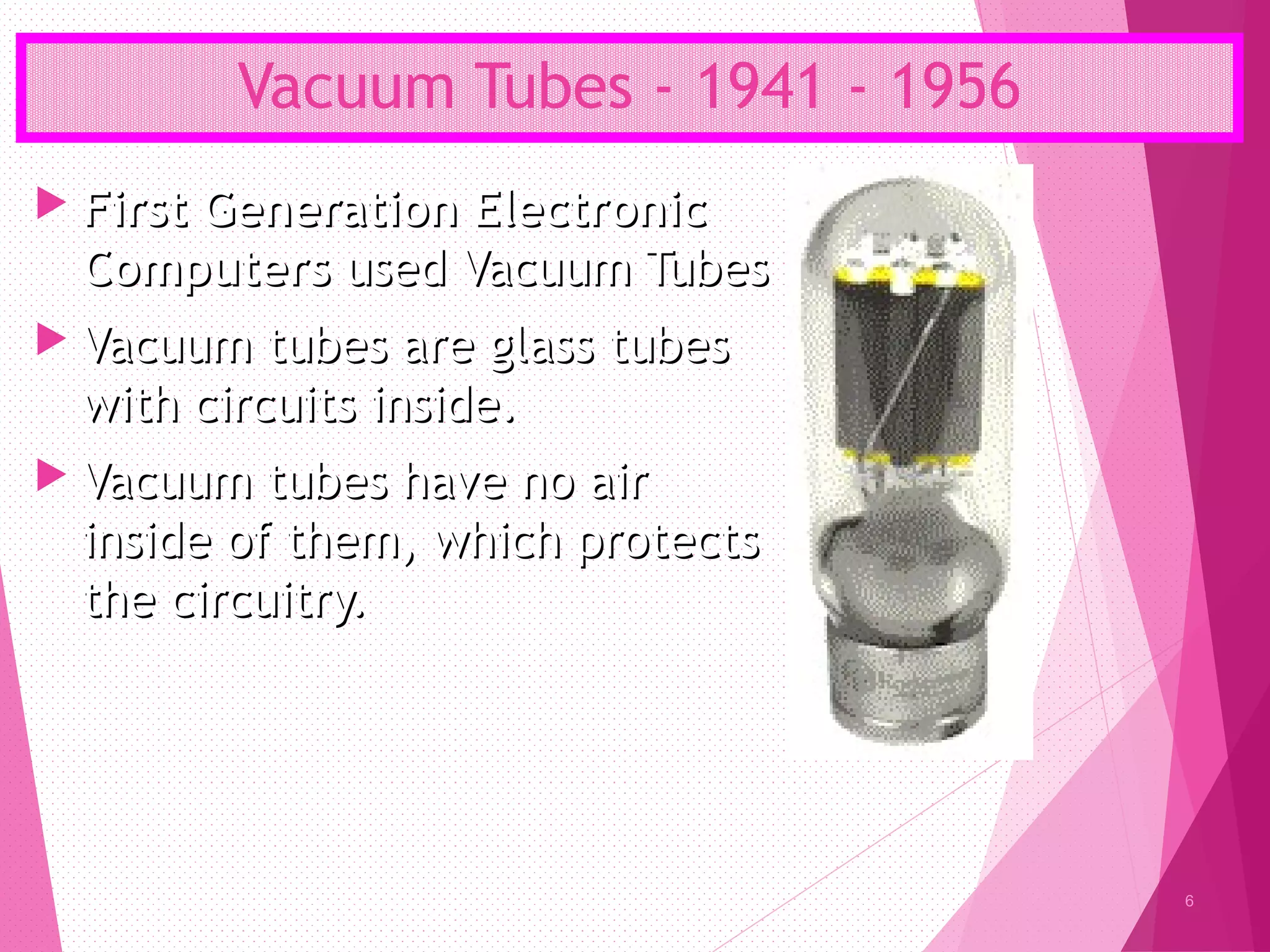
Vacuum Tubes - 1941 - 1956
 First Generation ElectronicFirst Generation Electronic
ComputersComputers used Vacuum Tubesused Vacuum Tubes
 Vacuum tubes are glass tubesVacuum tubes are glass tubes
with circuits inside.with circuits inside.
 Vacuum tubes have no airVacuum tubes have no air
inside of them, which protectsinside of them, which protects
the circuitry.the circuitry.
6
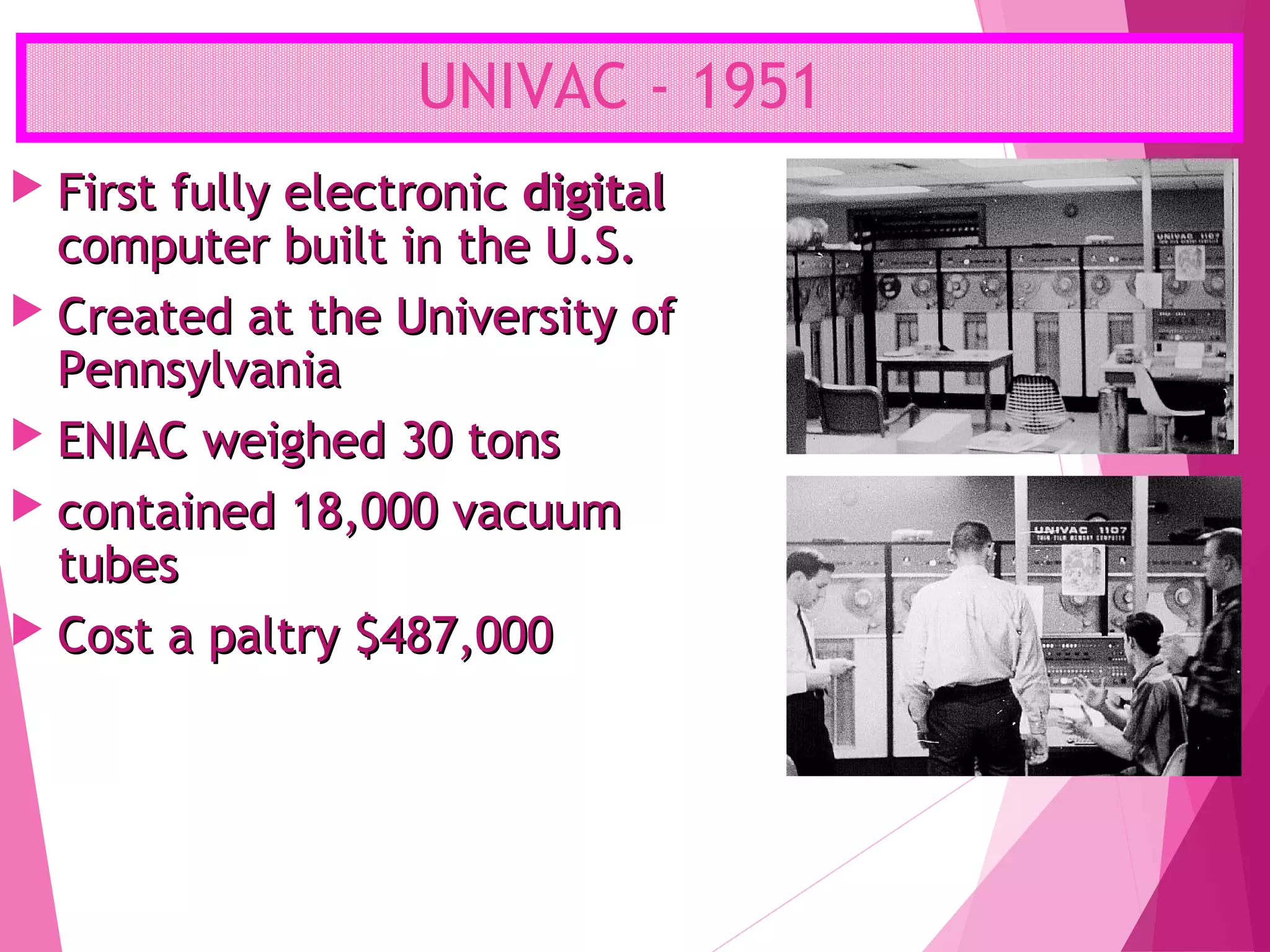
UNIVAC - 1951
 First fully electronicFirst fully electronic digitaldigital
computer built in the U.S.computer built in the U.S.
 Created at the University ofCreated at the University of
PennsylvaniaPennsylvania
 ENIAC weighed 30 tonsENIAC weighed 30 tons
 contained 18,000 vacuumcontained 18,000 vacuum
tubestubes
 Cost a paltry $487,000Cost a paltry $487,000
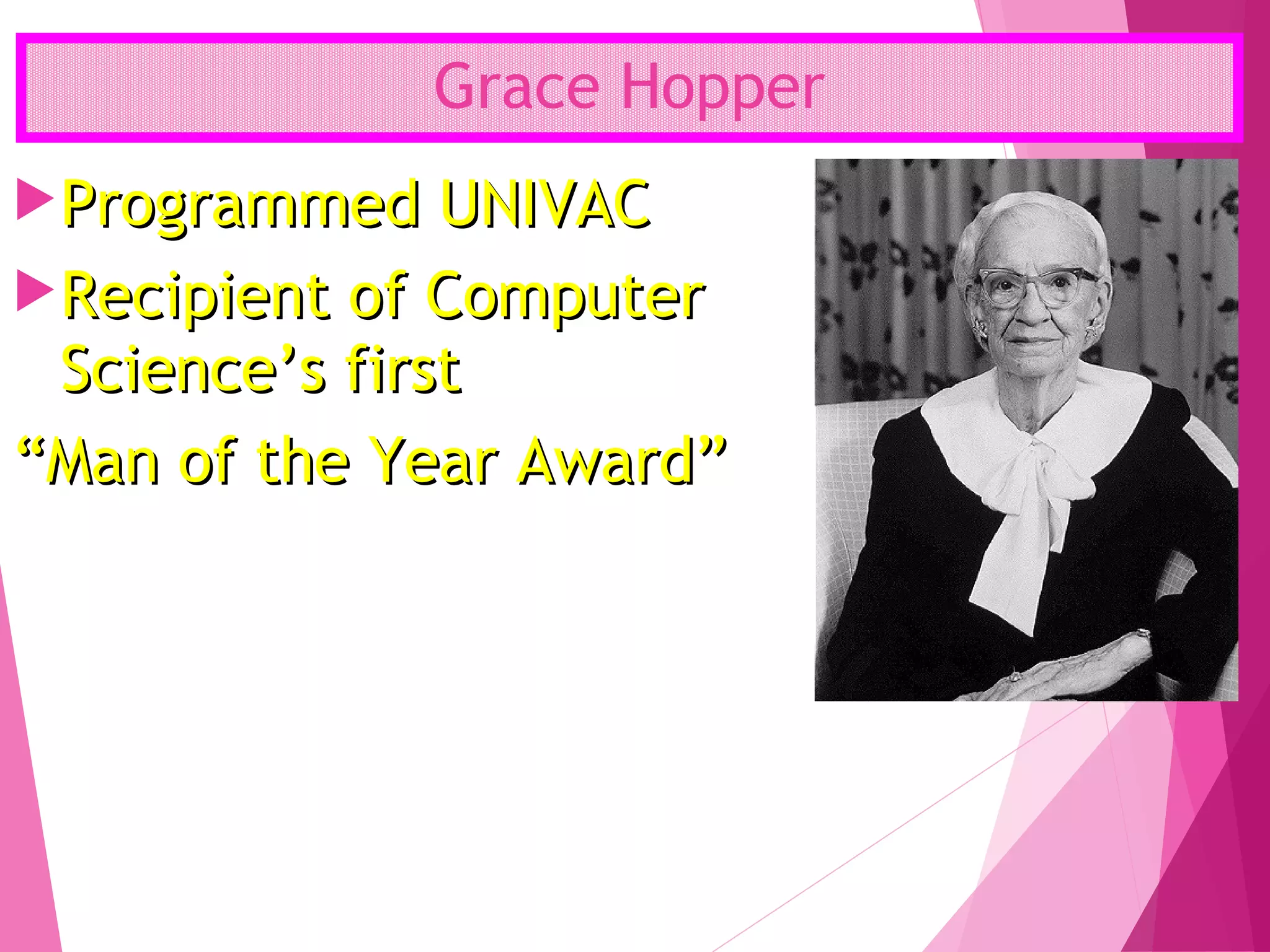
Grace Hopper
Programmed UNIVACProgrammed UNIVAC
Recipient of ComputerRecipient of Computer
Science’s firstScience’s first
““Man of the Year Award”Man of the Year Award”
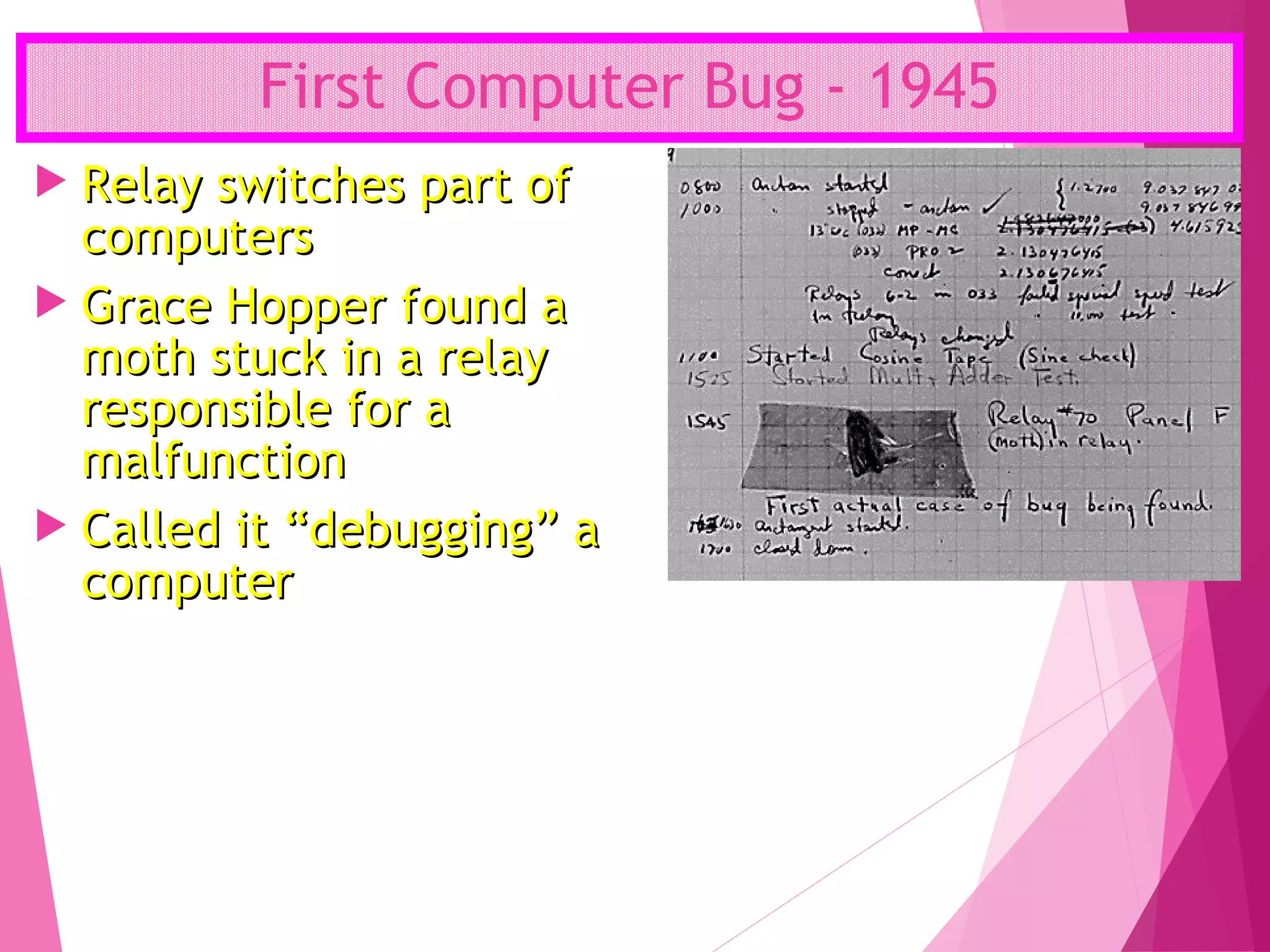
First Computer Bug - 1945
 Relay switches part ofRelay switches part of
computerscomputers
 Grace Hopper found aGrace Hopper found a
moth stuck in a relaymoth stuck in a relay
responsible for aresponsible for a
malfunctionmalfunction
 Called it “debugging” aCalled it “debugging” a
computercomputer
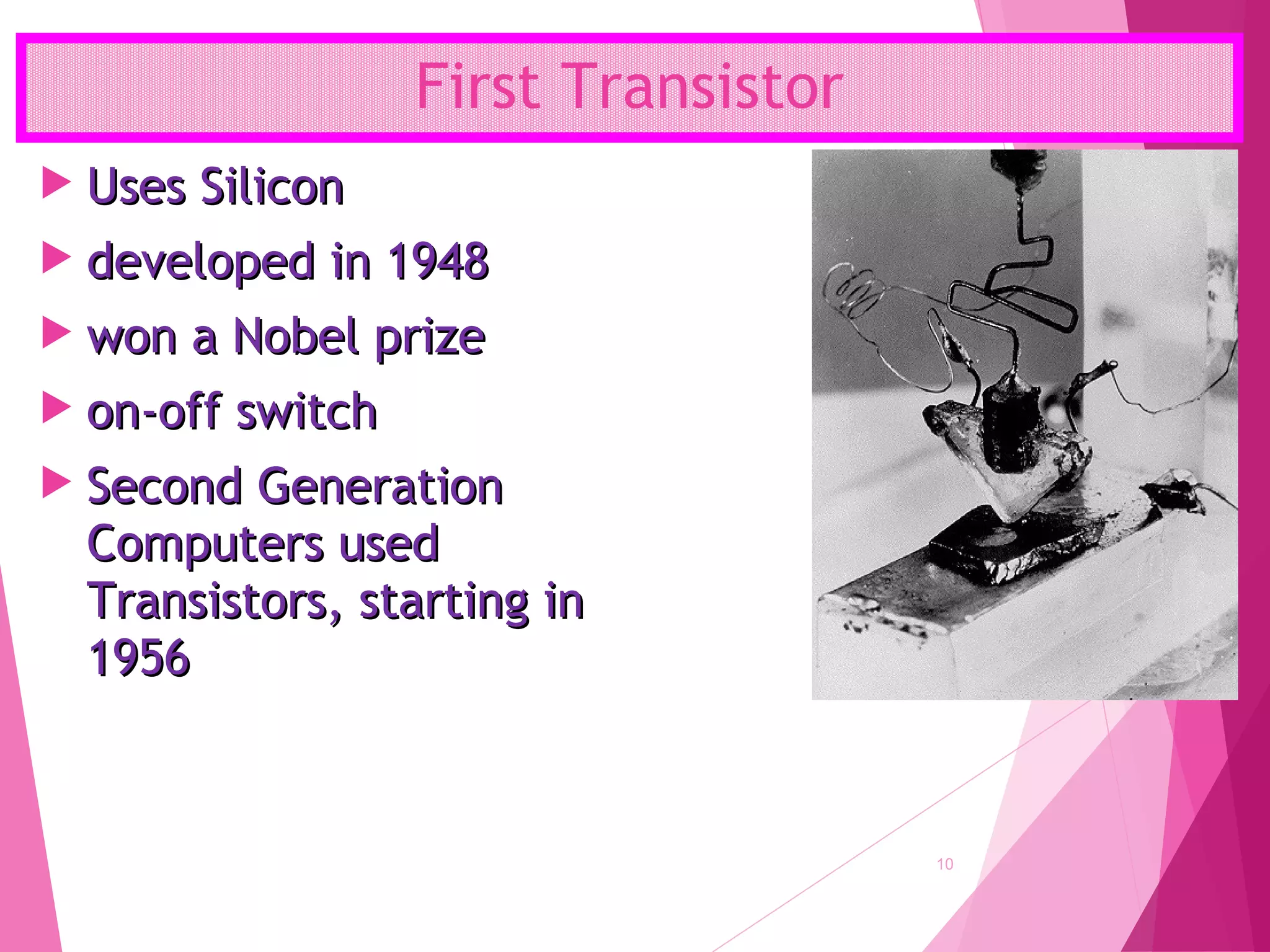
First Transistor
10
 Uses SiliconUses Silicon
 developed in 1948developed in 1948
 won a Nobel prizewon a Nobel prize
 on-off switchon-off switch
 Second GenerationSecond Generation
Computers usedComputers used
Transistors, starting inTransistors, starting in
19561956
Second Generation – 1965-1963
 1956 – Computers began to1956 – Computers began to
incorporateincorporate TransistorsTransistors
 Replaced vacuum tubes withReplaced vacuum tubes with
TransistorsTransistors
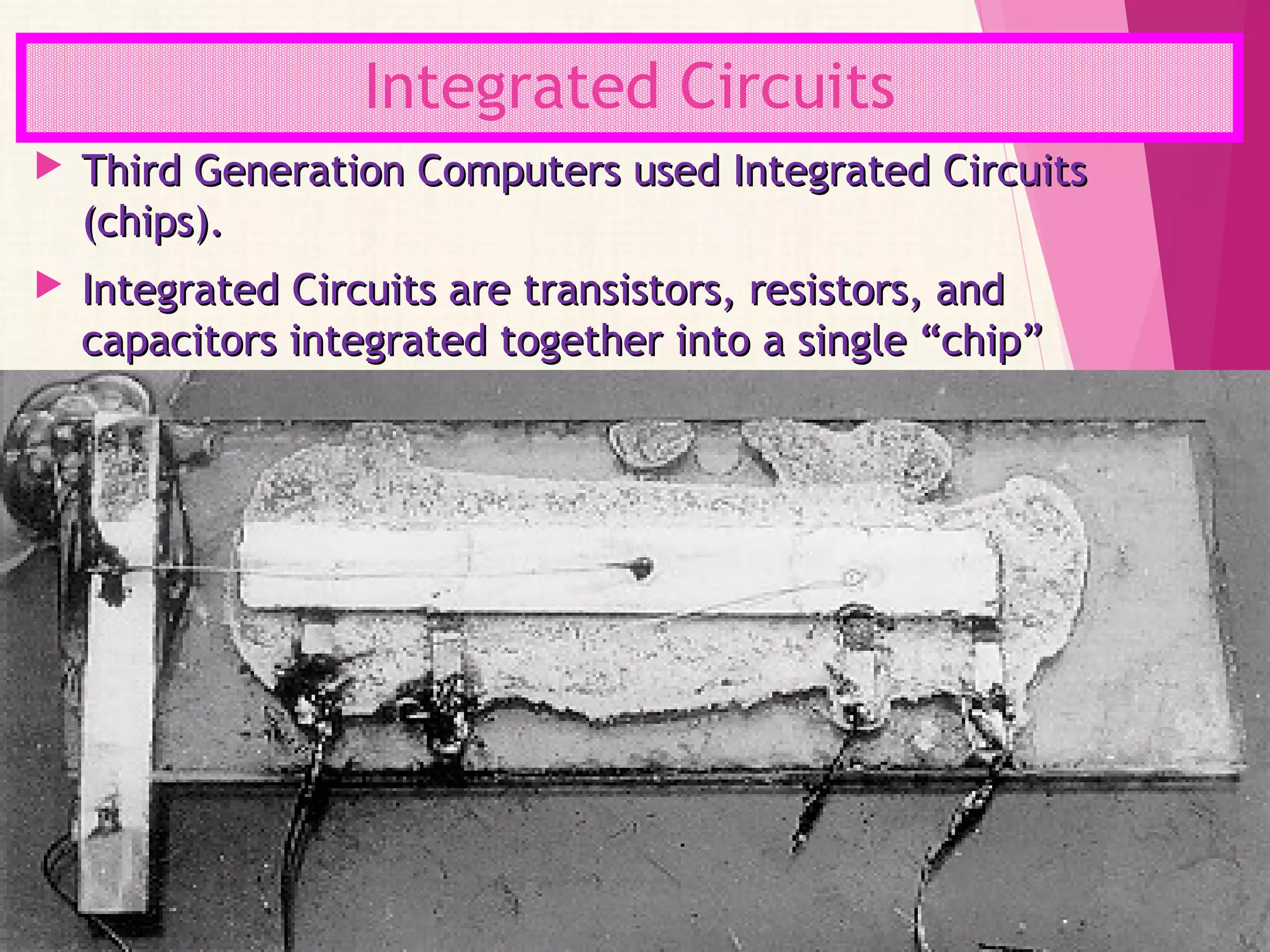
Integrated Circuits
 Third Generation Computers used Integrated CircuitsThird Generation Computers used Integrated Circuits
(chips).(chips).
 Integrated Circuits are transistors, resistors, andIntegrated Circuits are transistors, resistors, and
capacitors integrated together into a single “chip”capacitors integrated together into a single “chip”
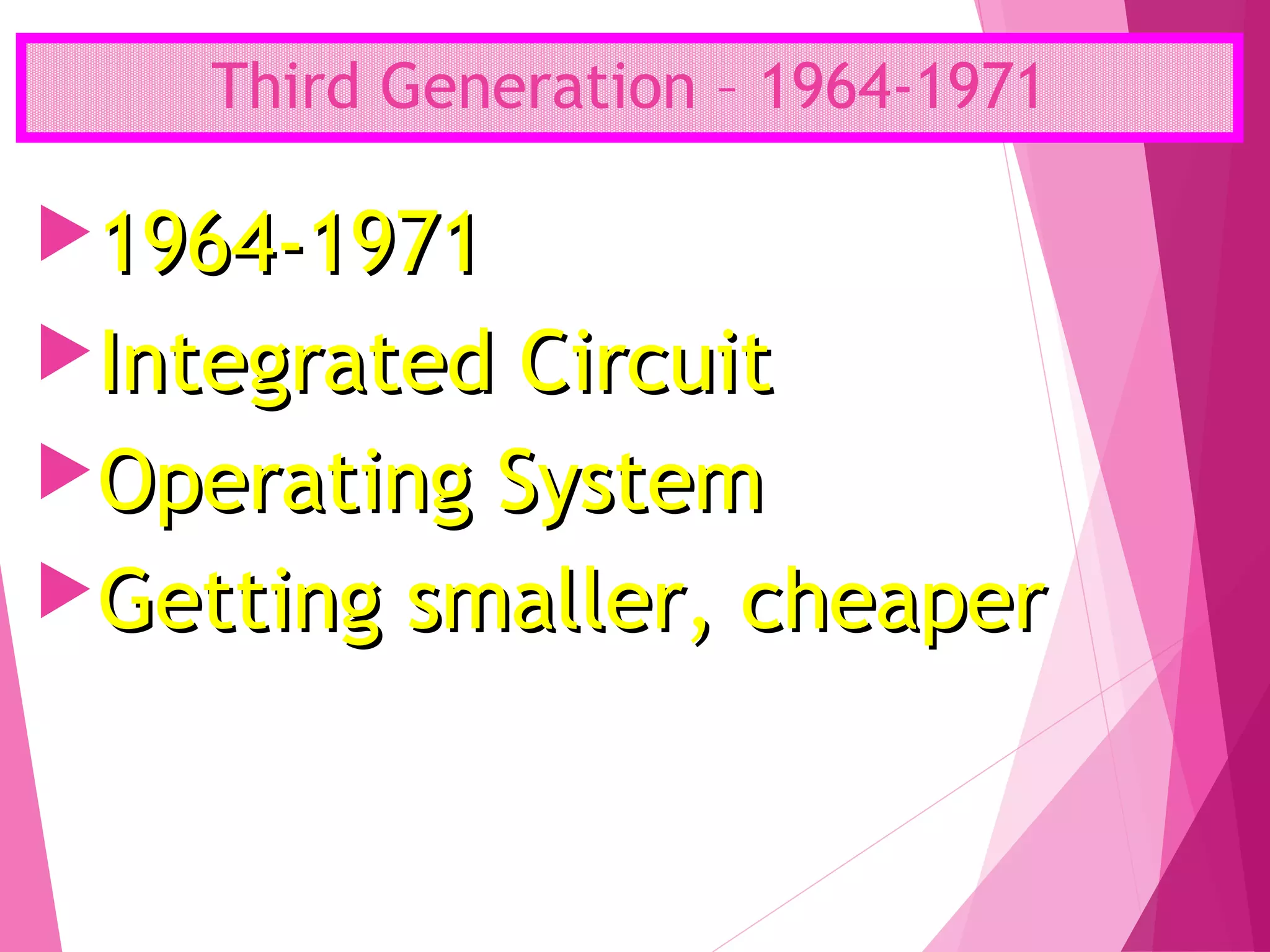
Third Generation – 1964-1971
1964-19711964-1971
Integrated CircuitIntegrated Circuit
Operating SystemOperating System
Getting smaller, cheaperGetting smaller, cheaper
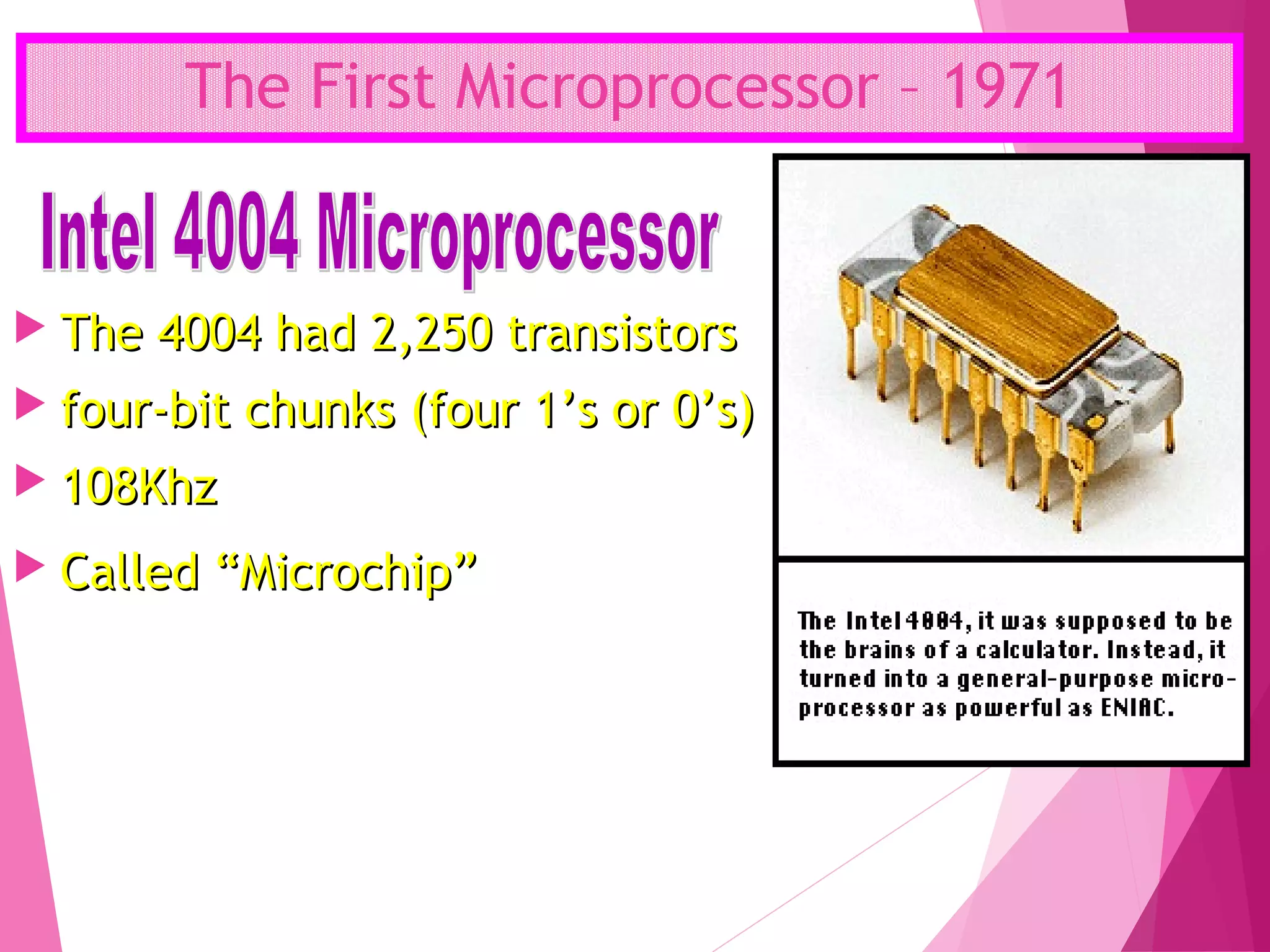
The First Microprocessor – 1971
 The 4004 had 2,250 transistorsThe 4004 had 2,250 transistors
 four-bit chunks (four 1’s or 0’s)four-bit chunks (four 1’s or 0’s)
 108Khz108Khz
 Called “Microchip”Called “Microchip”
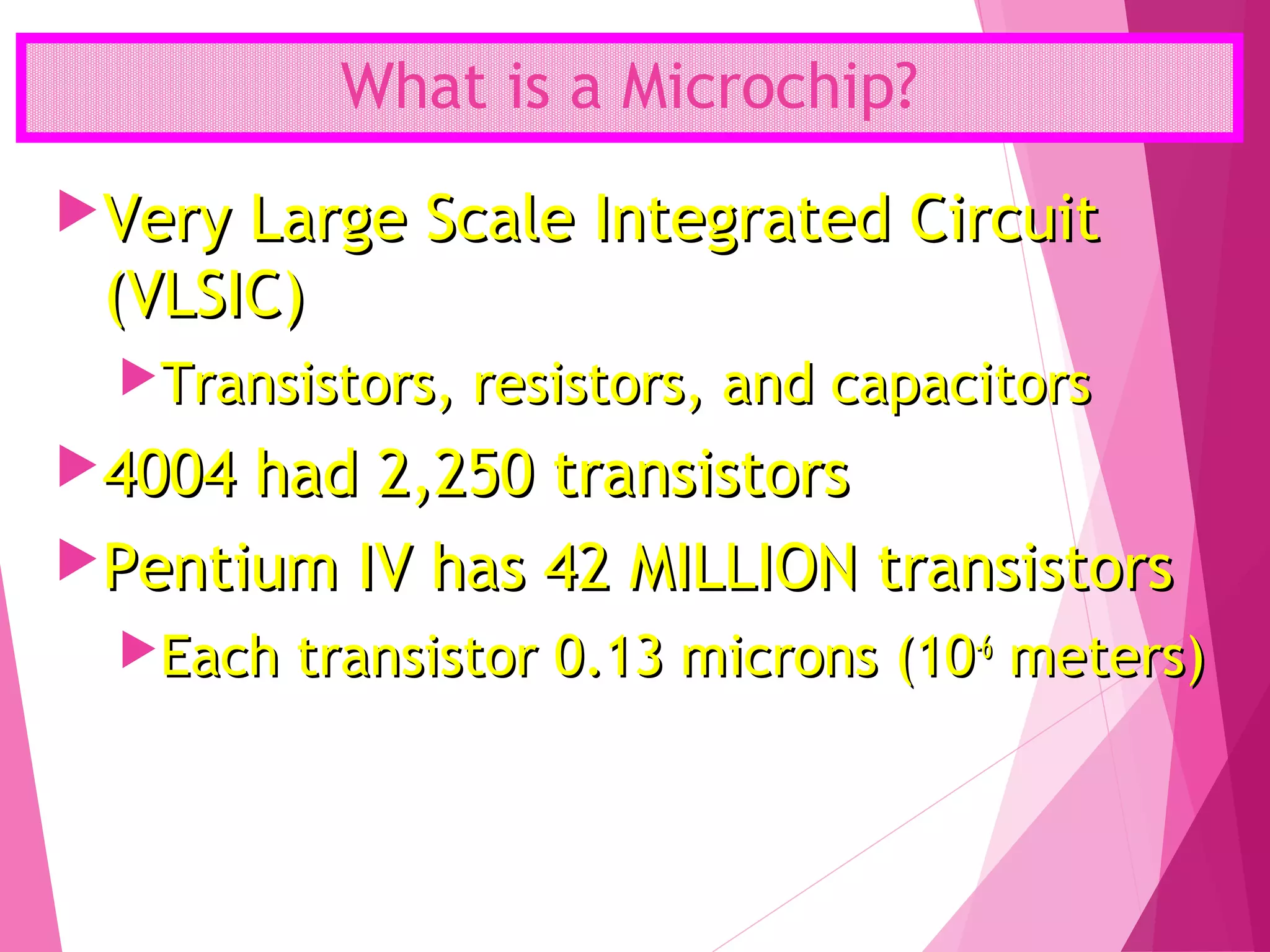
What is a Microchip?
Very Large Scale Integrated CircuitVery Large Scale Integrated Circuit
(VLSIC)(VLSIC)
Transistors, resistors, and capacitorsTransistors, resistors, and capacitors
4004 had 2,250 transistors4004 had 2,250 transistors
Pentium IV has 42 MILLION transistorsPentium IV has 42 MILLION transistors
Each transistor 0.13 microns (10Each transistor 0.13 microns (10-6-6
meters)meters)
4th
Generation – 1971
MICROCHIPS!MICROCHIPS!
Getting smaller and smaller,Getting smaller and smaller,
but we are still usingbut we are still using
microchip technologymicrochip technology
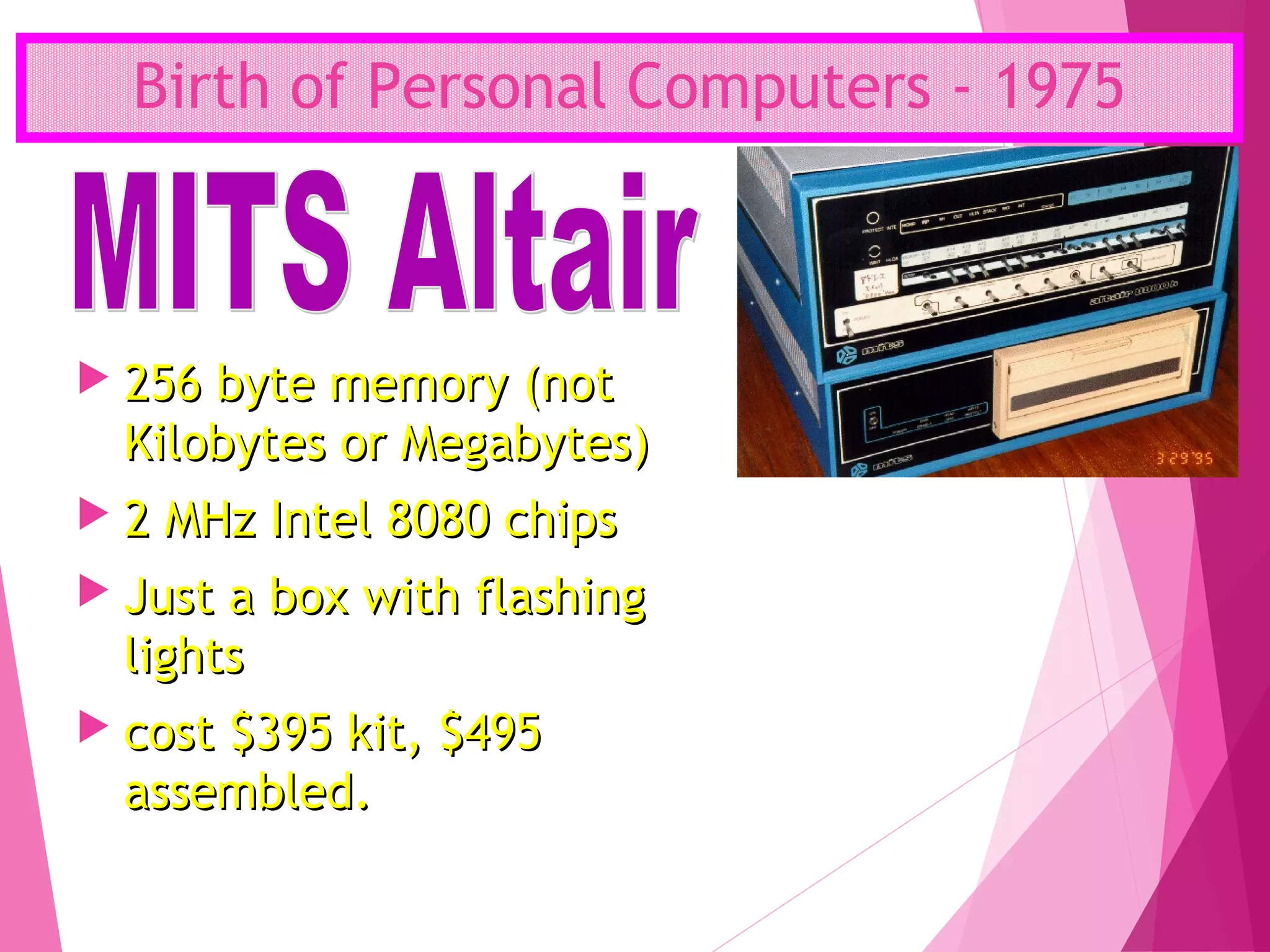
Birth of Personal Computers - 1975
 256 byte memory (not256 byte memory (not
Kilobytes or Megabytes)Kilobytes or Megabytes)
 2 MHz Intel 8080 chips2 MHz Intel 8080 chips
 Just a box with flashingJust a box with flashing
lightslights
 cost $395 kit, $495cost $395 kit, $495
assembled.assembled.
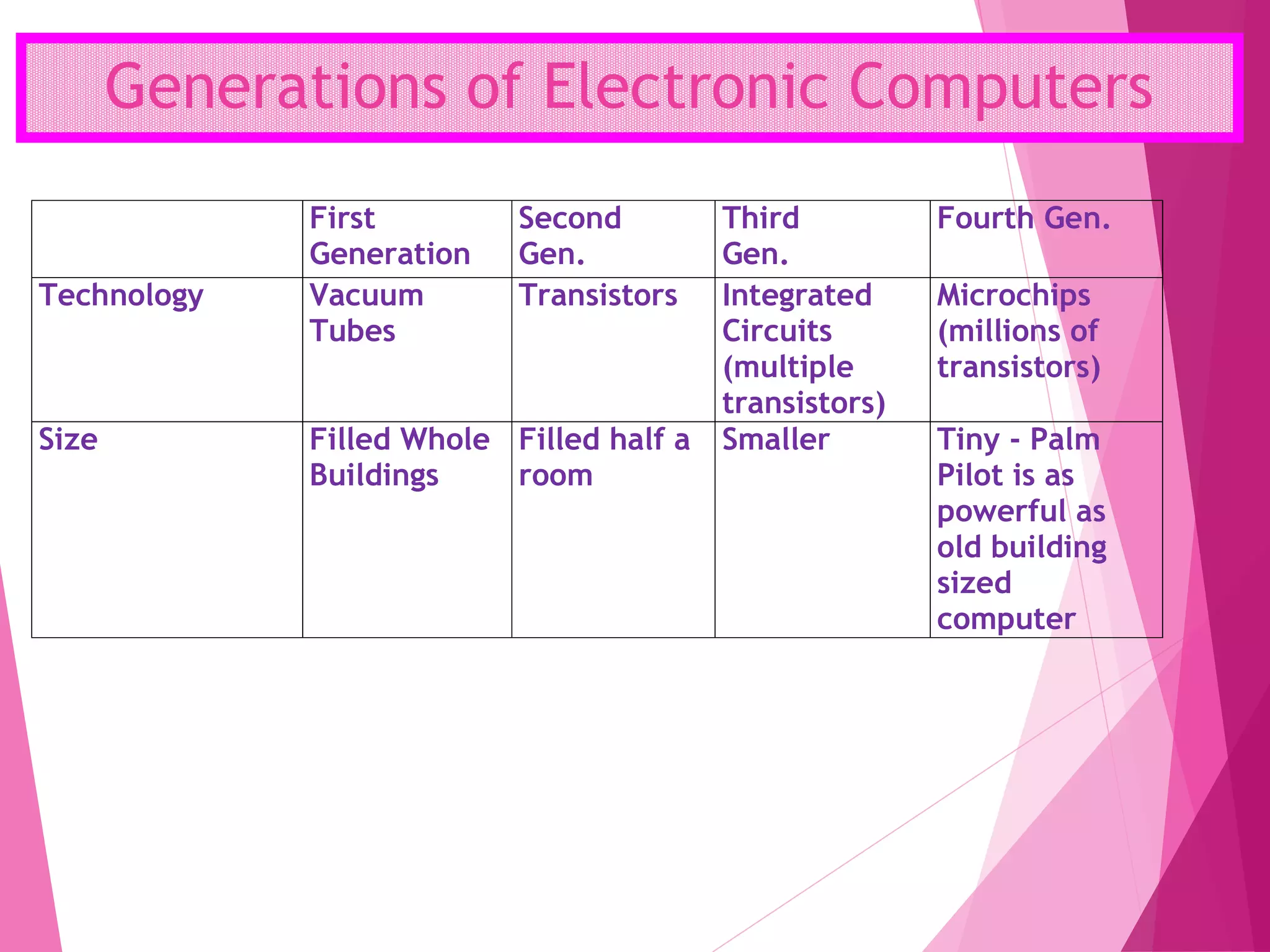
Generations of Electronic Computers
First
Generation
Second
Gen.
Third
Gen.
Fourth Gen.
Technology Vacuum
Tubes
Transistors Integrated
Circuits
(multiple
transistors)
Microchips
(millions of
transistors)
Size Filled Whole
Buildings
Filled half a
room
Smaller Tiny - Palm
Pilot is as
powerful as
old building
sized
computer
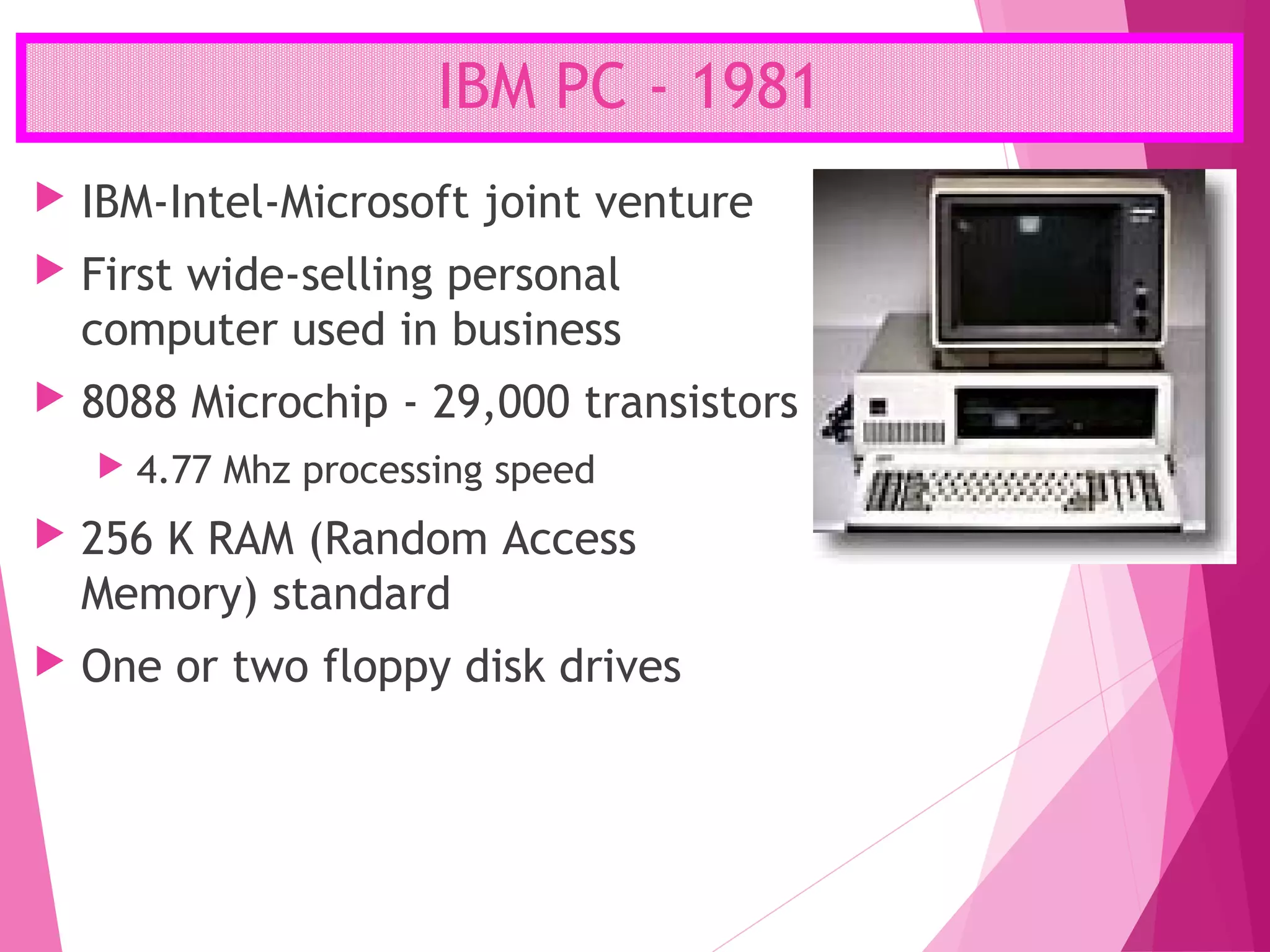
IBM PC - 1981
 IBM-Intel-Microsoft joint venture
 First wide-selling personal
computer used in business
 8088 Microchip - 29,000 transistors
 4.77 Mhz processing speed
 256 K RAM (Random Access
Memory) standard
 One or two floppy disk drives
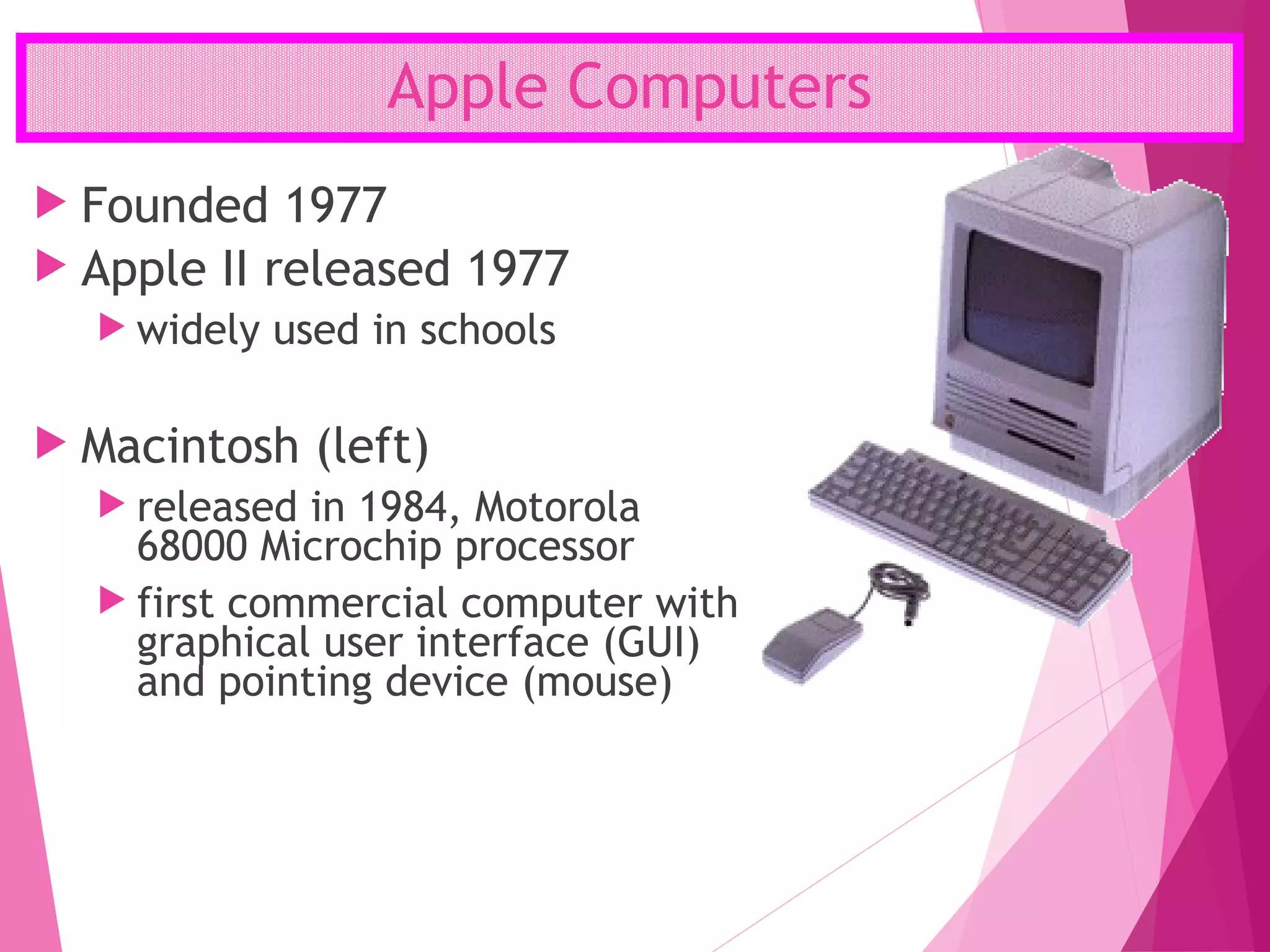
Apple Computers
 Founded 1977
 Apple II released 1977
 widely used in schools
 Macintosh (left)
 released in 1984, Motorola
68000 Microchip processor
 first commercial computer with
graphical user interface (GUI)
and pointing device (mouse)
Fifth generation computers
(present and beyond)
 Fifth generation computing devices, based
on artificial intelligence.
 Are still in development, though there are some
applications, such as voice recognition.
 The use of parallel processing and superconductors
is helping to make artificial intelligence a reality.
 The goal of fifth-generation computing is to
develop devices that respond to natural
language input and are capable of learning and
self-organization.
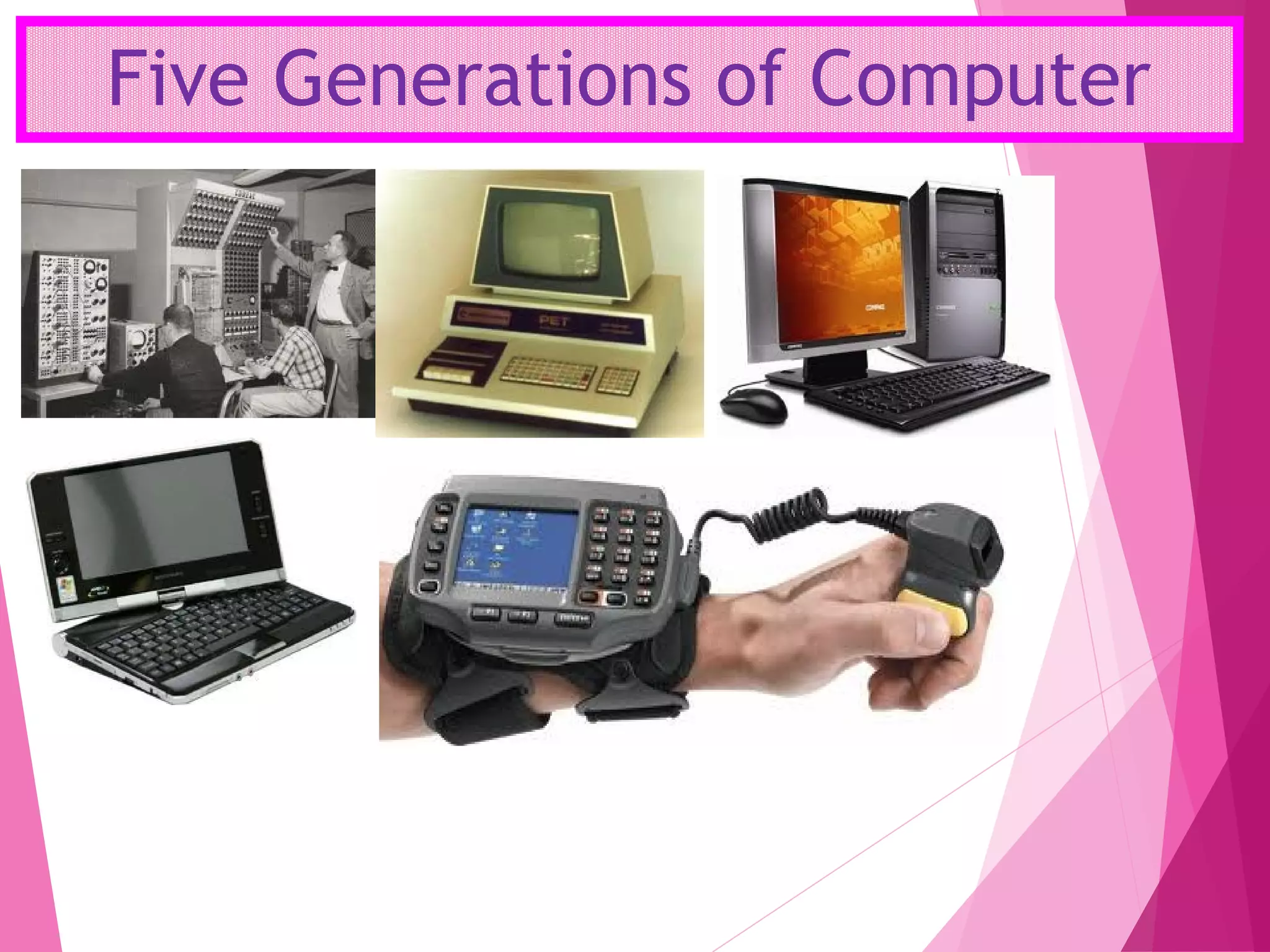
Five Generations of Computer
23

History of computer

  • 1.
  • 2.
  • 3.
    History of Computers- Way Back When 3 • Slide Rule 1630Slide Rule 1630 • based on Napier’s rules forbased on Napier’s rules for logarithmslogarithms • used until 1970sused until 1970s
  • 4.
    History of Computers- 19th Century  First storedFirst stored program - metalprogram - metal cardscards  First computerFirst computer manufacturingmanufacturing  still in use today!still in use today! 4
  • 5.
    Charles Babbage -1792-1871 5  Difference Engine c.1822Difference Engine c.1822  huge calculator, never finishedhuge calculator, never finished  Analytical Engine 1833Analytical Engine 1833  could store numberscould store numbers  calculating “mill” used punchedcalculating “mill” used punched metal cards for instructionsmetal cards for instructions  powered by steam!powered by steam!  accurate to six decimal placesaccurate to six decimal places
  • 6.
    Vacuum Tubes -1941 - 1956  First Generation ElectronicFirst Generation Electronic ComputersComputers used Vacuum Tubesused Vacuum Tubes  Vacuum tubes are glass tubesVacuum tubes are glass tubes with circuits inside.with circuits inside.  Vacuum tubes have no airVacuum tubes have no air inside of them, which protectsinside of them, which protects the circuitry.the circuitry. 6
  • 7.
    UNIVAC - 1951 First fully electronicFirst fully electronic digitaldigital computer built in the U.S.computer built in the U.S.  Created at the University ofCreated at the University of PennsylvaniaPennsylvania  ENIAC weighed 30 tonsENIAC weighed 30 tons  contained 18,000 vacuumcontained 18,000 vacuum tubestubes  Cost a paltry $487,000Cost a paltry $487,000
  • 8.
    Grace Hopper Programmed UNIVACProgrammedUNIVAC Recipient of ComputerRecipient of Computer Science’s firstScience’s first ““Man of the Year Award”Man of the Year Award”
  • 9.
    First Computer Bug- 1945  Relay switches part ofRelay switches part of computerscomputers  Grace Hopper found aGrace Hopper found a moth stuck in a relaymoth stuck in a relay responsible for aresponsible for a malfunctionmalfunction  Called it “debugging” aCalled it “debugging” a computercomputer
  • 10.
    First Transistor 10  UsesSiliconUses Silicon  developed in 1948developed in 1948  won a Nobel prizewon a Nobel prize  on-off switchon-off switch  Second GenerationSecond Generation Computers usedComputers used Transistors, starting inTransistors, starting in 19561956
  • 11.
    Second Generation –1965-1963  1956 – Computers began to1956 – Computers began to incorporateincorporate TransistorsTransistors  Replaced vacuum tubes withReplaced vacuum tubes with TransistorsTransistors
  • 12.
    Integrated Circuits  ThirdGeneration Computers used Integrated CircuitsThird Generation Computers used Integrated Circuits (chips).(chips).  Integrated Circuits are transistors, resistors, andIntegrated Circuits are transistors, resistors, and capacitors integrated together into a single “chip”capacitors integrated together into a single “chip”
  • 13.
    Third Generation –1964-1971 1964-19711964-1971 Integrated CircuitIntegrated Circuit Operating SystemOperating System Getting smaller, cheaperGetting smaller, cheaper
  • 14.
    The First Microprocessor– 1971  The 4004 had 2,250 transistorsThe 4004 had 2,250 transistors  four-bit chunks (four 1’s or 0’s)four-bit chunks (four 1’s or 0’s)  108Khz108Khz  Called “Microchip”Called “Microchip”
  • 15.
    What is aMicrochip? Very Large Scale Integrated CircuitVery Large Scale Integrated Circuit (VLSIC)(VLSIC) Transistors, resistors, and capacitorsTransistors, resistors, and capacitors 4004 had 2,250 transistors4004 had 2,250 transistors Pentium IV has 42 MILLION transistorsPentium IV has 42 MILLION transistors Each transistor 0.13 microns (10Each transistor 0.13 microns (10-6-6 meters)meters)
  • 16.
    4th Generation – 1971 MICROCHIPS!MICROCHIPS! Gettingsmaller and smaller,Getting smaller and smaller, but we are still usingbut we are still using microchip technologymicrochip technology
  • 17.
    Birth of PersonalComputers - 1975  256 byte memory (not256 byte memory (not Kilobytes or Megabytes)Kilobytes or Megabytes)  2 MHz Intel 8080 chips2 MHz Intel 8080 chips  Just a box with flashingJust a box with flashing lightslights  cost $395 kit, $495cost $395 kit, $495 assembled.assembled.
  • 18.
    Generations of ElectronicComputers First Generation Second Gen. Third Gen. Fourth Gen. Technology Vacuum Tubes Transistors Integrated Circuits (multiple transistors) Microchips (millions of transistors) Size Filled Whole Buildings Filled half a room Smaller Tiny - Palm Pilot is as powerful as old building sized computer
  • 19.
    IBM PC -1981  IBM-Intel-Microsoft joint venture  First wide-selling personal computer used in business  8088 Microchip - 29,000 transistors  4.77 Mhz processing speed  256 K RAM (Random Access Memory) standard  One or two floppy disk drives
  • 20.
    Apple Computers  Founded1977  Apple II released 1977  widely used in schools  Macintosh (left)  released in 1984, Motorola 68000 Microchip processor  first commercial computer with graphical user interface (GUI) and pointing device (mouse)
  • 21.
    Fifth generation computers (presentand beyond)  Fifth generation computing devices, based on artificial intelligence.  Are still in development, though there are some applications, such as voice recognition.  The use of parallel processing and superconductors is helping to make artificial intelligence a reality.  The goal of fifth-generation computing is to develop devices that respond to natural language input and are capable of learning and self-organization.
  • 22.
  • 23.