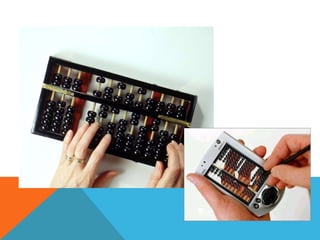
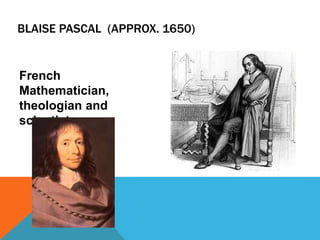
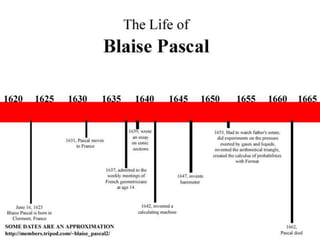
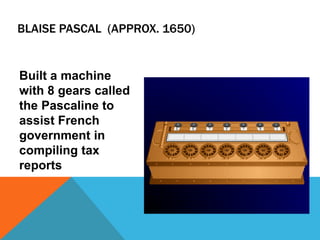
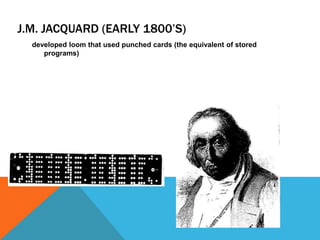
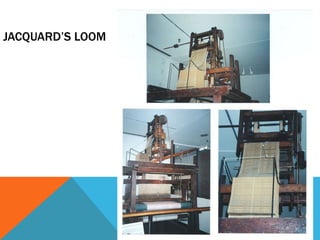
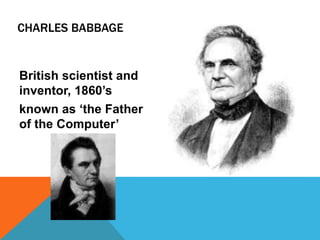
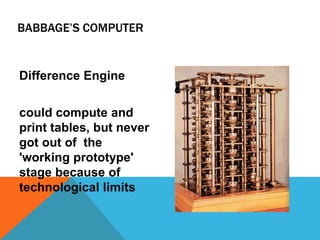
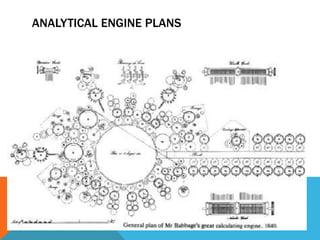
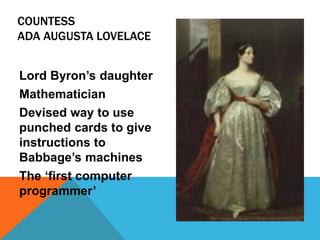
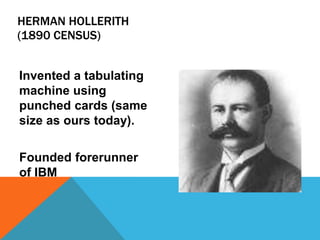
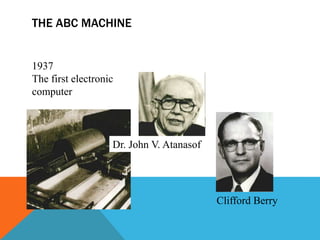
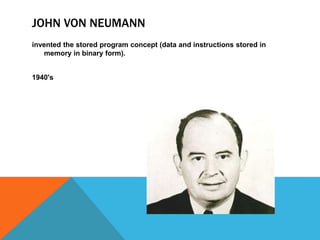
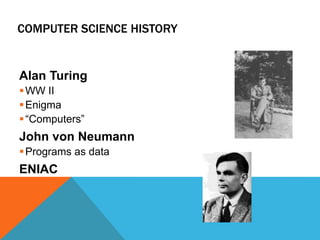
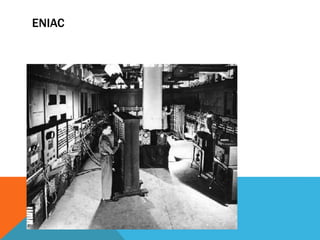
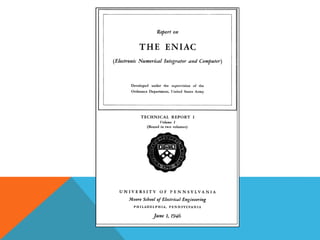
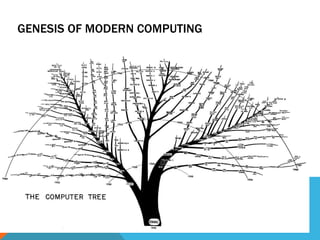
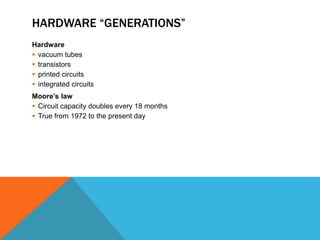
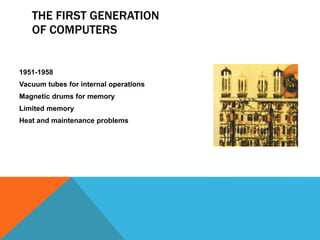
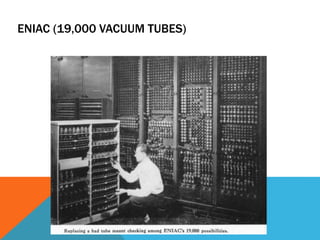
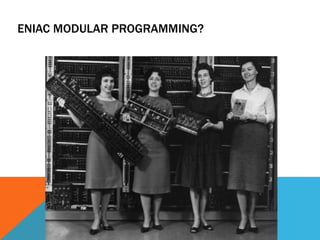
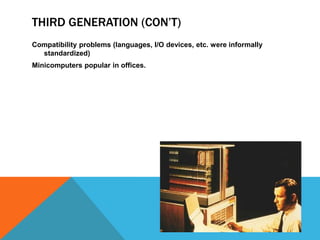
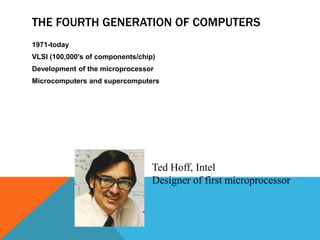
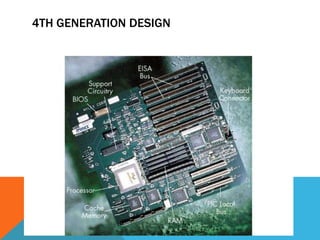
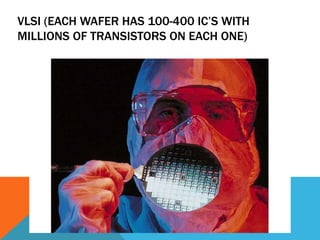
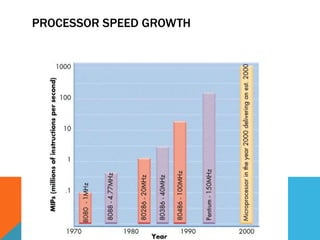
The history of computer science began in the 17th century with early mechanical computers like Pascal's calculator. In the 1800s, programmable looms used punched cards, an important precursor to modern storage devices. Charles Babbage designed the Analytical Engine in the 1800s, an early general-purpose computer. In the 1930s-40s, electronic computers were developed using vacuum tubes. The 1940s also saw developments in stored programs and coding. Advances in integrated circuits, semiconductors, and microprocessors led to four generations of computers from the 1950s to today. Modern computers are personal, networked devices that continue advancing rapidly in power and capabilities.





![Unit-1[Introduction to Computer System] (2).pptx](https://cdn.slidesharecdn.com/ss_thumbnails/unit-1introductiontocomputersystem2-260211021910-1c67956b-thumbnail.jpg?width=640&height=640&fit=bounds)


