Phi l ippine 
History 
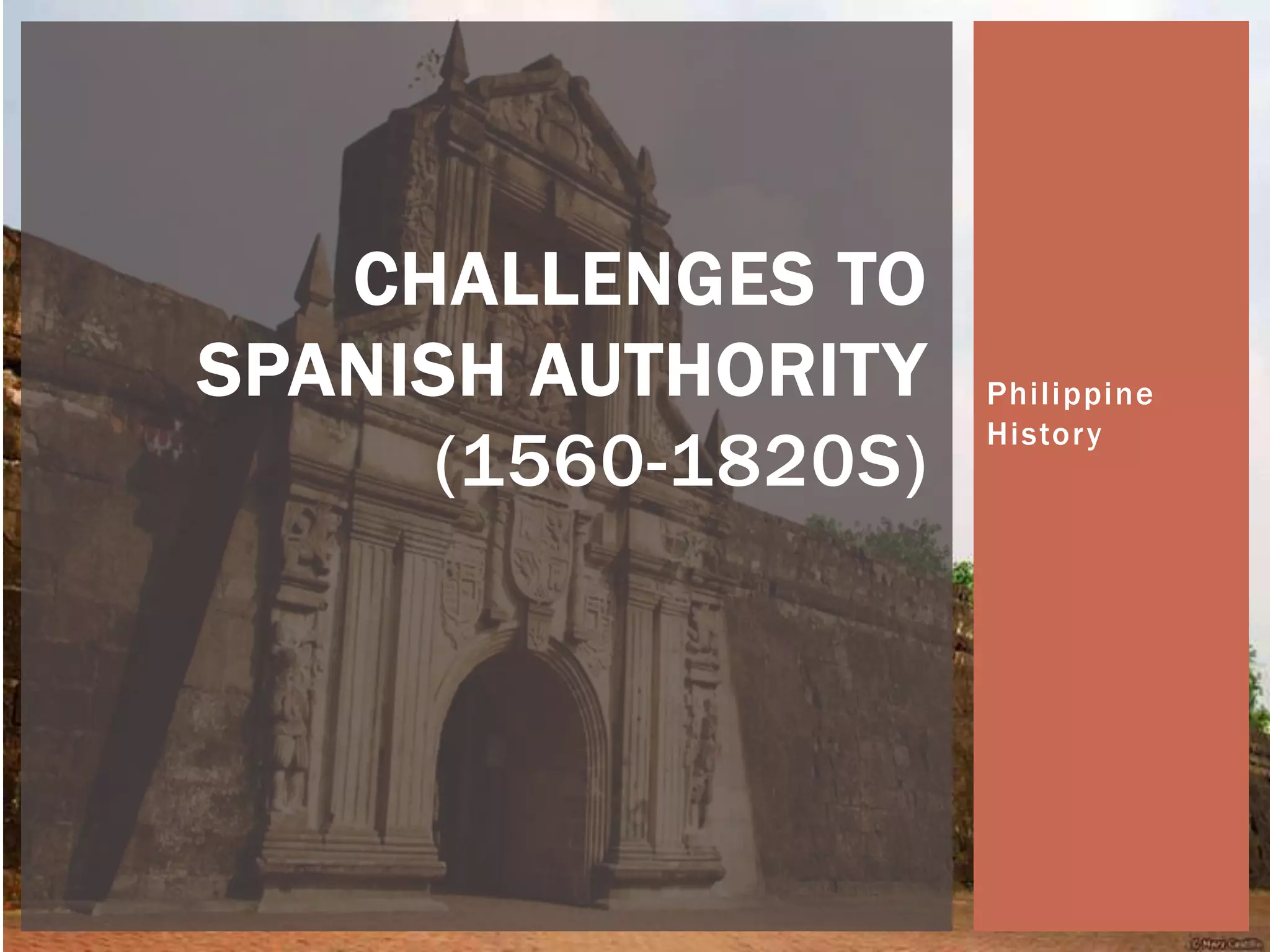
CHALLENGES TO 
SPANISH AUTHORITY 
(1560-1820S)
Portuguese and 
Dutch Threats 
During the 
Spanish colonial 
period in 
the Philippines, 
the Filipinos 
dreamed to 
achieve 
independence 
from the harsh 
Spanish rule at 
that time. 
The Filipinos 
began to fight the 
Spaniards the 
moment they 
settled 
permanently in 
1565 and 
continued this 
resistance to the 
end of their rule 
in 1898. 
The Philippine 
Revolt patterns 
must be treated 
holistically and 
not separately. 
OVERVIEW
PORTUGUESE 
THREATS TO 
SPANISH RULE
PORTUGUESE THREATS TO 
SPANISH RULE 
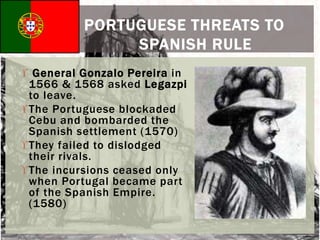
 General Gonzalo Pereira in 
1566 & 1568 asked Legazpi 
to leave. 
The Portuguese blockaded 
Cebu and bombarded the 
Spanish settlement (1570) 
They failed to dislodged 
their rivals. 
The incursions ceased only 
when Portugal became part 
of the Spanish Empire. 
(1580)
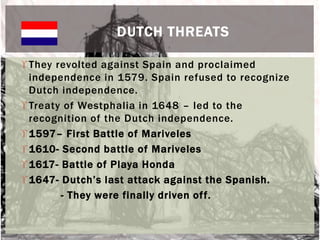
DUTCH THREATS 
 They revolted against Spain and proclaimed 
independence in 1579. Spain refused to recognize 
Dutch independence. 
 Treaty of Westphalia in 1648 – led to the 
recognition of the Dutch independence. 
1597– First Battle of Mariveles 
1610- Second battle of Mariveles 
1617- Battle of Playa Honda 
1647- Dutch’s last attack against the Spanish. 
- They were finally driven of f.
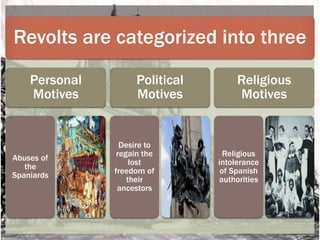
Revolts are categorized into three 
Personal 
Motives 
Abuses of 
the 
Spaniards 
Political 
Motives 
Desire to 
regain the 
lost 
freedom of 
their 
ancestors 
Religious 
Motives 
Religious 
intolerance 
of Spanish 
authorities
EARLY REVOLTS
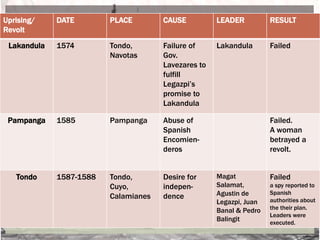
Uprising/ 
Revolt 
DATE PLACE CAUSE LEADER RESULT 
Lakandula 1574 Tondo, 
Navotas 
Failure of 
Gov. 
Lavezares to 
fulfill 
Legazpi’s 
promise to 
Lakandula 
Lakandula Failed 
Pampanga 1585 Pampanga Abuse of 
Spanish 
Encomien-deros 
Failed. 
A woman 
betrayed a 
revolt. 
Tondo 1587-1588 Tondo, 
Cuyo, 
Calamianes 
Desire for 
indepen-dence 
Magat 
Salamat, 
Agustin de 
Legazpi, Juan 
Banal & Pedro 
Balingit 
Failed 
a spy reported to 
Spanish 
authorities about 
the their plan. 
Leaders were 
executed.
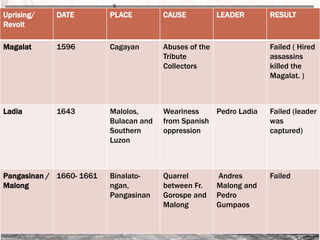
Uprising/ 
Revolt 
DATE PLACE CAUSE LEADER RESULT 
Magalat 1596 Cagayan Abuses of the 
Tribute 
Collectors 
Failed ( Hired 
assassins 
killed the 
Magalat. ) 
Ladia 1643 Malolos, 
Bulacan and 
Southern 
Luzon 
Weariness 
from Spanish 
oppression 
Pedro Ladia Failed (leader 
was 
captured) 
Pangasinan / 
Malong 
1660- 1661 Binalato-ngan, 
Pangasinan 
Quarrel 
between Fr. 
Gorospe and 
Malong 
Andres 
Malong and 
Pedro 
Gumpaos 
Failed
Uprising/ 
Revolt 
DATE PLACE CAUSE LEADER RESULT 
Visayan/ 
Sumuroy 
1649- 1650 Eastern 
Visayas, 
Northern 
Mindanao, 
Zamboanga 
Caused by Gov. 
Fajardo’s order 
to send 
Visayan 
laborers to 
Cavite for 
shipbuilding 
Juan Ponce 
SumoUroy 
and Pedro 
Caamug 
Failed ( 
Leaders were 
captured and 
were 
beheaded. ) 
Pampanga 1585 Pampanga Abuses of 
Spanish 
Encomiender 
os 
Failed ( A 
woman 
betrayed the 
revolt. ) 
Cagayan- 
Ilocos 
1589 Cagayan, 
Ilocos Norte 
Refusal to 
pay tributes, 
tyranny of 
tribute 
collectors 
Failed ( easily 
suppressed )
Uprising/ 
Revolt 
DATE PLACE CAUSE LEADER RESULT 
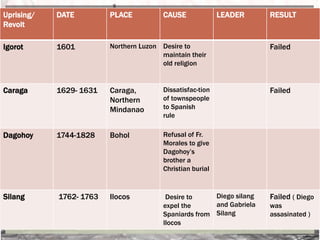
Igorot 1601 Northern Luzon Desire to 
maintain their 
old religion 
Failed 
Caraga 1629- 1631 Caraga, 
Northern 
Mindanao 
Dissatisfac-tion 
of townspeople 
to Spanish 
rule 
Failed 
Dagohoy 1744-1828 Bohol Refusal of Fr. 
Morales to give 
Dagohoy’s 
brother a 
Christian burial 
Silang 1762- 1763 Ilocos Desire to 
expel the 
Spaniards from 
Ilocos 
Diego silang 
and Gabriela 
Silang 
Failed ( Diego 
was 
assasinated )
WHY ALL THESE 
REVOLTS FAILED?
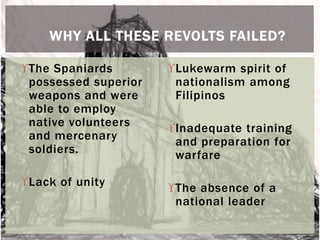
WHY ALL THESE REVOLTS FAILED? 
The Spaniards 
possessed superior 
weapons and were 
able to employ 
native volunteers 
and mercenary 
soldiers. 
Lack of unity 
Lukewarm spirit of 
nationalism among 
Filipinos 
Inadequate training 
and preparation for 
warfare 
The absence of a 
national leader
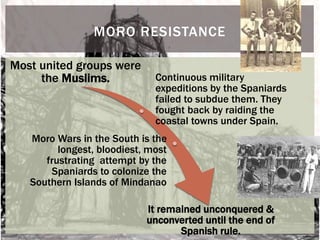
MORO RESISTANCE 
Most united groups were 
the Muslims. Continuous military 
expeditions by the Spaniards 
failed to subdue them. They 
fought back by raiding the 
coastal towns under Spain. 
Moro Wars in the South is the 
longest, bloodiest, most 
frustrating attempt by the 
Spaniards to colonize the 
Southern Islands of Mindanao 
It remained unconquered & 
unconverted until the end of 
Spanish rule.
RESISTANCE IN THE INTERIOR AND 
MOUNTAINOUS PARTS 
 Fierce resistance of the people of the mountain 
or the “taong bundok” 
PROCESS: Expensive and frustrating for the 
Spaniards but also very dangerous. 
Ancient beliefs and way of life are less exposed 
to the outside world which made them more 
resistant to the colonization whether Spanish or 
even later incursions of other colonizers.
THANK YOU!

Hist1 spanish challenges to authority

  • 1.
    Phi l ippine History CHALLENGES TO SPANISH AUTHORITY (1560-1820S)
  • 2.
    Portuguese and DutchThreats During the Spanish colonial period in the Philippines, the Filipinos dreamed to achieve independence from the harsh Spanish rule at that time. The Filipinos began to fight the Spaniards the moment they settled permanently in 1565 and continued this resistance to the end of their rule in 1898. The Philippine Revolt patterns must be treated holistically and not separately. OVERVIEW
  • 3.
    PORTUGUESE THREATS TO SPANISH RULE
  • 4.
    PORTUGUESE THREATS TO SPANISH RULE  General Gonzalo Pereira in 1566 & 1568 asked Legazpi to leave. The Portuguese blockaded Cebu and bombarded the Spanish settlement (1570) They failed to dislodged their rivals. The incursions ceased only when Portugal became part of the Spanish Empire. (1580)
  • 5.
    DUTCH THREATS They revolted against Spain and proclaimed independence in 1579. Spain refused to recognize Dutch independence.  Treaty of Westphalia in 1648 – led to the recognition of the Dutch independence. 1597– First Battle of Mariveles 1610- Second battle of Mariveles 1617- Battle of Playa Honda 1647- Dutch’s last attack against the Spanish. - They were finally driven of f.
  • 6.
    Revolts are categorizedinto three Personal Motives Abuses of the Spaniards Political Motives Desire to regain the lost freedom of their ancestors Religious Motives Religious intolerance of Spanish authorities
  • 7.
  • 8.
    Uprising/ Revolt DATEPLACE CAUSE LEADER RESULT Lakandula 1574 Tondo, Navotas Failure of Gov. Lavezares to fulfill Legazpi’s promise to Lakandula Lakandula Failed Pampanga 1585 Pampanga Abuse of Spanish Encomien-deros Failed. A woman betrayed a revolt. Tondo 1587-1588 Tondo, Cuyo, Calamianes Desire for indepen-dence Magat Salamat, Agustin de Legazpi, Juan Banal & Pedro Balingit Failed a spy reported to Spanish authorities about the their plan. Leaders were executed.
  • 9.
    Uprising/ Revolt DATEPLACE CAUSE LEADER RESULT Magalat 1596 Cagayan Abuses of the Tribute Collectors Failed ( Hired assassins killed the Magalat. ) Ladia 1643 Malolos, Bulacan and Southern Luzon Weariness from Spanish oppression Pedro Ladia Failed (leader was captured) Pangasinan / Malong 1660- 1661 Binalato-ngan, Pangasinan Quarrel between Fr. Gorospe and Malong Andres Malong and Pedro Gumpaos Failed
  • 10.
    Uprising/ Revolt DATEPLACE CAUSE LEADER RESULT Visayan/ Sumuroy 1649- 1650 Eastern Visayas, Northern Mindanao, Zamboanga Caused by Gov. Fajardo’s order to send Visayan laborers to Cavite for shipbuilding Juan Ponce SumoUroy and Pedro Caamug Failed ( Leaders were captured and were beheaded. ) Pampanga 1585 Pampanga Abuses of Spanish Encomiender os Failed ( A woman betrayed the revolt. ) Cagayan- Ilocos 1589 Cagayan, Ilocos Norte Refusal to pay tributes, tyranny of tribute collectors Failed ( easily suppressed )
  • 11.
    Uprising/ Revolt DATEPLACE CAUSE LEADER RESULT Igorot 1601 Northern Luzon Desire to maintain their old religion Failed Caraga 1629- 1631 Caraga, Northern Mindanao Dissatisfac-tion of townspeople to Spanish rule Failed Dagohoy 1744-1828 Bohol Refusal of Fr. Morales to give Dagohoy’s brother a Christian burial Silang 1762- 1763 Ilocos Desire to expel the Spaniards from Ilocos Diego silang and Gabriela Silang Failed ( Diego was assasinated )
  • 12.
    WHY ALL THESE REVOLTS FAILED?
  • 13.
    WHY ALL THESEREVOLTS FAILED? The Spaniards possessed superior weapons and were able to employ native volunteers and mercenary soldiers. Lack of unity Lukewarm spirit of nationalism among Filipinos Inadequate training and preparation for warfare The absence of a national leader
  • 14.
    MORO RESISTANCE Mostunited groups were the Muslims. Continuous military expeditions by the Spaniards failed to subdue them. They fought back by raiding the coastal towns under Spain. Moro Wars in the South is the longest, bloodiest, most frustrating attempt by the Spaniards to colonize the Southern Islands of Mindanao It remained unconquered & unconverted until the end of Spanish rule.
  • 15.
    RESISTANCE IN THEINTERIOR AND MOUNTAINOUS PARTS  Fierce resistance of the people of the mountain or the “taong bundok” PROCESS: Expensive and frustrating for the Spaniards but also very dangerous. Ancient beliefs and way of life are less exposed to the outside world which made them more resistant to the colonization whether Spanish or even later incursions of other colonizers.
  • 16.