Hiatal hernia
PRESENTED BY :
V.RAMYA,
TUTOR,
SRMTCON.
 COURSE : B.SC. NURSING II YEAR
 SUBJECT : MEDICAL SURGICAL NURSING
 UNIT : IV
 TOPIC : HIATAL HERNIA
 PREPARED BY : MRS ,V.RAMYA ,TUTOR.
OBJECTIVES
 At the end of the class student will be able to
 Introduce hiatal hernia
 Types of hiatal hernia
 Clinical manifestations of hiatal hernia
 Assessment and diagnostic findings of hiatal hernia
 Management of hiatal hernia
 Surgical management of hiatal hernia
introduction
 In the condition known as hiatal hernia , the
opening in the diaphragm through which the
esophagus passes becomes enlarged ,and part of
the upper stomach moves up into the lower portion
of the throax.
 Hiatal hernia occurs more often then in women
than in men.
TYPES
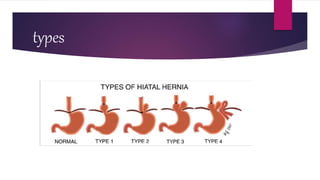
There are two main types of hiatal hernias
sliding and paraesophageal .
Sliding or type 1 occurs when the upper
stomach and the gastroesophageal junction
are displaced upward and slide in and out of
the throax .
types
 About 95% of patients with esophageal hiatal hernia have
a sliding hernia.
 A paraesophageal hernia occurs when all or part of the
stomach pushes through the diaphragm beside the
esophagus .
 Paraesophageal hernias are further classified as type II ,
type III, or type IV depending on the extent herniation.
types
Type IV has the greatest herniation.
With other intra – abdominal viscera such as
the colon, spleen or small bowel evidencing
displacement into the chest along with the
stomach.
types
Clinical
manifestations
 The patient with a sliding hernia may have
 Pyrosis,
 Regurgitation,
 And dysphagia
 But many patients are asymptomatic.
 The patient may present with vague symptoms of
intermittent epigastric pain or fullness after eating.
Clinical
manifestations
 Large hiatal hernias may lead to intolerance of
food ,nausea and vomiting.
 Sliding hiatal hernias are commonly associated
with GERD.
 Hemorrhage ,obstruction, and strangulation can
occur with any type of hernia.
Assessment and diagnostic findings
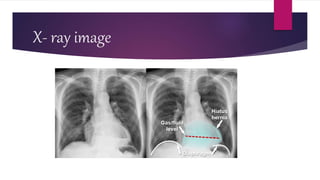
 Diagnosis is typically confirmed by x-ray studies ;
 Barium swallow ,
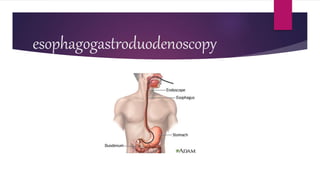
 Esophagogastroduodenoscopy (EGD),
 Which is the passage of a fiberoptic tube through the
mouth and throat into the digestive tract for visualization
of the esophagus , stomach ,and small intestine
;esophageal manometry
 Or chest CT scan
X- ray image
esophagogastroduodenoscopy
management
 Management for a hiatal hernia includes frequent ,small
feedings that can pass easily through the esophagus.
 The patient is advised not to recline for 1 hour after
eating, to prevent reflux or movement of the hernia , and
to elevate the head of the bed on 4 to 8 inch ( 10 to 20
cm) blocks to prevent the hernia from sliding upward.
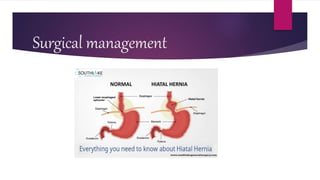
Surgical management
 Surgical hernia repair is indicated in patients who are
symptomatic ,although the primary reason for the surgery
is typically to relieve GERD symptoms and not repair the
hernia.
 Current quidelines recommend a laparoscopic approach ,
with an open transabdominal or transthoracic approach
reserved for patients with complications such as bleeding
,dense adhesions ,or injury to the spleen.
Surgical management
Nursing management
 Up to 50% of patients may experience early
postoperative dysphagia;
 Therefore the nurse advances the diet slowly from
liquids to solids ,while managing nausea and
vomiting ,tracking nutritional intake ,and
monitoring weight.
Nursing management
 The nurse also monitors for postoperative belching,
 vomiting,
 gagging,
 Abdominal distention,
 And epigastric chest pain , which may need indicate the
need for surgical revision.
Nursing management
 These should be reported immediately from the
primary provider .
 Surgical repair is often reserved for patients with
more extreme cases that involves gastric outlet
obstruction or suspected gastric strangulation,
which may result in ischemia ,necrosis ,or
perforation of the stomach.
bibliography
 Brunner and Suddarth’s Textbook of Medical- Surgical Nursing ,South
Asian Edition , Volume 1 , Published by Wolters Kluwer . Page reffered
to 856-857.
 Ansari and Kaur, Textbook of Medical – Surgical Nursing 1 . Published
by Pee Vee 2011 Edition, Page reffered to 848 – 849.
 https://www.slideshare.net/shafaatullahkhatt/hiatal-hernia-67541398
 https://www.slideshare.net/UgochukwuAniedu/hiatal-hernia-59416819
 https://www.slideshare.net/SupunDhanasekara1/hiatal-hernia-92550101
Hiatal hernia.pptx

Hiatal hernia.pptx

  • 1.
    Hiatal hernia PRESENTED BY: V.RAMYA, TUTOR, SRMTCON.
  • 2.
     COURSE :B.SC. NURSING II YEAR  SUBJECT : MEDICAL SURGICAL NURSING  UNIT : IV  TOPIC : HIATAL HERNIA  PREPARED BY : MRS ,V.RAMYA ,TUTOR.
  • 3.
    OBJECTIVES  At theend of the class student will be able to  Introduce hiatal hernia  Types of hiatal hernia  Clinical manifestations of hiatal hernia  Assessment and diagnostic findings of hiatal hernia  Management of hiatal hernia  Surgical management of hiatal hernia
  • 4.
    introduction  In thecondition known as hiatal hernia , the opening in the diaphragm through which the esophagus passes becomes enlarged ,and part of the upper stomach moves up into the lower portion of the throax.  Hiatal hernia occurs more often then in women than in men.
  • 5.
    TYPES There are twomain types of hiatal hernias sliding and paraesophageal . Sliding or type 1 occurs when the upper stomach and the gastroesophageal junction are displaced upward and slide in and out of the throax .
  • 6.
    types  About 95%of patients with esophageal hiatal hernia have a sliding hernia.  A paraesophageal hernia occurs when all or part of the stomach pushes through the diaphragm beside the esophagus .  Paraesophageal hernias are further classified as type II , type III, or type IV depending on the extent herniation.
  • 7.
    types Type IV hasthe greatest herniation. With other intra – abdominal viscera such as the colon, spleen or small bowel evidencing displacement into the chest along with the stomach.
  • 8.
  • 9.
    Clinical manifestations  The patientwith a sliding hernia may have  Pyrosis,  Regurgitation,  And dysphagia  But many patients are asymptomatic.  The patient may present with vague symptoms of intermittent epigastric pain or fullness after eating.
  • 10.
    Clinical manifestations  Large hiatalhernias may lead to intolerance of food ,nausea and vomiting.  Sliding hiatal hernias are commonly associated with GERD.  Hemorrhage ,obstruction, and strangulation can occur with any type of hernia.
  • 11.
    Assessment and diagnosticfindings  Diagnosis is typically confirmed by x-ray studies ;  Barium swallow ,  Esophagogastroduodenoscopy (EGD),  Which is the passage of a fiberoptic tube through the mouth and throat into the digestive tract for visualization of the esophagus , stomach ,and small intestine ;esophageal manometry  Or chest CT scan
  • 12.
  • 13.
  • 14.
    management  Management fora hiatal hernia includes frequent ,small feedings that can pass easily through the esophagus.  The patient is advised not to recline for 1 hour after eating, to prevent reflux or movement of the hernia , and to elevate the head of the bed on 4 to 8 inch ( 10 to 20 cm) blocks to prevent the hernia from sliding upward.
  • 15.
    Surgical management  Surgicalhernia repair is indicated in patients who are symptomatic ,although the primary reason for the surgery is typically to relieve GERD symptoms and not repair the hernia.  Current quidelines recommend a laparoscopic approach , with an open transabdominal or transthoracic approach reserved for patients with complications such as bleeding ,dense adhesions ,or injury to the spleen.
  • 16.
  • 17.
    Nursing management  Upto 50% of patients may experience early postoperative dysphagia;  Therefore the nurse advances the diet slowly from liquids to solids ,while managing nausea and vomiting ,tracking nutritional intake ,and monitoring weight.
  • 18.
    Nursing management  Thenurse also monitors for postoperative belching,  vomiting,  gagging,  Abdominal distention,  And epigastric chest pain , which may need indicate the need for surgical revision.
  • 19.
    Nursing management  Theseshould be reported immediately from the primary provider .  Surgical repair is often reserved for patients with more extreme cases that involves gastric outlet obstruction or suspected gastric strangulation, which may result in ischemia ,necrosis ,or perforation of the stomach.
  • 20.
    bibliography  Brunner andSuddarth’s Textbook of Medical- Surgical Nursing ,South Asian Edition , Volume 1 , Published by Wolters Kluwer . Page reffered to 856-857.  Ansari and Kaur, Textbook of Medical – Surgical Nursing 1 . Published by Pee Vee 2011 Edition, Page reffered to 848 – 849.  https://www.slideshare.net/shafaatullahkhatt/hiatal-hernia-67541398  https://www.slideshare.net/UgochukwuAniedu/hiatal-hernia-59416819  https://www.slideshare.net/SupunDhanasekara1/hiatal-hernia-92550101