Downloaded 77 times


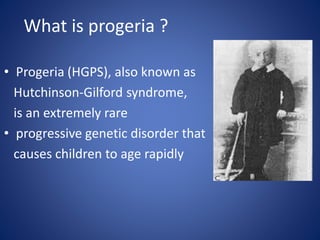
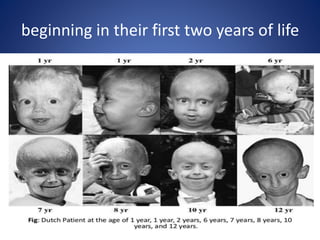

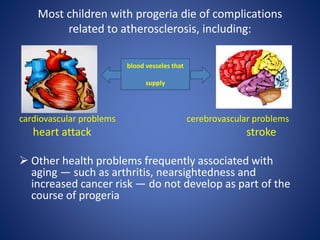
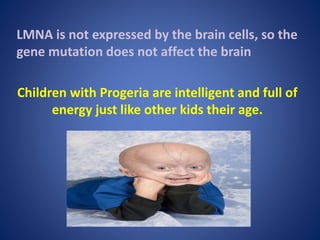


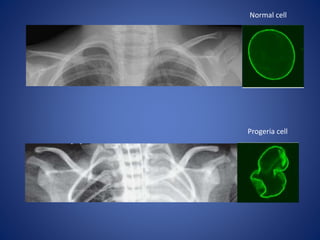





Progeria, also known as Hutchinson-Gilford Progeria Syndrome, is an extremely rare genetic disorder causing rapid aging in children. It is caused by a mutation in the LMNA gene producing abnormal lamin A protein called progerin. Children with Progeria appear normal at birth but show signs of aging including hair loss, stiff joints, and cardiovascular problems. They typically die of heart attacks or strokes in their early teens. In 2012, the first drug treatment using farnesyltransferase inhibitors was discovered, showing promise in reducing progerin and improving flexibility of blood vessels and other symptoms for children in clinical trials.


![[Speech3] Draft002](https://cdn.slidesharecdn.com/ss_thumbnails/63571e48-dcb3-4e06-bde3-3a90af7bd448-160809163414-thumbnail.jpg?width=640&height=640&fit=bounds)


