Biliary system anatomy,physiology &
investigations
G.NARENDRA ms general surgery
Under guidance of Dr.V.TATHA RAO
NRIGH,GUNTUR
ANATOMY
GALL BLADDER
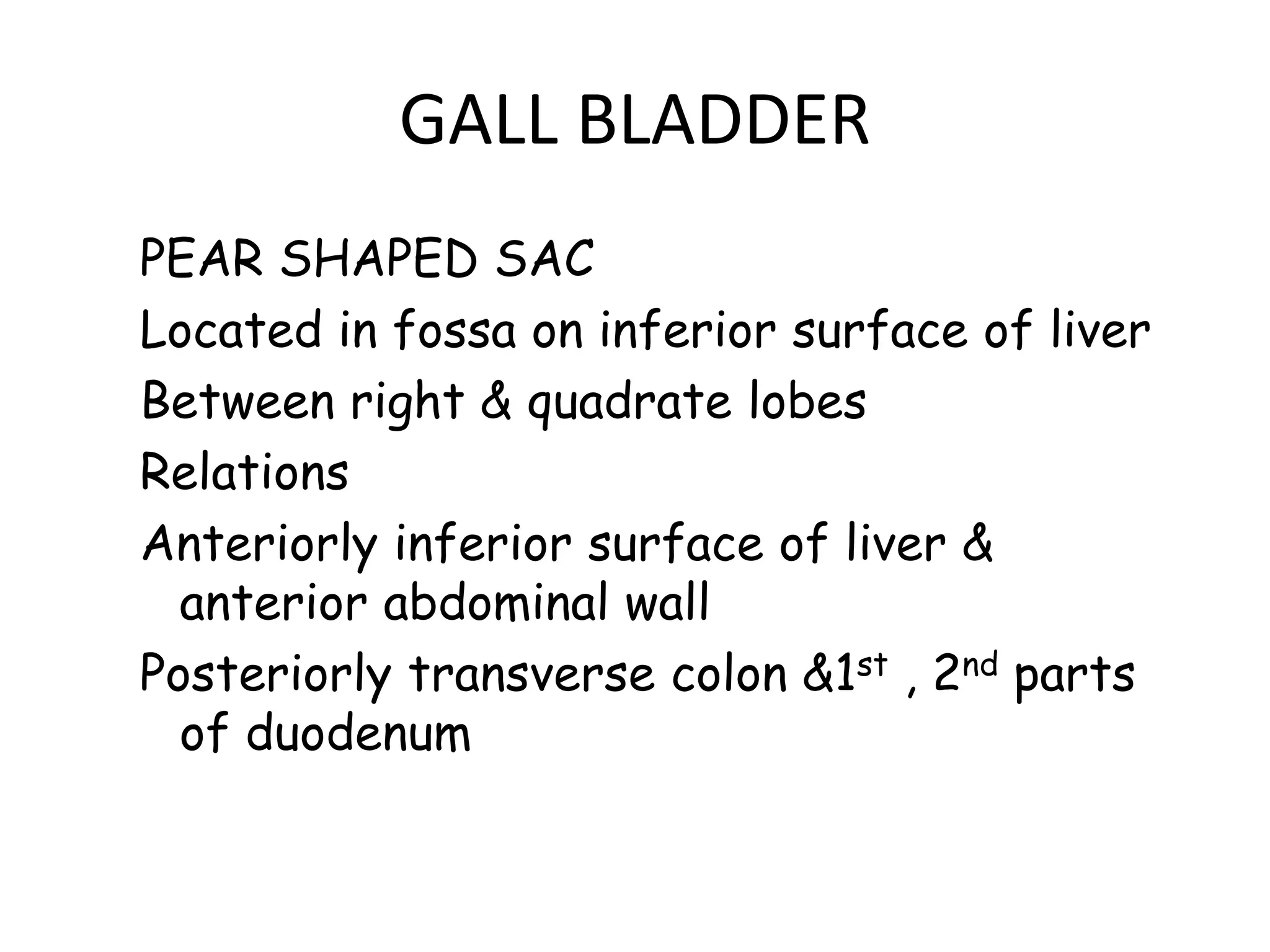
PEAR SHAPED SAC
Located in fossa on inferior surface of liver
Between right & quadrate lobes
Relations
Anteriorly inferior surface of liver &
anterior abdominal wall
Posteriorly transverse colon &1st , 2nd parts
of duodenum
• Dimensions
• 7-10 cm long
• 30 – 50 ml capacity
• When obstructed – upto 300 ml
• 4 anatomic parts
• Fundus
• Corpus
• Neck
• infundibulum
• Fundus –round ,blind end 1-2 cm beyond
liver margin,contains more of smooth
muscle
• Body-main storage area,more of elastic
tissue
• Neck- funnel shaped area connecting
body to duct
• Infundibulum- between body & neck –
dilated part is called hartmann pouch
• Layers
• Mucosa- lined by collumnar epithelium
• crypts of lushka
• Lamina propria
• Muscularis propria- circular ,longitudinal
& oblique fibres arranged criss crossly
• Subserosa- contains connective
tissue,nerves,lympatics,vessels
• Serosa-covered all over gb except on
embedded area
• Submucosa & muscularis mucosa absent
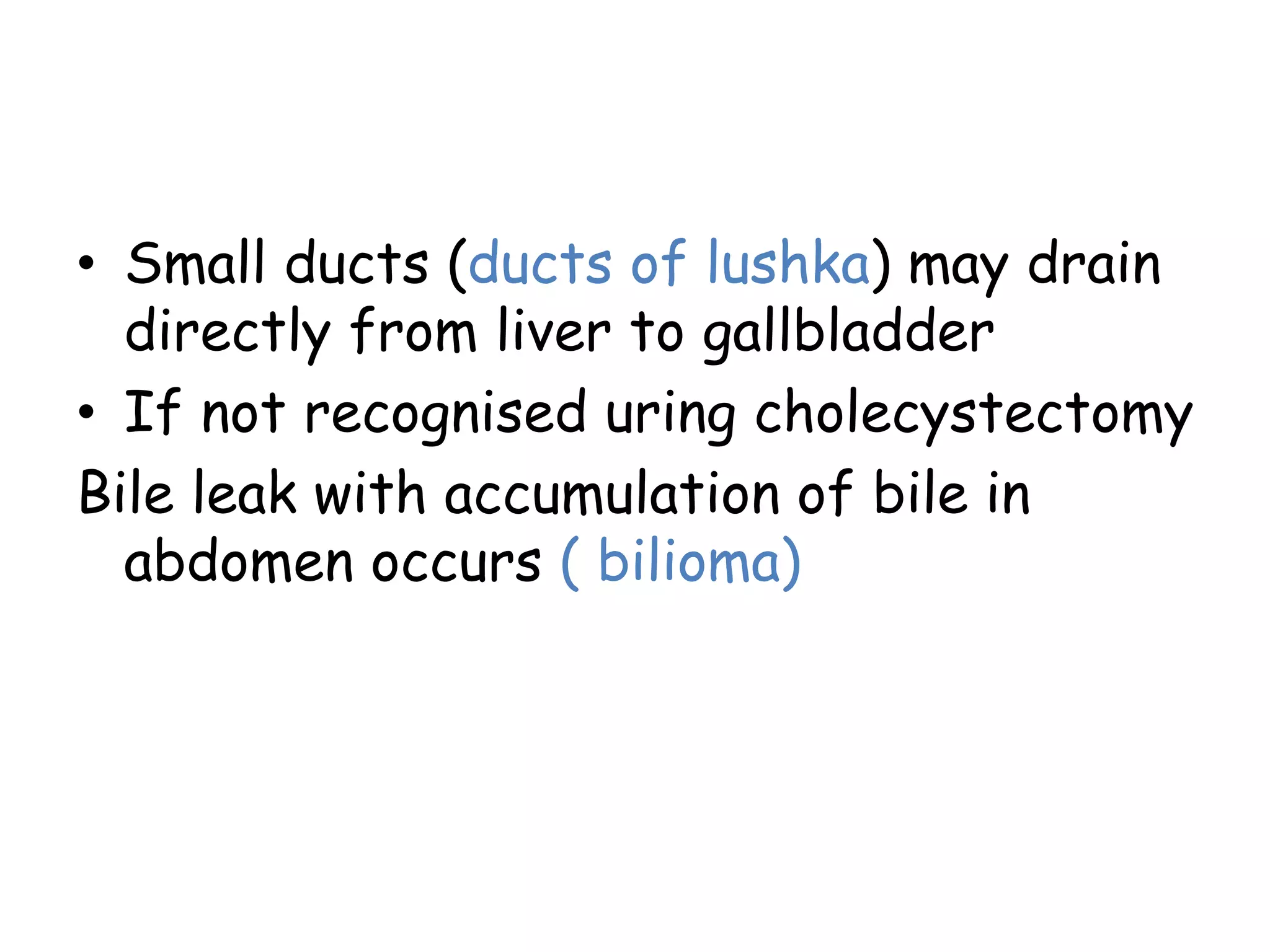
• Small ducts (ducts of lushka) may drain
directly from liver to gallbladder
• If not recognised uring cholecystectomy
Bile leak with accumulation of bile in
abdomen occurs ( bilioma)
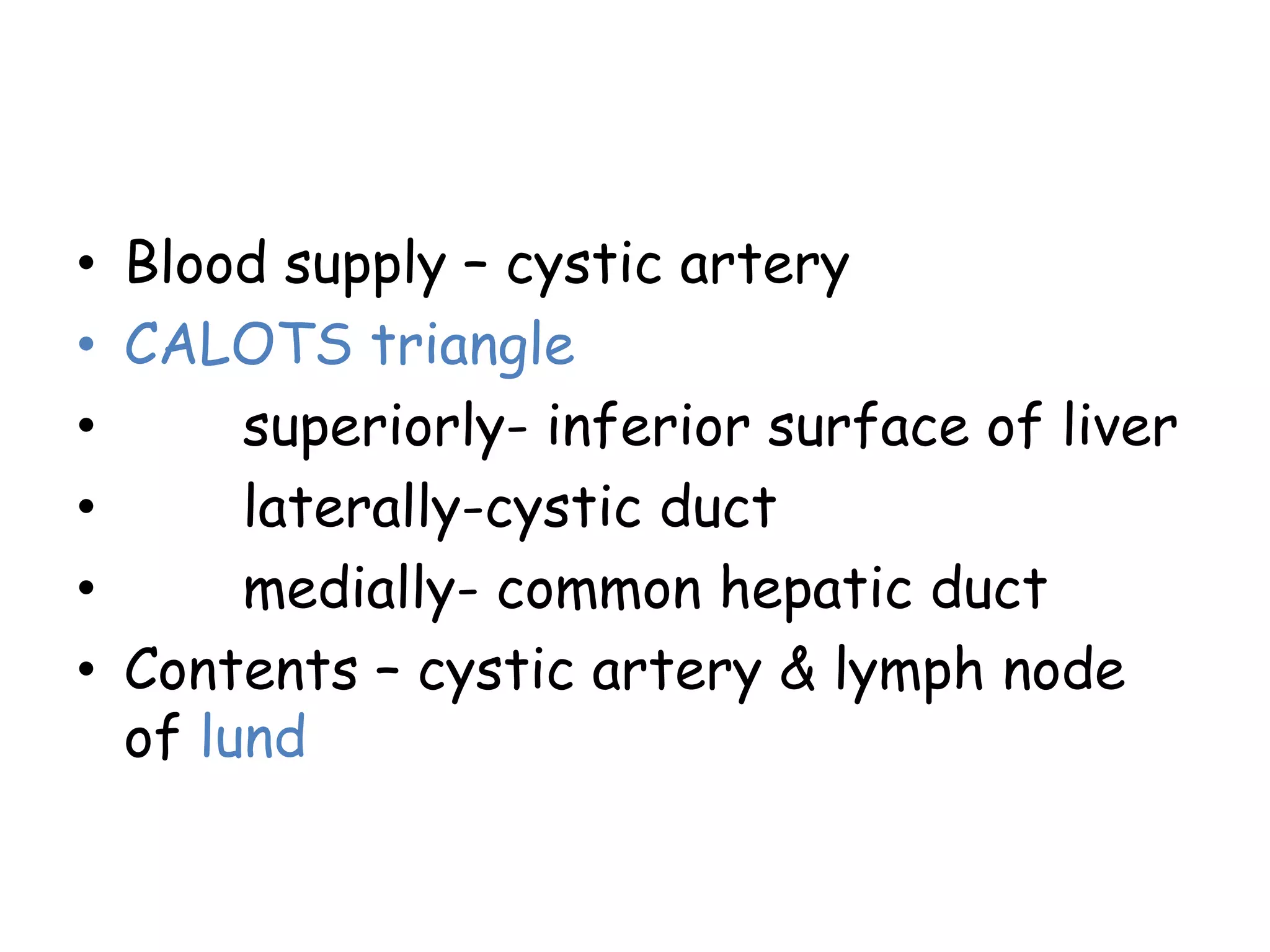
• Blood supply – cystic artery
• CALOTS triangle
• superiorly- inferior surface of liver
• laterally-cystic duct
• medially- common hepatic duct
• Contents – cystic artery & lymph node
of lund
• Venous drainage-
• 1)veins may drain directly into quadrate
lobe of liver
• 2)or may form pericholedochal plexus
• 3)finally enter hepatic veins
• 4)occasionally a vein may be found
passing along with cystic artery into
portal vein
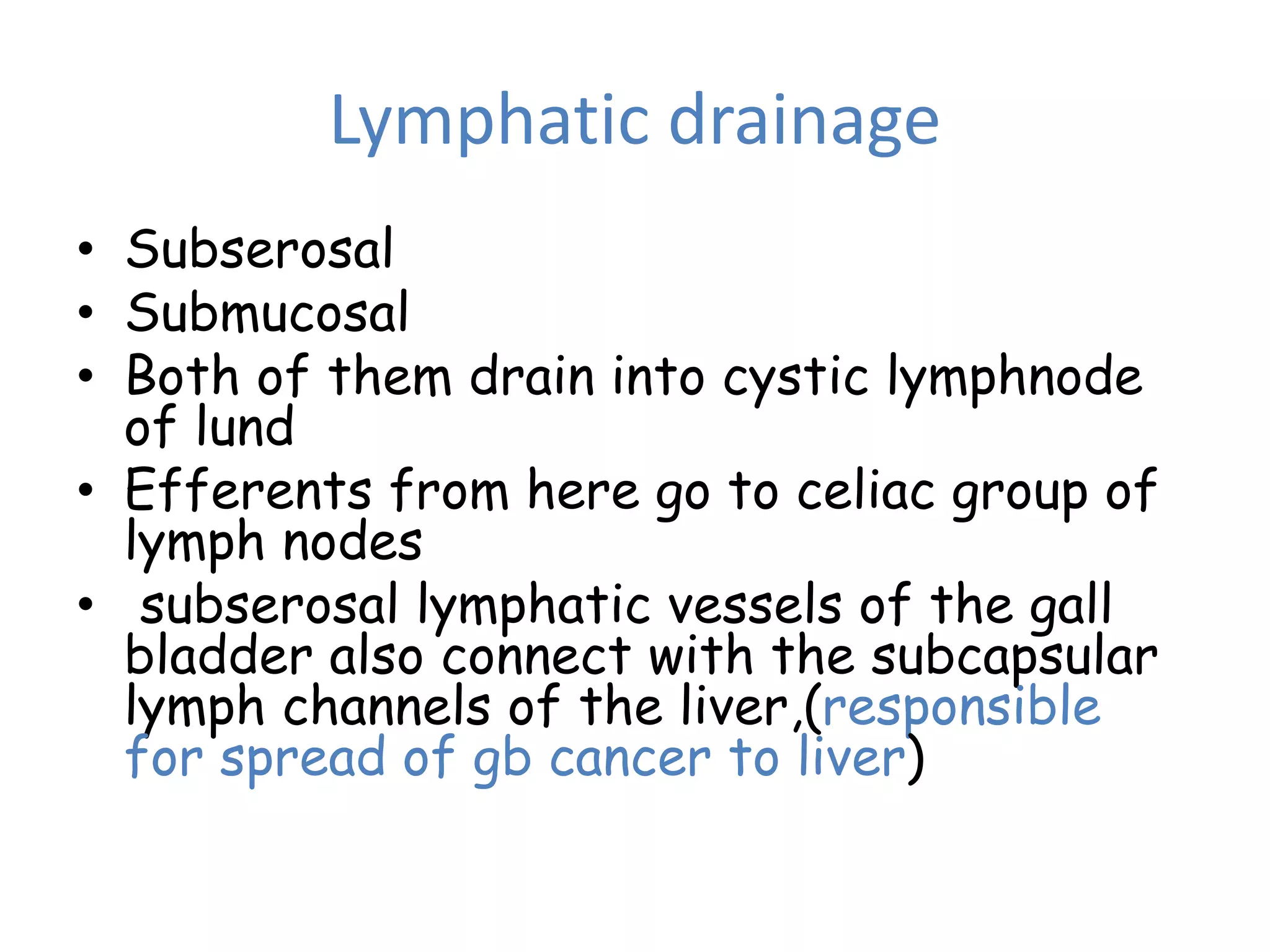
Lymphatic drainage
• Subserosal
• Submucosal
• Both of them drain into cystic lymphnode
of lund
• Efferents from here go to celiac group of
lymph nodes
• subserosal lymphatic vessels of the gall
bladder also connect with the subcapsular
lymph channels of the liver,(responsible
for spread of gb cancer to liver)
• Shoulder tip pain
• In acute cholecystitis pain is referred to
skin over lying acromion
• Phrenic nerve arises from c3,4,5 of spinal
cord,similiar to supraclavicular nerve c3,4
• Irritation of diaphramic peritoneum
supplied by phrenic nerve accounts for pain
referred to distribution of supraclavicular
nerve
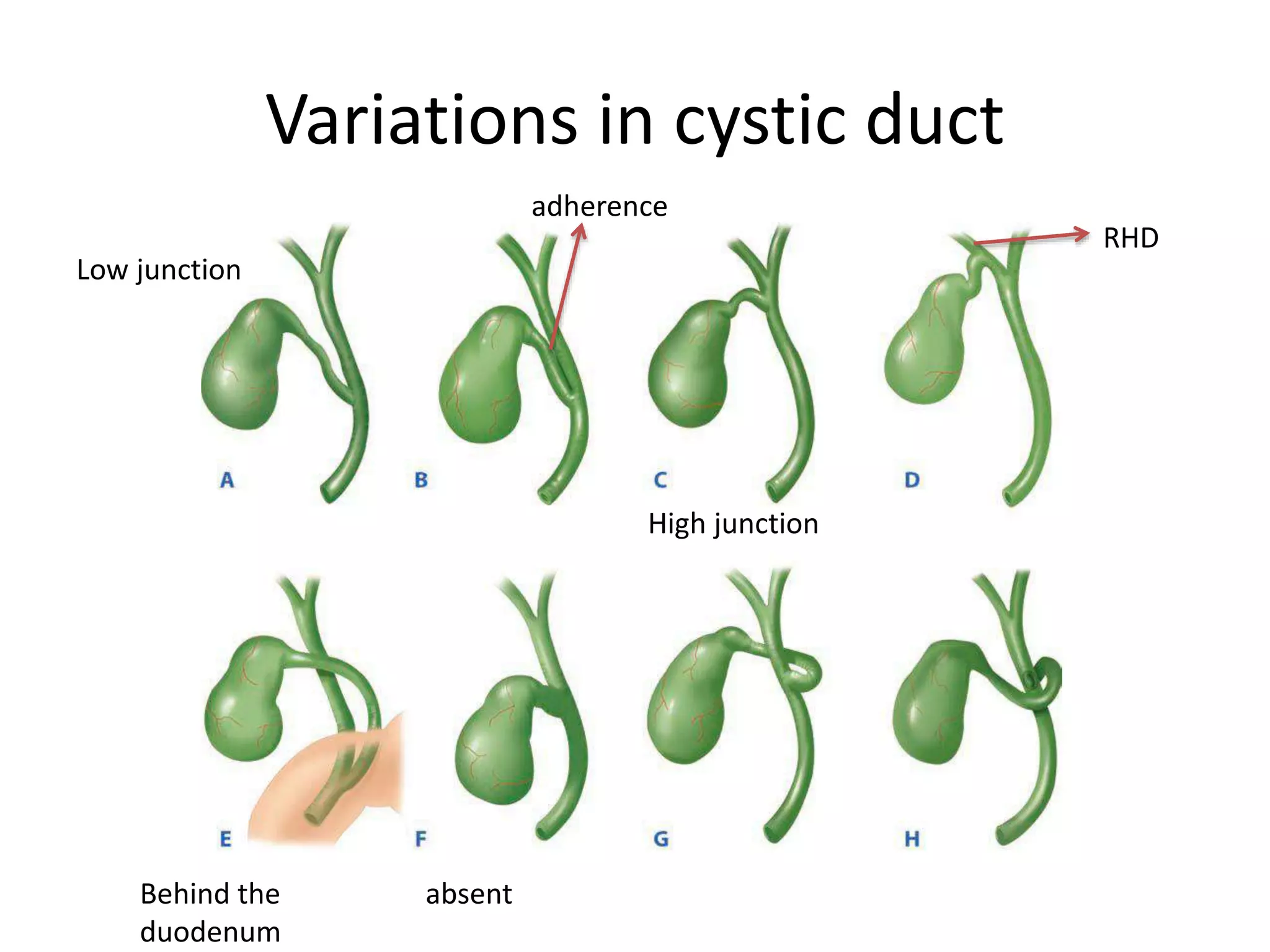
Cystic duct
• About 3cm in length,variable
• Diameter is 1-3 mm
• Mucosa arranged in spiral folds- valves
of heister- no valvular function
• Its wall surrounded by sphincteric
structure – sphincter of lutkens
• Joins common hepatic duct at variable
positions
• 80 % - supraduodenal
• 20% - retroduodenal
Variations in cystic duct
Low junction
adherence
High junction
RHD
Behind the
duodenum
absent
Hepatic ducts
• Right & left hepatic ducts forms
confluence outside liver
• Dissections in this area,it is necessary
to push liver substance away to display
confluence completely
• Common hepatic duct arises from
confluence
Common hepatic duct
• Formed by right & left hepatic ducts
• 1- 4 cm length
• Diameter 4mm
• Lies in front of portal vein & right to
hepatic artery
Common bile duct
• Formed by union of cystic duct & CHD
• 7 – 11 cm length
• 5- 10 mm diameter
• 4 parts
• Supra duodenal part- runs in free edge
of hepatoduodenal ligament
• Retroduodenal part- behind 1st part of
duodenum
• Infraduodenal part –runs behind head of
pancreas,in a groove, traverses through it
• Intraduodenal part- runs obliquely 1-2 cm
within wall of duodenum
• opens into papilla of ampulla of
vater,which is 10 cm distal to pylorus
• This papilla is present posteromedially at
junction of upper 2/3 & lower 1/3 of 2nd
part of duodenum
• 70 %- CBD & Pancreatic duct ,unite
outside the duodenal wall
• 20 % - ducts join within wall of
duodenum
• 10 % - opens through 2 seperate
openings
• Extrahepatic bile ducts- lined by
collumnar mucosa with numerous
mucosal glands in cbd
• Fibroareolar tissue containing smooth
muscle cells surrounds mucosa
• No muscle layer in CBD
• Blood supply- from gastroduodenal & right
hepatic arteries with major trunks medial
(3’oclock) & lateral (9’o clock) positions
• hence minimal dissection should be done
around CBD at sides to prevent stricture
formaton
• A retroportal artery arise from celiac
axis/SMA, runs behind portal vein to reach
posterior aspect of CBD
• Hence a thin fibrous layer should be left
intact posterior to pancreatic head &
portal vein ,during mobilisation of
duodenum
• Venous plexus on wall of supraduodenal
CBD
• Helps to recognise cbd at operation as
it doesnt extend onto cystic duct
• Ampulla of vater
• Union of CBD & pancreatic duct forms
ampulla
• Point of junction of common bile &
pancreatic ducts with duodenal papilla
is also variable
• Sometimes open independently
• Normal papilla permits a dilator of 3 mm
• Sphincters
• Differ from duodenal musculature
• Circular smooth muscle around CBD &
pancreatic duct- sphincter of oddi
• Sphincter of CBD- most constant ,best
developed ,present just before entry into
duodenal wall
• Pancreatic sphincter
• Ampullary sphincter
Variation in arterial supply to GB
CA from RHA 90%
CA from replaced RHA
2 CA from
RHA,CHA
2 CA from RHA ,LHA
Anterior to CHD
2 CA from RHA
physiology
• Liver produces bile continuously &
excretes into bile canaliculi
• Canaliculi coalesces into bile ducts
• Bile ducts portal triad hepatic
lobule hepatic ducts common
hepatic duct common bile duct
duodenum
• 500 – 1000 ml /day bile – normal adult
• Secretion regulated by various factors
• Neurogenic
• Humoral
• Chemical
• Neurogenic –
• Vagal stimulation – increased secretion
• Sympathetic stimulation- decreased
flow
• Chemical-
• Hcl,protein ,fatty acid in duodenum
• Increased secretin production
• Increased production & secretion of
bile
• Humoral-
• Cholecystokinin- gall bladder
contraction wit sphincter relaxation
• Vasoactive intestinal peptide – inhibits
gb contraction
• Somatostatin – inhibits gb contraction
Composition of bile
• Water
• Electrolytes
• Bile salts
• Bile pigments
• Proteins
• Lipids
• Na+,k+,cl,ca++ - same cocentration as that
of plasma or Ecf
• Ph- slightly alkaline
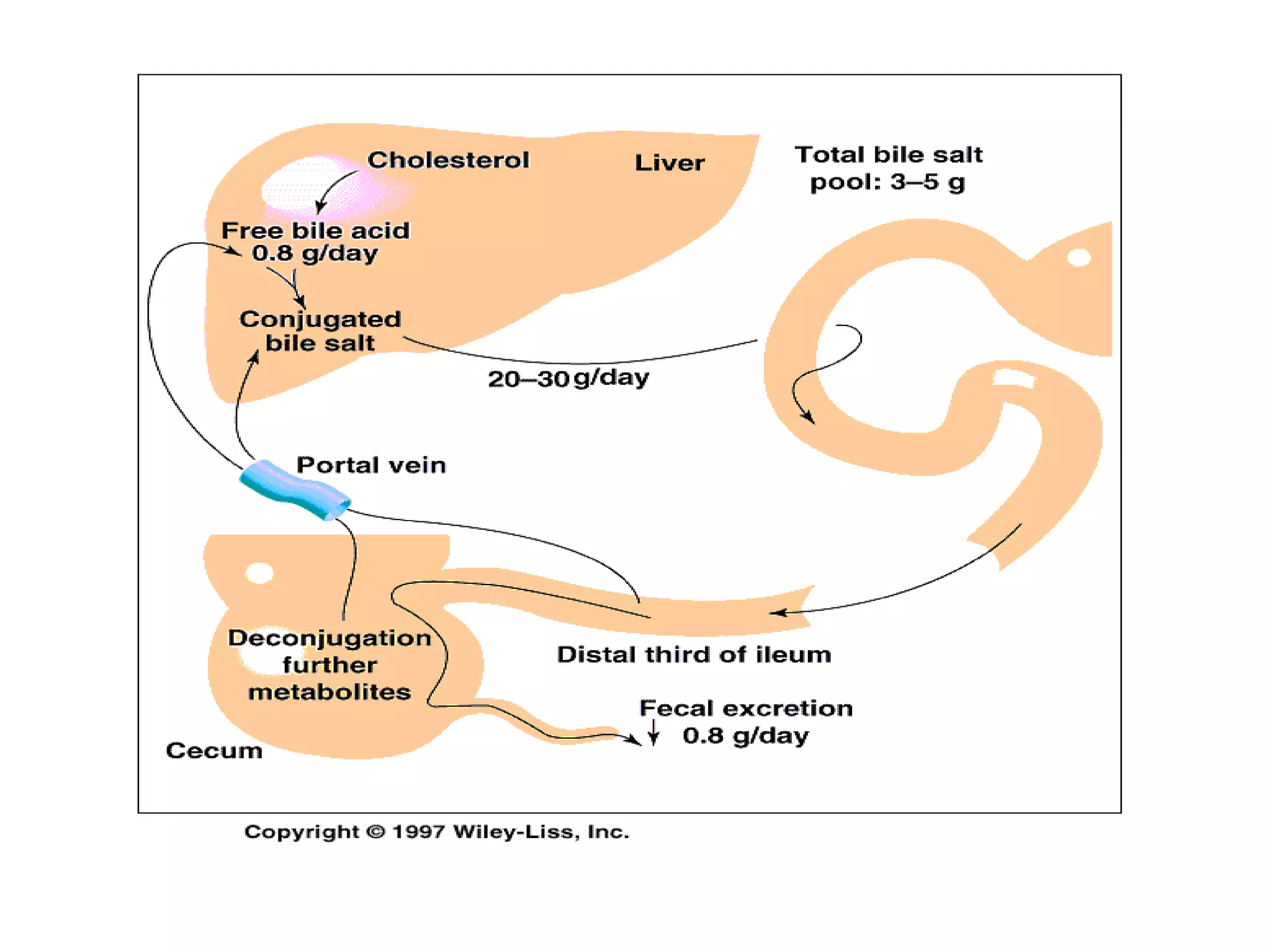
Enterohepatic circulation
• Primary bile salts – synthesized in liver
from cholesterol
• 500mg/day
• Cholic & chenedeoxycholic acid
• Conjugated with taurine , glycine
• Balanced with sodium
• These salts are excreted in bile , to
help in fat absorption by forming micelle
• 80% of these conjugated bile acids are
absorbed in terminal ileum-by active
transport
• Remaining 20% dehyroxylated by gut bacteria
• Forms deoxycholate & lithocholic acid-
secondary bile salts
• Some of this again absorbed in colon-by
passive transport
• So 95 % of bile acid pool gets reabsorbed &
returned to liver through portal circulation
• Only 5 % excreted through liver
• Defect in any step of enterohepatic circulation
causes steatorrhea
Defects in enterohepatic circulation
Process Pathophysiological defect Disease
synthesis Decreased hepatic function cirrhosis
Biliary secretion Altered canalicular function Primary biliary cirrhosis
Maintenance of conjugated
bile acids
Bacterial overgrowth Jejunal diverticulosis
reabsorption Abnormal ileal function Crohns disease,ileal
resection
Bile acid diarrhea Fatty acid diarrhea
Ileal resection limited extensive
Compensation by hepatic
synthesis
yes no
Bile acid pool normal reduced
Intraduodenal bile acid normal reduced
steatorrhea None/mild > 20gm/day
Response to
cholestyramine
yes no
Response to fatty acid No yes
INVESTIGATIONS
• BLOOD INVESTIGATIONS
• Suspected disease of gall bladder or extrahepatic
biliary tree- CBP,LFT usually evaluated
• Elevated WBC- cholecystitis
• Elevated direct/conjugated bilurubin with
elevated ALP –cholestasis
• Elevated wbc ,bilurubin,ALP,aminotransferases-
CHOLANGITIS
X RAY
• 10 % of gb stones are radio opaque
• Centre of stone may contain radioluscent gas
in triradiate/biradiate fissure- mercedes benz
sign/ seagull sign
Porcelain gall bladder
calcifications
Emphysematous cholecystitis
Gas in gb
ultrasonography
• Initial investigation of choice in suspected
extrahepatic biliary disease
• Advantages
• Non invasive
• Painless
• No radiation
• Adjacent organs can be examined at same
time
• Accurate identification of gall stones
(sensitivity > 95 %)
• Not limited by jaundice or pregnancy
• Allows assessment of GB volume, contractility,
inflammatory changes around GB
• Detects very small stones
• Accurate identification of dilated bile ducts
• Guidance for fine needle biopsy
• Other uses
• Detects tumour invasion
• Portal vein flow-
• Disadvantages
• Obesse, ascites,distention – difficult to
examine
• Partial obstuction cases
• Poor visualisation of distal cbd especially
retroduodenal part
GB stones
Post acoustic
shadow
d/d cacified polyp – doesnt change with position
Endoscopic ultrasound
• Endoscope with ultrasound transducer at tip
• Visualises biliary tree from within stomach &
duodenum
• Accurate to detect ampullary & periampullary
tumours & their resectability
• Accurate to detect stones in cbd
Oral cholecystography
• Once considered the diagnostic procedure of
choice for gallstones
• replaced by ultrasonography
• involves oral administration of a radiopaque
compound that is absorbed, excreted by the
liver, and passed into the gallbladder
• Stones- filling defects in opacified gall bladder
• No value in malabsorption,
vomiting,obstructive jaundice,hepatic failure
• Pt adviced to take fat free diet for 3 days
• Previous night 6 tabs of iopanoic acid given orally
• On day of ocg xray erect abdomen is taken to
visualise gall bladder
• Latter fatty meal given & one more x ray taken to
see change in size
• Smooth filling defect- non opaque stone
• Iv cholangiogram- meglumine used
Radioisotope scan
• a noninvasive evaluation of the liver, gallbladder, bile
ducts, and duodenum
• gives both anatomic and functional information
• 99mTechnetium-labeled derivatives of dimethyl
iminodiacetic acid (HIDA) are injected intravenously
• cleared by the Kupffer cells in the liver, and excreted in
the bile.
• Uptake by the liver is detected within 10 minutes,
• the gallbladder, the bile ducts, and the duodenum are
visualized within 60 minutes in fasting subjects.
• Non visualisation of GB – acute cholecysytitis
• Filling of the gallbladder,CBD with delayed or
absent filling of the duodenum-obstruction at
the ampulla
• Post operative biliary leaks can be identified &
quantified
• GB visualisation delayed or reduced with
contracted GB- chronic cholecystitis
• Contraindicated in
• Pregnancy
• S.bilurubin > 6 – 12m g/dl
Computerised tomography
• to define the course and status of the
extrahepatic biliary tree and adjacent
structures
• test of choice in suspected malignancy of the
gallbladder, the extrahepatic biliary system,
the head of the pancreas
• Spiral ct- detects vascular involvement in peri
ampullary ca
• To detect metastasis & lymph nodes
MRCP
• Magnetic resonance
cholangiopancreaticography
• Provides anatomic details of liver, gall
bladder,pancreas
• Uses heavily weighted T2 images/ pulse
sequences for anatomy of biliary tree &
pancreatic duct
• Non invasive test for biliary tree & pancreatic
duct pathology
Pancreatic duct
Extrahepatic
bile ducts
Hilar
obstruction
ERCP
• Using a side view endoscope,cbd
cannulated,& cholangiogram is done using
fluoroscopy
• requires intravenous sedation
• Advantages
• direct visualization of the ampullary region
• access to the distal common bile duct,
• possibility of therapeutic intervention.
• Bile or pancreatic cytology can be tahen
• For endoscopic sphinterotomy & stone
removal
• Indications
• stones in the common bile duct, associated with
obstructive jaundice, cholangitis, or gallstone
pancreatitis, ERC is the diagnostic and often
therapeutic procedure of choice
• Complications
• Cholangitis
• Pancratitis in 5% cases
• Infected pancreatic pseudocyst
• Limitation – cannot be done in
gastroduodenal obstruction
• Contraindicated
• Pregnancy
• Acute pancreatitis
Stones in cbd
Percutaneous Transhepatic
Cholangiography
• To assess intrahepatic bile ducts
percutaneously with a small needle under
fluoroscopic guidance
• Once position is confirmed,guide wire is
passed
• Then catheter is passed
• Then cholangiogram can be performed
• Therapeutic interventions like stenting,biliary
drainage can be done
• useful in patients with bile duct strictures and
tumors, as it defines the anatomy of the
biliary tree proximal to the affected segment
• Extremely useful in dilated ducts
• Limitations
• Non dilated/sclerosed ducts
• Contraindications
• Pregnancy
• Coagulopathy
• Massive ascites
• Hepatic abscess
• Complications
• Bleeding
• Hemobilia
• Bile peritonitis,sepsis
Intraoperative Cholangiogram
• Bile ducts are visualized under fluoroscopy by
injecting contrast through a catheter placed in
the cystic duct
• Bileducts size assessed & cbd stones are detected
• Can be selectively performed on patients with
– abnormal liver function tests,
– pancreatitis,
– jaundice,
– a large duct and small stones,
– a dilated duct on preoperative ultrasonography
THANK U

Biliary system anatomy,physiology & investigations

  • 1.
    Biliary system anatomy,physiology& investigations G.NARENDRA ms general surgery Under guidance of Dr.V.TATHA RAO NRIGH,GUNTUR
  • 2.
  • 3.
    GALL BLADDER PEAR SHAPEDSAC Located in fossa on inferior surface of liver Between right & quadrate lobes Relations Anteriorly inferior surface of liver & anterior abdominal wall Posteriorly transverse colon &1st , 2nd parts of duodenum
  • 4.
    • Dimensions • 7-10cm long • 30 – 50 ml capacity • When obstructed – upto 300 ml • 4 anatomic parts • Fundus • Corpus • Neck • infundibulum
  • 5.
    • Fundus –round,blind end 1-2 cm beyond liver margin,contains more of smooth muscle • Body-main storage area,more of elastic tissue • Neck- funnel shaped area connecting body to duct • Infundibulum- between body & neck – dilated part is called hartmann pouch
  • 6.
    • Layers • Mucosa-lined by collumnar epithelium • crypts of lushka • Lamina propria • Muscularis propria- circular ,longitudinal & oblique fibres arranged criss crossly • Subserosa- contains connective tissue,nerves,lympatics,vessels • Serosa-covered all over gb except on embedded area • Submucosa & muscularis mucosa absent
  • 7.
    • Small ducts(ducts of lushka) may drain directly from liver to gallbladder • If not recognised uring cholecystectomy Bile leak with accumulation of bile in abdomen occurs ( bilioma)
  • 8.
    • Blood supply– cystic artery • CALOTS triangle • superiorly- inferior surface of liver • laterally-cystic duct • medially- common hepatic duct • Contents – cystic artery & lymph node of lund
  • 9.
    • Venous drainage- •1)veins may drain directly into quadrate lobe of liver • 2)or may form pericholedochal plexus • 3)finally enter hepatic veins • 4)occasionally a vein may be found passing along with cystic artery into portal vein
  • 10.
    Lymphatic drainage • Subserosal •Submucosal • Both of them drain into cystic lymphnode of lund • Efferents from here go to celiac group of lymph nodes • subserosal lymphatic vessels of the gall bladder also connect with the subcapsular lymph channels of the liver,(responsible for spread of gb cancer to liver)
  • 11.
    • Shoulder tippain • In acute cholecystitis pain is referred to skin over lying acromion • Phrenic nerve arises from c3,4,5 of spinal cord,similiar to supraclavicular nerve c3,4 • Irritation of diaphramic peritoneum supplied by phrenic nerve accounts for pain referred to distribution of supraclavicular nerve
  • 12.
    Cystic duct • About3cm in length,variable • Diameter is 1-3 mm • Mucosa arranged in spiral folds- valves of heister- no valvular function • Its wall surrounded by sphincteric structure – sphincter of lutkens • Joins common hepatic duct at variable positions • 80 % - supraduodenal • 20% - retroduodenal
  • 13.
    Variations in cysticduct Low junction adherence High junction RHD Behind the duodenum absent
  • 14.
  • 15.
    • Right &left hepatic ducts forms confluence outside liver • Dissections in this area,it is necessary to push liver substance away to display confluence completely • Common hepatic duct arises from confluence
  • 16.
    Common hepatic duct •Formed by right & left hepatic ducts • 1- 4 cm length • Diameter 4mm • Lies in front of portal vein & right to hepatic artery
  • 17.
    Common bile duct •Formed by union of cystic duct & CHD • 7 – 11 cm length • 5- 10 mm diameter • 4 parts • Supra duodenal part- runs in free edge of hepatoduodenal ligament • Retroduodenal part- behind 1st part of duodenum
  • 18.
    • Infraduodenal part–runs behind head of pancreas,in a groove, traverses through it • Intraduodenal part- runs obliquely 1-2 cm within wall of duodenum • opens into papilla of ampulla of vater,which is 10 cm distal to pylorus • This papilla is present posteromedially at junction of upper 2/3 & lower 1/3 of 2nd part of duodenum
  • 19.
    • 70 %-CBD & Pancreatic duct ,unite outside the duodenal wall • 20 % - ducts join within wall of duodenum • 10 % - opens through 2 seperate openings
  • 20.
    • Extrahepatic bileducts- lined by collumnar mucosa with numerous mucosal glands in cbd • Fibroareolar tissue containing smooth muscle cells surrounds mucosa • No muscle layer in CBD
  • 21.
    • Blood supply-from gastroduodenal & right hepatic arteries with major trunks medial (3’oclock) & lateral (9’o clock) positions • hence minimal dissection should be done around CBD at sides to prevent stricture formaton • A retroportal artery arise from celiac axis/SMA, runs behind portal vein to reach posterior aspect of CBD • Hence a thin fibrous layer should be left intact posterior to pancreatic head & portal vein ,during mobilisation of duodenum
  • 22.
    • Venous plexuson wall of supraduodenal CBD • Helps to recognise cbd at operation as it doesnt extend onto cystic duct
  • 23.
    • Ampulla ofvater • Union of CBD & pancreatic duct forms ampulla • Point of junction of common bile & pancreatic ducts with duodenal papilla is also variable • Sometimes open independently • Normal papilla permits a dilator of 3 mm
  • 24.
    • Sphincters • Differfrom duodenal musculature • Circular smooth muscle around CBD & pancreatic duct- sphincter of oddi • Sphincter of CBD- most constant ,best developed ,present just before entry into duodenal wall • Pancreatic sphincter • Ampullary sphincter
  • 26.
    Variation in arterialsupply to GB CA from RHA 90% CA from replaced RHA 2 CA from RHA,CHA 2 CA from RHA ,LHA Anterior to CHD 2 CA from RHA
  • 27.
    physiology • Liver producesbile continuously & excretes into bile canaliculi • Canaliculi coalesces into bile ducts • Bile ducts portal triad hepatic lobule hepatic ducts common hepatic duct common bile duct duodenum
  • 28.
    • 500 –1000 ml /day bile – normal adult • Secretion regulated by various factors • Neurogenic • Humoral • Chemical • Neurogenic – • Vagal stimulation – increased secretion • Sympathetic stimulation- decreased flow
  • 29.
    • Chemical- • Hcl,protein,fatty acid in duodenum • Increased secretin production • Increased production & secretion of bile • Humoral- • Cholecystokinin- gall bladder contraction wit sphincter relaxation
  • 30.
    • Vasoactive intestinalpeptide – inhibits gb contraction • Somatostatin – inhibits gb contraction
  • 31.
    Composition of bile •Water • Electrolytes • Bile salts • Bile pigments • Proteins • Lipids • Na+,k+,cl,ca++ - same cocentration as that of plasma or Ecf • Ph- slightly alkaline
  • 34.
    Enterohepatic circulation • Primarybile salts – synthesized in liver from cholesterol • 500mg/day • Cholic & chenedeoxycholic acid • Conjugated with taurine , glycine • Balanced with sodium • These salts are excreted in bile , to help in fat absorption by forming micelle
  • 35.
    • 80% ofthese conjugated bile acids are absorbed in terminal ileum-by active transport • Remaining 20% dehyroxylated by gut bacteria • Forms deoxycholate & lithocholic acid- secondary bile salts • Some of this again absorbed in colon-by passive transport • So 95 % of bile acid pool gets reabsorbed & returned to liver through portal circulation
  • 36.
    • Only 5% excreted through liver • Defect in any step of enterohepatic circulation causes steatorrhea
  • 38.
    Defects in enterohepaticcirculation Process Pathophysiological defect Disease synthesis Decreased hepatic function cirrhosis Biliary secretion Altered canalicular function Primary biliary cirrhosis Maintenance of conjugated bile acids Bacterial overgrowth Jejunal diverticulosis reabsorption Abnormal ileal function Crohns disease,ileal resection
  • 39.
    Bile acid diarrheaFatty acid diarrhea Ileal resection limited extensive Compensation by hepatic synthesis yes no Bile acid pool normal reduced Intraduodenal bile acid normal reduced steatorrhea None/mild > 20gm/day Response to cholestyramine yes no Response to fatty acid No yes
  • 40.
    INVESTIGATIONS • BLOOD INVESTIGATIONS •Suspected disease of gall bladder or extrahepatic biliary tree- CBP,LFT usually evaluated • Elevated WBC- cholecystitis • Elevated direct/conjugated bilurubin with elevated ALP –cholestasis • Elevated wbc ,bilurubin,ALP,aminotransferases- CHOLANGITIS
  • 41.
    X RAY • 10% of gb stones are radio opaque • Centre of stone may contain radioluscent gas in triradiate/biradiate fissure- mercedes benz sign/ seagull sign
  • 43.
  • 44.
  • 45.
    ultrasonography • Initial investigationof choice in suspected extrahepatic biliary disease • Advantages • Non invasive • Painless • No radiation • Adjacent organs can be examined at same time
  • 46.
    • Accurate identificationof gall stones (sensitivity > 95 %) • Not limited by jaundice or pregnancy • Allows assessment of GB volume, contractility, inflammatory changes around GB • Detects very small stones • Accurate identification of dilated bile ducts • Guidance for fine needle biopsy
  • 47.
    • Other uses •Detects tumour invasion • Portal vein flow-
  • 48.
    • Disadvantages • Obesse,ascites,distention – difficult to examine • Partial obstuction cases • Poor visualisation of distal cbd especially retroduodenal part
  • 49.
    GB stones Post acoustic shadow d/dcacified polyp – doesnt change with position
  • 50.
    Endoscopic ultrasound • Endoscopewith ultrasound transducer at tip • Visualises biliary tree from within stomach & duodenum • Accurate to detect ampullary & periampullary tumours & their resectability • Accurate to detect stones in cbd
  • 52.
    Oral cholecystography • Onceconsidered the diagnostic procedure of choice for gallstones • replaced by ultrasonography • involves oral administration of a radiopaque compound that is absorbed, excreted by the liver, and passed into the gallbladder • Stones- filling defects in opacified gall bladder • No value in malabsorption, vomiting,obstructive jaundice,hepatic failure
  • 53.
    • Pt advicedto take fat free diet for 3 days • Previous night 6 tabs of iopanoic acid given orally • On day of ocg xray erect abdomen is taken to visualise gall bladder • Latter fatty meal given & one more x ray taken to see change in size • Smooth filling defect- non opaque stone • Iv cholangiogram- meglumine used
  • 54.
    Radioisotope scan • anoninvasive evaluation of the liver, gallbladder, bile ducts, and duodenum • gives both anatomic and functional information • 99mTechnetium-labeled derivatives of dimethyl iminodiacetic acid (HIDA) are injected intravenously • cleared by the Kupffer cells in the liver, and excreted in the bile. • Uptake by the liver is detected within 10 minutes, • the gallbladder, the bile ducts, and the duodenum are visualized within 60 minutes in fasting subjects.
  • 56.
    • Non visualisationof GB – acute cholecysytitis • Filling of the gallbladder,CBD with delayed or absent filling of the duodenum-obstruction at the ampulla • Post operative biliary leaks can be identified & quantified • GB visualisation delayed or reduced with contracted GB- chronic cholecystitis
  • 57.
    • Contraindicated in •Pregnancy • S.bilurubin > 6 – 12m g/dl
  • 58.
    Computerised tomography • todefine the course and status of the extrahepatic biliary tree and adjacent structures • test of choice in suspected malignancy of the gallbladder, the extrahepatic biliary system, the head of the pancreas • Spiral ct- detects vascular involvement in peri ampullary ca • To detect metastasis & lymph nodes
  • 59.
    MRCP • Magnetic resonance cholangiopancreaticography •Provides anatomic details of liver, gall bladder,pancreas • Uses heavily weighted T2 images/ pulse sequences for anatomy of biliary tree & pancreatic duct • Non invasive test for biliary tree & pancreatic duct pathology
  • 60.
  • 61.
  • 62.
    ERCP • Using aside view endoscope,cbd cannulated,& cholangiogram is done using fluoroscopy • requires intravenous sedation • Advantages • direct visualization of the ampullary region • access to the distal common bile duct, • possibility of therapeutic intervention.
  • 63.
    • Bile orpancreatic cytology can be tahen • For endoscopic sphinterotomy & stone removal
  • 64.
    • Indications • stonesin the common bile duct, associated with obstructive jaundice, cholangitis, or gallstone pancreatitis, ERC is the diagnostic and often therapeutic procedure of choice • Complications • Cholangitis • Pancratitis in 5% cases • Infected pancreatic pseudocyst
  • 65.
    • Limitation –cannot be done in gastroduodenal obstruction • Contraindicated • Pregnancy • Acute pancreatitis
  • 67.
  • 68.
    Percutaneous Transhepatic Cholangiography • Toassess intrahepatic bile ducts percutaneously with a small needle under fluoroscopic guidance • Once position is confirmed,guide wire is passed • Then catheter is passed • Then cholangiogram can be performed • Therapeutic interventions like stenting,biliary drainage can be done
  • 69.
    • useful inpatients with bile duct strictures and tumors, as it defines the anatomy of the biliary tree proximal to the affected segment • Extremely useful in dilated ducts • Limitations • Non dilated/sclerosed ducts
  • 70.
    • Contraindications • Pregnancy •Coagulopathy • Massive ascites • Hepatic abscess • Complications • Bleeding • Hemobilia • Bile peritonitis,sepsis
  • 71.
    Intraoperative Cholangiogram • Bileducts are visualized under fluoroscopy by injecting contrast through a catheter placed in the cystic duct • Bileducts size assessed & cbd stones are detected • Can be selectively performed on patients with – abnormal liver function tests, – pancreatitis, – jaundice, – a large duct and small stones, – a dilated duct on preoperative ultrasonography
  • 73.