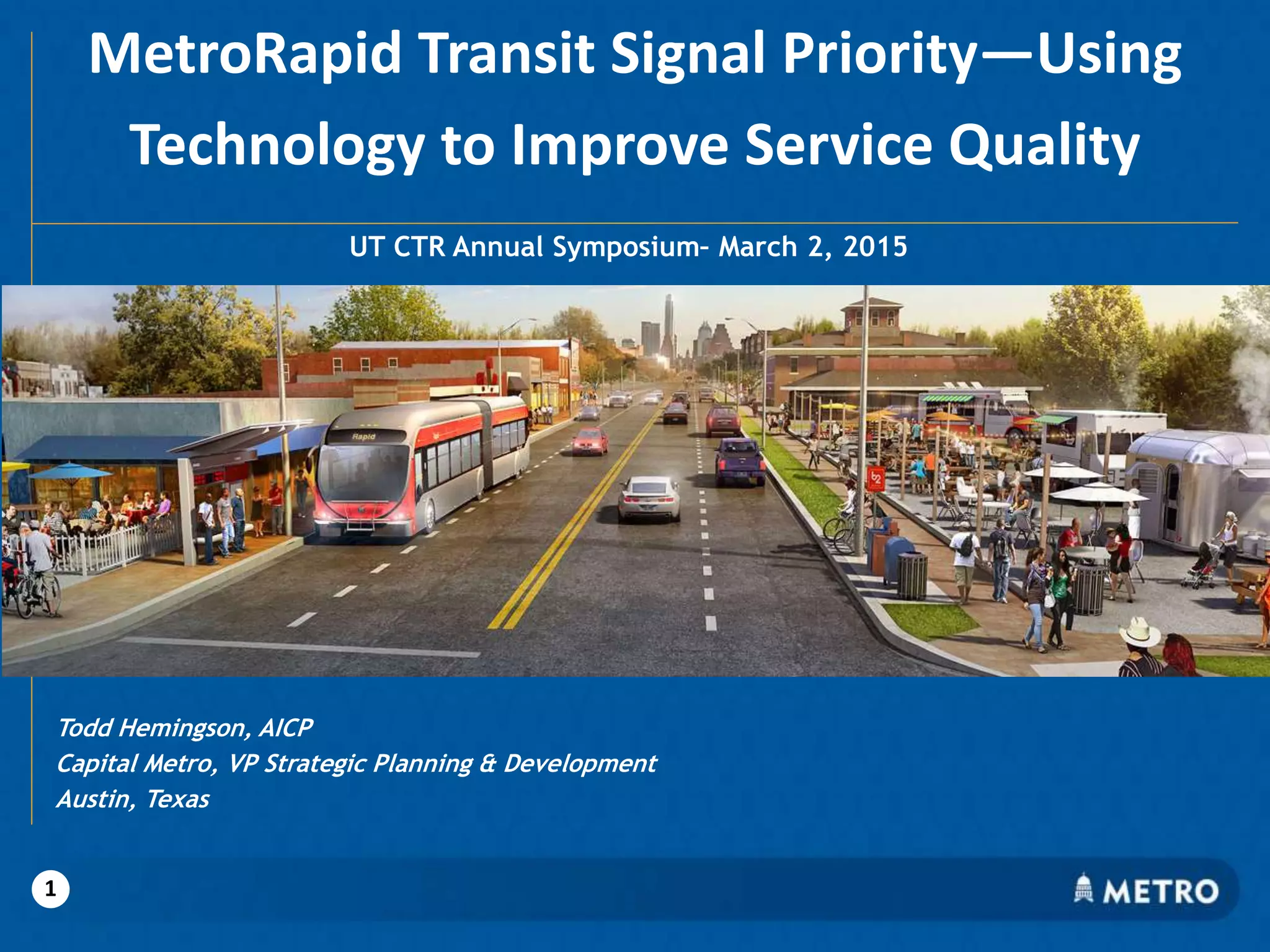
MetroRapid Transit Signal Priority—Using
Technology to Improve Service Quality
UT CTR Annual Symposium– March 2, 2015
Todd Hemingson, AICP
Capital Metro, VP Strategic Planning & Development
Austin, Texas
1
MetroRapid
2
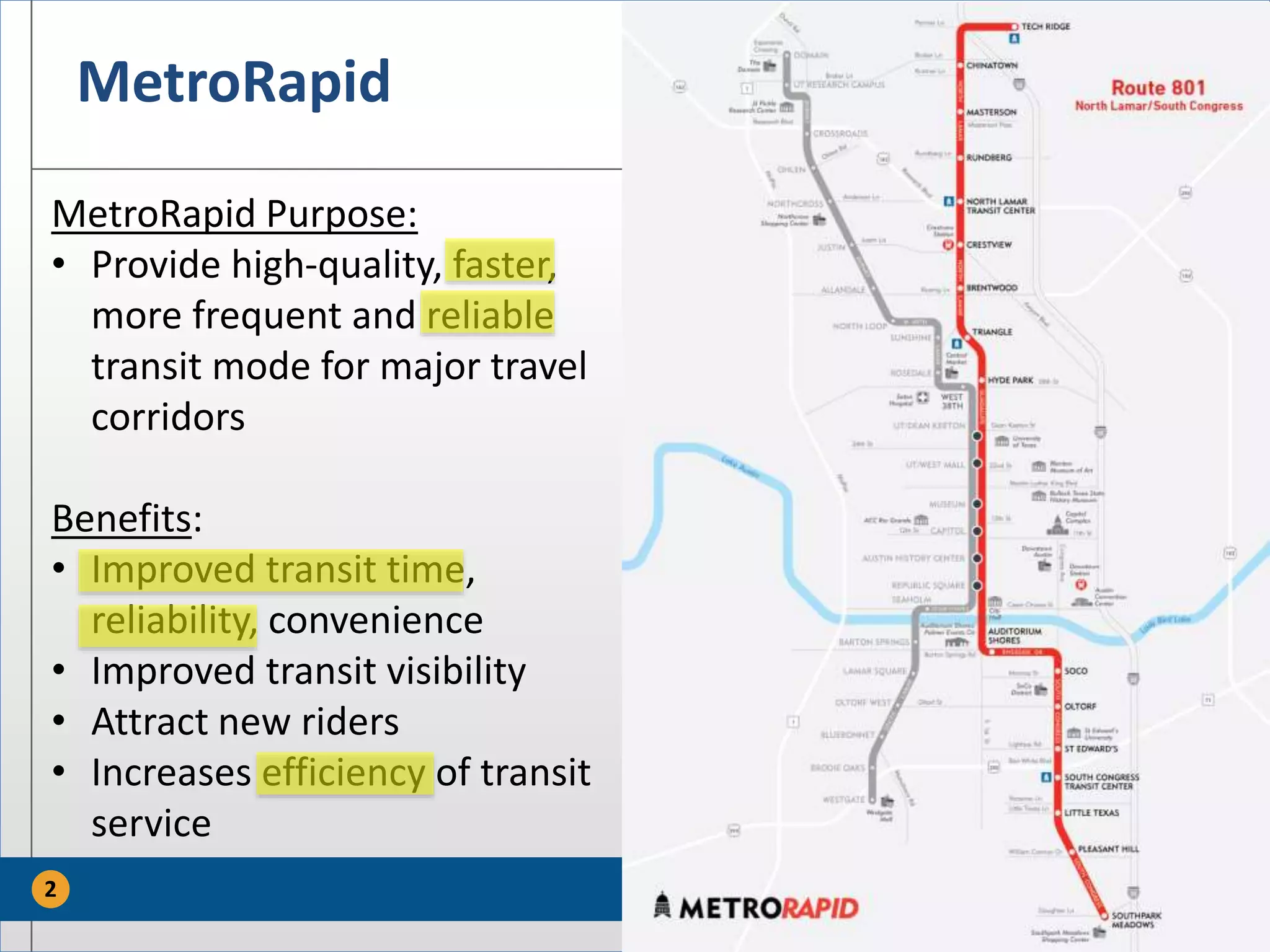
MetroRapid Purpose:
• Provide high-quality, faster,
more frequent and reliable
transit mode for major travel
corridors
Benefits:
• Improved transit time,
reliability, convenience
• Improved transit visibility
• Attract new riders
• Increases efficiency of transit
service
MetroRapid To Date
3
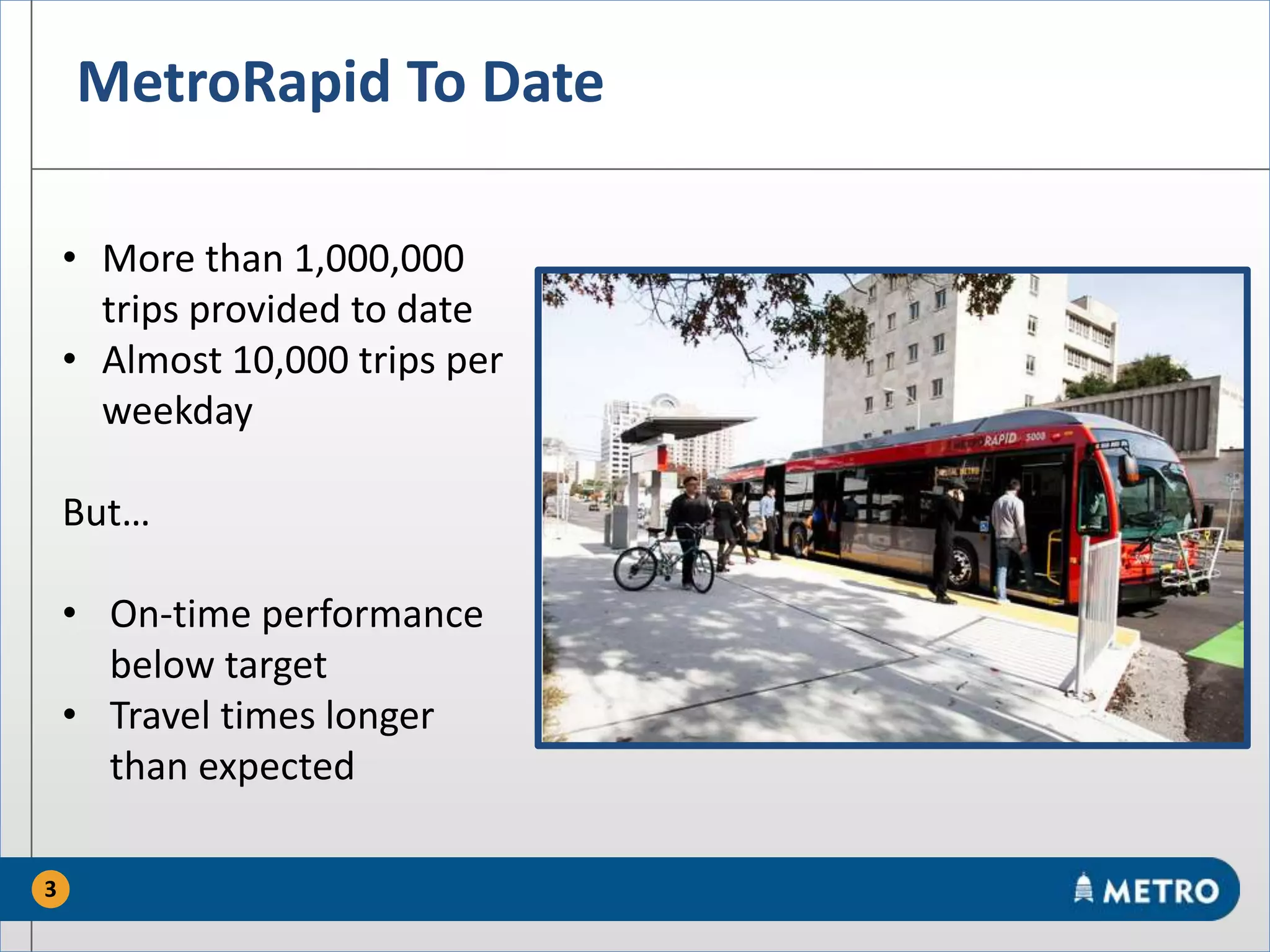
• More than 1,000,000
trips provided to date
• Almost 10,000 trips per
weekday
But…
• On-time performance
below target
• Travel times longer
than expected
MetroRapid and Transit Signal Priority
(TSP)
• During project design, Capital Metro sought to
include as many elements of Bus Rapid Transit as
possible, including TSP
• Coordination with City of Austin required for TSP
• Multiyear effort
– Citywide upgrade from optical system to centralized
system using GPS
– Interagency agreements to jointly fund
– Testing and deployment ahead of MetroRapid launch
4
Where is TSP used in Austin?
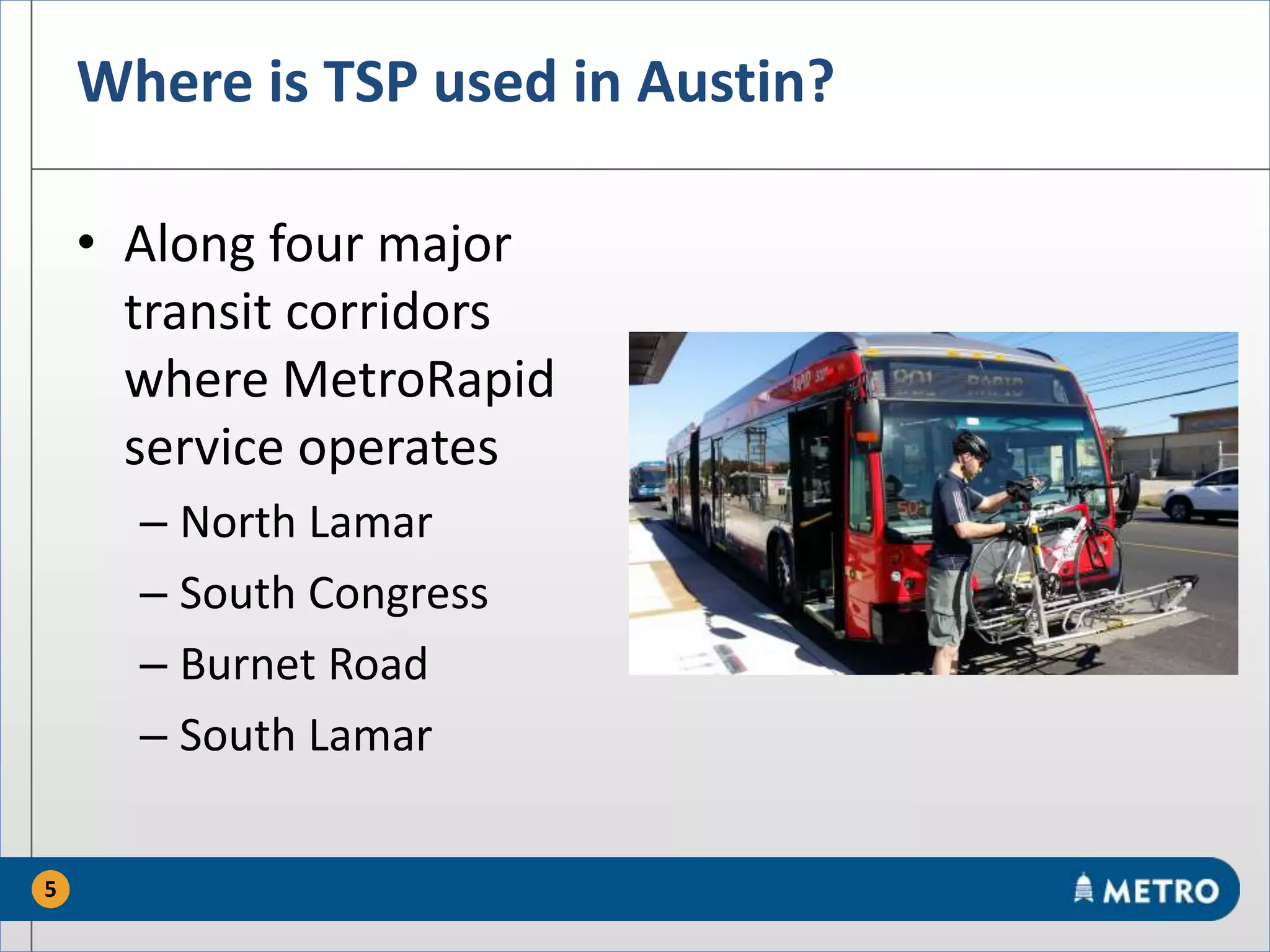
• Along four major
transit corridors
where MetroRapid
service operates
– North Lamar
– South Congress
– Burnet Road
– South Lamar
5
What is Transit Signal Priority?
• TSP is an operational strategy that facilitates
the movement of transit vehicles through
traffic-signal controlled intersections.
• Objectives of TSP include:
– improved schedule adherence
– improved transit travel time efficiency
– minimizing impacts to normal traffic operations
• It is NOT signal pre-emption!
6
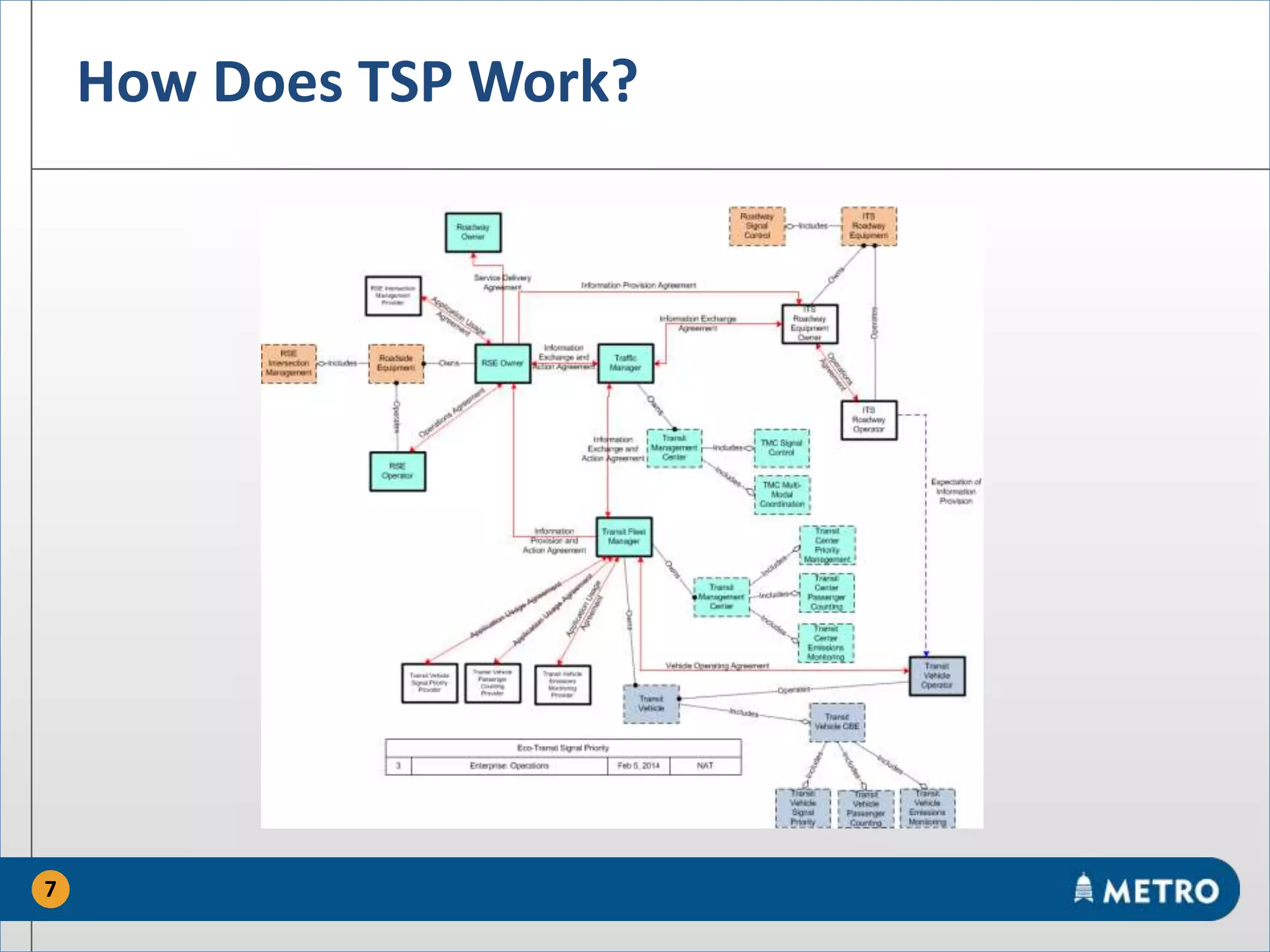
How Does TSP Work?
7
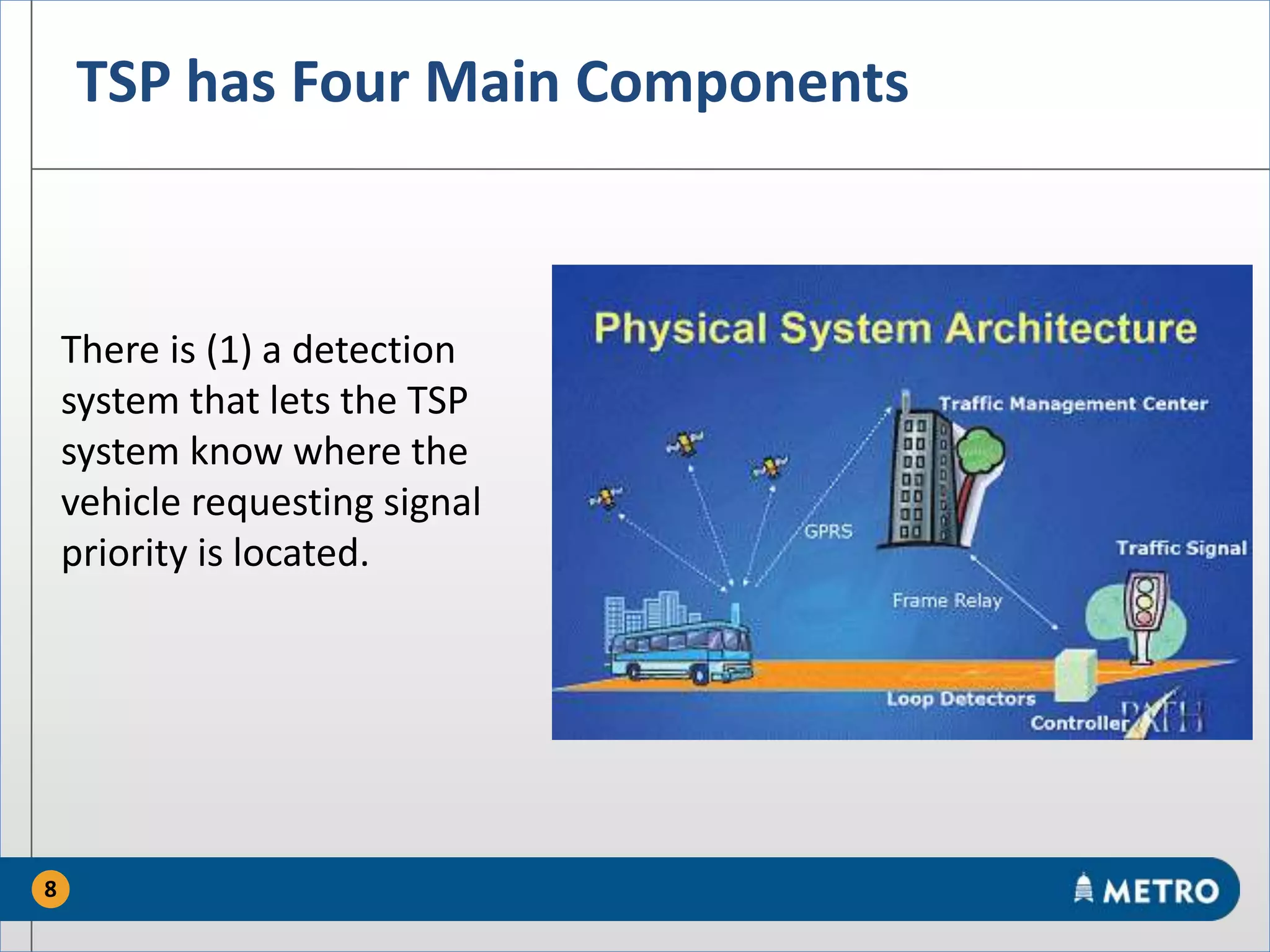
TSP has Four Main Components
There is (1) a detection
system that lets the TSP
system know where the
vehicle requesting signal
priority is located.
8
TSP has Four Main Components
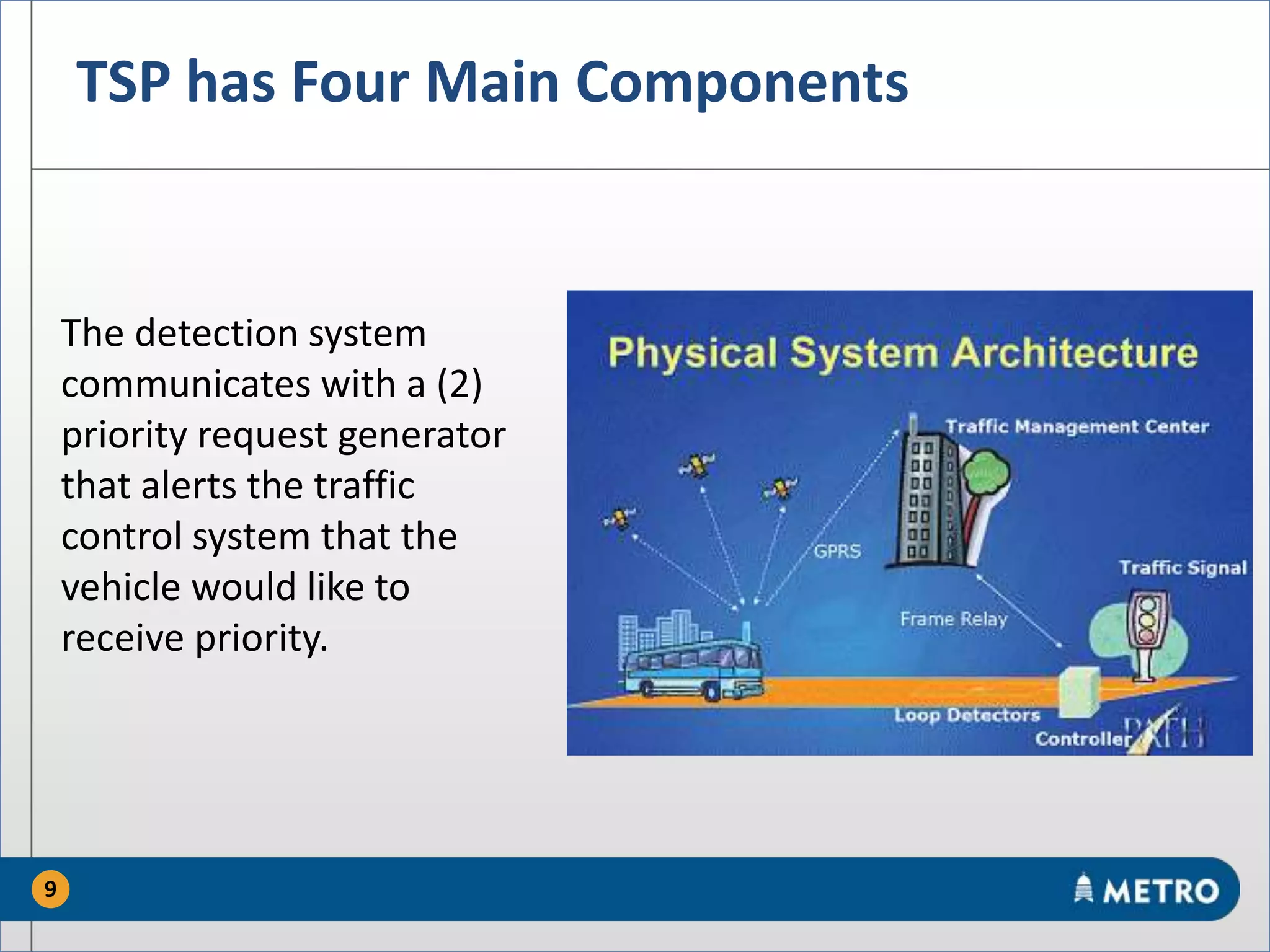
The detection system
communicates with a (2)
priority request generator
that alerts the traffic
control system that the
vehicle would like to
receive priority.
9
TSP has Four Main Components
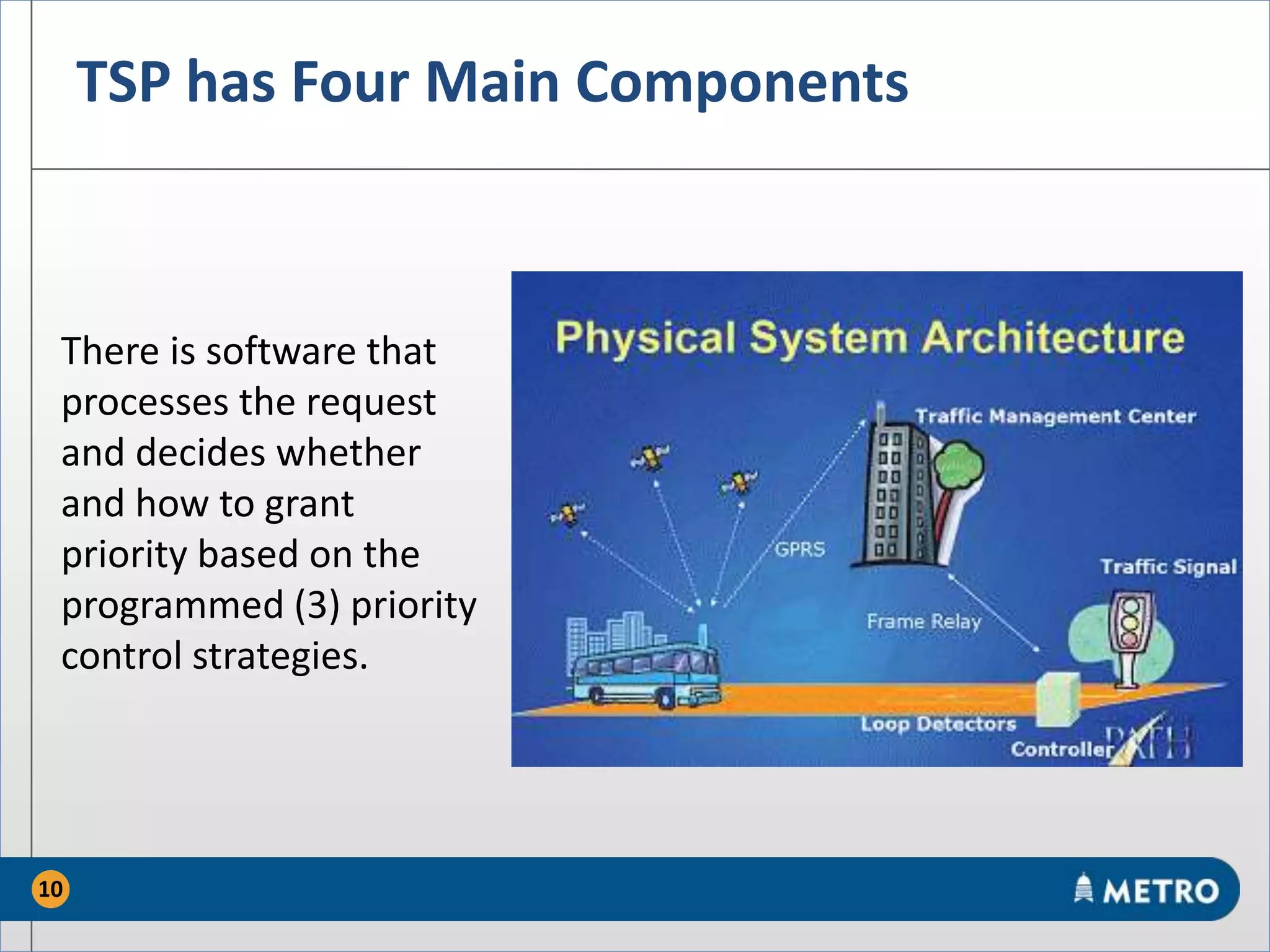
There is software that
processes the request
and decides whether
and how to grant
priority based on the
programmed (3) priority
control strategies.
10
TSP has Four Main Components
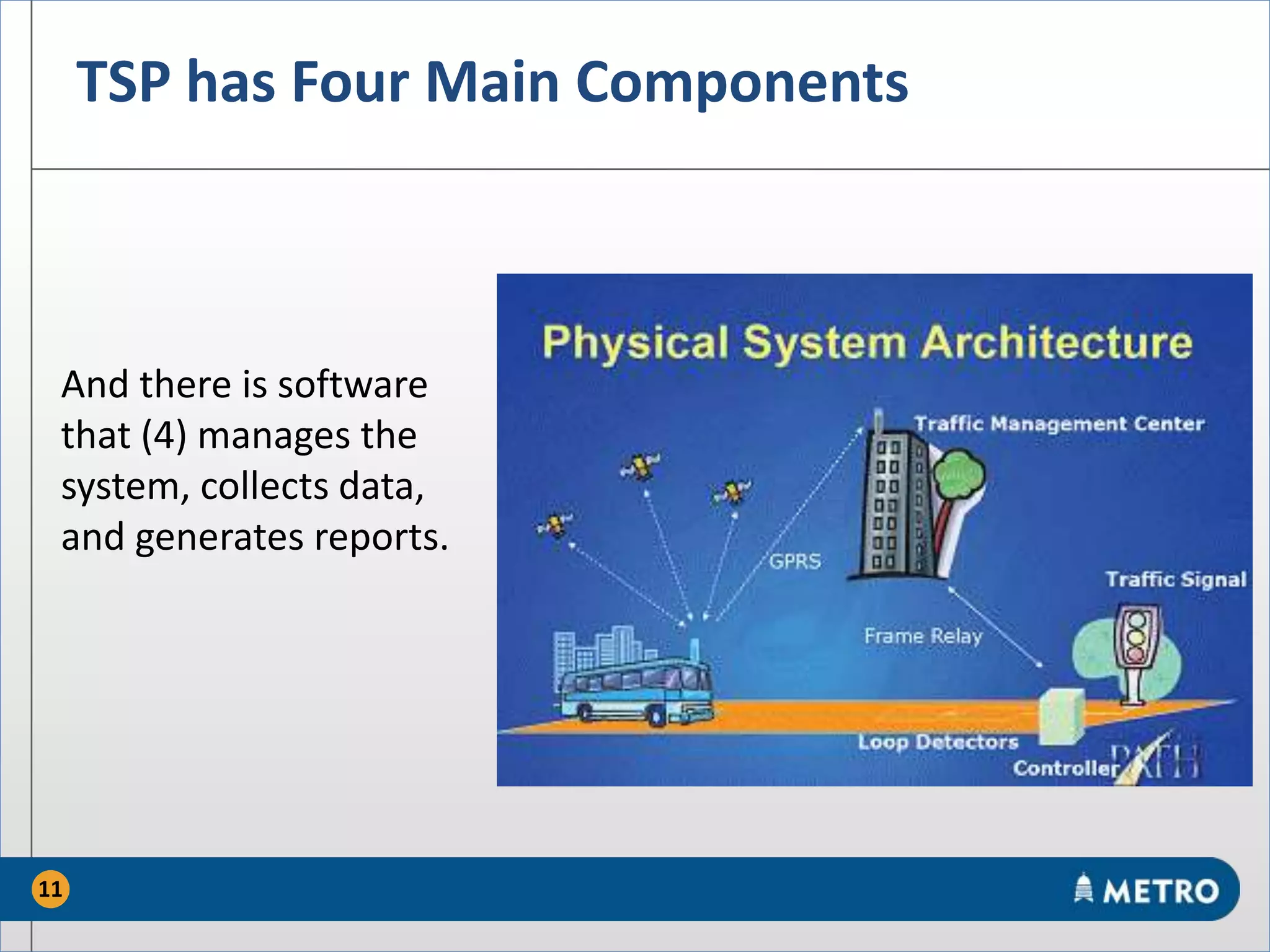
And there is software
that (4) manages the
system, collects data,
and generates reports.
11
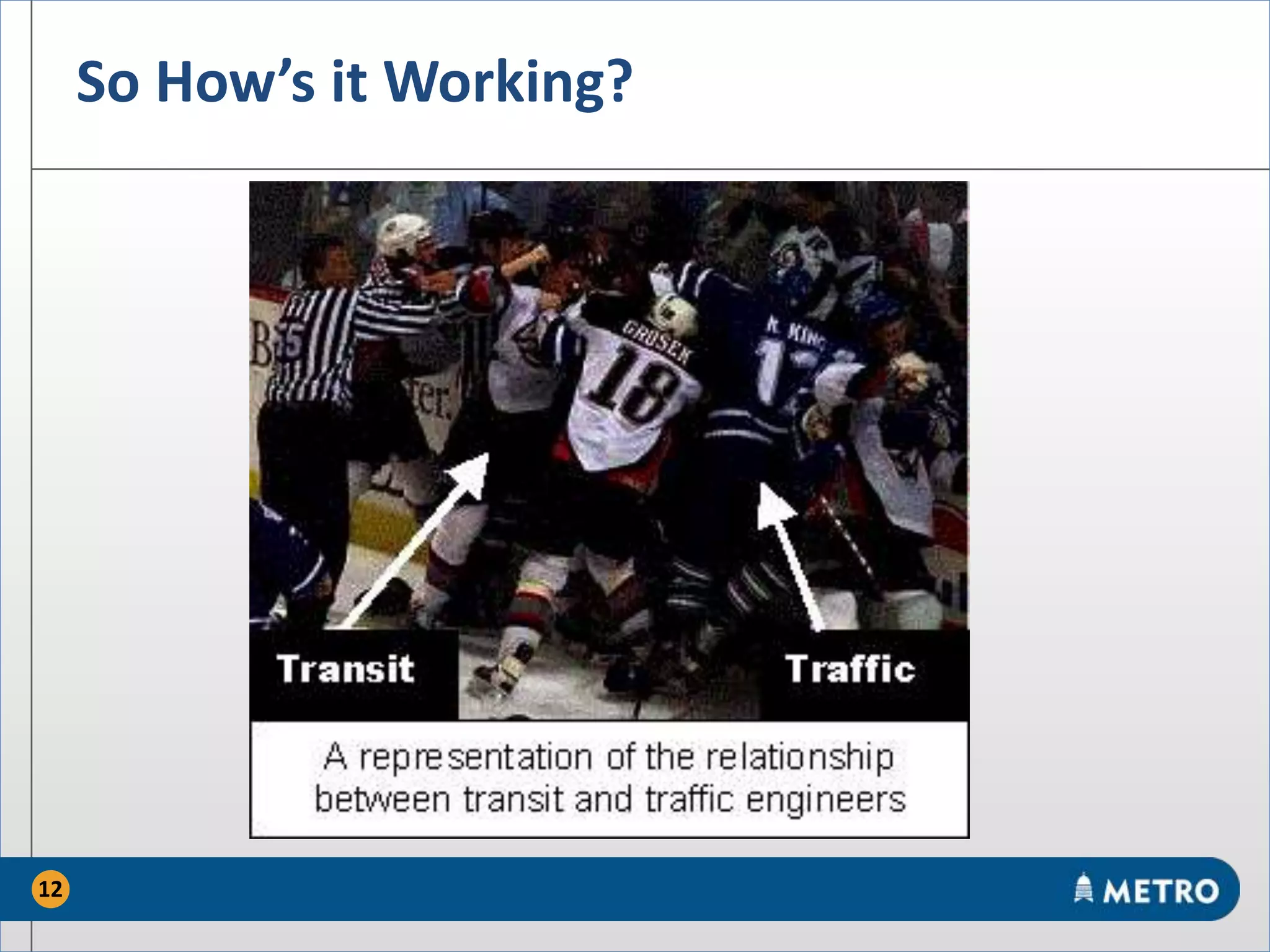
So How’s it Working?
12
So How’s it Working…Really?
• The system is seeing from
2400-3000 vehicle “check-
ins” per weekday
• Under current operating
practices, that results in 275-
450 “green extensions” per
weekday
• Need much more in-depth
analysis!
13
Where We’re Headed
• Analysis of data on TSP requests (by
route, signal location, individual vehicle,
average time by route, average by
direction, day of week/time of day)
• Analysis of data on TSP activations
(locations where granted, day/time, did
the bus make it through the
intersection?, why denied?, where in the
signal cycle did request occur?)
• Comparison of performance differences
between routes
• End-to-End Dashboard/Reporting
14
Conclusions
• Successes
– First ever use of TSP in
Central Texas
– System installed, tested
and implemented on-time
and within budget
– System is working to
improve MetroRapid
• Challenges and
Opportunities
– Detailed analysis of
operations lacking
– Resource availability for
analysis and optimization
– Partnership with academic
institutions!?
– And, how to augment TSP
for improved operations?
15
Thanks!
Todd Hemingson, AICP
Capital Metro, VP Strategic Planning & Development
Austin, Texas
16

MetroRapid Transit Signal Priority—Using Technology to Improve Service Quality

  • 1.
    MetroRapid Transit SignalPriority—Using Technology to Improve Service Quality UT CTR Annual Symposium– March 2, 2015 Todd Hemingson, AICP Capital Metro, VP Strategic Planning & Development Austin, Texas 1
  • 2.
    MetroRapid 2 MetroRapid Purpose: • Providehigh-quality, faster, more frequent and reliable transit mode for major travel corridors Benefits: • Improved transit time, reliability, convenience • Improved transit visibility • Attract new riders • Increases efficiency of transit service
  • 3.
    MetroRapid To Date 3 •More than 1,000,000 trips provided to date • Almost 10,000 trips per weekday But… • On-time performance below target • Travel times longer than expected
  • 4.
    MetroRapid and TransitSignal Priority (TSP) • During project design, Capital Metro sought to include as many elements of Bus Rapid Transit as possible, including TSP • Coordination with City of Austin required for TSP • Multiyear effort – Citywide upgrade from optical system to centralized system using GPS – Interagency agreements to jointly fund – Testing and deployment ahead of MetroRapid launch 4
  • 5.
    Where is TSPused in Austin? • Along four major transit corridors where MetroRapid service operates – North Lamar – South Congress – Burnet Road – South Lamar 5
  • 6.
    What is TransitSignal Priority? • TSP is an operational strategy that facilitates the movement of transit vehicles through traffic-signal controlled intersections. • Objectives of TSP include: – improved schedule adherence – improved transit travel time efficiency – minimizing impacts to normal traffic operations • It is NOT signal pre-emption! 6
  • 7.
    How Does TSPWork? 7
  • 8.
    TSP has FourMain Components There is (1) a detection system that lets the TSP system know where the vehicle requesting signal priority is located. 8
  • 9.
    TSP has FourMain Components The detection system communicates with a (2) priority request generator that alerts the traffic control system that the vehicle would like to receive priority. 9
  • 10.
    TSP has FourMain Components There is software that processes the request and decides whether and how to grant priority based on the programmed (3) priority control strategies. 10
  • 11.
    TSP has FourMain Components And there is software that (4) manages the system, collects data, and generates reports. 11
  • 12.
    So How’s itWorking? 12
  • 13.
    So How’s itWorking…Really? • The system is seeing from 2400-3000 vehicle “check- ins” per weekday • Under current operating practices, that results in 275- 450 “green extensions” per weekday • Need much more in-depth analysis! 13
  • 14.
    Where We’re Headed •Analysis of data on TSP requests (by route, signal location, individual vehicle, average time by route, average by direction, day of week/time of day) • Analysis of data on TSP activations (locations where granted, day/time, did the bus make it through the intersection?, why denied?, where in the signal cycle did request occur?) • Comparison of performance differences between routes • End-to-End Dashboard/Reporting 14
  • 15.
    Conclusions • Successes – Firstever use of TSP in Central Texas – System installed, tested and implemented on-time and within budget – System is working to improve MetroRapid • Challenges and Opportunities – Detailed analysis of operations lacking – Resource availability for analysis and optimization – Partnership with academic institutions!? – And, how to augment TSP for improved operations? 15
  • 16.
    Thanks! Todd Hemingson, AICP CapitalMetro, VP Strategic Planning & Development Austin, Texas 16