HEMATOLOGY
SYSTEM
DR ROSHAN
KHATIWADA
Learning Objectives:
 Anemia
 Leukemia
 Lymphoma
 Lymphadenopathy
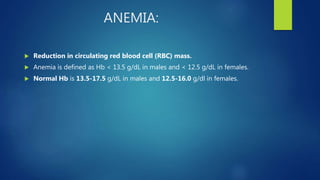
ANEMIA:
 Reduction in circulating red blood cell (RBC) mass.
 Anemia is defined as Hb < 13.5 g/dL in males and < 12.5 g/dL in females.
 Normal Hb is 13.5-17.5 g/dL in males and 12.5-16.0 g/dl in females.
Classification of Anemia:
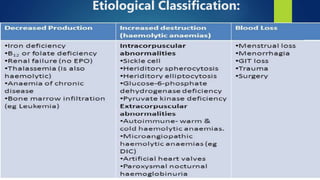
A. On the basis of Etiology
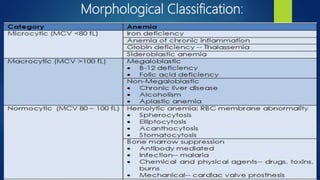
B. On the basis of Morphology
Etiological Classification:
Morphological Classification:
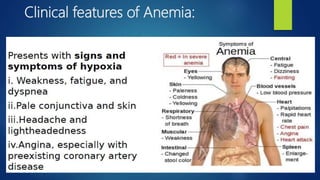
Clinical features of Anemia:
Microcytic Anemia:
 Anemia with MCV < 80 fL.
 Microcytic anemias are due to decreased production of hemoglobin.
a. RBC progenitor cells in the bone marrow are large and normally divide multiple times to
produce smaller mature cells (MCV = 80-100 fL).
b. Microcytosis is due to an "extra" division which occurs to maintain hemoglobin concentration.
 Hemoglobin is made of heme and globin: heme is composed of iron and protoporphyrin. A
decrease in any of these components leads to microcytic anemia.
 Microcytic anemias include (1) iron deficiency anemia, (2) anemia of chronic disease, (3)
sideroblastic anemia, and (4) thalassemia
IRON Deficiency Anemia:
 Due to decreased levels of iron.
 Most common type of anemia
 Lack of iron is the most common nutritional deficiency in the world, affecting roughly 1/3
of world's population
Causes of Iron Deficiency Anemia:
 Iron deficiency is usually caused by dietary lack or blood loss.
1. Infants—breast-feeding (human milk is low in iron)
2. Children—poor diet
3. Adults (20-50 years)—peptic ulcer disease in males and menorrhagia or
pregnancy in females
4. Elderly—colon polyps/carcinoma in the Western world; hookworm
(Ancylostoma duodenale and Necator americanus) in the developing world
5. Other causes include malnutrition, malabsorption, and gastrectomy (acid
aids iron absorption by by maintaining the Fe2+ state, which is more readily
absorbed
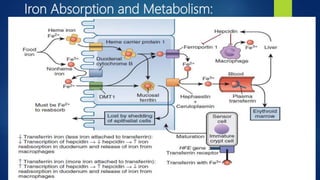
Iron Absorption and Metabolism:
 Iron is consumed in heme (meat-derived) and non-heme (vegetable derived) forms.
1. Absorption occurs in the duodenum, Enterocytes have heme and non-heme (DMT1) Heme
transporters; the heme form is more readily absorbed.
2. Enterocytes transport iron across the cell membrane into blood via ferroportin,
3. Transferrin transports iron in the blood and delivers it to liver and bone marrow macrophages
for storage.
4. Stored intracellular iron is bound to ferritin, which prevents iron from forming free radicals via
the Penton reaction.
Stages of Iron Deficiency Anemia:
1. Storage iron is depleted—↓ferritin; ↑TIBC
2. Serum iron is depleted—↓serum iron; ↓saturation
3. Normocytic anemia—Bone marrow makes fewer, but normal-sized, RBCs,
4. Microcytic, hypochromic anemia—Bone marrow makes smaller and fewer
RBCs
Clinical Features:
 Features of Anemia
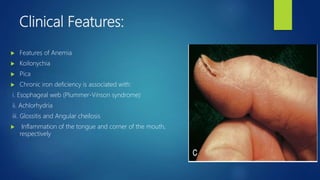
 Koilonychia
 Pica
 Chronic iron deficiency is associated with:
i. Esophageal web (Plummer-Vinson syndrome)
ii. Achlorhydria
iii. Glossitis and Angular cheilosis
 Inflammation of the tongue and corner of the mouth,
respectively
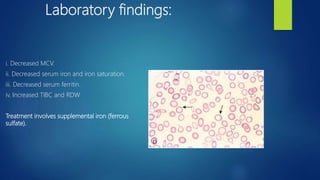
Laboratory findings:
i. Decreased MCV.
ii. Decreased serum iron and iron saturation.
iii. Decreased serum ferritin.
iv. Increased TIBC and RDW
Treatment involves supplemental iron (ferrous
sulfate).
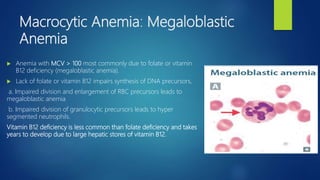
Macrocytic Anemia: Megaloblastic
Anemia
 Anemia with MCV > 100 most commonly due to folate or vitamin
B12 deficiency (megaloblastic anemia).
 Lack of folate or vitamin B12 impairs synthesis of DNA precursors,
a. Impaired division and enlargement of RBC precursors leads to
megaloblastic anemia
b. Impaired division of granulocytic precursors leads to hyper
segmented neutrophils.
Vitamin B12 deficiency is less common than folate deficiency and takes
years to develop due to large hepatic stores of vitamin B12.
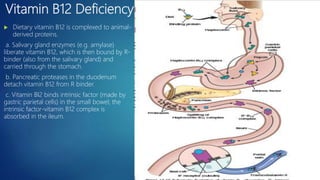
Vitamin B12 Deficiency:
 Dietary vitamin B12 is complexed to animal-
derived proteins.
a. Salivary gland enzymes (e.g. amylase)
liberate vitamin B12, which is then bound by R-
binder (also from the salivary gland) and
carried through the stomach.
b. Pancreatic proteases in the duodenum
detach vitamin B12 from R binder.
c. Vitamin BI2 binds intrinsic factor (made by
gastric parietal cells) in the small bowel; the
intrinsic factor-vitamin B12 complex is
absorbed in the ileum.
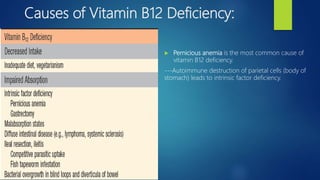
Causes of Vitamin B12 Deficiency:
 Pernicious anemia is the most common cause of
vitamin B12 deficiency.
---Autoimmune destruction of parietal cells (body of
stomach) leads to intrinsic factor deficiency.
Clinical and Lab Findings:
 Features of Anemia
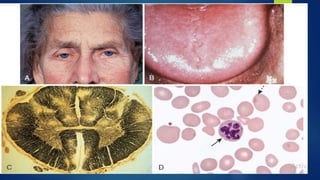
 Glossitis
 Macrocytic RBCs with hypersegmented neutrophils
 ↓ serum vitamin B12
 Increased homocysteine
 Increased methylmalonic acid
 Neurologic symptoms: reversible dementia, subacute combined
degeneration (due to involvement of B12 in fatty acid pathways and
myelin synthesis)
 Folate supplementation in vitamin B12 deficiency can correct the anemia,
but worsens neurologic symptoms.
Folate Deficiency:
 Dietary folate is obtained from green vegetables andsome fruits.
 Absorbed in the jejunum
 Folate deficiency develops within months, as body stores are minimal.
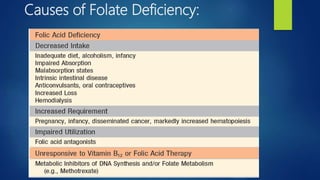
 Causes include poor diet (e.g., alcoholics and elderly), increased demand
(e.g. pregnancy, cancer, and hemolytic anemia), and folate antagonists
(e.g. methotrexate, which inhibits dihydrofolate reductase).
Causes of Folate Deficiency:
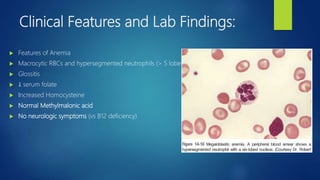
Clinical Features and Lab Findings:
 Features of Anemia
 Macrocytic RBCs and hypersegmented neutrophils (> 5 lobes)
 Glossitis
 ↓ serum folate
 Increased Homocysteine
 Normal Methylmalonic acid
 No neurologic symptoms (vs B12 deficiency)
WBC Disorder
Common Terms:
1. A normal white blood cell (WBC) count is approximately 5000-10000/cmm.
i. A low WRC count (< 5000/cmm) is called leukopenia.
ii. A high WBC count (> 1000/cmm) is called leukocytosis.
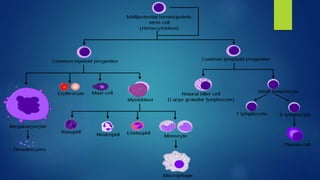
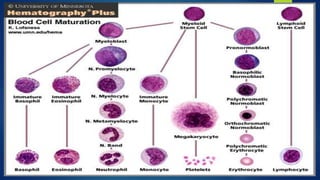
iii. A low or high WBC count is usually due to a decrease or increase in one particular cell lineage.
2. Monocytosis refers to increased circulating monocytes. Causes include chronic inflammatory states
(e.g. autoimmune and infectious) and malignancy.
3. Eosinophilia refers to increased circulating eosinophils. Causes include allergic reactions (type I
hypersensitivity), parasitic infections, and Hodgkin lymphoma,
4. Eosinophilia is driven by increased eosinophil chemotactic factor.
5. Basophilia refers to increased circulating basophils; classically seen in chronic myeloid leukemia
Leukemia:
 “Leukemia is a group of hematological neoplasm that usually begin in
the bone marrow and result in high numbers of abnormal WBCs. These
white blood cells are not fully developed and are called blasts or leukemia
cells.”
Types of Leukemia:
I. Acute Leukemia
i. Acute Lymphoblastic Leukemia
ii. Acute Myeloid Leukemia
II. Chronic Leukemia
i. Chronic Lymphocytic Leukemia
ii. Hairy B cell Leukemia
iii. Adult T cell Leukemia
iv. Myeloproliferative Disorders:
a. Chronic myeloid leukemia
b. Myelofibrosis
ACUTE LEUKEMIA:
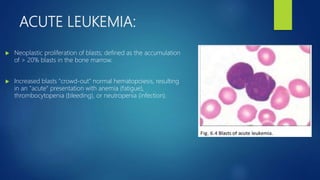
 Neoplastic proliferation of blasts; defined as the accumulation
of > 20% blasts in the bone marrow.
 Increased blasts "crowd-out" normal hematopoiesis, resulting
in an "acute“ presentation with anemia (fatigue),
thrombocytopenia (bleeding), or neutropenia (infection).
1. Acute Lymphoblastic Leukemia:
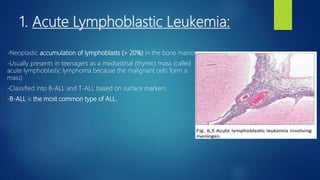
-Neoplastic accumulation of lymphoblasts (> 20%) in the bone marrow.
-Usually presents in teenagers as a mediastinal (thymic) mass (called
acute lymphoblastic lymphoma because the malignant cells form a
mass)
-Classified into B-ALL and T-ALL based on surface markers.
-B-ALL is the most common type of ALL.
i. B-ALL: It is the most common type of ALL.
--Usually characterized by lymphoblasts (TdT+) that express CD10, CD19, and CD20.
--Excellent response to chemotherapy.
--Prognosis is based on cytogenetic abnormalities,
 t(12;21) has a good prognosis; more commonly seen in children
 t(9;22) has a poor prognosis; more commonly seen in adults (Philadelphia+).
ii. T-ALL : It is characterized by lymphoblasts (TdT+) that express markers ranging from CD2 to CDH
(e.g., CD3, CD4, CD7). These blasts do not express CD10.
2. Acute Myeloid Leukemia:
-Neoplastic accumulation of myeloblasts (> 20%) in the bone marrow
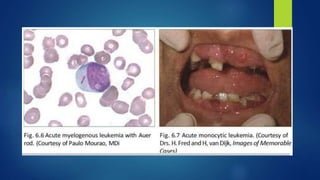
-Myeloblasts are usually characterized by positive cytoplasmic staining for
myeloperoxidase (MPO). Crystal aggregates of MPO may be seen as Auer
rods.
-Most commonly arises in older adults (average age is 50-60 years).
- Classification:
i. Acute Promyelocytic leukemia (APL)
ii. Acute monocytic leukemia
iii. Acute megakaryoblastic leukemia
i. Acute Promyelocytic leukemia (APL):
-- Characterized by t(15;17), which involves translocation of the retinoic acid receptor (RAR) on
chromosome 17 to chromosome 15; RAR disruption blocks maturation and promyelocytes (blasts)
accumulate.
--Treatment is with all-trans-retinoic acid (ATRA, a vitamin A derivative), which binds the altered
receptor and causes the blasts to mature (and eventually die).
ii. Acute monocytic leukemia:
--Proliferation of monoblasts; usually lack MPO.
--Blasts characteristically infiltrate gums.
iii. Acute megakaryoblastic leukemia:
--Proliferation of megakaryoblasts; lack MPO.
--Associated with Down syndrome (usually arises before the age of 5)
CHRONIC LEUKEMIA:
 Neoplastic proliferation of mature circulating lymphocytes; characterized
by a high WBC count
 Usually insidious in onset and seen in older adults.
1.Chronic Lymphocytic Leukemia:
 Neoplastic proliferation of naive B cells that co-express CD5 and CD20;
most common leukemia overall.
 Increased lymphocytes and smudge cells are seen on blood smear.
 Involvement of lymph nodes leads to generalized lymphadenopathy and
is called small lymphocytic lymphoma,
 Complications include:
i. Hypogammaglobulinemia—Infection is the most common cause of death
in CLL.
ii. Autoimmune hemolytic anemia
iii. Transformation to diffuse large B-cell lymphoma (Richter
transformation)— marked clinically by an enlarging lymph node or spleen
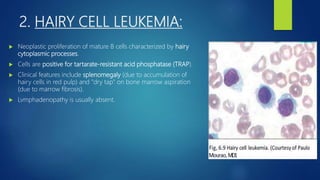
2. HAIRY CELL LEUKEMIA:
 Neoplastic proliferation of mature B cells characterized by hairy
cytoplasmic processes.
 Cells are positive for tartarate-resistant acid phosphatase (TRAP).
 Clinical features include splenomegaly (due to accumulation of
hairy cells in red pulp) and "dry tap" on bone marrow aspiration
(due to marrow fibrosis).
 Lvmphadenopathy is usually absent.
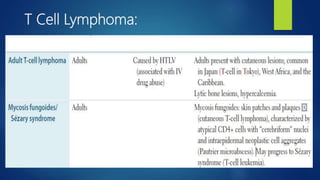
3. Adult T- cell Leukemia/ Lymphoma
(ATLL):
 Neoplastic proliferation of mature CD4+ T cells.
 Associated with HTLV-L; most commonly seen in Japan and the
Caribbean.
 Clinical features include rash (skin infiltration), generalized
lymphadenopathy with hepatosplenomegaly, and lytic (punched-out)
bone lesions with hypercalcemia.
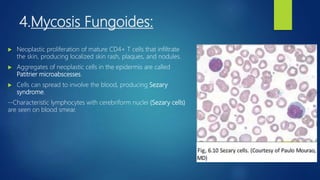
4.Mycosis Fungoides:
 Neoplastic proliferation of mature CD4+ T cells that infiltrate
the skin, producing localized skin rash, plaques, and nodules.
 Aggregates of neoplastic cells in the epidermis are called
Patitrier microabscesses.
 Cells can spread to involve the blood, producing Sezary
syndrome.
--Characteristic lymphocytes with cerebriform nuclei (Sezary cells)
are seen on blood smear.
5. MYELOPROLIFERATIVE DISORDERS
(MPD):
Neoplastic proliferation of mature cells of myeloid lineage; disease of late adulthood
(average age is 50-60 years)
 Results in high WBC count with hypercellular bone marrow
--Cells of all myeloid lineages are increased; classified based on the dominant myeloid cell
produced
 Complications include
i. Increased risk for hyperuricemia and gout due to high turnover of cells
ii. Progression to marrow fibrosis or transformation to acute leukemia
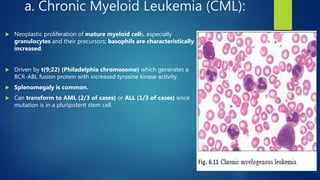
a. Chronic Myeloid Leukemia (CML):
 Neoplastic proliferation of mature myeloid cells, especially
granulocytes and their precursors; basophils are characteristically
increased.
 Driven by t(9;22) (Philadelphia chromosome) which generates a
BCR-ABL fusion protein with increased tyrosine kinase activity.
 Splenomegaly is common.
 Can transform to AML (2/3 of cases) or ALL (1/3 of cases) since
mutation is in a pluripotent stem cell.
b. Myelofibrosis:
 Neoplastic proliferation of mature myeloid cells, especially megakaryocytes.
 Associated with JAK2 kinase mutation (50% of cases)
 Megakaryocytes produce excess platelet-derived growth factor (PDGF) causing marrow
fibrosis.
 Clinical features:
i. Splenomegaly due to extra medullary hematopoiesis
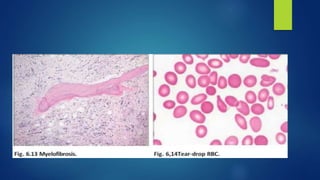
ii. Leukoerythroblastic smear (tear-drop RBCs, nucleated RBCs, and immature granulocytes.
iii. Increased risk of infection, thrombosis, and bleeding.
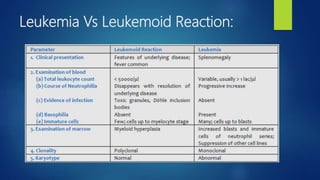
Leukemia Vs Leukemoid Reaction:
Questions:
1. Classify Leukemia. Write short note on AML.
2. List the causes of Lymphadenopathy.
3. Classify Leukemia. Write short note on CML.
4. Differentiate between Leukemia and Leukemoid Reaction.
5. Define Leukemia. Write short note on ALL.
LYMPHOMA
LYMPHOMA
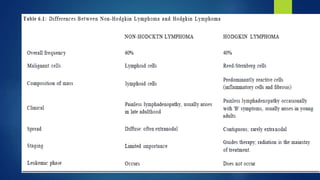
 Neoplastic proliferation of lymphoid cells that forms a mass; may arise in a
lymph node or in extranodal tissue.
 Divided into non-Hodgkin lymphoma (NHL, 60%) and Hodgkin lymphoma
(HL, 40%).
I. Non-Hodgkin’s Lymphoma
 NHL is further classified based on cell type (e.g., B versus T), cell size, pattern of cell
growth, expression of surface markers, and cytogenetic translocations.
B Cell Non Hodgkin’s Lymphoma:
1. Small B cells—follicular lymphoma, mantle cell lymphoma, marginal zone
lymphoma, and small lymphocytic lymphoma (i.e.. CLL cells that involve
tissue)
2. Intermediate-sized B cells—Burkitt lymphoma
3. Large B cells—diffuse large B-cell lymphoma
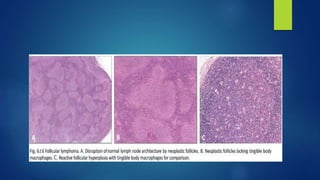
A. FOLLICULAR LYMPHOMA:
 Neoplastic proliferation of small B cells (CD20) that form follicle-like
nodules.
 Clinically presents in late adulthood with painless lymphadenopathy
 Driven by t(14;18)
1. BCL2 on chromosome 18 translocates to the Ig heavy chain locus on
chromosome 14,
2. Results in overexpression of Bcl2, which inhibits apoptosis
 Treatment is reserved lot patients who are symptomatic and involves low-
dose chemotherapy or rituximab (anti-CD20 antibody).
 Progression to diffuse large B-cell lymphoma is an important complication;
presents as an enlarging lymph node.
B. MANTLE CELL LYMPHOMA:
 Neoplastic proliferation of small B cells (CD20+) that expands the mantle
zone
 Clinically presents in late adulthood with painless lymph adenopathy
 Driven by t(11;14)
1. Cydin D1 gene on chromosome 11 translocates to Ig heavy chain locus on
chromosome 14.
2. Overexpression of cydin Dl promotes G1/S transition in the cell cycle,
facilitating neoplastic proliferation,
C. MARGINAL ZONE LYMPHOMA:
 Neoplastic proliferation of small B cells (CD 2 CP) that expands the
marginal zone
 Associated with chronic inflammatory states such as Hashimoto
thyroiditis, Sjogren syndrome, and H pylori gastritis
---The marginal zone is formed by post-germinal center B cells.
 MALToma is marginal zone lymphoma in mucosal sites.
---Gastric MALToma may regress with treatment of H Pylori.
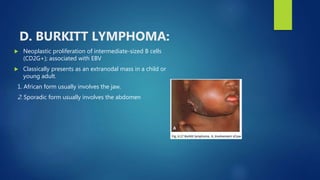
D. BURKITT LYMPHOMA:
 Neoplastic proliferation of intermediate-sized B cells
(CD2G+); associated with EBV
 Classically presents as an extranodal mass in a child or
young adult.
1. African form usually involves the jaw.
2. Sporadic form usually involves the abdomen
 Driven by translocations of c-myc (chromosome 8)
1. t(8;14) is most common, resulting in translocation of c-
myc to the Ig heavy chain locus on chromosome 14.
2. Overexpression of c-myc oncogene promotes cell
growth.
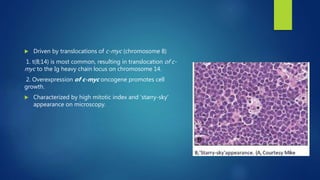
 Characterized by high mitotic index and 'starry-sky'
appearance on microscopy.
E. DIFFUSE LARGE B-CELL LYMPHOMA:
 Neoplastic proliferation of large B cells (CD20+) that grow diffusely in
sheets
1. Most common form o f NHL .
2. Clinically aggressive (high-grade)
 Arises sporadically or from transformation of a low-grade lymphoma (e.g.,
follicular lymphoma)
---Presents in late adulthood as an enlarging lymph node or an extranodal
mass.
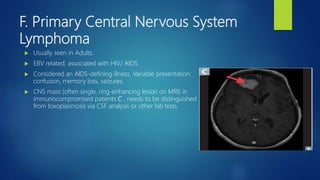
F. Primary Central Nervous System
Lymphoma
 Usually seen in Adults.
 EBV related; associated with HIV/ AIDS.
 Considered an AIDS-defining illness. Variable presentation:
confusion, memory loss, seizures.
 CNS mass (often single, ring-enhancing lesion on MRI) in
immunocompromised patients C , needs to be distinguished
from toxoplasmosis via CSF analysis or other lab tests.
T Cell Lymphoma:
II. HODGKIN’S LYMPHOMA:
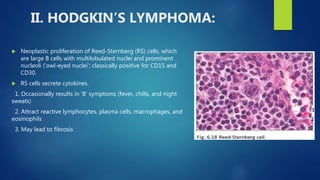
 Neoplastic proliferation of Reed-Sternberg (RS) cells, which
are large B cells with multilobulated nuclei and prominent
nucleoli ('owl-eyed nuclei'; classically positive for CD15 and
CD30.
 RS cells secrete cytokines.
1. Occasionally results in 'B' symptoms (fever, chills, and night
sweats)
2. Attract reactive lymphocytes, plasma cells, macrophages, and
eosinophils
3. May lead to fibrosis
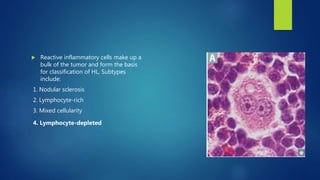
 Reactive inflammatory cells make up a
bulk of the tumor and form the basis
for classification of HL, Subtypes
include:
1. Nodular sclerosis
2. Lymphocyte-rich
3. Mixed cellularity
4. Lymphocyte-depleted
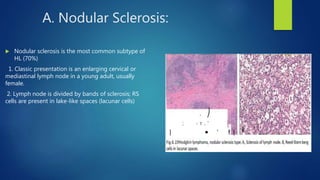
A. Nodular Sclerosis:
 Nodular sclerosis is the most common subtype of
HL (70%)
1. Classic presentation is an enlarging cervical or
mediastinal lymph node in a young adult, usually
female.
2. Lymph node is divided by bands of sclerosis; RS
cells are present in lake-like spaces (lacunar cells)
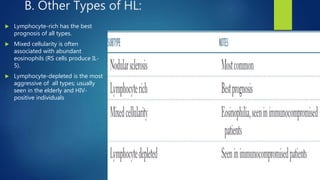
B. Other Types of HL:
 Lymphocyte-rich has the best
prognosis of all types.
 Mixed cellularity is often
associated with abundant
eosinophils (RS cells produce IL-
5).
 Lymphocyte-depleted is the most
aggressive of all types; usually
seen in the elderly and HIV-
positive individuals
Questions:
 Define lymphoma. Classify it.
 Classify lymphoma and explain about each in brief.
 Write short note on Hodgkin’s lymphoma.
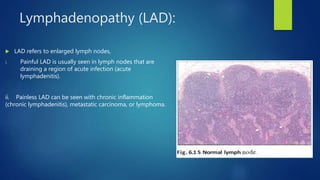
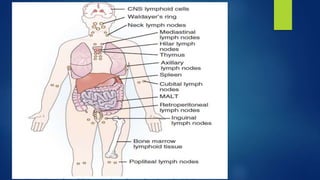
Lymphadenopathy (LAD):
 LAD refers to enlarged lymph nodes,
i. Painful LAD is usually seen in lymph nodes that are
draining a region of acute infection (acute
lymphadenitis).
ii. Painless LAD can be seen with chronic inflammation
(chronic lymphadenitis), metastatic carcinoma, or lymphoma.
 In Inflammation, lymph node enlargement is due to hyperplasia of particular regions of
the lymph node.
a. Follicular hyperplasia (B-cell region) is seen with rheumatoid arthritis and early stages of
HIV infection.
b. Paracortex hyperplasia (T-cell region) is seen with viral infections (e.g. infectious
mononucleosis).
c. Hyperplasia of sinus histiocytes is seen in lymph nodes that are draining a tissue with
cancer.
HEMATOLOGY AND LYMPHOID SYSTEM

HEMATOLOGY AND LYMPHOID SYSTEM

  • 1.
  • 2.
    Learning Objectives:  Anemia Leukemia  Lymphoma  Lymphadenopathy
  • 3.
    ANEMIA:  Reduction incirculating red blood cell (RBC) mass.  Anemia is defined as Hb < 13.5 g/dL in males and < 12.5 g/dL in females.  Normal Hb is 13.5-17.5 g/dL in males and 12.5-16.0 g/dl in females.
  • 4.
    Classification of Anemia: A.On the basis of Etiology B. On the basis of Morphology
  • 5.
  • 6.
  • 7.
  • 8.
    Microcytic Anemia:  Anemiawith MCV < 80 fL.  Microcytic anemias are due to decreased production of hemoglobin. a. RBC progenitor cells in the bone marrow are large and normally divide multiple times to produce smaller mature cells (MCV = 80-100 fL). b. Microcytosis is due to an "extra" division which occurs to maintain hemoglobin concentration.  Hemoglobin is made of heme and globin: heme is composed of iron and protoporphyrin. A decrease in any of these components leads to microcytic anemia.  Microcytic anemias include (1) iron deficiency anemia, (2) anemia of chronic disease, (3) sideroblastic anemia, and (4) thalassemia
  • 9.
    IRON Deficiency Anemia: Due to decreased levels of iron.  Most common type of anemia  Lack of iron is the most common nutritional deficiency in the world, affecting roughly 1/3 of world's population
  • 10.
    Causes of IronDeficiency Anemia:  Iron deficiency is usually caused by dietary lack or blood loss. 1. Infants—breast-feeding (human milk is low in iron) 2. Children—poor diet 3. Adults (20-50 years)—peptic ulcer disease in males and menorrhagia or pregnancy in females 4. Elderly—colon polyps/carcinoma in the Western world; hookworm (Ancylostoma duodenale and Necator americanus) in the developing world 5. Other causes include malnutrition, malabsorption, and gastrectomy (acid aids iron absorption by by maintaining the Fe2+ state, which is more readily absorbed
  • 11.
  • 12.
     Iron isconsumed in heme (meat-derived) and non-heme (vegetable derived) forms. 1. Absorption occurs in the duodenum, Enterocytes have heme and non-heme (DMT1) Heme transporters; the heme form is more readily absorbed. 2. Enterocytes transport iron across the cell membrane into blood via ferroportin, 3. Transferrin transports iron in the blood and delivers it to liver and bone marrow macrophages for storage. 4. Stored intracellular iron is bound to ferritin, which prevents iron from forming free radicals via the Penton reaction.
  • 13.
    Stages of IronDeficiency Anemia: 1. Storage iron is depleted—↓ferritin; ↑TIBC 2. Serum iron is depleted—↓serum iron; ↓saturation 3. Normocytic anemia—Bone marrow makes fewer, but normal-sized, RBCs, 4. Microcytic, hypochromic anemia—Bone marrow makes smaller and fewer RBCs
  • 14.
    Clinical Features:  Featuresof Anemia  Koilonychia  Pica  Chronic iron deficiency is associated with: i. Esophageal web (Plummer-Vinson syndrome) ii. Achlorhydria iii. Glossitis and Angular cheilosis  Inflammation of the tongue and corner of the mouth, respectively
  • 15.
    Laboratory findings: i. DecreasedMCV. ii. Decreased serum iron and iron saturation. iii. Decreased serum ferritin. iv. Increased TIBC and RDW Treatment involves supplemental iron (ferrous sulfate).
  • 16.
    Macrocytic Anemia: Megaloblastic Anemia Anemia with MCV > 100 most commonly due to folate or vitamin B12 deficiency (megaloblastic anemia).  Lack of folate or vitamin B12 impairs synthesis of DNA precursors, a. Impaired division and enlargement of RBC precursors leads to megaloblastic anemia b. Impaired division of granulocytic precursors leads to hyper segmented neutrophils. Vitamin B12 deficiency is less common than folate deficiency and takes years to develop due to large hepatic stores of vitamin B12.
  • 17.
    Vitamin B12 Deficiency: Dietary vitamin B12 is complexed to animal- derived proteins. a. Salivary gland enzymes (e.g. amylase) liberate vitamin B12, which is then bound by R- binder (also from the salivary gland) and carried through the stomach. b. Pancreatic proteases in the duodenum detach vitamin B12 from R binder. c. Vitamin BI2 binds intrinsic factor (made by gastric parietal cells) in the small bowel; the intrinsic factor-vitamin B12 complex is absorbed in the ileum.
  • 18.
    Causes of VitaminB12 Deficiency:  Pernicious anemia is the most common cause of vitamin B12 deficiency. ---Autoimmune destruction of parietal cells (body of stomach) leads to intrinsic factor deficiency.
  • 19.
    Clinical and LabFindings:  Features of Anemia  Glossitis  Macrocytic RBCs with hypersegmented neutrophils  ↓ serum vitamin B12  Increased homocysteine  Increased methylmalonic acid  Neurologic symptoms: reversible dementia, subacute combined degeneration (due to involvement of B12 in fatty acid pathways and myelin synthesis)  Folate supplementation in vitamin B12 deficiency can correct the anemia, but worsens neurologic symptoms.
  • 21.
    Folate Deficiency:  Dietaryfolate is obtained from green vegetables andsome fruits.  Absorbed in the jejunum  Folate deficiency develops within months, as body stores are minimal.  Causes include poor diet (e.g., alcoholics and elderly), increased demand (e.g. pregnancy, cancer, and hemolytic anemia), and folate antagonists (e.g. methotrexate, which inhibits dihydrofolate reductase).
  • 22.
    Causes of FolateDeficiency:
  • 23.
    Clinical Features andLab Findings:  Features of Anemia  Macrocytic RBCs and hypersegmented neutrophils (> 5 lobes)  Glossitis  ↓ serum folate  Increased Homocysteine  Normal Methylmalonic acid  No neurologic symptoms (vs B12 deficiency)
  • 24.
  • 27.
    Common Terms: 1. Anormal white blood cell (WBC) count is approximately 5000-10000/cmm. i. A low WRC count (< 5000/cmm) is called leukopenia. ii. A high WBC count (> 1000/cmm) is called leukocytosis. iii. A low or high WBC count is usually due to a decrease or increase in one particular cell lineage. 2. Monocytosis refers to increased circulating monocytes. Causes include chronic inflammatory states (e.g. autoimmune and infectious) and malignancy. 3. Eosinophilia refers to increased circulating eosinophils. Causes include allergic reactions (type I hypersensitivity), parasitic infections, and Hodgkin lymphoma, 4. Eosinophilia is driven by increased eosinophil chemotactic factor. 5. Basophilia refers to increased circulating basophils; classically seen in chronic myeloid leukemia
  • 28.
    Leukemia:  “Leukemia isa group of hematological neoplasm that usually begin in the bone marrow and result in high numbers of abnormal WBCs. These white blood cells are not fully developed and are called blasts or leukemia cells.”
  • 29.
    Types of Leukemia: I.Acute Leukemia i. Acute Lymphoblastic Leukemia ii. Acute Myeloid Leukemia II. Chronic Leukemia i. Chronic Lymphocytic Leukemia ii. Hairy B cell Leukemia iii. Adult T cell Leukemia iv. Myeloproliferative Disorders: a. Chronic myeloid leukemia b. Myelofibrosis
  • 30.
    ACUTE LEUKEMIA:  Neoplasticproliferation of blasts; defined as the accumulation of > 20% blasts in the bone marrow.  Increased blasts "crowd-out" normal hematopoiesis, resulting in an "acute“ presentation with anemia (fatigue), thrombocytopenia (bleeding), or neutropenia (infection).
  • 31.
    1. Acute LymphoblasticLeukemia: -Neoplastic accumulation of lymphoblasts (> 20%) in the bone marrow. -Usually presents in teenagers as a mediastinal (thymic) mass (called acute lymphoblastic lymphoma because the malignant cells form a mass) -Classified into B-ALL and T-ALL based on surface markers. -B-ALL is the most common type of ALL.
  • 32.
    i. B-ALL: Itis the most common type of ALL. --Usually characterized by lymphoblasts (TdT+) that express CD10, CD19, and CD20. --Excellent response to chemotherapy. --Prognosis is based on cytogenetic abnormalities,  t(12;21) has a good prognosis; more commonly seen in children  t(9;22) has a poor prognosis; more commonly seen in adults (Philadelphia+). ii. T-ALL : It is characterized by lymphoblasts (TdT+) that express markers ranging from CD2 to CDH (e.g., CD3, CD4, CD7). These blasts do not express CD10.
  • 33.
    2. Acute MyeloidLeukemia: -Neoplastic accumulation of myeloblasts (> 20%) in the bone marrow -Myeloblasts are usually characterized by positive cytoplasmic staining for myeloperoxidase (MPO). Crystal aggregates of MPO may be seen as Auer rods. -Most commonly arises in older adults (average age is 50-60 years). - Classification: i. Acute Promyelocytic leukemia (APL) ii. Acute monocytic leukemia iii. Acute megakaryoblastic leukemia
  • 34.
    i. Acute Promyelocyticleukemia (APL): -- Characterized by t(15;17), which involves translocation of the retinoic acid receptor (RAR) on chromosome 17 to chromosome 15; RAR disruption blocks maturation and promyelocytes (blasts) accumulate. --Treatment is with all-trans-retinoic acid (ATRA, a vitamin A derivative), which binds the altered receptor and causes the blasts to mature (and eventually die). ii. Acute monocytic leukemia: --Proliferation of monoblasts; usually lack MPO. --Blasts characteristically infiltrate gums. iii. Acute megakaryoblastic leukemia: --Proliferation of megakaryoblasts; lack MPO. --Associated with Down syndrome (usually arises before the age of 5)
  • 36.
    CHRONIC LEUKEMIA:  Neoplasticproliferation of mature circulating lymphocytes; characterized by a high WBC count  Usually insidious in onset and seen in older adults.
  • 37.
    1.Chronic Lymphocytic Leukemia: Neoplastic proliferation of naive B cells that co-express CD5 and CD20; most common leukemia overall.  Increased lymphocytes and smudge cells are seen on blood smear.  Involvement of lymph nodes leads to generalized lymphadenopathy and is called small lymphocytic lymphoma,  Complications include: i. Hypogammaglobulinemia—Infection is the most common cause of death in CLL. ii. Autoimmune hemolytic anemia iii. Transformation to diffuse large B-cell lymphoma (Richter transformation)— marked clinically by an enlarging lymph node or spleen
  • 38.
    2. HAIRY CELLLEUKEMIA:  Neoplastic proliferation of mature B cells characterized by hairy cytoplasmic processes.  Cells are positive for tartarate-resistant acid phosphatase (TRAP).  Clinical features include splenomegaly (due to accumulation of hairy cells in red pulp) and "dry tap" on bone marrow aspiration (due to marrow fibrosis).  Lvmphadenopathy is usually absent.
  • 39.
    3. Adult T-cell Leukemia/ Lymphoma (ATLL):  Neoplastic proliferation of mature CD4+ T cells.  Associated with HTLV-L; most commonly seen in Japan and the Caribbean.  Clinical features include rash (skin infiltration), generalized lymphadenopathy with hepatosplenomegaly, and lytic (punched-out) bone lesions with hypercalcemia.
  • 40.
    4.Mycosis Fungoides:  Neoplasticproliferation of mature CD4+ T cells that infiltrate the skin, producing localized skin rash, plaques, and nodules.  Aggregates of neoplastic cells in the epidermis are called Patitrier microabscesses.  Cells can spread to involve the blood, producing Sezary syndrome. --Characteristic lymphocytes with cerebriform nuclei (Sezary cells) are seen on blood smear.
  • 41.
    5. MYELOPROLIFERATIVE DISORDERS (MPD): Neoplasticproliferation of mature cells of myeloid lineage; disease of late adulthood (average age is 50-60 years)  Results in high WBC count with hypercellular bone marrow --Cells of all myeloid lineages are increased; classified based on the dominant myeloid cell produced  Complications include i. Increased risk for hyperuricemia and gout due to high turnover of cells ii. Progression to marrow fibrosis or transformation to acute leukemia
  • 42.
    a. Chronic MyeloidLeukemia (CML):  Neoplastic proliferation of mature myeloid cells, especially granulocytes and their precursors; basophils are characteristically increased.  Driven by t(9;22) (Philadelphia chromosome) which generates a BCR-ABL fusion protein with increased tyrosine kinase activity.  Splenomegaly is common.  Can transform to AML (2/3 of cases) or ALL (1/3 of cases) since mutation is in a pluripotent stem cell.
  • 43.
    b. Myelofibrosis:  Neoplasticproliferation of mature myeloid cells, especially megakaryocytes.  Associated with JAK2 kinase mutation (50% of cases)  Megakaryocytes produce excess platelet-derived growth factor (PDGF) causing marrow fibrosis.  Clinical features: i. Splenomegaly due to extra medullary hematopoiesis ii. Leukoerythroblastic smear (tear-drop RBCs, nucleated RBCs, and immature granulocytes. iii. Increased risk of infection, thrombosis, and bleeding.
  • 45.
  • 46.
    Questions: 1. Classify Leukemia.Write short note on AML. 2. List the causes of Lymphadenopathy. 3. Classify Leukemia. Write short note on CML. 4. Differentiate between Leukemia and Leukemoid Reaction. 5. Define Leukemia. Write short note on ALL.
  • 47.
  • 48.
    LYMPHOMA  Neoplastic proliferationof lymphoid cells that forms a mass; may arise in a lymph node or in extranodal tissue.  Divided into non-Hodgkin lymphoma (NHL, 60%) and Hodgkin lymphoma (HL, 40%).
  • 49.
    I. Non-Hodgkin’s Lymphoma NHL is further classified based on cell type (e.g., B versus T), cell size, pattern of cell growth, expression of surface markers, and cytogenetic translocations.
  • 50.
    B Cell NonHodgkin’s Lymphoma: 1. Small B cells—follicular lymphoma, mantle cell lymphoma, marginal zone lymphoma, and small lymphocytic lymphoma (i.e.. CLL cells that involve tissue) 2. Intermediate-sized B cells—Burkitt lymphoma 3. Large B cells—diffuse large B-cell lymphoma
  • 51.
    A. FOLLICULAR LYMPHOMA: Neoplastic proliferation of small B cells (CD20) that form follicle-like nodules.  Clinically presents in late adulthood with painless lymphadenopathy  Driven by t(14;18) 1. BCL2 on chromosome 18 translocates to the Ig heavy chain locus on chromosome 14, 2. Results in overexpression of Bcl2, which inhibits apoptosis
  • 53.
     Treatment isreserved lot patients who are symptomatic and involves low- dose chemotherapy or rituximab (anti-CD20 antibody).  Progression to diffuse large B-cell lymphoma is an important complication; presents as an enlarging lymph node.
  • 54.
    B. MANTLE CELLLYMPHOMA:  Neoplastic proliferation of small B cells (CD20+) that expands the mantle zone  Clinically presents in late adulthood with painless lymph adenopathy  Driven by t(11;14) 1. Cydin D1 gene on chromosome 11 translocates to Ig heavy chain locus on chromosome 14. 2. Overexpression of cydin Dl promotes G1/S transition in the cell cycle, facilitating neoplastic proliferation,
  • 55.
    C. MARGINAL ZONELYMPHOMA:  Neoplastic proliferation of small B cells (CD 2 CP) that expands the marginal zone  Associated with chronic inflammatory states such as Hashimoto thyroiditis, Sjogren syndrome, and H pylori gastritis ---The marginal zone is formed by post-germinal center B cells.  MALToma is marginal zone lymphoma in mucosal sites. ---Gastric MALToma may regress with treatment of H Pylori.
  • 56.
    D. BURKITT LYMPHOMA: Neoplastic proliferation of intermediate-sized B cells (CD2G+); associated with EBV  Classically presents as an extranodal mass in a child or young adult. 1. African form usually involves the jaw. 2. Sporadic form usually involves the abdomen
  • 57.
     Driven bytranslocations of c-myc (chromosome 8) 1. t(8;14) is most common, resulting in translocation of c- myc to the Ig heavy chain locus on chromosome 14. 2. Overexpression of c-myc oncogene promotes cell growth.  Characterized by high mitotic index and 'starry-sky' appearance on microscopy.
  • 58.
    E. DIFFUSE LARGEB-CELL LYMPHOMA:  Neoplastic proliferation of large B cells (CD20+) that grow diffusely in sheets 1. Most common form o f NHL . 2. Clinically aggressive (high-grade)  Arises sporadically or from transformation of a low-grade lymphoma (e.g., follicular lymphoma) ---Presents in late adulthood as an enlarging lymph node or an extranodal mass.
  • 59.
    F. Primary CentralNervous System Lymphoma  Usually seen in Adults.  EBV related; associated with HIV/ AIDS.  Considered an AIDS-defining illness. Variable presentation: confusion, memory loss, seizures.  CNS mass (often single, ring-enhancing lesion on MRI) in immunocompromised patients C , needs to be distinguished from toxoplasmosis via CSF analysis or other lab tests.
  • 60.
  • 61.
    II. HODGKIN’S LYMPHOMA: Neoplastic proliferation of Reed-Sternberg (RS) cells, which are large B cells with multilobulated nuclei and prominent nucleoli ('owl-eyed nuclei'; classically positive for CD15 and CD30.  RS cells secrete cytokines. 1. Occasionally results in 'B' symptoms (fever, chills, and night sweats) 2. Attract reactive lymphocytes, plasma cells, macrophages, and eosinophils 3. May lead to fibrosis
  • 62.
     Reactive inflammatorycells make up a bulk of the tumor and form the basis for classification of HL, Subtypes include: 1. Nodular sclerosis 2. Lymphocyte-rich 3. Mixed cellularity 4. Lymphocyte-depleted
  • 63.
    A. Nodular Sclerosis: Nodular sclerosis is the most common subtype of HL (70%) 1. Classic presentation is an enlarging cervical or mediastinal lymph node in a young adult, usually female. 2. Lymph node is divided by bands of sclerosis; RS cells are present in lake-like spaces (lacunar cells)
  • 64.
    B. Other Typesof HL:  Lymphocyte-rich has the best prognosis of all types.  Mixed cellularity is often associated with abundant eosinophils (RS cells produce IL- 5).  Lymphocyte-depleted is the most aggressive of all types; usually seen in the elderly and HIV- positive individuals
  • 66.
    Questions:  Define lymphoma.Classify it.  Classify lymphoma and explain about each in brief.  Write short note on Hodgkin’s lymphoma.
  • 67.
    Lymphadenopathy (LAD):  LADrefers to enlarged lymph nodes, i. Painful LAD is usually seen in lymph nodes that are draining a region of acute infection (acute lymphadenitis). ii. Painless LAD can be seen with chronic inflammation (chronic lymphadenitis), metastatic carcinoma, or lymphoma.
  • 68.
     In Inflammation,lymph node enlargement is due to hyperplasia of particular regions of the lymph node. a. Follicular hyperplasia (B-cell region) is seen with rheumatoid arthritis and early stages of HIV infection. b. Paracortex hyperplasia (T-cell region) is seen with viral infections (e.g. infectious mononucleosis). c. Hyperplasia of sinus histiocytes is seen in lymph nodes that are draining a tissue with cancer.