Acute and Chronic
Inflammation
Wound Healing
DR.ROSHAN KHATIWADA
INFLAMMATION
Inflammation is defined as the local response of living
mammalian tissues to injury due to any agent.
It is a body defense reaction in order to eliminate or limit the
spread of injurious agent as well as to remove the consequent
necrosed cells and tissue.
Types of Inflammation:
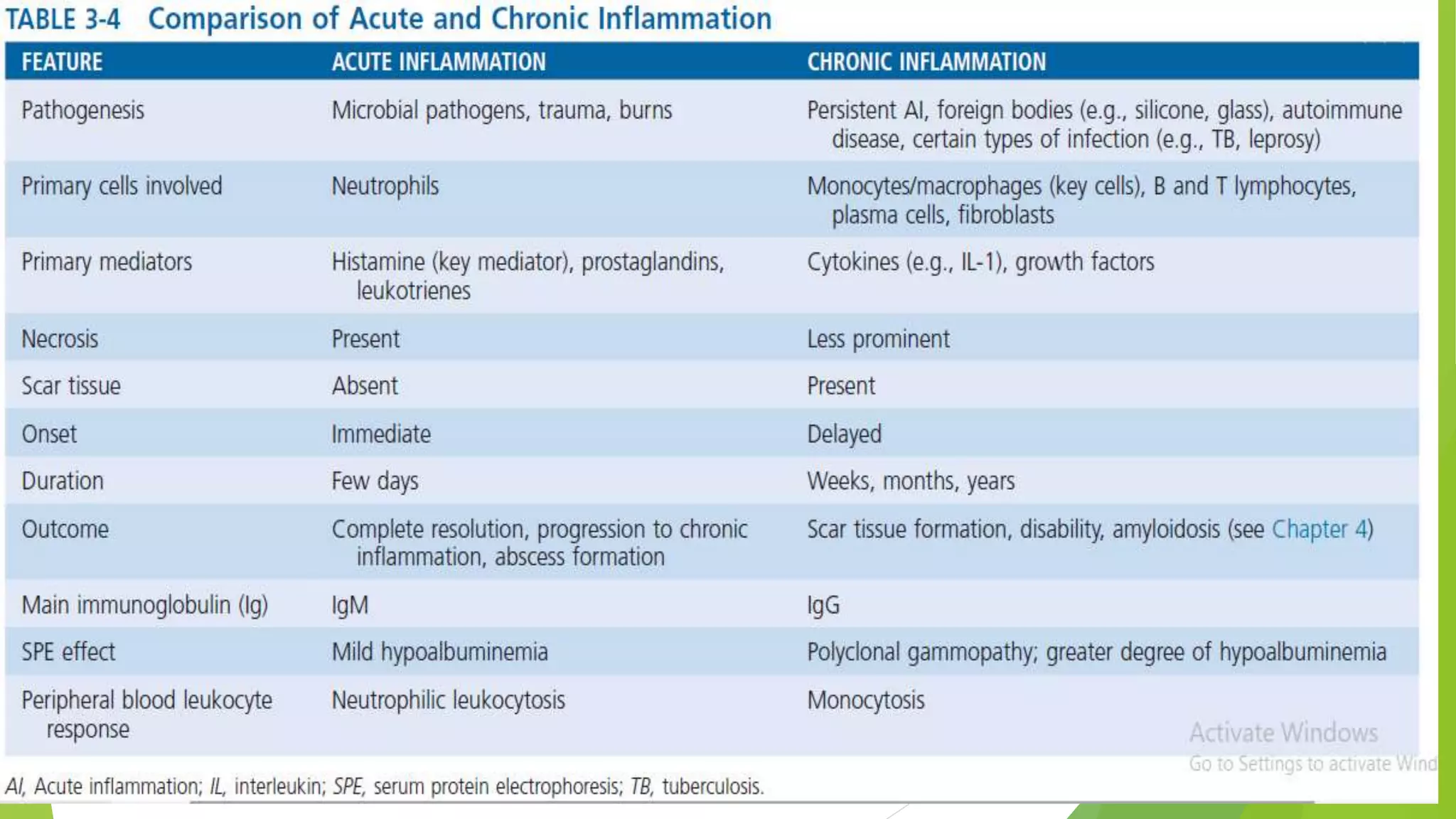
• Acute inflammation
▫ Short duration
▫ Edema
▫ Mainly neutrophils
• Chronic inflammation
▫ Longer duration
▫ Lymphocytes & macrophages predominate
▫ Fibrosis
▫ New blood vessels(angiogenesis)
Acute Inflammation:
 Acute inflammation is a transient and early response to injury that is
characterized by the release of numerous chemical mediators and leads to
stereotypic small vessel and leukocyte (white blood cell [WBC]) responses.
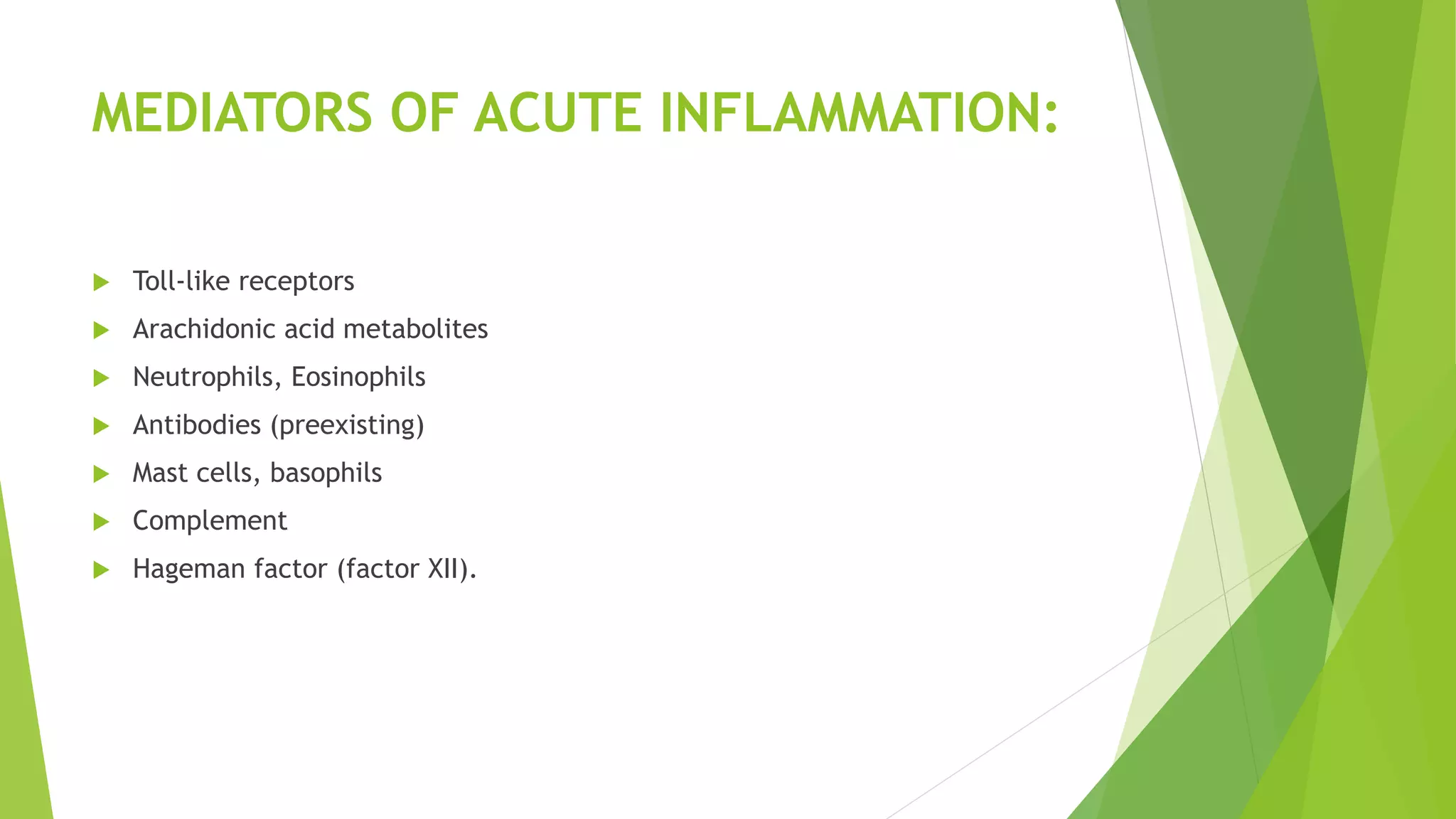
MEDIATORS OF ACUTE INFLAMMATION:
 Toll-like receptors
 Arachidonic acid metabolites
 Neutrophils, Eosinophils
 Antibodies (preexisting)
 Mast cells, basophils
 Complement
 Hageman factor (factor XII).
A. Toll-like receptors (TLRs):
 Present on cells of the innate immune system (e.g., macrophages and
dendritic cells)
 Activated by pathogen-associated molecular patterns (PAMPs) that are
commonly shared by microbes
 TLR activation results in activation of immune response genes leading to
production of multiple immune mediators.
B. Arachidonic acid (AA) metabolites:
C. Mast cells:
 Widely distributed throughout connective tissue
 Activated by (i) tissue trauma, (ii) complement proteins C3a and C5a, or (iii)
cross-linking of cell-surface IgE by antigen.
a. Immediate response involves release of preformed histamine granules, which
mediate vasodilation of arterioles and increased vascular permeability.
b. Delayed response involves production of arachidonic acid metabolites,
particularly leukotrienes.
Cardinal Signs and their mediators
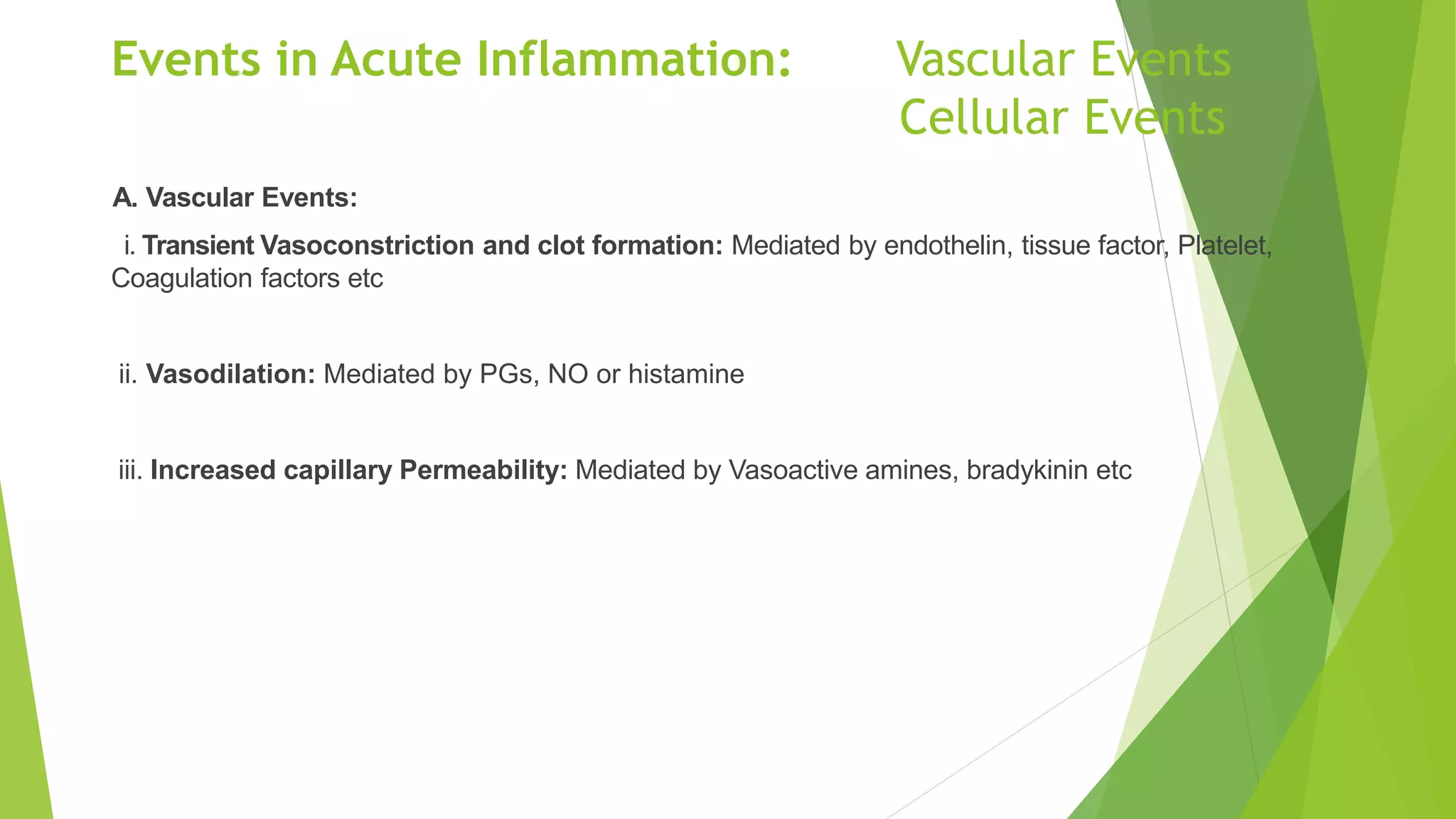
Events in Acute Inflammation: Vascular Events
Cellular Events
A. Vascular Events:
i. Transient Vasoconstriction and clot formation: Mediated by endothelin, tissue factor, Platelet,
Coagulation factors etc
ii. Vasodilation: Mediated by PGs, NO or histamine
iii. Increased capillary Permeability: Mediated by Vasoactive amines, bradykinin etc
B. Cellular events:
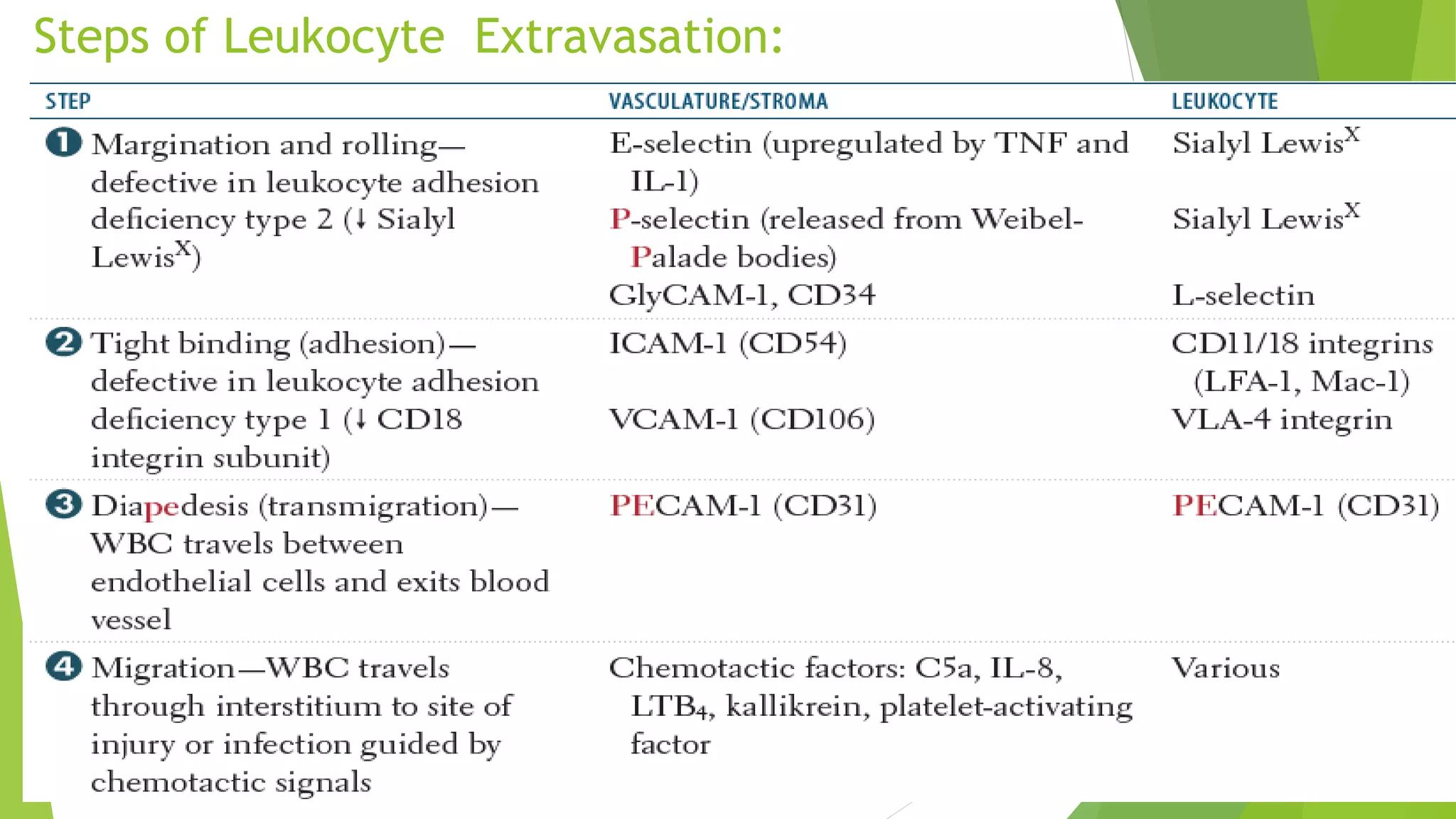
1. Leukocytes extravasation from microcirculation and accumulate in the focus of
injury.
2. Phagocytosis
3. Macrophages enrollment and clearing debris
1. Leukocyte Extravasation:
Steps of Leukocyte Extravasation:
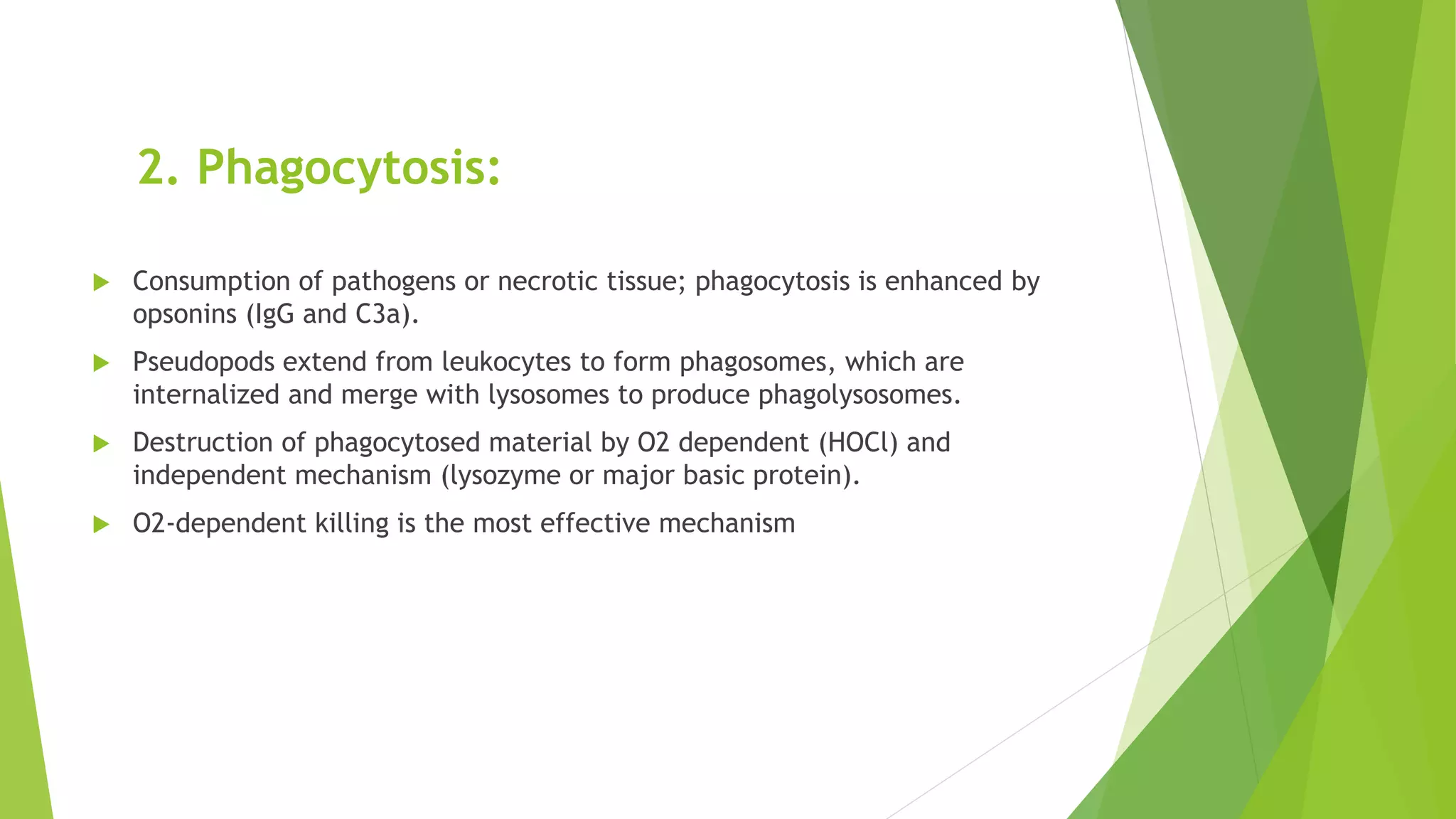
2. Phagocytosis:
 Consumption of pathogens or necrotic tissue; phagocytosis is enhanced by
opsonins (IgG and C3a).
 Pseudopods extend from leukocytes to form phagosomes, which are
internalized and merge with lysosomes to produce phagolysosomes.
 Destruction of phagocytosed material by O2 dependent (HOCl) and
independent mechanism (lysozyme or major basic protein).
 O2-dependent killing is the most effective mechanism
3. Macrophage Enrollment:
 Macrophages predominate after neutrophils and peak 2-3 days after inflammation begins and derived from
monocytes.
 Ingest organisms via phagocytosis and destroy phagocytosed material using enzymes (lysozyme).
 Manage the next step of the inflammatory process. Outcomes include:
a. Resolution and healing—Anti-inflammatory cytokines (e.g., IL-10 and TGF-B are produced by macrophages.
b. Continued acute inflammation—marked by persistent pus formation; IL-8 from macrophages recruits
additional neutrophils.
c. Abscess—acute inflammation surrounded by fibrosis; macrophages mediate fibrosis via fibrogenic growth
factors and cytokines.
d. Chronic inflammation—Macrophages present antigen to activate CD4 helper T cells, which secrete cytokines
that promote chronic inflammation
CHRONIC INFLAMMATION
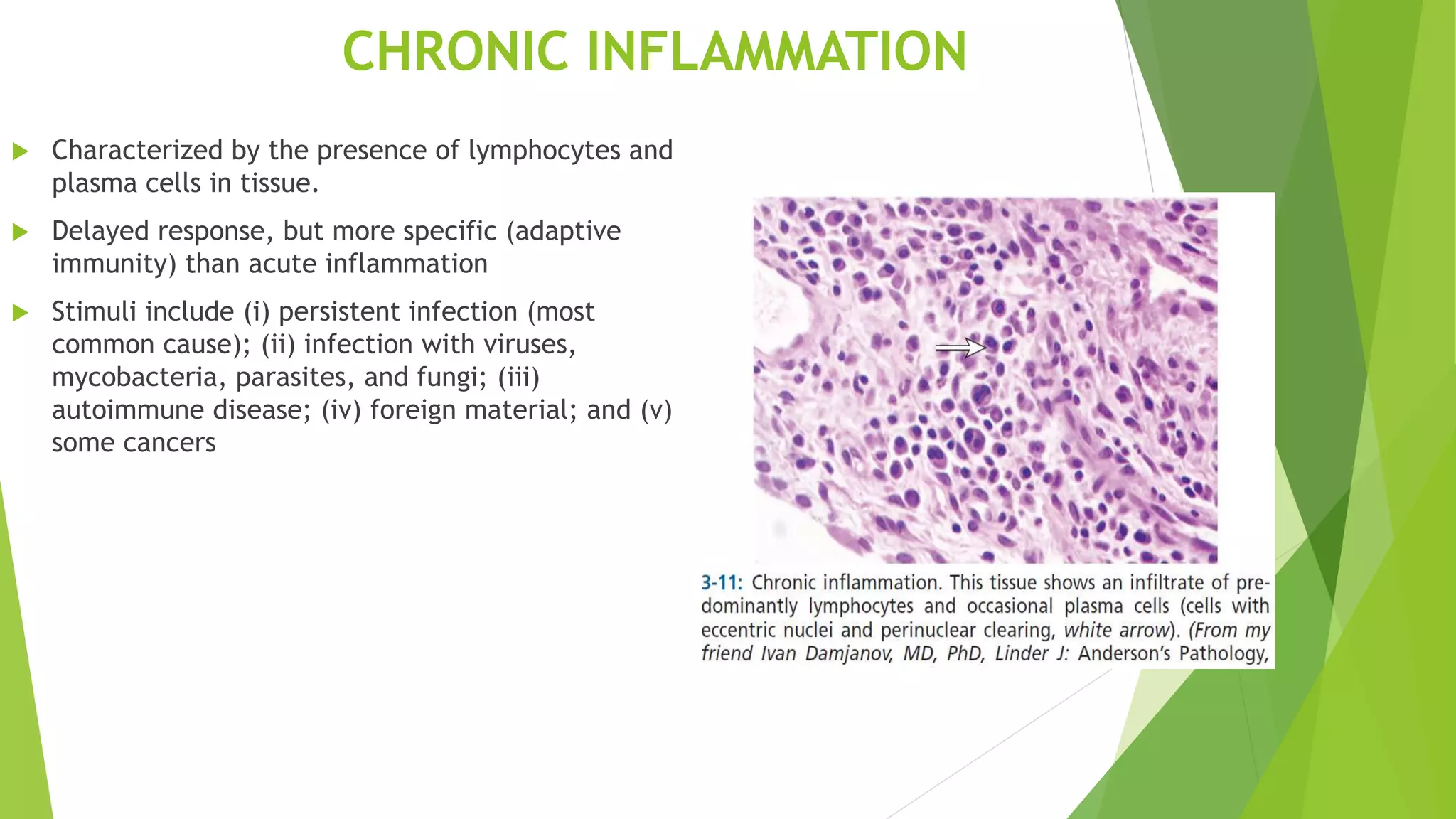
 Characterized by the presence of lymphocytes and
plasma cells in tissue.
 Delayed response, but more specific (adaptive
immunity) than acute inflammation
 Stimuli include (i) persistent infection (most
common cause); (ii) infection with viruses,
mycobacteria, parasites, and fungi; (iii)
autoimmune disease; (iv) foreign material; and (v)
some cancers
Cellular component of Chronic inflammation:
1. T LYMPHOCYTES
 Produced in bone marrow as progenitor T cells and further develop in the thymus. Types of T cells are:
i. CD4+ T cells—MHC class II
ii. CD8+ T cells—MHC class I
2. B LYMPHOCYTES
 Immature B cells are produced in the bone marrow and undergo immunoglobulin rearrangements to
become naive B cells that express surface IgM and IgD.
Outcome of Chronic Inflammation:
 Wound Healing
 Scarring
 Amyloidosis
 Neoplastic transformation
GRANULOMATOUS INFLAMMATION:
 Subtype of chronic inflammation
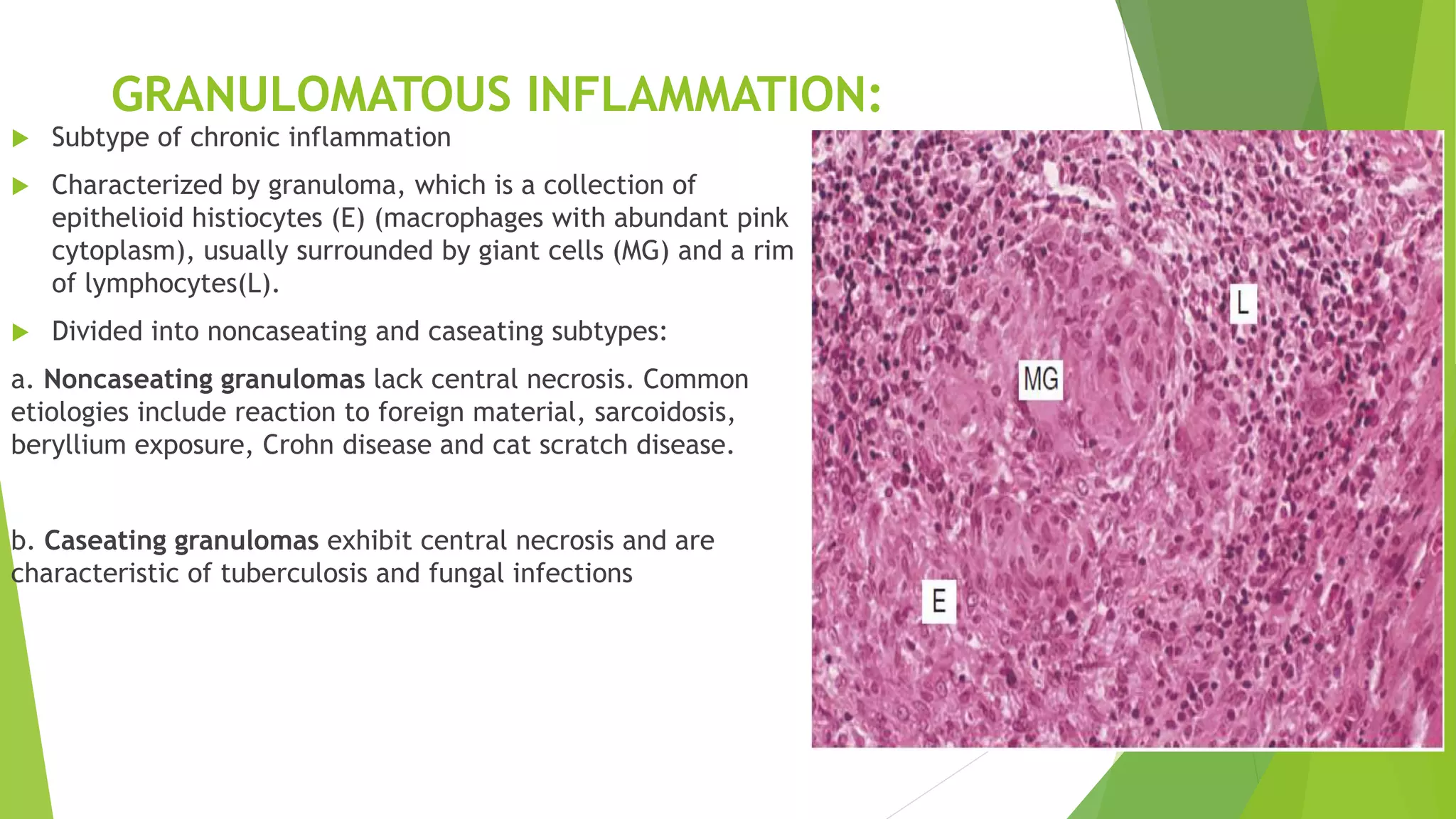
 Characterized by granuloma, which is a collection of
epithelioid histiocytes (E) (macrophages with abundant pink
cytoplasm), usually surrounded by giant cells (MG) and a rim
of lymphocytes(L).
 Divided into noncaseating and caseating subtypes:
a. Noncaseating granulomas lack central necrosis. Common
etiologies include reaction to foreign material, sarcoidosis,
beryllium exposure, Crohn disease and cat scratch disease.
b. Caseating granulomas exhibit central necrosis and are
characteristic of tuberculosis and fungal infections
Wound Healing
• Healing is the body response to injury in an attempt to
restore normal structure and function.
• 2 Distinct processes:-- Regeneration and Repair
a. Regeneration:- Complete restoration of the original
tissues.
b. Repair:- When the healing take place by proliferation of
connective tissue element resulting in fibrosis and scarring.
Wound Healing: Mediators
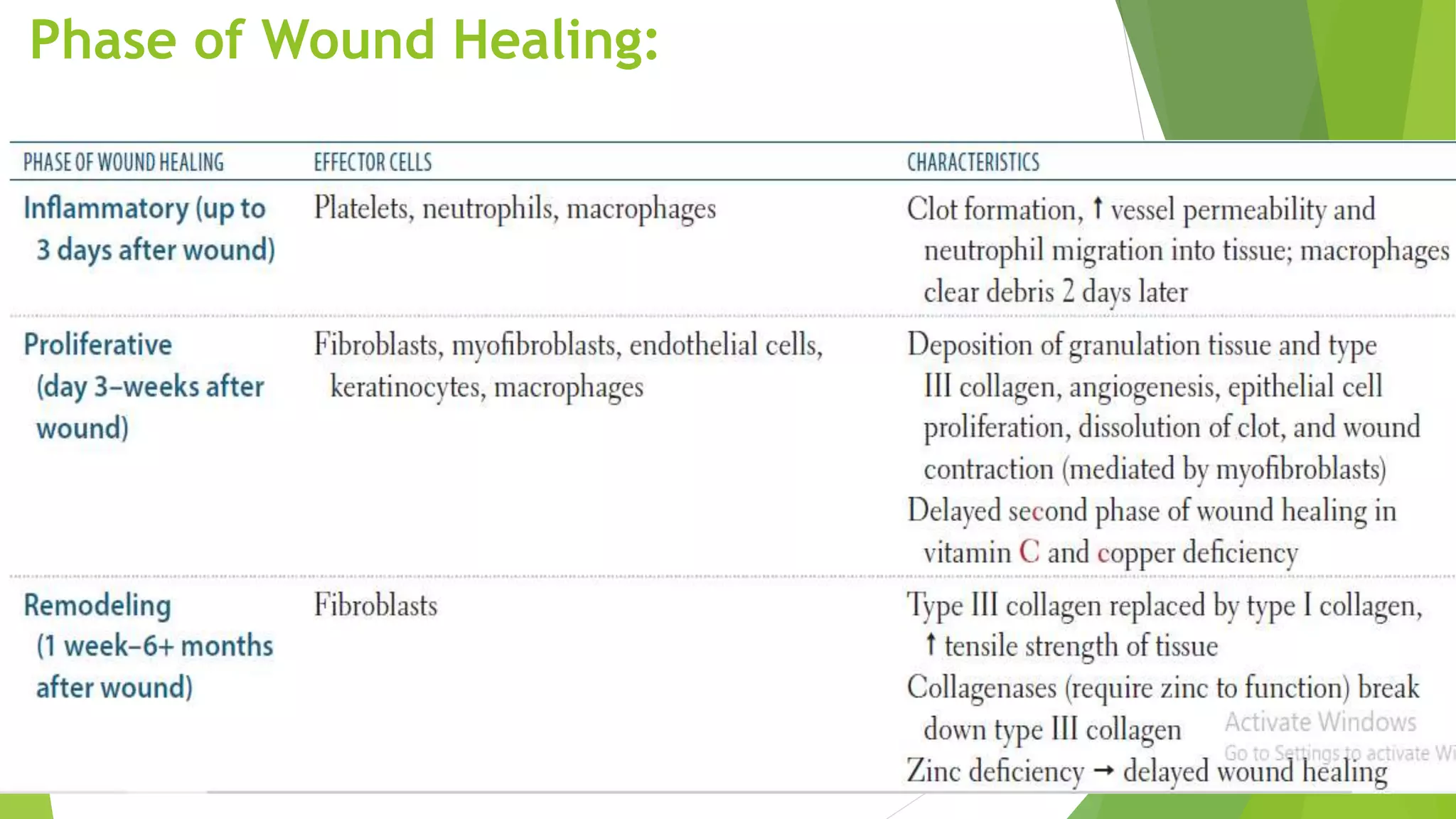
Phase of Wound Healing:
Granulation Tissue:
• Hallmark of healing
• Termcomes from soft, pink, granular
appearance when viewed from the surface
of a wound
• Histology: Proliferation of small blood
vessels and fibroblasts; tissue often
edematous
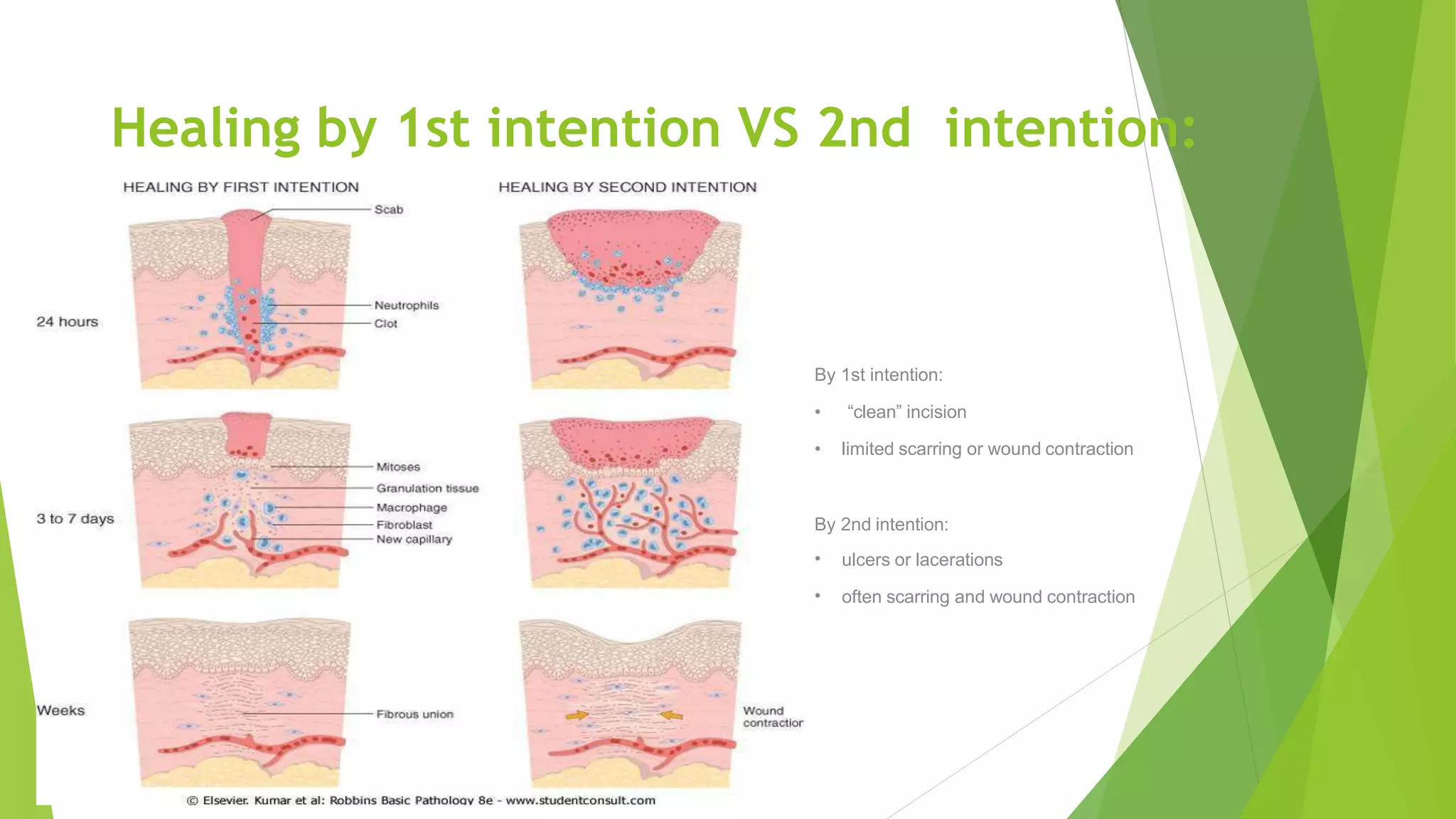
Healing by 1st intention VS 2nd intention:
By 1st intention:
• “clean” incision
• limited scarring or wound contraction
By 2nd intention:
•
•
ulcers or lacerations
often scarring and wound contraction
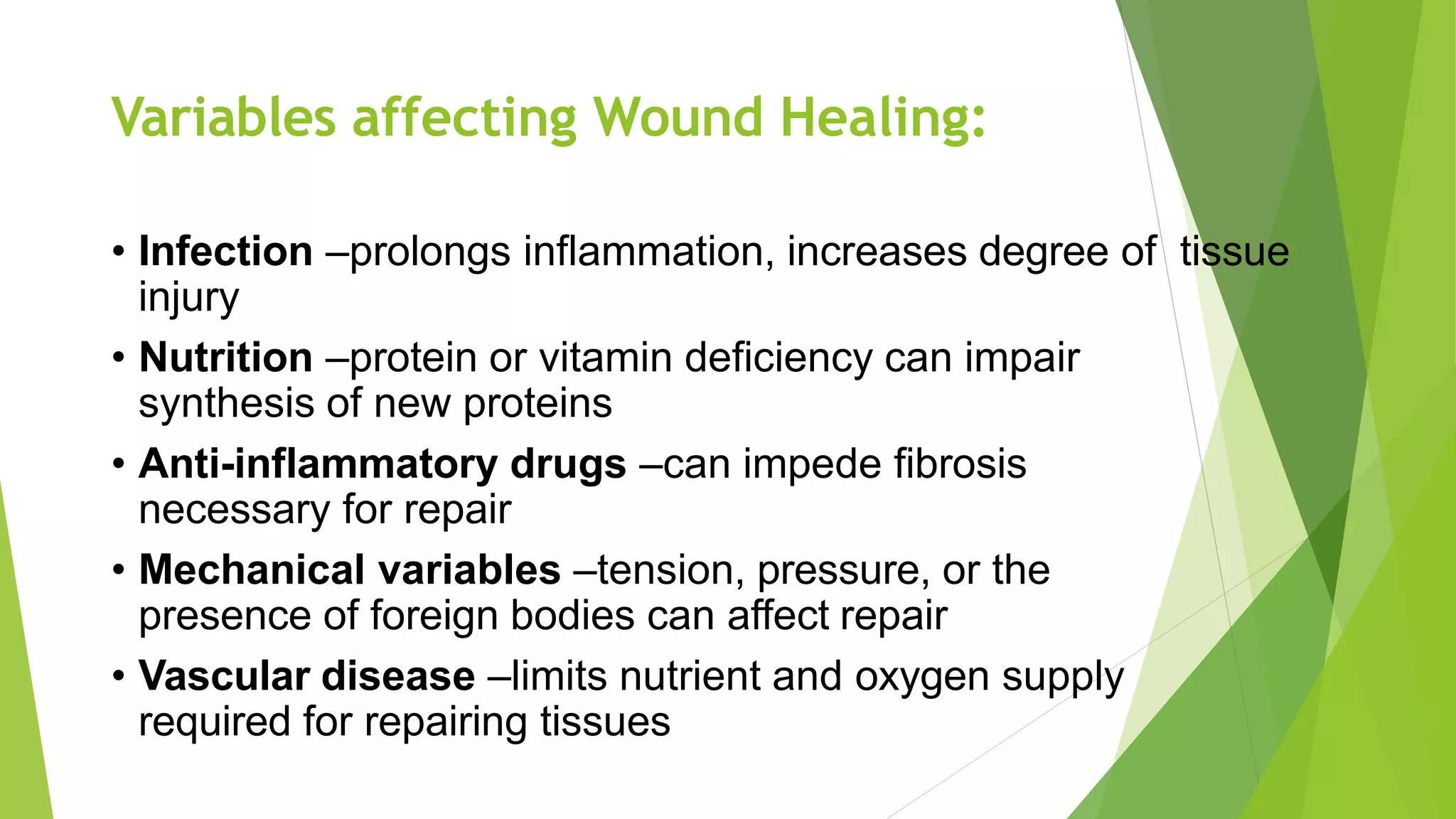
Variables affecting Wound Healing:
• Infection –prolongs inflammation, increases degree of tissue
injury
• Nutrition –protein or vitamin deficiency can impair
synthesis of new proteins
• Anti-inflammatory drugs –can impede fibrosis
necessary for repair
• Mechanical variables –tension, pressure, or the
presence of foreign bodies can affect repair
• Vascular disease –limits nutrient and oxygen supply
required for repairing tissues
Abnormal Wound Healing:
a. Dehiscence is rupture of a wound; most commonly seen after abdominal
surgery.
b. Scarring:
 Occurs when repair cannot be accomplished by cell regeneration alone.
 Nonregenerated cells (2° to severe acute or chronic injury) are replaced by
connective tissue.
 70–80% of tensile strength regained at 3 months; little tensile strength
regained thereafter. Associated with excess TGF-β.
Acute and Chronic inflammation & Wound Healing

Acute and Chronic inflammation & Wound Healing

  • 1.
    Acute and Chronic Inflammation WoundHealing DR.ROSHAN KHATIWADA
  • 2.
    INFLAMMATION Inflammation is definedas the local response of living mammalian tissues to injury due to any agent. It is a body defense reaction in order to eliminate or limit the spread of injurious agent as well as to remove the consequent necrosed cells and tissue.
  • 3.
    Types of Inflammation: •Acute inflammation ▫ Short duration ▫ Edema ▫ Mainly neutrophils • Chronic inflammation ▫ Longer duration ▫ Lymphocytes & macrophages predominate ▫ Fibrosis ▫ New blood vessels(angiogenesis)
  • 4.
    Acute Inflammation:  Acuteinflammation is a transient and early response to injury that is characterized by the release of numerous chemical mediators and leads to stereotypic small vessel and leukocyte (white blood cell [WBC]) responses.
  • 5.
    MEDIATORS OF ACUTEINFLAMMATION:  Toll-like receptors  Arachidonic acid metabolites  Neutrophils, Eosinophils  Antibodies (preexisting)  Mast cells, basophils  Complement  Hageman factor (factor XII).
  • 6.
    A. Toll-like receptors(TLRs):  Present on cells of the innate immune system (e.g., macrophages and dendritic cells)  Activated by pathogen-associated molecular patterns (PAMPs) that are commonly shared by microbes  TLR activation results in activation of immune response genes leading to production of multiple immune mediators.
  • 7.
    B. Arachidonic acid(AA) metabolites:
  • 8.
    C. Mast cells: Widely distributed throughout connective tissue  Activated by (i) tissue trauma, (ii) complement proteins C3a and C5a, or (iii) cross-linking of cell-surface IgE by antigen. a. Immediate response involves release of preformed histamine granules, which mediate vasodilation of arterioles and increased vascular permeability. b. Delayed response involves production of arachidonic acid metabolites, particularly leukotrienes.
  • 9.
    Cardinal Signs andtheir mediators
  • 10.
    Events in AcuteInflammation: Vascular Events Cellular Events A. Vascular Events: i. Transient Vasoconstriction and clot formation: Mediated by endothelin, tissue factor, Platelet, Coagulation factors etc ii. Vasodilation: Mediated by PGs, NO or histamine iii. Increased capillary Permeability: Mediated by Vasoactive amines, bradykinin etc
  • 11.
    B. Cellular events: 1.Leukocytes extravasation from microcirculation and accumulate in the focus of injury. 2. Phagocytosis 3. Macrophages enrollment and clearing debris
  • 12.
  • 13.
    Steps of LeukocyteExtravasation:
  • 14.
    2. Phagocytosis:  Consumptionof pathogens or necrotic tissue; phagocytosis is enhanced by opsonins (IgG and C3a).  Pseudopods extend from leukocytes to form phagosomes, which are internalized and merge with lysosomes to produce phagolysosomes.  Destruction of phagocytosed material by O2 dependent (HOCl) and independent mechanism (lysozyme or major basic protein).  O2-dependent killing is the most effective mechanism
  • 15.
    3. Macrophage Enrollment: Macrophages predominate after neutrophils and peak 2-3 days after inflammation begins and derived from monocytes.  Ingest organisms via phagocytosis and destroy phagocytosed material using enzymes (lysozyme).  Manage the next step of the inflammatory process. Outcomes include: a. Resolution and healing—Anti-inflammatory cytokines (e.g., IL-10 and TGF-B are produced by macrophages. b. Continued acute inflammation—marked by persistent pus formation; IL-8 from macrophages recruits additional neutrophils. c. Abscess—acute inflammation surrounded by fibrosis; macrophages mediate fibrosis via fibrogenic growth factors and cytokines. d. Chronic inflammation—Macrophages present antigen to activate CD4 helper T cells, which secrete cytokines that promote chronic inflammation
  • 17.
  • 18.
    CHRONIC INFLAMMATION  Characterizedby the presence of lymphocytes and plasma cells in tissue.  Delayed response, but more specific (adaptive immunity) than acute inflammation  Stimuli include (i) persistent infection (most common cause); (ii) infection with viruses, mycobacteria, parasites, and fungi; (iii) autoimmune disease; (iv) foreign material; and (v) some cancers
  • 19.
    Cellular component ofChronic inflammation: 1. T LYMPHOCYTES  Produced in bone marrow as progenitor T cells and further develop in the thymus. Types of T cells are: i. CD4+ T cells—MHC class II ii. CD8+ T cells—MHC class I 2. B LYMPHOCYTES  Immature B cells are produced in the bone marrow and undergo immunoglobulin rearrangements to become naive B cells that express surface IgM and IgD.
  • 20.
    Outcome of ChronicInflammation:  Wound Healing  Scarring  Amyloidosis  Neoplastic transformation
  • 21.
    GRANULOMATOUS INFLAMMATION:  Subtypeof chronic inflammation  Characterized by granuloma, which is a collection of epithelioid histiocytes (E) (macrophages with abundant pink cytoplasm), usually surrounded by giant cells (MG) and a rim of lymphocytes(L).  Divided into noncaseating and caseating subtypes: a. Noncaseating granulomas lack central necrosis. Common etiologies include reaction to foreign material, sarcoidosis, beryllium exposure, Crohn disease and cat scratch disease. b. Caseating granulomas exhibit central necrosis and are characteristic of tuberculosis and fungal infections
  • 24.
  • 25.
    • Healing isthe body response to injury in an attempt to restore normal structure and function. • 2 Distinct processes:-- Regeneration and Repair a. Regeneration:- Complete restoration of the original tissues. b. Repair:- When the healing take place by proliferation of connective tissue element resulting in fibrosis and scarring.
  • 26.
  • 27.
  • 28.
    Granulation Tissue: • Hallmarkof healing • Termcomes from soft, pink, granular appearance when viewed from the surface of a wound • Histology: Proliferation of small blood vessels and fibroblasts; tissue often edematous
  • 29.
    Healing by 1stintention VS 2nd intention: By 1st intention: • “clean” incision • limited scarring or wound contraction By 2nd intention: • • ulcers or lacerations often scarring and wound contraction
  • 30.
    Variables affecting WoundHealing: • Infection –prolongs inflammation, increases degree of tissue injury • Nutrition –protein or vitamin deficiency can impair synthesis of new proteins • Anti-inflammatory drugs –can impede fibrosis necessary for repair • Mechanical variables –tension, pressure, or the presence of foreign bodies can affect repair • Vascular disease –limits nutrient and oxygen supply required for repairing tissues
  • 31.
    Abnormal Wound Healing: a.Dehiscence is rupture of a wound; most commonly seen after abdominal surgery. b. Scarring:  Occurs when repair cannot be accomplished by cell regeneration alone.  Nonregenerated cells (2° to severe acute or chronic injury) are replaced by connective tissue.  70–80% of tensile strength regained at 3 months; little tensile strength regained thereafter. Associated with excess TGF-β.