HEAVY METAL POISONING
Dr. SHIVAPRASADA T
ASSISTANT PROFESSOR
DEPARTMENT OF GENERAL MEDICNE
KIMS, KOPPAL
INTRODUCTION
• Presents with multi system involvement
• Heavy metals : arsenic, antimony, bismuth,lead, mercury,thallium and
copper
1. ARSENIC POISINING
• Exists in tri valent and pentavalent form (inorganic), organic,metallic
forms
• Arsenic gas is most toxic of all forms followed by Trivalent arsenic
compounds
• Pentavalent arsenic compounds less soluble and less toxic
• Organic arsenics less toxic, Elemental arsenic is non toxic , seafood
contains arsenic in the form of organoarsenicals which are non toxic
• SOURSE OF EXPOSURE: pesticides and rodenticides, herbicides, glass
production, natural contaminant of ground waters
• ARSENIC POISONING IN INDIA: WHO permissible limit is 10 micro
gram, In india accepted level of exposure is below 50mcg/dl
ENDEMIC STATES: west Bengal, states in the Ganga/Bramhaputra
plains, Bihar, Jharkand, UP, AP and Chattisgarh
MECHANISM OF TOXICITY:
• Trivalent arsenic compounds inhibit pyruvate dehydrogenase
complex via inhibition of sulfhydryl group containing cellular
enzymes, which results in reduced citric acid cycle activity and
reduced gluconeogenesis
• production of free radicals
CLINICAL FEATURES:
As litte as 1 mg will poduce symptoms, Acute toxicity: 20mg , Lethal dose: 200-
300mg
ARSENIC GAS POISONING:
• headache, weakness, nausea, vomiting and abdominal pain.
• intravascular haemolysis leading to jaundice, haemoglobinuria and acute renal
failure
ACUTE ARSENIC POISONING:
• vomiting, watery ( ‘rice water’ appearance), and later bloody stools and severe
abdominal pain
• electrolyte imbalance, hypotension and shock
• Cardiotoxicity : altered myocardial function, ECG changes (prolongation of QT
interval and abnormal Twaves) and arrhythmias.
• Acute encephalopathy ,delirium, coma and convulsions. peripheral
neuropathy with a glove and stocking distribution. acute respiratory
distress syndrome, hepatitis,
• haemolytic anaemia and rhabdomyolysis. Acute renal failure
• Fever, A garlic-like odour of breath . Fatalities occur within one to four
days due to cardiovascular collapse
• Peripheral sensorimotor neuropathy typically develops in 1 to 3 weeks.
This may mimic Guillain-Barré syndrome
• Encephalopathic features: headache, drowsiness, reduced memory,
hallucinations and seizures.
• haemoptysis and patchy infiltrates in the lungs.
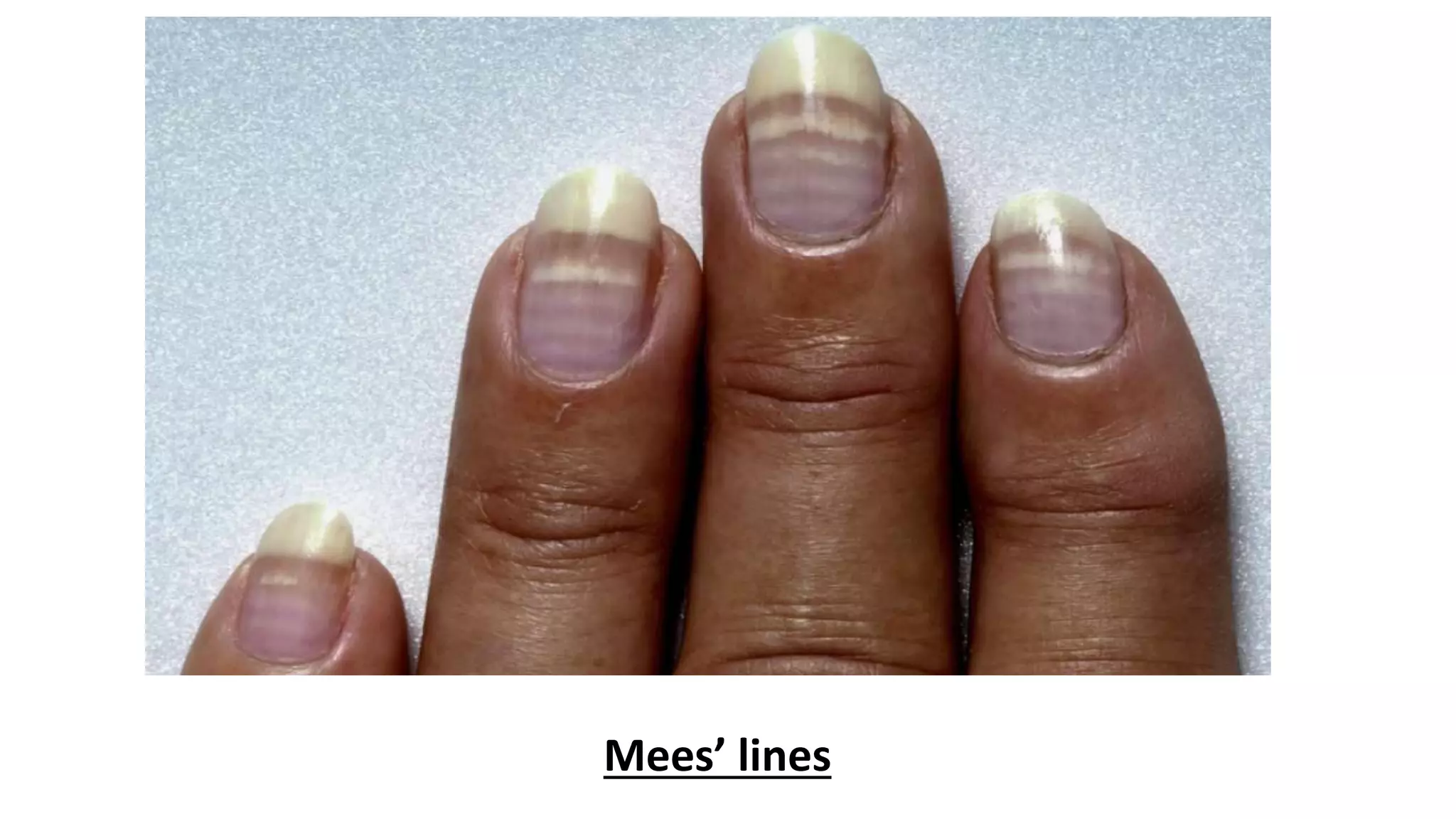
• Skin manifestations are alopaecia, oral lesions and macular rash. Mees’
lines, Similar lines have also seen in thallium, lead poisoning, Hodgkin’s
disease and renal failure.
Mees’ lines
Rain drop pigmentation
Spotty pigmentation
DIAGNOSIS
• X ray abdomen: radio opaque substance
• Urine analysis : Excretion of arsenic of more than 100 μg in 24 hours or
50 μg/L is abnormal.
• Arsenic levels in hair and nails in diagnosis of chronic poisoning
(normal arsenic levels in hair and nails are below 0.5 mg/kg and 1
mg/kg, respectively)
TREATMENT
• decontamination, chelation and supportive care.
• gastric lavage in every case.
• Whole bowel irrigation is another option for decontamination.
• Intravenous fluids to assure adequate intravascular volume.
• The chelation therapy : dimercaprol (British anti-Lewisite)
• Dimercaptosuccinic acid (DMSA) and dimercapto-1-propane sulphonate
(DMPS) appear to be better alternatives than BAL
• The DMPS is administered in a dose of 5 mg/kg intravenously every 4
hours till the patient can be able to tolerate the medication orally.
• The oral dose in adults is 400 mg every 4 hours for a week.
• The recommended dose of DMSA is 10 mg/kg every 8 hours for 5 days and
then 10 mg/kg every 12 hourly
2. LEAD POISONING (SATURNISM/PLUMBISM)
Common Sources of Lead
• Paint (lead-based), Household dust, Lead water pipes, Soil around
the home Herbal and traditional remedies
• Food-storage articles: Lead-glazed ceramic ware
• lead crystals and lead-soldered cans
• Paint on children’s toys
• Industrial: Smelting, soldering, battery making, ship building,
FATAL DOSE:
10g/70kg for lead salts
100mg/kg for tetra ethyl lead
MECHANISM OF TOXICITY:
• Interfers with mitochondrial oxidative phosphorylation and sodium,
potassium, and calcium ATPase
• It depresses enzyme responsible for heme synthesis
• Blocks enzyme aminolevulenic acid dehydrase
CLINICAL FEATURES:
• Apparently asymptomatic (lowest exposure; blood lead levels may be
below 10 μg/dL)
• Reduced learning and memory Lowered IQ Impaired speech
Hyperactivity
• Low exposure: Myalgia Paraesthesia Fatigue/lethargy Irritability Mild
abdominal discomfort, Change in taste
• Moderate exposure: (additional features) Arthralgias Inability to
concentrate, Short-term memory loss, Tremor, Headache, Diffuse
abdominal pain, Vomiting, Constipation, Hypertension
• High exposure :Abdominal colic, Paresis or paralysis (wrist and foot
drop) Papilloedema, Somnolence, coma, Seizures, Lead line on
gingival tissue (Burton’s line)
Burton`s line
ACUTE POISONING
• abdominal colic, vomiting, constipation, fatigue, anaemia.
• renal failure, peripheral neuropathy, renal insufficiency.
• in severe cases, encephalopathy (coma, convulsions, papilloedema).
• Neuropathy is generally of pure motor type resulting in foot and wrist
drop.
CHRONIC POISONING (PLUMBISM)
• Facial pallor, anemia
• Basophilic stippling of red cells
• Blue lines in gums
• Retinal stippling (late)
• Constipation
• Encephalopathy
Basophillic strippling
DIAGNOSIS
• Blood investigation: Anemia and basophilic stippling
• RBC shows fluorosence due to increased FEPP
• Urine investigation
• Calcium EDTA mobilisation test
• X ray examination: Abdominal Xray shows flecks of lead paint, long
bones show lead lines
TREATMENT
3. MERCURY
Sources of Exposure
• Mercury is used in the manufacture of batteries, latex paint,
urethane, polyvinyl chloride, scientific instruments and fungicides
Mechanism of toxicity
• Mercury bind to sulfhydryl groups present on the cell membranes
and enzymes and cause their toxicities. Mercuric ions also accumulate
in the kidneys, causing acute renal failure due to the necrosis of the
proximal tubular epithelium.
ACUTE POISONING:
• Acute inhalation of elemental mercury results initially in
• pulmonary toxicity causing cough, haemoptysis, tachycardia, pulmonary oedema,
cyanosis and death.
• Gastrointestinal features include vomiting, diarrhoea, metallic taste, dysphagia
and salivation.
• If the patient survives, headache, blurred vision and encephalopathy can occur.
CHRONIC POISONING:
• dermatitis, loosening of teeth, gingivitis, salivation, stomatitis, intention tremor
and a neuropsychiatric syndrome called ‘erethism’.
• ‘acrodynia’ or ‘pink disease’ is characterised by painful, erythematous
extremities, sweating, photophobia, tachycardia, hypertension, insomnia and
irritability
DIAGNOSIS :
• determination of mercury levels in whole blood, 24-hour urine
samples and hairs.
• Blood mercury levels are the best indicator of acute exposure to
methylmercury,
• while hairs may be the best specimen for the evaluation of
chronic exposure.
• Normal levels of mercury in whole blood and urine are below 10
μg/L and 50 μg/L, respectively
TREATMENT
• Discontinuing the exposure, supportive care
• Oxygen inhalation, close monitoring of respiratory status and if
required, assisted ventilation
• In case of subcutaneous injection of mercury, surgical removal of
mercury and surrounding granulated tissue is important
• Ingestion of inorganic mercury requires supportive treatment
with aggressive fluid replacement and if required, haemodialysis.
Patients should also be started on chelation therapy. Gastric
lavage has been recommended for acute organic salt ingestions.
• in critically ill patients, chelation therapy should be started
regardless of the suspected form of mercury
• The DMSA is administered in a dose of 30 mg/kg per day
• D-penicillamine is also useful in mercury poisoning although its
efficacy is only about 30% of that with DMSA. It is administered in
a dose of 250 mg 6 hourly along with pyridoxine (40 mg/day)
COPPER:
• Elemental copper is not toxic, but many of its salts are poisonous
• Copper compounds are used as insecticides and fungicides and also
as pigments
MECHANISM OF TOXICITY:
• acute intoxication: involved in oxidation-reduction reactions . It
inhibits several enzymes including mitochondrial electron transport
chain and also disrupts lipid membranes. It also inhibits sulfhydryl
groups on enzymes, including glucose-6-phosphate dehydrogenase
and glutathione reductase, which may be responsible for haemolysis
ACUTE POISONING
• fatal dose of copper sulphate is 10 to 20 g
• Initial features of acute poisoning include myalgia, retrosternal pain,
abdominal pain, vomiting (greenish or bluish) and diarrhoea
• Acute intravascular haemolysis occurs within 24 hours and can lead
to anaemia, jaundice and renal failure.
• Jaundice may also occur due to liver injury
• Some patients may develop methaemoglobinaemia due to oxidation
of haeme and this may precede haemolysis.
• The central nervous system effects include agitation, convulsions and
coma and are usually related to hepatic failure
CHRONIC POISONING:
• Chronic exogenous copper poisoning is uncommon.
• Chronic inhalation of copper sulphate spray used as an insecticide can
produce interstitial lung disease, the latter having histiocytic
granulomas containing copper on biopsy.
• liver damage and cirrhosis
• malaise, weakness, headache, dizziness, tightness in the chest, and
leg and back pain.
DIAGNOSIS:
• Following acute copper poisoning, liver function tests and
haemogram may reveal evidence of haemolysis and liver damage.
• Blood copper level more than 1.5 mg/dL indicates serious copper
toxicity. Elevated copper levels are also seen in patients with
inflammatory conditions.
• Urinary copper levels are also elevated (normal urinary copper value
< 25 μg/day).
TREATMENT:
• supportive care .
• The fluid and electrolyte balance must be ensured.
• Chelation therapy is indicated when haematological or hepatic
manifestations are present .
• Most commonly recommended chelator initially is BAL as the patient has
vomiting, and therefore, oral D penicillamine cannot be given. When
tolerated, D-penicillamine should be started.
• The DMSA may be used in patients with mild symptoms.
• Use of DMPS may worsen haemolysis and therefore, is not
recommended in copper poisoning
THALLIUM:
• Thallium metal is nontoxic, but its salts are highly toxic.
• Thallium salts are tasteless, colourless and odourless.
• Thallium sulphate and nitrate were used as rodenticides.
• Some thallium salts are occasionally used as cockroach
poison.
Mechanism of Toxicity
• Thallium associates with the Na+/K+ ATPase channel with 10 times
the affinity of potassium.
• Once intracellular stores of thallium accumulate, thallium interferes
with the function of a number of enzymes by binding sulfhydryl
groups and ultimately inhibiting cellular respiration, disrupting
calcium homeostasis, and interacting with riboflavin and riboflavin-
derived cofactors
Clinical Features:
• nausea, vomiting, abdominal pain and diarrhoea or constipation.
• Within 2 to 5 days, the patient may develop paraesthesia, burning pain in
feet and hands, motor weakness, respiratory depression, nystagmus,
optic atrophy, cranial nerve palsies, delirium, convulsions and coma.
• The picture may resemble Guillain-Barré syndrome superficially, but
sensory neuropathy and preservation of reflexes exclude this syndrome
• Tachycardia and hypertension , acne, palmar erythema, dry skin and
occasionally a ‘butterfly’ rash on the face and alopaecia develop.
• Mees’ lines on the nails . Cardiac arrhythmias.
Diagnosis:
• Abdominal radiographs may demonstrate radio-opaque material in
the gut when patient presents early
• Microscopic examination of hair root shows deep black pigmentation
in more than 95% cases.
• The definitive diagnosis can be made by blood and urine thallium
levels.
• Normal urine thallium levels are less than 5 μg/L
Treatment
• supportive care and gastric decontamination . Activated charcoal is
useful in adsorbing substantial amount of thallium salts.
• Administration of potassium increases the excretion of thallium in the
urine by 2 to 3 times
• B-complex vitamin may be useful.
• Haemodialysis and haemoperfusion .
• Traditional chelators are of little use in thallium poisoning.
• Prussian blue (potassium ferric hexacyanoferrate) can be used as a
chelator
THANK YOU

Heavy metal poisoning PPT.pptx

  • 1.
    HEAVY METAL POISONING Dr.SHIVAPRASADA T ASSISTANT PROFESSOR DEPARTMENT OF GENERAL MEDICNE KIMS, KOPPAL
  • 2.
    INTRODUCTION • Presents withmulti system involvement • Heavy metals : arsenic, antimony, bismuth,lead, mercury,thallium and copper
  • 3.
    1. ARSENIC POISINING •Exists in tri valent and pentavalent form (inorganic), organic,metallic forms • Arsenic gas is most toxic of all forms followed by Trivalent arsenic compounds • Pentavalent arsenic compounds less soluble and less toxic • Organic arsenics less toxic, Elemental arsenic is non toxic , seafood contains arsenic in the form of organoarsenicals which are non toxic
  • 4.
    • SOURSE OFEXPOSURE: pesticides and rodenticides, herbicides, glass production, natural contaminant of ground waters • ARSENIC POISONING IN INDIA: WHO permissible limit is 10 micro gram, In india accepted level of exposure is below 50mcg/dl ENDEMIC STATES: west Bengal, states in the Ganga/Bramhaputra plains, Bihar, Jharkand, UP, AP and Chattisgarh
  • 5.
    MECHANISM OF TOXICITY: •Trivalent arsenic compounds inhibit pyruvate dehydrogenase complex via inhibition of sulfhydryl group containing cellular enzymes, which results in reduced citric acid cycle activity and reduced gluconeogenesis • production of free radicals
  • 6.
    CLINICAL FEATURES: As litteas 1 mg will poduce symptoms, Acute toxicity: 20mg , Lethal dose: 200- 300mg ARSENIC GAS POISONING: • headache, weakness, nausea, vomiting and abdominal pain. • intravascular haemolysis leading to jaundice, haemoglobinuria and acute renal failure ACUTE ARSENIC POISONING: • vomiting, watery ( ‘rice water’ appearance), and later bloody stools and severe abdominal pain • electrolyte imbalance, hypotension and shock • Cardiotoxicity : altered myocardial function, ECG changes (prolongation of QT interval and abnormal Twaves) and arrhythmias.
  • 7.
    • Acute encephalopathy,delirium, coma and convulsions. peripheral neuropathy with a glove and stocking distribution. acute respiratory distress syndrome, hepatitis, • haemolytic anaemia and rhabdomyolysis. Acute renal failure • Fever, A garlic-like odour of breath . Fatalities occur within one to four days due to cardiovascular collapse • Peripheral sensorimotor neuropathy typically develops in 1 to 3 weeks. This may mimic Guillain-Barré syndrome
  • 8.
    • Encephalopathic features:headache, drowsiness, reduced memory, hallucinations and seizures. • haemoptysis and patchy infiltrates in the lungs. • Skin manifestations are alopaecia, oral lesions and macular rash. Mees’ lines, Similar lines have also seen in thallium, lead poisoning, Hodgkin’s disease and renal failure.
  • 9.
  • 12.
  • 13.
  • 14.
    DIAGNOSIS • X rayabdomen: radio opaque substance • Urine analysis : Excretion of arsenic of more than 100 μg in 24 hours or 50 μg/L is abnormal. • Arsenic levels in hair and nails in diagnosis of chronic poisoning (normal arsenic levels in hair and nails are below 0.5 mg/kg and 1 mg/kg, respectively)
  • 15.
    TREATMENT • decontamination, chelationand supportive care. • gastric lavage in every case. • Whole bowel irrigation is another option for decontamination. • Intravenous fluids to assure adequate intravascular volume. • The chelation therapy : dimercaprol (British anti-Lewisite) • Dimercaptosuccinic acid (DMSA) and dimercapto-1-propane sulphonate (DMPS) appear to be better alternatives than BAL • The DMPS is administered in a dose of 5 mg/kg intravenously every 4 hours till the patient can be able to tolerate the medication orally. • The oral dose in adults is 400 mg every 4 hours for a week. • The recommended dose of DMSA is 10 mg/kg every 8 hours for 5 days and then 10 mg/kg every 12 hourly
  • 16.
    2. LEAD POISONING(SATURNISM/PLUMBISM) Common Sources of Lead • Paint (lead-based), Household dust, Lead water pipes, Soil around the home Herbal and traditional remedies • Food-storage articles: Lead-glazed ceramic ware • lead crystals and lead-soldered cans • Paint on children’s toys • Industrial: Smelting, soldering, battery making, ship building,
  • 17.
    FATAL DOSE: 10g/70kg forlead salts 100mg/kg for tetra ethyl lead MECHANISM OF TOXICITY: • Interfers with mitochondrial oxidative phosphorylation and sodium, potassium, and calcium ATPase • It depresses enzyme responsible for heme synthesis • Blocks enzyme aminolevulenic acid dehydrase
  • 18.
    CLINICAL FEATURES: • Apparentlyasymptomatic (lowest exposure; blood lead levels may be below 10 μg/dL) • Reduced learning and memory Lowered IQ Impaired speech Hyperactivity • Low exposure: Myalgia Paraesthesia Fatigue/lethargy Irritability Mild abdominal discomfort, Change in taste • Moderate exposure: (additional features) Arthralgias Inability to concentrate, Short-term memory loss, Tremor, Headache, Diffuse abdominal pain, Vomiting, Constipation, Hypertension • High exposure :Abdominal colic, Paresis or paralysis (wrist and foot drop) Papilloedema, Somnolence, coma, Seizures, Lead line on gingival tissue (Burton’s line)
  • 19.
  • 21.
    ACUTE POISONING • abdominalcolic, vomiting, constipation, fatigue, anaemia. • renal failure, peripheral neuropathy, renal insufficiency. • in severe cases, encephalopathy (coma, convulsions, papilloedema). • Neuropathy is generally of pure motor type resulting in foot and wrist drop. CHRONIC POISONING (PLUMBISM) • Facial pallor, anemia • Basophilic stippling of red cells • Blue lines in gums • Retinal stippling (late) • Constipation • Encephalopathy
  • 22.
  • 23.
    DIAGNOSIS • Blood investigation:Anemia and basophilic stippling • RBC shows fluorosence due to increased FEPP • Urine investigation • Calcium EDTA mobilisation test • X ray examination: Abdominal Xray shows flecks of lead paint, long bones show lead lines
  • 24.
  • 25.
    3. MERCURY Sources ofExposure • Mercury is used in the manufacture of batteries, latex paint, urethane, polyvinyl chloride, scientific instruments and fungicides Mechanism of toxicity • Mercury bind to sulfhydryl groups present on the cell membranes and enzymes and cause their toxicities. Mercuric ions also accumulate in the kidneys, causing acute renal failure due to the necrosis of the proximal tubular epithelium.
  • 26.
    ACUTE POISONING: • Acuteinhalation of elemental mercury results initially in • pulmonary toxicity causing cough, haemoptysis, tachycardia, pulmonary oedema, cyanosis and death. • Gastrointestinal features include vomiting, diarrhoea, metallic taste, dysphagia and salivation. • If the patient survives, headache, blurred vision and encephalopathy can occur. CHRONIC POISONING: • dermatitis, loosening of teeth, gingivitis, salivation, stomatitis, intention tremor and a neuropsychiatric syndrome called ‘erethism’. • ‘acrodynia’ or ‘pink disease’ is characterised by painful, erythematous extremities, sweating, photophobia, tachycardia, hypertension, insomnia and irritability
  • 27.
    DIAGNOSIS : • determinationof mercury levels in whole blood, 24-hour urine samples and hairs. • Blood mercury levels are the best indicator of acute exposure to methylmercury, • while hairs may be the best specimen for the evaluation of chronic exposure. • Normal levels of mercury in whole blood and urine are below 10 μg/L and 50 μg/L, respectively
  • 28.
    TREATMENT • Discontinuing theexposure, supportive care • Oxygen inhalation, close monitoring of respiratory status and if required, assisted ventilation • In case of subcutaneous injection of mercury, surgical removal of mercury and surrounding granulated tissue is important • Ingestion of inorganic mercury requires supportive treatment with aggressive fluid replacement and if required, haemodialysis. Patients should also be started on chelation therapy. Gastric lavage has been recommended for acute organic salt ingestions. • in critically ill patients, chelation therapy should be started regardless of the suspected form of mercury • The DMSA is administered in a dose of 30 mg/kg per day • D-penicillamine is also useful in mercury poisoning although its efficacy is only about 30% of that with DMSA. It is administered in a dose of 250 mg 6 hourly along with pyridoxine (40 mg/day)
  • 30.
    COPPER: • Elemental copperis not toxic, but many of its salts are poisonous • Copper compounds are used as insecticides and fungicides and also as pigments MECHANISM OF TOXICITY: • acute intoxication: involved in oxidation-reduction reactions . It inhibits several enzymes including mitochondrial electron transport chain and also disrupts lipid membranes. It also inhibits sulfhydryl groups on enzymes, including glucose-6-phosphate dehydrogenase and glutathione reductase, which may be responsible for haemolysis
  • 31.
    ACUTE POISONING • fataldose of copper sulphate is 10 to 20 g • Initial features of acute poisoning include myalgia, retrosternal pain, abdominal pain, vomiting (greenish or bluish) and diarrhoea • Acute intravascular haemolysis occurs within 24 hours and can lead to anaemia, jaundice and renal failure. • Jaundice may also occur due to liver injury • Some patients may develop methaemoglobinaemia due to oxidation of haeme and this may precede haemolysis. • The central nervous system effects include agitation, convulsions and coma and are usually related to hepatic failure
  • 32.
    CHRONIC POISONING: • Chronicexogenous copper poisoning is uncommon. • Chronic inhalation of copper sulphate spray used as an insecticide can produce interstitial lung disease, the latter having histiocytic granulomas containing copper on biopsy. • liver damage and cirrhosis • malaise, weakness, headache, dizziness, tightness in the chest, and leg and back pain.
  • 33.
    DIAGNOSIS: • Following acutecopper poisoning, liver function tests and haemogram may reveal evidence of haemolysis and liver damage. • Blood copper level more than 1.5 mg/dL indicates serious copper toxicity. Elevated copper levels are also seen in patients with inflammatory conditions. • Urinary copper levels are also elevated (normal urinary copper value < 25 μg/day).
  • 34.
    TREATMENT: • supportive care. • The fluid and electrolyte balance must be ensured. • Chelation therapy is indicated when haematological or hepatic manifestations are present . • Most commonly recommended chelator initially is BAL as the patient has vomiting, and therefore, oral D penicillamine cannot be given. When tolerated, D-penicillamine should be started. • The DMSA may be used in patients with mild symptoms. • Use of DMPS may worsen haemolysis and therefore, is not recommended in copper poisoning
  • 35.
    THALLIUM: • Thallium metalis nontoxic, but its salts are highly toxic. • Thallium salts are tasteless, colourless and odourless. • Thallium sulphate and nitrate were used as rodenticides. • Some thallium salts are occasionally used as cockroach poison.
  • 36.
    Mechanism of Toxicity •Thallium associates with the Na+/K+ ATPase channel with 10 times the affinity of potassium. • Once intracellular stores of thallium accumulate, thallium interferes with the function of a number of enzymes by binding sulfhydryl groups and ultimately inhibiting cellular respiration, disrupting calcium homeostasis, and interacting with riboflavin and riboflavin- derived cofactors
  • 37.
    Clinical Features: • nausea,vomiting, abdominal pain and diarrhoea or constipation. • Within 2 to 5 days, the patient may develop paraesthesia, burning pain in feet and hands, motor weakness, respiratory depression, nystagmus, optic atrophy, cranial nerve palsies, delirium, convulsions and coma. • The picture may resemble Guillain-Barré syndrome superficially, but sensory neuropathy and preservation of reflexes exclude this syndrome • Tachycardia and hypertension , acne, palmar erythema, dry skin and occasionally a ‘butterfly’ rash on the face and alopaecia develop. • Mees’ lines on the nails . Cardiac arrhythmias.
  • 38.
    Diagnosis: • Abdominal radiographsmay demonstrate radio-opaque material in the gut when patient presents early • Microscopic examination of hair root shows deep black pigmentation in more than 95% cases. • The definitive diagnosis can be made by blood and urine thallium levels. • Normal urine thallium levels are less than 5 μg/L
  • 39.
    Treatment • supportive careand gastric decontamination . Activated charcoal is useful in adsorbing substantial amount of thallium salts. • Administration of potassium increases the excretion of thallium in the urine by 2 to 3 times • B-complex vitamin may be useful. • Haemodialysis and haemoperfusion . • Traditional chelators are of little use in thallium poisoning. • Prussian blue (potassium ferric hexacyanoferrate) can be used as a chelator
  • 40.