ARSENIC POISONING

Dr. Badar Uddin Umar
MBBS, M.Phil (Pharmacology)
PROPERTIES OF ARSENIC (AS)
 It is a heavy metallic inorganic irritant poison
 Inorganic arsenic compounds are poisonous:
 Arsenic trioxide, sodium arsenite, arsenic sulphide,
copperarsenite, etc.

 Metallic arsenic is non poisonous if ingested
because it is not absorbed
MECHANISM OF ACTION
 Arsenic ion binds with sulphydryl group (-SH) of
enzymes in the liver, lungs, intestinal walls,
spleen
 It replaces phosphorus in bones where it may
remain for years
 It also gets deposited in the hairs
SIGNS & SYMPTOMS
 Arsenic poisoning clinically manifests in three
forms 1. ACUTE FULMINATING TYPE:
•

Symptoms occur within half an hour when
heavy dose (3-5 gm) is taken

•

Acts on sulphhydryl groups of enzymes and
capillaries inhibiting cellular metabolism and
causing marked dilation of capillaries and
myocardial failure resulting in shock and
death
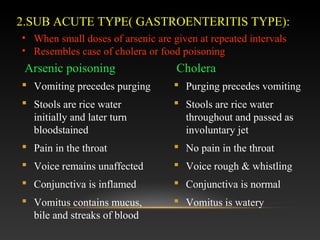
2.SUB ACUTE TYPE( GASTROENTERITIS TYPE):
• When small doses of arsenic are given at repeated intervals
• Resembles case of cholera or food poisoning

Arsenic poisoning

Cholera

 Vomiting precedes purging

 Purging precedes vomiting

 Stools are rice water
initially and later turn
bloodstained

 Stools are rice water
throughout and passed as
involuntary jet

 Pain in the throat

 No pain in the throat

 Voice remains unaffected

 Voice rough & whistling

 Conjunctiva is inflamed

 Conjunctiva is normal

 Vomitus contains mucus,
bile and streaks of blood

 Vomitus is watery
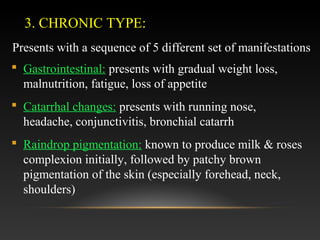
3. CHRONIC TYPE:
Presents with a sequence of 5 different set of manifestations
 Gastrointestinal: presents with gradual weight loss,
malnutrition, fatigue, loss of appetite
 Catarrhal changes: presents with running nose,
headache, conjunctivitis, bronchial catarrh
 Raindrop pigmentation: known to produce milk & roses
complexion initially, followed by patchy brown
pigmentation of the skin (especially forehead, neck,
shoulders)
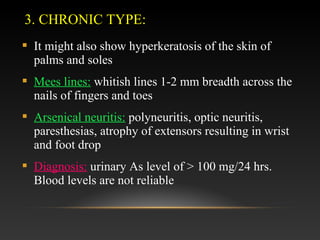
3. CHRONIC TYPE:
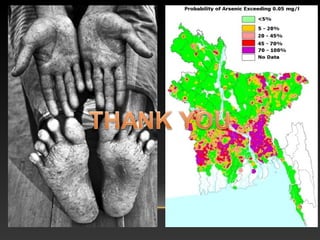
 It might also show hyperkeratosis of the skin of
palms and soles
 Mees lines: whitish lines 1-2 mm breadth across the
nails of fingers and toes
 Arsenical neuritis: polyneuritis, optic neuritis,
paresthesias, atrophy of extensors resulting in wrist
and foot drop
 Diagnosis: urinary As level of > 100 mg/24 hrs.
Blood levels are not reliable
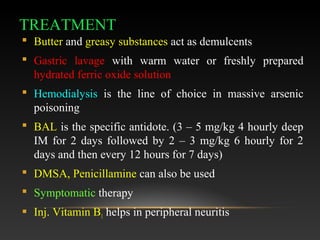
TREATMENT
 Butter and greasy substances act as demulcents
 Gastric lavage with warm water or freshly prepared
hydrated ferric oxide solution
 Hemodialysis is the line of choice in massive arsenic
poisoning
 BAL is the specific antidote. (3 – 5 mg/kg 4 hourly deep
IM for 2 days followed by 2 – 3 mg/kg 6 hourly for 2
days and then every 12 hours for 7 days)
 DMSA, Penicillamine can also be used
 Symptomatic therapy
 Inj. Vitamin B1 helps in peripheral neuritis
POSTMORTEM FINDINGS
 Stomach: velvety red or brownish, patchy areas
with ulceration. Gastric contents emit garlicky odor
 Heart: subendocardial haemorrhage
 Other viscera: fatty degeneration of liver, kidney &
heart
 Brain may show inflammation with haemorrhagic
spots
MEDICOLEGAL IMPORTANCE
 It was considered as an ideal homicidal poison as it
was Cheap
 Easy to obtain
 Could be easily mixed and given
 Symptoms were similar to cholera
 Accidental poisoning with those who consume for its
aphrodisiac effects
 Accidental poisoning with contaminated tube well
water is common in Asia
Arsenic poisoning

Arsenic poisoning

  • 1.
    ARSENIC POISONING Dr. BadarUddin Umar MBBS, M.Phil (Pharmacology)
  • 2.
    PROPERTIES OF ARSENIC(AS)  It is a heavy metallic inorganic irritant poison  Inorganic arsenic compounds are poisonous:  Arsenic trioxide, sodium arsenite, arsenic sulphide, copperarsenite, etc.  Metallic arsenic is non poisonous if ingested because it is not absorbed
  • 3.
    MECHANISM OF ACTION Arsenic ion binds with sulphydryl group (-SH) of enzymes in the liver, lungs, intestinal walls, spleen  It replaces phosphorus in bones where it may remain for years  It also gets deposited in the hairs
  • 4.
    SIGNS & SYMPTOMS Arsenic poisoning clinically manifests in three forms 1. ACUTE FULMINATING TYPE: • Symptoms occur within half an hour when heavy dose (3-5 gm) is taken • Acts on sulphhydryl groups of enzymes and capillaries inhibiting cellular metabolism and causing marked dilation of capillaries and myocardial failure resulting in shock and death
  • 5.
    2.SUB ACUTE TYPE(GASTROENTERITIS TYPE): • When small doses of arsenic are given at repeated intervals • Resembles case of cholera or food poisoning Arsenic poisoning Cholera  Vomiting precedes purging  Purging precedes vomiting  Stools are rice water initially and later turn bloodstained  Stools are rice water throughout and passed as involuntary jet  Pain in the throat  No pain in the throat  Voice remains unaffected  Voice rough & whistling  Conjunctiva is inflamed  Conjunctiva is normal  Vomitus contains mucus, bile and streaks of blood  Vomitus is watery
  • 6.
    3. CHRONIC TYPE: Presentswith a sequence of 5 different set of manifestations  Gastrointestinal: presents with gradual weight loss, malnutrition, fatigue, loss of appetite  Catarrhal changes: presents with running nose, headache, conjunctivitis, bronchial catarrh  Raindrop pigmentation: known to produce milk & roses complexion initially, followed by patchy brown pigmentation of the skin (especially forehead, neck, shoulders)
  • 7.
    3. CHRONIC TYPE: It might also show hyperkeratosis of the skin of palms and soles  Mees lines: whitish lines 1-2 mm breadth across the nails of fingers and toes  Arsenical neuritis: polyneuritis, optic neuritis, paresthesias, atrophy of extensors resulting in wrist and foot drop  Diagnosis: urinary As level of > 100 mg/24 hrs. Blood levels are not reliable
  • 8.
    TREATMENT  Butter andgreasy substances act as demulcents  Gastric lavage with warm water or freshly prepared hydrated ferric oxide solution  Hemodialysis is the line of choice in massive arsenic poisoning  BAL is the specific antidote. (3 – 5 mg/kg 4 hourly deep IM for 2 days followed by 2 – 3 mg/kg 6 hourly for 2 days and then every 12 hours for 7 days)  DMSA, Penicillamine can also be used  Symptomatic therapy  Inj. Vitamin B1 helps in peripheral neuritis
  • 9.
    POSTMORTEM FINDINGS  Stomach:velvety red or brownish, patchy areas with ulceration. Gastric contents emit garlicky odor  Heart: subendocardial haemorrhage  Other viscera: fatty degeneration of liver, kidney & heart  Brain may show inflammation with haemorrhagic spots
  • 10.
    MEDICOLEGAL IMPORTANCE  Itwas considered as an ideal homicidal poison as it was Cheap  Easy to obtain  Could be easily mixed and given  Symptoms were similar to cholera  Accidental poisoning with those who consume for its aphrodisiac effects  Accidental poisoning with contaminated tube well water is common in Asia