SHORT TOPIC PRESENTATION -
CLUBBING
DEFINITION
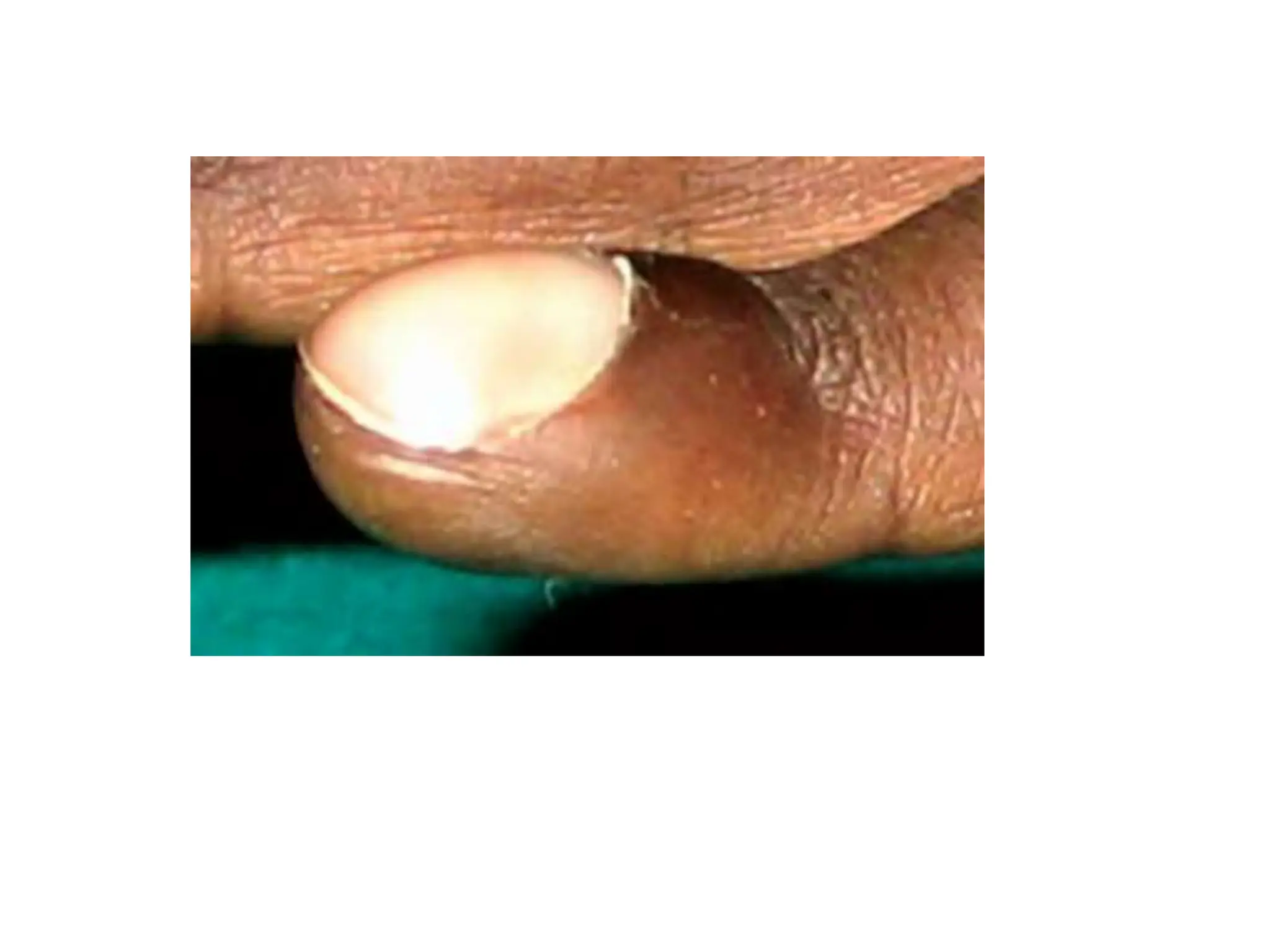
bulbous swelling of the terminal part of the
fingers and the toes with an increase in the
soft tissue mass and increased anteroposterior
,transverse diameter of the nail due to
proliferation of subungual connective tissue
,interstitial edema, and dilatation of arterioles
and capillaries
ANY OTHER NAME FOR CLUBBING …?
• Because it was hippocrates who first described
this clinical sign , clubbing is sometimes called
as hippocrates fingers
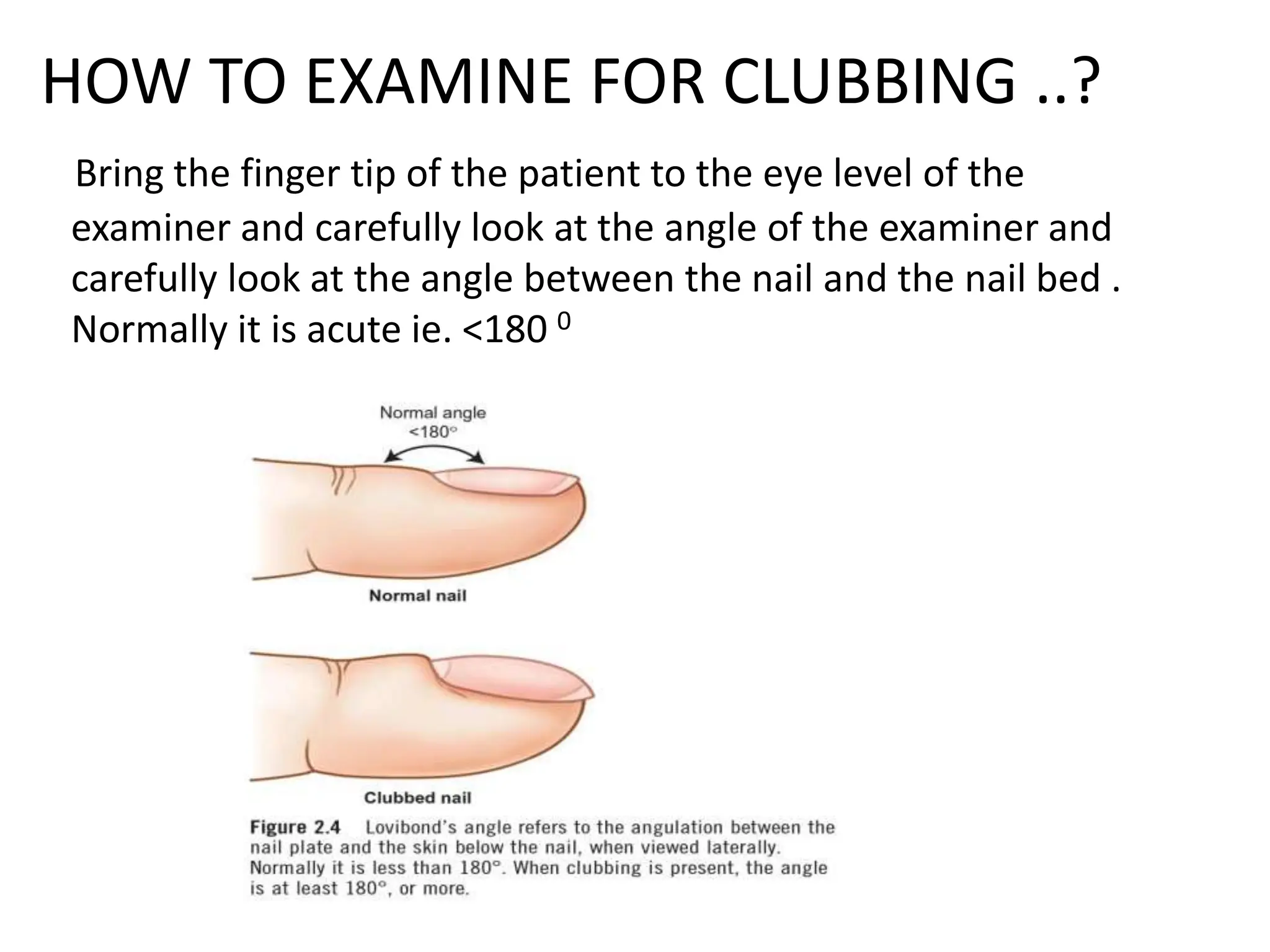
HOW TO EXAMINE FOR CLUBBING ..?
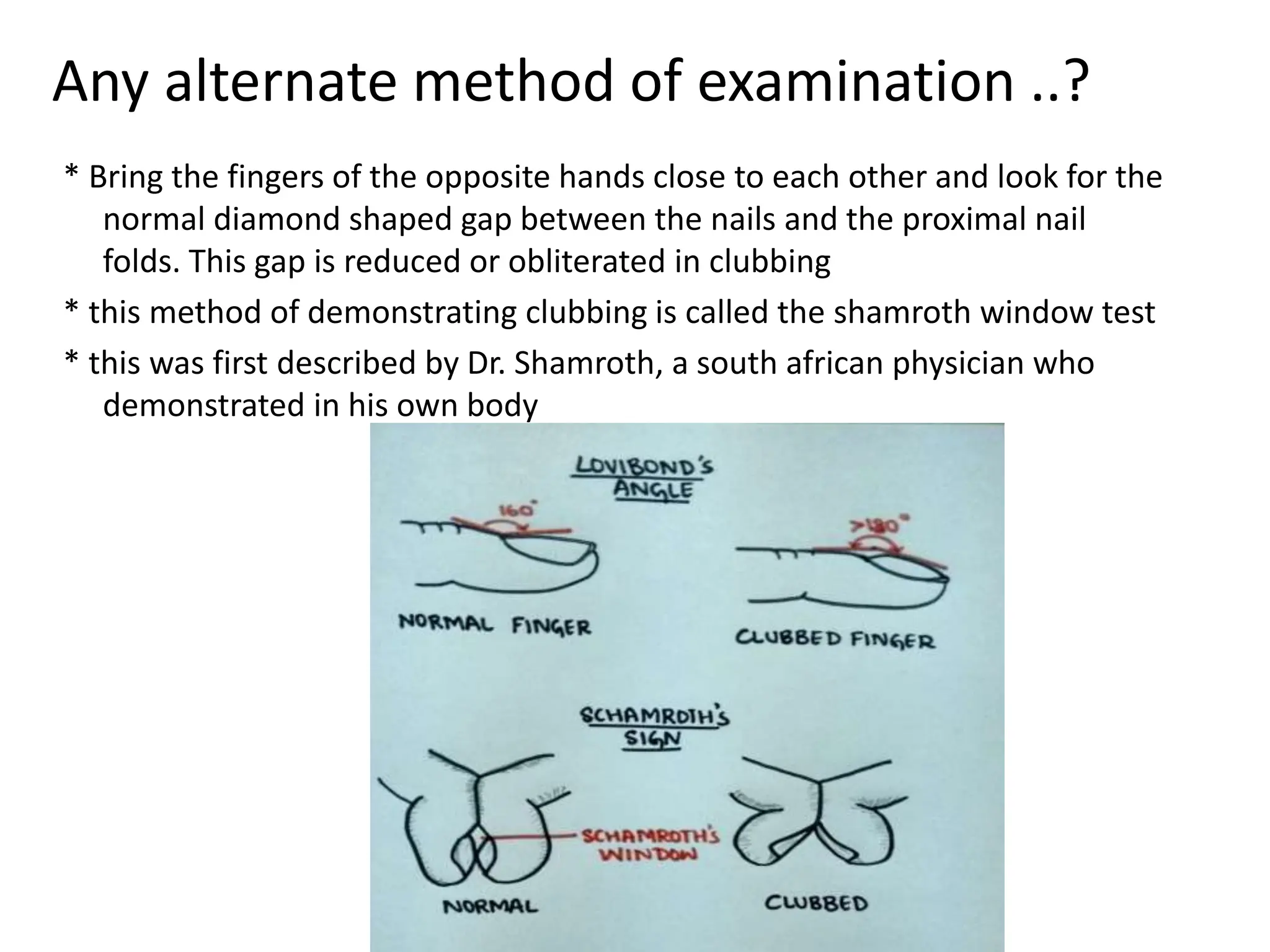
Bring the finger tip of the patient to the eye level of the
examiner and carefully look at the angle of the examiner and
carefully look at the angle between the nail and the nail bed .
Normally it is acute ie. <180 0
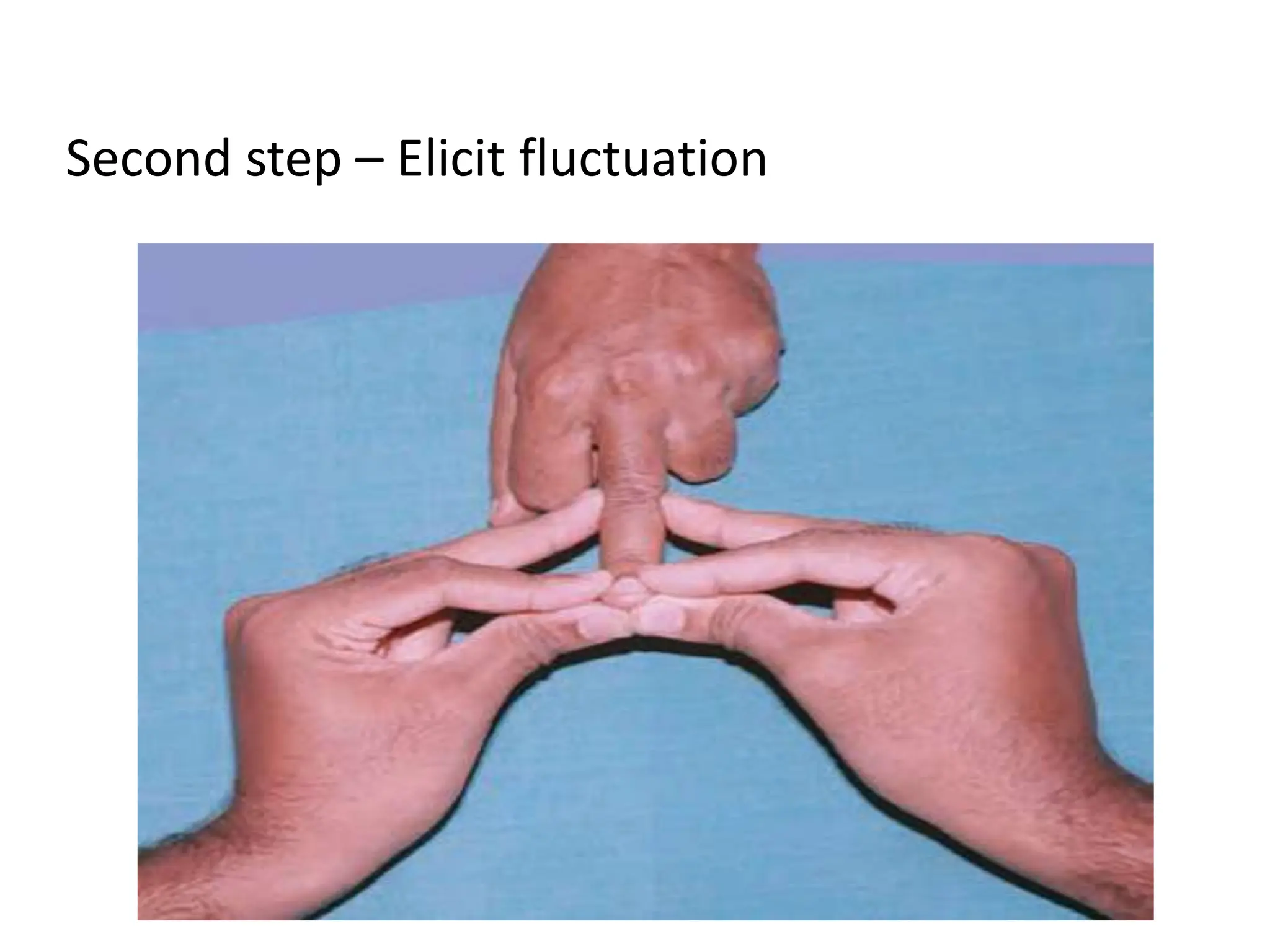
Second step – Elicit fluctuation
Any alternate method of examination ..?
* Bring the fingers of the opposite hands close to each other and look for the
normal diamond shaped gap between the nails and the proximal nail
folds. This gap is reduced or obliterated in clubbing
* this method of demonstrating clubbing is called the shamroth window test
* this was first described by Dr. Shamroth, a south african physician who
demonstrated in his own body
DIGITAL INDEX
• Objective measurment of clubbing
• Circumference at nail bed divided by
circumference of the distal interphalangeal
joint
• The individual ratio of 10 fingers are added
and devided by 10
• If >1 clubbing to be present
GRADING OF CLUBBING
• GRADE 1- increased fluctuation of nail bed with loss
of onychodermal angle
• GRADE 2- increase in AP and Transverse diameter of
the nails as well as nail become smooth and glossy
with loss of longitudinal ridge
• GRADE 3 - incresed pulp tissue, parrot
beak/drumstick
• GRADE 4 – wrist and ankle swelling due to
hypertrophic pulmonary osteoarthropathy
HYPERTROPHIC PULMONARY OSTEOARTHROPATHY
• Subperiosteal new bone formation at the lower end of radius,ulna,tibia
• Swelling ,Pain in wrist , ankle, elbow and knee
•Also other bones like ribs ,clavical,scapula may be affected
• Seen in Bronchogenic carcinoma(Squamous)
• Familial(Pachydermoperiostitis) or Idiopathic
MECHANISMS OF CLUBBNG
• Neurogenic-Vagal stimulation
• Humoral- GH,PTH,Estrogen,Bradykinin,PG
• Ferritin - Decreased
• Hypoxia-Persistent hypoxia causes opening of
deep AV fistula of the terminal phalanx
• Toxic-SBE
• Metabolic-Thyrotoxicosis
• PDGF-Released secondary to infection(latest and
most acceptable)
PULP TISSUE INCREASE DUE TO-
o Proliferation of subungual connective tissue
o Interstitial Oedema
o Dilatation of arterioles and capillaries or
Opening of anastomoting channels at nail bed
CAUSES OF CLUBBING
Cardiac causes
 Cyanotic congenital heart diseases like
 Fallot’s tetralogy
 SBE
 Atrial myxoma
 Primary pulmonary hypertension
 Eisenmenger’s syndrome
Lung and Pleural causes
a.Bronchogenic carcinoma (rare in adenocarcinoma)
b. Metastatic lung cancer
c. Suppurative lung disease
1. Bronchiectasis
2. Cystic fibrosis
3. Lung abscess
4. Empyema
d. Interstitial lung disease
e. Longstanding pulmonary tuberculosis
f. Chronic bronchitis
g. Mesothelioma
h. Neurogenic diaphragmatic tumour
i. Pulmonary AV malformation
j. Sarcoidosis
k. Fibrosing Alveolitis
Gastro Intestinal Causes-
oUlcerative colitis
oBiliary cirrhosis , Hepato cellular carcinoma
o Malabsorption syndrome,
oCrohns disease,
oPolyposis coli,
oCoeliac Disease
oGI malignancy
Miscellaneous
oSyphilis
oSyringomyelia
oAcromegaly
oThyrotoxicosis
oNormally in some people
oGenetic
PAINFUL CLUBBING-
Brochogenic Carcinoma
SBE
Lung abscess
REVERSIBLE CLUBBING
Lung abscess
Empyema Thoracis
UNILATERAL CLUBBING
Presubclavian coarctation of aorta
Bronchogenic carcinoma
Pancoast tumour
Cervical rib
Aneurysm of subclavian or Axillary artery
Hemiplegia
Erythromelalgia
Arteriovenous fistula of brachial vessels
UNIDIGITAL CLUBBING
Hereditary
Repeated local trauma
Median nerve injury or Deposition of
tophi
Sarcoidosis
CLUBBING LIMITED TO UPPER
EXTREMITY
Chronic obstructive phlebitis of upper extremity in
chronic IV drug user
CLUBBING LIMITED TO LOWER
EXTREMITY
Infective abdominal aortic aneurysm
PDA with reversal of shunt
ACUTE CLUBBING – Very rapidly as early as 10-
14 days after the onset of illness like Lung abscess
,Empyema thorasis
Subperiosteal bone resorption of terminal
phalanges
Seen in
Scleroderma
Acromegaly
Hyperparathyrodism
Leprosy
People working with vinyl chloride
Pseudoclubbing
Thank you

General physical examination CLUBBING.pptx

  • 1.
  • 2.
    DEFINITION bulbous swelling ofthe terminal part of the fingers and the toes with an increase in the soft tissue mass and increased anteroposterior ,transverse diameter of the nail due to proliferation of subungual connective tissue ,interstitial edema, and dilatation of arterioles and capillaries
  • 4.
    ANY OTHER NAMEFOR CLUBBING …? • Because it was hippocrates who first described this clinical sign , clubbing is sometimes called as hippocrates fingers
  • 5.
    HOW TO EXAMINEFOR CLUBBING ..? Bring the finger tip of the patient to the eye level of the examiner and carefully look at the angle of the examiner and carefully look at the angle between the nail and the nail bed . Normally it is acute ie. <180 0
  • 6.
    Second step –Elicit fluctuation
  • 7.
    Any alternate methodof examination ..? * Bring the fingers of the opposite hands close to each other and look for the normal diamond shaped gap between the nails and the proximal nail folds. This gap is reduced or obliterated in clubbing * this method of demonstrating clubbing is called the shamroth window test * this was first described by Dr. Shamroth, a south african physician who demonstrated in his own body
  • 8.
    DIGITAL INDEX • Objectivemeasurment of clubbing • Circumference at nail bed divided by circumference of the distal interphalangeal joint • The individual ratio of 10 fingers are added and devided by 10 • If >1 clubbing to be present
  • 9.
    GRADING OF CLUBBING •GRADE 1- increased fluctuation of nail bed with loss of onychodermal angle • GRADE 2- increase in AP and Transverse diameter of the nails as well as nail become smooth and glossy with loss of longitudinal ridge • GRADE 3 - incresed pulp tissue, parrot beak/drumstick • GRADE 4 – wrist and ankle swelling due to hypertrophic pulmonary osteoarthropathy
  • 10.
    HYPERTROPHIC PULMONARY OSTEOARTHROPATHY •Subperiosteal new bone formation at the lower end of radius,ulna,tibia • Swelling ,Pain in wrist , ankle, elbow and knee •Also other bones like ribs ,clavical,scapula may be affected • Seen in Bronchogenic carcinoma(Squamous) • Familial(Pachydermoperiostitis) or Idiopathic
  • 11.
    MECHANISMS OF CLUBBNG •Neurogenic-Vagal stimulation • Humoral- GH,PTH,Estrogen,Bradykinin,PG • Ferritin - Decreased • Hypoxia-Persistent hypoxia causes opening of deep AV fistula of the terminal phalanx • Toxic-SBE • Metabolic-Thyrotoxicosis • PDGF-Released secondary to infection(latest and most acceptable)
  • 12.
    PULP TISSUE INCREASEDUE TO- o Proliferation of subungual connective tissue o Interstitial Oedema o Dilatation of arterioles and capillaries or Opening of anastomoting channels at nail bed
  • 13.
    CAUSES OF CLUBBING Cardiaccauses  Cyanotic congenital heart diseases like  Fallot’s tetralogy  SBE  Atrial myxoma  Primary pulmonary hypertension  Eisenmenger’s syndrome
  • 14.
    Lung and Pleuralcauses a.Bronchogenic carcinoma (rare in adenocarcinoma) b. Metastatic lung cancer c. Suppurative lung disease 1. Bronchiectasis 2. Cystic fibrosis 3. Lung abscess 4. Empyema d. Interstitial lung disease e. Longstanding pulmonary tuberculosis f. Chronic bronchitis
  • 15.
    g. Mesothelioma h. Neurogenicdiaphragmatic tumour i. Pulmonary AV malformation j. Sarcoidosis k. Fibrosing Alveolitis
  • 16.
    Gastro Intestinal Causes- oUlcerativecolitis oBiliary cirrhosis , Hepato cellular carcinoma o Malabsorption syndrome, oCrohns disease, oPolyposis coli, oCoeliac Disease oGI malignancy
  • 17.
  • 18.
    PAINFUL CLUBBING- Brochogenic Carcinoma SBE Lungabscess REVERSIBLE CLUBBING Lung abscess Empyema Thoracis
  • 19.
    UNILATERAL CLUBBING Presubclavian coarctationof aorta Bronchogenic carcinoma Pancoast tumour Cervical rib Aneurysm of subclavian or Axillary artery Hemiplegia Erythromelalgia Arteriovenous fistula of brachial vessels
  • 20.
    UNIDIGITAL CLUBBING Hereditary Repeated localtrauma Median nerve injury or Deposition of tophi Sarcoidosis
  • 21.
    CLUBBING LIMITED TOUPPER EXTREMITY Chronic obstructive phlebitis of upper extremity in chronic IV drug user CLUBBING LIMITED TO LOWER EXTREMITY Infective abdominal aortic aneurysm PDA with reversal of shunt ACUTE CLUBBING – Very rapidly as early as 10- 14 days after the onset of illness like Lung abscess ,Empyema thorasis
  • 22.
    Subperiosteal bone resorptionof terminal phalanges Seen in Scleroderma Acromegaly Hyperparathyrodism Leprosy People working with vinyl chloride Pseudoclubbing
  • 23.