HIGH FLUX HEAT
TRANSFER IN
MICROCHANNELS
PRESENTED BY, GUIDED BY,
NEETHIN NANDAKUMAR DR.BINOY BABY
S7,ME-B HOD
ROLL NO-14 DEPT. OF MECH ENGG.
CONTENTS
1. HEAT EXCHANGERS
2. MICROCHANNEL COOLING
3. NEED FOR SMALLER CHANNELS
4. APPLICATIONS
5. CHANNEL DIMENSIONS
6. SINGLE PASS VS SPLIT FLOW
7. MANUFACTURING
8. COOLANTS USED
9. NANOFLUIDS
10. LIMITATIONS
11. CONCLUSIONS
12. REFERENCES
2
HEAT EXCHANGERS
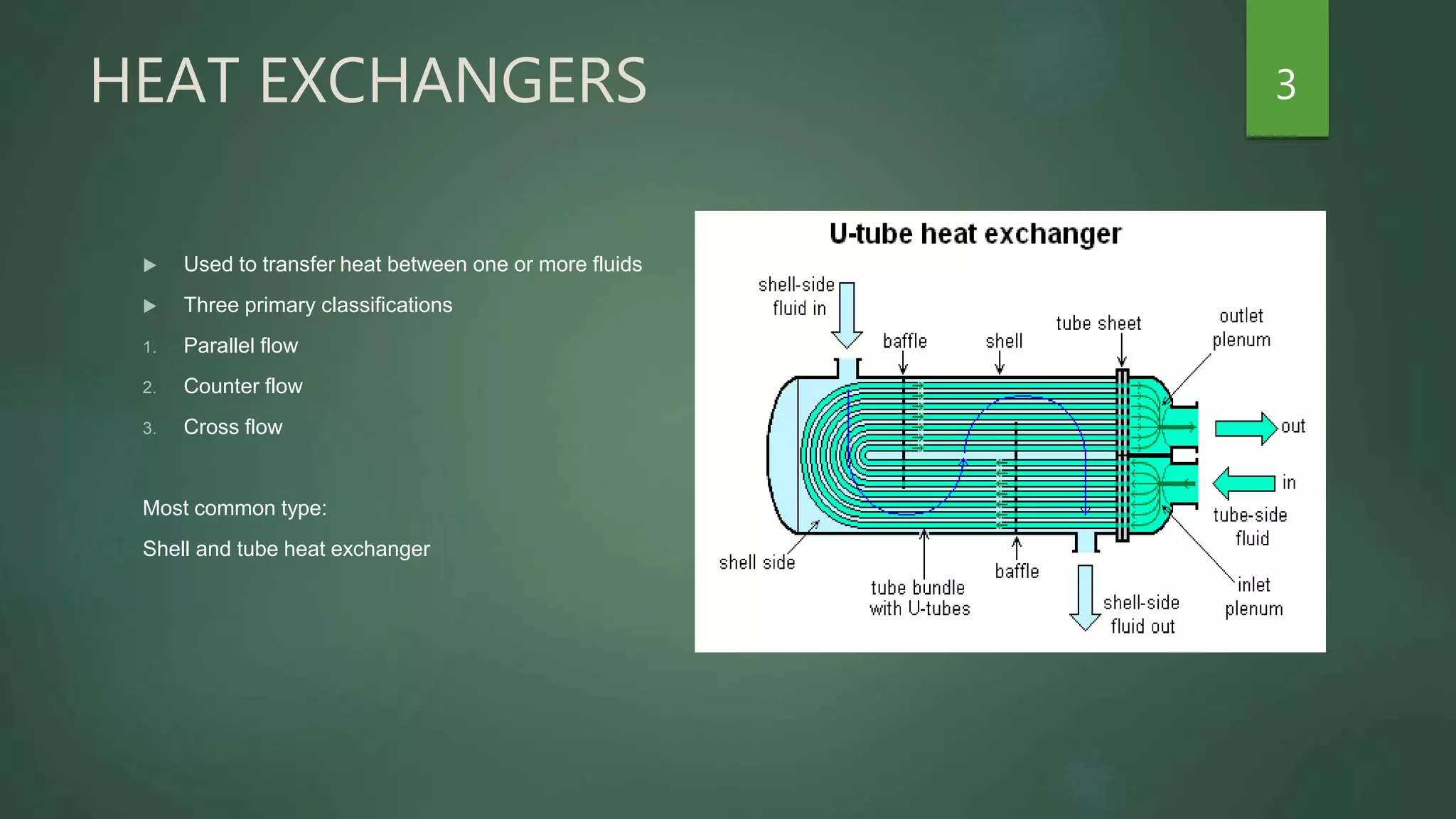
 Used to transfer heat between one or more fluids
 Three primary classifications
1. Parallel flow
2. Counter flow
3. Cross flow
Most common type:
Shell and tube heat exchanger
3
MICROCHANNEL COOLING
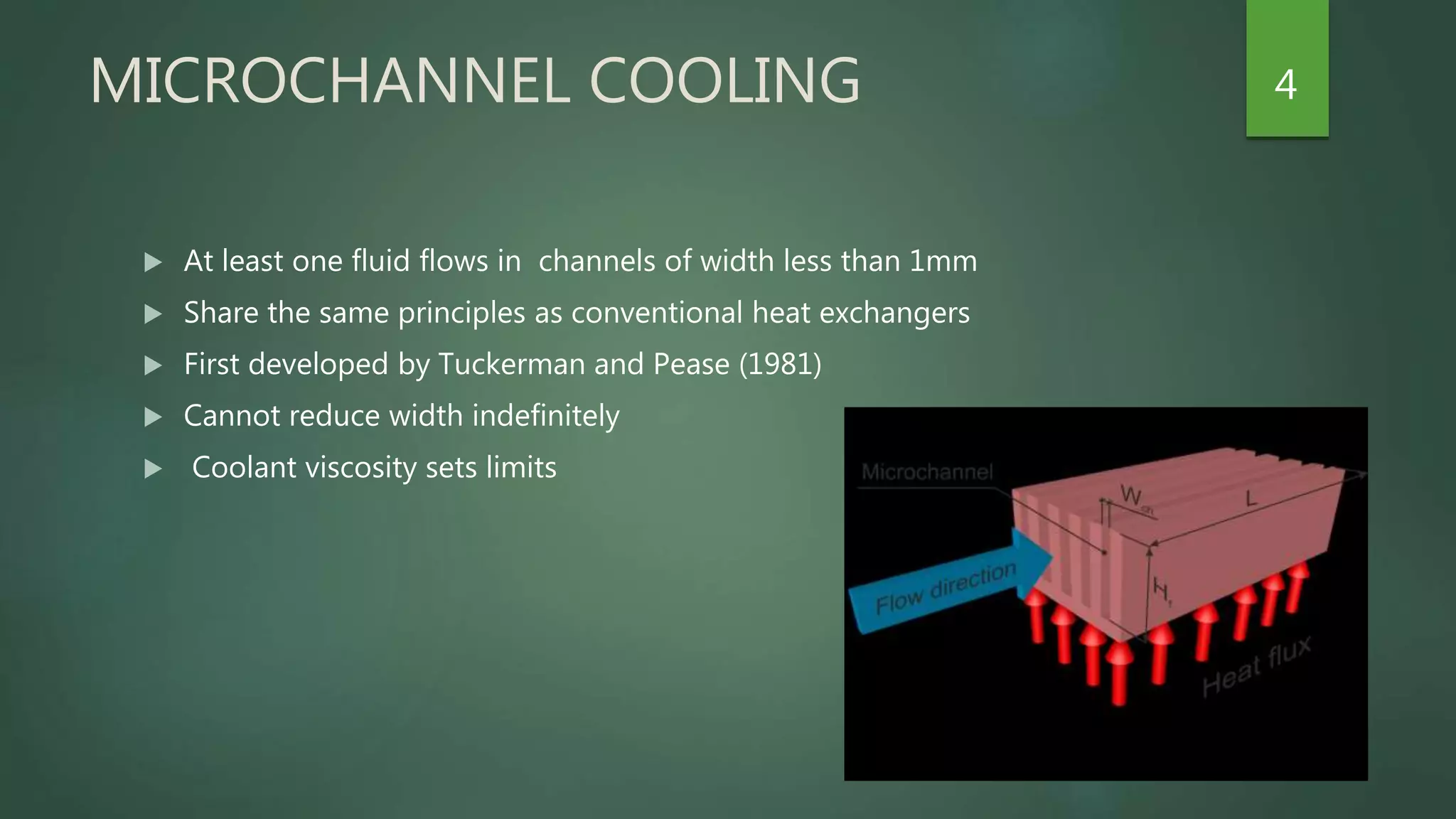
 At least one fluid flows in channels of width less than 1mm
 Share the same principles as conventional heat exchangers
 First developed by Tuckerman and Pease (1981)
 Cannot reduce width indefinitely
 Coolant viscosity sets limits
4
NEED FOR SMALLER CHANNELS
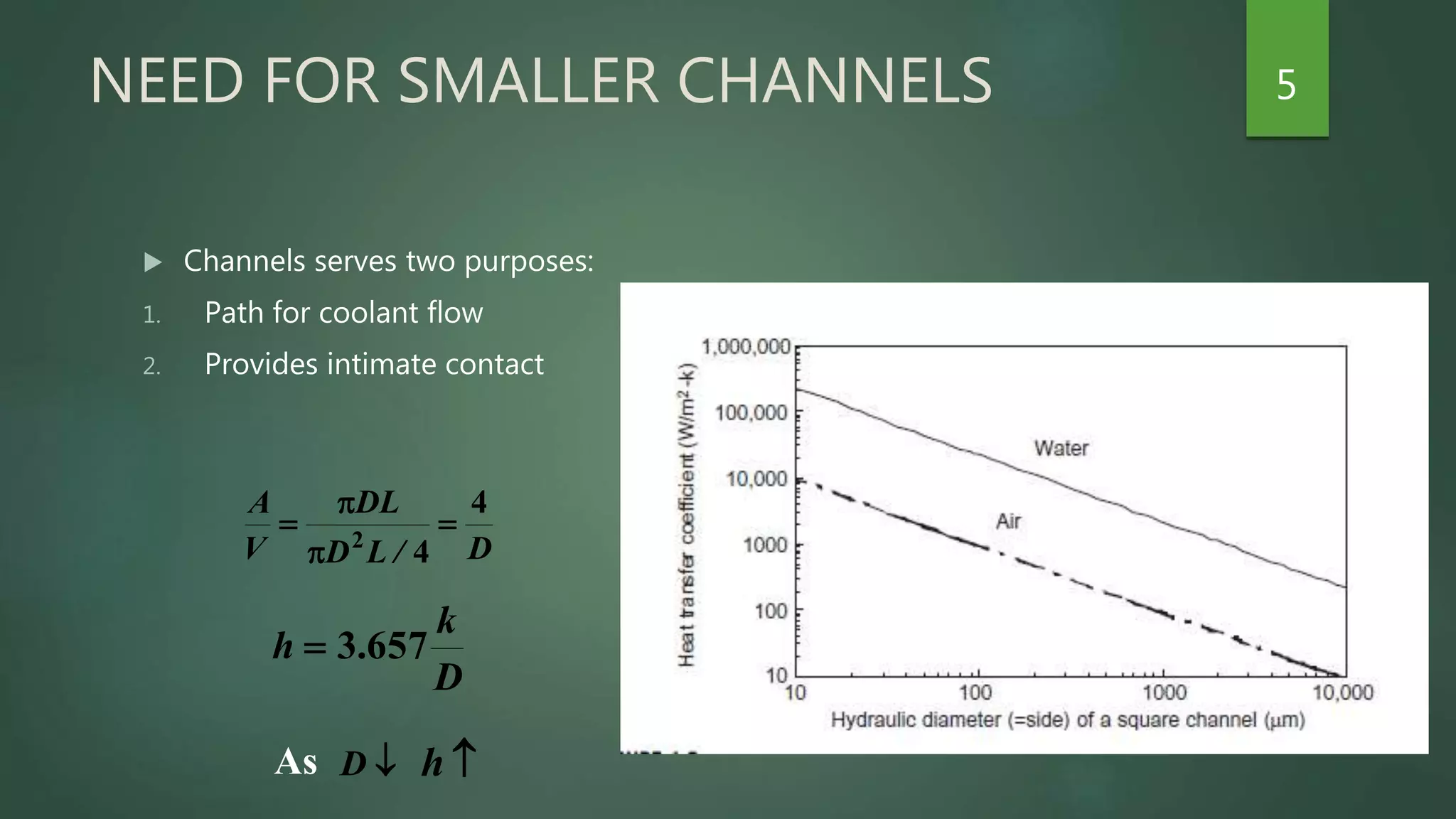
 Channels serves two purposes:
1. Path for coolant flow
2. Provides intimate contact
5
D/LD
DL
V
A 4
42




As D h
D
k
h 657.3
APPLICATIONS
 Major application is in cooling electronic equipments where area is of
essence
 Cryogenic industry is a major user due to high heat transfer
 Refrigeration industry
 High performance aircraft gas turbine engines
 Chemical reactors
6
CHANNEL DIMENSIONS
 Channel dimensions are chosen after taking into consider the following
factors:
1. Maximum allowable temperature of channel surface
2. Maximum coolant temp
3. Cost considerations
4. Maximum pressure drop
7
SINGLE PASS VS SPLIT FLOW
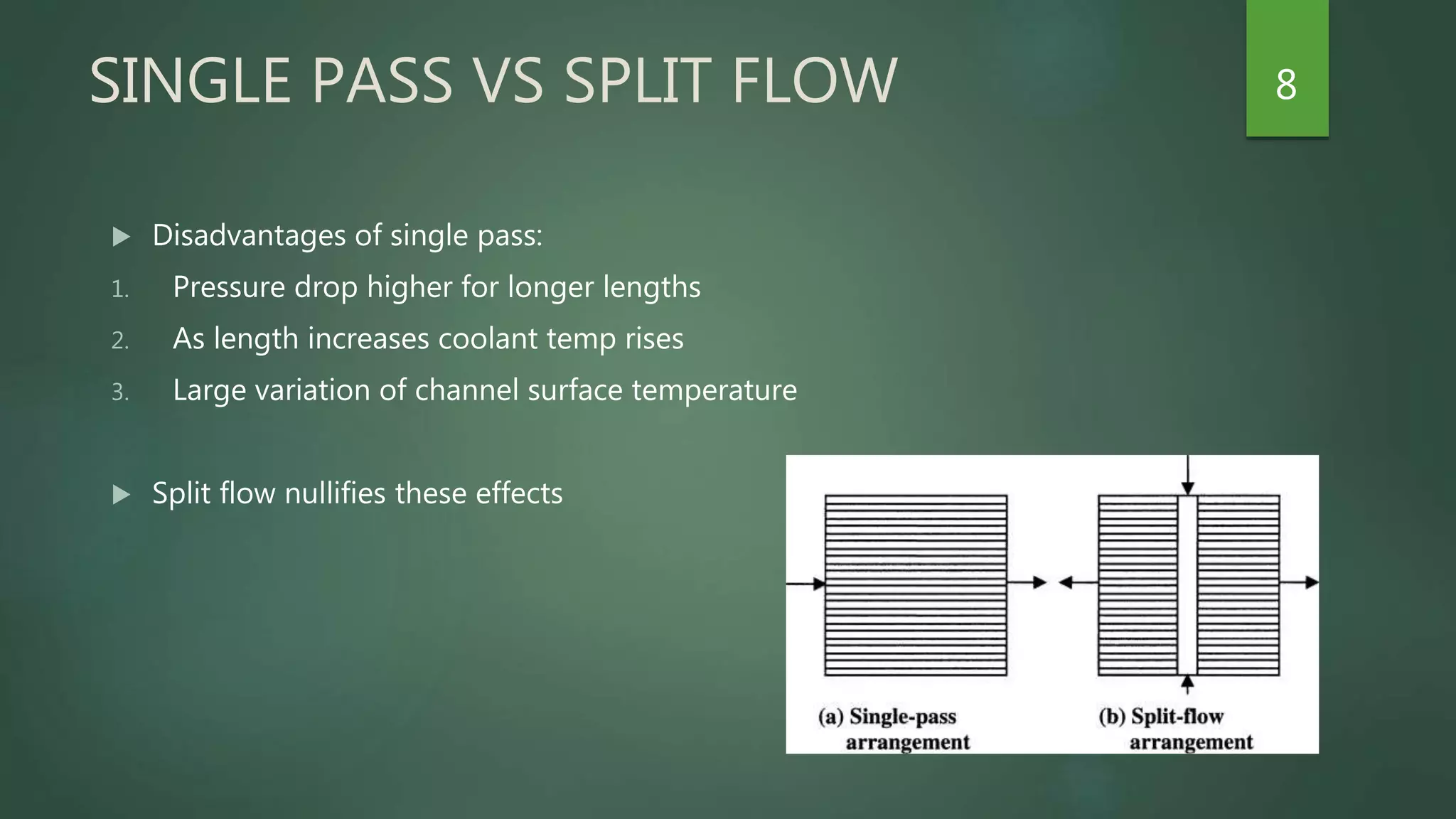
 Disadvantages of single pass:
1. Pressure drop higher for longer lengths
2. As length increases coolant temp rises
3. Large variation of channel surface temperature
 Split flow nullifies these effects
8
MANUFACTURING
 Traditional machining operations used initially.
 The last two decades have seen significant improvement in microscale
manufacturing technologies.
 Major technologies used are
1. Water jet cutting
2. Electrical discharge machining
3. Ultrasonic cutting
4. Steriolithography
9
GENERAL LAYOUT
 Mounted on part that need cooling.
 Coolant passed over the surface
 Coolant cooled in secondary heat exchanger
10
11
COOLANTS USED
 Conventionally used refrigerants in a microchannel are:
1. Air
2. Water
3. Refrigerant
 But none of these coolants are considered ideal to reach present
requirements
12
NANOFLUIDS
 Suspended metallic nanoparticles in traditional coolants
 High thermal conductivity increase heat transfer
 Other factors are:
1. Brownian motion
2. Nature of heat transfer in nanoparticles
13
14
LIMITATIONS
 Machining processes
 Pressure drop
 Deviation from continuum
 Boundary effects
15
CONCLUSIONS
 In microchannels the use of reduced sized channels lead to high heat flux
 The last two decades saw considerable increase in microchannel
technology
 Wide variety of processes available today for manufacture
 Different coolants used in microchannels were also analysed
 Microchannels have huge potential for further devolopment
16
REFERENCES
 Mohammed,H.A;Bhaskaran,G;Shuaib,N.H;and Saidur,R; Heat transfer and
fluid flow characteristics in microchannels heat exchanger using nanofluids:
A review; Renewable and Sustainable Energy Reviews;2010;P1502-1512
 Przemysław Smakulski;and Sławomir Pietrowicz; A review of the capabilities
of high heat flux removal by porous materials, microchannels and spray
cooling techniques; Applied Thermal Engineering,2016
 Muhammad-Umar Saeed;Bin-Bin Li;and Zhao-Feng Chen; Mechanical
effects of microchannels on fiber-reinforced composite structure;Journals
on Composite Structures;2016;P129-141
17

Heat transfer in microchannels

  • 1.
    HIGH FLUX HEAT TRANSFERIN MICROCHANNELS PRESENTED BY, GUIDED BY, NEETHIN NANDAKUMAR DR.BINOY BABY S7,ME-B HOD ROLL NO-14 DEPT. OF MECH ENGG.
  • 2.
    CONTENTS 1. HEAT EXCHANGERS 2.MICROCHANNEL COOLING 3. NEED FOR SMALLER CHANNELS 4. APPLICATIONS 5. CHANNEL DIMENSIONS 6. SINGLE PASS VS SPLIT FLOW 7. MANUFACTURING 8. COOLANTS USED 9. NANOFLUIDS 10. LIMITATIONS 11. CONCLUSIONS 12. REFERENCES 2
  • 3.
    HEAT EXCHANGERS  Usedto transfer heat between one or more fluids  Three primary classifications 1. Parallel flow 2. Counter flow 3. Cross flow Most common type: Shell and tube heat exchanger 3
  • 4.
    MICROCHANNEL COOLING  Atleast one fluid flows in channels of width less than 1mm  Share the same principles as conventional heat exchangers  First developed by Tuckerman and Pease (1981)  Cannot reduce width indefinitely  Coolant viscosity sets limits 4
  • 5.
    NEED FOR SMALLERCHANNELS  Channels serves two purposes: 1. Path for coolant flow 2. Provides intimate contact 5 D/LD DL V A 4 42     As D h D k h 657.3
  • 6.
    APPLICATIONS  Major applicationis in cooling electronic equipments where area is of essence  Cryogenic industry is a major user due to high heat transfer  Refrigeration industry  High performance aircraft gas turbine engines  Chemical reactors 6
  • 7.
    CHANNEL DIMENSIONS  Channeldimensions are chosen after taking into consider the following factors: 1. Maximum allowable temperature of channel surface 2. Maximum coolant temp 3. Cost considerations 4. Maximum pressure drop 7
  • 8.
    SINGLE PASS VSSPLIT FLOW  Disadvantages of single pass: 1. Pressure drop higher for longer lengths 2. As length increases coolant temp rises 3. Large variation of channel surface temperature  Split flow nullifies these effects 8
  • 9.
    MANUFACTURING  Traditional machiningoperations used initially.  The last two decades have seen significant improvement in microscale manufacturing technologies.  Major technologies used are 1. Water jet cutting 2. Electrical discharge machining 3. Ultrasonic cutting 4. Steriolithography 9
  • 10.
    GENERAL LAYOUT  Mountedon part that need cooling.  Coolant passed over the surface  Coolant cooled in secondary heat exchanger 10
  • 11.
  • 12.
    COOLANTS USED  Conventionallyused refrigerants in a microchannel are: 1. Air 2. Water 3. Refrigerant  But none of these coolants are considered ideal to reach present requirements 12
  • 13.
    NANOFLUIDS  Suspended metallicnanoparticles in traditional coolants  High thermal conductivity increase heat transfer  Other factors are: 1. Brownian motion 2. Nature of heat transfer in nanoparticles 13
  • 14.
  • 15.
    LIMITATIONS  Machining processes Pressure drop  Deviation from continuum  Boundary effects 15
  • 16.
    CONCLUSIONS  In microchannelsthe use of reduced sized channels lead to high heat flux  The last two decades saw considerable increase in microchannel technology  Wide variety of processes available today for manufacture  Different coolants used in microchannels were also analysed  Microchannels have huge potential for further devolopment 16
  • 17.
    REFERENCES  Mohammed,H.A;Bhaskaran,G;Shuaib,N.H;and Saidur,R;Heat transfer and fluid flow characteristics in microchannels heat exchanger using nanofluids: A review; Renewable and Sustainable Energy Reviews;2010;P1502-1512  Przemysław Smakulski;and Sławomir Pietrowicz; A review of the capabilities of high heat flux removal by porous materials, microchannels and spray cooling techniques; Applied Thermal Engineering,2016  Muhammad-Umar Saeed;Bin-Bin Li;and Zhao-Feng Chen; Mechanical effects of microchannels on fiber-reinforced composite structure;Journals on Composite Structures;2016;P129-141 17