
Heart Failure
Investigation And Management
By: Ismah Haron
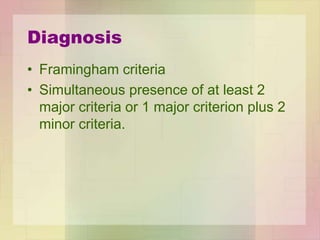
Diagnosis
• Framingham criteria
• Simultaneous presence of at least 2
major criteria or 1 major criterion plus 2
minor criteria.
Framingham criteria
 PND
 Acute pulmonary edema
 JVP
 Hepatojugular reflux
 S3 gallop
 Crackles in lung fields
 Cardiomegaly on CXR
 CVP (>160 cmH2O at RA)
 Weight loss >4.5 kg in 5
days in response to Rx of
HF
Major
 Nocturnal cough
 Dyspnea on ordinary
exertion
 Bilateral ankle edema
 Tachycardia (HR >120/min)
 Hepatomegaly
 Pleural effusion
 Decrease in vital capacity
by 1/3rd
Minor
Quiz
• For Framingham criteria:
simultaneous presence of at least …….
or …… plus ……..
ECG
• No specific changes
• AF
• Tachy / bradyarrhythmias
• Previous MI
• Cardiac ischemia
• Ventricular hypertrophy
Plasma BNP
• Secreted by ventricular myocardium
• Closely related to LV pressure
• Reflect myocyte stretch
• Highest in decompensated heart failure
• Diagnosis of HF if BNP >100ng/L
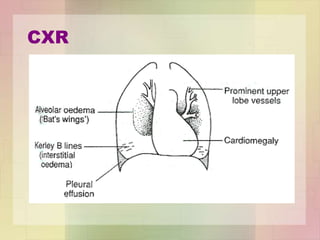
CXR
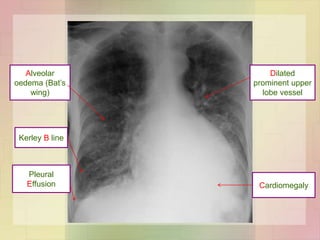
Alveolar
oedema (Bat’s
wing)
Kerley B line
Pleural
Effusion
Dilated
prominent upper
lobe vessel
Cardiomegaly
Echocardiogram
• Resting LV size and function
• Absence/presence of LV dysfunction
• To detect valvular disease, pericardial
or myocardial disease
Acute management
Sit the patient
upright
O2 100%
IV access and
monitor ECG.
Treat any
arrhythmias
Ix whilst
continuing
treatment
Diarmorphine
2.5 to 5mg IV
slowly.
Furosemide
40-80mg IV
slowly
GTN spray 2
puffs SL or 2 X
0.3mg tablets
SL
Necessary ix,
examination
and history
If BP
≥100mmHg,
start nitrate
infusion
If patient is worsening: further dose
of furosemide, ventilation or increase
nitrate infusion. Alternatively,
venesect 500mL blood
If SBP
<100mmHg treat
as cardiogenic
shock
Management outline
• Confirm diagnosis
• Ascertain the severity of symptoms and
presenting features
• Determine the etiology of HF
• Identify the exacerbating factors and any
concomitant illness
• Estimate prognosis
• Anticipate complications
• Counsel patient and relatives
• Choose appropriate management
• Monitor progress and manage accordingly
Chronic management
• Change in lifestyle: smoking. Salty
foods. Weight and nutrition.
• Treat the cause
• Treat exacerbating factors
• Avoid exacerbating factors
• Drugs
Quiz
Following is/are true regarding heart failure:
A. Framingham criteria can be used to diagnose
HF
B. Hepatomegaly is the major point in Framingham
criteria
C. CXR in HF will shows dilated prominent lower
lobe vessels
D. The higher the BNP, the lower the
cardiovascular mortality
E. Usage of Digoxin is absolutely contraindicated
in heart failure
References
• Oxford Handbook of Clinical Medicine
• Oxford American Handbook of
Cardiology
THANK YOU.
Continue with last presenter

Heart failure

  • 1.
    Heart Failure Investigation AndManagement By: Ismah Haron
  • 2.
    Diagnosis • Framingham criteria •Simultaneous presence of at least 2 major criteria or 1 major criterion plus 2 minor criteria.
  • 3.
    Framingham criteria  PND Acute pulmonary edema  JVP  Hepatojugular reflux  S3 gallop  Crackles in lung fields  Cardiomegaly on CXR  CVP (>160 cmH2O at RA)  Weight loss >4.5 kg in 5 days in response to Rx of HF Major  Nocturnal cough  Dyspnea on ordinary exertion  Bilateral ankle edema  Tachycardia (HR >120/min)  Hepatomegaly  Pleural effusion  Decrease in vital capacity by 1/3rd Minor
  • 4.
    Quiz • For Framinghamcriteria: simultaneous presence of at least ……. or …… plus ……..
  • 6.
    ECG • No specificchanges • AF • Tachy / bradyarrhythmias • Previous MI • Cardiac ischemia • Ventricular hypertrophy
  • 7.
    Plasma BNP • Secretedby ventricular myocardium • Closely related to LV pressure • Reflect myocyte stretch • Highest in decompensated heart failure • Diagnosis of HF if BNP >100ng/L
  • 8.
  • 9.
    Alveolar oedema (Bat’s wing) Kerley Bline Pleural Effusion Dilated prominent upper lobe vessel Cardiomegaly
  • 11.
    Echocardiogram • Resting LVsize and function • Absence/presence of LV dysfunction • To detect valvular disease, pericardial or myocardial disease
  • 13.
    Acute management Sit thepatient upright O2 100% IV access and monitor ECG. Treat any arrhythmias Ix whilst continuing treatment Diarmorphine 2.5 to 5mg IV slowly. Furosemide 40-80mg IV slowly GTN spray 2 puffs SL or 2 X 0.3mg tablets SL Necessary ix, examination and history If BP ≥100mmHg, start nitrate infusion If patient is worsening: further dose of furosemide, ventilation or increase nitrate infusion. Alternatively, venesect 500mL blood If SBP <100mmHg treat as cardiogenic shock
  • 14.
    Management outline • Confirmdiagnosis • Ascertain the severity of symptoms and presenting features • Determine the etiology of HF • Identify the exacerbating factors and any concomitant illness • Estimate prognosis • Anticipate complications • Counsel patient and relatives • Choose appropriate management • Monitor progress and manage accordingly
  • 15.
    Chronic management • Changein lifestyle: smoking. Salty foods. Weight and nutrition. • Treat the cause • Treat exacerbating factors • Avoid exacerbating factors • Drugs
  • 17.
    Quiz Following is/are trueregarding heart failure: A. Framingham criteria can be used to diagnose HF B. Hepatomegaly is the major point in Framingham criteria C. CXR in HF will shows dilated prominent lower lobe vessels D. The higher the BNP, the lower the cardiovascular mortality E. Usage of Digoxin is absolutely contraindicated in heart failure
  • 18.
    References • Oxford Handbookof Clinical Medicine • Oxford American Handbook of Cardiology
  • 19.

Editor's Notes

  • #2 Aim of ix: support diagnosis + exclude ddfx. Monitoring and rx?
  • #3 Diagnosis: symptoms, signs & ix http://en.wikipedia.org/wiki/Framingham_Heart_Study
  • #4 The Framingham Heart Study criteria are 100% sensitive and 78% specific Minor criteria are acceptable only if they can not be attributed to another medical condition (such as pulmonary hypertension, chronic lung disease, cirrhosis, ascites, or the nephrotic syndrome). Normal JVP:≤4cm Vital capacity in spirometry?
  • #6 Plus TFT
  • #9 CXR: A(alveolar damage: Bat’s wings) B(Kerley B lines: interstitial edema) C(Cardiomegaly) D(dilated prominent upper lobe vessels) E(pleural effusion)
  • #10 CXR: A(alveolar damage: Bat’s wings) B(Kerley B lines: interstitial edema) C(Cardiomegaly) D(dilated prominent upper lobe vessels) E(pleural effusion)
  • #13 Transesophageal echocardiography (TEE/TOE)
  • #15 Aims of rx: Control HF and prevent illness induce HF aka treat the cause? Maintenance or improvement in quality of life Increased duration of life
  • #16 Cause: dysrhythmias, valve disease TEF: anemia, thyroid disease, infection, HPT AEF: NSAIDs (causing fluid retention), verapamil (-ve inotrope; less contraction?)
  • #17 Diuretic: loop and spironolactone Vasodilators Treat cause Palliative care?
  • #18 T F F F F