Hearing Sound 
by Denise Carroll
What do you hear? 
 Did you hear something? Maybe the sound 
you heard was as quiet as your cat licking 
her paws. Or maybe it was loud, like a 
siren going by. 
 Sounds are everywhere, and you have two 
cool parts on your body that let you hear 
them all: your ears! 
 No matter where we go, sound waves are 
all around us.
Sounds 
Close your eyes and listen to these sounds. 
Click 
Click 
Click 
Click 
Click 
Click
What is sound? 
 Sound is a form of energy that can be 
heard and travels in waves. 
 When matter vibrates or moves back and 
forth very quickly, a sound is made. 
 Sound waves can travel through solids, 
liquids, or gases. 
 Example: When a school bell rings, 
parts of the bell will vibrate creating 
sound.
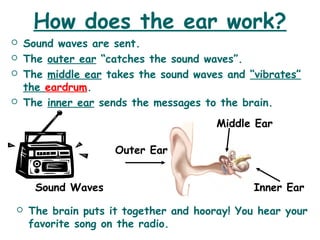
How does the ear work? 
 Sound waves are sent. 
 The outer ear “catches the sound waves”. 
 The middle ear takes the sound waves and “vibrates” 
the eardrum. 
 The inner ear sends the messages to the brain. 
Sound Waves 
Middle Ear 
Inner Ear 
Outer Ear 
 The brain puts it together and hooray! You hear your 
favorite song on the radio.
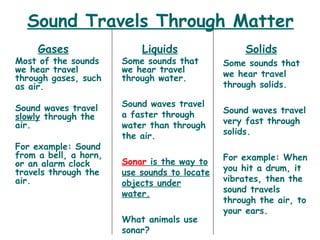
Sound Travels 
 Sound travels in waves. 
 Sound must travel through matter to 
be heard. 
 Remember: Matter can be a solid, a 
liquid, or a gas. 
 A sound is made when things vibrate. 
 Sound travels by sending vibrations 
through matter.
Sound Travels Through Matter 
Gases 
Liquids 
Most of the sounds 
Some sounds that 
we hear travel 
we hear travel 
through gases, such 
through water. 
as air. 
Sound waves travel 
Sound waves travel 
slowly through the 
a faster through 
air. 
water than through 
the air. 
For example: Sound 
from a bell, a horn, 
or an alarm clock 
travels through the 
air. 
Sonar is the way to 
use sounds to locate 
objects under 
water. 
What animals use 
sonar? 
Solids 
Some sounds that 
we hear travel 
through solids. 
Sound waves travel 
very fast through 
solids. 
For example: When 
you hit a drum, it 
vibrates, then the 
sound travels 
through the air, to 
your ears.
Sound makes the air vibrate. 
 For sound to be heard, sound 
vibrations must have air or some other 
kind of matter to travel through. 
 You cannot hear sound in outer space 
because there is no air or other 
matter to carry sound vibrations. 
How do you think astronauts are 
able to talk each other in outer 
space?
Sound can also be blocked. 
THINK: 
Why do some people wear ear 
coverings?
Cover your ears! 
 Some people who work near loud 
machines wear ear coverings. 
 The coverings block some of the sound 
vibrations from reaching the ears. 
 The ear coverings protect your ears 
from the noise. 
 Have you ever covered your ears? 
Why?
Audiologist 
 An audiologist is a person who tests 
people’s hearing. 
 They use special machines that make 
sounds. 
 They also help people who do not 
hear well. 
 Have you had your hearing tested?
How You Make Sounds 
 We use our vocal cords to make 
sounds in our throat. 
 When we speak, our vocal cords 
vibrate. 
 Place your hand on your throat when 
you talk, and you can feel the vocal 
cords vibrate.
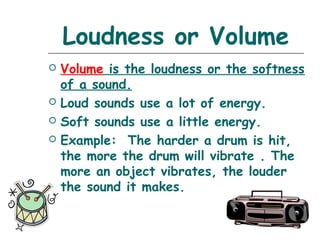
Loudness or Volume 
 Volume is the loudness or the softness 
of a sound. 
 Loud sounds use a lot of energy. 
 Soft sounds use a little energy. 
 Example: The harder a drum is hit, 
the more the drum will vibrate . The 
more an object vibrates, the louder 
the sound it makes.
Pitch 
 Pitch is the highest or lowest sound 
an object makes. 
 Objects that vibrate slowly, make a 
low pitch. Example-drum. 
 Objects that vibrate quickly, make a 
higher pitch. Example-recorder
Music 
 Music is a combination or sequences of 
sounds that people enjoy listening to. 
 Musical instruments make different 
sounds by plucking the strings. 
 The shorter the string, the quicker it 
vibrates producing a high sound. 
 The longer the string, the slower it 
vibrates producing a low sound.
Let’s Review 
 Sound is a kind of energy that can be 
heard. 
 A sound is made when things vibrate. 
 The vibrating object makes the air around 
it vibrate. 
 Sound vibrations move through the air into 
your ears and make the eardrums vibrate. 
 Volume is how loud or soft a sound is. 
 Pitch is how high or low a sound is.
Congratulations! 
You have learned how sound 
travels. 
Three Cheers for the Ears!
Resources 
 http://images.search.yahoo.com 
 http://office.microsoft.com/clipart

Hearing sound.pptab.pptccc

  • 1.
    Hearing Sound byDenise Carroll
  • 2.
    What do youhear?  Did you hear something? Maybe the sound you heard was as quiet as your cat licking her paws. Or maybe it was loud, like a siren going by.  Sounds are everywhere, and you have two cool parts on your body that let you hear them all: your ears!  No matter where we go, sound waves are all around us.
  • 3.
    Sounds Close youreyes and listen to these sounds. Click Click Click Click Click Click
  • 4.
    What is sound?  Sound is a form of energy that can be heard and travels in waves.  When matter vibrates or moves back and forth very quickly, a sound is made.  Sound waves can travel through solids, liquids, or gases.  Example: When a school bell rings, parts of the bell will vibrate creating sound.
  • 5.
    How does theear work?  Sound waves are sent.  The outer ear “catches the sound waves”.  The middle ear takes the sound waves and “vibrates” the eardrum.  The inner ear sends the messages to the brain. Sound Waves Middle Ear Inner Ear Outer Ear  The brain puts it together and hooray! You hear your favorite song on the radio.
  • 6.
    Sound Travels Sound travels in waves.  Sound must travel through matter to be heard.  Remember: Matter can be a solid, a liquid, or a gas.  A sound is made when things vibrate.  Sound travels by sending vibrations through matter.
  • 7.
    Sound Travels ThroughMatter Gases Liquids Most of the sounds Some sounds that we hear travel we hear travel through gases, such through water. as air. Sound waves travel Sound waves travel slowly through the a faster through air. water than through the air. For example: Sound from a bell, a horn, or an alarm clock travels through the air. Sonar is the way to use sounds to locate objects under water. What animals use sonar? Solids Some sounds that we hear travel through solids. Sound waves travel very fast through solids. For example: When you hit a drum, it vibrates, then the sound travels through the air, to your ears.
  • 8.
    Sound makes theair vibrate.  For sound to be heard, sound vibrations must have air or some other kind of matter to travel through.  You cannot hear sound in outer space because there is no air or other matter to carry sound vibrations. How do you think astronauts are able to talk each other in outer space?
  • 9.
    Sound can alsobe blocked. THINK: Why do some people wear ear coverings?
  • 10.
    Cover your ears!  Some people who work near loud machines wear ear coverings.  The coverings block some of the sound vibrations from reaching the ears.  The ear coverings protect your ears from the noise.  Have you ever covered your ears? Why?
  • 11.
    Audiologist  Anaudiologist is a person who tests people’s hearing.  They use special machines that make sounds.  They also help people who do not hear well.  Have you had your hearing tested?
  • 12.
    How You MakeSounds  We use our vocal cords to make sounds in our throat.  When we speak, our vocal cords vibrate.  Place your hand on your throat when you talk, and you can feel the vocal cords vibrate.
  • 13.
    Loudness or Volume  Volume is the loudness or the softness of a sound.  Loud sounds use a lot of energy.  Soft sounds use a little energy.  Example: The harder a drum is hit, the more the drum will vibrate . The more an object vibrates, the louder the sound it makes.
  • 14.
    Pitch  Pitchis the highest or lowest sound an object makes.  Objects that vibrate slowly, make a low pitch. Example-drum.  Objects that vibrate quickly, make a higher pitch. Example-recorder
  • 15.
    Music  Musicis a combination or sequences of sounds that people enjoy listening to.  Musical instruments make different sounds by plucking the strings.  The shorter the string, the quicker it vibrates producing a high sound.  The longer the string, the slower it vibrates producing a low sound.
  • 16.
    Let’s Review Sound is a kind of energy that can be heard.  A sound is made when things vibrate.  The vibrating object makes the air around it vibrate.  Sound vibrations move through the air into your ears and make the eardrums vibrate.  Volume is how loud or soft a sound is.  Pitch is how high or low a sound is.
  • 17.
    Congratulations! You havelearned how sound travels. Three Cheers for the Ears!
  • 18.
    Resources  http://images.search.yahoo.com  http://office.microsoft.com/clipart