Anatomy and
Composition of
the Brain
Lopez, Renalyn
Lu, Chrislamia
Brain
– Most complex organ in the body
– Allows us to think, have emotions, and dream
– Weights about 3 pounds
– Made up of about 100 billion neurons
– Covered by the protective called meninges
– Housed in the skull
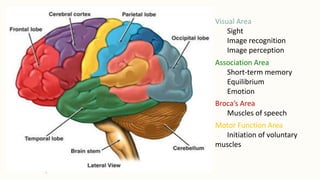
Visual Area
Sight
Image recognition
Image perception
Association Area
Short-term memory
Equilibrium
Emotion
Motor Function Area
Initiation of voluntary
muscles
Broca’s Area
Muscles of speech
Somatosensory Association
Area
Evaluation of weight,
texture, temperature, etc.,
for object recognition
Wernicke’s Area
Written and spoken
language
comprehension
Auditory Area
Hearing
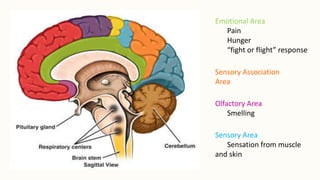
Emotional Area
Pain
Hunger
“fight or flight” response
Sensory Association
Area
Olfactory Area
Smelling
Sensory Area
Sensation from muscle
and skin
Pituitary Gland
- Releases hormones
(Growth hormone, Anti-diuretic
hormone, Gonadotropins)
Brain Stem
- Where spinal cord
connects with the rest of the brain
- Controls breathing,
regulates reflexes, maintains
upright posture
- Controls autonomic
functions, acts as relay station for
nerve signals
Higher Mental Functions
Concentration, planning,
judgment
Emotional expression
Creativity, inhibition
Cerebellum
Coordination of
movements
Balance and Equilibrium
Posture
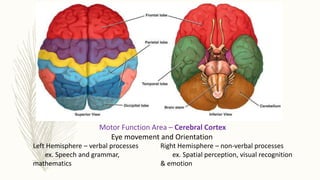
Motor Function Area – Cerebral Cortex
Eye movement and Orientation
Left Hemisphere – verbal processes
ex. Speech and grammar,
mathematics
Right Hemisphere – non-verbal processes
ex. Spatial perception, visual recognition
& emotion
“Right and Left Handedness:
Biological or Genetic?” - Clare Porac,
a professor of psychology at
Pennsylvania State University
Source:
http://www.scientificamerican.com/article/what-
causes-some-people-t/
Reference:
Genaral Psychology (Psych 111)
(Woorkbook)
Brain images are hosted by:
www.basicknowledge.com
Brain related facts from:
http://www.factslides.com/s-
Brain#

Brain anatomy and Composition (CADev't)

  • 1.
    Anatomy and Composition of theBrain Lopez, Renalyn Lu, Chrislamia
  • 2.
    Brain – Most complexorgan in the body – Allows us to think, have emotions, and dream – Weights about 3 pounds – Made up of about 100 billion neurons – Covered by the protective called meninges – Housed in the skull
  • 3.
    Visual Area Sight Image recognition Imageperception Association Area Short-term memory Equilibrium Emotion Motor Function Area Initiation of voluntary muscles Broca’s Area Muscles of speech
  • 4.
    Somatosensory Association Area Evaluation ofweight, texture, temperature, etc., for object recognition Wernicke’s Area Written and spoken language comprehension Auditory Area Hearing
  • 5.
    Emotional Area Pain Hunger “fight orflight” response Sensory Association Area Olfactory Area Smelling Sensory Area Sensation from muscle and skin
  • 6.
    Pituitary Gland - Releaseshormones (Growth hormone, Anti-diuretic hormone, Gonadotropins) Brain Stem - Where spinal cord connects with the rest of the brain - Controls breathing, regulates reflexes, maintains upright posture - Controls autonomic functions, acts as relay station for nerve signals
  • 7.
    Higher Mental Functions Concentration,planning, judgment Emotional expression Creativity, inhibition Cerebellum Coordination of movements Balance and Equilibrium Posture
  • 8.
    Motor Function Area– Cerebral Cortex Eye movement and Orientation Left Hemisphere – verbal processes ex. Speech and grammar, mathematics Right Hemisphere – non-verbal processes ex. Spatial perception, visual recognition & emotion
  • 9.
    “Right and LeftHandedness: Biological or Genetic?” - Clare Porac, a professor of psychology at Pennsylvania State University Source: http://www.scientificamerican.com/article/what- causes-some-people-t/
  • 10.
    Reference: Genaral Psychology (Psych111) (Woorkbook) Brain images are hosted by: www.basicknowledge.com Brain related facts from: http://www.factslides.com/s- Brain#