Dr. Mangesh Pawale
25th SILVER JUBALI BATCH,
CLI,SION,MUMBAI.
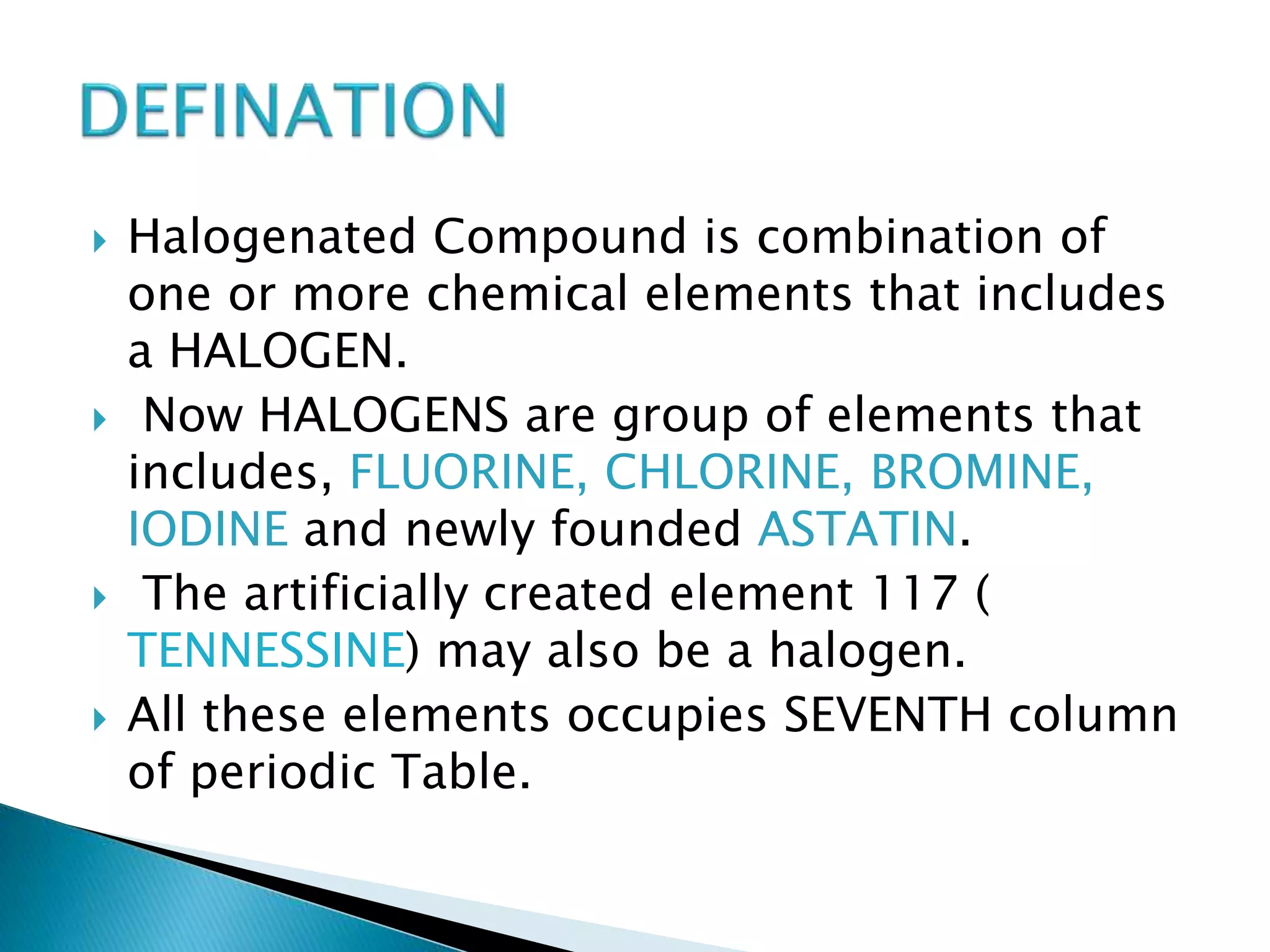
 Halogenated Compound is combination of
one or more chemical elements that includes
a HALOGEN.
 Now HALOGENS are group of elements that
includes, FLUORINE, CHLORINE, BROMINE,
IODINE and newly founded ASTATIN.
 The artificially created element 117 (
TENNESSINE) may also be a halogen.
 All these elements occupies SEVENTH column
of periodic Table.
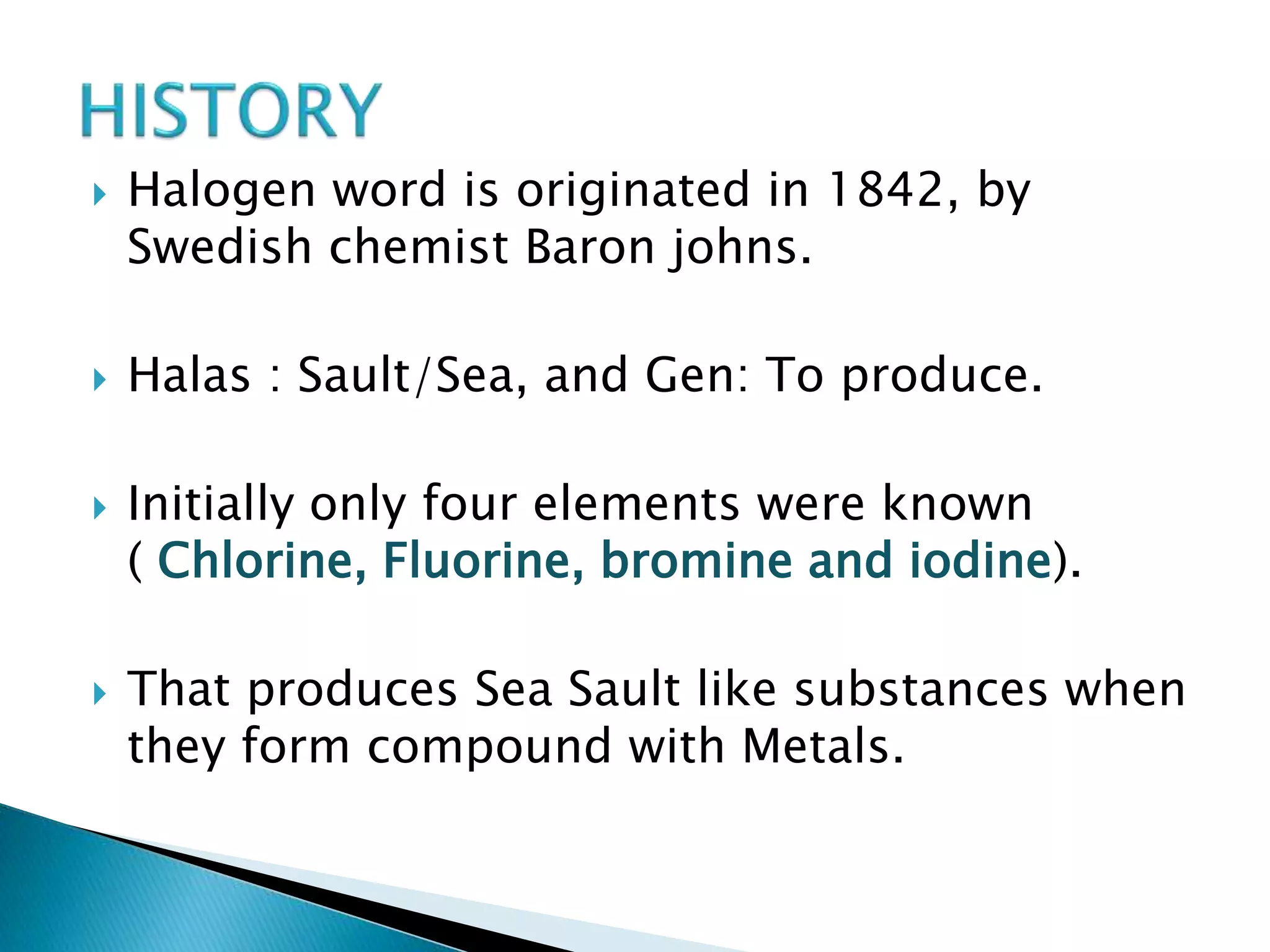
 Halogen word is originated in 1842, by
Swedish chemist Baron johns.
 Halas : Sault/Sea, and Gen: To produce.
 Initially only four elements were known
( Chlorine, Fluorine, bromine and iodine).
 That produces Sea Sault like substances when
they form compound with Metals.
 Fluorspar , a Fluorine mineral known since
1952.
 Hydrochloric acid was known to early
chemists and the alchemist , however
elemental Chlorine was not produced until
1774.
 Chlorine was used as poison gas in world war
first.
 Bromine was discovered in 1820.By Antonio
Balard.
 Iodine was discovered by Bernard Cartois, he
was using seaweed ash as a part of saltpeter
manufacture.
 Halogens are highly reactive compounds
because of there high electro negativity.
 That is why they can be harmful or lethal to
Biological organism in sufficient quantity.
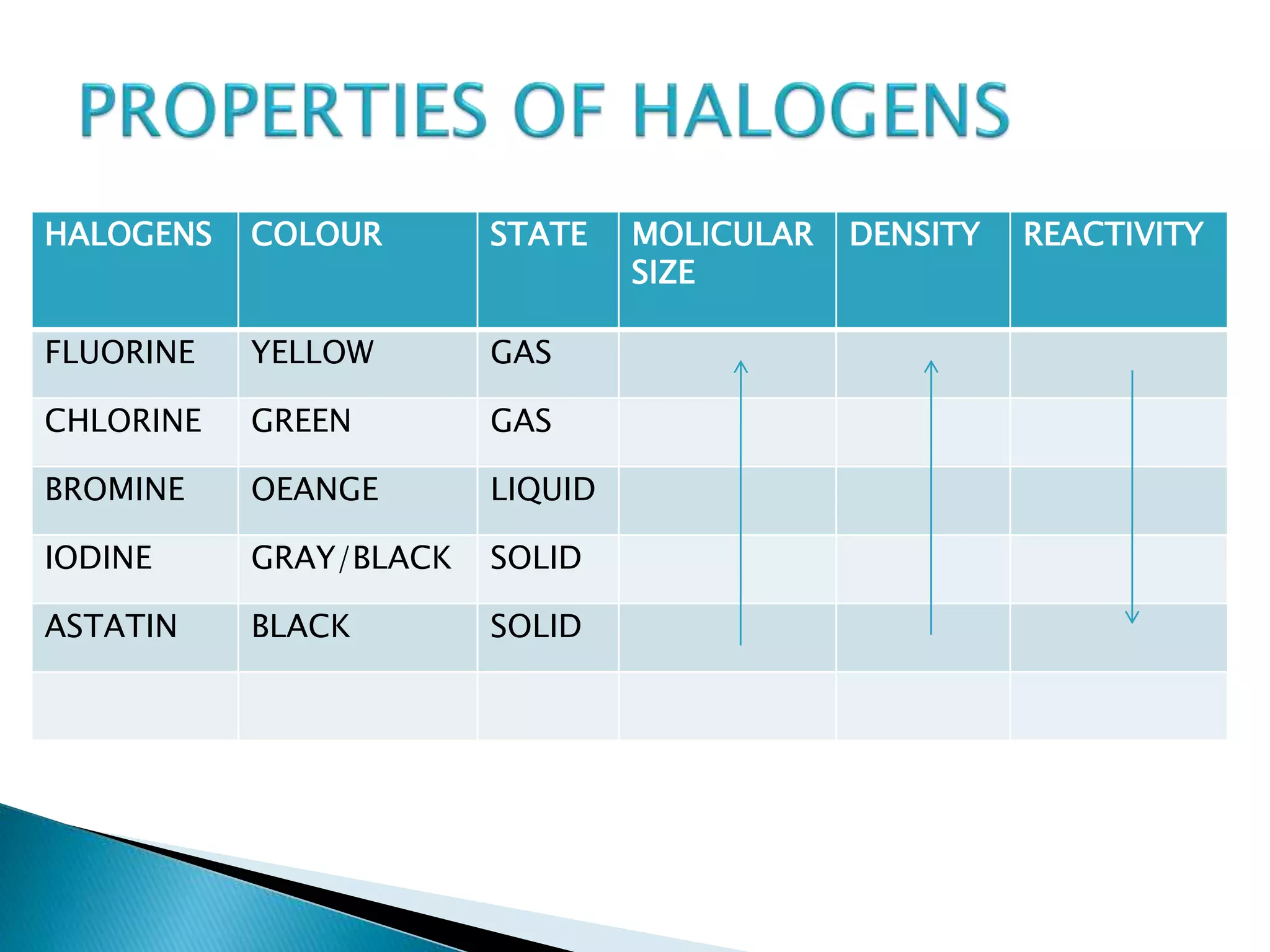
HALOGENS COLOUR STATE MOLICULAR
SIZE
DENSITY REACTIVITY
FLUORINE YELLOW GAS
CHLORINE GREEN GAS
BROMINE OEANGE LIQUID
IODINE GRAY/BLACK SOLID
ASTATIN BLACK SOLID
 HALOGENS COMPLETE THEIR OCTATE BY
SHARING THEIR SINGLE UNPAIRED p
ELECTRON.
 ETHER, GAINING ONE ELECTRON FROM
HALIDE IONS OR BY SHARING THEIR SINGLE
UNPAIRED p ELECTRON TO FORM A SINGLE
COVALENT BANDS.
 FREE RADICAL HALOGENATION.
 KETONE HALOGENATION.
 ELECTROPHILIC HALOGENATION
 HALOGEN ADDITION REACTION.
 THEY FORM,
 1.HALOGENATED HYDROCARBONS, ALIPHATIC
AND UNSATURATED.
 2.AROMATIC HALOGENATED HYDROCARBONS.
 3.FLUOROCARBONS
 Solvents
 Paints
 Textile
 Rubber
 Plastic
 Dye-stuff
 PHARMACETUCALS
 SPRAY-CLEANING INDUSTRIES
 SOIL FUMIGENTS AND INSECTICIDES.
 RUBBER VULCANIZING AGENTS
 FIRE EXTINGUISHERS
 LEAD BASED ANTIKNOCK AGENTS FOR
GASOLIN
 EXPLOSIVES AND MILITARY.
 SEMICONDUCTOR MANUFACTURE
 METAL RECOVERY
 WET SPARK PLUGS
 SOAP FRAGRANCE
 EXTRACTING OIL FROM FLOWERS.
 ELECTRICAL TRANSFORMERS
 CAPACITORS
 HEAT TRANSFER SYSTEM
 HYDRAULIC FLUIDS
 LUBRICATING OILS
 INSULATED ELECTRIC WIRES AND CABLES.
 PLASTIC INDUSTRIES AND FOR THE SYNTHESIS
OF POLIVINYL CHLORIDE(PVC).
 REFRIGERANT
 Vinyl ASBESTOS FLOOR TILES
 TYPEWRITER CORRECTION FLUID
 EXTRACTION SOLVENT FOR CAFFINE
 COOLING GAS OF TRANSFORMERS
TOXICITY DEPENDS ON THE
 TYPE OF COMPOUND
 MODE OF EXPOSURE
 CONCENTRATION.
 ( Dermatotoxic, Heamatotoxic, Nephrotoxic,
Neurotoxic, Pulmonotoxic.)
 INHALATION
 INGESTION
 ABSORPTION FROM SKIN
 ACUTE INTOXICATION
 IMMEDIATE EFFECT
 DEALYED EFFECT OF ACUTE INTOXICATION
 DALAYED EFFECTS
 Dermato-toxic: They are local irritants ,
causes burns, Allergic reactions,
photosensitization.
 Exm: Polychlorinated Biphenyls cause
Erythematic eruption with Pruritis. Hyper
pigmentation of skin and mucus membrane ,
Discoloration of fingernails and thickening of
the skin.
 Neurotoxicity
 CNS depression: Halothane ,
Hexachloroethen, Methyl Chloride,
Tetrachloroethane.
 Nephro toxicity: Dioxin causes Pylonepheritis.
 Pulmonary toxic: are Irritants, Asphaxients ,
pulmonary edema , pulmonary haemorrhage
and pulmonary fibrosis.
EXAM: Calcium Fluoride Dust. Pesticides.
 Cardiotoxicity :DDT, Hexachlorobutaine.
 Hepatotxicity :Methyl Bromide causes,
Necrosis and fibrosis of hepatocytes.
 Nephrotoxicity: Carbontetrachloride causes
ATN. And renal failure.
 GIT: Nausea , vomiting, abdominal pain,
caused by Carbon tetrachloride.
 Reduce duration of exposure.
 Dust Suppression
 Good Housekeeping.
 Good Ventilation.
 Periodic environmental surveys.
 Safe plant deign –i.e. Fume Hood, Bio-safety
cabins.
 Medical Examination
 Health education & Health promotions.
 Record keeping
 Eye Protection
 Head Protection
 Foot Protection
 Respiratory protection
 Safety Showers.
 Eye Wash
 Clothing.
 ICSC: International Chemical Safety Card.
 MSDS: Material Safety Data Sheet.
 Chemical info sheet
 Product Safety Data Sheet .
 All these chemical safety data sheets should
be available within the enterprise for every
chemical substance that has been classified
as hazardous chemical or substance.
Halogeneted compounds ppt,Dr.Mangesh Pawale

Halogeneted compounds ppt,Dr.Mangesh Pawale

  • 1.
    Dr. Mangesh Pawale 25thSILVER JUBALI BATCH, CLI,SION,MUMBAI.
  • 4.
     Halogenated Compoundis combination of one or more chemical elements that includes a HALOGEN.  Now HALOGENS are group of elements that includes, FLUORINE, CHLORINE, BROMINE, IODINE and newly founded ASTATIN.  The artificially created element 117 ( TENNESSINE) may also be a halogen.  All these elements occupies SEVENTH column of periodic Table.
  • 5.
     Halogen wordis originated in 1842, by Swedish chemist Baron johns.  Halas : Sault/Sea, and Gen: To produce.  Initially only four elements were known ( Chlorine, Fluorine, bromine and iodine).  That produces Sea Sault like substances when they form compound with Metals.
  • 6.
     Fluorspar ,a Fluorine mineral known since 1952.  Hydrochloric acid was known to early chemists and the alchemist , however elemental Chlorine was not produced until 1774.  Chlorine was used as poison gas in world war first.  Bromine was discovered in 1820.By Antonio Balard.
  • 7.
     Iodine wasdiscovered by Bernard Cartois, he was using seaweed ash as a part of saltpeter manufacture.  Halogens are highly reactive compounds because of there high electro negativity.  That is why they can be harmful or lethal to Biological organism in sufficient quantity.
  • 8.
    HALOGENS COLOUR STATEMOLICULAR SIZE DENSITY REACTIVITY FLUORINE YELLOW GAS CHLORINE GREEN GAS BROMINE OEANGE LIQUID IODINE GRAY/BLACK SOLID ASTATIN BLACK SOLID
  • 9.
     HALOGENS COMPLETETHEIR OCTATE BY SHARING THEIR SINGLE UNPAIRED p ELECTRON.  ETHER, GAINING ONE ELECTRON FROM HALIDE IONS OR BY SHARING THEIR SINGLE UNPAIRED p ELECTRON TO FORM A SINGLE COVALENT BANDS.
  • 10.
     FREE RADICALHALOGENATION.  KETONE HALOGENATION.  ELECTROPHILIC HALOGENATION  HALOGEN ADDITION REACTION.  THEY FORM,  1.HALOGENATED HYDROCARBONS, ALIPHATIC AND UNSATURATED.  2.AROMATIC HALOGENATED HYDROCARBONS.  3.FLUOROCARBONS
  • 11.
     Solvents  Paints Textile  Rubber  Plastic  Dye-stuff
  • 12.
     PHARMACETUCALS  SPRAY-CLEANINGINDUSTRIES  SOIL FUMIGENTS AND INSECTICIDES.  RUBBER VULCANIZING AGENTS  FIRE EXTINGUISHERS  LEAD BASED ANTIKNOCK AGENTS FOR GASOLIN  EXPLOSIVES AND MILITARY.
  • 13.
     SEMICONDUCTOR MANUFACTURE METAL RECOVERY  WET SPARK PLUGS  SOAP FRAGRANCE  EXTRACTING OIL FROM FLOWERS.
  • 14.
     ELECTRICAL TRANSFORMERS CAPACITORS  HEAT TRANSFER SYSTEM  HYDRAULIC FLUIDS  LUBRICATING OILS  INSULATED ELECTRIC WIRES AND CABLES.
  • 15.
     PLASTIC INDUSTRIESAND FOR THE SYNTHESIS OF POLIVINYL CHLORIDE(PVC).  REFRIGERANT  Vinyl ASBESTOS FLOOR TILES
  • 16.
     TYPEWRITER CORRECTIONFLUID  EXTRACTION SOLVENT FOR CAFFINE  COOLING GAS OF TRANSFORMERS
  • 17.
    TOXICITY DEPENDS ONTHE  TYPE OF COMPOUND  MODE OF EXPOSURE  CONCENTRATION.  ( Dermatotoxic, Heamatotoxic, Nephrotoxic, Neurotoxic, Pulmonotoxic.)
  • 18.
     INHALATION  INGESTION ABSORPTION FROM SKIN  ACUTE INTOXICATION
  • 19.
     IMMEDIATE EFFECT DEALYED EFFECT OF ACUTE INTOXICATION  DALAYED EFFECTS
  • 20.
     Dermato-toxic: Theyare local irritants , causes burns, Allergic reactions, photosensitization.  Exm: Polychlorinated Biphenyls cause Erythematic eruption with Pruritis. Hyper pigmentation of skin and mucus membrane , Discoloration of fingernails and thickening of the skin.
  • 21.
     Neurotoxicity  CNSdepression: Halothane , Hexachloroethen, Methyl Chloride, Tetrachloroethane.  Nephro toxicity: Dioxin causes Pylonepheritis.  Pulmonary toxic: are Irritants, Asphaxients , pulmonary edema , pulmonary haemorrhage and pulmonary fibrosis. EXAM: Calcium Fluoride Dust. Pesticides.
  • 22.
     Cardiotoxicity :DDT,Hexachlorobutaine.  Hepatotxicity :Methyl Bromide causes, Necrosis and fibrosis of hepatocytes.  Nephrotoxicity: Carbontetrachloride causes ATN. And renal failure.  GIT: Nausea , vomiting, abdominal pain, caused by Carbon tetrachloride.
  • 24.
     Reduce durationof exposure.  Dust Suppression  Good Housekeeping.  Good Ventilation.  Periodic environmental surveys.  Safe plant deign –i.e. Fume Hood, Bio-safety cabins.
  • 25.
     Medical Examination Health education & Health promotions.  Record keeping
  • 26.
     Eye Protection Head Protection  Foot Protection  Respiratory protection  Safety Showers.  Eye Wash  Clothing.
  • 27.
     ICSC: InternationalChemical Safety Card.  MSDS: Material Safety Data Sheet.  Chemical info sheet  Product Safety Data Sheet .  All these chemical safety data sheets should be available within the enterprise for every chemical substance that has been classified as hazardous chemical or substance.