SURGICAL HEMOSTASIS
Prof. Faisal Ghani Siddiqui
MBBS; FCPS; PGDIP-BIOETHICS; MCPS-HPE
LEARNING OUTCOMES
By the end of this lecture, the students
will learn;
• What is hemostasis and why blood doesn't
clot inside intact blood vessels
• What are different causes of excessive
bleeding during or after surgery
• How to evaluate your patient for
hemostasis before surgery?
HEMOSTASIS
Will this bleeding stop?
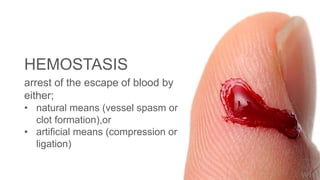
HEMOSTASIS
arrest of the escape of blood by
either;
• natural means (vessel spasm or
clot formation),or
• artificial means (compression or
ligation)
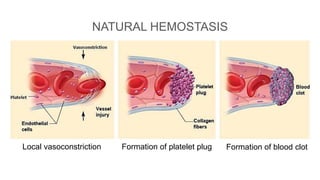
NATURAL HEMOSTASIS
Local vasoconstriction Formation of platelet plug Formation of blood clot
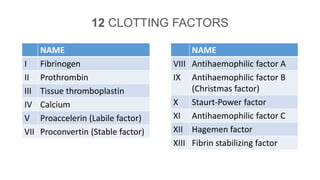
12 CLOTTING FACTORS
NAME
VIII Antihaemophilic factor A
IX Antihaemophilic factor B
(Christmas factor)
X Staurt-Power factor
XI Antihaemophilic factor C
XII Hagemen factor
XIII Fibrin stabilizing factor
NAME
I Fibrinogen
II Prothrombin
III Tissue thromboplastin
IV Calcium
V Proaccelerin (Labile factor)
VII Proconvertin (Stable factor)
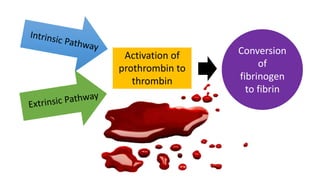
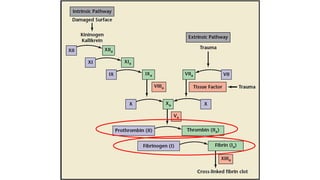
CLOTTING CASCADE
INTRINSIC PATHWAY
• All factors needed are present in the blood
• Triggered when ‘contact factors’ are exposed to collagen or basement membrane
at the site of injury
EXTRINSIC PATHWAY
• Requires tissue thromboplastin to be released from damaged cells (outside
blood)
Activation of
prothrombin to
thrombin
Conversion
of
fibrinogen
to fibrin
SO WHY DOESN'T’ THE BLOOD
CLOT INSIDE INTACT BLOOD
VESSELS?
NATURAL INHIBITORS OF COAGULATION
CASCADE
• Smoothness of the endothelium
• Continuous blood flow
• Prostacyclin (secreted by the platelets)
• Heparin (secreted by the mast cells)
• Antithrombin III (secreted by the liver)
• Protein C & S (natural anticoagulants)
CAUSES OF BLEEDING
DURING OR AFTER SURGERY
CAUSES OF BLEEDING
DURING OR AFTER SURGERY
• Poor control during surgery
• Defects of hemostasis
DEFECTS OF HEMOSTASIS
• Congenital
• Acquired
CONGENITAL DEFECTS OF HEMOSTASIS
• Hemophilia A (factor VIII deficiency)
• Hemophilia B (factor IX deficiency)
ACQUIRED DEFECTS OF
HEMOSTASIS
• Liver diseases
• Vitamin K deficiency
• Disseminated intravascular
coagulation
• Anticoagulants
• Massive blood transfusion
• Platelet disorders
PRE-OPERATIVE EVALUATION
OF HEMOSTASIS
HISTORY
• Easy bruising
• Nose bleeds
• Prolonged bleeding after
cuts
• Bleeding >3 mts. After
brushing tooth
• Prolonged/excessive
menstrual cycles
• Severe bleeding after
tooth extraction / surgery
HISTORY
• Liver disease, renal
failure or hypersplenism
• Family H/O hemophilia
• Current or recent use of
drugs that may interfere
with hemostasis
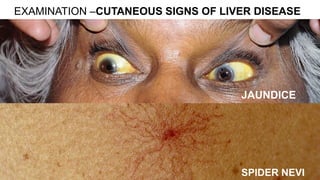
EXAMINATION –CUTANEOUS SIGNS OF LIVER DISEASE
JAUNDICE
SPIDER NEVI
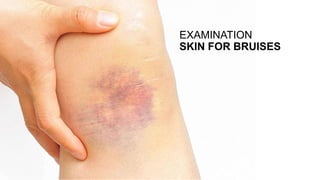
EXAMINATION
SKIN FOR BRUISES
EXAMINATION
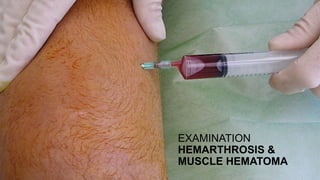
HEMARTHROSIS &
MUSCLE HEMATOMA
EXAMINATION
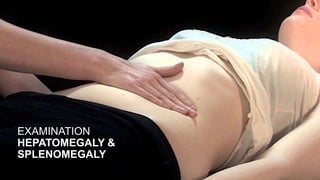
HEPATOMEGALY &
SPLENOMEGALY
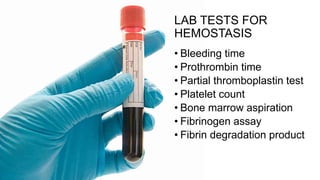
LAB TESTS FOR
HEMOSTASIS
• Bleeding time
• Prothrombin time
• Partial thromboplastin test
• Platelet count
• Bone marrow aspiration
• Fibrinogen assay
• Fibrin degradation product

6 surgical hemostasis