High Voltage electrical Burns
Alumona C. O
INTRODUCTION
• Passage of high voltage electricity through the
body
• One of the most devastating form of injuries
seen in the emergency room
• Actual injuries are more than the obvious
• Classification
– High Voltage: >1000VAC or 1500VDC
– Low Voltage: <1000VAC or 1500VDC
• Mechanism of injury
– Joule heating
– Arc/Flash burns
– Secondary mechanical injuries
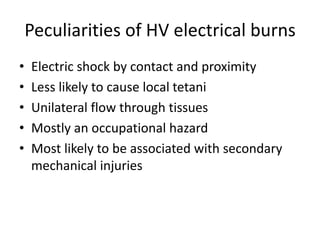
Peculiarities of HV electrical burns
• Electric shock by contact and proximity
• Less likely to cause local tetani
• Unilateral flow through tissues
• Mostly an occupational hazard
• Most likely to be associated with secondary
mechanical injuries
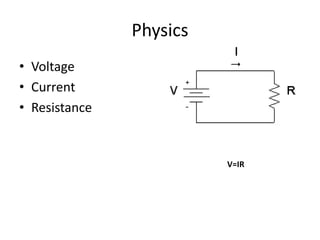
Physics
• Voltage
• Current
• Resistance
V=IR
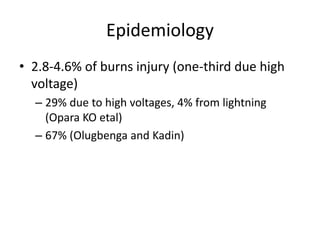
Epidemiology
• 2.8-4.6% of burns injury (one-third due high
voltage)
– 29% due to high voltages, 4% from lightning
(Opara KO etal)
– 67% (Olugbenga and Kadin)

High voltage electrical burns2

  • 1.
    High Voltage electricalBurns Alumona C. O
  • 2.
    INTRODUCTION • Passage ofhigh voltage electricity through the body • One of the most devastating form of injuries seen in the emergency room • Actual injuries are more than the obvious
  • 3.
    • Classification – HighVoltage: >1000VAC or 1500VDC – Low Voltage: <1000VAC or 1500VDC • Mechanism of injury – Joule heating – Arc/Flash burns – Secondary mechanical injuries
  • 4.
    Peculiarities of HVelectrical burns • Electric shock by contact and proximity • Less likely to cause local tetani • Unilateral flow through tissues • Mostly an occupational hazard • Most likely to be associated with secondary mechanical injuries
  • 5.
  • 6.
    Epidemiology • 2.8-4.6% ofburns injury (one-third due high voltage) – 29% due to high voltages, 4% from lightning (Opara KO etal) – 67% (Olugbenga and Kadin)

Editor's Notes

  • #7 Okpara ko, chukwuanukwu tog, Ogbonnanya is etal. Pattern of severe electrical burn injury in a nigerian regional burn centre. NIG J Clin Pract. 2006;9:124-127.[PubMed]