Haemostasis &
Coagulation
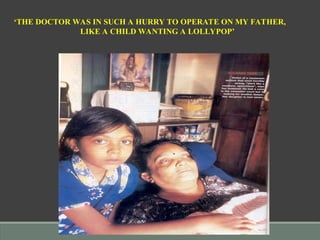
‘THE DOCTOR WAS IN SUCH A HURRY TO OPERATE ON MY FATHER,
LIKE A CHILD WANTING A LOLLYPOP’
When an incision is made , the blood clots
A 68 year old woman with a history of a 12 kg weight loss over the past
six months presents to the emergency room with a history of passing
bright red blood per rectum. Her pulse is 95, her blood pressure
120/70. She has not seen a physician in 40 years.
Study Questions:
What history and physical exam information would you gather to assess
this patient's coagulation system?
If there is a problem present, what would be the most likely?
What laboratory tests would you order to assess this patient's
coagulation system?
A 24 year old man is in the operating room for a massive liver injury
sustained when his motorcycle hit a truck. After one hour of surgery he
has received 15 units of packed cells and has developed diffuse oozing
from the surface of his liver. Clots are no longer forming. His body
temperature is 34oC.
Study Question:
What are the most common coagulation difficulties associated with
massive transfusion? What is the management of each?
HAEMOSTASIS
OBJECTIVES
Mechanism of coagulation
Tests
Abnormal thrombosis
Abnormal bleeding
HAEMOSTASIS
Keeps blood in fluid state & in circulation
Prevents blood loss
Haemostasis
Four interconnected mechanisms form the basis of hemostasis:
(a) blood vessel contraction
(b) platelet plug formation (primary hemostasis)
(c) clot stabilization with fibrin cross-linking (secondary hemostasis)
(d) endogenous fibrinolysis.
What is involved in
Haemostasis?
Blood vessels
Platelets
Plasma coagulation factors
Inhibitors
Fibrinolytics
Events in Haemostasis
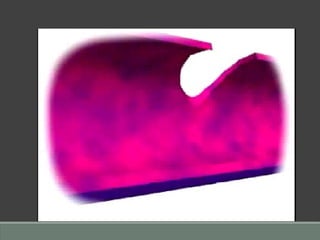
Vascular spasm
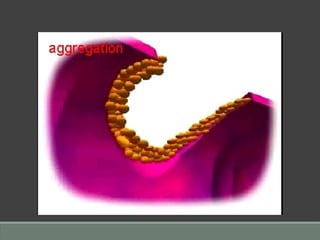
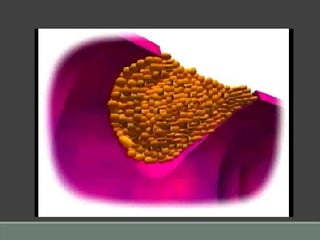
Formation of platelet plug
Formation of fibrin plug - Blood clot
Re-establishment of endothelium
Haemostasis
Vasoconstriction
Clean cut vessels > crushed vessels
Partially transected > completely cut
Veins are easily compressed
Danger areas of bleed
Haemostasis
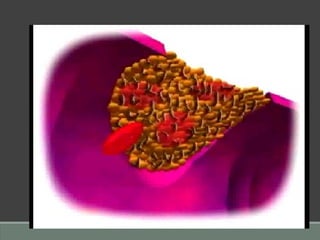
Platelet plug - White bodies or microthrombi
Contact with subendothelial collagen
swell
irregular with pseudopods
release ADP, thromboxane A2 , phospholipids , HMWK
sticky & aggregate
Haemostasis
Fibrin clot:
Severe trauma - 15-20 secs
Minor trauma - 1-2 mts
Retraction - 20-60 mts
Haemostasis
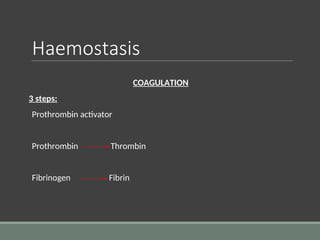
COAGULATION
3 steps:
Prothrombin activator
Prothrombin Thrombin
Fibrinogen Fibrin
Haemostasis
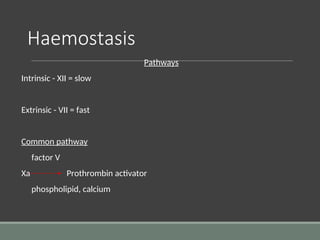
Pathways
Intrinsic - XII = slow
Extrinsic - VII = fast
Common pathway
factor V
Xa Prothrombin activator
phospholipid, calcium
Haemostasis
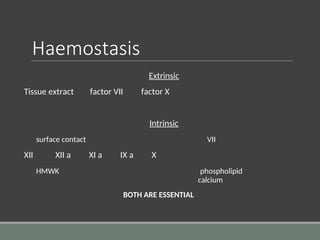
Extrinsic
Tissue extract factor VII factor X
Intrinsic
surface contact VII
XII XII a XI a IX a X
HMWK phospholipid
calcium
BOTH ARE ESSENTIAL
HAEMOSTASIS
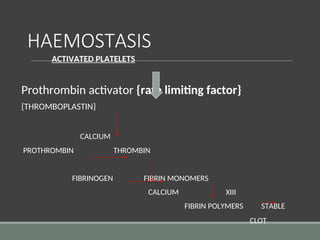
ACTIVATED PLATELETS
Prothrombin activator {rate limiting factor}
{THROMBOPLASTIN}
CALCIUM
PROTHROMBIN THROMBIN
FIBRINOGEN FIBRIN MONOMERS
CALCIUM XIII
FIBRIN POLYMERS STABLE
CLOT
HAEMOSTASIS
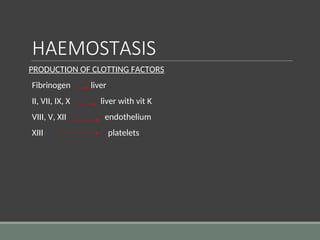
PRODUCTION OF CLOTTING FACTORS
Fibrinogen liver
II, VII, IX, X liver with vit K
VIII, V, XII endothelium
XIII platelets
HAEMOSTASIS
THROMBIN
Intensely proteolytic
Activates factor V ,VIII, XIII
Releases phospholipid from endothelium & platelet
Activates protein C
HAEMOSTASIS
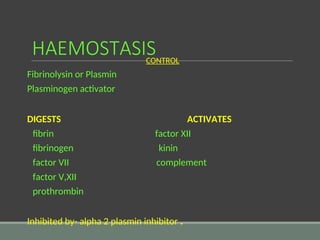
CONTROL
Fibrinolysin or Plasmin
Plasminogen activator
DIGESTS ACTIVATES
fibrin factor XII
fibrinogen kinin
factor VII complement
factor V,XII
prothrombin
Inhibited by- alpha 2 plasmin inhibitor .
HAEMOSTASIS
Why does not blood clot normally ?
Endothelium Fibrin & Antithrombin
smooth thrombin fibrin [85-90%]
glycocalyx antithrombin
thrombomodulin
prostacyclin
heparin sulfate
tissue plasminogen activator
ADP ase
HAEMOSTASIS
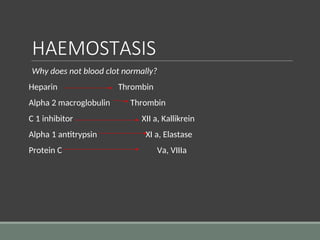
Why does not blood clot normally?
Heparin Thrombin
Alpha 2 macroglobulin Thrombin
C 1 inhibitor XII a, Kallikrein
Alpha 1 antitrypsin XI a, Elastase
Protein C Va, VIIIa
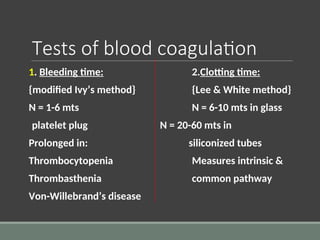
Tests of blood coagulation
1. Bleeding time: 2.Clotting time:
{modified Ivy’s method} {Lee & White method}
N = 1-6 mts N = 6-10 mts in glass
platelet plug N = 20-60 mts in
Prolonged in: siliconized tubes
Thrombocytopenia Measures intrinsic &
Thrombasthenia common pathway
Von-Willebrand’s disease
Tests of blood coagulation
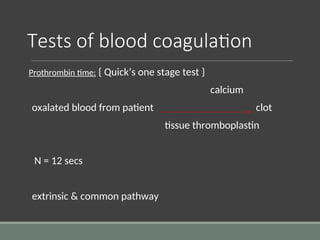
Prothrombin time: { Quick’s one stage test }
calcium
oxalated blood from patient clot
tissue thromboplastin
N = 12 secs
extrinsic & common pathway
Prothrombin time contd...
Prolonged in:
1. Oral anticoagulant drugs
2. Liver disease, obstructive jaundice
3. Vit K deficiency
4. D I C
5. Deficiency of factor VII , X, V, II
SPECIFIC FOR FACTOR VII
[ With X & V APTT is also prolonged]
PARTIAL THROMBOPLASTIN TIME
[ activated ]
Contact activation
KAOLIN
+ of factor XII + pt’s = Clot
CEPHALIN blood
phospholipid
Intrinsic & Common pathway
Partial thromboplastin time
[activated ] contd…..
Prolonged in:
1. D I C
2. Liver disease
3. Massive transfusion of stored blood
4. Heparin
5. Circulating anticoagulants
6. Deficiency of clotting factors other than VII
7. Haemophilia
THROMBIN TIME
PLASMA + THROMBIN CLOT
Assesses fibrinogen
Prolonged in :
1. Hypofibrinogenemia
DIC CONGENITAL
2. FDP
3. Heparin [ assess with REPTILASE test ]
4. Dysfibrinogenaemia
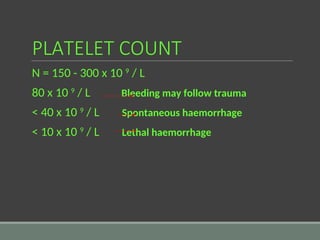
PLATELET COUNT
N = 150 - 300 x 10 9
/ L
80 x 10 9
/ L Bleeding may follow trauma
< 40 x 10 9
/ L Spontaneous haemorrhage
< 10 x 10 9
/ L Lethal haemorrhage
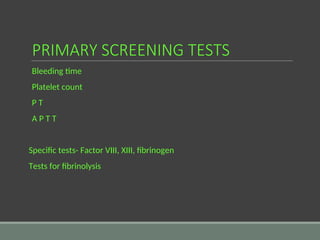
PRIMARY SCREENING TESTS
Bleeding time
Platelet count
P T
A P T T
Specific tests- Factor VIII, XIII, fibrinogen
Tests for fibrinolysis
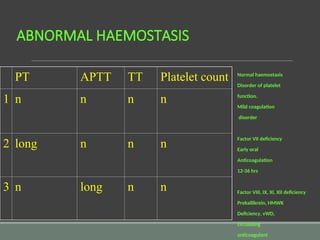
ABNORMAL HAEMOSTASIS
Normal haemostasis
Disorder of platelet
function.
Mild coagulation
disorder
Factor VII deficiency
Early oral
Anticoagulation
12-36 hrs
Factor VIII, IX, XI, XII deficiency
Prekallikrein, HMWK
Deficiency, vWD,
circulating
anticoagulant
PT APTT TT Platelet count
1 n n n n
2 long n n n
3 n long n n
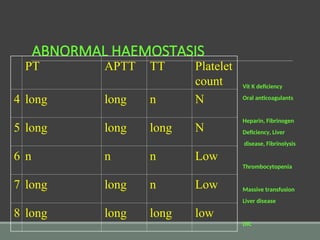
ABNORMAL HAEMOSTASIS
Vit K deficiency
Oral anticoagulants
Heparin, Fibrinogen
Deficiency, Liver
disease, Fibrinolysis
Thrombocytopenia
Massive transfusion
Liver disease
DIC
PT APTT TT Platelet
count
4 long long n N
5 long long long N
6 n n n Low
7 long long n Low
8 long long long low
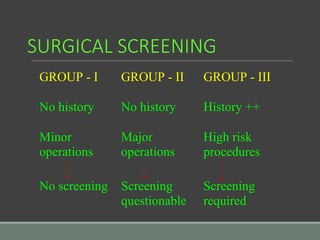
SURGICAL SCREENING
GROUP - I GROUP - II GROUP - III
No history No history History ++
Minor
operations
Major
operations
High risk
procedures
No screening Screening
questionable
Screening
required
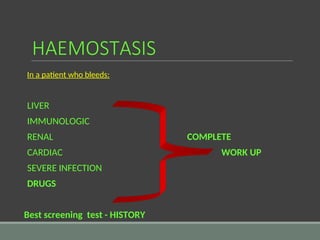
HAEMOSTASIS
In a patient who bleeds:
LIVER
IMMUNOLOGIC
RENAL COMPLETE
CARDIAC WORK UP
SEVERE INFECTION
DRUGS
Best screening test - HISTORY
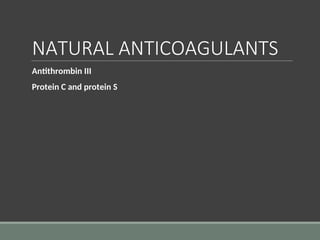
NATURAL ANTICOAGULANTS
Antithrombin III
Protein C and protein S
NATURAL ANTICOAGULANTS
Antithrombin III
This is an inhibitor of thrombin, its action being potentiated by heparin.
Congenital antithrombin III deficiency is inherited as an autosomal
dominant.
Heterozygotes may suffer from recurrent DVT, pulmonary embolism,
and mesenteric thrombosis.
Homozygotes present in childhood with severe arterial and venous
thrombosis.
NATURAL ANTICOAGULANTS
Protein C and protein S
These are synthesised in the liver and are dependant on vitamin K.
Protein C degrades factors Va and VIIIa and promotes fibrinolysis by
inactivating plasminogen-activator inhibitor I.
Protein S is a cofactor for protein C and enhances its activity.
Hereditary protein C defciency may occur, patients being more
susceptible to DVT, PE, superficial thrombophlebitis, and cerebral
venous thrombosis
ANTICOAGULANT DRUGS
Warfarin
Warfarin is a coumarin derivative which is administered orally.
It is a vitamin K antagonist and in effect induces a state analogous to
vitamin K deficiency.
It interferes with the activity of factors II, VII, IX and X. It delays
thrombin generation, thus preventing the formation of thrombi.
Warfarin is usually administered for 3–6 months following DVT or PE
Lifelong warfarin is required for recurrent venous thromboembolic
disease,some prosthetic heart valves, congenital deficiency of
antithrombin III, deficiency of protein C or protein S,
ANTICOAGULANT DRUGS
Heparin
Heparin potentiates the action of antithrombin III.
Standard unfractionated heparin is administered i.v. or s.c. and has a half
life of about 1 h.
Low molecular weight heparin is used subcutaneously and has a longer
biological half life..
Heparin does not cross the placenta and is, therefore, the drug of choice
when anticoagulation is required during pregnancy.
Bleeding due to overdose is managed by stopping the heparin and
administering protamine sulphate intravenously.
Side effects of heparin include thrombocytopaenia,hypersensitivity
reactions, alopecia, and osteoporoi
DISORDERS OF
HAEMOSTASIS AND
COAGULATION
CONGENITAL
HAEMOPHILIA A and B.
Von WILLEBRAND’S disease.
Defencies of factorXI and XII,prekallikrien,HMWkininogen.
Defencies of factorVII,V and thrombin.
Disorders of fibrinogen like a or hypofibrinogenemia or
dysfibrinogenemia.
Factor XIII defeciency.
ACQUIRED
VITAMIN K DEFECIENCY.
ANTICOAGULANT DRUGS.
HEPATIC FAILURE.
RENAL FAILURE.
THROMBOCYTOPENIA.
THROMBOCYTOPATHY.
HYPOTHERMIA.
DIC.
APPROACH
HISTORY
HO bleeding,easybruising.
Frequent or unusual mucosal bleeding.
Metromenorrahgia.
Haematuria.
Epistaxis.
Previous ho prolonged bleeding asso with invasive procedures.
Positive family history.
Drug history like intake of NSAIDS,aspirin,etc.
EXAMINATION
Ecchymotic patches or petechiae on skin.
Joint deformities.
Adenopathy.
Hepatospleenomegaly.
Hypermobility of joints.
Increased elaticity of skin.
SCREENING TESTS
CBC.
Platelet count.
PT.
aPTT.
Bleeding time.
Fibrinogen level.
Thrombin time.
Platelet function tests.
Specific factor assays.
PROTHROMBIN TIME
Measures function of factor VII,X, prothrombin and
thrombin,fibrinogen and fibrin.
Prolongation occurs when levels of factor V,VII or X fall.
Seen in warfarin therapy and vit.k defeciency.
aPTT
Detects decreased levels
ofHMWkininogen,prekallikrien,XII,XI,IX,VIII,V,X.
Increased in heparin therapy.
CONGENITAL
DISORDERS
HAEMOPHILIA A
HAEMOPHILIA A
Deficiency of factor VIII.
X linked recessive disorder with males being affected exclusively.
Severe bleeding if factor level<2%.Moderate bleeding with levels bw
2%-5%.Mild bleeding with factor levels bw 5%-30%.
Patient has large haematomas and haemarthroses.
Bleeding is prolonged for hours or days after injury.
Lab tests show a prolonged Aptt with decreased factor VIII level,normal
PT,bleeding time and vWF levels.
HAEMOPHILIA A
Desmopressin may temporarily raise factor VIII levels in mild disease.
Can be given intranasally or iv and is ineffective in treating severe disease.
Antifibrinolytic therapy with EACA and tranexemic acid with or without
desmopressin is also effective in dental extarctions or paediatric patients.
CRYOPRECIPITATE is a good source of factorVIII.
One bag contains 80 units of factor VIII and 1Ukg increases levels by2%.
Specific factor VIII concentrates are more popular now.
Give 50Ukg stat then 30Ukg every 8 hrs for the first 2 days after surgery
or injury.
CONGENITAL
DISORDERS
HAEMOPHILIA B
HAEMOPHILIA B
Xlinked bleeding disorder with a deficiency of factor IX.
Patient presents with deep bleeding and haemarthroses.
Lab tests show increased Aptt with decreased factor IX levels, normal
PT, BT,platelet count and factor VIII.
Tt is by prothrombin complex concentrate which contains factor IX and
all of the vit k dependent factors.
HighPurity factor IX concentrate is also available.
CONGENITAL
DISORDERS
VON WILLEBRAND’S DISEASE
Von WILLEBRAND’S DISEASE
Most common congenital bleeding disorder.
vWF is an important stimulus for platelet aggregation and carrier
protien for factor VIII.
Type 1 is inherited as autosomal dominant and is characterized by
quantitative defect in vWF.
Type 2 has variable inheritance and there is qualitative defect in vWF.
Type3 is autosomal recessive disease with absent levels of vWF.
Patients present with mucosal bleeding,petechiae,epistaxis and
menorrhagia.
Tt is by desmopressin or cryoprecipitate.
ACQUIRED
DISORDERS
VITAMIN K DEFECIENCY
Platelet disorders
Thrombocytopaenia
This may be due to a failure of platelet production or increased
destruction or sequestration of platelets, and abnormal platelet
function.
Abnormal platelet function may cause bleeding despite a normal
platelet count.
Abnormal platelet function may occur with: drugs, e.g. aspirin, non-
steroidal antiinflammatory drugs carbenicillin, and ticarcillin;
uraemia;septicaemia; and von Willebrand’s disease.
Blood vessel wall
abnormalities
Blood vessel wall abnormalities
These are rare and may be due to scurvy, steroids, Cushing’s syndrome,
or Henoch-Schonlein purpura.
VITAMIN K DEFICIENCY
Vit k is required for the reaction that attaches a carboxyl gp to glutamic
acid.
Causes of def are inadequate dietary intake,
Malabsorption,obstructive jaundice,biliaryfistula,
Oral antibiotics and TPN.
Tt is parenteral administration of vit k if there is no active bleeding.
Administration of FFP rapidly corrects the coagulation deficit and is
given in patients with ongoing bleeding.
Correction of the etiology.
ACQUIRED
DISORDERS
HEPATIC INSUFFICIENCY
Liver is the site of synthesis of all clotting factors except factorVIII,vWF.
Hepatic failure will result in coagulopathy.
Asso with platelet dysfunction.
Tt is by giving vitk,FFP,cryoprecipitate and platelets.
ACQUIRED
DISORDERS
HYPOTHERMIA
HYPOTHERMIA
Usually seen in a lengthy open surgery on the abdomen or thorax.
The coagulopathy is because of defect in platelet function,fibrinolytic
activity,coagulation cascade enzyme.
Intraoperatively all efforts should be made to keep the temp normal by
warming fluids,heated ventilation and warm environment.
ACQUIRED
DISORDERS
MASSIVE TRANSFUSION
MASSIVE TRANSFUSION
Defined as more than 10 units of transfused blood or replacement of
the pts total blood volume within 24 hrs.
Pts have thrombocytopenia,low fibrinogen and prolonged PT.
These changes result from low temperature of blood,increased citrate
level,increased k level,low pH,decreased ca level.
Tt is by infusion of FFP,PLATELETS.
POST-OP THROMBOSIS
WHY?
1. NO MUSCLE CONTRACTION
2. FIBRINOGEN , PLATELET,vWF, FACTOR VIII
3. DECREASED ANTITHROMBIN III
4. SEPSIS
5. DAMAGE TO VEINS
POST-OP THROMBOSIS
PREVENTION:
Intermittent compression or electrical stimulation
Aspirin, dextran, di-pyridamole
Low dose heparin, low molecular weight heparin
Early mobilization
Hydration
T E D stockings
Surgery in patients on
anticoagulants
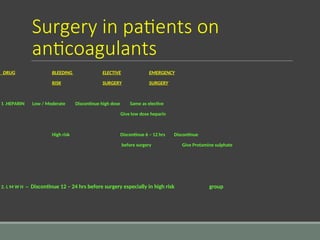
DRUG BLEEDING ELECTIVE EMERGENCY
RISK SURGERY SURGERY
1 .HEPARIN Low / Moderate Discontinue high dose Same as elective
Give low dose heparin
High risk Discontinue 6 – 12 hrs Discontinue
before surgery Give Protamine sulphate
2. L M W H -- Discontinue 12 – 24 hrs before surgery especially in high risk group
Surgery in patients on
anticoagulants
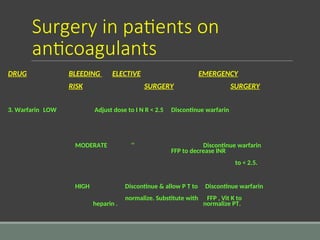
DRUG BLEEDING ELECTIVE EMERGENCY
RISK SURGERY SURGERY
3. Warfarin LOW Adjust dose to I N R < 2.5 Discontinue warfarin
MODERATE ‘’ Discontinue warfarin
FFP to decrease INR
to < 2.5.
HIGH Discontinue & allow P T to Discontinue warfarin
normalize. Substitute with FFP , Vit K to
heparin . normalize PT.
Surgery in patients on
anticoagulants
Aspirin:
Discontinue 1 week before surgery.
Platelet transfusion
DDAVP In emergency surgery
Fibrinolytics:
Wait for half life
6 min for TPA
23 min for Streptokinase
16 min for Urokinase
EACA: Only in emergency.
Weigh benefit Vs risk
CONCLUSION
The more exotic these approaches become, the more one is compelled
to emphasize that gentle handling, precise dissection and accurately
applied haemostasis constitute much the art of surgery.
Injecting, burning, stuffing, and scorching wounds is not likely to lead to
a higher plateau of accomplishment.
John A Collins , M.D
THANK YOU

haemostasis & coagulation-26-10-2017.ppt

  • 1.
  • 4.
    ‘THE DOCTOR WASIN SUCH A HURRY TO OPERATE ON MY FATHER, LIKE A CHILD WANTING A LOLLYPOP’
  • 5.
    When an incisionis made , the blood clots
  • 6.
    A 68 yearold woman with a history of a 12 kg weight loss over the past six months presents to the emergency room with a history of passing bright red blood per rectum. Her pulse is 95, her blood pressure 120/70. She has not seen a physician in 40 years. Study Questions: What history and physical exam information would you gather to assess this patient's coagulation system? If there is a problem present, what would be the most likely? What laboratory tests would you order to assess this patient's coagulation system?
  • 7.
    A 24 yearold man is in the operating room for a massive liver injury sustained when his motorcycle hit a truck. After one hour of surgery he has received 15 units of packed cells and has developed diffuse oozing from the surface of his liver. Clots are no longer forming. His body temperature is 34oC. Study Question: What are the most common coagulation difficulties associated with massive transfusion? What is the management of each?
  • 8.
  • 9.
  • 10.
    HAEMOSTASIS Keeps blood influid state & in circulation Prevents blood loss
  • 11.
    Haemostasis Four interconnected mechanismsform the basis of hemostasis: (a) blood vessel contraction (b) platelet plug formation (primary hemostasis) (c) clot stabilization with fibrin cross-linking (secondary hemostasis) (d) endogenous fibrinolysis.
  • 12.
    What is involvedin Haemostasis? Blood vessels Platelets Plasma coagulation factors Inhibitors Fibrinolytics
  • 13.
    Events in Haemostasis Vascularspasm Formation of platelet plug Formation of fibrin plug - Blood clot Re-establishment of endothelium
  • 14.
    Haemostasis Vasoconstriction Clean cut vessels> crushed vessels Partially transected > completely cut Veins are easily compressed Danger areas of bleed
  • 15.
    Haemostasis Platelet plug -White bodies or microthrombi Contact with subendothelial collagen swell irregular with pseudopods release ADP, thromboxane A2 , phospholipids , HMWK sticky & aggregate
  • 16.
    Haemostasis Fibrin clot: Severe trauma- 15-20 secs Minor trauma - 1-2 mts Retraction - 20-60 mts
  • 17.
  • 18.
    Haemostasis Pathways Intrinsic - XII= slow Extrinsic - VII = fast Common pathway factor V Xa Prothrombin activator phospholipid, calcium
  • 19.
    Haemostasis Extrinsic Tissue extract factorVII factor X Intrinsic surface contact VII XII XII a XI a IX a X HMWK phospholipid calcium BOTH ARE ESSENTIAL
  • 20.
    HAEMOSTASIS ACTIVATED PLATELETS Prothrombin activator{rate limiting factor} {THROMBOPLASTIN} CALCIUM PROTHROMBIN THROMBIN FIBRINOGEN FIBRIN MONOMERS CALCIUM XIII FIBRIN POLYMERS STABLE CLOT
  • 21.
    HAEMOSTASIS PRODUCTION OF CLOTTINGFACTORS Fibrinogen liver II, VII, IX, X liver with vit K VIII, V, XII endothelium XIII platelets
  • 22.
    HAEMOSTASIS THROMBIN Intensely proteolytic Activates factorV ,VIII, XIII Releases phospholipid from endothelium & platelet Activates protein C
  • 27.
    HAEMOSTASIS CONTROL Fibrinolysin or Plasmin Plasminogenactivator DIGESTS ACTIVATES fibrin factor XII fibrinogen kinin factor VII complement factor V,XII prothrombin Inhibited by- alpha 2 plasmin inhibitor .
  • 28.
    HAEMOSTASIS Why does notblood clot normally ? Endothelium Fibrin & Antithrombin smooth thrombin fibrin [85-90%] glycocalyx antithrombin thrombomodulin prostacyclin heparin sulfate tissue plasminogen activator ADP ase
  • 29.
    HAEMOSTASIS Why does notblood clot normally? Heparin Thrombin Alpha 2 macroglobulin Thrombin C 1 inhibitor XII a, Kallikrein Alpha 1 antitrypsin XI a, Elastase Protein C Va, VIIIa
  • 30.
    Tests of bloodcoagulation 1. Bleeding time: 2.Clotting time: {modified Ivy’s method} {Lee & White method} N = 1-6 mts N = 6-10 mts in glass platelet plug N = 20-60 mts in Prolonged in: siliconized tubes Thrombocytopenia Measures intrinsic & Thrombasthenia common pathway Von-Willebrand’s disease
  • 31.
    Tests of bloodcoagulation Prothrombin time: { Quick’s one stage test } calcium oxalated blood from patient clot tissue thromboplastin N = 12 secs extrinsic & common pathway
  • 32.
    Prothrombin time contd... Prolongedin: 1. Oral anticoagulant drugs 2. Liver disease, obstructive jaundice 3. Vit K deficiency 4. D I C 5. Deficiency of factor VII , X, V, II SPECIFIC FOR FACTOR VII [ With X & V APTT is also prolonged]
  • 33.
    PARTIAL THROMBOPLASTIN TIME [activated ] Contact activation KAOLIN + of factor XII + pt’s = Clot CEPHALIN blood phospholipid Intrinsic & Common pathway
  • 34.
    Partial thromboplastin time [activated] contd….. Prolonged in: 1. D I C 2. Liver disease 3. Massive transfusion of stored blood 4. Heparin 5. Circulating anticoagulants 6. Deficiency of clotting factors other than VII 7. Haemophilia
  • 35.
    THROMBIN TIME PLASMA +THROMBIN CLOT Assesses fibrinogen Prolonged in : 1. Hypofibrinogenemia DIC CONGENITAL 2. FDP 3. Heparin [ assess with REPTILASE test ] 4. Dysfibrinogenaemia
  • 36.
    PLATELET COUNT N =150 - 300 x 10 9 / L 80 x 10 9 / L Bleeding may follow trauma < 40 x 10 9 / L Spontaneous haemorrhage < 10 x 10 9 / L Lethal haemorrhage
  • 37.
    PRIMARY SCREENING TESTS Bleedingtime Platelet count P T A P T T Specific tests- Factor VIII, XIII, fibrinogen Tests for fibrinolysis
  • 38.
    ABNORMAL HAEMOSTASIS Normal haemostasis Disorderof platelet function. Mild coagulation disorder Factor VII deficiency Early oral Anticoagulation 12-36 hrs Factor VIII, IX, XI, XII deficiency Prekallikrein, HMWK Deficiency, vWD, circulating anticoagulant PT APTT TT Platelet count 1 n n n n 2 long n n n 3 n long n n
  • 39.
    ABNORMAL HAEMOSTASIS Vit Kdeficiency Oral anticoagulants Heparin, Fibrinogen Deficiency, Liver disease, Fibrinolysis Thrombocytopenia Massive transfusion Liver disease DIC PT APTT TT Platelet count 4 long long n N 5 long long long N 6 n n n Low 7 long long n Low 8 long long long low
  • 40.
    SURGICAL SCREENING GROUP -I GROUP - II GROUP - III No history No history History ++ Minor operations Major operations High risk procedures No screening Screening questionable Screening required
  • 41.
    HAEMOSTASIS In a patientwho bleeds: LIVER IMMUNOLOGIC RENAL COMPLETE CARDIAC WORK UP SEVERE INFECTION DRUGS Best screening test - HISTORY
  • 42.
  • 43.
    NATURAL ANTICOAGULANTS Antithrombin III Thisis an inhibitor of thrombin, its action being potentiated by heparin. Congenital antithrombin III deficiency is inherited as an autosomal dominant. Heterozygotes may suffer from recurrent DVT, pulmonary embolism, and mesenteric thrombosis. Homozygotes present in childhood with severe arterial and venous thrombosis.
  • 44.
    NATURAL ANTICOAGULANTS Protein Cand protein S These are synthesised in the liver and are dependant on vitamin K. Protein C degrades factors Va and VIIIa and promotes fibrinolysis by inactivating plasminogen-activator inhibitor I. Protein S is a cofactor for protein C and enhances its activity. Hereditary protein C defciency may occur, patients being more susceptible to DVT, PE, superficial thrombophlebitis, and cerebral venous thrombosis
  • 45.
    ANTICOAGULANT DRUGS Warfarin Warfarin isa coumarin derivative which is administered orally. It is a vitamin K antagonist and in effect induces a state analogous to vitamin K deficiency. It interferes with the activity of factors II, VII, IX and X. It delays thrombin generation, thus preventing the formation of thrombi. Warfarin is usually administered for 3–6 months following DVT or PE Lifelong warfarin is required for recurrent venous thromboembolic disease,some prosthetic heart valves, congenital deficiency of antithrombin III, deficiency of protein C or protein S,
  • 46.
    ANTICOAGULANT DRUGS Heparin Heparin potentiatesthe action of antithrombin III. Standard unfractionated heparin is administered i.v. or s.c. and has a half life of about 1 h. Low molecular weight heparin is used subcutaneously and has a longer biological half life.. Heparin does not cross the placenta and is, therefore, the drug of choice when anticoagulation is required during pregnancy. Bleeding due to overdose is managed by stopping the heparin and administering protamine sulphate intravenously. Side effects of heparin include thrombocytopaenia,hypersensitivity reactions, alopecia, and osteoporoi
  • 47.
  • 48.
    CONGENITAL HAEMOPHILIA A andB. Von WILLEBRAND’S disease. Defencies of factorXI and XII,prekallikrien,HMWkininogen. Defencies of factorVII,V and thrombin. Disorders of fibrinogen like a or hypofibrinogenemia or dysfibrinogenemia. Factor XIII defeciency.
  • 49.
    ACQUIRED VITAMIN K DEFECIENCY. ANTICOAGULANTDRUGS. HEPATIC FAILURE. RENAL FAILURE. THROMBOCYTOPENIA. THROMBOCYTOPATHY. HYPOTHERMIA. DIC.
  • 50.
  • 51.
    HISTORY HO bleeding,easybruising. Frequent orunusual mucosal bleeding. Metromenorrahgia. Haematuria. Epistaxis. Previous ho prolonged bleeding asso with invasive procedures. Positive family history. Drug history like intake of NSAIDS,aspirin,etc.
  • 52.
    EXAMINATION Ecchymotic patches orpetechiae on skin. Joint deformities. Adenopathy. Hepatospleenomegaly. Hypermobility of joints. Increased elaticity of skin.
  • 53.
    SCREENING TESTS CBC. Platelet count. PT. aPTT. Bleedingtime. Fibrinogen level. Thrombin time. Platelet function tests. Specific factor assays.
  • 54.
    PROTHROMBIN TIME Measures functionof factor VII,X, prothrombin and thrombin,fibrinogen and fibrin. Prolongation occurs when levels of factor V,VII or X fall. Seen in warfarin therapy and vit.k defeciency.
  • 55.
  • 56.
  • 57.
    HAEMOPHILIA A Deficiency offactor VIII. X linked recessive disorder with males being affected exclusively. Severe bleeding if factor level<2%.Moderate bleeding with levels bw 2%-5%.Mild bleeding with factor levels bw 5%-30%. Patient has large haematomas and haemarthroses. Bleeding is prolonged for hours or days after injury. Lab tests show a prolonged Aptt with decreased factor VIII level,normal PT,bleeding time and vWF levels.
  • 58.
    HAEMOPHILIA A Desmopressin maytemporarily raise factor VIII levels in mild disease. Can be given intranasally or iv and is ineffective in treating severe disease. Antifibrinolytic therapy with EACA and tranexemic acid with or without desmopressin is also effective in dental extarctions or paediatric patients. CRYOPRECIPITATE is a good source of factorVIII. One bag contains 80 units of factor VIII and 1Ukg increases levels by2%. Specific factor VIII concentrates are more popular now. Give 50Ukg stat then 30Ukg every 8 hrs for the first 2 days after surgery or injury.
  • 59.
  • 60.
    HAEMOPHILIA B Xlinked bleedingdisorder with a deficiency of factor IX. Patient presents with deep bleeding and haemarthroses. Lab tests show increased Aptt with decreased factor IX levels, normal PT, BT,platelet count and factor VIII. Tt is by prothrombin complex concentrate which contains factor IX and all of the vit k dependent factors. HighPurity factor IX concentrate is also available.
  • 61.
  • 62.
    Von WILLEBRAND’S DISEASE Mostcommon congenital bleeding disorder. vWF is an important stimulus for platelet aggregation and carrier protien for factor VIII. Type 1 is inherited as autosomal dominant and is characterized by quantitative defect in vWF. Type 2 has variable inheritance and there is qualitative defect in vWF. Type3 is autosomal recessive disease with absent levels of vWF. Patients present with mucosal bleeding,petechiae,epistaxis and menorrhagia. Tt is by desmopressin or cryoprecipitate.
  • 63.
  • 64.
    Platelet disorders Thrombocytopaenia This maybe due to a failure of platelet production or increased destruction or sequestration of platelets, and abnormal platelet function. Abnormal platelet function may cause bleeding despite a normal platelet count. Abnormal platelet function may occur with: drugs, e.g. aspirin, non- steroidal antiinflammatory drugs carbenicillin, and ticarcillin; uraemia;septicaemia; and von Willebrand’s disease.
  • 65.
    Blood vessel wall abnormalities Bloodvessel wall abnormalities These are rare and may be due to scurvy, steroids, Cushing’s syndrome, or Henoch-Schonlein purpura.
  • 66.
    VITAMIN K DEFICIENCY Vitk is required for the reaction that attaches a carboxyl gp to glutamic acid. Causes of def are inadequate dietary intake, Malabsorption,obstructive jaundice,biliaryfistula, Oral antibiotics and TPN. Tt is parenteral administration of vit k if there is no active bleeding. Administration of FFP rapidly corrects the coagulation deficit and is given in patients with ongoing bleeding. Correction of the etiology.
  • 67.
  • 68.
    HEPATIC INSUFFICIENCY Liver isthe site of synthesis of all clotting factors except factorVIII,vWF. Hepatic failure will result in coagulopathy. Asso with platelet dysfunction. Tt is by giving vitk,FFP,cryoprecipitate and platelets.
  • 69.
  • 70.
    HYPOTHERMIA Usually seen ina lengthy open surgery on the abdomen or thorax. The coagulopathy is because of defect in platelet function,fibrinolytic activity,coagulation cascade enzyme. Intraoperatively all efforts should be made to keep the temp normal by warming fluids,heated ventilation and warm environment.
  • 71.
  • 72.
    MASSIVE TRANSFUSION Defined asmore than 10 units of transfused blood or replacement of the pts total blood volume within 24 hrs. Pts have thrombocytopenia,low fibrinogen and prolonged PT. These changes result from low temperature of blood,increased citrate level,increased k level,low pH,decreased ca level. Tt is by infusion of FFP,PLATELETS.
  • 73.
    POST-OP THROMBOSIS WHY? 1. NOMUSCLE CONTRACTION 2. FIBRINOGEN , PLATELET,vWF, FACTOR VIII 3. DECREASED ANTITHROMBIN III 4. SEPSIS 5. DAMAGE TO VEINS
  • 74.
    POST-OP THROMBOSIS PREVENTION: Intermittent compressionor electrical stimulation Aspirin, dextran, di-pyridamole Low dose heparin, low molecular weight heparin Early mobilization Hydration T E D stockings
  • 75.
    Surgery in patientson anticoagulants DRUG BLEEDING ELECTIVE EMERGENCY RISK SURGERY SURGERY 1 .HEPARIN Low / Moderate Discontinue high dose Same as elective Give low dose heparin High risk Discontinue 6 – 12 hrs Discontinue before surgery Give Protamine sulphate 2. L M W H -- Discontinue 12 – 24 hrs before surgery especially in high risk group
  • 76.
    Surgery in patientson anticoagulants DRUG BLEEDING ELECTIVE EMERGENCY RISK SURGERY SURGERY 3. Warfarin LOW Adjust dose to I N R < 2.5 Discontinue warfarin MODERATE ‘’ Discontinue warfarin FFP to decrease INR to < 2.5. HIGH Discontinue & allow P T to Discontinue warfarin normalize. Substitute with FFP , Vit K to heparin . normalize PT.
  • 77.
    Surgery in patientson anticoagulants Aspirin: Discontinue 1 week before surgery. Platelet transfusion DDAVP In emergency surgery Fibrinolytics: Wait for half life 6 min for TPA 23 min for Streptokinase 16 min for Urokinase EACA: Only in emergency. Weigh benefit Vs risk
  • 78.
    CONCLUSION The more exoticthese approaches become, the more one is compelled to emphasize that gentle handling, precise dissection and accurately applied haemostasis constitute much the art of surgery. Injecting, burning, stuffing, and scorching wounds is not likely to lead to a higher plateau of accomplishment. John A Collins , M.D
  • 79.