GROUP 7
MASTITIS AND BREAST
SWELLINGS
MEMBERS
Leyla Ombula
Denis Muchui
Steve Gathu
Carolyne Ndunda
Martin Muthomi
Dorcas Sanet
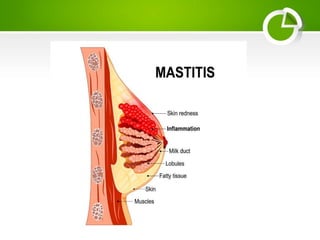
Mastitis
It is the inflammation of the breast which
often happens because of blocked milk
ducts and / or nipple damage.
TYPES OF MASTITIS
a. Clinical mastitis
b. Sub-clinical mastitis
c. Lactational mastitis
d. Non-lactational mastitis
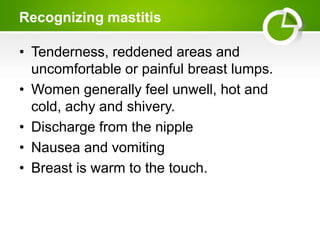
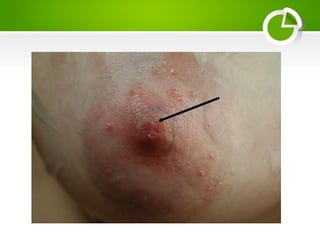
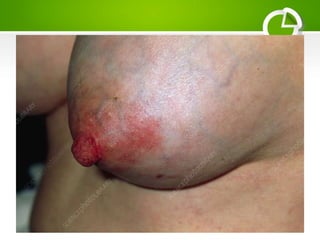
Recognizing mastitis
• Tenderness, reddened areas and
uncomfortable or painful breast lumps.
• Women generally feel unwell, hot and
cold, achy and shivery.
• Discharge from the nipple
• Nausea and vomiting
• Breast is warm to the touch.
Common causes
Baby not attaching well to the breast
Nipple damage
Blocked milk ducts
Long gaps btwn feeds-leading to very
painful breast.
Stopping breast feeding suddenly
Tight or underwire bras causing pressure
on breasts
Baby with a tongue-tie having problems
feeding.
Treatment
 Continue breastfeeding or expressing milk
from both breasts.
 Frequent feeding to prevent milk duct
blockage.
 A heat pack or warm cloth placed on the
affected area may help milk flow before
feeding or expressing.
 A cold pack placed on the breast after
feeding or expressing to reduce
inflammation and relief pain.
 Paracetamol or ibuprofen can help with
pain
 Drink plenty of water and rest when you
can.
 Antibiotics – cloxacillin, dicloxacillin or
flucloxacillin.
Prevention
o Breast feed frequently
o Don’t miss or delay feeds
o Offer both breast for each feed, if 2nd not
given, offer it first in the next feed.
o Express milk if the baby doesn’t want to
feed yet.
o Wake baby to feed if the breast becomes
too full.
o If using breast pump, check breast shield
size to ensure the pump is not causing any
nipple trauma.
o Get advice on proper feeding and
attaching.
o Avoid giving the baby other fluids unless
advised by your nurse, midwife or doctor.
o Wear comfortable non-restrictive clothing
and avoid pressure on your breasts from
hands and fingers.
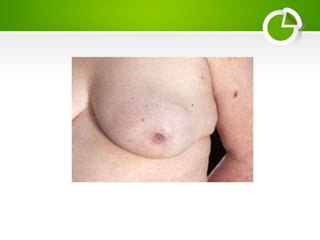
Additional breast swellings
CYSTS: these are sacs filled with fluid.
They may enlarge and feel tender right
before your period.
FIBROADENOMAS: These are the most
common breast lumps in younger women
and are usually small.
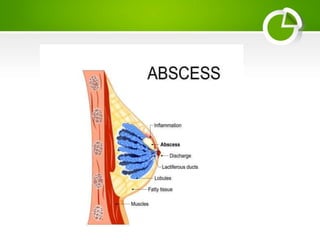
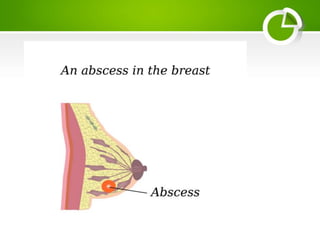
BREAST ABSCESS
Breast Abscess
It is a bacterial infection
Mostly caused by Staphylococcus aureus and
Streptococus.
At times caused by anaerobic bacteria.
Common signs and symptoms
Tender swelling of the breast
Pain in the affected area
Fever
Feeling generally unwell
Risk factors
• Trauma
• Smoking
• Obesity
• Diabetes mellitus
• Duct ectasia of the breast
• Local skin infection
Treatment
Antibiotic therapy : nafcillin, augmentin,
doxycycline, trimethoprim, clindamycin or
vancomycin.
• THANKYOU

GROUP 7 SURGERY ASSIGNMENT.-1.pptx

  • 1.
    GROUP 7 MASTITIS ANDBREAST SWELLINGS
  • 2.
    MEMBERS Leyla Ombula Denis Muchui SteveGathu Carolyne Ndunda Martin Muthomi Dorcas Sanet
  • 3.
    Mastitis It is theinflammation of the breast which often happens because of blocked milk ducts and / or nipple damage.
  • 4.
    TYPES OF MASTITIS a.Clinical mastitis b. Sub-clinical mastitis c. Lactational mastitis d. Non-lactational mastitis
  • 5.
    Recognizing mastitis • Tenderness,reddened areas and uncomfortable or painful breast lumps. • Women generally feel unwell, hot and cold, achy and shivery. • Discharge from the nipple • Nausea and vomiting • Breast is warm to the touch.
  • 9.
    Common causes Baby notattaching well to the breast Nipple damage Blocked milk ducts Long gaps btwn feeds-leading to very painful breast. Stopping breast feeding suddenly Tight or underwire bras causing pressure on breasts Baby with a tongue-tie having problems feeding.
  • 10.
    Treatment  Continue breastfeedingor expressing milk from both breasts.  Frequent feeding to prevent milk duct blockage.  A heat pack or warm cloth placed on the affected area may help milk flow before feeding or expressing.  A cold pack placed on the breast after feeding or expressing to reduce inflammation and relief pain.
  • 11.
     Paracetamol oribuprofen can help with pain  Drink plenty of water and rest when you can.  Antibiotics – cloxacillin, dicloxacillin or flucloxacillin.
  • 12.
    Prevention o Breast feedfrequently o Don’t miss or delay feeds o Offer both breast for each feed, if 2nd not given, offer it first in the next feed. o Express milk if the baby doesn’t want to feed yet. o Wake baby to feed if the breast becomes too full.
  • 13.
    o If usingbreast pump, check breast shield size to ensure the pump is not causing any nipple trauma. o Get advice on proper feeding and attaching. o Avoid giving the baby other fluids unless advised by your nurse, midwife or doctor. o Wear comfortable non-restrictive clothing and avoid pressure on your breasts from hands and fingers.
  • 14.
    Additional breast swellings CYSTS:these are sacs filled with fluid. They may enlarge and feel tender right before your period. FIBROADENOMAS: These are the most common breast lumps in younger women and are usually small.
  • 16.
  • 19.
    Breast Abscess It isa bacterial infection Mostly caused by Staphylococcus aureus and Streptococus. At times caused by anaerobic bacteria. Common signs and symptoms Tender swelling of the breast Pain in the affected area Fever Feeling generally unwell
  • 20.
    Risk factors • Trauma •Smoking • Obesity • Diabetes mellitus • Duct ectasia of the breast • Local skin infection
  • 21.
    Treatment Antibiotic therapy :nafcillin, augmentin, doxycycline, trimethoprim, clindamycin or vancomycin.
  • 22.