INTRODUCTIO
N TO IMCNI
mentorship training slides
Tiwi Ward
Objectives of IMCNI case
management
 To improve the quality of care provided to
children under five years
 To contribute to the reduction in childhood
mortality
cont
Why an integrated approach?:
 Most children present with signs and
symptoms related to more than one of these
diseases mentioned above
 Thus a single diagnosis may neither be
possible nor appropriate
 This approach is needed as need to go
beyond single diseases and address the
overall health
Aim?
 At reducing death, and frequency and severity
of illness and disability by
 Integrating treatment and prevention of major
childhood illnesses, to contribute to improved
growth and development
cont
 Therefore the IMCNI strategy combines
improved management of childhood illnesses
with aspect of:
 Nutrition
 Immunization
 Other important influences on child health
including maternal health
Cont..
 Improvement of family and community practices
 Community and family practices that if adopted can
reduce child mortalities eg
 Exclusive breastfeeding for 6months
 Appropriate complementary feeding from 6months whilst
continuing breastfeeding
 Proper disposal of feces, hand washing
 Child sleeps under ITN
 Prevention and care of HIV/AIDS
 Continue feed child and offer more food and fluids when
child sick
 Give child appropriate home treatment for infections
Components of IMCI
 Improvement of health workers skills
? Through training in case management and the systems
should thus be functional and family and community practices
have been improved
 Improvement of health systems
 Ensuring availability of essential drugs and supplies
 Organized hospital emergency area to support rapid
evaluation and management of sick children
 Training of health workers in ETAT
 Adherence to national policies for standards of care
29/05/2023
8
0
20
40
60
80
100
120
140
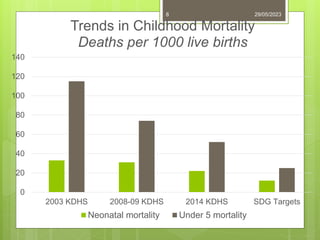
2003 KDHS 2008-09 KDHS 2014 KDHS SDG Targets
Trends in Childhood Mortality
Deaths per 1000 live births
Neonatal mortality Under 5 mortality
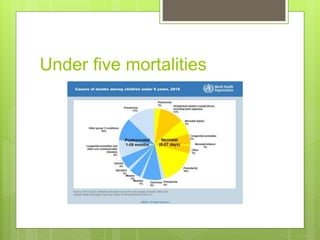
Under five mortalities
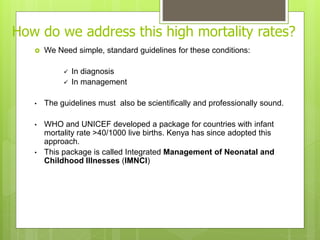
How do we address this high mortality rates?
 We Need simple, standard guidelines for these conditions:
 In diagnosis
 In management
• The guidelines must also be scientifically and professionally sound.
• WHO and UNICEF developed a package for countries with infant
mortality rate >40/1000 live births. Kenya has since adopted this
approach.
• This package is called Integrated Management of Neonatal and
Childhood Illnesses (IMNCI)
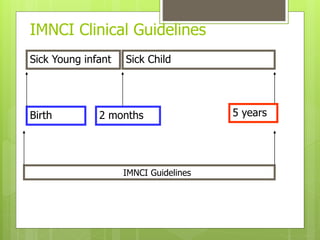
IMNCI Clinical Guidelines
2 months 5 years
IMNCI Guidelines
Sick Child
Birth
Sick Young infant
Important aspects (1)
• IMNCI does not cover all symptoms.
• IMNCI strategy is not reviewing all pediatric medicine
• Emphasis is how to deal more effectively with the most common
problems in sick children brought to the clinic.
• IMNCI strategy takes into consideration the overlapping of these
symptoms and conditions.
Important Aspects (2)
 The core interventions is integrated management of six most important
causes of death, namely:
1. Pneumonia
2. Diarrhoea
3. Measles
4. Malaria
5. Acute Malnutrition and Anemia, HIV
6. Young infant infections and birth related conditions.
• IMNCI also addresses the common signs/symptoms that
make the mother bring her child to hospital.
The IMNCI Case Management Process
 This must be performed on all sick children
 The IMNCI Case Management Process includes;
– Assessing and classifying the sick child 2 months up to 5
years.
– Identifying treatment and treating the child.
– Counseling the caregiver..
– Check for child’s developmental milestone.
– Assessing for interaction, communication& responsiveness.
– Assessing and classifying the sick young infant
– Follow up care.
This process is detailed in the IMNCI chart booklet
29/05/2023
14
The Chart Booklet and the Recording form
Chart Booklet
 The chart booklet is a IMNCI case management job aid which gives a step
by step guide on the case management process.
 Health care providers need to continuously refer to this document
throughout the case management process.
 Many mistakes service providers make in assessment, classification and
management of sick children and young infants are due to failure to use this
job aid.
Recording Form ( Chart booklet pages 48-53)
 There is a sick child and a sick young infant recording forms
 Each is used for the corresponding age group.
 The assessment findings, Classifications and management options for the
child should be recorded on this form.
29/05/2023
15
The IMCNI strategy
 It is an innovative approach
 Started in 1995 by WHO and UNICEF with aim of
introducing a comprehensive and timely
management of the 5 most common causes of ill
health and death among children
 The illnesses are:
 Pneumonia
 Diarrhea
 Measles
 malnutrition

INTRODUCTION TO IMCNI. updated.pptx

  • 1.
    INTRODUCTIO N TO IMCNI mentorshiptraining slides Tiwi Ward
  • 2.
    Objectives of IMCNIcase management  To improve the quality of care provided to children under five years  To contribute to the reduction in childhood mortality
  • 3.
    cont Why an integratedapproach?:  Most children present with signs and symptoms related to more than one of these diseases mentioned above  Thus a single diagnosis may neither be possible nor appropriate  This approach is needed as need to go beyond single diseases and address the overall health
  • 4.
    Aim?  At reducingdeath, and frequency and severity of illness and disability by  Integrating treatment and prevention of major childhood illnesses, to contribute to improved growth and development
  • 5.
    cont  Therefore theIMCNI strategy combines improved management of childhood illnesses with aspect of:  Nutrition  Immunization  Other important influences on child health including maternal health
  • 6.
    Cont..  Improvement offamily and community practices  Community and family practices that if adopted can reduce child mortalities eg  Exclusive breastfeeding for 6months  Appropriate complementary feeding from 6months whilst continuing breastfeeding  Proper disposal of feces, hand washing  Child sleeps under ITN  Prevention and care of HIV/AIDS  Continue feed child and offer more food and fluids when child sick  Give child appropriate home treatment for infections
  • 7.
    Components of IMCI Improvement of health workers skills ? Through training in case management and the systems should thus be functional and family and community practices have been improved  Improvement of health systems  Ensuring availability of essential drugs and supplies  Organized hospital emergency area to support rapid evaluation and management of sick children  Training of health workers in ETAT  Adherence to national policies for standards of care
  • 8.
    29/05/2023 8 0 20 40 60 80 100 120 140 2003 KDHS 2008-09KDHS 2014 KDHS SDG Targets Trends in Childhood Mortality Deaths per 1000 live births Neonatal mortality Under 5 mortality
  • 9.
  • 10.
    How do weaddress this high mortality rates?  We Need simple, standard guidelines for these conditions:  In diagnosis  In management • The guidelines must also be scientifically and professionally sound. • WHO and UNICEF developed a package for countries with infant mortality rate >40/1000 live births. Kenya has since adopted this approach. • This package is called Integrated Management of Neonatal and Childhood Illnesses (IMNCI)
  • 11.
    IMNCI Clinical Guidelines 2months 5 years IMNCI Guidelines Sick Child Birth Sick Young infant
  • 12.
    Important aspects (1) •IMNCI does not cover all symptoms. • IMNCI strategy is not reviewing all pediatric medicine • Emphasis is how to deal more effectively with the most common problems in sick children brought to the clinic. • IMNCI strategy takes into consideration the overlapping of these symptoms and conditions.
  • 13.
    Important Aspects (2) The core interventions is integrated management of six most important causes of death, namely: 1. Pneumonia 2. Diarrhoea 3. Measles 4. Malaria 5. Acute Malnutrition and Anemia, HIV 6. Young infant infections and birth related conditions. • IMNCI also addresses the common signs/symptoms that make the mother bring her child to hospital.
  • 14.
    The IMNCI CaseManagement Process  This must be performed on all sick children  The IMNCI Case Management Process includes; – Assessing and classifying the sick child 2 months up to 5 years. – Identifying treatment and treating the child. – Counseling the caregiver.. – Check for child’s developmental milestone. – Assessing for interaction, communication& responsiveness. – Assessing and classifying the sick young infant – Follow up care. This process is detailed in the IMNCI chart booklet 29/05/2023 14
  • 15.
    The Chart Bookletand the Recording form Chart Booklet  The chart booklet is a IMNCI case management job aid which gives a step by step guide on the case management process.  Health care providers need to continuously refer to this document throughout the case management process.  Many mistakes service providers make in assessment, classification and management of sick children and young infants are due to failure to use this job aid. Recording Form ( Chart booklet pages 48-53)  There is a sick child and a sick young infant recording forms  Each is used for the corresponding age group.  The assessment findings, Classifications and management options for the child should be recorded on this form. 29/05/2023 15
  • 16.
    The IMCNI strategy It is an innovative approach  Started in 1995 by WHO and UNICEF with aim of introducing a comprehensive and timely management of the 5 most common causes of ill health and death among children  The illnesses are:  Pneumonia  Diarrhea  Measles  malnutrition