Breastfeeding
                                                                   Information for GPs and Pharmacists


                                                                                                     FACTSHEET


   Mastitis                                                                                            04
This is an inflammatory condition of the breast that is frequently accompanied
by infection. It is most common in the first 12 weeks postpartum and occurs in
up to 33% of breastfeeding women.
Pathophysiology: Mastitis is a result of ineffective
removal of milk from the breast. This results in stasis
in an area of breast tissue. This sets up an inflamma-
tory process leading to pain, erythema and pyrexia. If
it is not resolved the area becomes infected. Infec-
tion is more likely to occur if the mother has cracked
nipples as this provides a portal of entry for infectious
organisms. (1, 2, 3)

Presentation: It presents with fever, malaise, flu-like
symptoms, myalgia, mild breast tenderness or severe
breast pain.                                                Blocked ducts
                                                            It is not easy to distinguish mastitis from a blocked
Examination: may reveal a wedge shaped area of              duct. A blocked duct presents as a painful, swollen
the breast which is pink, hot, swollen and tender.          firm mass in the breast. It usually resolves within 24-
                                                            48hrs if managed correctly.
Treatment:                                                  Management involves, res t, increased frequency of
  • Increase frequency of feeds from affected breast.        feeding from the affected breast, and heat applica-
    The mother may need to use a breast pump to             tion. If it has not resolved within 48 hrs therapeutic
    express milk from this breast if the baby will not      ultrasound may be beneficial. The author has no
    latch on.                                               personal experience of acquiring this treatment for
  • Analgesia such as paracetamol or non-steroidal          patients. It is not a well known use of ultrasound.
    anti-inflammatories.                                     The dose is 2 watts/cm2, continuous for five minutes
  • Rest – this allows the baby to feed more frequent-      to the affected area, once daily for up to two doses.(4)
    ly and stimulates the release of prolactin.
  • Antibiotics – most women with mastitis need             Breast abscess
    antibiotics. Antibiotic options include:                Breast abscess occurs in 5-10% of patients with masti-
      o Flucloxacillin 500mgs 6 hourly (first line)          tis and is often associated with delayed or inadequate
      o Erythromycin 250-500mgs 6 hourly (penicillin        treatment of mastitis.
        sensitivity)                                        It presents as a painful, firm lump which will not go
      o Cephalexin 500mgs 8 hourly (second line)            away. It is usually hot, red and the mother will feel
      o Co-amoxiclav 625mgs 8 hourly (third line)           unwell. All suspected breast abscesses need special-
    Prescribe antibiotics for 10-14 days to prevent         ist referral. It is important to advise the mother to
    recurrence.                                             continue breastfeeding especially on the affected
                                                            side. Breast lumps are usually treated by repeated
 Culture of breastmilk may be useful in persistent or       needle aspiration under radiological control. Surgical
recurrent infections.(6) This should be discussed with      incision and drainage is not commonly required in
the local microbiologist before sending a sample.           recent times. (5)

Mastitis                                                                                      © Health Service Executive 2008
Breastfeeding
                                                                   Information for GPs and Pharmacists


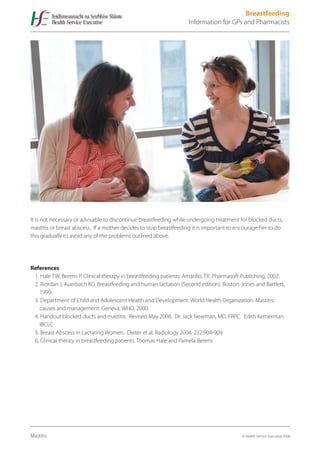
It is not necessary or advisable to discontinue breastfeeding while undergoing treatment for blocked ducts,
mastitis or breast abscess. If a mother decides to stop breastfeeding it is important to encourage her to do
this gradually to avoid any of the problems outlined above.


References
 1. Hale TW, Berens P. Clinical therapy in breastfeeding patients. Amarillo, TX: Pharmasoft Publishing, 2002.
 2. Riordan J, Auerbach KG. Breastfeeding and human lactation (Second edition). Boston: Jones and Bartlett,
    1999.
 3. Department of Child and Adolescent Health and Development: World Health Organization. Mastitis:
    causes and management. Geneva: WHO, 2000.
 4. Handout blocked ducts and mastitis. Revised May 2008. Dr. Jack Newman, MD, FRPC. Edith Kernerman.
    IBCLC
 5. Breast Abscess in Lactating Women. Dieter et al. Radiology 2004; 232:904-909
 6. Clinical thera;y in breastfeeding patients. Thomas Hale and Pamela Berens


Mastitis                                                                                  © Health Service Executive 2008

Mastitis

  • 1.
    Breastfeeding Information for GPs and Pharmacists FACTSHEET Mastitis 04 This is an inflammatory condition of the breast that is frequently accompanied by infection. It is most common in the first 12 weeks postpartum and occurs in up to 33% of breastfeeding women. Pathophysiology: Mastitis is a result of ineffective removal of milk from the breast. This results in stasis in an area of breast tissue. This sets up an inflamma- tory process leading to pain, erythema and pyrexia. If it is not resolved the area becomes infected. Infec- tion is more likely to occur if the mother has cracked nipples as this provides a portal of entry for infectious organisms. (1, 2, 3) Presentation: It presents with fever, malaise, flu-like symptoms, myalgia, mild breast tenderness or severe breast pain. Blocked ducts It is not easy to distinguish mastitis from a blocked Examination: may reveal a wedge shaped area of duct. A blocked duct presents as a painful, swollen the breast which is pink, hot, swollen and tender. firm mass in the breast. It usually resolves within 24- 48hrs if managed correctly. Treatment: Management involves, res t, increased frequency of • Increase frequency of feeds from affected breast. feeding from the affected breast, and heat applica- The mother may need to use a breast pump to tion. If it has not resolved within 48 hrs therapeutic express milk from this breast if the baby will not ultrasound may be beneficial. The author has no latch on. personal experience of acquiring this treatment for • Analgesia such as paracetamol or non-steroidal patients. It is not a well known use of ultrasound. anti-inflammatories. The dose is 2 watts/cm2, continuous for five minutes • Rest – this allows the baby to feed more frequent- to the affected area, once daily for up to two doses.(4) ly and stimulates the release of prolactin. • Antibiotics – most women with mastitis need Breast abscess antibiotics. Antibiotic options include: Breast abscess occurs in 5-10% of patients with masti- o Flucloxacillin 500mgs 6 hourly (first line) tis and is often associated with delayed or inadequate o Erythromycin 250-500mgs 6 hourly (penicillin treatment of mastitis. sensitivity) It presents as a painful, firm lump which will not go o Cephalexin 500mgs 8 hourly (second line) away. It is usually hot, red and the mother will feel o Co-amoxiclav 625mgs 8 hourly (third line) unwell. All suspected breast abscesses need special- Prescribe antibiotics for 10-14 days to prevent ist referral. It is important to advise the mother to recurrence. continue breastfeeding especially on the affected side. Breast lumps are usually treated by repeated Culture of breastmilk may be useful in persistent or needle aspiration under radiological control. Surgical recurrent infections.(6) This should be discussed with incision and drainage is not commonly required in the local microbiologist before sending a sample. recent times. (5) Mastitis © Health Service Executive 2008
  • 2.
    Breastfeeding Information for GPs and Pharmacists It is not necessary or advisable to discontinue breastfeeding while undergoing treatment for blocked ducts, mastitis or breast abscess. If a mother decides to stop breastfeeding it is important to encourage her to do this gradually to avoid any of the problems outlined above. References 1. Hale TW, Berens P. Clinical therapy in breastfeeding patients. Amarillo, TX: Pharmasoft Publishing, 2002. 2. Riordan J, Auerbach KG. Breastfeeding and human lactation (Second edition). Boston: Jones and Bartlett, 1999. 3. Department of Child and Adolescent Health and Development: World Health Organization. Mastitis: causes and management. Geneva: WHO, 2000. 4. Handout blocked ducts and mastitis. Revised May 2008. Dr. Jack Newman, MD, FRPC. Edith Kernerman. IBCLC 5. Breast Abscess in Lactating Women. Dieter et al. Radiology 2004; 232:904-909 6. Clinical thera;y in breastfeeding patients. Thomas Hale and Pamela Berens Mastitis © Health Service Executive 2008