DEPARTMENT OF ARCHITECTURE 
Presented by: 
M.Swathi
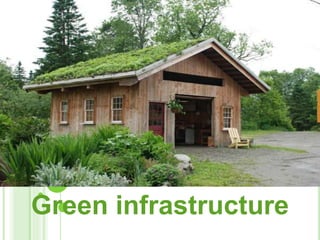
Green infrastructure
Green infrastructure is interconnected green 
space net work population. 
It includes natural areas and features, public 
and private conservation lands, working lands 
with conservation values and other protected 
open spaces. 
It is planned and managed for its natural 
resources values and for the associated 
benefits it confers to humans.
WHY GREEN INFRASTRUCTURE?
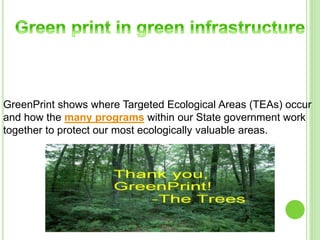
GreenPrint shows where Targeted Ecological Areas (TEAs) occur 
and how the many programs within our State government work 
together to protect our most ecologically valuable areas.
Right-of-way Boswells 
Storm water Green streets 
Green Roofs 
Blue Roofs 
Rain Gardens 
Permeable Paving 
Subsurface Detention 
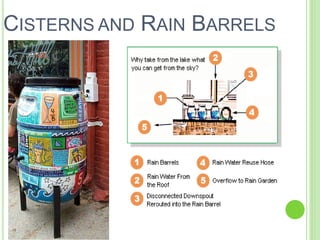
Cisterns and Rain Barrels
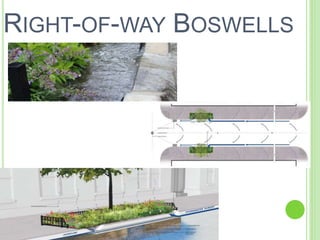
RIGHT-OF-WAY BOSWELLS
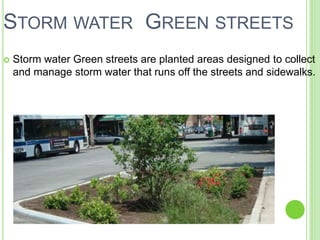
STORM WATER GREEN STREETS 
 Storm water Green streets are planted areas designed to collect 
and manage storm water that runs off the streets and sidewalks.
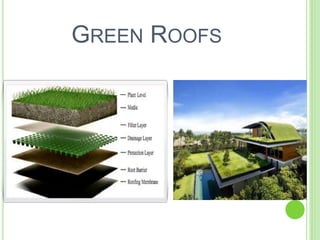
GREEN ROOFS
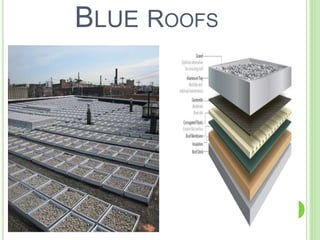
BLUE ROOFS
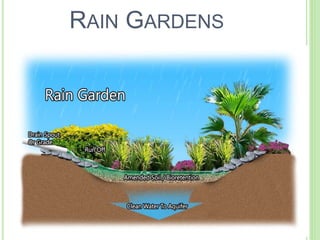
RAIN GARDENS
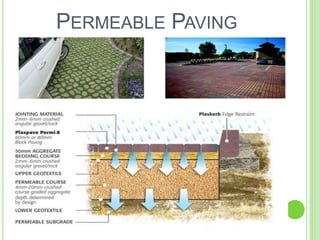
PERMEABLE PAVING
SUBSURFACE DETENTION 
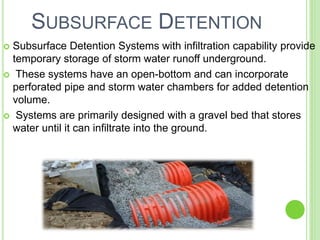
 Subsurface Detention Systems with infiltration capability provide 
temporary storage of storm water runoff underground. 
 These systems have an open-bottom and can incorporate 
perforated pipe and storm water chambers for added detention 
volume. 
 Systems are primarily designed with a gravel bed that stores 
water until it can infiltrate into the ground.
CISTERNS AND RAIN BARRELS
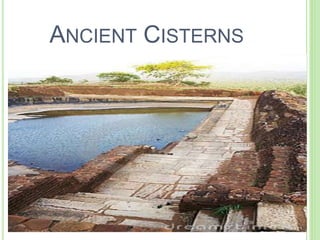
ANCIENT CISTERNS
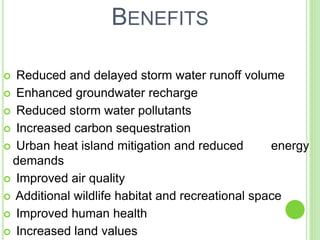
BENEFITS 
 Reduced and delayed storm water runoff volume 
 Enhanced groundwater recharge 
 Reduced storm water pollutants 
 Increased carbon sequestration 
 Urban heat island mitigation and reduced energy 
demands 
 Improved air quality 
 Additional wildlife habitat and recreational space 
 Improved human health 
 Increased land values
Green infrastructure

Green infrastructure

  • 1.
    DEPARTMENT OF ARCHITECTURE Presented by: M.Swathi
  • 2.
  • 3.
    Green infrastructure isinterconnected green space net work population. It includes natural areas and features, public and private conservation lands, working lands with conservation values and other protected open spaces. It is planned and managed for its natural resources values and for the associated benefits it confers to humans.
  • 4.
  • 5.
    GreenPrint shows whereTargeted Ecological Areas (TEAs) occur and how the many programs within our State government work together to protect our most ecologically valuable areas.
  • 6.
    Right-of-way Boswells Stormwater Green streets Green Roofs Blue Roofs Rain Gardens Permeable Paving Subsurface Detention Cisterns and Rain Barrels
  • 7.
  • 8.
    STORM WATER GREENSTREETS  Storm water Green streets are planted areas designed to collect and manage storm water that runs off the streets and sidewalks.
  • 9.
  • 10.
  • 11.
  • 12.
  • 13.
    SUBSURFACE DETENTION Subsurface Detention Systems with infiltration capability provide temporary storage of storm water runoff underground.  These systems have an open-bottom and can incorporate perforated pipe and storm water chambers for added detention volume.  Systems are primarily designed with a gravel bed that stores water until it can infiltrate into the ground.
  • 14.
  • 15.
  • 16.
    BENEFITS  Reducedand delayed storm water runoff volume  Enhanced groundwater recharge  Reduced storm water pollutants  Increased carbon sequestration  Urban heat island mitigation and reduced energy demands  Improved air quality  Additional wildlife habitat and recreational space  Improved human health  Increased land values