
By Ruth WangiaBy Ruth Wangia
Sustainable Spelman InternSustainable Spelman Intern
An AUC Forum on Green InfrastructureAn AUC Forum on Green Infrastructure
March 17March 17thth
20152015

 In undeveloped areas runoff water is absorbed by soil &
plants(Slowed down, and soaked in)
 Replenishes ground water sources
 Water cannot soak into the ground of impervious
surfaces
 Storm water runoff causes water pollution in urban
areas
 GI provides a functional cost effective solution to
urban runoff
Introduction

Pervious vs Impervious

 Urban centers have engineered storm sewers that
drain and discharge storm water
 Storm water carries, heavy metals, trash,& other
pollutants to nearby water bodies
 In Atlanta some storm water is combined with
sewers
 Degrades the quality of receiving waters
 Higher flows cause erosion
 Loss of habitat and aquatic life
 Increased flooding
Water Pollution

 Uses natural process to manage storm water and
create healthier urban spaces
 Management system that mimic natural processes to
 infiltrate storm water
 Evapotranspiration
 Repurpose storm water
 Retains water onsite reducing runoff
 Controls storm water
 Slows it down, spread it out and soaks it in
Green Infrastructure

Examples of GI
 Rain gardens
 Bioswales
 Permeable pavements
 Rain water harvesting
 Downspout
disconnection
 Green Streets
 Green parking
 Urban tree Canopy

Rain gardens
 Also bio retention cells
 Are shallow, vegetated
basins
 Collect and absorb
runoff from sidewalks
 Mimics natural
hydrology(infiltration
& evapotranspiration)

Bio swales
 Shallow depression
 Carries water during
storms & snowmelts
 Removes silt and
pollutants from surface
runoff
 Mulched, vegetated or
xeriscaped

Permeable pavements
 Paved surface that
infiltrate and store
water where it falls
 Cost effective where
flooding or icing is a
problem
 Can be constructed
from pervious concrete,
& porous asphalt

Rainwater Harvesting
 Collects and stores
rainwater for later use
 Mitigates runoff
 Attractive in arid
regions
 Reduce the demand on
limited water supplies

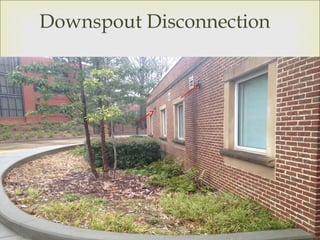
Downspout
Disconnection
 Re-routing rooftop
drainage pipes to drain
rain water to permeable
areas e.g. rain gardens
 Allows storm water to
infiltrate the soil

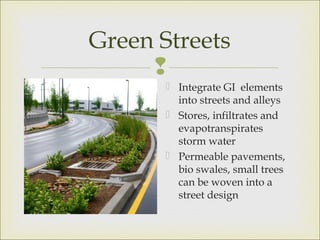
Green Streets
 Integrate GI elements
into streets and alleys
 Stores, infiltrates and
evapotranspirates
storm water
 Permeable pavements,
bio swales, small trees
can be woven into a
street design

Green Parking
 Incorporate the GI
elements into parking
lot designs
 Rain gardens & bio
swales can be in
medians & along
perimeter of parking lot
 Use of permeable
pavements

Urban Tree Canopy
 Trees Reduce & slow
storm water
 Intercepts precipitation
in leaves and branches
 Mitigates urban heat
islands
 Trees Atlanta

 ~75% pervious surface
 24ft wide pavement replaced by 12 ft wide sidewalk
 Installed a 60,000 gallon cistern used for irrigation
system
 Rain gardens as part of its Landscape Beautification
 Green Space at the oval
 Xeriscaped landscape between Bessie Strong and
Reynolds Cottage
 Use of native plant species around Laura Spelman
Spelman College

Pavement Reduction

Cistern Installation

Downspout Disconnection

Rain Gardens

Wellness center Bioretention

Xeriscaping

Thank You
Q & A

 Bioswale." - Wiktionary. Wikipedia.org, 05 Feb. 2015. Web.
9 Mar. 2015.
 "Green Infrastructure Practices." Clean Water Nashville
Program:. Cleanwaternashville.org, n.d. Web. 9 Mar. 2015.
 "Green Infrastructure." What Is Green Infrastructure?
United States Environmental Protection Agency, 13 June
2014. Web. 9 Mar. 2015.
 Kerry G. "How To Reduce Stormwater Runoff From Your
Home or Business." HubPages. N.p., 17 July 2010. Web. 10
Mar. 2015.
References

Building Green: Repurposing Stormwater for Sustainable Development

  • 1.
    By Ruth WangiaByRuth Wangia Sustainable Spelman InternSustainable Spelman Intern An AUC Forum on Green InfrastructureAn AUC Forum on Green Infrastructure March 17March 17thth 20152015
  • 2.
      In undevelopedareas runoff water is absorbed by soil & plants(Slowed down, and soaked in)  Replenishes ground water sources  Water cannot soak into the ground of impervious surfaces  Storm water runoff causes water pollution in urban areas  GI provides a functional cost effective solution to urban runoff Introduction
  • 3.
  • 4.
      Urban centershave engineered storm sewers that drain and discharge storm water  Storm water carries, heavy metals, trash,& other pollutants to nearby water bodies  In Atlanta some storm water is combined with sewers  Degrades the quality of receiving waters  Higher flows cause erosion  Loss of habitat and aquatic life  Increased flooding Water Pollution
  • 6.
      Uses naturalprocess to manage storm water and create healthier urban spaces  Management system that mimic natural processes to  infiltrate storm water  Evapotranspiration  Repurpose storm water  Retains water onsite reducing runoff  Controls storm water  Slows it down, spread it out and soaks it in Green Infrastructure
  • 7.
     Examples of GI Rain gardens  Bioswales  Permeable pavements  Rain water harvesting  Downspout disconnection  Green Streets  Green parking  Urban tree Canopy
  • 8.
     Rain gardens  Alsobio retention cells  Are shallow, vegetated basins  Collect and absorb runoff from sidewalks  Mimics natural hydrology(infiltration & evapotranspiration)
  • 9.
     Bio swales  Shallowdepression  Carries water during storms & snowmelts  Removes silt and pollutants from surface runoff  Mulched, vegetated or xeriscaped
  • 10.
     Permeable pavements  Pavedsurface that infiltrate and store water where it falls  Cost effective where flooding or icing is a problem  Can be constructed from pervious concrete, & porous asphalt
  • 11.
     Rainwater Harvesting  Collectsand stores rainwater for later use  Mitigates runoff  Attractive in arid regions  Reduce the demand on limited water supplies
  • 12.
     Downspout Disconnection  Re-routing rooftop drainagepipes to drain rain water to permeable areas e.g. rain gardens  Allows storm water to infiltrate the soil
  • 13.
     Green Streets  IntegrateGI elements into streets and alleys  Stores, infiltrates and evapotranspirates storm water  Permeable pavements, bio swales, small trees can be woven into a street design
  • 14.
     Green Parking  Incorporatethe GI elements into parking lot designs  Rain gardens & bio swales can be in medians & along perimeter of parking lot  Use of permeable pavements
  • 15.
     Urban Tree Canopy Trees Reduce & slow storm water  Intercepts precipitation in leaves and branches  Mitigates urban heat islands  Trees Atlanta
  • 16.
      ~75% pervioussurface  24ft wide pavement replaced by 12 ft wide sidewalk  Installed a 60,000 gallon cistern used for irrigation system  Rain gardens as part of its Landscape Beautification  Green Space at the oval  Xeriscaped landscape between Bessie Strong and Reynolds Cottage  Use of native plant species around Laura Spelman Spelman College
  • 17.
  • 18.
  • 19.
  • 20.
  • 21.
  • 22.
  • 23.
  • 24.
      Bioswale." -Wiktionary. Wikipedia.org, 05 Feb. 2015. Web. 9 Mar. 2015.  "Green Infrastructure Practices." Clean Water Nashville Program:. Cleanwaternashville.org, n.d. Web. 9 Mar. 2015.  "Green Infrastructure." What Is Green Infrastructure? United States Environmental Protection Agency, 13 June 2014. Web. 9 Mar. 2015.  Kerry G. "How To Reduce Stormwater Runoff From Your Home or Business." HubPages. N.p., 17 July 2010. Web. 10 Mar. 2015. References

Editor's Notes

  • #10 Image by Jessica Woolliams from flickr.com Bioswale in Vancouver on Green Skyline 2009
  • #15 http://msdprojectwin.org/
  • #16 http://www.vtnews.vt.edu/articles/2012/11/112112-cnre-treecanopymapper.html
  • #21 Functional and beautiful Different sizes
  • #22 Functional and beautiful Different sizes