Statuary Publication
This is the sole publication of the Author. Any misuse and the
mis-interpretation of this document by anyone, author does not
take the responsibility for the same.
Urban green infrastructure-
Presented by: Amit Pokhrel
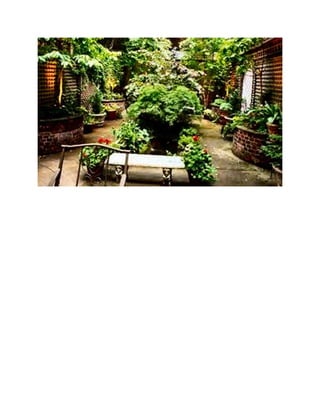
The green infrastructure of a city consists of those parts that contribute to the
natural processes of keeping the water and the air clean and recycling of waste, It
includes the parks and wild lands, stream corridors, utility corridors and vacant
regenerating sites, These fragments of city property, if considered as a single
system similar to transportation or waste treatment, offer opportunities for keeping
our cities clean and for providing recreational space.
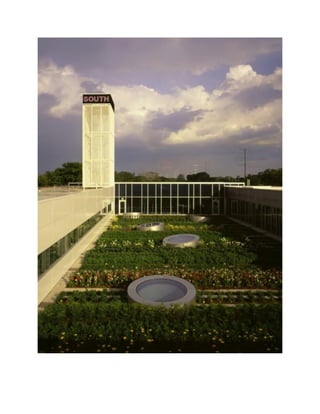
Arboriculture, bios wale, conservation corridor, Eco roof, green walls, heat island,
infrastructure, parks, porous paving, retaining wall, vegetation Cities are a complex
interaction of the natural and built elements. In order to maintain some degree of
balance in the natural systems, we have to introduce engineered systems to create
and transport energy, to remove and process wastes, to control storm runoff, etc
The green infrastructure of the city is comprised of natural and designed systems of
the elements of the city that functions in ways analogous to natural processes in
managing air, water, microclimatic and energy resources
especially for
 Air quality improvement
 microclimatic modification
 storm water management
 density zoning
 cluster development
 street with limits
 pollutant collector
next,
GREENWAYS BY –Loring LaB. Schwarz, editor
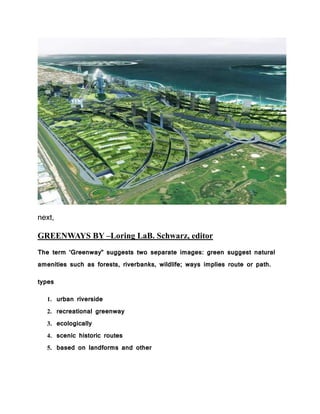
The term ‘Greenway” suggests two separate images: green suggest natural
amenities such as forests, riverbanks, wildlife; ways implies route or path.
types
1. urban riverside
2. recreational greenway
3. ecologically
4. scenic historic routes
5. based on landforms and other
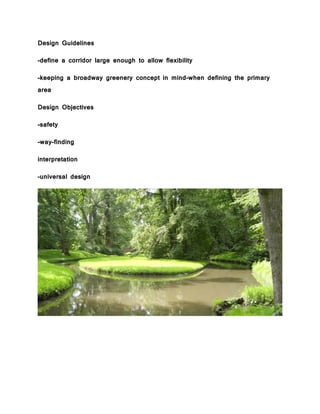
Design Guidelines
-define a corridor large enough to allow flexibility
-keeping a broadway greenery concept in mind-when defining the primary
area
Design Objectives
-safety
-way-finding
interpretation
-universal design
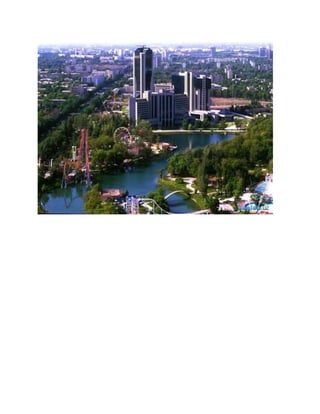
Green cities concept in urban design

Green cities concept in urban design

  • 1.
    Statuary Publication This isthe sole publication of the Author. Any misuse and the mis-interpretation of this document by anyone, author does not take the responsibility for the same. Urban green infrastructure- Presented by: Amit Pokhrel The green infrastructure of a city consists of those parts that contribute to the natural processes of keeping the water and the air clean and recycling of waste, It includes the parks and wild lands, stream corridors, utility corridors and vacant regenerating sites, These fragments of city property, if considered as a single system similar to transportation or waste treatment, offer opportunities for keeping our cities clean and for providing recreational space. Arboriculture, bios wale, conservation corridor, Eco roof, green walls, heat island, infrastructure, parks, porous paving, retaining wall, vegetation Cities are a complex interaction of the natural and built elements. In order to maintain some degree of balance in the natural systems, we have to introduce engineered systems to create and transport energy, to remove and process wastes, to control storm runoff, etc
  • 2.
    The green infrastructureof the city is comprised of natural and designed systems of the elements of the city that functions in ways analogous to natural processes in managing air, water, microclimatic and energy resources especially for  Air quality improvement  microclimatic modification  storm water management  density zoning  cluster development  street with limits  pollutant collector
  • 5.
    next, GREENWAYS BY –LoringLaB. Schwarz, editor The term ‘Greenway” suggests two separate images: green suggest natural amenities such as forests, riverbanks, wildlife; ways implies route or path. types 1. urban riverside 2. recreational greenway 3. ecologically 4. scenic historic routes 5. based on landforms and other
  • 6.
    Design Guidelines -define acorridor large enough to allow flexibility -keeping a broadway greenery concept in mind-when defining the primary area Design Objectives -safety -way-finding interpretation -universal design