Green Building is a Myth or
we have Misconception…..??
COGNIZANCE-2017
(24-26 March, 2017)
Indian Institute of Technology, Roorkee
(CONVERT OLD BUILDINGS INTO GREEN &
REDUCE THE EXPLOITATION OF ENVIRONMENT)
Presented By –
Avitesh, Karan Nagpal
Himalyan University
M.Tech Civil (Construction Engg.)
OBJECTIVES:-
The main objectives of this study are –
•To understand, what is the correct meaning of green
building?
•Fundamental principals.
•How green building can reduce the exploitation of
environment? Benefits of Green Building.
•How can we convert an old building into an eco-friendly
building?
• Study of:-
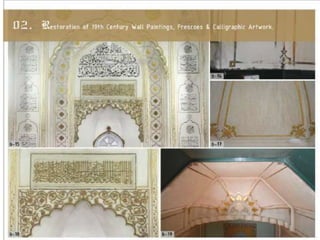
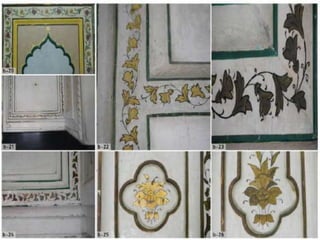
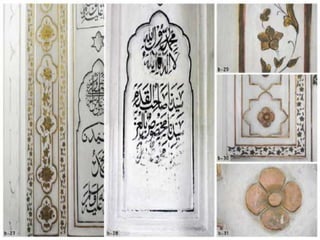
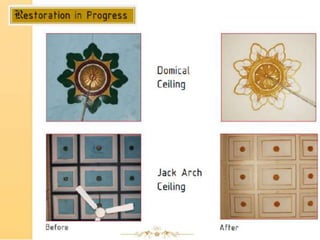
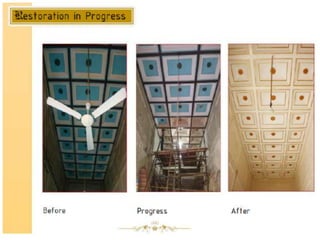
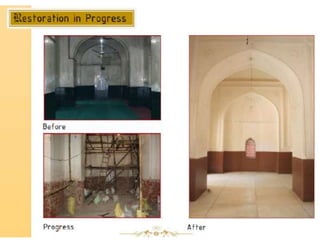
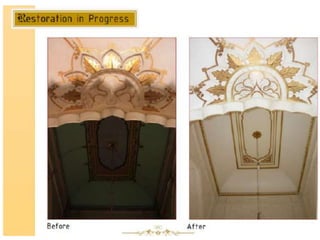
•Preventive Restoration of Jama Mashid,
Aligarh Muslim University.
Introduction To Green
Buildings
3
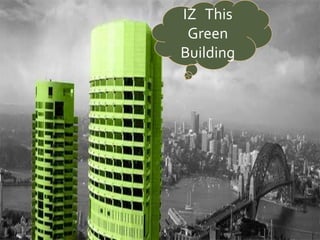
IZ This
Green
Building
There are lots of discussions, about Green Buildings and sustainable
development.
But the main question is what do we understand about Green Buildings?
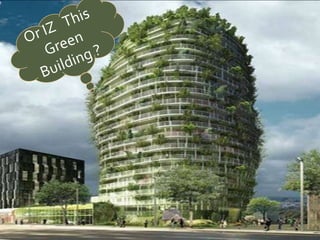
A building which is colored in green or full of landscape (including
vertical and terrace gardening) not green building.
Green Building means, a building which is
optimizing on the local ecology, using local
available materials as far as possible and most
important thing is used resources like energy,
water and materials reducing building impacts on
environment also on human health. These are the
buildings that ensure waste will be minimized during
construction at every stage, resulting in low costs
and building will sustain better and for long time.
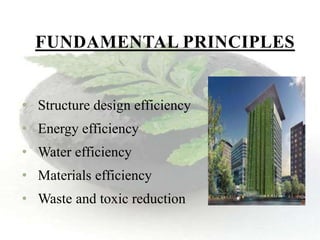
FUNDAMENTAL PRINCIPLES
• Structure design efficiency
• Energy efficiency
• Water efficiency
• Materials efficiency
• Waste and toxic reduction
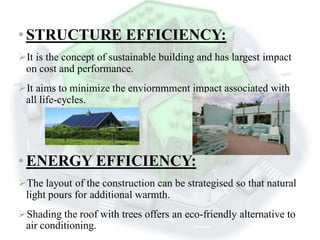
• STRUCTURE EFFICIENCY:
It is the concept of sustainable building and has largest impact
on cost and performance.
It aims to minimize the enviornmment impact associated with
all life-cycles.
• ENERGY EFFICIENCY:
The layout of the construction can be strategised so that natural
light pours for additional warmth.
Shading the roof with trees offers an eco-friendly alternative to
air conditioning.
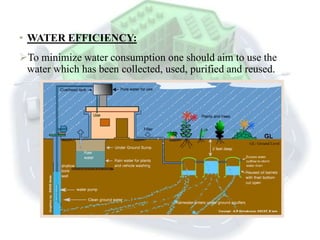
• WATER EFFICIENCY:
To minimize water consumption one should aim to use the
water which has been collected, used, purified and reused.
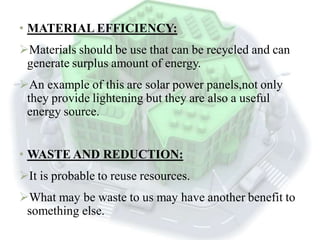
• MATERIAL EFFICIENCY:
Materials should be use that can be recycled and can
generate surplus amount of energy.
An example of this are solar power panels,not only
they provide lightening but they are also a useful
energy source.
• WASTE AND REDUCTION:
It is probable to reuse resources.
What may be waste to us may have another benefit to
something else.
BENEFITS OF GREEN BUILDING
• Buildings have a large effect on the
enviornment,human health and the economy.
• The successful adoption of GREEN
BUILDING development can maximize both
the economic and enviornmental performance
of the buildings.
ENVIORNMENTAL BENEFITS
•Protect biodiversity and ecosystems
•Improve air and water quality
•Reduce waste streams
•Conserve natural resources
ECONOMIC BENEFITS
• Reduce operating costs
• Create, expand, and shape markets for green
product and services
• Improve occupant productivity
SOCIAL BENEFITS
•Enhance occupant comfort and health.
•Heighten aesthetic qualities.
•Minimize strain on local infrastructure.
•Improve overall quality of life.
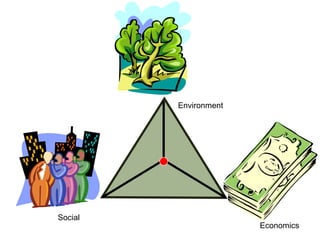
Economics
Social
Environment
Now this is the time when we should make a way to
maximize our natural resources and also help our
earth to get some relief since pollution is
everywhere plus the global warming that we are all
experiencing.
There is also a common misconception; some
people think that they can’t go with Green building
because it will cost them money.
Non-renewable energy is expensive and unsafe but
did you know that through green building we can
save lots of energy.
This is an investment that will be able to save your
money, as well as an investment that will be able to
help the environment.
•FEATURES OF GREEN BUILDING
Green buildings have many features. Some
important advantages indicating below:-
•Energy efficient equipment for air conditioning
and lighting systems & Use of onsite renewable
energy.
•Measurement and verification plan to ensure
energy & water savings.
•Reduction of building footprints to minimize the
impact on environment.
•Minimal disturbance to landscapes and site
condition.
•Use of recycled, Non-toxic and environmental
friendly building materials.
•Efficient use of Water Recycling
•Indoor air quality improvement for human safety and
comfort.
•Effective controls and building management
systems.
•Installation of high efficiency irrigation methods and
selection of vegetation which have low water
consumption.
•Recycling of construction debris.
•Use of building materials having a high recycled
content.
•Use of rapidly renewable materials.
Materials Used In Green Constructions
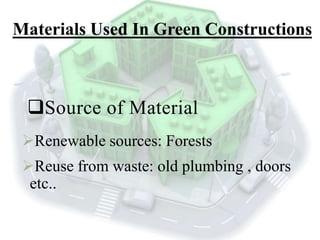
Source of Material
Renewable sources: Forests
Reuse from waste: old plumbing , doors
etc..
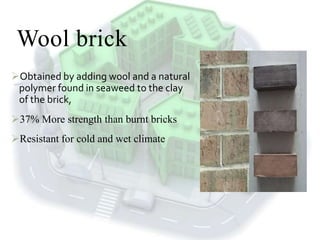
Wool brick
Obtained by adding wool and a natural
polymer found in seaweed to the clay
of the brick,
37% More strength than burnt bricks
Resistant for cold and wet climate
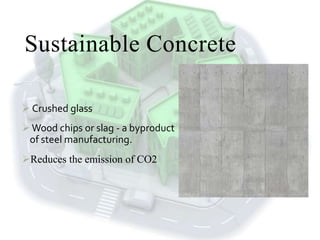
Sustainable Concrete
 Crushed glass
Wood chips or slag - a byproduct
of steel manufacturing.
Reduces the emission of CO2
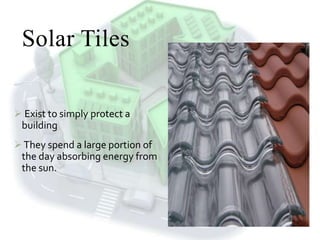
Solar Tiles
 Exist to simply protect a
building
They spend a large portion of
the day absorbing energy from
the sun.
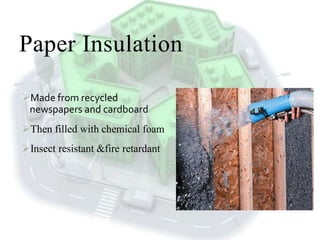
Paper Insulation
Made from recycled
newspapers and cardboard
Then filled with chemical foam
Insect resistant &fire retardant
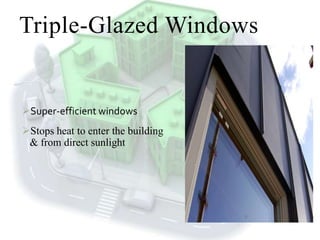
Triple-Glazed Windows
Super-efficient windows
Stops heat to enter the building
& from direct sunlight
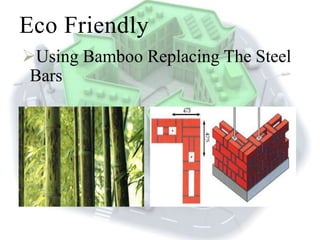
Eco Friendly
Using Bamboo Replacing The Steel
Bars
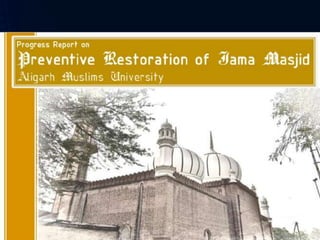
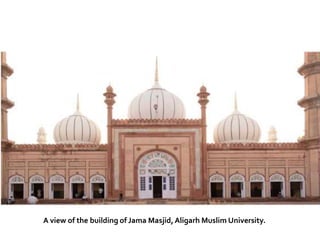
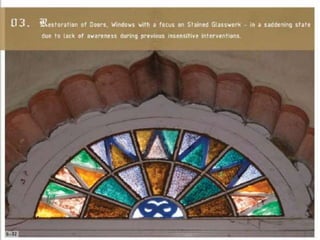
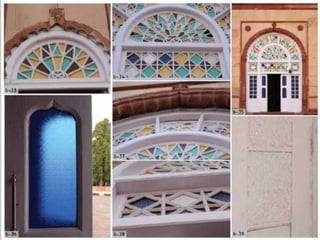
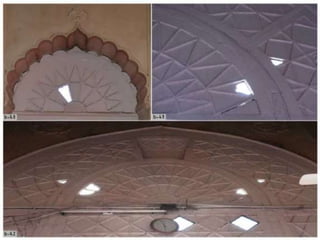
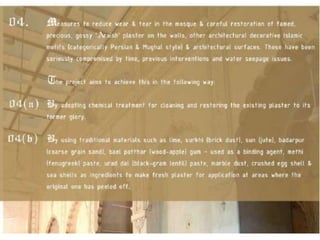
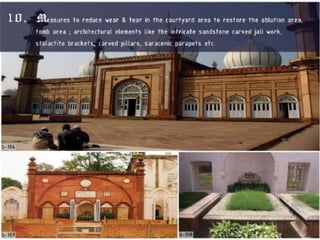
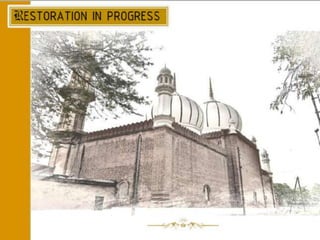
A view of the building of Jama Masjid,Aligarh Muslim University.
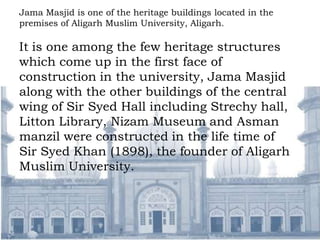
Jama Masjid is one of the heritage buildings located in the
premises of Aligarh Muslim University, Aligarh.
It is one among the few heritage structures
which come up in the first face of
construction in the university, Jama Masjid
along with the other buildings of the central
wing of Sir Syed Hall including Strechy hall,
Litton Library, Nizam Museum and Asman
manzil were constructed in the life time of
Sir Syed Khan (1898), the founder of Aligarh
Muslim University.
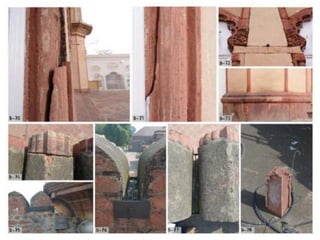
Decay in Heritage Structures-
Heritage belongs to all of us and it is our responsibility to protect our
heritage structures.
Its interpretation can play an important role in enhancing people’s
awareness, understanding & appreciation of time and place.
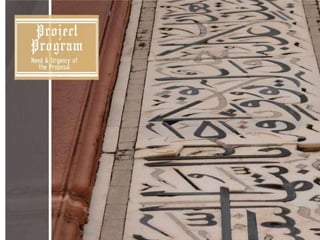
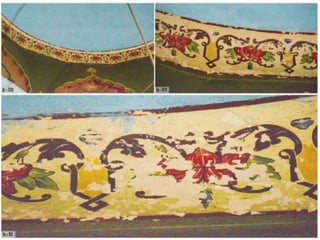
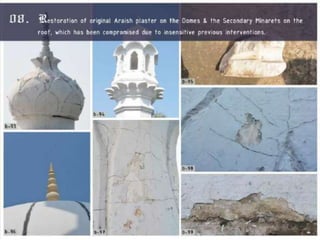
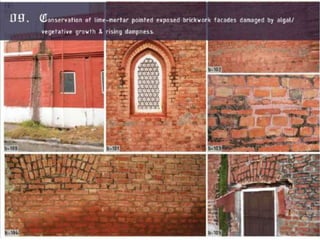
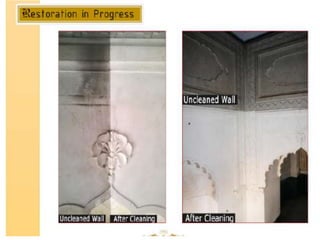
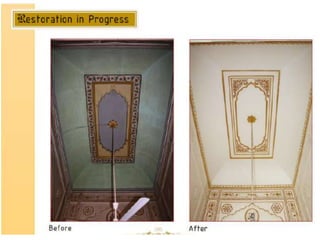
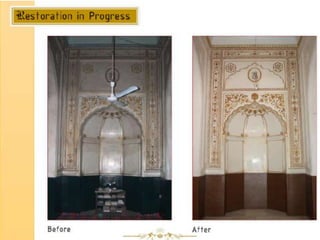
Causes of Deterioration of the building and art work of Mosque:-
Failure to carry out routine Maintenance.
Improper maintenance programme-
 Application of synthetic paint ,
Surface deposits,
Flaking of paint layer,
Lack of adhesion in rendering of Araish work and paintings.
Losses in manuscripts written on walls,
Alteration of golden color,
Splashes of paint/lime wash due to over painting,
Peeling of plaster along with painted ceiling,
Blistering of stone elements,
Faulty Plumbing
Natural aging of the structural elements.
Guided By –
Ar. M. Farhan Fazli
Convener, Heritage Cell
Assistant Professor
Dept. of Architecture
Aligarh Muslim University

Green Building is a Myth or we have Misconception…..??

  • 1.
    Green Building isa Myth or we have Misconception…..?? COGNIZANCE-2017 (24-26 March, 2017) Indian Institute of Technology, Roorkee (CONVERT OLD BUILDINGS INTO GREEN & REDUCE THE EXPLOITATION OF ENVIRONMENT) Presented By – Avitesh, Karan Nagpal Himalyan University M.Tech Civil (Construction Engg.)
  • 2.
    OBJECTIVES:- The main objectivesof this study are – •To understand, what is the correct meaning of green building? •Fundamental principals. •How green building can reduce the exploitation of environment? Benefits of Green Building. •How can we convert an old building into an eco-friendly building? • Study of:- •Preventive Restoration of Jama Mashid, Aligarh Muslim University.
  • 3.
  • 4.
  • 6.
    There are lotsof discussions, about Green Buildings and sustainable development. But the main question is what do we understand about Green Buildings? A building which is colored in green or full of landscape (including vertical and terrace gardening) not green building. Green Building means, a building which is optimizing on the local ecology, using local available materials as far as possible and most important thing is used resources like energy, water and materials reducing building impacts on environment also on human health. These are the buildings that ensure waste will be minimized during construction at every stage, resulting in low costs and building will sustain better and for long time.
  • 7.
    FUNDAMENTAL PRINCIPLES • Structuredesign efficiency • Energy efficiency • Water efficiency • Materials efficiency • Waste and toxic reduction
  • 8.
    • STRUCTURE EFFICIENCY: Itis the concept of sustainable building and has largest impact on cost and performance. It aims to minimize the enviornmment impact associated with all life-cycles. • ENERGY EFFICIENCY: The layout of the construction can be strategised so that natural light pours for additional warmth. Shading the roof with trees offers an eco-friendly alternative to air conditioning.
  • 9.
    • WATER EFFICIENCY: Tominimize water consumption one should aim to use the water which has been collected, used, purified and reused.
  • 10.
    • MATERIAL EFFICIENCY: Materialsshould be use that can be recycled and can generate surplus amount of energy. An example of this are solar power panels,not only they provide lightening but they are also a useful energy source. • WASTE AND REDUCTION: It is probable to reuse resources. What may be waste to us may have another benefit to something else.
  • 11.
    BENEFITS OF GREENBUILDING • Buildings have a large effect on the enviornment,human health and the economy. • The successful adoption of GREEN BUILDING development can maximize both the economic and enviornmental performance of the buildings.
  • 12.
    ENVIORNMENTAL BENEFITS •Protect biodiversityand ecosystems •Improve air and water quality •Reduce waste streams •Conserve natural resources
  • 13.
    ECONOMIC BENEFITS • Reduceoperating costs • Create, expand, and shape markets for green product and services • Improve occupant productivity
  • 14.
    SOCIAL BENEFITS •Enhance occupantcomfort and health. •Heighten aesthetic qualities. •Minimize strain on local infrastructure. •Improve overall quality of life.
  • 15.
  • 16.
    Now this isthe time when we should make a way to maximize our natural resources and also help our earth to get some relief since pollution is everywhere plus the global warming that we are all experiencing. There is also a common misconception; some people think that they can’t go with Green building because it will cost them money. Non-renewable energy is expensive and unsafe but did you know that through green building we can save lots of energy. This is an investment that will be able to save your money, as well as an investment that will be able to help the environment.
  • 17.
    •FEATURES OF GREENBUILDING Green buildings have many features. Some important advantages indicating below:- •Energy efficient equipment for air conditioning and lighting systems & Use of onsite renewable energy. •Measurement and verification plan to ensure energy & water savings. •Reduction of building footprints to minimize the impact on environment. •Minimal disturbance to landscapes and site condition. •Use of recycled, Non-toxic and environmental friendly building materials.
  • 18.
    •Efficient use ofWater Recycling •Indoor air quality improvement for human safety and comfort. •Effective controls and building management systems. •Installation of high efficiency irrigation methods and selection of vegetation which have low water consumption. •Recycling of construction debris. •Use of building materials having a high recycled content. •Use of rapidly renewable materials.
  • 19.
    Materials Used InGreen Constructions Source of Material Renewable sources: Forests Reuse from waste: old plumbing , doors etc..
  • 20.
    Wool brick Obtained byadding wool and a natural polymer found in seaweed to the clay of the brick, 37% More strength than burnt bricks Resistant for cold and wet climate
  • 21.
    Sustainable Concrete  Crushedglass Wood chips or slag - a byproduct of steel manufacturing. Reduces the emission of CO2
  • 22.
    Solar Tiles  Existto simply protect a building They spend a large portion of the day absorbing energy from the sun.
  • 23.
    Paper Insulation Made fromrecycled newspapers and cardboard Then filled with chemical foam Insect resistant &fire retardant
  • 24.
    Triple-Glazed Windows Super-efficient windows Stopsheat to enter the building & from direct sunlight
  • 25.
    Eco Friendly Using BambooReplacing The Steel Bars
  • 28.
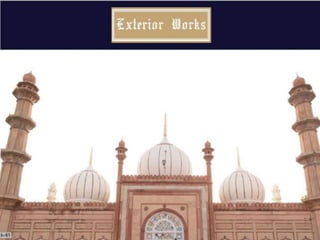
    A view ofthe building of Jama Masjid,Aligarh Muslim University.
  • 29.
    Jama Masjid isone of the heritage buildings located in the premises of Aligarh Muslim University, Aligarh. It is one among the few heritage structures which come up in the first face of construction in the university, Jama Masjid along with the other buildings of the central wing of Sir Syed Hall including Strechy hall, Litton Library, Nizam Museum and Asman manzil were constructed in the life time of Sir Syed Khan (1898), the founder of Aligarh Muslim University.
  • 31.
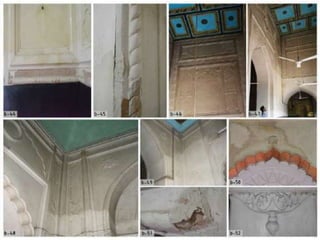
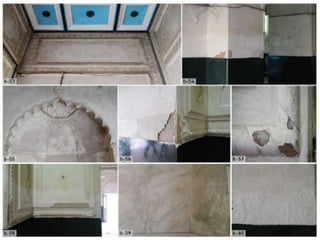
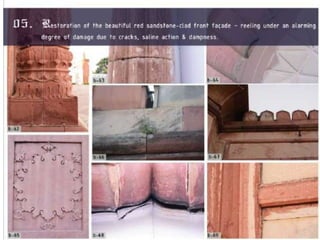
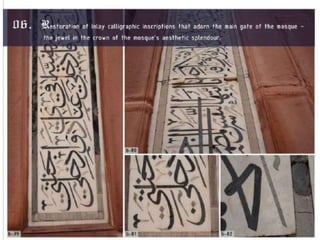
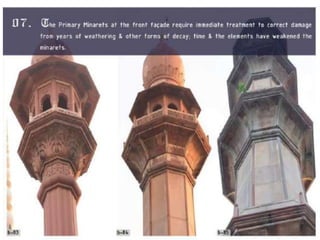
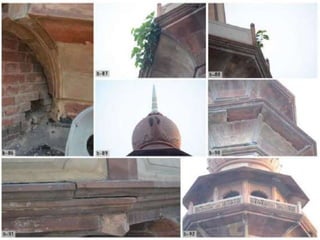
    Decay in HeritageStructures- Heritage belongs to all of us and it is our responsibility to protect our heritage structures. Its interpretation can play an important role in enhancing people’s awareness, understanding & appreciation of time and place. Causes of Deterioration of the building and art work of Mosque:- Failure to carry out routine Maintenance. Improper maintenance programme-  Application of synthetic paint , Surface deposits, Flaking of paint layer, Lack of adhesion in rendering of Araish work and paintings. Losses in manuscripts written on walls, Alteration of golden color, Splashes of paint/lime wash due to over painting, Peeling of plaster along with painted ceiling, Blistering of stone elements, Faulty Plumbing Natural aging of the structural elements.
  • 67.
    Guided By – Ar.M. Farhan Fazli Convener, Heritage Cell Assistant Professor Dept. of Architecture Aligarh Muslim University