GREEN BUILDING FOR
SUSTAINABLE ENVIRONMENT
STRUCTURE OF THE
PRESENTATION
• Green building (also known as green
construction or sustainable building) expands
and complements the building design
concerns of economy, utility, durability, and
comfort.
• A Green Building is one which uses less
water, optimizes energy efficiency, conserves
natural resources, generates less waste and
provides healthier space for occupants as
compared to conventional buildings.
The `Green Building' concept is gaining
importance in various countries, including
India. These are buildings that ensure that
waste is minimized at every stage during the
construction and operation of the building,
resulting in low costs, according to experts in
the technology.
Continue…
The techniques associated with the `Green Building'
include measures to prevent erosion of soil,
rainwater harvesting, use of solar energy,
preparation of landscapes to reduce heat,
reduction in usage of water, recycling of waste
water and use of world class energy efficient
practices.
A similar concept is natural building, which is
usually on a smaller scale and tends to focus on
the use of natural materials that are available
locally.
OBJECTIVES OF GREEN
BUILDING
• Green Buildings are designed to reduce the
overall impact on human health and the
natural environment by the following ways:
• Using energy, water and other resources
efficiently.
• By reducing waste, pollution, and
environmental degradation.
Principles of Green Building
• Save energy
• Recycle buildings
• Create community
• Reduce material use
• Protect and enhance
the site
• Select low-impact
materials
• Maximize longevity
• Save water
• Make the building
healthy
• Minimize C&D waste
• Green up your business
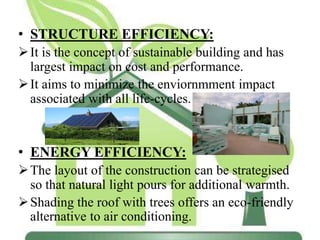
• STRUCTURE EFFICIENCY:
It is the concept of sustainable building and has
largest impact on cost and performance.
It aims to minimize the enviornmment impact
associated with all life-cycles.
• ENERGY EFFICIENCY:
The layout of the construction can be strategised
so that natural light pours for additional warmth.
Shading the roof with trees offers an eco-friendly
alternative to air conditioning.
• WATER EFFICIENCY:
To minimize water consumption one should
aim to use the water which has been collected,
used, purified and reused.
• MATERIAL EFFICIENCY:
Materials should be use that can be recycled
and can generate surplus amount of energy.
An example of this are solar power panels,not
only they provide lightening but they are also a
useful energy source.
• WASTE AND REDUCTION:
It is probable to reuse resources.
What may be waste to us may have another
benefit to something else.
11
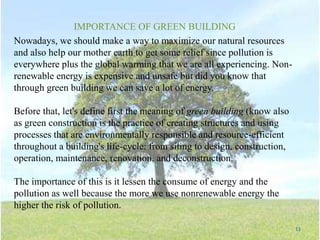
IMPORTANCE OF GREEN BUILDING
Nowadays, we should make a way to maximize our natural resources
and also help our mother earth to get some relief since pollution is
everywhere plus the global warming that we are all experiencing. Non-
renewable energy is expensive and unsafe but did you know that
through green building we can save a lot of energy.
Before that, let's define first the meaning of green building (know also
as green construction is the practice of creating structures and using
processes that are environmentally responsible and resource-efficient
throughout a building's life-cycle: from siting to design, construction,
operation, maintenance, renovation, and deconstruction.
The importance of this is it lessen the consume of energy and the
pollution as well because the more we use nonrenewable energy the
higher the risk of pollution.
ADVANCED SYSTEMS IN GREEN
BUILDING
• Installation of solar panels constructed using
organic solar cells for efficiency.
• The electrical energy is stored in a high PV
inverter.
• It is also a hybrid system using the wind mill
for electricity.
• Allow high ventilation of air throughout the
building.
• Making the sun light to enter into the building.
5/13/2017 12
Principles of Green Materials
• Choose products:
– made from environmentally attractive materials
– that are green because of what isn’t there
– that reduce environmental impacts during
construction, renovation or demolition
– that reduce environmental impacts of building
operation
– that contribute to a safe, healthy indoor environment
Green Materials
 Materials, production, use and disposal must be safe for
the planet. Most of the materials have specific range of
conditions in which they best work
 Sustainable building materials have the following
features:
• Durable and easily maintained
• Less processing required
• Low odor
• Low emitting
• Cost-effective
• Aesthetic
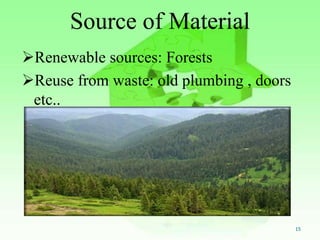
Source of Material
Renewable sources: Forests
Reuse from waste: old plumbing , doors
etc..
15
Wool brick
 Obtained by adding wool and a natural
polymer found in seaweed to the clay
of the brick, red bricks and blue
engineering bricks.
 37% More strength than burnt bricks
 Resistant for cold and wet climate
Lumber
Sustainable Concrete
 Crushed glass
 Wood chips or slag - a
byproduct of steel
manufacturing.
Reduces the emission of
CO2
18
Solar Tiles
 Exist to simply protect
a building
 They spend a large
portion of the day
absorbing energy from
the sun.
19
Triple-Glazed Windows
Super-efficient
windows
Stops heat to enter the
building & from direct
sunlight
20
Eco Friendly
Using Bamboo Replacing The Steel
Bars
21
Typical Layout Of Green
Building
22
DIFFERENT FROM OTHER
BUILDINGS
• The design,maintaince and construction of
buildings have tremendous effect on our
enviornment and natural resources.
• Green Building is different from the other
buildings because it use a minimum amount of
nonrenewable energy, produce minimal pollution,
increases the comfort, health and safety of the
people who work in them.
• It also minimize the waste in construction by
recovering materials and reusing or recycling
them.
Merits Of Green Building
 Efficient Technologies
 Easier Maintenance
 Return On Investment
 Improved Indoor Air Quality
 Energy Efficiency
 Water Efficiency
24
• Continue…
Waste Reduction
Temperature Moderation
Water Conservation
Economical Construction For Poor
Healthier Lifestyles and Recreation
Improved Health.
25
DEMERITS OF GREEN BUILDING
INITIAL COST IS HIGH
AVAILABILITY OF MATERIALS
NEED MORE TIME TO CONSTRUCT
NEED SKILED WORKER
26
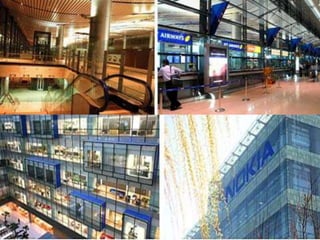
TOP TEN GREEN BUILDINGS IN INDIA
27
28
29
30
31
START THINKING GREEN
green building

green building

  • 1.
  • 2.
  • 3.
    • Green building(also known as green construction or sustainable building) expands and complements the building design concerns of economy, utility, durability, and comfort. • A Green Building is one which uses less water, optimizes energy efficiency, conserves natural resources, generates less waste and provides healthier space for occupants as compared to conventional buildings.
  • 4.
    The `Green Building'concept is gaining importance in various countries, including India. These are buildings that ensure that waste is minimized at every stage during the construction and operation of the building, resulting in low costs, according to experts in the technology.
  • 5.
    Continue… The techniques associatedwith the `Green Building' include measures to prevent erosion of soil, rainwater harvesting, use of solar energy, preparation of landscapes to reduce heat, reduction in usage of water, recycling of waste water and use of world class energy efficient practices. A similar concept is natural building, which is usually on a smaller scale and tends to focus on the use of natural materials that are available locally.
  • 6.
    OBJECTIVES OF GREEN BUILDING •Green Buildings are designed to reduce the overall impact on human health and the natural environment by the following ways: • Using energy, water and other resources efficiently. • By reducing waste, pollution, and environmental degradation.
  • 7.
    Principles of GreenBuilding • Save energy • Recycle buildings • Create community • Reduce material use • Protect and enhance the site • Select low-impact materials • Maximize longevity • Save water • Make the building healthy • Minimize C&D waste • Green up your business
  • 8.
    • STRUCTURE EFFICIENCY: Itis the concept of sustainable building and has largest impact on cost and performance. It aims to minimize the enviornmment impact associated with all life-cycles. • ENERGY EFFICIENCY: The layout of the construction can be strategised so that natural light pours for additional warmth. Shading the roof with trees offers an eco-friendly alternative to air conditioning.
  • 9.
    • WATER EFFICIENCY: Tominimize water consumption one should aim to use the water which has been collected, used, purified and reused.
  • 10.
    • MATERIAL EFFICIENCY: Materialsshould be use that can be recycled and can generate surplus amount of energy. An example of this are solar power panels,not only they provide lightening but they are also a useful energy source. • WASTE AND REDUCTION: It is probable to reuse resources. What may be waste to us may have another benefit to something else.
  • 11.
    11 IMPORTANCE OF GREENBUILDING Nowadays, we should make a way to maximize our natural resources and also help our mother earth to get some relief since pollution is everywhere plus the global warming that we are all experiencing. Non- renewable energy is expensive and unsafe but did you know that through green building we can save a lot of energy. Before that, let's define first the meaning of green building (know also as green construction is the practice of creating structures and using processes that are environmentally responsible and resource-efficient throughout a building's life-cycle: from siting to design, construction, operation, maintenance, renovation, and deconstruction. The importance of this is it lessen the consume of energy and the pollution as well because the more we use nonrenewable energy the higher the risk of pollution.
  • 12.
    ADVANCED SYSTEMS INGREEN BUILDING • Installation of solar panels constructed using organic solar cells for efficiency. • The electrical energy is stored in a high PV inverter. • It is also a hybrid system using the wind mill for electricity. • Allow high ventilation of air throughout the building. • Making the sun light to enter into the building. 5/13/2017 12
  • 13.
    Principles of GreenMaterials • Choose products: – made from environmentally attractive materials – that are green because of what isn’t there – that reduce environmental impacts during construction, renovation or demolition – that reduce environmental impacts of building operation – that contribute to a safe, healthy indoor environment
  • 14.
    Green Materials  Materials,production, use and disposal must be safe for the planet. Most of the materials have specific range of conditions in which they best work  Sustainable building materials have the following features: • Durable and easily maintained • Less processing required • Low odor • Low emitting • Cost-effective • Aesthetic
  • 15.
    Source of Material Renewablesources: Forests Reuse from waste: old plumbing , doors etc.. 15
  • 16.
    Wool brick  Obtainedby adding wool and a natural polymer found in seaweed to the clay of the brick, red bricks and blue engineering bricks.  37% More strength than burnt bricks  Resistant for cold and wet climate
  • 17.
  • 18.
    Sustainable Concrete  Crushedglass  Wood chips or slag - a byproduct of steel manufacturing. Reduces the emission of CO2 18
  • 19.
    Solar Tiles  Existto simply protect a building  They spend a large portion of the day absorbing energy from the sun. 19
  • 20.
    Triple-Glazed Windows Super-efficient windows Stops heatto enter the building & from direct sunlight 20
  • 21.
    Eco Friendly Using BambooReplacing The Steel Bars 21
  • 22.
    Typical Layout OfGreen Building 22
  • 23.
    DIFFERENT FROM OTHER BUILDINGS •The design,maintaince and construction of buildings have tremendous effect on our enviornment and natural resources. • Green Building is different from the other buildings because it use a minimum amount of nonrenewable energy, produce minimal pollution, increases the comfort, health and safety of the people who work in them. • It also minimize the waste in construction by recovering materials and reusing or recycling them.
  • 24.
    Merits Of GreenBuilding  Efficient Technologies  Easier Maintenance  Return On Investment  Improved Indoor Air Quality  Energy Efficiency  Water Efficiency 24
  • 25.
    • Continue… Waste Reduction TemperatureModeration Water Conservation Economical Construction For Poor Healthier Lifestyles and Recreation Improved Health. 25
  • 26.
    DEMERITS OF GREENBUILDING INITIAL COST IS HIGH AVAILABILITY OF MATERIALS NEED MORE TIME TO CONSTRUCT NEED SKILED WORKER 26
  • 27.
    TOP TEN GREENBUILDINGS IN INDIA 27
  • 28.
  • 29.
  • 30.
  • 31.
  • 32.