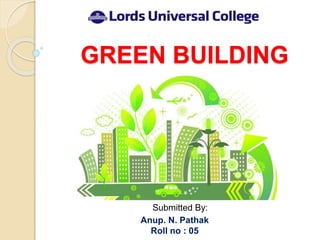

GREEN BUILDING
Submitted By:
Anup. N. Pathak
Roll no : 05
Index
 Introduction
 What Exactly is Green Building ?
 Goals of Green Building
 Fundamental Principles
 Benefits of Green Building
 Challenges for Green Building
 Affect on Natural Resources
 Conclusion
 Reference
Introduction
 Green building (also known as green construction or
sustainable building) refers to both a structure and the
using of processes that are environmentally responsible
and resource-efficient throughout a building's life-cycle:
from sitting to design, construction, operation,
maintenance, renovation, and demolition.
 In other words, green building design involves finding
the balance between homebuilding and the sustainable
environment.
 The Green Building practice expands and complements
the classical building design concerns of economy,
utility, durability, and comfort.
What Exactly is Green
Building ? Avoiding harmful chemicals (Off-Gassing)
 Using Rapidly Renewable materials
 Using Recycled Content Containing materials
 Purchasing Locally Manufactured materials
 Choosing Energy Efficient appliances
 Selecting Water Saving fixtures and features
 Taking advantage of Salvage opportunities
 Reducing Job Site Waste (Avoid Landfill)
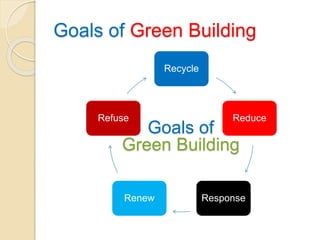
Goals of Green Building
Recycle
Reduce
ResponseRenew
Refuse
Goals of
Green Building
Fundamental Principle
 Structure Efficiency
 Energy Efficiency
 Water Efficiency
 Material Efficiency
 Waste and toxic Reduction
Structure Design Efficiency
It is the concept of sustainable building and
has largest impact on cost and performance.
In designing environmentally optimal
buildings, the objective is to minimize the
total environmental impact associated with all
life-cycle stages of the building project.
Energy Efficiency
 The layout of the construction can be
strategized so the natural light pours for
additional warmth.
 Green buildings often include measures to
reduce energy consumption – both the
embodied energy required to extract,
process, transport and install building
materials and operating energy to provide
services such as heating and power for
equipment.
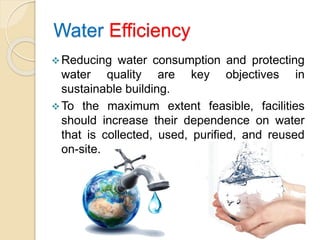
Water Efficiency
Reducing water consumption and protecting
water quality are key objectives in
sustainable building.
To the maximum extent feasible, facilities
should increase their dependence on water
that is collected, used, purified, and reused
on-site.
Material Efficiency
The term Material efficiency can also signify
the degree in which a material can handle a
particular load, strain or weight upon it.
Material efficiency can be achieved through
using material which can be recycled,
materials that use renewable energy, and
other ways.
For example, using recycled steel instead of
new steel "reduces the energy produced in
making the steel by 75 percent, and saves
space in landfills as well."
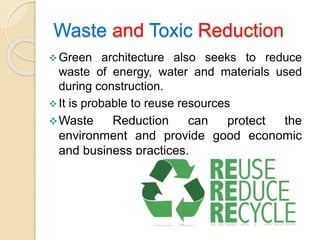
Waste and Toxic Reduction
Green architecture also seeks to reduce
waste of energy, water and materials used
during construction.
It is probable to reuse resources
Waste Reduction can protect the
environment and provide good economic
and business practices.
Benefits of Green Building
 Building have large effect on the environment,
human health and economy.
 The successful adoption of GREEN BUILDING
development can maximize both the economic
and environmental performance of the buildings.
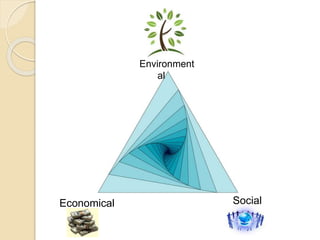
 Basically Benefits can be Describe in following:-
 Environmental Benefits
 Economical Benefits
 Social Benefits
Environment
al
Economical Social
Environmental Benefits
 Protect Bio-diversity and eco-system
 Improve air and water quality
 Reduce waste streams
 Conserve natural resources
Economical Benefits
Reduce operating Costs
Create, expand and shape markets for
green products and services
Improve occuptant productivity
Social Benefits
Enhance occupant comfort and health.
Heighten aesthetic qualities.
Minimize Strain on local infrastructure.
Improve overall quality of life.
Challenges for Green Building
Increased Growth of e-waste
Increased energy costing
Increased amount of non-disposal
waste
Lack of awareness in people
Affect on Natural Resources
According to surveys conducted in 2006, 107.3
million acres of total land area is developed,
which represents an increase of 24 percent land
covering green buildings over the past 3 years.
In terms of energy, buildings accounted for 39.4
percent of total energy consumption and 67.9
percent of total electricity consumption.
Conclusion
 This research identified the exciting developments
taking place on the technology front and analyzes
their implications for intelligent and green
buildings, highlighting examples of “best in class”
buildings employing green and intelligent
technologies. These buildings are dynamic
environments that respond to their occupants’
changing needs and lifestyles. This research
provided documented evidence to educate and
influence end-users, building owners, architects,
and contractors that a “greener building” can be
achieved using intelligent technology and that this
“greening” will provide a tangible and significant
return on investment.
Reference
 http://www.igbc.in/site/igbc/tests.jsp?event=2286
9
 http://www.greenbuildingsindia.com/Green-
Buildings.html
 http://www.biperusa.org/6-objectives-of-green-
building.html
 http://www.brighthub.com/environment/green-
living/articles/51601.aspx
 http://ecenter.colorado.edu/greening-cu/green-
building
 http://www.chillibreeze.com/articles/top-10-green-
buildings-in-India-1011.asp
 http://gbindia.wordpress.com/igbc-rating-system-
Start Thinking..!
Go Green

Green building ppt

  • 1.
    GREEN BUILDING Submitted By: Anup.N. Pathak Roll no : 05
  • 2.
    Index  Introduction  WhatExactly is Green Building ?  Goals of Green Building  Fundamental Principles  Benefits of Green Building  Challenges for Green Building  Affect on Natural Resources  Conclusion  Reference
  • 3.
    Introduction  Green building(also known as green construction or sustainable building) refers to both a structure and the using of processes that are environmentally responsible and resource-efficient throughout a building's life-cycle: from sitting to design, construction, operation, maintenance, renovation, and demolition.  In other words, green building design involves finding the balance between homebuilding and the sustainable environment.  The Green Building practice expands and complements the classical building design concerns of economy, utility, durability, and comfort.
  • 4.
    What Exactly isGreen Building ? Avoiding harmful chemicals (Off-Gassing)  Using Rapidly Renewable materials  Using Recycled Content Containing materials  Purchasing Locally Manufactured materials  Choosing Energy Efficient appliances  Selecting Water Saving fixtures and features  Taking advantage of Salvage opportunities  Reducing Job Site Waste (Avoid Landfill)
  • 5.
    Goals of GreenBuilding Recycle Reduce ResponseRenew Refuse Goals of Green Building
  • 6.
    Fundamental Principle  StructureEfficiency  Energy Efficiency  Water Efficiency  Material Efficiency  Waste and toxic Reduction
  • 7.
    Structure Design Efficiency Itis the concept of sustainable building and has largest impact on cost and performance. In designing environmentally optimal buildings, the objective is to minimize the total environmental impact associated with all life-cycle stages of the building project.
  • 8.
    Energy Efficiency  Thelayout of the construction can be strategized so the natural light pours for additional warmth.  Green buildings often include measures to reduce energy consumption – both the embodied energy required to extract, process, transport and install building materials and operating energy to provide services such as heating and power for equipment.
  • 9.
    Water Efficiency Reducing waterconsumption and protecting water quality are key objectives in sustainable building. To the maximum extent feasible, facilities should increase their dependence on water that is collected, used, purified, and reused on-site.
  • 10.
    Material Efficiency The termMaterial efficiency can also signify the degree in which a material can handle a particular load, strain or weight upon it. Material efficiency can be achieved through using material which can be recycled, materials that use renewable energy, and other ways. For example, using recycled steel instead of new steel "reduces the energy produced in making the steel by 75 percent, and saves space in landfills as well."
  • 11.
    Waste and ToxicReduction Green architecture also seeks to reduce waste of energy, water and materials used during construction. It is probable to reuse resources Waste Reduction can protect the environment and provide good economic and business practices.
  • 12.
    Benefits of GreenBuilding  Building have large effect on the environment, human health and economy.  The successful adoption of GREEN BUILDING development can maximize both the economic and environmental performance of the buildings.  Basically Benefits can be Describe in following:-  Environmental Benefits  Economical Benefits  Social Benefits
  • 13.
  • 14.
    Environmental Benefits  ProtectBio-diversity and eco-system  Improve air and water quality  Reduce waste streams  Conserve natural resources
  • 15.
    Economical Benefits Reduce operatingCosts Create, expand and shape markets for green products and services Improve occuptant productivity
  • 16.
    Social Benefits Enhance occupantcomfort and health. Heighten aesthetic qualities. Minimize Strain on local infrastructure. Improve overall quality of life.
  • 17.
    Challenges for GreenBuilding Increased Growth of e-waste Increased energy costing Increased amount of non-disposal waste Lack of awareness in people
  • 18.
    Affect on NaturalResources According to surveys conducted in 2006, 107.3 million acres of total land area is developed, which represents an increase of 24 percent land covering green buildings over the past 3 years. In terms of energy, buildings accounted for 39.4 percent of total energy consumption and 67.9 percent of total electricity consumption.
  • 19.
    Conclusion  This researchidentified the exciting developments taking place on the technology front and analyzes their implications for intelligent and green buildings, highlighting examples of “best in class” buildings employing green and intelligent technologies. These buildings are dynamic environments that respond to their occupants’ changing needs and lifestyles. This research provided documented evidence to educate and influence end-users, building owners, architects, and contractors that a “greener building” can be achieved using intelligent technology and that this “greening” will provide a tangible and significant return on investment.
  • 20.
    Reference  http://www.igbc.in/site/igbc/tests.jsp?event=2286 9  http://www.greenbuildingsindia.com/Green- Buildings.html http://www.biperusa.org/6-objectives-of-green- building.html  http://www.brighthub.com/environment/green- living/articles/51601.aspx  http://ecenter.colorado.edu/greening-cu/green- building  http://www.chillibreeze.com/articles/top-10-green- buildings-in-India-1011.asp  http://gbindia.wordpress.com/igbc-rating-system-
  • 21.