Chapter 3
Graphical Representation of Data
• Bar diagram
• Histogram
• Frequency Polygon
2
Histograms
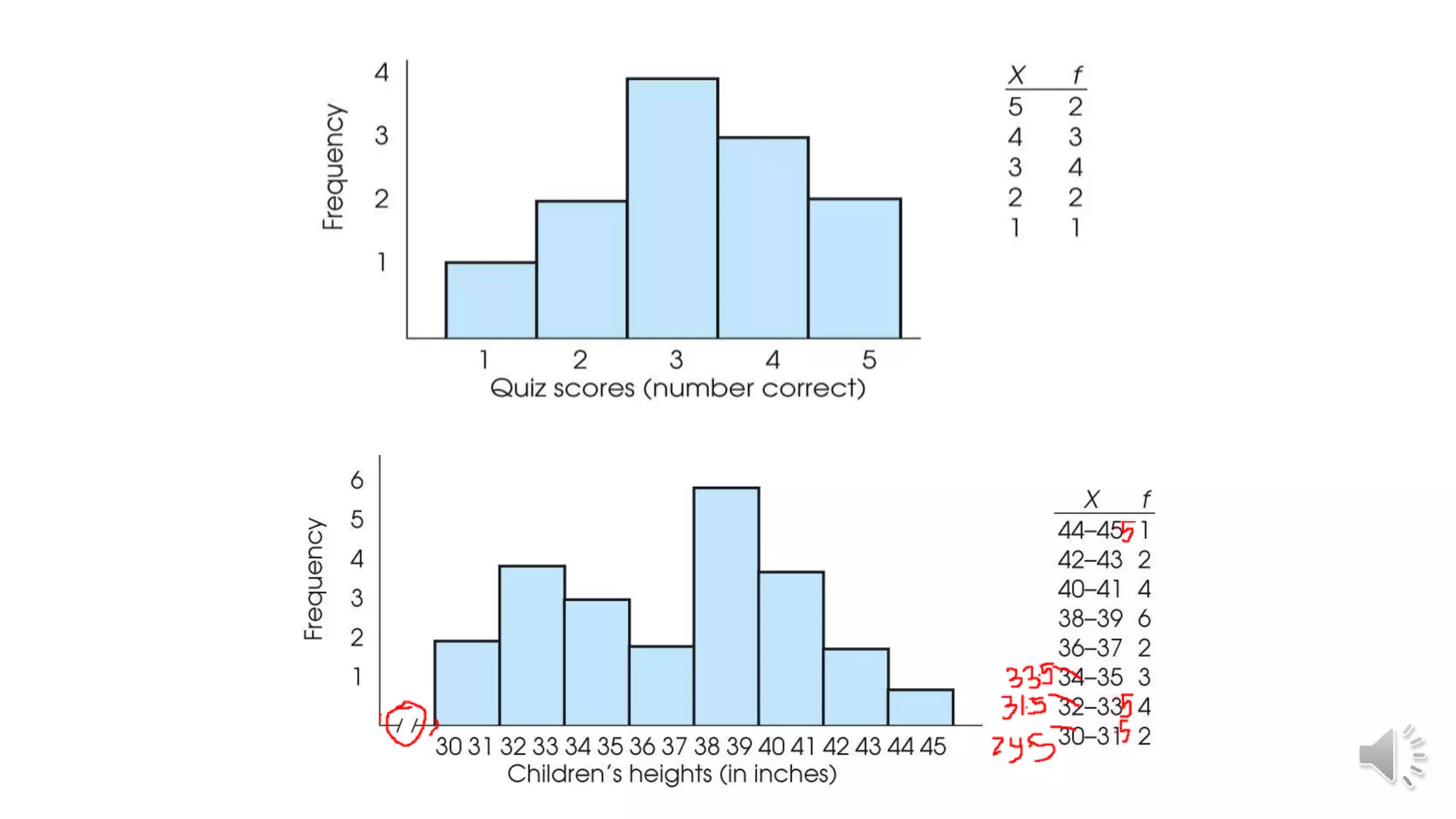
• A Histogram is a variation of a bar chart in which data values are
grouped together and put into different classes.
• This grouping allows you see how frequently data in each class
occur in the data set.
• In a histogram, a bar is centered above each score (or class
interval) so that the height of the bar corresponds to the
frequency and the width extends to the real limits, so that
adjacent bars touch.
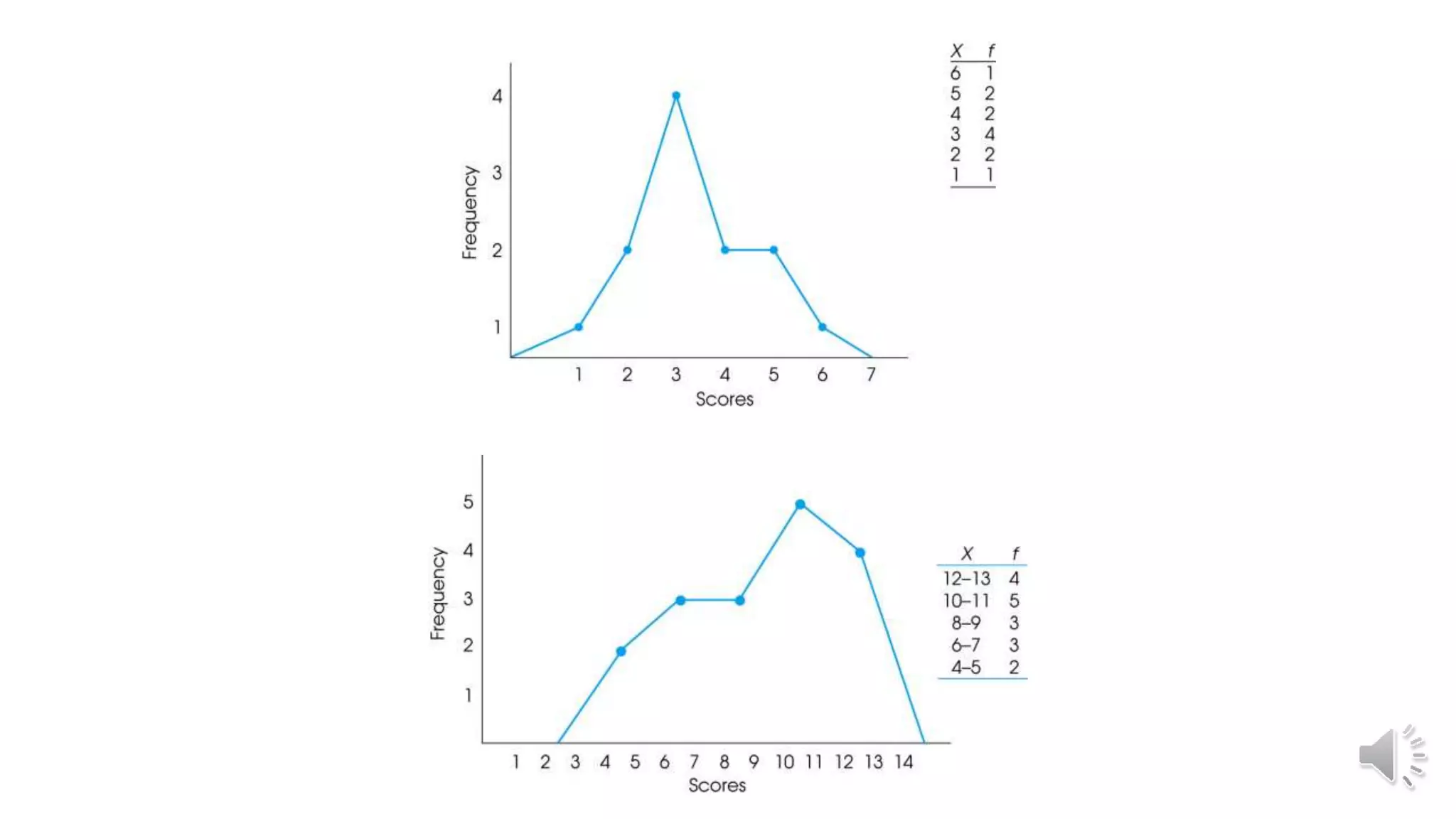
Frequency Polygon
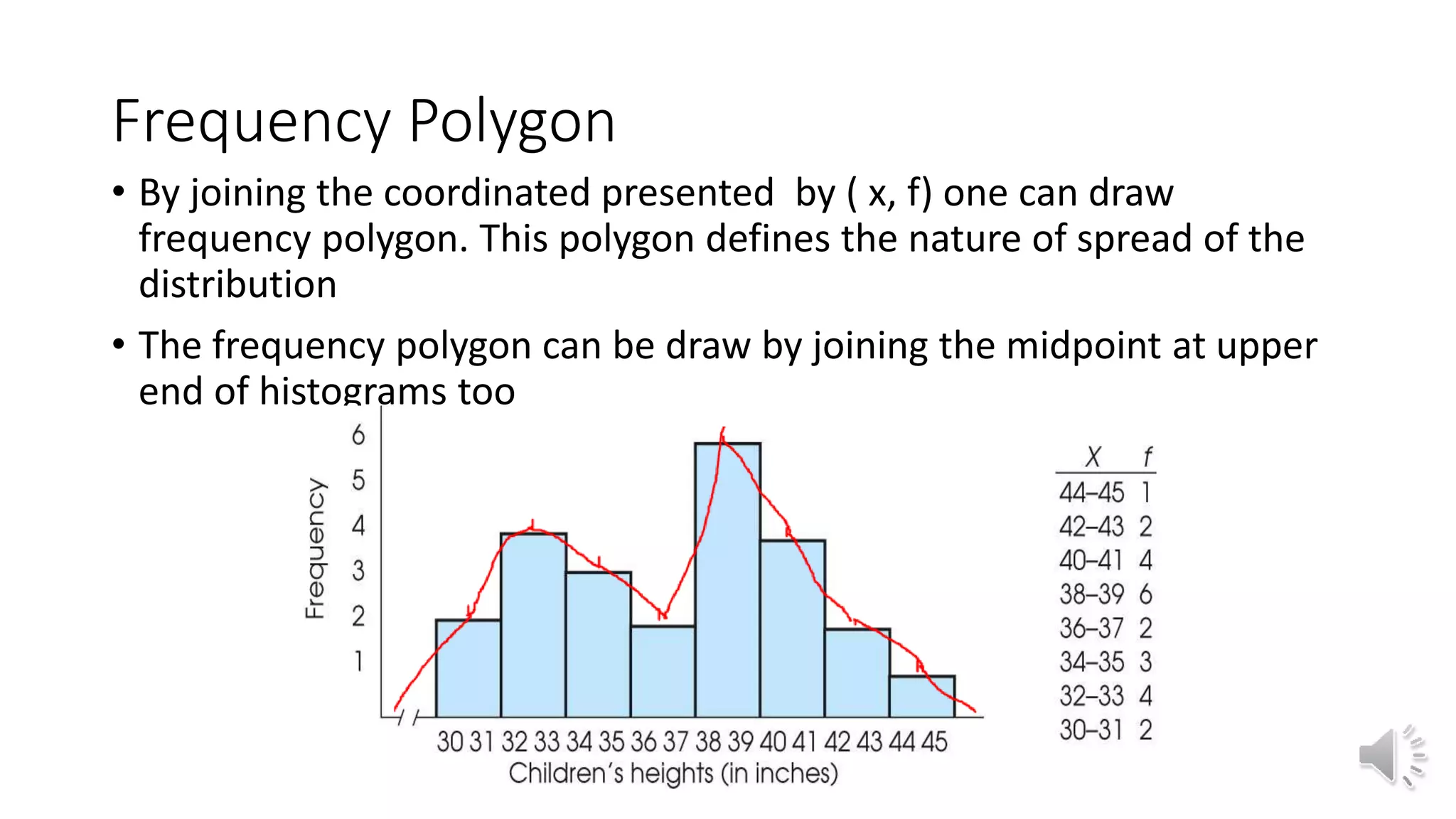
• By joining the coordinated presented by ( x, f) one can draw
frequency polygon. This polygon defines the nature of spread of the
distribution
• The frequency polygon can be draw by joining the midpoint at upper
end of histograms too
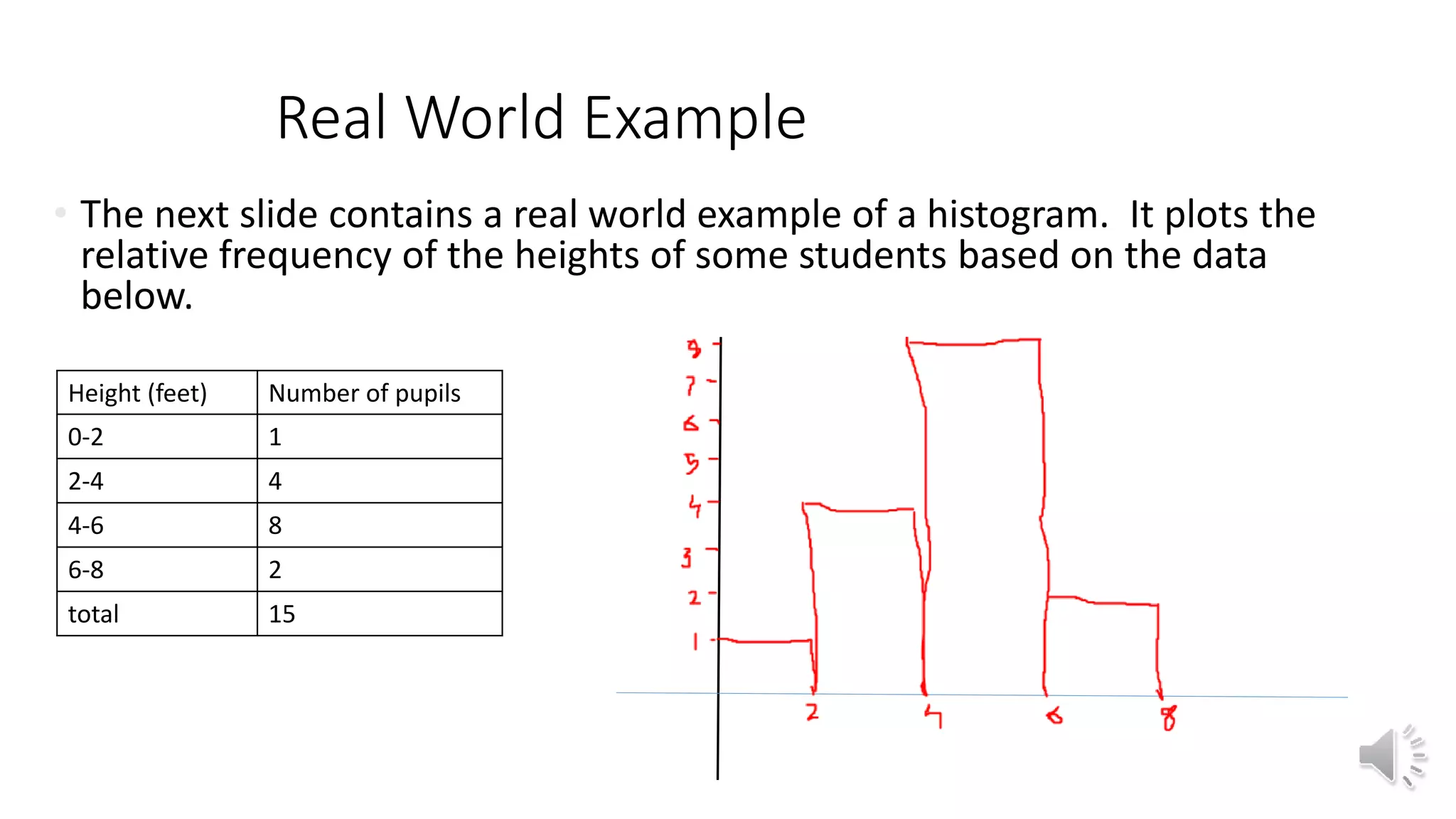
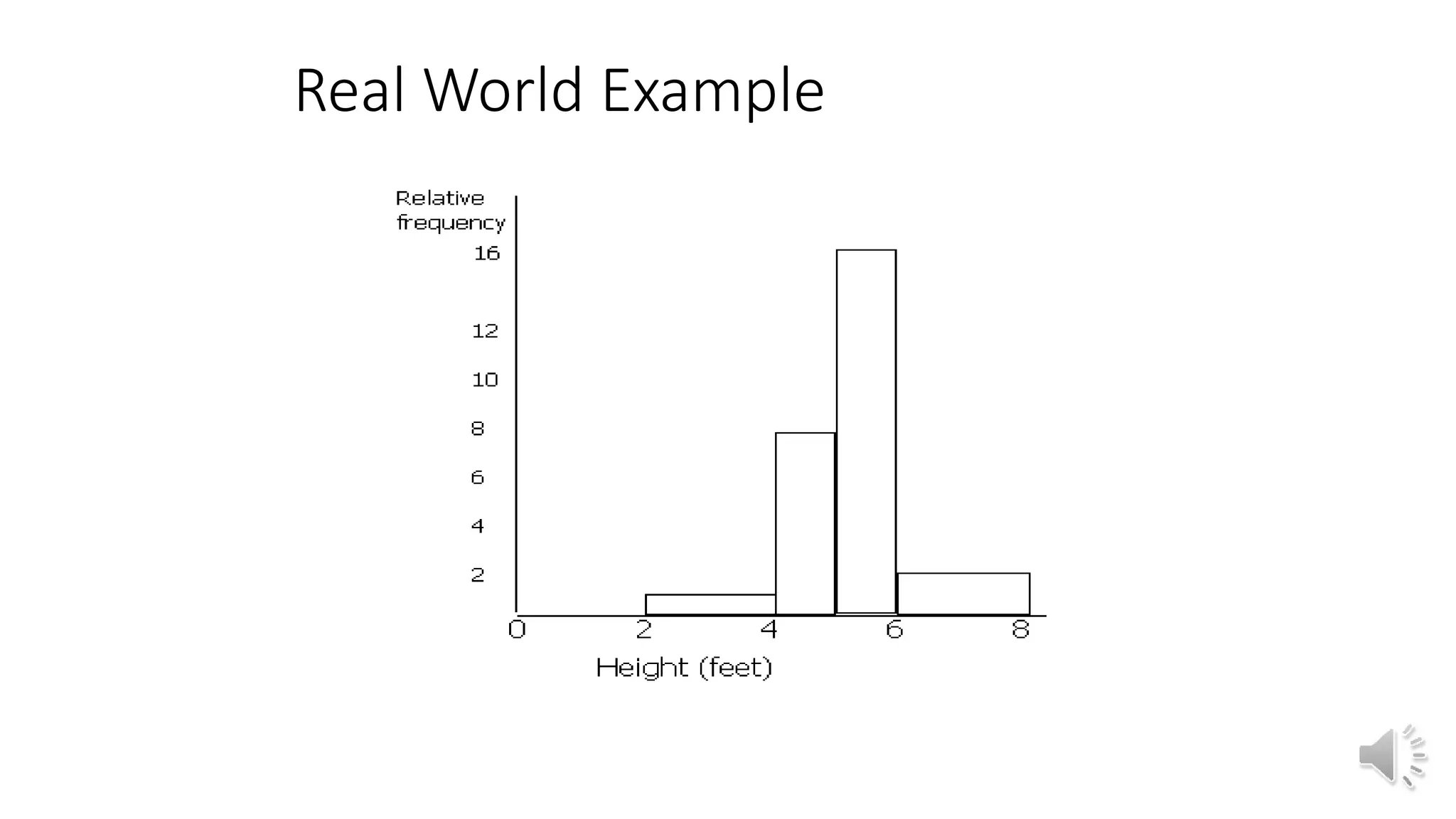
Real World Example
• The next slide contains a real world example of a histogram. It plots the
relative frequency of the heights of some students based on the data
below.
Height (feet) Number of pupils
0-2 1
2-4 4
4-6 8
6-8 2
total 15
Real World Example

Graphical representation histogram

  • 1.
    Chapter 3 Graphical Representationof Data • Bar diagram • Histogram • Frequency Polygon
  • 2.
    2 Histograms • A Histogramis a variation of a bar chart in which data values are grouped together and put into different classes. • This grouping allows you see how frequently data in each class occur in the data set. • In a histogram, a bar is centered above each score (or class interval) so that the height of the bar corresponds to the frequency and the width extends to the real limits, so that adjacent bars touch.
  • 4.
    Frequency Polygon • Byjoining the coordinated presented by ( x, f) one can draw frequency polygon. This polygon defines the nature of spread of the distribution • The frequency polygon can be draw by joining the midpoint at upper end of histograms too
  • 6.
    Real World Example •The next slide contains a real world example of a histogram. It plots the relative frequency of the heights of some students based on the data below. Height (feet) Number of pupils 0-2 1 2-4 4 4-6 8 6-8 2 total 15
  • 7.