Mi Libro de la
Gramática

Emilia Stuchlik
Preterite
Uses :

A Snapshot in Time

-AR Endings
-ER / -IR Endings
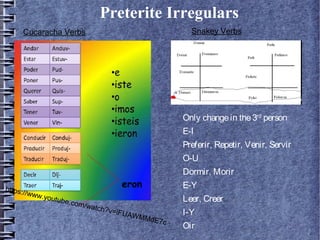
Preterite Irregulars
Snakey Verbs

Cucaracha Verbs

Only change in the 3rd person
E-I
Preferir, Repetir, Venir, Servir
O-U
https:
//

www.y
outu

eron
be.co
m

/watch

Dormir, Morir
E-Y
Leer, Creer

?v=iF
UA

WMM
dE7c

I-Y
Oir
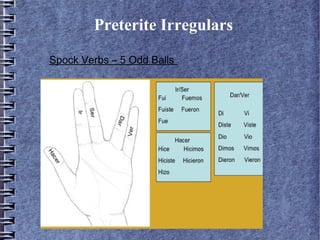
Preterite Irregulars
Spock Verbs – 5 Odd Balls
Imperfect

Uses :

Continuous
Action

-ER / -IR Endings

Notice the
“yo” and
“usted “
endings
are the
same

-AR Endings
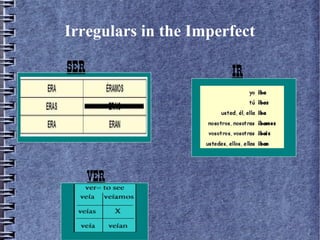
Irregulars in the Imperfect

SER

IR

VER
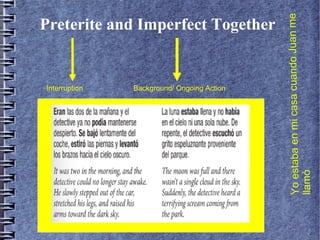
Interruption

Background/ Ongoing Action

Yo estaba en mi casa cuando Juan me
llamó

Preterite and Imperfect Together
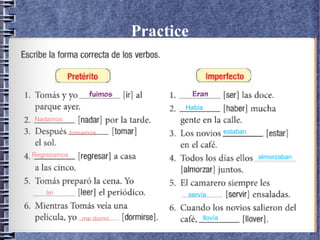
Practice

Había
Nadamos
estaban

tomamos
Regresamos

almorzaban

leí

servía
.me dormí

llovía
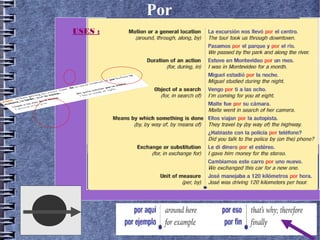
Por
USES :
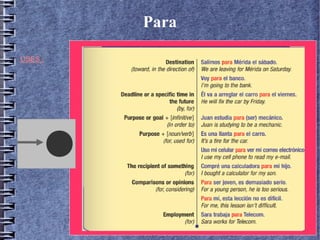
Para
USES :
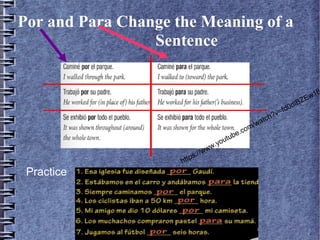
Por and Para Change the Meaning of a
Sentence

Practice

m
.co
e
tub
u
.yo
w
/ww
:/
tps
ht

dlB
d0
f
?v=
h
atc
/w

Z

8
w1
E
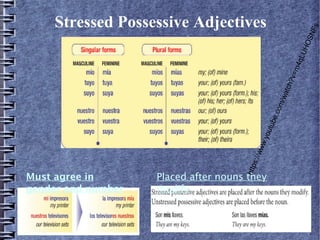
Must agree in
gender and number

http
s://
ww
w.y
out
ube
.c

om
/wa
tch
?v=

m4
qLU

HO
S

NF
s

Stressed Possessive Adjectives

Placed after nouns they
modify
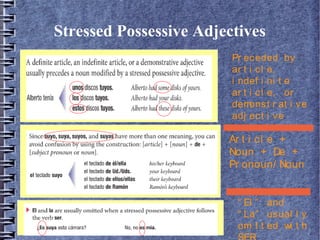
Stressed Possessive Adjectives
Pr eceded by
ar t i cl e,
i ndef i ni t e
ar t i cl e, or
dem
onst r at i ve
adj ect i ve

Ar t i cl e +
Noun + De +
Pr onoun/ Noun
“ El ” and
“ La” usual l y
om t t ed wi t h
i
Pos

sess
i

ve P
r on
ou n
s
MAN
Ejemplos -

DATA

S FO
RMA
LES
Uds.
Ud. +

1) Drop the
final “o” in the
yo form
2) AR VERBS
Add –e or –en

th

E
IV
AT
M
m
R to
FI h nd nt o
AF tac ma ce st u le
At m ac la yo ab
co d to if yll
Ad ird ble e s e t if
r
th lla on th as
sy d on o l wo n o
ad d h t d t ou
an urt ad on
fo u pr
yo ne
(o o)
tw

Wi

u
no
pro

ns

NEGATIVE
s before
lace pronoun
P
command
cents
Do not add ac

3) ER/IR VERBS
Add -a or –an
CAR → QUE
GAR →GUE
ZAR → CE
MANDATOS FORMALES
IRREGULARES

ir-(formal)to go
ser-(formal)
saber-(formal)to know
estar-(formal) to be
dar -(formal) to give
jugar-(formal) to play
llegar-(formal)
buscar-(formal)
tocar-(formal) to touch
empezar -(formal) to start

Tener
Traer

T
Tenga
Traiga

Venir

V
Venga

Dar
Decir

Ir

Salir

D

I

S

De
Dije

Vaya

Salga

Hacer
Haber

H
Haga
Haya

(vaya(n))
to be (sea(n))
(sepa(n))
(esté(n))
(dé(n))
(juegue(n))
(llegue(n))
(busque(n))
(toque(n))
(empiece(n) )

Estar

Ser

E

S

Este

Sea
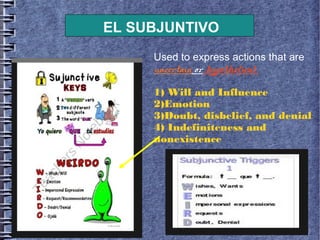
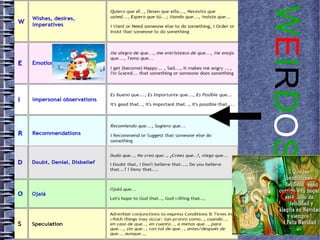
EL SUBJUNTIVO
Used to express actions that are
uncertain or hypothetical
1) Will and Influence
2)Emotion
3)Doubt, disbelief, and denial
4) Indefiniteness and
nonexistence
EL SUBJUNTIVO CONT.
SAME
CONJUGATION
AS FORMAL
COMMANDS BUT
INCLUDES
NOSOTROS/YO
TRIGGER...

EJEMPLO -
Verbs of Will and Influence
Aconseja
rTo
advise

Importar To be
important
;to matter

Mandar To order
Prohibir
To
prohibit

Insistir
(en) To
insist
(on)

Recomen
dar
(e-ie) To
recomme
nd

Rogar
(o-ue) To beg ;
to plead

Sugerir
(e-ie) To suggest
Subjunctive w/Verbs of Emotion
Subjunctive w/ Verbs of Doubt, Disbelief and Denial
Que significa

PERHAPS =
DOUBT
Used when there is a
change in subject
(And the main clause implies
negation or uncertainty)

When to use just the
INDICATIVE?

There is no
doubt/uncertainty

que indicative
No negamos que hay
demasiados carros.
(We DON”T DENY =
affirmative)
Affirmative Sentence
Creer → Indicative
Negative Sentence
No Creer → Subjunctive
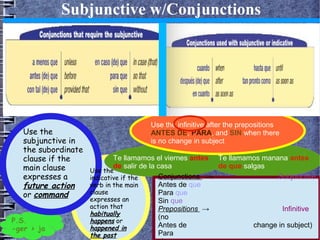
Subjunctive w/Conjunctions

Use the
subjunctive in
the subordinate
clause if the
main clause
expresses a
future action
or command
P.S.
-ger > ja

Use the infinitive after the prepositions
ANTES DE, PARA, and SIN when there
is no change in subject
Te llamamos el viernes antes Te llamamos manana antes
de salir de la casa
de que salgas
Use the
Conjunctions →
Subjunctive
indicative if the
Antes de que
verb in the main
clause
Para que
expresses an
Sin que
action that
Prepositions →
Infinitive
habitually
(no
happens or
Antes de
change in subject)
happened in
Para
the past
EXTRA SUBJUNCTI VE

Keanu se alegra de
QUE la profe sea su
novia.

Irregulars
WEIRDOS

Grammar Book SP3H

  • 1.
    Mi Libro dela Gramática Emilia Stuchlik
  • 2.
    Preterite Uses : A Snapshotin Time -AR Endings -ER / -IR Endings
  • 3.
    Preterite Irregulars Snakey Verbs CucarachaVerbs Only change in the 3rd person E-I Preferir, Repetir, Venir, Servir O-U https: // www.y outu eron be.co m /watch Dormir, Morir E-Y Leer, Creer ?v=iF UA WMM dE7c I-Y Oir
  • 4.
  • 5.
    Imperfect Uses : Continuous Action -ER /-IR Endings Notice the “yo” and “usted “ endings are the same -AR Endings
  • 6.
    Irregulars in theImperfect SER IR VER
  • 7.
    Interruption Background/ Ongoing Action Yoestaba en mi casa cuando Juan me llamó Preterite and Imperfect Together
  • 8.
  • 9.
  • 10.
  • 11.
    Por and ParaChange the Meaning of a Sentence Practice m .co e tub u .yo w /ww :/ tps ht dlB d0 f ?v= h atc /w Z 8 w1 E
  • 12.
    Must agree in genderand number http s:// ww w.y out ube .c om /wa tch ?v= m4 qLU HO S NF s Stressed Possessive Adjectives Placed after nouns they modify
  • 13.
    Stressed Possessive Adjectives Preceded by ar t i cl e, i ndef i ni t e ar t i cl e, or dem onst r at i ve adj ect i ve Ar t i cl e + Noun + De + Pr onoun/ Noun “ El ” and “ La” usual l y om t t ed wi t h i
  • 14.
  • 15.
    MAN Ejemplos - DATA S FO RMA LES Uds. Ud.+ 1) Drop the final “o” in the yo form 2) AR VERBS Add –e or –en th E IV AT M m R to FI h nd nt o AF tac ma ce st u le At m ac la yo ab co d to if yll Ad ird ble e s e t if r th lla on th as sy d on o l wo n o ad d h t d t ou an urt ad on fo u pr yo ne (o o) tw Wi u no pro ns NEGATIVE s before lace pronoun P command cents Do not add ac 3) ER/IR VERBS Add -a or –an CAR → QUE GAR →GUE ZAR → CE
  • 16.
    MANDATOS FORMALES IRREGULARES ir-(formal)to go ser-(formal) saber-(formal)toknow estar-(formal) to be dar -(formal) to give jugar-(formal) to play llegar-(formal) buscar-(formal) tocar-(formal) to touch empezar -(formal) to start Tener Traer T Tenga Traiga Venir V Venga Dar Decir Ir Salir D I S De Dije Vaya Salga Hacer Haber H Haga Haya (vaya(n)) to be (sea(n)) (sepa(n)) (esté(n)) (dé(n)) (juegue(n)) (llegue(n)) (busque(n)) (toque(n)) (empiece(n) ) Estar Ser E S Este Sea
  • 17.
    EL SUBJUNTIVO Used toexpress actions that are uncertain or hypothetical 1) Will and Influence 2)Emotion 3)Doubt, disbelief, and denial 4) Indefiniteness and nonexistence
  • 18.
    EL SUBJUNTIVO CONT. SAME CONJUGATION ASFORMAL COMMANDS BUT INCLUDES NOSOTROS/YO TRIGGER... EJEMPLO -
  • 19.
    Verbs of Willand Influence Aconseja rTo advise Importar To be important ;to matter Mandar To order Prohibir To prohibit Insistir (en) To insist (on) Recomen dar (e-ie) To recomme nd Rogar (o-ue) To beg ; to plead Sugerir (e-ie) To suggest
  • 20.
  • 21.
    Subjunctive w/ Verbsof Doubt, Disbelief and Denial Que significa PERHAPS = DOUBT Used when there is a change in subject (And the main clause implies negation or uncertainty) When to use just the INDICATIVE? There is no doubt/uncertainty que indicative No negamos que hay demasiados carros. (We DON”T DENY = affirmative) Affirmative Sentence Creer → Indicative Negative Sentence No Creer → Subjunctive
  • 22.
    Subjunctive w/Conjunctions Use the subjunctivein the subordinate clause if the main clause expresses a future action or command P.S. -ger > ja Use the infinitive after the prepositions ANTES DE, PARA, and SIN when there is no change in subject Te llamamos el viernes antes Te llamamos manana antes de salir de la casa de que salgas Use the Conjunctions → Subjunctive indicative if the Antes de que verb in the main clause Para que expresses an Sin que action that Prepositions → Infinitive habitually (no happens or Antes de change in subject) happened in Para the past
  • 23.
    EXTRA SUBJUNCTI VE Keanuse alegra de QUE la profe sea su novia. Irregulars
  • 24.