Going Personal: How Emerging
Technologies Can Support
Individualized Learning
Cairo, 9 June 2014
Øystein Johannessen
Deputy Director of Education
1
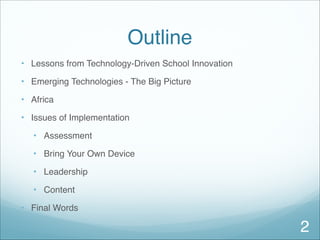
Outline
• Lessons from Technology-Driven School Innovation
• Emerging Technologies - The Big Picture
• Africa
• Issues of Implementation
• Assessment
• Bring Your Own Device
• Leadership
• Content
• Final Words
2
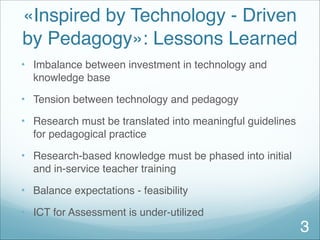
«Inspired by Technology - Driven
by Pedagogy»: Lessons Learned
• Imbalance between investment in technology and
knowledge base
• Tension between technology and pedagogy
• Research must be translated into meaningful guidelines
for pedagogical practice
• Research-based knowledge must be phased into initial
and in-service teacher training
• Balance expectations - feasibility
• ICT for Assessment is under-utilized
3
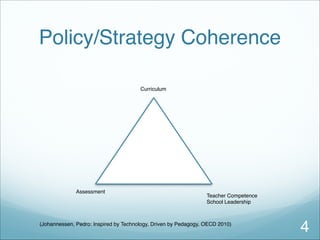
Policy/Strategy Coherence
Curriculum
Assessment
Teacher Competence
School Leadership
(Johannessen, Pedro: Inspired by Technology, Driven by Pedagogy, OECD 2010)
4
5
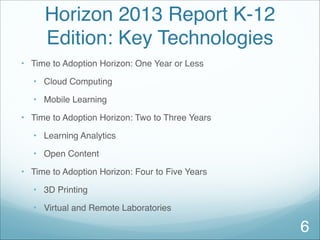
Horizon 2013 Report K-12
Edition: Key Technologies
• Time to Adoption Horizon: One Year or Less
• Cloud Computing
• Mobile Learning
• Time to Adoption Horizon: Two to Three Years
• Learning Analytics
• Open Content
• Time to Adoption Horizon: Four to Five Years
• 3D Printing
• Virtual and Remote Laboratories
6
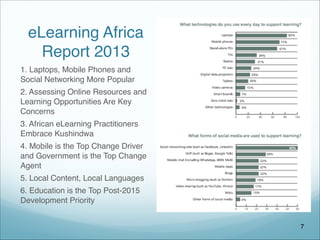
eLearning Africa
Report 2013
1. Laptops, Mobile Phones and
Social Networking More Popular
2. Assessing Online Resources and
Learning Opportunities Are Key
Concerns
3. African eLearning Practitioners
Embrace Kushindwa
4. Mobile is the Top Change Driver
and Government is the Top Change
Agent
5. Local Content, Local Languages
6. Education is the Top Post-2015
Development Priority
7
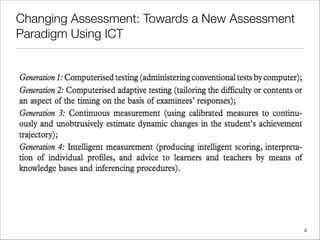
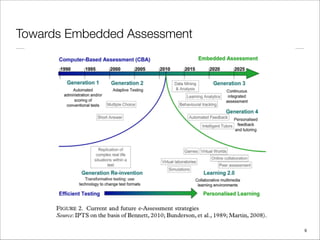
Changing Assessment: Towards a New Assessment
Paradigm Using ICT
!8
Towards Embedded Assessment
!9
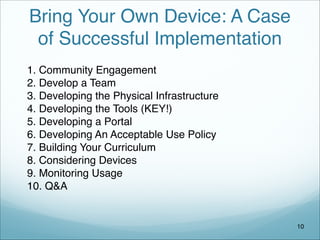
Bring Your Own Device: A Case
of Successful Implementation
1. Community Engagement
2. Develop a Team
3. Developing the Physical Infrastructure
4. Developing the Tools (KEY!)
5. Developing a Portal
6. Developing An Acceptable Use Policy
7. Building Your Curriculum
8. Considering Devices
9. Monitoring Usage
10. Q&A
10
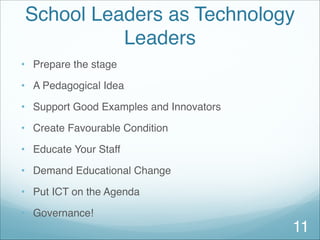
School Leaders as Technology
Leaders
• Prepare the stage
• A Pedagogical Idea
• Support Good Examples and Innovators
• Create Favourable Condition
• Educate Your Staff
• Demand Educational Change
• Put ICT on the Agenda
• Governance!
11
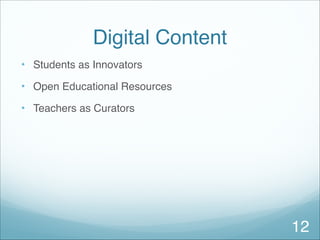
Digital Content
• Students as Innovators
• Open Educational Resources
• Teachers as Curators
12
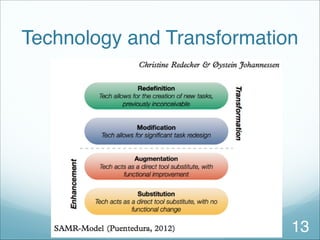
Technology and Transformation
13
Famous Last Words
• Curriculum - Assessment - Professional Development
• Assessment: Formative and Embedded
• Technology Implementation Requires Holistic
Approaches
• School Leader as Technology Leader: Merging
Technology and Pedagogy
• Empower Both Students and Teachers
14
15

Going personal - How Emerging Technologies Can Support Individualized Learning

  • 1.
    Going Personal: HowEmerging Technologies Can Support Individualized Learning Cairo, 9 June 2014 Øystein Johannessen Deputy Director of Education 1
  • 2.
    Outline • Lessons fromTechnology-Driven School Innovation • Emerging Technologies - The Big Picture • Africa • Issues of Implementation • Assessment • Bring Your Own Device • Leadership • Content • Final Words 2
  • 3.
    «Inspired by Technology- Driven by Pedagogy»: Lessons Learned • Imbalance between investment in technology and knowledge base • Tension between technology and pedagogy • Research must be translated into meaningful guidelines for pedagogical practice • Research-based knowledge must be phased into initial and in-service teacher training • Balance expectations - feasibility • ICT for Assessment is under-utilized 3
  • 4.
    Policy/Strategy Coherence Curriculum Assessment Teacher Competence SchoolLeadership (Johannessen, Pedro: Inspired by Technology, Driven by Pedagogy, OECD 2010) 4
  • 5.
  • 6.
    Horizon 2013 ReportK-12 Edition: Key Technologies • Time to Adoption Horizon: One Year or Less • Cloud Computing • Mobile Learning • Time to Adoption Horizon: Two to Three Years • Learning Analytics • Open Content • Time to Adoption Horizon: Four to Five Years • 3D Printing • Virtual and Remote Laboratories 6
  • 7.
    eLearning Africa Report 2013 1.Laptops, Mobile Phones and Social Networking More Popular 2. Assessing Online Resources and Learning Opportunities Are Key Concerns 3. African eLearning Practitioners Embrace Kushindwa 4. Mobile is the Top Change Driver and Government is the Top Change Agent 5. Local Content, Local Languages 6. Education is the Top Post-2015 Development Priority 7
  • 8.
    Changing Assessment: Towardsa New Assessment Paradigm Using ICT !8
  • 9.
  • 10.
    Bring Your OwnDevice: A Case of Successful Implementation 1. Community Engagement 2. Develop a Team 3. Developing the Physical Infrastructure 4. Developing the Tools (KEY!) 5. Developing a Portal 6. Developing An Acceptable Use Policy 7. Building Your Curriculum 8. Considering Devices 9. Monitoring Usage 10. Q&A 10
  • 11.
    School Leaders asTechnology Leaders • Prepare the stage • A Pedagogical Idea • Support Good Examples and Innovators • Create Favourable Condition • Educate Your Staff • Demand Educational Change • Put ICT on the Agenda • Governance! 11
  • 12.
    Digital Content • Studentsas Innovators • Open Educational Resources • Teachers as Curators 12
  • 13.
  • 14.
    Famous Last Words •Curriculum - Assessment - Professional Development • Assessment: Formative and Embedded • Technology Implementation Requires Holistic Approaches • School Leader as Technology Leader: Merging Technology and Pedagogy • Empower Both Students and Teachers 14
  • 15.