Universal Design
for Learning
UDL in the Elementary Classroom
by Maurine Adamek
What is
UDL?
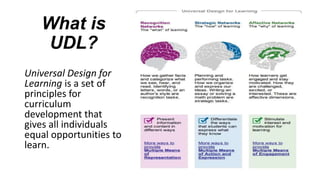
Universal Design for
Learning is a set of
principles for
curriculum
development that
gives all individuals
equal opportunities to
learn.
Structure
Classes
Personnel
Instruction
General Curriculum
Technology
Assessment
Elements of a UDL School
Structure
• One story
• Handicap Accessible
• Large classrooms
• Automatic doors for hands-free access
• Clean and inviting atmosphere
• Unique architectural design elements that promote
creativity
• State of the art facity
Classes
• Students grouped by grade level
• Co-Teaching classroom
• Student to teacher ratio = 20 to 2
• Flexible Learning
• Technology Station
• Reading Station
• Small Group Learning Station
• Adjustable furniture
• Science Center
• Tables arranged for easy collaboration
• Lamps, sofas, tent, fort
• Multiple seating options
Personnel
• Salary - 10% above base pay
• Highly qualified and motivated
• Incentives for creativity and student achievement
• All staff receives UDL training
• Staff receives updated technology training
• Built-in time for planning and implementation
• Professional development on student-centered learning
• Training on co-teaching models
• Brain network training
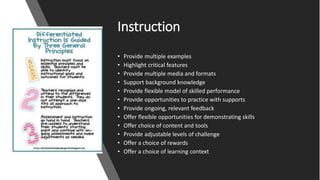
Instruction
• Provide multiple examples
• Highlight critical features
• Provide multiple media and formats
• Support background knowledge
• Provide flexible model of skilled performance
• Provide opportunities to practice with supports
• Provide ongoing, relevant feedback
• Offer flexible opportunities for demonstrating skills
• Offer choice of content and tools
• Provide adjustable levels of challenge
• Offer a choice of rewards
• Offer a choice of learning context
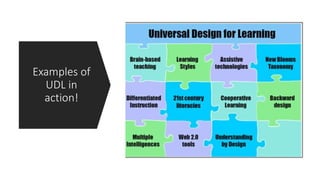
Examples of
UDL in
action!
General Education - Flexible
Responsive Curriculum
• Options for how information is presented
• Options for how students respond or demonstrate their
knowledge and skills
• Options for how students are engaged in learning
• Opportunities for all student to access, participate in,
and progress in the general-education curriculum by
reducing barriers to instruction
Technology
• Digital Textbooks
• Reading Pens
• Smartboards
• iPads
• Laptop computers
• Text-to-Speech
• Computer Simulations
Assessment
• Align assessment to learning goals
• Offer authentic opportunities for assessment
• Assess engagement as well as content knowledge
• Include frequent formative assessments
• Eliminate unnecessary barriers in assessment
• Support learner variability through flexible assessments
• Use and share rubrics to clarify expectations
• Involve learners in their learning progress through
assessment data
• Reflect on summative assessments for future lesson design
• Build communities of practice that support curricular
modification from assessment data
Universal design for learning pp

Universal design for learning pp

  • 1.
    Universal Design for Learning UDLin the Elementary Classroom by Maurine Adamek
  • 2.
    What is UDL? Universal Designfor Learning is a set of principles for curriculum development that gives all individuals equal opportunities to learn.
  • 3.
  • 4.
    Structure • One story •Handicap Accessible • Large classrooms • Automatic doors for hands-free access • Clean and inviting atmosphere • Unique architectural design elements that promote creativity • State of the art facity
  • 5.
    Classes • Students groupedby grade level • Co-Teaching classroom • Student to teacher ratio = 20 to 2 • Flexible Learning • Technology Station • Reading Station • Small Group Learning Station • Adjustable furniture • Science Center • Tables arranged for easy collaboration • Lamps, sofas, tent, fort • Multiple seating options
  • 6.
    Personnel • Salary -10% above base pay • Highly qualified and motivated • Incentives for creativity and student achievement • All staff receives UDL training • Staff receives updated technology training • Built-in time for planning and implementation • Professional development on student-centered learning • Training on co-teaching models • Brain network training
  • 7.
    Instruction • Provide multipleexamples • Highlight critical features • Provide multiple media and formats • Support background knowledge • Provide flexible model of skilled performance • Provide opportunities to practice with supports • Provide ongoing, relevant feedback • Offer flexible opportunities for demonstrating skills • Offer choice of content and tools • Provide adjustable levels of challenge • Offer a choice of rewards • Offer a choice of learning context
  • 8.
  • 9.
    General Education -Flexible Responsive Curriculum • Options for how information is presented • Options for how students respond or demonstrate their knowledge and skills • Options for how students are engaged in learning • Opportunities for all student to access, participate in, and progress in the general-education curriculum by reducing barriers to instruction
  • 10.
    Technology • Digital Textbooks •Reading Pens • Smartboards • iPads • Laptop computers • Text-to-Speech • Computer Simulations
  • 11.
    Assessment • Align assessmentto learning goals • Offer authentic opportunities for assessment • Assess engagement as well as content knowledge • Include frequent formative assessments • Eliminate unnecessary barriers in assessment • Support learner variability through flexible assessments • Use and share rubrics to clarify expectations • Involve learners in their learning progress through assessment data • Reflect on summative assessments for future lesson design • Build communities of practice that support curricular modification from assessment data