International Workshop Re-designing Institutional Policies and Practices to Enhance the Quality of Education through Innovative Use of Digital Technologies Joke Voogt, University of Twente, NL Co-chair EDUsummIT EDUCATION IN THE 21st CENTURY:  WHAT TO EXPECT FROM TEACHERS
International Handbook of Information Technology in Primary & Secondary Education (Voogt & Knezek, 2008) Synthesis of research on ICT in education from a broad international perspective
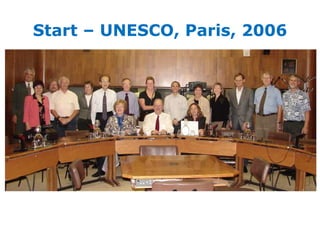
Start – UNESCO, Paris, 2006
 
What research has demonstrated ICT can enhance teaching and learning  Under which conditions ICT works (at system, school  and teacher level) But ICT scarcely finds its way in teaching and learning practice
International Summit of 70 scholars, leadership and policy makers to go beyond the findings of the Handbook  EDUsummIT 2009: The Hague 2009
CALL TO ACTION EDUSUMMIT 2009 To establish a clear view on the role of ICT in  21st century learning and its implications for formal and informal learning To radically restructure schools to be able to use multiple technology-enhanced pedagogies to address individual needs of students To better understand student technology experiences in informal learning environments, in order to inform learning in formal settings To develop new assessments designed to measure outcomes from technology enriched learning experiences To develop and use distributed leadership models for technology use in schools and teacher education programs To develop and use models for teacher learning on technology use in schools and classrooms at the pre- and in-service levels To d evelop ideas on international opportunities relating to new and emerging technologies in order to address the needs of developing countries and promote global social awareness and responsibilities To develop and disseminate a list of essential conditions that need to be in place to ensure benefit from technology investments To actively study both research on and development of ICT applications in classrooms To use findings presented in the Handbook to inform research, policy and leadership for ICT in schools To develop m echanisms for sharing and distributing research, promising policies and practices on ICT in education  To nurture an international community of ICT scholars, policy makers and leaders who continually build upon our knowledge base to inform policy and practice. To disseminate and discuss the recommendation in this Call to Action to other national and international ICT initiatives .
 
Building a Global Community of Policy-Makers, Educators & Researchers to Move Education into the Digital Age
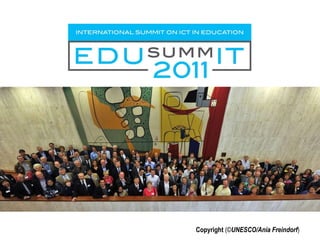
Copyright  (© UNESCO/Ania Freindorf )
Themes based on the Call to Action Restructuring Educational Systems Student Technology Experiences Teacher Professional Development Global Awareness Assessment 21st Century Learning Barriers/Essential Conditions Research on IT in Education
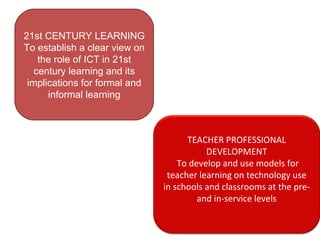
21st CENTURY LEARNING To establish a clear view on the role of ICT in  21st century learning and its implications for formal and informal learning TEACHER PROFESSIONAL DEVELOPMENT To develop and use models for teacher learning on technology use in schools and classrooms at the pre- and in-service levels
Teaching and Learning in the Knowledge Society ‘What do students need to learn:  21 st  century skills ‘ Skills’ encompass: To know, to do and to value Broad consensus on what 21 st  century ‘skills’ are,  but local reconceptualization is needed
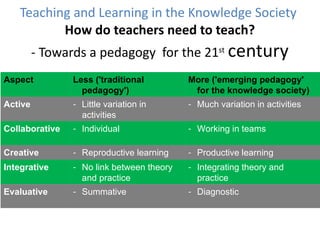
Teaching and Learning in the Knowledge Society   How do teachers need to teach? - Towards a pedagogy  for the 21 st   century Aspect Less ('traditional pedagogy') More ('emerging pedagogy' for the knowledge society)  Active Little variation in activities Much variation in activities Collaborative Individual Working in teams Creative Reproductive learning Productive learning Integrative No link between theory and practice Integrating theory and practice Evaluative Summative Diagnostic
Technological Pedagogical Content Knowledge Koehler & Mishra (2006): * The integration of  ICT in education benefits from a careful  alignment between content, pedagogy and  the affordances  of the  technology * Teachers who want to integrate technology need to be competent in all three domains
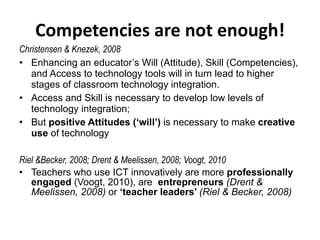
Competencies are not enough! Christensen & Knezek, 2008 Enhancing an educator’s Will (Attitude), Skill (Competencies), and Access to technology tools will in turn lead to higher stages of classroom technology integration. Access and Skill is necessary to develop low levels of technology integration; But  positive Attitudes (‘will’)  is necessary to make  creative use  of technology Riel &Becker, 2008; Drent & Meelissen, 2008; Voogt, 2010 Teachers who use ICT innovatively are more  professionally engaged  (Voogt, 2010), are  entrepreneurs   (Drent & Meelissen, 2008)  or  ‘teacher leaders’  (Riel & Becker, 2008)
Some preliminary conclusions from the EDUsummIT Teachers (and learners) need to be owners of the concept of 21 st  century learning Lack of understanding of ICT prevents teachers to better prepare students for their future Teachers need to understand how to integrate content, pedagogy a and technology Teachers are afraid they loose control over the learning process that takes place ‘inside’ students
Preliminary Recommendations Document a shared vision for education and the role of ICT & PD which engages all stakeholders to encourage ownership Allocation of funding for Teacher Professional Development as a part of any new ICT initiative  A career-long PD continuum to prepare for emerging roles and practices of teachers is needed
WWW.EDUSUMMIT.NL [email_address]
 

Unesco workshop ed usumm it 2011 sofia 15 june

  • 1.
    International Workshop Re-designingInstitutional Policies and Practices to Enhance the Quality of Education through Innovative Use of Digital Technologies Joke Voogt, University of Twente, NL Co-chair EDUsummIT EDUCATION IN THE 21st CENTURY: WHAT TO EXPECT FROM TEACHERS
  • 2.
    International Handbook ofInformation Technology in Primary & Secondary Education (Voogt & Knezek, 2008) Synthesis of research on ICT in education from a broad international perspective
  • 3.
    Start – UNESCO,Paris, 2006
  • 4.
  • 5.
    What research hasdemonstrated ICT can enhance teaching and learning Under which conditions ICT works (at system, school and teacher level) But ICT scarcely finds its way in teaching and learning practice
  • 6.
    International Summit of70 scholars, leadership and policy makers to go beyond the findings of the Handbook EDUsummIT 2009: The Hague 2009
  • 7.
    CALL TO ACTIONEDUSUMMIT 2009 To establish a clear view on the role of ICT in 21st century learning and its implications for formal and informal learning To radically restructure schools to be able to use multiple technology-enhanced pedagogies to address individual needs of students To better understand student technology experiences in informal learning environments, in order to inform learning in formal settings To develop new assessments designed to measure outcomes from technology enriched learning experiences To develop and use distributed leadership models for technology use in schools and teacher education programs To develop and use models for teacher learning on technology use in schools and classrooms at the pre- and in-service levels To d evelop ideas on international opportunities relating to new and emerging technologies in order to address the needs of developing countries and promote global social awareness and responsibilities To develop and disseminate a list of essential conditions that need to be in place to ensure benefit from technology investments To actively study both research on and development of ICT applications in classrooms To use findings presented in the Handbook to inform research, policy and leadership for ICT in schools To develop m echanisms for sharing and distributing research, promising policies and practices on ICT in education To nurture an international community of ICT scholars, policy makers and leaders who continually build upon our knowledge base to inform policy and practice. To disseminate and discuss the recommendation in this Call to Action to other national and international ICT initiatives .
  • 8.
  • 9.
    Building a GlobalCommunity of Policy-Makers, Educators & Researchers to Move Education into the Digital Age
  • 10.
    Copyright (©UNESCO/Ania Freindorf )
  • 11.
    Themes based onthe Call to Action Restructuring Educational Systems Student Technology Experiences Teacher Professional Development Global Awareness Assessment 21st Century Learning Barriers/Essential Conditions Research on IT in Education
  • 12.
    21st CENTURY LEARNINGTo establish a clear view on the role of ICT in 21st century learning and its implications for formal and informal learning TEACHER PROFESSIONAL DEVELOPMENT To develop and use models for teacher learning on technology use in schools and classrooms at the pre- and in-service levels
  • 13.
    Teaching and Learningin the Knowledge Society ‘What do students need to learn: 21 st century skills ‘ Skills’ encompass: To know, to do and to value Broad consensus on what 21 st century ‘skills’ are, but local reconceptualization is needed
  • 14.
    Teaching and Learningin the Knowledge Society How do teachers need to teach? - Towards a pedagogy for the 21 st century Aspect Less ('traditional pedagogy') More ('emerging pedagogy' for the knowledge society) Active Little variation in activities Much variation in activities Collaborative Individual Working in teams Creative Reproductive learning Productive learning Integrative No link between theory and practice Integrating theory and practice Evaluative Summative Diagnostic
  • 15.
    Technological Pedagogical ContentKnowledge Koehler & Mishra (2006): * The integration of ICT in education benefits from a careful alignment between content, pedagogy and the affordances of the technology * Teachers who want to integrate technology need to be competent in all three domains
  • 16.
    Competencies are notenough! Christensen & Knezek, 2008 Enhancing an educator’s Will (Attitude), Skill (Competencies), and Access to technology tools will in turn lead to higher stages of classroom technology integration. Access and Skill is necessary to develop low levels of technology integration; But positive Attitudes (‘will’) is necessary to make creative use of technology Riel &Becker, 2008; Drent & Meelissen, 2008; Voogt, 2010 Teachers who use ICT innovatively are more professionally engaged (Voogt, 2010), are entrepreneurs (Drent & Meelissen, 2008) or ‘teacher leaders’ (Riel & Becker, 2008)
  • 17.
    Some preliminary conclusionsfrom the EDUsummIT Teachers (and learners) need to be owners of the concept of 21 st century learning Lack of understanding of ICT prevents teachers to better prepare students for their future Teachers need to understand how to integrate content, pedagogy a and technology Teachers are afraid they loose control over the learning process that takes place ‘inside’ students
  • 18.
    Preliminary Recommendations Documenta shared vision for education and the role of ICT & PD which engages all stakeholders to encourage ownership Allocation of funding for Teacher Professional Development as a part of any new ICT initiative A career-long PD continuum to prepare for emerging roles and practices of teachers is needed
  • 19.
  • 20.

Editor's Notes

  • #8 Not to read aloud, but just brief to share, they basically have had the information