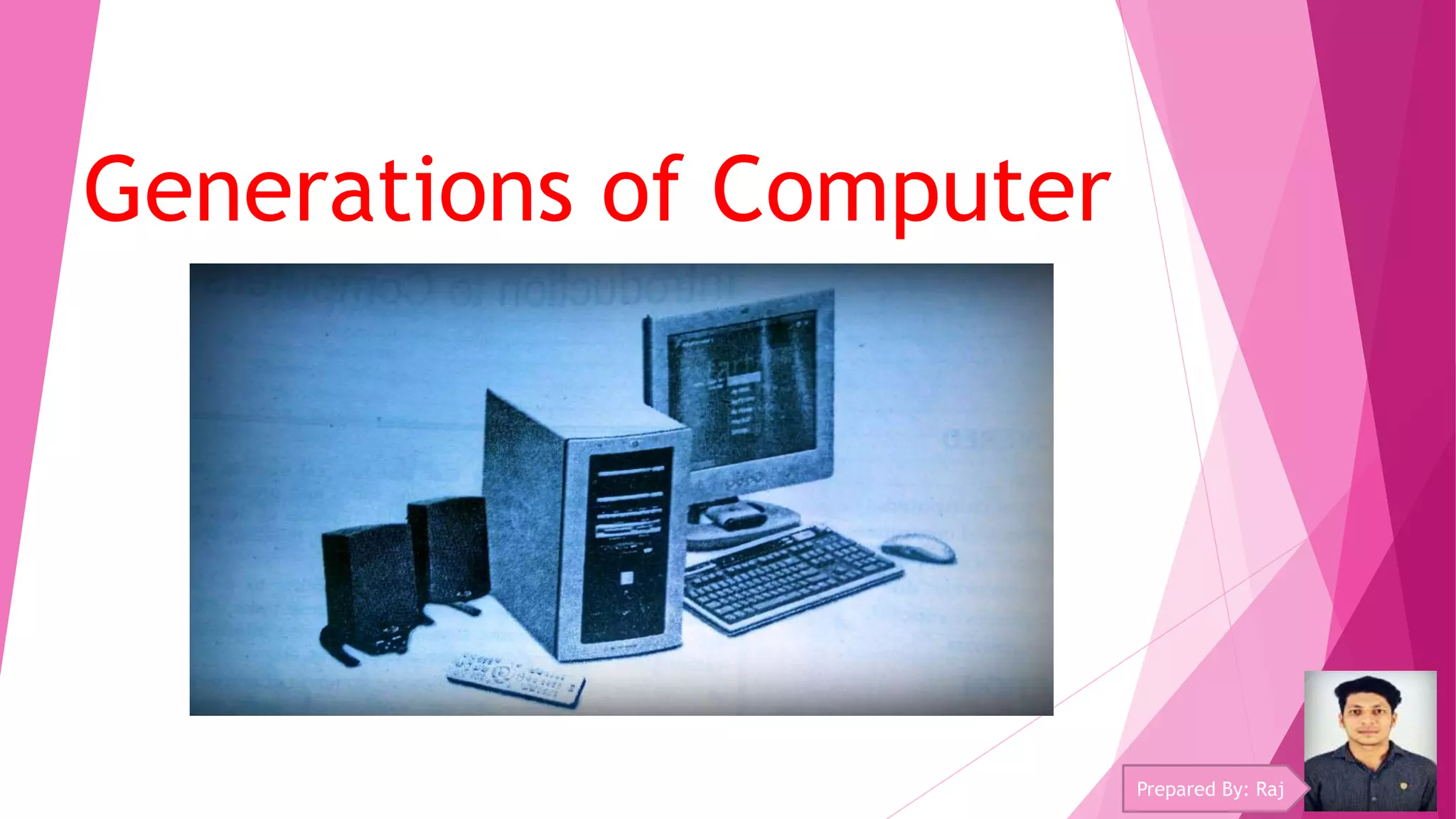
Generations of Computer
Prepared By: Raj
Generations of Computer
 There are totally five computer generations known till date. Each generation
has been discussed in detail along with their time period.
 The main five generations of computer are:
 First Generation
 Second Generation
 Third Generation
 Fourth Generation
 Fifth Generation
Prepared By: Raj
First Generation of Computer (1943-1956)
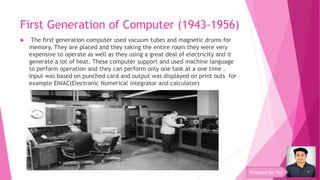
 The first generation computer used vacuum tubes and magnetic drums for
memory. They are placed and they taking the entire room they were very
expensive to operate as well as they using a great deal of electricity and it
generate a lot of heat. These computer support and used machine language
to perform operation and they can perform only one task at a one time .
Input was based on punched card and output was displayed on print outs for
example ENIAC(Electronic Numerical integrator and calculator)
Prepared By: Raj
Advantages of First Generation Computers
 Vacuum tube technology made possible to make electronic digital computers.
 These computers could calculate data in millisecond
Disadvantages of First Generation Computers
 These Computers are large in size.
 They were not very reliable.
 Air conditioning was required.
 More consumption of electricity.
 Non-Portable.
 Very Slow Speed.
 Used Punch Cards for Inputs.
 Used Machine Language.
 They produced too much heat & energy.
Prepared By: Raj
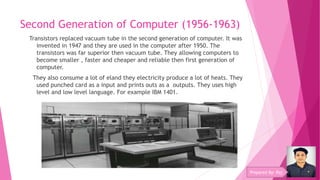
Second Generation of Computer (1956-1963)
Transistors replaced vacuum tube in the second generation of computer. It was
invented in 1947 and they are used in the computer after 1950. The
transistors was far superior then vacuum tube. They allowing computers to
become smaller , faster and cheaper and reliable then first generation of
computer.
They also consume a lot of eland they electricity produce a lot of heats. They
used punched card as a input and prints outs as a outputs. They uses high
level and low level language. For example IBM 1401.
Prepared By: Raj
Advantages of Second Generation Computers
 Smaller in size compared to First Generation.
 More reliable than first generation.
 Better portability than first generation.
 Better speed & could calculate data in microseconds.
Disadvantages of Second Generation Computers
 Costly & non-Versatile.
 Only used for special purposes.
 Constant maintenance is required.
Prepared By: Raj
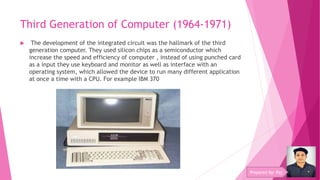
Third Generation of Computer (1964-1971)
 The development of the integrated circuit was the hallmark of the third
generation computer. They used silicon chips as a semiconductor which
increase the speed and efficiency of computer , instead of using punched card
as a input they use keyboard and monitor as well as interface with an
operating system, which allowed the device to run many different application
at once a time with a CPU. For example IBM 370
Prepared By: Raj
Advantages of Third Generation Computers
 Smaller in size compared to previous computers.
 More Reliable.
 Use Less energy.
 Maintenance cost was low because hardware failure is rear.
 Less Expensive.
 Used Mouse & Keyboard for input.
Disadvantages of Third Generation Computers
 Air Conditioning was required.
 The latest technology required for manufacturing of IC chips.
Prepared By: Raj
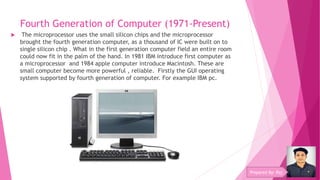
Fourth Generation of Computer (1971-Present)
 The microprocessor uses the small silicon chips and the microprocessor
brought the fourth generation computer, as a thousand of IC were built on to
single silicon chip . What in the first generation computer field an entire room
could now fit in the palm of the hand. In 1981 IBM introduce first computer as
a microprocessor and 1984 apple computer introduce Macintosh. These are
small computer become more powerful , reliable. Firstly the GUI operating
system supported by fourth generation of computer. For example IBM pc.
Prepared By: Raj
Advantages of Fourth Generation Computers
 Smaller is Size in comparison to previous generations.
 More powerful & reliable than previous generations.
 No air conditioning required.
 Cheapest among all previous generations.
 Totally general purpose.
 Less need to repair the computers.
Disadvantages of Fourth Generation Computers
 The latest technology is required for manufacturing of Microprocessors.
Prepared By: Raj
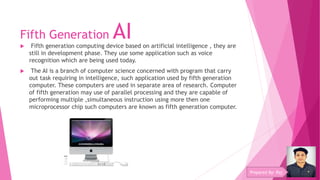
Fifth Generation AI Fifth generation computing device based on artificial intelligence , they are
still in development phase. They use some application such as voice
recognition which are being used today.
 The AI is a branch of computer science concerned with program that carry
out task requiring in intelligence, such application used by fifth generation
computer. These computers are used in separate area of research. Computer
of fifth generation may use of parallel processing and they are capable of
performing multiple ,simultaneous instruction using more then one
microprocessor chip such computers are known as fifth generation computer.
Prepared By: Raj
 Smaller in Size.
 More powerful, reliable & easy to handle.
 The fifth generation is a more updated, clean & easy to use.
 Having capabilities of parallel processing.
 Having extra high processing speed.
Advantages of Fifth Generation Computers
Disadvantages of Fifth Generation Computers
 If Computers have their own brain then harm the humans.
Prepared By: Raj

Generations of computer

  • 1.
  • 2.
    Generations of Computer There are totally five computer generations known till date. Each generation has been discussed in detail along with their time period.  The main five generations of computer are:  First Generation  Second Generation  Third Generation  Fourth Generation  Fifth Generation Prepared By: Raj
  • 3.
    First Generation ofComputer (1943-1956)  The first generation computer used vacuum tubes and magnetic drums for memory. They are placed and they taking the entire room they were very expensive to operate as well as they using a great deal of electricity and it generate a lot of heat. These computer support and used machine language to perform operation and they can perform only one task at a one time . Input was based on punched card and output was displayed on print outs for example ENIAC(Electronic Numerical integrator and calculator) Prepared By: Raj
  • 4.
    Advantages of FirstGeneration Computers  Vacuum tube technology made possible to make electronic digital computers.  These computers could calculate data in millisecond Disadvantages of First Generation Computers  These Computers are large in size.  They were not very reliable.  Air conditioning was required.  More consumption of electricity.  Non-Portable.  Very Slow Speed.  Used Punch Cards for Inputs.  Used Machine Language.  They produced too much heat & energy. Prepared By: Raj
  • 5.
    Second Generation ofComputer (1956-1963) Transistors replaced vacuum tube in the second generation of computer. It was invented in 1947 and they are used in the computer after 1950. The transistors was far superior then vacuum tube. They allowing computers to become smaller , faster and cheaper and reliable then first generation of computer. They also consume a lot of eland they electricity produce a lot of heats. They used punched card as a input and prints outs as a outputs. They uses high level and low level language. For example IBM 1401. Prepared By: Raj
  • 6.
    Advantages of SecondGeneration Computers  Smaller in size compared to First Generation.  More reliable than first generation.  Better portability than first generation.  Better speed & could calculate data in microseconds. Disadvantages of Second Generation Computers  Costly & non-Versatile.  Only used for special purposes.  Constant maintenance is required. Prepared By: Raj
  • 7.
    Third Generation ofComputer (1964-1971)  The development of the integrated circuit was the hallmark of the third generation computer. They used silicon chips as a semiconductor which increase the speed and efficiency of computer , instead of using punched card as a input they use keyboard and monitor as well as interface with an operating system, which allowed the device to run many different application at once a time with a CPU. For example IBM 370 Prepared By: Raj
  • 8.
    Advantages of ThirdGeneration Computers  Smaller in size compared to previous computers.  More Reliable.  Use Less energy.  Maintenance cost was low because hardware failure is rear.  Less Expensive.  Used Mouse & Keyboard for input. Disadvantages of Third Generation Computers  Air Conditioning was required.  The latest technology required for manufacturing of IC chips. Prepared By: Raj
  • 9.
    Fourth Generation ofComputer (1971-Present)  The microprocessor uses the small silicon chips and the microprocessor brought the fourth generation computer, as a thousand of IC were built on to single silicon chip . What in the first generation computer field an entire room could now fit in the palm of the hand. In 1981 IBM introduce first computer as a microprocessor and 1984 apple computer introduce Macintosh. These are small computer become more powerful , reliable. Firstly the GUI operating system supported by fourth generation of computer. For example IBM pc. Prepared By: Raj
  • 10.
    Advantages of FourthGeneration Computers  Smaller is Size in comparison to previous generations.  More powerful & reliable than previous generations.  No air conditioning required.  Cheapest among all previous generations.  Totally general purpose.  Less need to repair the computers. Disadvantages of Fourth Generation Computers  The latest technology is required for manufacturing of Microprocessors. Prepared By: Raj
  • 11.
    Fifth Generation AIFifth generation computing device based on artificial intelligence , they are still in development phase. They use some application such as voice recognition which are being used today.  The AI is a branch of computer science concerned with program that carry out task requiring in intelligence, such application used by fifth generation computer. These computers are used in separate area of research. Computer of fifth generation may use of parallel processing and they are capable of performing multiple ,simultaneous instruction using more then one microprocessor chip such computers are known as fifth generation computer. Prepared By: Raj
  • 12.
     Smaller inSize.  More powerful, reliable & easy to handle.  The fifth generation is a more updated, clean & easy to use.  Having capabilities of parallel processing.  Having extra high processing speed. Advantages of Fifth Generation Computers Disadvantages of Fifth Generation Computers  If Computers have their own brain then harm the humans. Prepared By: Raj