An introduction 
to Email: Gmail 
Huntington Beach Public Library
What is Email? 
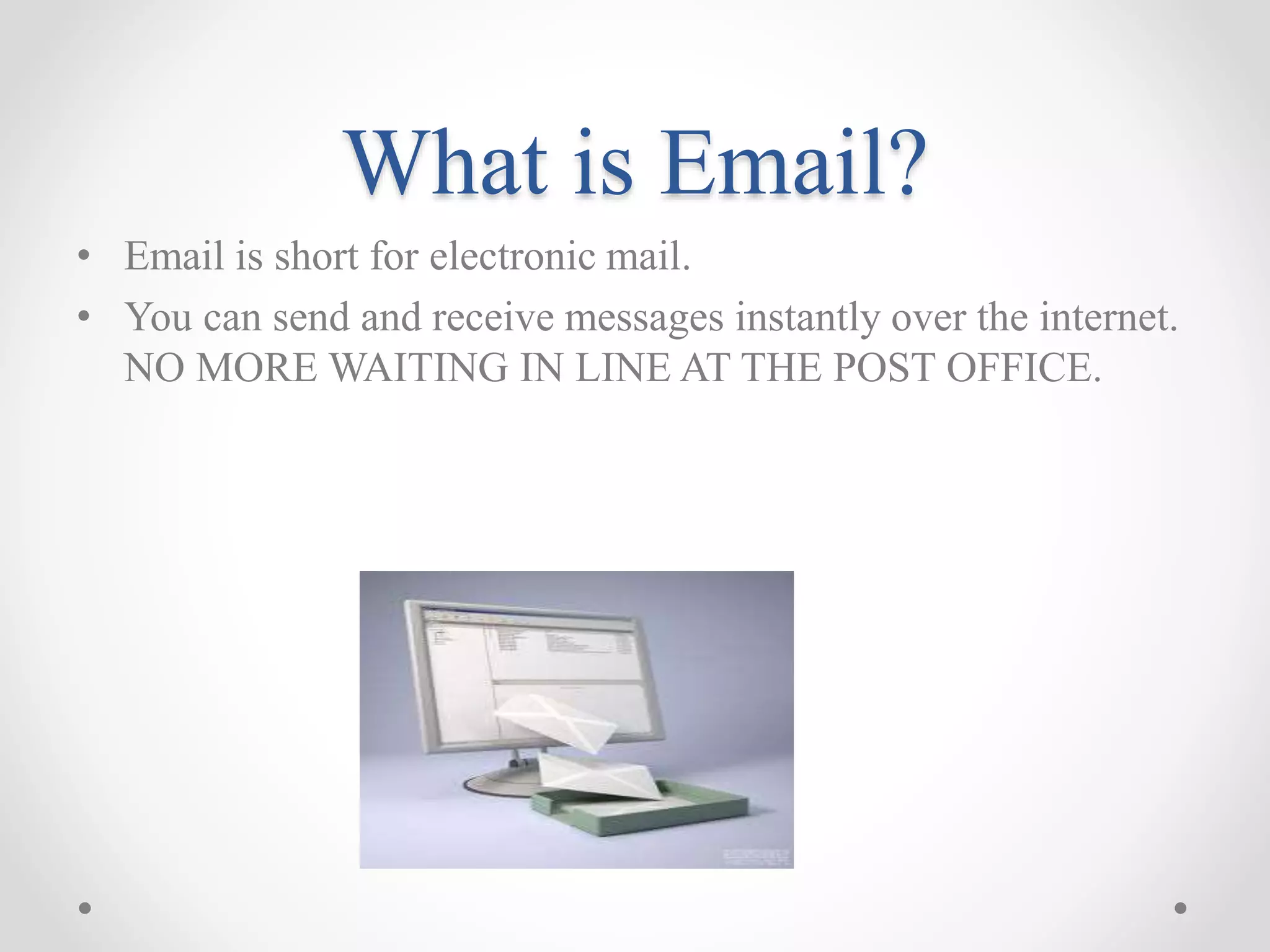
• Email is short for electronic mail. 
• You can send and receive messages instantly over the internet. 
NO MORE WAITING IN LINE AT THE POST OFFICE.
Tools for the job 
• a computer with internet access or a phone or tablet. 
• an email account with a service provider such as Gmail, 
Yahoo, Hotmail, and many more.
Lets get on with it! Setting 
up email address. 
• The Different parts to an email address 
• Example email address: cat@gmail.com 
• The user name is cat, each user name is 
unique 
• @ sign after user name. 
• An email providers name. Yours will be 
Gmail.com
Passwords 
• The next step is picking a password. 
• Pick something that will be easy to remember, but 
also hard for others to guess 
• Pick a combination of letters and numbers 
• Do not use sensitive information, E.G. ATM pin 
number
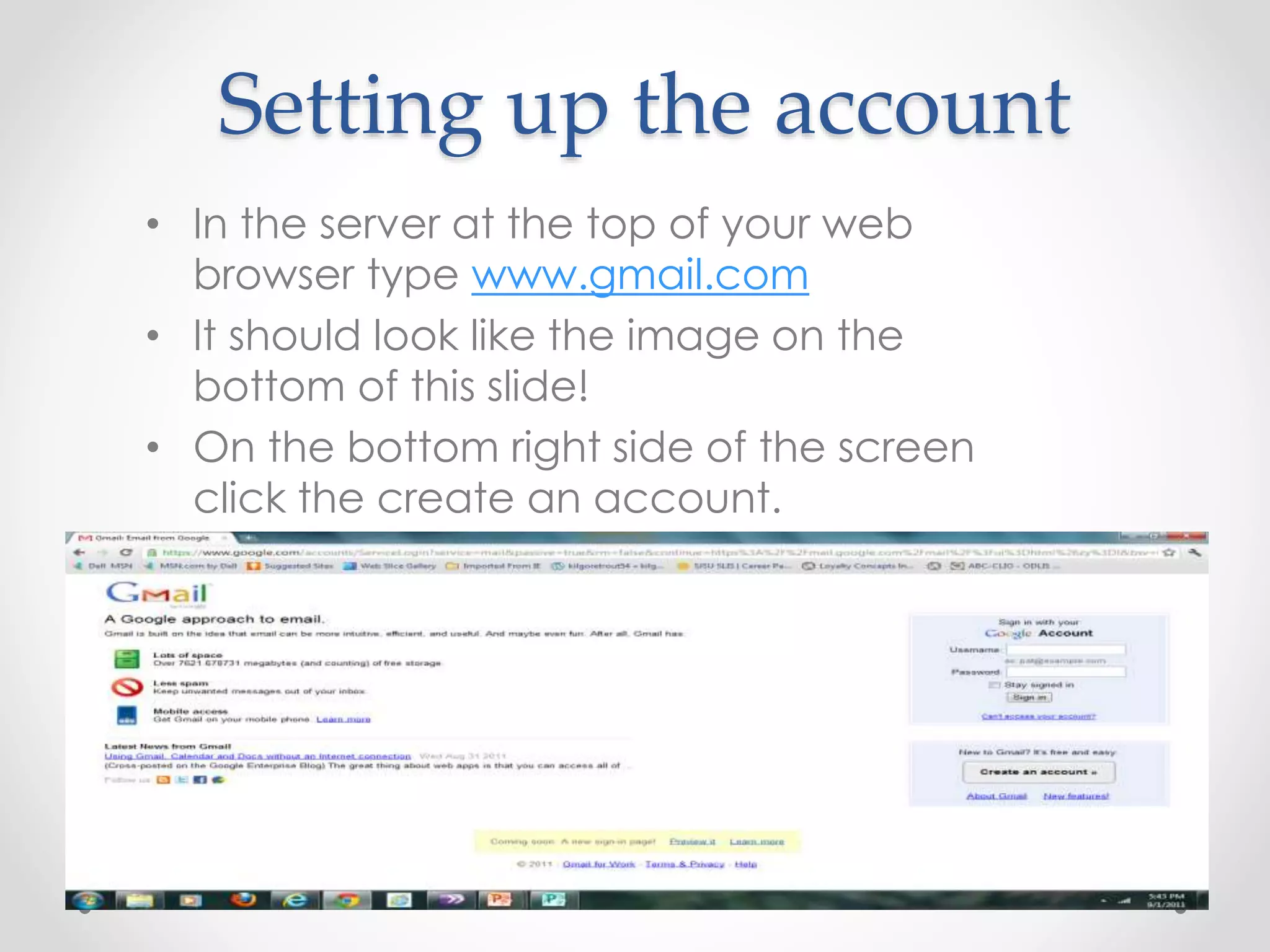
Setting up the account 
• In the server at the top of your web 
browser type www.gmail.com 
• It should look like the image on the 
bottom of this slide! 
• On the bottom right side of the screen 
click the create an account.
The Next Slide will show 
you where you should 
be, and also have the 
information for you to 
register for your own 
Gmail account
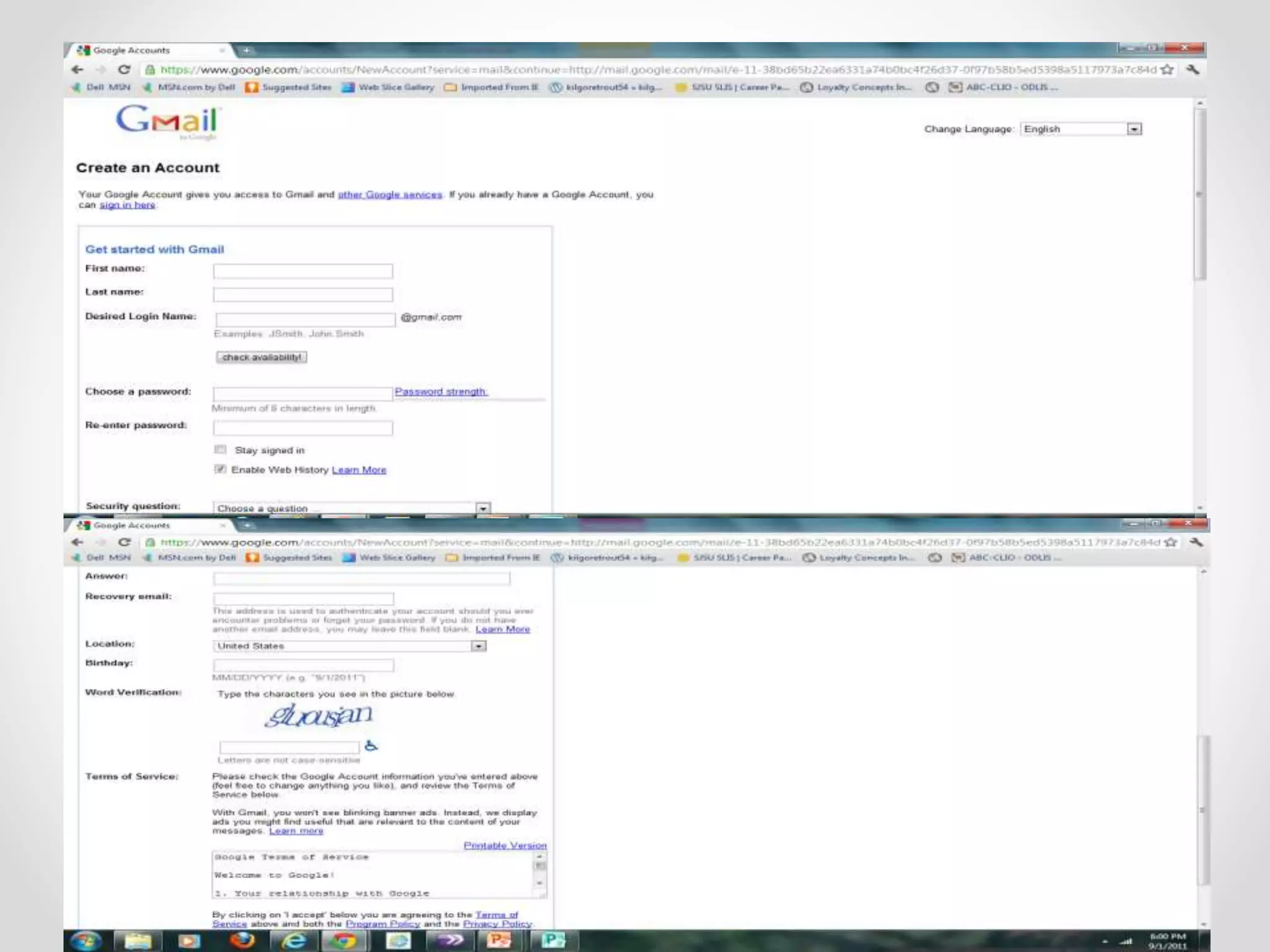
Filling out the personal Information 
• Type in your first and last name 
• Create your own unique login(user name) 
• Pick a password, Re-enter the password 
• Pick a security question and answer. You do this 
incase you ever forget your password.
Filling out personal Information Cont. 
• Type in location and birthday. 
• Word verification. Type in the word you 
see pictured above the text box. (this is 
too eliminate virus software from hacking 
your account. 
• Read and agree to terms of service if you 
wish to continue.
Sending a message 
• Click Compose Mail (top left) 
• Parts of an email. 
• To : enter the exact email address of your recipient (E.G.) 
cat@gmail.com 
o For multiple recipients, separate each address with a 
comma 
• CC : carbon copy 
• BCC : BLIND carbon copy – is anonymous 
• Subject : the topic of your email – very important 
• Body : the message of your email 
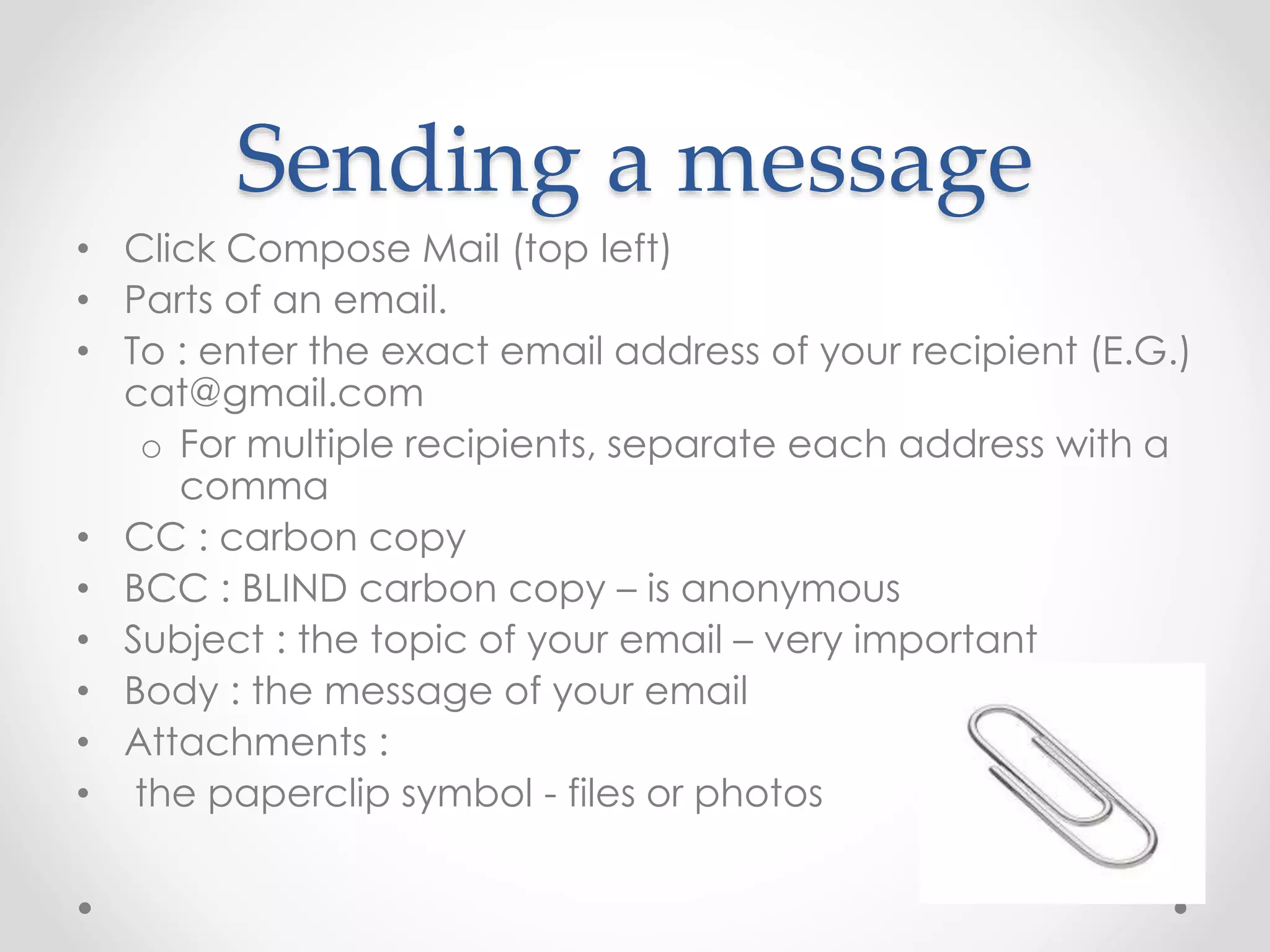
• Attachments : 
• the paperclip symbol - files or photos
Sending your first 
EMAIL! 
• When communicating over email, err on the side of 
formality unless it is a family member or close friend. 
(I hate when the people close to me are too 
formal)!! 
• You can attach a file from a flash drive, E.G. 
Resume 
• Click attach file, then click browse. Find the file you 
want attached and click on it. Then click ok. The file 
will now be part of your email
Sending your first EMAIL 
Cont. 
• Click send to mail your letter when ready. 
• The message will now be in your sent folder 
• Remember make sure you want to send the email 
the way it is, once sent it is gone forever and you 
can’t take it back! 
• Spell-check, proofread, etc 
• It is now in the sent mail folder
Draft box and work 
loss 
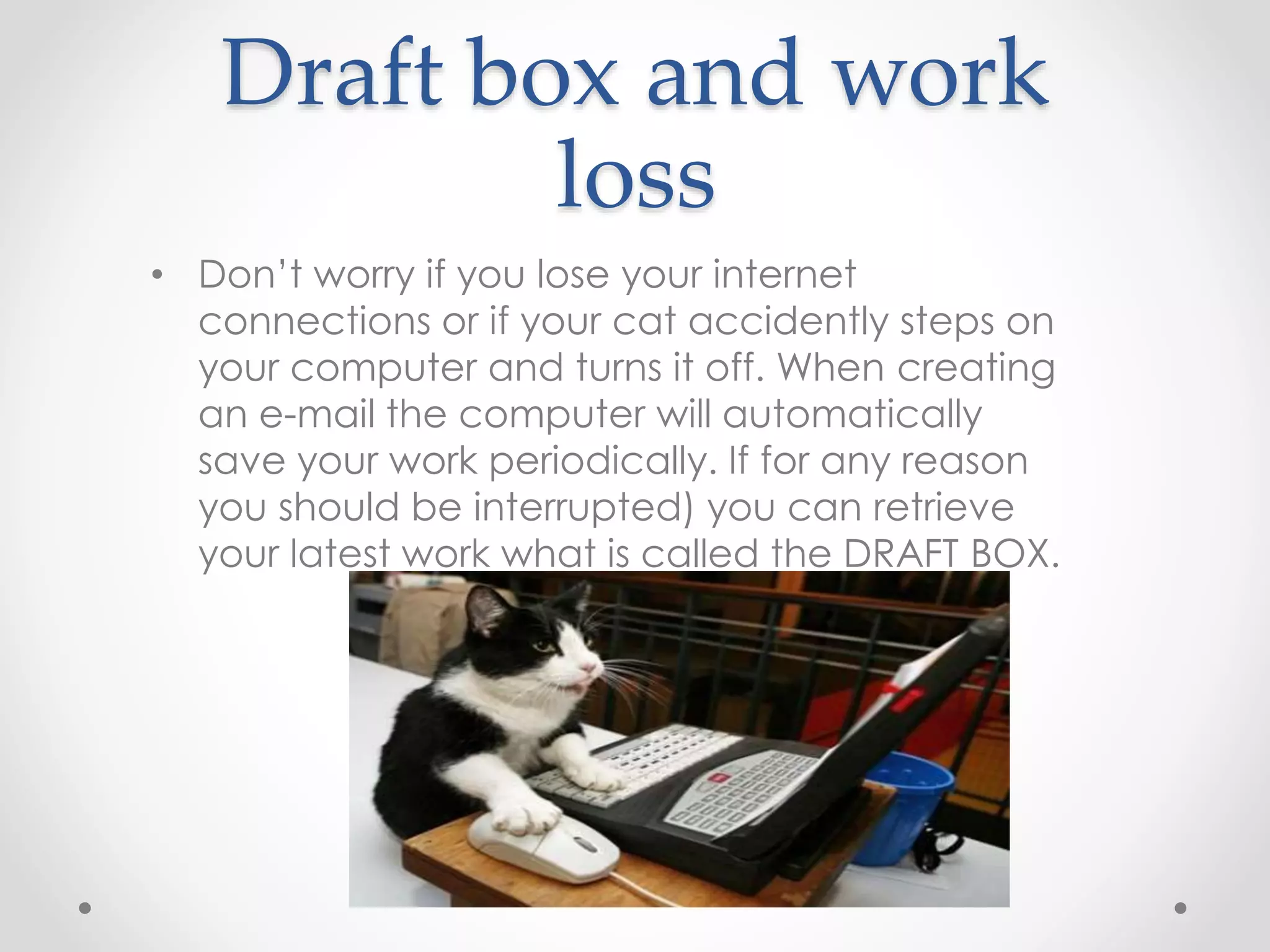
• Don’t worry if you lose your internet 
connections or if your cat accidently steps on 
your computer and turns it off. When creating 
an e-mail the computer will automatically 
save your work periodically. If for any reason 
you should be interrupted) you can retrieve 
your latest work what is called the DRAFT BOX.
New Emails 
• Inbox: The inbox on the top left will alert you when you 
have received mail. It will tell you how many new 
messages you have. E.G. 
• At the top of each message is a header with information 
about the sender, date, and routing of each message. 
From: cat@gmail.com 
To: dog@gmail.com 
CC: 
Subject: You are the worst 
Date:
Reply VS Reply all 
• When you hit reply, it will automatically reply to the sender of 
the email. 
• Reply all, the message will automatically be sent to the person 
who sent you the email AND everyone in the TO and CC fields 
in the header 
• Pay Close attention to this, you don’t want to accidently send 
sensitive information
Forwarding your email 
• When you click on FORWARD, you may share the email 
you’ve received by sending it to others. 
• You may add your own message before sending.
Opening attachments 
• To open an attachment, click on the paper click. 
• If you don’t know the sender do not open! Could 
be a virus. 
• You can save the attachment if you want to hold 
on to it. If you just want to view it once, click open
Deleting mail 
• After reading an email you either keep it or delete 
it. 
• If you delete it, it will be stored in the trash 
temporarily 
• Gmail will keep your trashed emails for a few 
months. So if you accidently delete something, 
don’t panic! Look through your trash folder.
Viruses, Spam and 
Safety 
• Viruses: Do not open attachments or click on web 
links from an unknown sender. 
• A web line is a URL, E.G. www.espn.com 
• Safety, never send out personal or financial 
information via email. There are a lot of scams out 
there, so be careful! 
• Spam is junk mail or mass commercial emails. Gmail 
catches most of these. If they don’t click on the 
email, and more actions at the top of the inbox. 
Mark as spam.
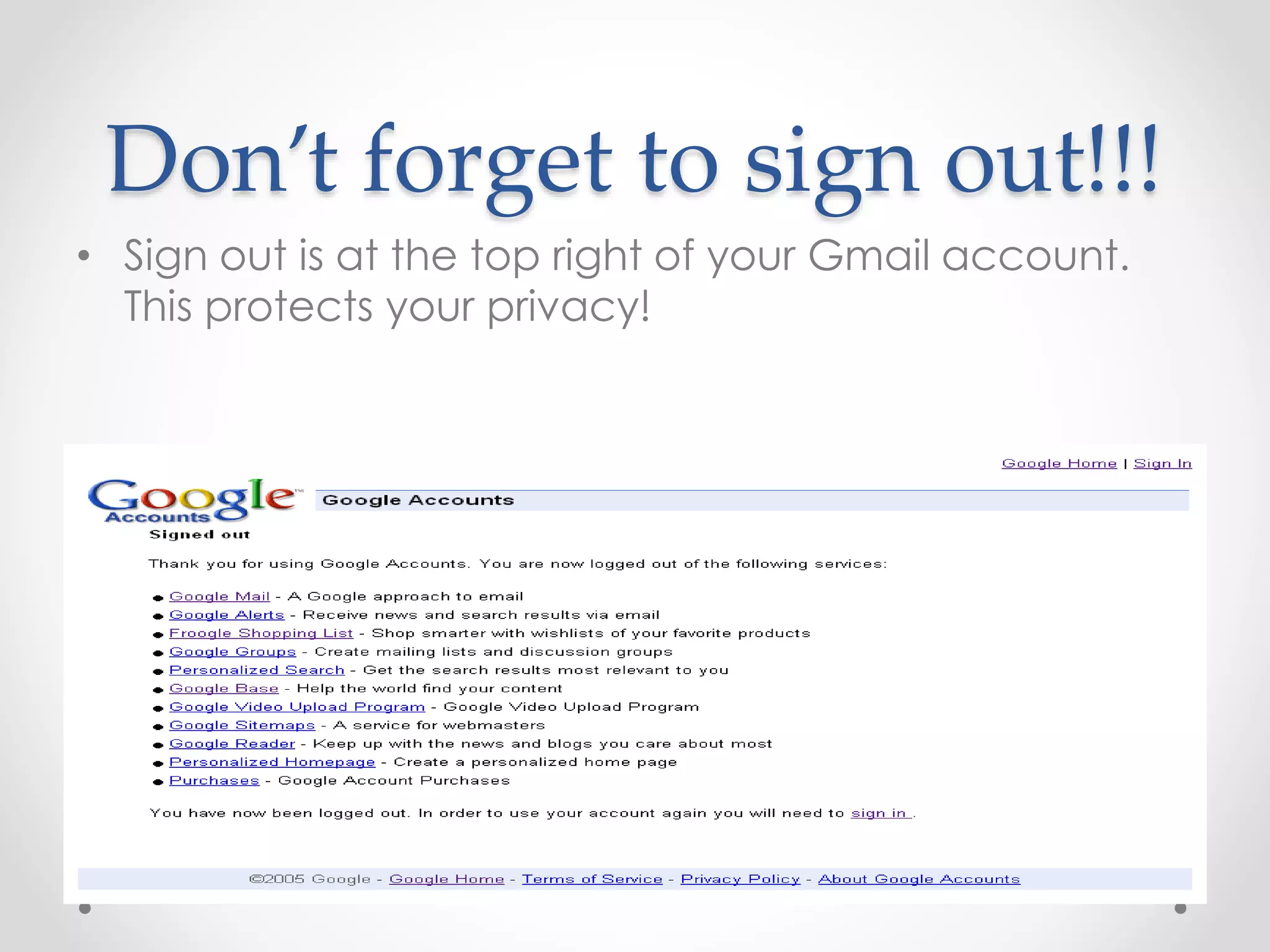
Don’t forget to sign out!!! 
• Sign out is at the top right of your Gmail account. 
This protects your privacy!

Gmail introduction

  • 1.
    An introduction toEmail: Gmail Huntington Beach Public Library
  • 2.
    What is Email? • Email is short for electronic mail. • You can send and receive messages instantly over the internet. NO MORE WAITING IN LINE AT THE POST OFFICE.
  • 3.
    Tools for thejob • a computer with internet access or a phone or tablet. • an email account with a service provider such as Gmail, Yahoo, Hotmail, and many more.
  • 4.
    Lets get onwith it! Setting up email address. • The Different parts to an email address • Example email address: cat@gmail.com • The user name is cat, each user name is unique • @ sign after user name. • An email providers name. Yours will be Gmail.com
  • 5.
    Passwords • Thenext step is picking a password. • Pick something that will be easy to remember, but also hard for others to guess • Pick a combination of letters and numbers • Do not use sensitive information, E.G. ATM pin number
  • 6.
    Setting up theaccount • In the server at the top of your web browser type www.gmail.com • It should look like the image on the bottom of this slide! • On the bottom right side of the screen click the create an account.
  • 7.
    The Next Slidewill show you where you should be, and also have the information for you to register for your own Gmail account
  • 9.
    Filling out thepersonal Information • Type in your first and last name • Create your own unique login(user name) • Pick a password, Re-enter the password • Pick a security question and answer. You do this incase you ever forget your password.
  • 10.
    Filling out personalInformation Cont. • Type in location and birthday. • Word verification. Type in the word you see pictured above the text box. (this is too eliminate virus software from hacking your account. • Read and agree to terms of service if you wish to continue.
  • 11.
    Sending a message • Click Compose Mail (top left) • Parts of an email. • To : enter the exact email address of your recipient (E.G.) cat@gmail.com o For multiple recipients, separate each address with a comma • CC : carbon copy • BCC : BLIND carbon copy – is anonymous • Subject : the topic of your email – very important • Body : the message of your email • Attachments : • the paperclip symbol - files or photos
  • 12.
    Sending your first EMAIL! • When communicating over email, err on the side of formality unless it is a family member or close friend. (I hate when the people close to me are too formal)!! • You can attach a file from a flash drive, E.G. Resume • Click attach file, then click browse. Find the file you want attached and click on it. Then click ok. The file will now be part of your email
  • 13.
    Sending your firstEMAIL Cont. • Click send to mail your letter when ready. • The message will now be in your sent folder • Remember make sure you want to send the email the way it is, once sent it is gone forever and you can’t take it back! • Spell-check, proofread, etc • It is now in the sent mail folder
  • 14.
    Draft box andwork loss • Don’t worry if you lose your internet connections or if your cat accidently steps on your computer and turns it off. When creating an e-mail the computer will automatically save your work periodically. If for any reason you should be interrupted) you can retrieve your latest work what is called the DRAFT BOX.
  • 15.
    New Emails •Inbox: The inbox on the top left will alert you when you have received mail. It will tell you how many new messages you have. E.G. • At the top of each message is a header with information about the sender, date, and routing of each message. From: cat@gmail.com To: dog@gmail.com CC: Subject: You are the worst Date:
  • 16.
    Reply VS Replyall • When you hit reply, it will automatically reply to the sender of the email. • Reply all, the message will automatically be sent to the person who sent you the email AND everyone in the TO and CC fields in the header • Pay Close attention to this, you don’t want to accidently send sensitive information
  • 17.
    Forwarding your email • When you click on FORWARD, you may share the email you’ve received by sending it to others. • You may add your own message before sending.
  • 18.
    Opening attachments •To open an attachment, click on the paper click. • If you don’t know the sender do not open! Could be a virus. • You can save the attachment if you want to hold on to it. If you just want to view it once, click open
  • 19.
    Deleting mail •After reading an email you either keep it or delete it. • If you delete it, it will be stored in the trash temporarily • Gmail will keep your trashed emails for a few months. So if you accidently delete something, don’t panic! Look through your trash folder.
  • 20.
    Viruses, Spam and Safety • Viruses: Do not open attachments or click on web links from an unknown sender. • A web line is a URL, E.G. www.espn.com • Safety, never send out personal or financial information via email. There are a lot of scams out there, so be careful! • Spam is junk mail or mass commercial emails. Gmail catches most of these. If they don’t click on the email, and more actions at the top of the inbox. Mark as spam.
  • 21.
    Don’t forget tosign out!!! • Sign out is at the top right of your Gmail account. This protects your privacy!

Editor's Notes

  • #3 Hello My name is Seth Porter & I am the Computer Coach Coordinator and will be talking about Email, specifically Gmail today.
  • #9 This is where you should be right now. It will ask you for your personal information.