Assessing instructional initiatives through
program evaluation
Seth M. Porter & Mathew Frizzell
 Contextual Overview
 Methods & Tools for scientific analysis of programs
 Instruction Example
 Recommendation in Higher Education & Academic Libraries
 Program evaluation is, “a systematic application of scientific methods to design,
implementation, improvement, or outcomes of a programs”.
 Most importantly the systematic nature of program evaluation creates a
framework for collection analyses of data that is used to measure the effectiveness
and outcomes of a specific program, treatment, or service.
 Program evaluation is used by government agencies, non-profit organization, and
non-governmental agencies to help provide quality information to policy makers,
practitioners, administrators, and other stakeholders to assist in decision making,
improve processes and behaviors, improve failing programs, and to understand
resource allocation and the outcomes of their inputs.
 Understand, verify or increase the impact of products or services on customers or clients.
 Improve delivery mechanisms to be more efficient and less costly - Over time, product or
service ends up to be an inefficient collection of activities that are less efficient and more
costly than need be. Evaluations can identify program strengths and
weaknesses to improve the program.
 Verify that you're doing what you think you're doing.
 Program evaluation can Facilitate management's really thinking about what their
program is all about, including its goals, how it meets it goals and how it will know if
it has met its goals or not.
 Produce data or verify results that can be used for public relations and promoting
services in the community.
 Produce valid comparisons between programs to decide which should be retained, e.g., in
the face of pending budget cuts.
 Experimental Design (RCT)
 Quasi-Experimental Design
 Cost Effectiveness Analysis
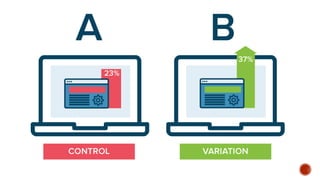
 A/B Testing
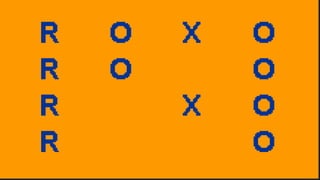
 At the beginning of a student’s freshman year they are randomly assigned to a
treatment or control group.. After random assignment both groups of students will
take a pre-test measuring their foundational knowledge of a certain topic, e.g.,
statistical literacy and decision making based on chosen peer-reviewed articles.
 The treatment group would then go through either a one-shot instruction
workshop teaching the best practices in analyzing data for statistical significance
or a semester long course. At the end of the treatment both groups would again be
tested on their knowledge of the topic. The two results would be compared.
 While every design has its limitation the pre-test post-test experimental design is
a simple but effective way to measure specific programs and compare actual
outcomes and understand the counterfactuals and impacts made by a specific
service.
 Imagine four of the same courses that traditionally have academic librarians come
into teach a two-hour long workshop on how to access, analyze, and implement
research data into a semester long project.
 Some of the classes will not get a pre-test, and some will not be taught this
semester, but will have a pre-test. All the classes must be chosen at random as
well as their classification of control or treatment.
 If the pretest-post text randomized control trial was needed on a program
underway, but two different sets of students groups were not chosen at random,
the evaluators could still do a pretest-posttest and gain valuable information from
the data, assuming the sample size was not invalid based on the artificial creation
of the control and the treatment.
 The comparison between the control and the treatment would still be a useful
benchmarking for the outcome of the program; it just would not be as
generalizable as the true experimental design.
Over the past decade, the power of A/B testing has become an open secret of high-
stakes web development. It’s now the standard (but seldom advertised) means
through which Silicon Valley improves its online products. Using A/B, new ideas can
be essentially focus-group tested in real time: Without being told, a fraction of users
are diverted to a slightly different version of a given web page and their behavior
compared against the mass of users on the standard site. If the new version proves
superior—gaining more clicks, longer visits, more purchases—it will displace the
original; if the new version is inferior, it’s quietly phased out without most users
ever seeing it. A/B allows seemingly subjective questions of design—color, layout,
image selection, text—to become incontrovertible matters of data-driven social
science (Christian 2012).
 Imagine a library website that was newly designed and was on beta-test, but the
organization was unsure if it was the best possible version and the most user
friendly.
 The designer could create a few similar websites but with small differences, e.g.,
placement of the library catalog and discovery search, or naming the catalog
something less technical like, “get books”. The designers would then run each
version of the site for set amount of time. Following the test the stakeholders
could analyze the differences in the use of the sites and if there was a drastic
difference this could help guide the decision on the best version to use.
 If specific service or program is consistently getting funds but the outcomes on the
service experience are poor maybe the target efficiency of those funds needs to be
retooled.
Program evaluation instead of assessment AABIG

Program evaluation instead of assessment AABIG

  • 1.
    Assessing instructional initiativesthrough program evaluation Seth M. Porter & Mathew Frizzell
  • 2.
     Contextual Overview Methods & Tools for scientific analysis of programs  Instruction Example  Recommendation in Higher Education & Academic Libraries
  • 4.
     Program evaluationis, “a systematic application of scientific methods to design, implementation, improvement, or outcomes of a programs”.  Most importantly the systematic nature of program evaluation creates a framework for collection analyses of data that is used to measure the effectiveness and outcomes of a specific program, treatment, or service.
  • 6.
     Program evaluationis used by government agencies, non-profit organization, and non-governmental agencies to help provide quality information to policy makers, practitioners, administrators, and other stakeholders to assist in decision making, improve processes and behaviors, improve failing programs, and to understand resource allocation and the outcomes of their inputs.
  • 7.
     Understand, verifyor increase the impact of products or services on customers or clients.  Improve delivery mechanisms to be more efficient and less costly - Over time, product or service ends up to be an inefficient collection of activities that are less efficient and more costly than need be. Evaluations can identify program strengths and weaknesses to improve the program.  Verify that you're doing what you think you're doing.  Program evaluation can Facilitate management's really thinking about what their program is all about, including its goals, how it meets it goals and how it will know if it has met its goals or not.  Produce data or verify results that can be used for public relations and promoting services in the community.  Produce valid comparisons between programs to decide which should be retained, e.g., in the face of pending budget cuts.
  • 9.
     Experimental Design(RCT)  Quasi-Experimental Design  Cost Effectiveness Analysis  A/B Testing
  • 12.
     At thebeginning of a student’s freshman year they are randomly assigned to a treatment or control group.. After random assignment both groups of students will take a pre-test measuring their foundational knowledge of a certain topic, e.g., statistical literacy and decision making based on chosen peer-reviewed articles.  The treatment group would then go through either a one-shot instruction workshop teaching the best practices in analyzing data for statistical significance or a semester long course. At the end of the treatment both groups would again be tested on their knowledge of the topic. The two results would be compared.  While every design has its limitation the pre-test post-test experimental design is a simple but effective way to measure specific programs and compare actual outcomes and understand the counterfactuals and impacts made by a specific service.
  • 14.
     Imagine fourof the same courses that traditionally have academic librarians come into teach a two-hour long workshop on how to access, analyze, and implement research data into a semester long project.  Some of the classes will not get a pre-test, and some will not be taught this semester, but will have a pre-test. All the classes must be chosen at random as well as their classification of control or treatment.
  • 16.
     If thepretest-post text randomized control trial was needed on a program underway, but two different sets of students groups were not chosen at random, the evaluators could still do a pretest-posttest and gain valuable information from the data, assuming the sample size was not invalid based on the artificial creation of the control and the treatment.  The comparison between the control and the treatment would still be a useful benchmarking for the outcome of the program; it just would not be as generalizable as the true experimental design.
  • 18.
    Over the pastdecade, the power of A/B testing has become an open secret of high- stakes web development. It’s now the standard (but seldom advertised) means through which Silicon Valley improves its online products. Using A/B, new ideas can be essentially focus-group tested in real time: Without being told, a fraction of users are diverted to a slightly different version of a given web page and their behavior compared against the mass of users on the standard site. If the new version proves superior—gaining more clicks, longer visits, more purchases—it will displace the original; if the new version is inferior, it’s quietly phased out without most users ever seeing it. A/B allows seemingly subjective questions of design—color, layout, image selection, text—to become incontrovertible matters of data-driven social science (Christian 2012).
  • 19.
     Imagine alibrary website that was newly designed and was on beta-test, but the organization was unsure if it was the best possible version and the most user friendly.  The designer could create a few similar websites but with small differences, e.g., placement of the library catalog and discovery search, or naming the catalog something less technical like, “get books”. The designers would then run each version of the site for set amount of time. Following the test the stakeholders could analyze the differences in the use of the sites and if there was a drastic difference this could help guide the decision on the best version to use.
  • 21.
     If specificservice or program is consistently getting funds but the outcomes on the service experience are poor maybe the target efficiency of those funds needs to be retooled.

Editor's Notes

  • #4 Analysis of actual outcomes, not just data collection and reporting.
  • #5 The term “program” can mean many different actions, treat Peter Rossi and Howard Freeman, Evaluation: A systematic approach 5th ed. ( Newbury Park, CA: Sage Publications, Inc, 1993). ments, or services. Including, Education, media, public policies, instructional programs.
  • #6 The term “program” can mean many different actions, treatments, or services. Including, Education, media, public policies, instructional programs.
  • #7 “Chapter 6. Useful Program Evaluation,” NCWD, accessed May 15, 2017. http://www.ncwd-youth.info/assets/guides/mentoring/Mentoring-Chapter_6.pdf
  • #8 Program eval is all about outcomes not inputs Mcnamara, Basic Guide to Program Evaluation, 4.
  • #9 As previously explored, program evaluation is not a single rigid approach—it is a scientific, systematic approach for measuring effectiveness in programs. While there are other types of program evaluation, such as process evaluation which measures the implementation process of a program, and is very valuable for institutional effectiveness assessment, this chapter is more focused on impact evaluations and policy evaluations. (Bingham and Felbringer 2002). These processes are also known as outcome or summative evaluations, and are focused on measuring short term outcomes from programs and services—as detailed in the Context section. Though there are many different types of program evaluation and tools for measurement, this section will cover the most relevant methodologies for higher education and academic libraries.
  • #11 Experimental Design (RCT) Experimental research is the gold standard of research design and is highly respected by researchers, policy analysts, policy actors, and political actors. Experimental experiments are completely randomized. These experiments are random and the participants in the experiment are chosen by chance. This is the most valuable type of research because after measuring the impact of the program the conclusion of the results can be highly certain. In regards to program evaluation experimental design participants in the program must be randomly selected to a treatment or a control group. The random nature of the selection makes the characteristics of the participants statistically equal. For it to be effective in program evaluation there must be a comparison between the control and the treatment group (Bingham and Felbringer 2002). As previously discussed experiment design is the gold standard of research and program evaluation, however, it can be expensive and difficult to implement in the real world. Although, there are methodologies that can be used to implement experimental design in higher education and the assessment programs of academic libraries.
  • #12 Pre-test Posttest The pre-test post-test is the basic experimental design. As mentioned previously this design is created between two comparable groups, an experimental group and a control group. This is completely random, individuals are chosen for control or treatment by complete chance. This can be done by pulling a name out of a hat, random table numbers, or flipping a coin (Bingham and Felbringer 2002). After this is completed both groups take a pre-test to measure level of knowledge. The treatment group then takes part in the program. The control group is held steady and is not involved in the program. Following the program both groups are then tested and the differences in the results are compared between the control and treatment.
  • #14 Solomon Four-Group Design The Solomon four-group design is one of the most effective and pure research designs that can be implemented in a higher education environment. Essentially, the design controls for the noise that is created in the pre-test that can have effects between the pre-test and the treatment. Bingham and Felbringer (2002) explain the details of the powerful design: The Solomon Four-Group Design…contains the same features as the classic(the pre-test-postest control group design), plus an additional set of comparison and experimental groups that are not measured prior to the introduction of the program. Therefore, the reactive effective of measurement can be directly assessed by comparing the two experimental groups and the two comparison groups. The comparison will indicate whether X (the policy) had an independent effect on the groups that were not sensitized by the preprogram measurement procedures. (79)
  • #16 Quasi-Experimental Design When randomized experimental design is not possible or plausible the second best program evaluation research methodology is Quasi-Experimental design. (Bingham and Felbringer 2002) describe quasi experimental design as, “Quasi-experimental design employ comparison groups just as do experiments. In the quasi-experimental design, the research strives to create a comparison group that is as close to possible as the experimental group in all relevant respects” (Bingham and Felbringer 2002, 109). There are other differences between quasi-experimental design and experimental design. Often quasi-experimental design is implemented retroactively or while the program is in effect. And because of the nature of the time a pure experiment is ruled out. Additionally, this is not as internally pure as the experimental design. The evaluation must identify, classify, and measure all variable of the experimental and control group to attempt to create a true experiment (Bingham and Felbringer 2002.) Many of these same designs that can be attempted in a true experimental design can be implemented with an evaluation method that is quasi-experimental e.g., both the pre-test post-test and Solomon four-group design could be crafted under a quasi-experimental design except the two groups would be artificially created to be as similar as possible, and they not be completely randomized. While it is not as pure as a true experiment it is a valuable program evaluation tool, and most likely more relevant for the muddy environment of higher education programs and academic library assessment.
  • #18 A/B testing is very similar to an experimental or quasi-experimental design but it is used distinctly in virtual program evaluation and software assessment. Essentially, A/B testing or Bucket testing is an experiment where two or more webpages, digital learning objects, or apps, are tested against each other to evaluate the top performer (Optimizely 2017). This can be done with two completely different versions or small changes like a different font style, color, or content placement. The original version of the page, app, or digital learning object, would be the control and the updated version is the treatment. After running both versions the evaluator can collect the data through an analytics framework and compare the control and the treatment in the A/B test (Optimizely 2017).
  • #21 Unlike the previous tools and methodologies a Cost Effectiveness Analysis does not measure the outcomes of a specific program, it forecasts the outcomes and compares these against the inputs. The foundation of a Cost Effectiveness Analysis is the target efficiency of a specific program (Schuck 2014). Basically, is the program or service worth implementation based on the resource allocation and the projected outcomes? A Cost Effectiveness Analysis is not a Cost Benefit Analysis, while they are similar, there is a distinct difference. A Cost Benefit Analysis is measured by the economic impact assessed by potential dollars. While this a valuable program evaluation tool, in higher education and academic libraries our programs and services are more holistic and the benefits are less economic (Schuck 2014). A Cost Effectiveness analysis the outputs measure are non-monetary (Bingham and Felbringer 2002) The Cost Effectiveness is a valuable tool for forecasting and analyzing potential programs. Essentially, they analyze potential results and the corresponding costs attached to the results. A Cost Effectiveness Analysis attaches a unit of measurement to an input instead of a monetary output, e.g., the satisfaction of a patron following a library visit. This is a valuable tool for the service side of academic library programs.
  • #23 Reccomendations
  • #24 Services Changes Simple Example - ECC Librarians wanted to keep reference service History Model Data - Anecdotal - More Complex - Books Going Away Pushback – Fulfillment Services Project
  • #25 Cost effectiveness anaylsis for ECC Campus Survey Data Collected Talk about Results – Get Specific Made hard decision to reallocate ecc resources Data used to confirm and backup lsc decision Total Days = 66  Questions Per Day  = 2.62 Total Hours = 264  Questions Per Hour  = 0.655 Simple questions = 92 Non Research Questions (but not directional either) = 38  Research Questions = 43 Total Questions = 173 Research Questions Total = 43 (defined as level 3 or above on a scale of 5)   Research Questions Per Day =   .65 Research Questions Per Hour = .16
  • #26 The Big Picture Organizational Effectiveness – Why this has traditionally been hard for libraries Current Initiatives Library Next Organizational Effectiveness Program – Fullfillment services Centralize assessment and program evaluation efforts Better communicate the impact we are having on campus Ask for more resources Fight to keep current resources Immediacy to data Historical / recordkeeping