• Normally, the urine contains about 0.05gm%
of sugar. Such a small quantity cannot be
detected by benedicts test, but under certain
circumstances, a considerable amount of
sugar may be excreted in the urine.
• Excretion of detectable amount of sugar in the
urine is called glycosuria.
• Glycosuria results from the rise of blood
glucose above its renal threshold.
• Glycosuria may be due to various reasons on
the basis of which is classified into following
groups:
1. Alimentary glycosuria
2. Renal glycosuria
3. Diabetic glycosuria
• The blood sugar level of some individuals after
meal rises rapidly above the normal renal
threshold and results in glycosuria and know
as alimentary glycosuria.
• This is due to an increased rate of absorption
of glucose from the intestine.
• High blood glucose level returns to normal at
2 hours after a meal. This type of glycosuria is
benign (harmless).
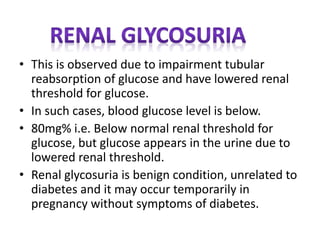
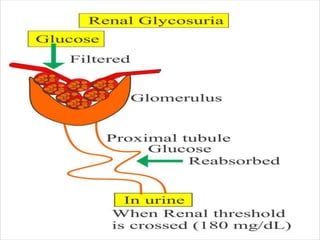
• This is observed due to impairment tubular
reabsorption of glucose and have lowered renal
threshold for glucose.
• In such cases, blood glucose level is below.
• 80mg% i.e. Below normal renal threshold for
glucose, but glucose appears in the urine due to
lowered renal threshold.
• Renal glycosuria is benign condition, unrelated to
diabetes and it may occur temporarily in
pregnancy without symptoms of diabetes.
• Diabetic glycosuria is a pathological condition
and is due to deficiency or lack of insulin
which causes diabetes mellitus.
• Although the renal threshold id normal, as
blood glucose level exceeds the renal
threshold, the excess glucose passes into urine
to produce glycosuria.
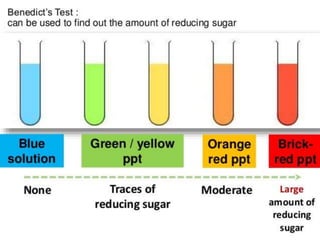
• Take 5 ml of Benedict's reagent.
• Add 8 drops of urine sample.
• Boil for 2 minutes or keep it in water bath for
5 minutes.
• A light green, yellow and brick red color is
produced depending on the concentration of
urinary glucose.
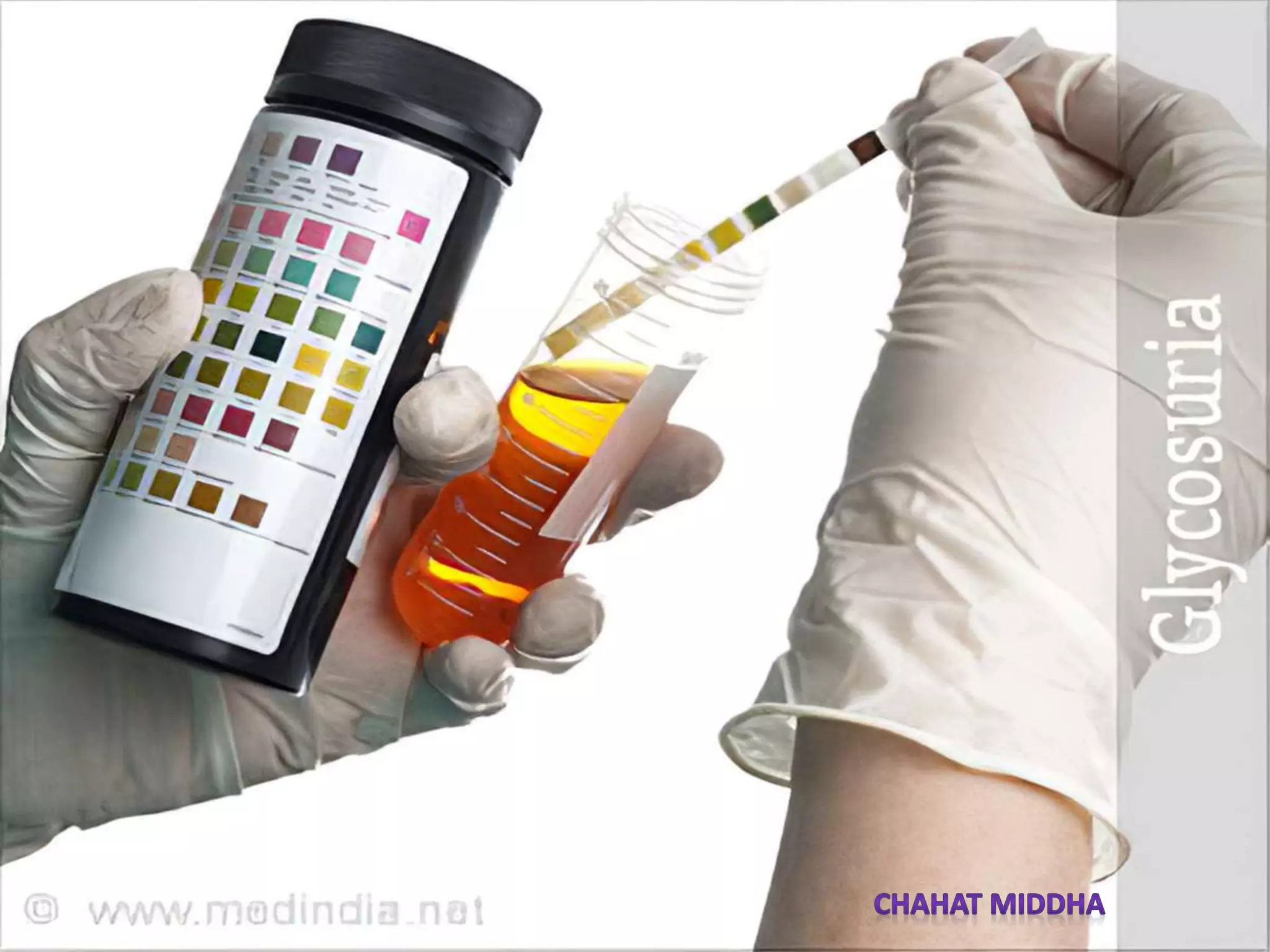
Glycosuria

Glycosuria

  • 2.
    • Normally, theurine contains about 0.05gm% of sugar. Such a small quantity cannot be detected by benedicts test, but under certain circumstances, a considerable amount of sugar may be excreted in the urine. • Excretion of detectable amount of sugar in the urine is called glycosuria. • Glycosuria results from the rise of blood glucose above its renal threshold.
  • 3.
    • Glycosuria maybe due to various reasons on the basis of which is classified into following groups: 1. Alimentary glycosuria 2. Renal glycosuria 3. Diabetic glycosuria
  • 4.
    • The bloodsugar level of some individuals after meal rises rapidly above the normal renal threshold and results in glycosuria and know as alimentary glycosuria. • This is due to an increased rate of absorption of glucose from the intestine. • High blood glucose level returns to normal at 2 hours after a meal. This type of glycosuria is benign (harmless).
  • 5.
    • This isobserved due to impairment tubular reabsorption of glucose and have lowered renal threshold for glucose. • In such cases, blood glucose level is below. • 80mg% i.e. Below normal renal threshold for glucose, but glucose appears in the urine due to lowered renal threshold. • Renal glycosuria is benign condition, unrelated to diabetes and it may occur temporarily in pregnancy without symptoms of diabetes.
  • 7.
    • Diabetic glycosuriais a pathological condition and is due to deficiency or lack of insulin which causes diabetes mellitus. • Although the renal threshold id normal, as blood glucose level exceeds the renal threshold, the excess glucose passes into urine to produce glycosuria.
  • 9.
    • Take 5ml of Benedict's reagent. • Add 8 drops of urine sample. • Boil for 2 minutes or keep it in water bath for 5 minutes. • A light green, yellow and brick red color is produced depending on the concentration of urinary glucose.